

47
Over 100 years of the US car industry distilled into an all-time top 50… you might want to sit down for this
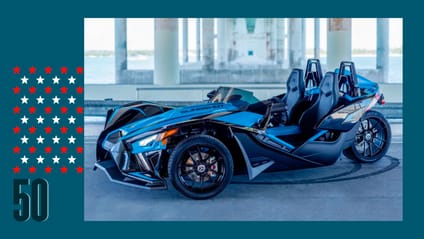
The Polaris Slingshot is a three-wheeled, open-air autocycle that has caused much argument among car enthusiasts, largely about whether it should be classified as a car at all.
But, silly as it may look, the Slingshot is a blast. Essentially a go-kart for adults that starts around $25,000, it can be specced with more than 200 horsepower and a five-speed manual transmission. It can sit outside in the sun or rain thanks to its shower-tolerant interior, and if you floor the gas pedal too hard, you’ll be drifting all over the place on your single rear wheel.
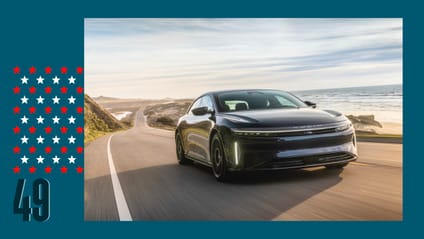
The Lucid Air Sapphire debuted in 2022 with three electric motors, over 1,200 horsepower, and the ability to crush 0-60mph in 1.9 seconds and the quarter-mile in under nine. In a four-door family saloon, this combination of stats is… unprecedented. At the time, Car & Driver pronounced it the quickest road car they’d ever tested: at Virginia International Raceway, the Air Sapphire posted a lap time faster than any road-going Porsche, McLaren or Corvette.
Many electric start-ups have launched in recent years. Plenty have since vanished. Lucid continues to make waves.
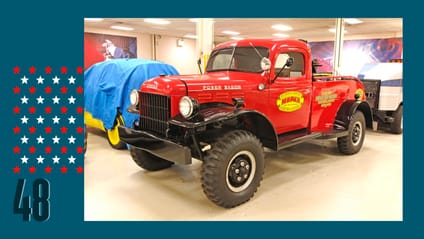
When World War II ended, Dodge took the WC series truck it had spent four years building for the US military, changed little, and sold it to civilians. At launch, the 1946 Power Wagon – same straight-six, same four-wheel drive, same flat military fenders – was one of only two factory-built civilian 4x4s you could buy in America. The other? The Willys Jeep.
The Jeep gets the fame. The Power Wagon arguably deserves more of the credit. It's the vehicle that proved four-wheel drive belonged in rural life, to which every serious off-road pickup built since owes a debt. Dodge's marketing called it “the truck that needs no roads”. Strong line.
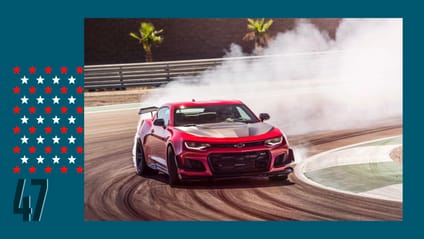
The Chevrolet Camaro, one of the most storied names in U.S. automotive history, left the American car market in 2024. Before its departure, we got one final hardcore goodbye: the ZL1.
As goodbyes go, it was a noisy one: supercharged V8, 650 horsepower, the option of a six-speed manual transmission, and an array of aggressive aero additions including a vast rear wing and pointy dive planes. Which turned out to be illegal in Europe as they didn’t meet pedestrian safety regs.
The Camaro’s death left a huge hole in the American car market. RIP, ZL1.
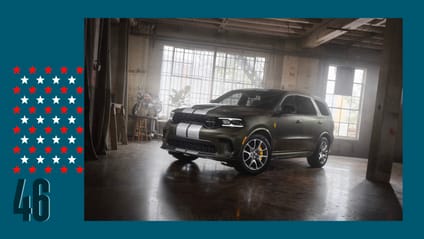
The Dodge Durango SRT Hellcat blends two things that probably should never have been blended: a chunky three-row SUV, and Dodge’s famous Hellcat engine. The result? Power and derangedness turned up to 11.
Packing 710 horsepower from a supercharged V8, the Hellcat’s beauty lies in its absurdity. On the outside, it’s a practical family bus. Underneath, you can pop it into launch mode, squat it, and hurl all three rows toward the horizon.

The original Ford Bronco ran for 31 years and five generations, along the way transporting not only the Pope, but also OJ Simpson in his infamous 1994 slow-speed freeway chase, watched live by 95 million Americans. Ford discontinued it two years later. Coincidence, they said.
The sixth-generation Bronco arrived in 2021, built on the Ford Ranger’s body-on-frame platform and designed specifically to take on the Jeep Wrangler. Capable, configurable, and priced for normal humans, the Bronco nailed it. Twenty-five years is a long time to wait for a comeback. It was worth it.
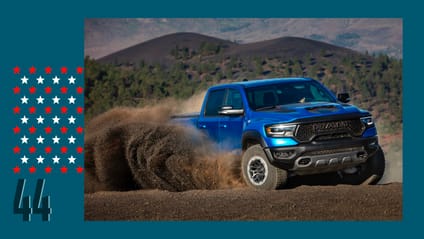
The Ram 1500 TRX arrived in 2021 with 702 horsepower from a supercharged 6.2-litre Hellcat V8, the same engine Dodge had been dropping into muscle cars for years, here transplanted into a three-tonne pickup truck. Ram claimed 0-60 in 4.5 seconds. Press cars ran it in the high threes.
One brave soul famously hot-lapped their 1500 TRX round the Nürburgring. It hit the speed limiter on the straights and cooked its brakes in the corners. Never a quiet day in the Ram office.
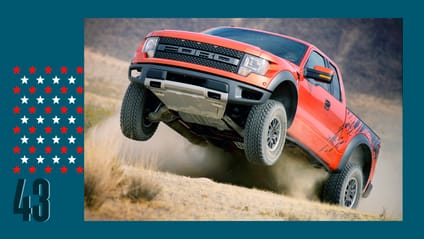
The F-150 SVT Raptor was born in the desert. Literally. Before it went on sale as a 2010 model, Ford's Special Vehicles Team raced a near-stock prototype at the Baja 1000, one of the most punishing off-road races on earth. It finished third in class.
The production truck that followed was seven inches wider than a standard F-150, rode on Fox Racing shocks developed specifically for high-speed desert running, and came with a 411hp 6.2-litre V8. The first one off the line sold at charity auction for $130,000, roughly three times the sticker price. Desirable.
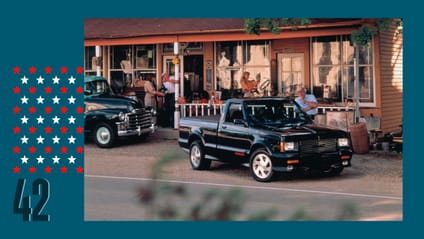
In September 1991, Car and Driver put a $26,000 GMC pickup truck on its cover next to a Ferrari 348ts, calling it “The $96,000 Sting”. The Syclone – a turbocharged, all-wheel-drive version of the GMC Sonoma – beat the Ferrari in the quarter mile by four-tenths of a second and stopped four feet shorter from 70mph.
Only 2,995 Syclones were ever built, all in black. It was so street-oriented that it featured a warning label stating: “This vehicle is not intended for off-road use. The reduced height of this vehicle will not allow it to clear obstacles commonly encountered in an off-road environment. Off-road operation could result in serious damage to the chassis and drivetrain.” Couldn’t handle a curb, could humiliate a Ferrari.
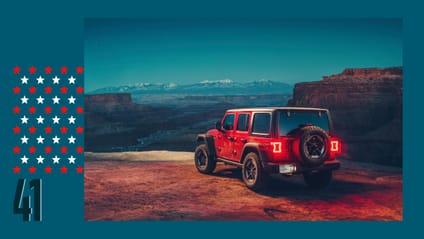
Arriving in 1987 as a civilized upgrade on the CJ (Civilian Jeep), the Wrangler has remained in continuous production ever since. The formula has barely changed in nearly four decades. With removable doors, removable roof, solid axles, low-range transfer case and that recognisably retro silhouette, it remains the benchmark against which every serious off-roader is measured.
Of course, most Wranglers don’t off-road at all. In 2019, Jeep's own head of design told ABC News that only 10 to 15 per cent of Wrangler owners actually take them away from the tarmac. Their loss.
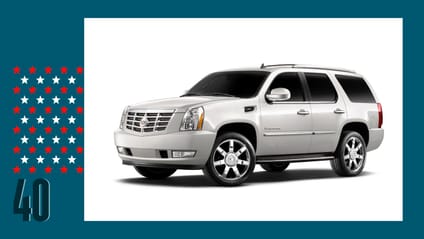
The first Escalade in 1999 was a rush job, GM tarting up the GMC Yukon Denali in response to the Lincoln Navigator. It showed. The second-generation Escalade was far better, arriving at exactly the right cultural moment.
Hip-hop instantly embraced the Escalade. Jay-Z and J-Lo name-checked it. It appeared in The Matrix Reloaded and The Sopranos. Dr Evil rapped about it in 2002’s Austin Powers: Goldmember. Fame was guaranteed.
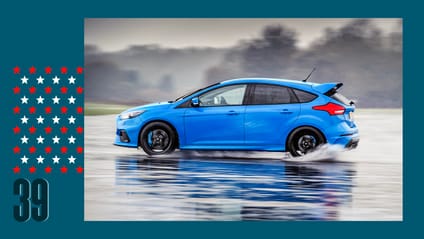
The third-generation Focus RS arrived in 2016 as Ford's last hurrah before the company announced it was killing small cars in America. The RS made the most of its moment in the spotlight. Three hundred and fifty horsepower, an all-wheel drive system that could send up to 70 per cent of torque to the rear wheels, and, best of all, a drift mode, accessible via a button on the dash. On a family hatchback. Ford said it was for track use only. Few listened.
And then Ford decided America didn't want small, fast, affordable cars anymore. Maybe America still does, Ford. Maybe you just stopped asking.
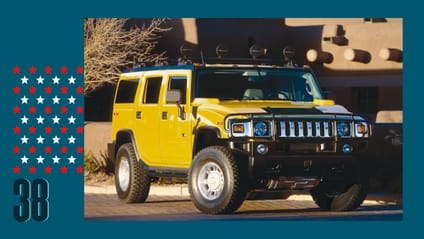
The Hummer H1 was a genuine military vehicle that civilians could buy. The H2 was a Chevy Tahoe that looked like one. GM was never required to publish an official fuel economy figure for it, because the H2's 8,600lb gross vehicle weight exempted it from EPA testing. Real-world owners reported around 10mpg.
When the H2 arrived in 2003, celebrities paid up to $10,000 over sticker to be first in line, while eco-protesters vandalised them in car parks. The controversy only added to the H2’s fame. A perfect time capsule of a very specific American moment.
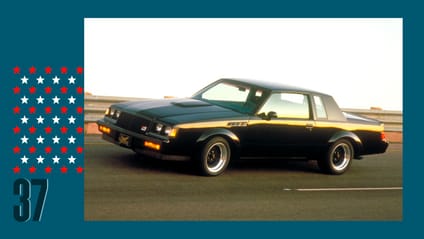
In 1987, Buick took 547 Grand Nationals, fitted bigger turbos, reworked the intercooler and suspension, and produced the GNX, a four-seat coupe that could embarrass not just the Corvette of the day, but the Ferrari too. Independent tests put the GNX’s output around 300 horsepower and 420lb ft of torque. The quarter mile came up in 13.4 seconds at over 100mph. The Ferrari Testarossa ran 13.5.
A legend was born. The GNX earned the nickname Darth Vader. Kendrick Lamar named his 2024 album after it. Now that’s legacy.
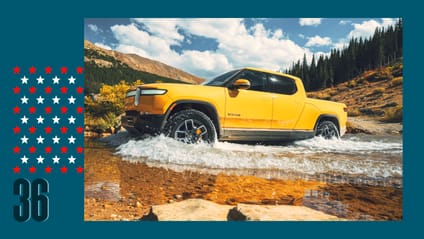
Most electric startups of the 2010s promised the world and quietly disappeared. Not Rivian. The R1T arrived in 2021 as the first serious electric pickup truck – not a concept, but a genuinely original design including a lockable gear tunnel running the width of the truck between cab and bed. Power? Up to 1,025 horsepower in Quad Motor form.
When Rivian went public that November, having delivered fewer than 200 vehicles, it was briefly valued at $88bn, making it – for a brief window in time at least – worth more than Ford.
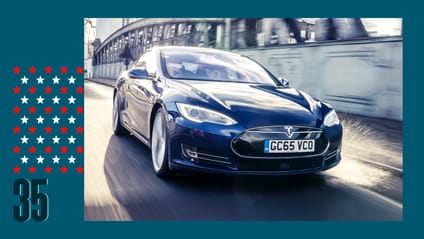
When the Model S won Motor Trend's Car of the Year for 2013 – beating the Porsche 911 among others – it was the first time an electric car had ever taken the prize. The judges called it the fastest American sedan they'd tested. The Model S would do 0-60 in 3.9 seconds and had a range of 265 miles, numbers that still look impressive today. “This is a point at which the gears of history moved,” announced Tesla’s boss, a mild-mannered entrepreneur by the name of Elon Musk.
The Model S was the car that made EVs impossible to ignore. For better or worse, it made Musk impossible to ignore too.
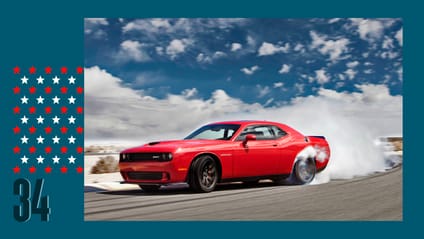
The Challenger Hellcat nearly didn’t happen, Chrysler’s management initially kyboshing the idea on cost grounds. Good thing the SRT engineers kept arguing. In 2015, it arrived as the most powerful production muscle car in American history. The first one off the line raised $1.65 million for charity at auction.
The Hellcat would run the quarter mile in 11.2 seconds, came with two keys – black for 500 horsepower, red for all 707 – and was named after the Grumman F6F Hellcat, the WWII fighter that was famously hard to down.
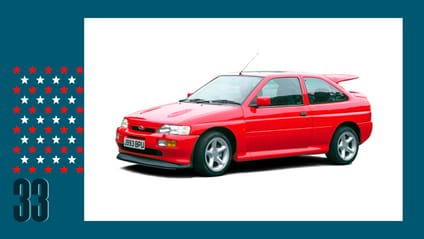
The Escort RS Cosworth was the most special of homologation specials. Ford needed 2,500 road cars to qualify for 1993’s WRC Group A competition, and what they created was remarkable.
Underneath Escort body panels lurked the four-wheel drive system from the Sierra RS Cosworth and a 2.0-litre turbocharged Cosworth engine producing some 220 horsepower, all topped off with a frankly obscene rear wing. Some claimed the Escort Cossie was the first production car to generate proper downforce at both ends.
It never officially reached America. A handful were grey-market imported anyway. We’ll have it on the list anyhow.
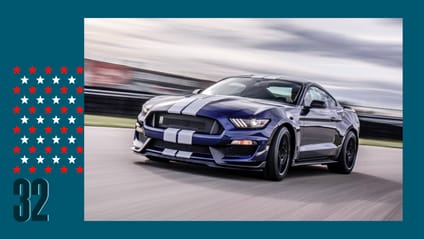
American V8s have cross-plane crankshafts. Ferraris have flat-plane cranks. But the GT350’s 5.2-litre Voodoo V8 employed a flat-plane crank. That’s why it revved to 8,250rpm, why it screamed instead of rumbled, and why Ford's engineers struggled to tame the vibrations. Bless them for persisting.
The result was Ford’s most powerful naturally aspirated engine of the day: 526hp, six-speed manual, and a noise that made grown adults cry at car shows.
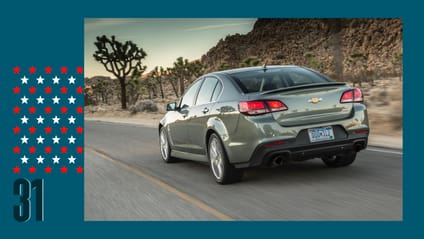
The Chevrolet SS was a 415-horsepower, rear-wheel-drive Australian sedan fitted with the same LS3 V8 as the C6 Corvette, developed at the Nürburgring, and sold in America between 2014 and 2017. It looked like a Malibu, which may explain why Chevrolet shifted fewer than 13,000 across four years.
But those few who bought the SS knew what they were getting: essentially a four-door Corvette, and one of America’s ultimate sleepers.
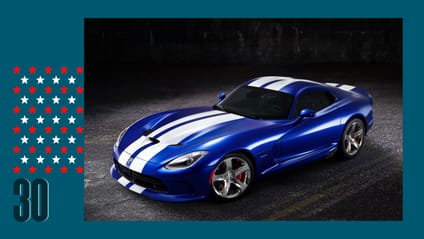
In 2015, the ACR edition of the fifth-generation Viper broke 13 lap records across America, filling the nation’s ears with a furious V10 scream as it did so. Two years later, the Viper was dead, modern airbag regulations finishing what poor sales had started.
The final Viper rolled out of Conner Avenue in August 2017. After 32 thousand examples over a 26-year run, America’s most unique sports car was finally gone.
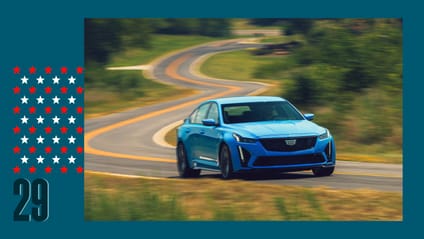
In 2008, Cadillac’s CTS-V smashed the Nürburgring lap record for production saloons, embarrassing the Germans in their own backyard. Today, the CT5-V Blackwing keeps that flame burning with 668 supercharged horsepower from a Corvette-derived V8, rear-wheel drive, and – uniquely in its class – the option of a six-speed manual. Sure, the new BMW M5 might make slightly more power, but it also weighs 1,200 pounds more.
The Blackwing is currently the world’s only new four-door saloon to combine a V8, rear-wheel drive, and stick-shift. It’s a combo unlikely to exist much longer. Buy accordingly.
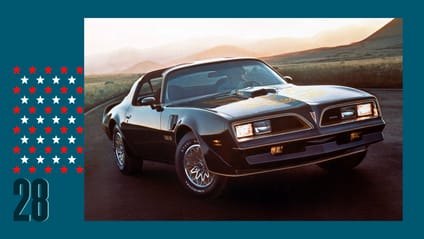
In 1977, the second-highest-grossing film in America – behind only Star Wars – starred a black-and-gold Pontiac. Smokey and the Bandit caused Trans Am sales to spike by 25,000 in a year. Pontiac had already designed the third-generation car. They held it back rather than mess with the Trans Am’s success.
The cars used in filming were actually 1976 models with 1977 front ends grafted on. Some produced 700bhp, while the real Trans Am’s V8 made a modest 200 horsepower. None of that mattered. Burt Reynolds made it look like the fastest thing on the road, and America believed him.
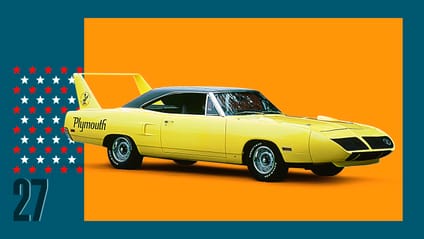
The Superbird exists because NASCAR got aerodynamic. Manufacturers began sculpting their race cars into pointed noses rather than the flat rectangular faces of standard American muscle, and Plymouth needed a response to the Dodge Daytona. Homologation rules required a street version, which is how one of the most outlandish shapes in American automotive history ended up in showroom forecourts.
The Superbird also ended up in Pixar's Cars, as Strip ‘The King’ Weathers, voiced by the real Richard Petty, who had actually driven the real thing.
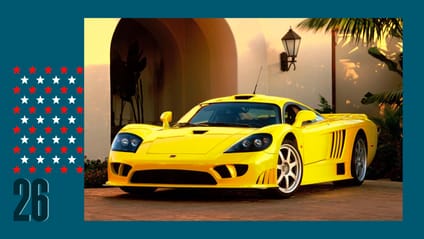
In 2004, at Ferrari's own Imola circuit, in front of Ferrari's CEO, the track version of the Saleen S7 beat two Maserati MC12s, three Ferrari 550s, four Ferrari 575s and two Lamborghini Murcielagos outright. “We were no match for the Saleen today,” admitted Luca di Montezemolo afterwards. The automotive press called it one of the biggest upsets in racing history.
The road car behind Ferrari’s humiliation was a mid-engined, carbon-fibre-bodied monster with a 550hp 7.0-litre V8, built entirely in America by a company better known for tuning Mustangs. America can’t build supercars what-now?
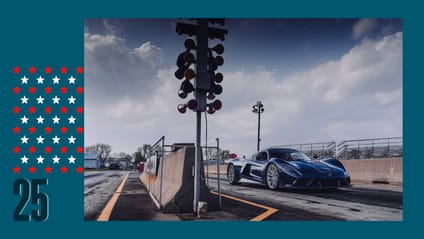
The Venom F5's key fob contains a fragment of metal from a Space Shuttle launch. Founder John Hennessey was given a piece by an astronaut, broke it up, and had a sliver embedded in every F5 key fob.
The car itself: 1,817hp from a twin-turbo 6.6-litre V8, 2,998lb, theoretically capable of 328mph according to Hennessey's own CFD simulations. It’s yet to happen for real: in testing the F5 passed 270mph at the old NASA Space Shuttle landing strip at Cape Canaveral.
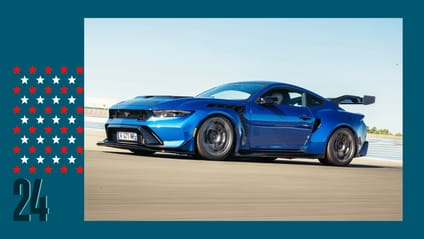
The Ford Mustang GTD arrived for 2025 as a road-going version of Ford's GT3 race car. For your $325,000, you get a supercharged 5.2-litre V8, 815hp, an eight-speed dual-clutch transaxle mounted at the rear, carbon fibre driveshaft, and active aerodynamics. The GTD’s suspension adjusts spring rate and ride height between road and track modes, and there’s a window allowing you – or at least your passenger – to look upon the suspension as it does its thing.
You could have ten base Mustangs for the price of one GTD. Good thing it’s ten times as special, then.
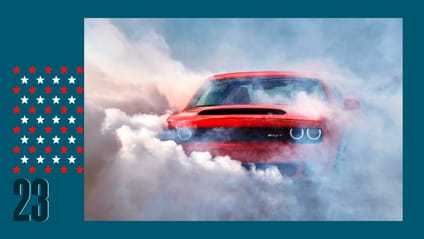
The most powerful muscle car in history arrived for 2018… without a passenger seat. As standard, the SRT Demon’s front chair was deleted to save weight, but could be optioned back in for the princely sum of $1.
Point is, this was no regular muscle car. The 840hp Dodge Challenger SRT Demon was built specifically to drag race. Its 9.65-second quarter mile was so fast that NHRA rules required a roll cage. The Demon didn’t have one, so the NHRA banned it from sanctioned events. Dodge put the ban letter in the press release. It was marketing gold.
Then in 2023, as the Challenger reached its end, Dodge cooked up the even-wilder Demon. Over 1,000hp on E85 fuel, a quarter mile in 8.91 seconds, 0-60 in 1.66 seconds. The NHRA banned that one as well. Dodge put that letter in the press release as well.
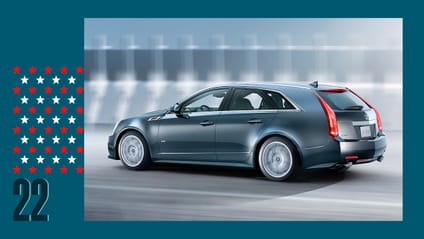
In Europe, fast estate cars are a well-established genre. America never really got on board to the same degree, which makes the 556hp CTS-V Wagon even more of a glorious anomaly.
In 2012, Motor Trend drove their long-term example to the Nürburgring, handed the keys to professional racing driver Johnny O'Connell, and set the fastest lap ever recorded by a production estate car: 8 minutes 12.1 seconds. In your face, Germany.
Today, a decade-old CTS-V with 50,000 miles still sells for roughly what it cost new. Talk about depreciation-proof.
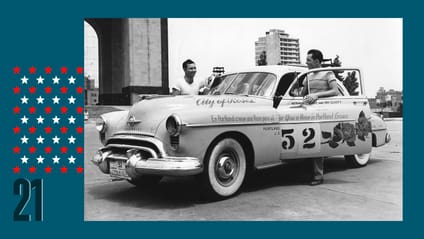
The V8-powered Oldsmobile 88 is considered one of America's first muscle cars: a big engine dropped into a modest body to generate serious blue-collar performance. Its ‘Rocket’ V8 made 135 horsepower – modest by modern standards, but enough to dominate the inaugural season of NASCAR's top series in 1949.
That first season was called the Strictly Stock Division. Oldsmobile won five of the eight races on the schedule, and driver Red Byron took the first championship in series history. Byron is now a NASCAR Hall of Famer. The 88 deserves its place too.
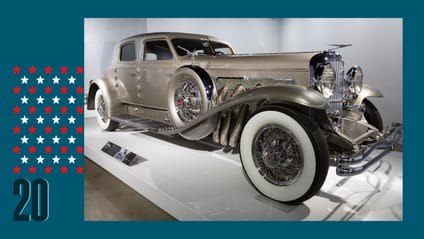
In 1933, at the height of the Great Depression, Duesenberg built a one-off show car for the Chicago World's Fair and priced it at $20,000. At the time, the average new car cost around $600. The average house cost around $2,000.
The Twenty Grand — there was only ever one — made 320 horsepower from a supercharged 6.9-litre straight-eight, at a time when Ford's newest V8 made less than 100hp. It’s now estimated to be worth $50 million, making it potentially the most valuable American car ever made. Jay Leno, who owns several Duesenbergs, called it the twentieth century's equivalent of the Bugatti Veyron. If anything, that’s underselling it.
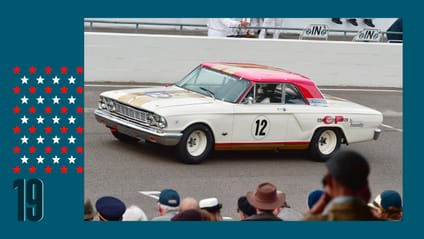
Ford built 100 Fairlane Thunderbolts in 1964, all of them stripped to the bone to meet the NHRA's minimum weight limit. The heater was gone. So was the radio, the sun visors, the arm rests, the spare tyre, and the carpeting. The front seats were replaced with lightweight buckets, reportedly from an Econoline van. Instead of headlights lurked mesh-covered ram-air intakes feeding the V8 underneath.
It was technically street legal. Ford riveted a plate to each glovebox warning buyers that normal quality standards were ‘not met on this vehicle’. You don’t say. The 100 cars built were enough to satisfy the NHRA's homologation rules. The Fairlane promptly won the National Hot Rod Association’s Super Stock Championship, running low-11-second quarter-miles.
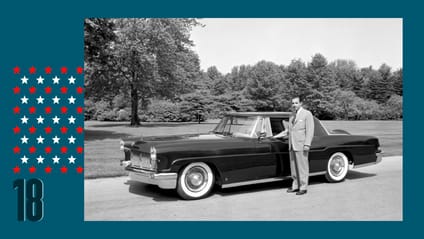
The Continental Mark II was largely hand-assembled in its own dedicated factory, benchmarked against the Rolls-Royce Silver Cloud, and priced at $9,966 – the equivalent of $120,000 today. Each engine was individually balanced, tested on a dynamometer for six hours, then reinstalled. Elvis Presley bought one.
Perhaps inevitably, Ford lost money on every single sale. The car cost far more to build than it sold for, and the Continental Division was quietly closed in 1957 after just two model years and some 3,000 cars.
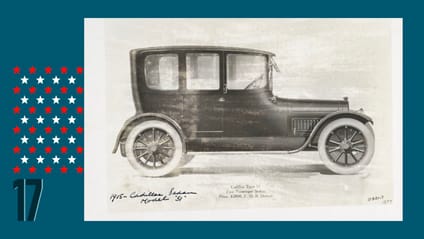
In 1914, Cadillac's chief engineer wanted the company's new engine to be a complete surprise. So he housed the entire development in a small concrete-block building a few miles outside Detroit, with access restricted to a handful of trusted engineers, all forbidden from telling anyone what they were working on. Even their wives.
The secret? An eight-cylinder engine arranged in a V, something no car manufacturer had ever mass-produced. When the V8-powered Type 51 launched in September 1914, the sales brochure boasted it ‘speeds along under the almost magic influence of this new power principle’. By the standards of the day, its 70-horsepower output was monstrous.
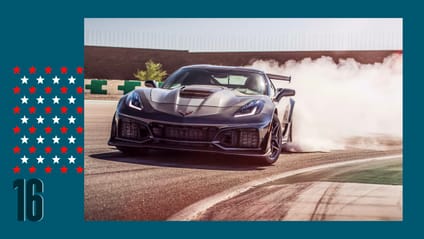
The C7 Corvette ZR1 was the last hurrah of the front-engined Corvette in full-attack mode: 755hp from a supercharged 6.2-litre V8, a wing visible from space, and the option of a seven-speed manual gearbox. The ZR1 cost $120,000 and went 212mph.
Chevrolet had been planning the switch to a mid-engine layout for decades, and the C8 finally arrived for 2020, rendering the C7 ZR1 a museum piece almost immediately. When Chevrolet eventually built a mid-engine ZR1 in 2025, it made 1,064hp and came only with an automatic. The manual died with the C7. Progress? You decide.
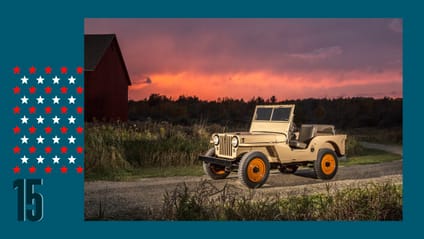
In 1940, the US military invited 135 manufacturers to design a lightweight reconnaissance vehicle. Only three responded: Willys-Overland, American Bantam, and Ford. Willys won the contract, and went on to build around 400,000 vehicles for the war effort.
When peace came, Willys did something nobody had done before: took a military vehicle, civilianised it, and sold it to farmers. Basic and rugged, but less basic and rugged than a horse, the CJ-2A even had a power take-off to run farm equipment. It was the first mass-market off-roader.
Everything 4x4 that followed —Land Cruiser, Defender, Wrangler, the bunch — followed the Willys template. The ultimate trend-setter.
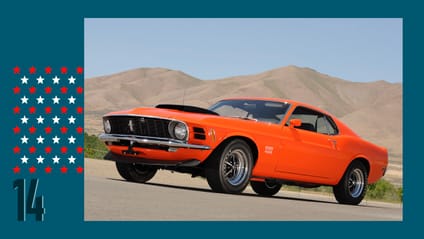
In 1969, Ford needed to homologate its new 429 cubic inch V8 for NASCAR. The rules said at least 500 road cars had to be fitted with the engine. Just one problem: the 429 was too large to fit in a Mustang.
Ford's solution? To ship partially-built Mustangs to a specialist fabricator called Kar Kraft in Brighton, Michigan, where the shock towers were cut out and rebuilt two inches further apart to make room. The battery was moved to the trunk. Only 1,359 Boss 429s were built across 1969 and 1970, each one hand-assembled. In the 1969 NASCAR season, the engine won 26 races.
The name came from designer Larry Shinoda deflecting questions about the secret project. When colleagues asked what he was working on, he would tell them it was “the boss’s car". The title stuck.
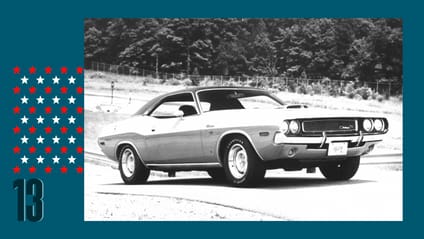
Dodge was late. The Mustang had launched in 1964, the Camaro in 1966, but the Challenger didn't arrive until 1970, at which point the pony-car boom was already fading.
Such tardiness failed to damage the Challenger’s reputation. The 1970 R/T model driven by Kowalski in Vanishing Point became one of the most iconic movie cars ever made. The looks didn’t hurt: when Dodge revived the Challenger in 2008, they barely changed the shape. Some compliments don't need words.
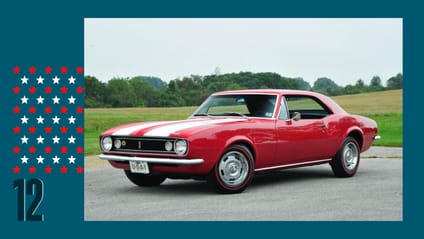
When the press asked Chevrolet what a ‘Camaro’ was, the official answer was that it was an old French term for camaraderie and friendship. Some GM executives, however, told journalists it was “a small, vicious animal that eats Mustangs".
Chevrolet had been blindsided by the Mustang in 1964, and spent two years in a flat sprint to build a response. The mandate from the top was to beat the Mustang in every dimension: longer, lower, wider, faster, better-handling. When the Camaro arrived in September 1966, most agreed they’d nailed the brief.
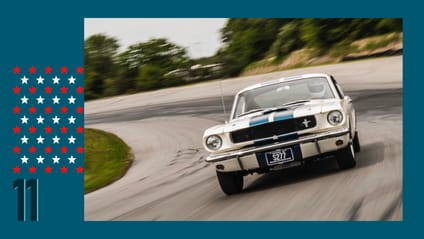
In 1964, Ford needed a racing version of the Mustang, so they called Carroll Shelby. Shelby needed a name for it. In a meeting where nobody could agree on anything, he turned to his shop foreman and asked how far it was between their race shop and production shop. The answer? Roughly 350 feet. “That's what we'll call it,” Shelby said. “The name wouldn't make the car, and if it is a bad car, the name won't save it.”
Only 562 GT350s were built in 1965, all in Wimbledon White with Guardsman Blue stripes. The rear seats were removed and replaced with a spare tyre to qualify the car as a two-seat sports car under SCCA rules. With 306hp and crisp handling, it won the SCCA B-Production championship three years running. Six decades on, that arbitrary GT350 name survives.
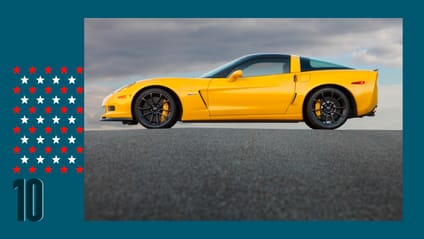
The C6 Corvette Z06 cost around $65,000. In 2006, GM's own test driver Jim Mero lapped the Nürburgring in 7:22.68, a time that put it ahead of Ferraris, Lamborghinis and Porsches costing two, three, even four times as much. Some bright spark worked out the cost-per-second of those ‘Ring lap times: the Porsche Carrera GT came in at roughly $1,000 per second. The Z06 was $162.
The V8 responsible - the 505hp, naturally aspirated 7.0-litre LS7 - is still regarded as one of the greatest American powerplants. The whole car weighed under 3,200 pounds. At $65,000 it was, by almost any measure, the greatest performance bargain in the world.
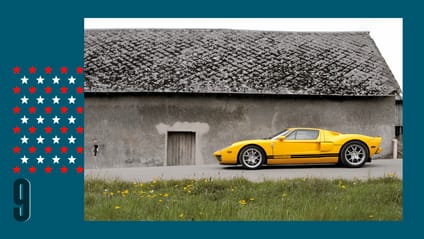
Ford wanted to call it the GT40. They couldn't: a small Ohio company owned the trademark and wanted $40 million for it. So the production car was simply called the GT. It was also four inches taller than the original, which had been named for its 40-inch roof height. The GT stood ten centimetres or so higher, a concession to the fact humans have got somewhat longer since the Sixties.
Even so, with a 550-horsepower V8 and manual transmission, the GT was a mid-engine ripper. When the first production example was auctioned at Pebble Beach in 2004, it sold for $557,000, four times the $140,000 list price.
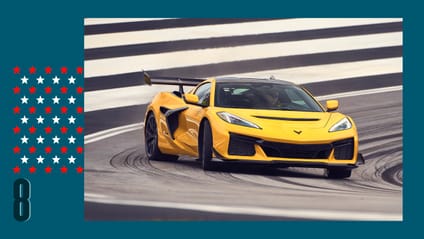
In 1957, a Corvette competing at the 12 Hours of Sebring had to retire twenty-three laps in because the driver's feet were being cooked by the front-mounted engine. Corvette engineer Zora Arkus-Duntov decided then and there that the engine needed to be behind the driver. He spent the next four decades building prototypes and concept cars to prove it. He died in 1996 without ever seeing a production mid-engine Corvette.
The C8 finally arrived in 2020, immediately proving Arkus-Duntov may have had a point. The ZR1 version, launched in 2025, produces 1,064 horsepower from a twin-turbocharged 5.5-litre V8. And all without cooking its driver’s feet.
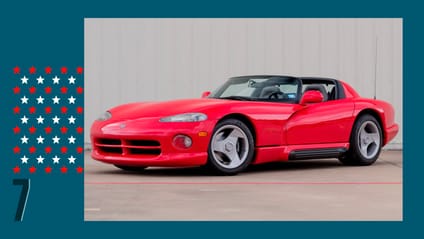
In 1988, Chrysler vice president Bob Lutz wanted to build a modern Cobra. Chrysler happened to own Lamborghini at the time, which turned out to be handy: the V10 engine Dodge had in mind was a cast-iron truck unit weighing nearly 900 pounds. Lamborghini engineers redesigned it in aluminium, shed hundreds of pounds, and produced 400 horsepower from 8.0 litres.
The Viper that arrived in 1992 was a sketchy, terrifying, bare-bones sports car with no air conditioning, no airbags, no traction control, and no exterior door handles. There were, at least, enormous side exhausts that would burn your legs if you forgot they were there stepping out. Scorching in every sense.
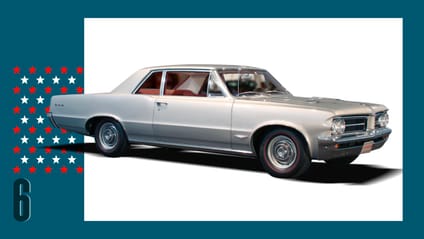
GM had banned its divisions from racing in 1963. Pontiac’s response was to bring the race to the street. Engineer John DeLorean (yep, him) and colleagues stuffed a 389 cubic inch V8 into the Tempest LeMans body. To get around a GM rule limiting engine size in smaller cars, they cunningly offered it as an option package rather than a new model. The bosses approved a production run of 5,000. Pontiac sold 32,000 in the first year.
When Car and Driver tested the GTO in March 1964 and declared it the fastest car in America, they didn't know that Pontiac's marketing man had quietly swapped in a 421 Super Duty engine – one considerably more powerful than the GTO’s standard 389 – before handing over the car. The true story only emerged years later. By then it didn't matter. The GTO legend was cemented.
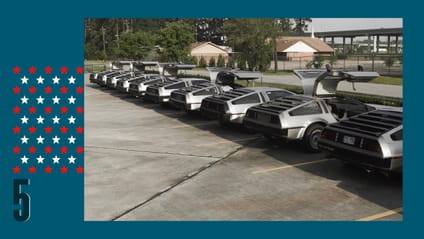
John DeLorean (him again) dreamed of building a stainless steel sports car. For the design, he went to Giorgetto Giugiaro. For the chassis, he hired Colin Chapman of Lotus. For a factory, he took a $120 million offer from the British government, who were desperate to create jobs in Northern Ireland during the Troubles.
What rolled out in 1981 had gullwing doors, a brushed stainless steel body that never needed painting, and a wheezy 130 horsepower from a Renault V6. The DMC-12 was beautiful, slow, and doomed from the get-go. Only about 9,000 were ever made before DeLorean was arrested by the FBI in a drug-trafficking sting. The company soon collapsed. Then Back to the Future came out, and none of the rest of it mattered.
Can we really call it American? Well, John DeLorean was from Detroit, so we’ll take it, thank you very much.
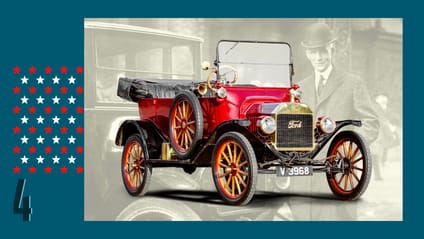
In 1908, it took Ford’s workers twelve hours to build a single Model T. By 1914, after Henry Ford introduced the moving assembly line, it took ninety-three minutes. The price fell accordingly: from $850 at launch to $260 by the mid-1920s.
The Model T proved a complex machine could be built faster, cheaper and more consistently than anyone had previously imagined. Every modern car factory on earth still runs on the principle Ford demonstrated at Highland Park in 1913. By 1918, half of all the cars in America were Model Ts. Ford kept the colour black for most of the production run, as black paint dries quickest. Production ended in 1927 with 15 million cars produced.
In 1999 the Model T was voted Car of the Century. It was the automobile that created the modern automobile.
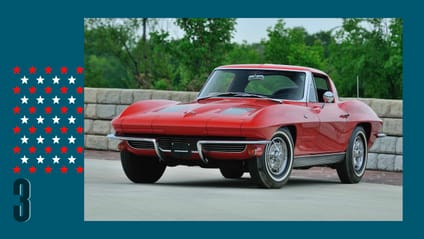
The split rear window on the 1963 Corvette Sting Ray existed because GM design chief Bill Mitchell wanted a single line to run uninterrupted from the nose of the car all the way to the tail, like a freshly pressed trouser crease.
Corvette chief engineer Zora Arkus-Duntov (him again) considered this insane, pointing out that the split blocked rear visibility. The two men fought, Mitchell won, and the split window appeared for the 1963 model year. Much of the press hated it. Customers complained. Some dealers replaced the windows with single-pane glass before delivery. Arkus-Duntov won the argument for 1964, and the split was gone.
Naturally, the split-window is now the single most collectible Corvette body style ever made. True art defies logic.
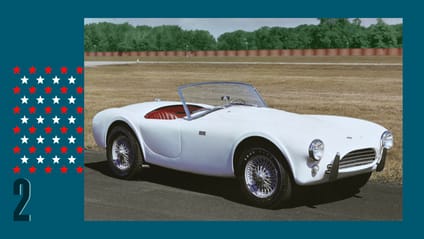
Carroll Shelby's idea was simple to the point of genius: take a lightweight British sports car body, stuff the biggest American V8 that would fit inside it, cling on for the ride. What emerged was the Cobra, a car so quick that, according to the Guinness Book of World Records, it held the title of world’s fastest production car from 0 to 100mph and back to a standstill for twenty years. The all-wheel-drive Porsche 959 finally beat it in 1986. The Cobra had been built two decades earlier.
The Cobra’s 427 cubic inch V8 produced 485 horsepower in competition trim, and sat in a car weighing around 2,500 pounds. It had no traction control, no electronic aids, no concessions to comfort or common sense. It remains one of the most replicated cars in history, which is either testament to its greatness or testament to how few originals survived unscathed.
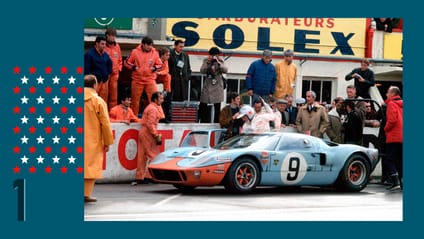
The story is well-told. In 1963, Henry Ford II tried to buy Ferrari, only to be rebuffed by Enzo Ferrari at the last minute. Ford's response was to build a race car and beat Ferrari at Le Mans. It took three attempts and cost a fortune. In 1966 it worked: Ford GT40s finished first, second and third.
What the history books mention less often is what happened in those final laps. Ken Miles, the British driver who had effectively won the race, was asked by Ford's PR team to slow down so all three cars could cross the line together for a photograph. Miles did as he was told.
But because the car of his team mate Bruce McLaren had started further back on the grid, it had technically covered more distance over 24 hours. McLaren was declared the winner by eight metres. Miles, who would have been the first driver ever to win Daytona, Sebring and Le Mans in the same year, finished second. He would die two months later testing a GT40 prototype. But at least Ford got its picture.
Get all the latest news, reviews and exclusives, direct to your inbox.