



25
This story was originally published in the September 2007 issue of Top Gear magazine
You always know you’re in a good car when the photographer asks to get out, and in a decent fast car on a mountain road it usually takes about a dozen corners. The new M3 required just three and a short straight. “I’m not being funny,” said Lee in an almost pathologically calm voice, “but would you be offended if I got out and you did this bit of road on your own?”
“Why?” I asked, snatching third and flailing desperately to stop the car entering a pine forest on its carbon-fibre reinforced plastic roof.
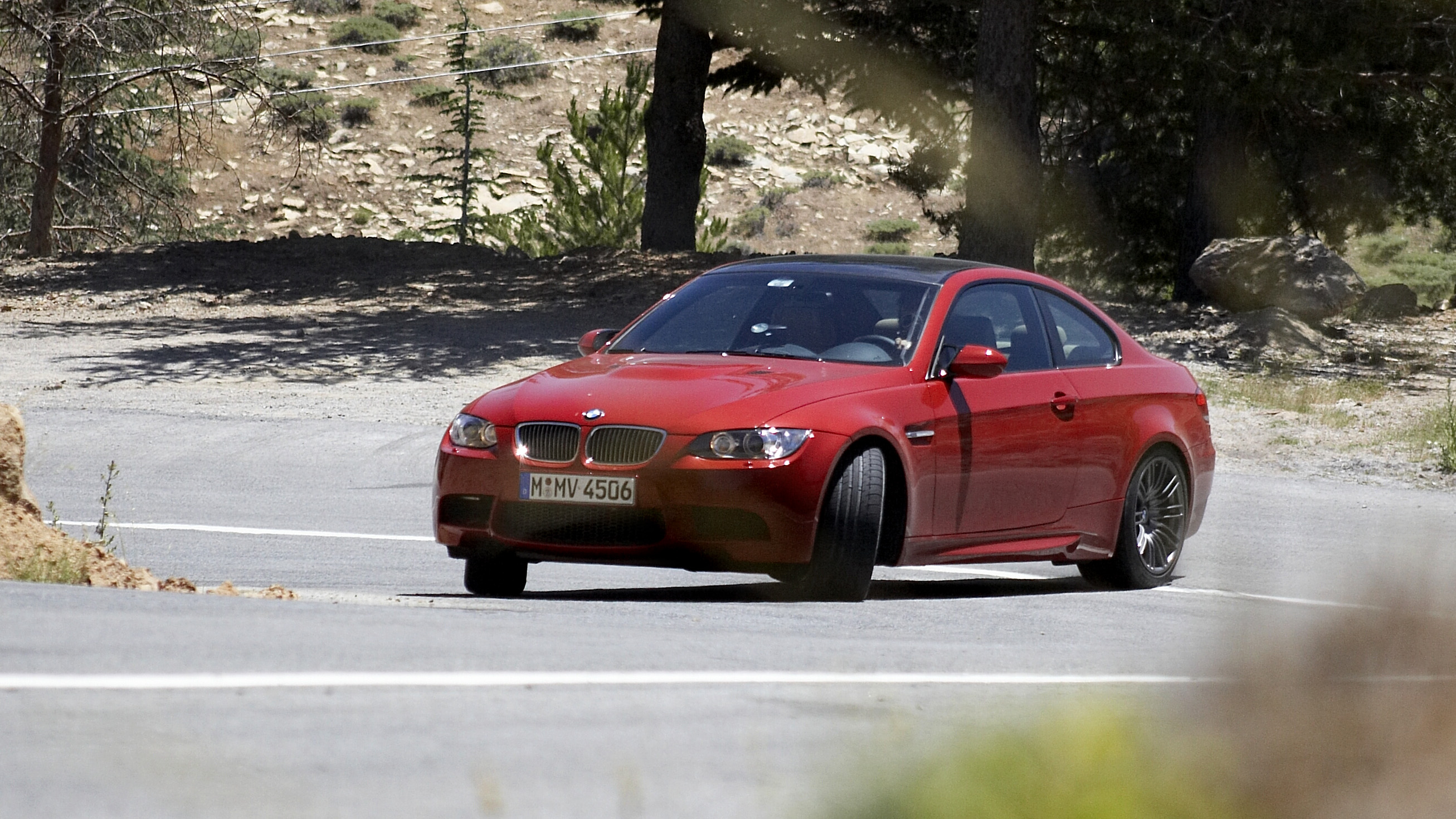
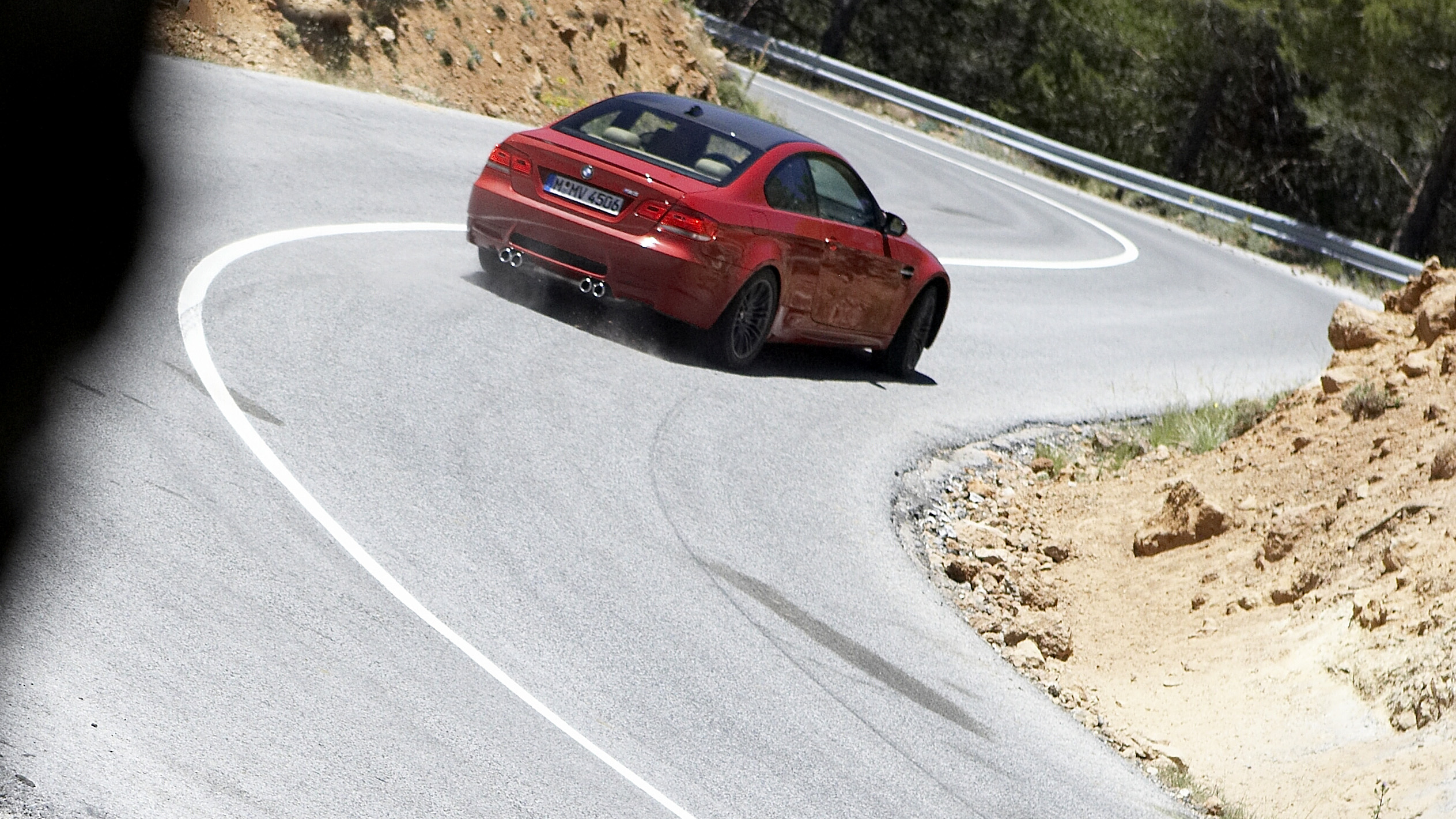
“Because I’m going to be sick,” said Lee. And so it began. A new BMW M3 driven over a seemingly deserted Spanish Sierra Nevada, in sunshine hot enough to warrant losing a few bhp to full-bore aircon, glare strong enough to sear retinas from the laser-flash of a setting sun, and rocks sharp and hard enough to make sure that we’d make a very pretty fractal should I take too much interest in the view. A car so consuming that, when we eventually reached the top, I found myself massaging my forearms and with a knot of muscle between my shoulder blades you could rig a mast with. After 10 minutes, I drove back down, only slightly more gingerly, just so that I could do it again.
At this point it’s probably fair to say that the cat is well out of the bag and wandering off looking to score some catnip; the new M3 is properly impressive, in almost every respect. But that much you might have guessed. The surprise is how BMW’s people have M-powered this car, because it’s not the car you were expecting. Sorry, I’m getting ahead of myself: first, let’s explain some of the stuff that you’ll completely ignore once you get into the driving seat.
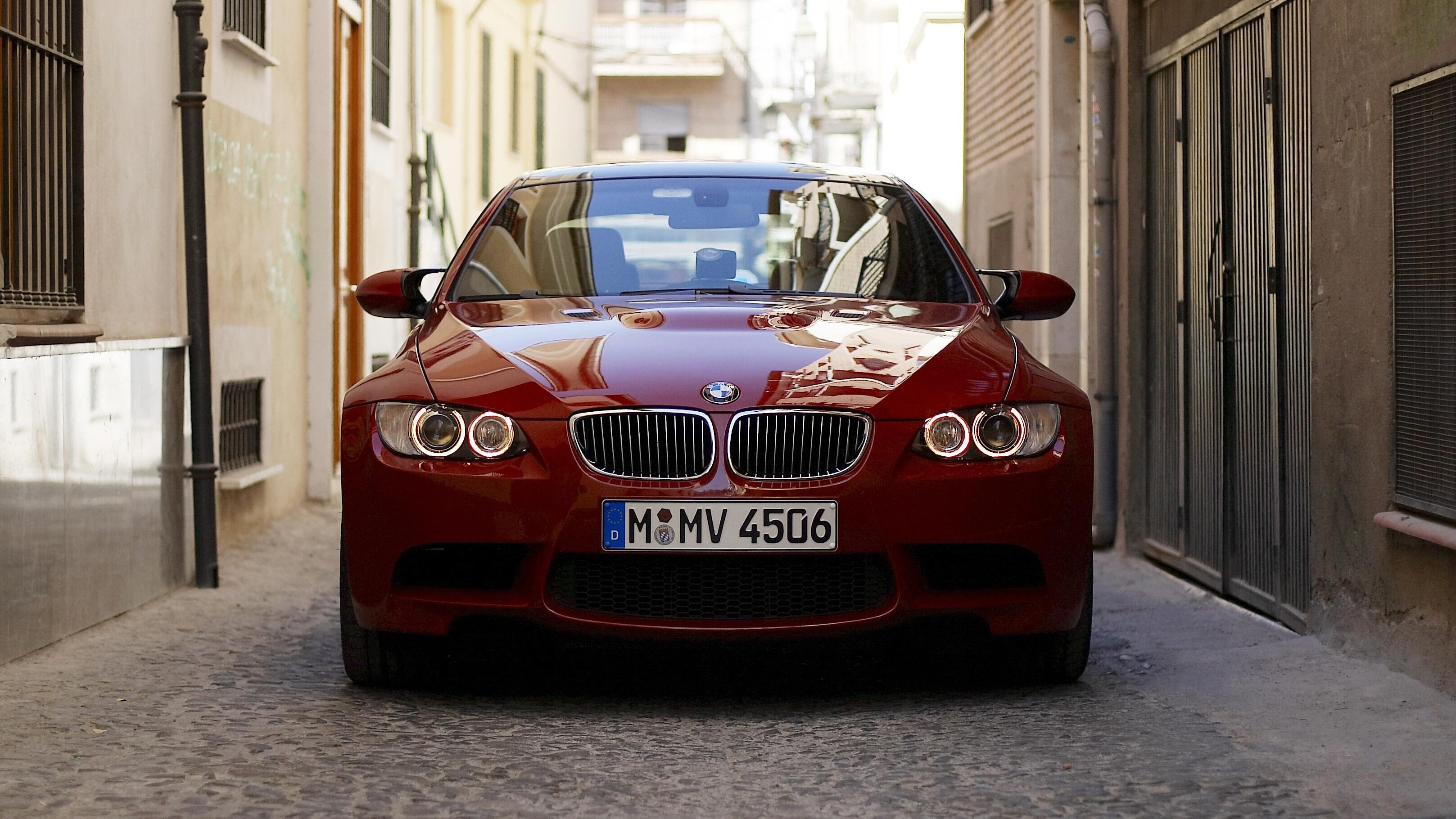
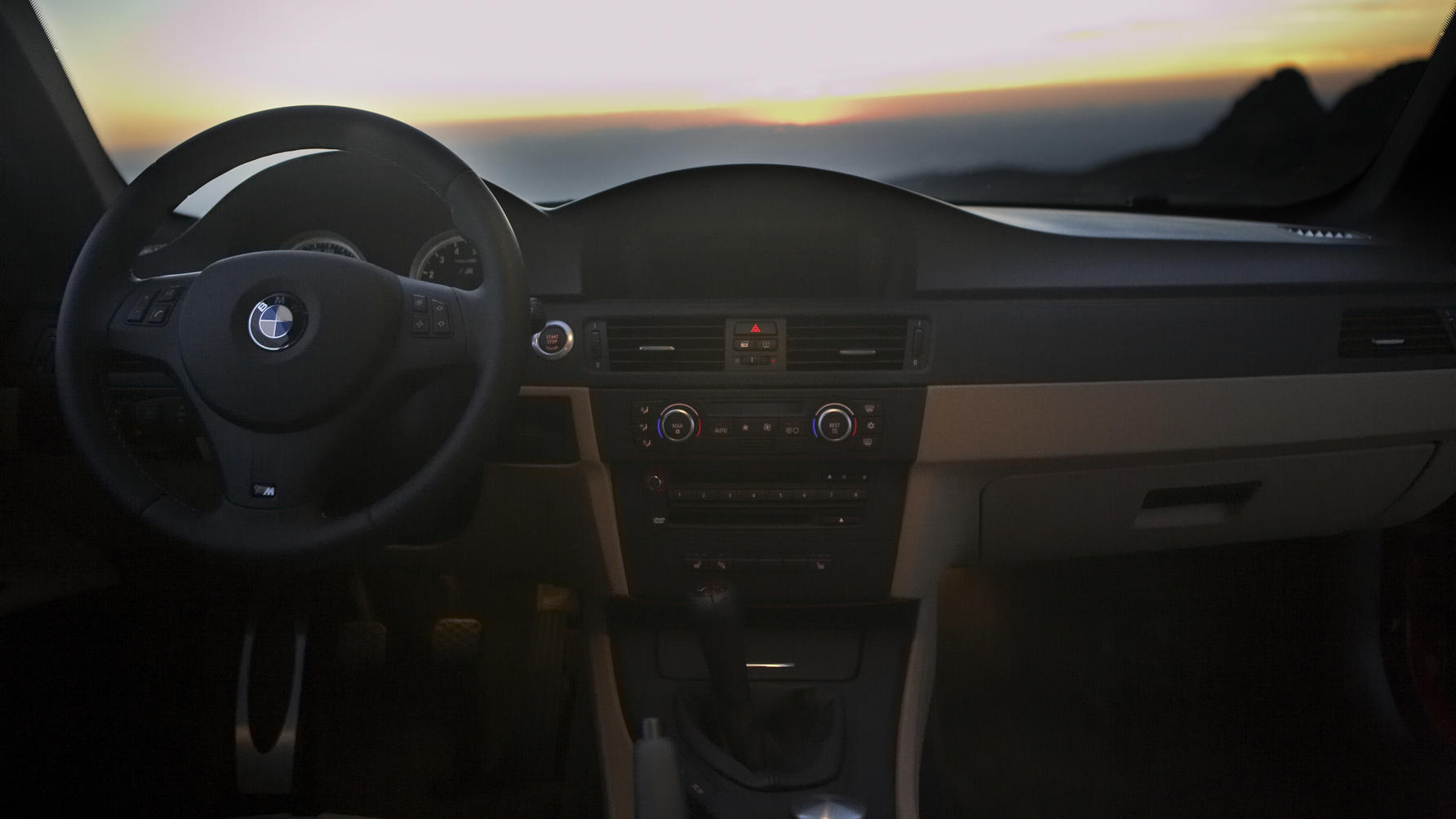
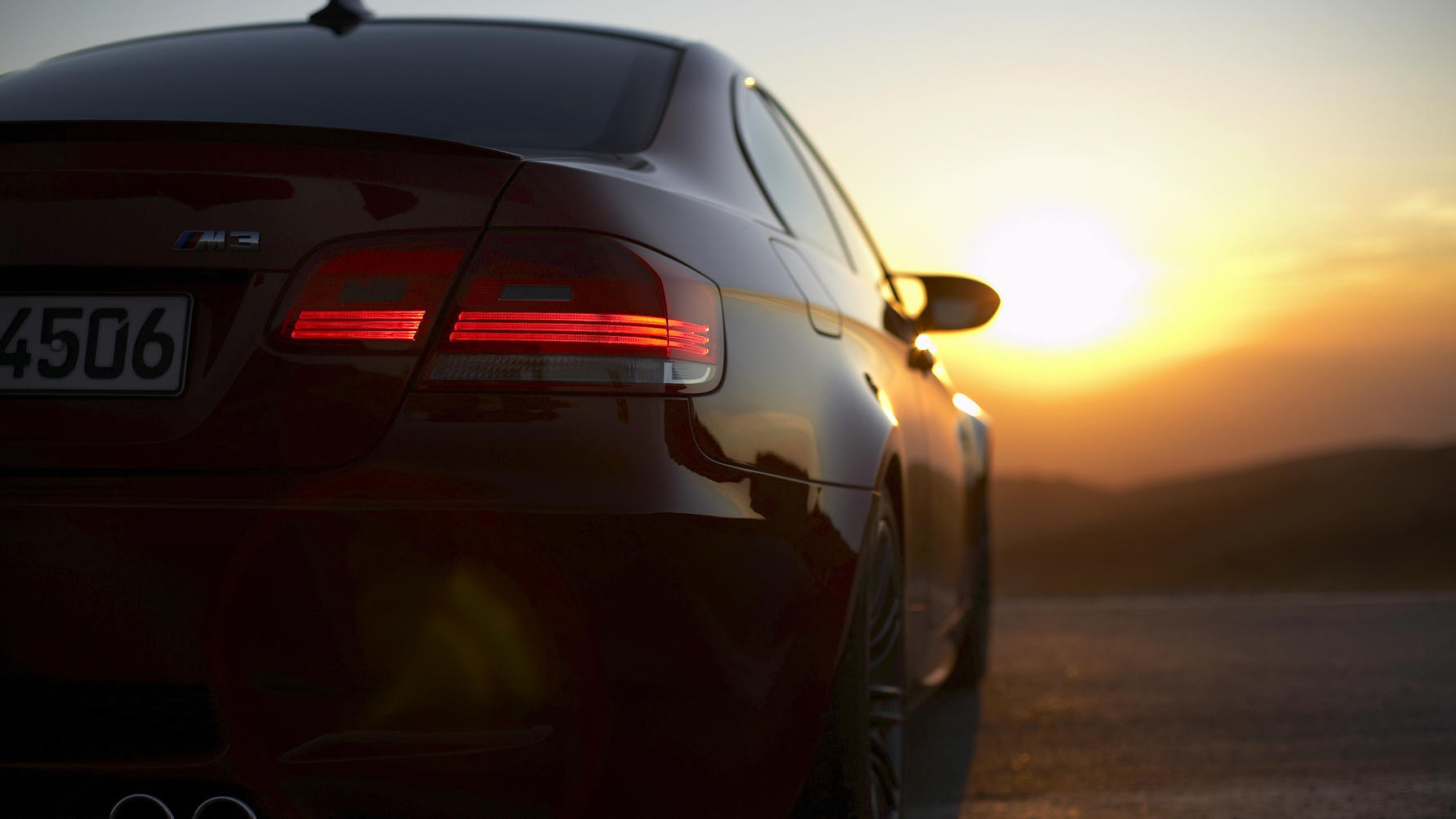
First up, forget de-badging a 335i Coupe and adding some wheels, ’cos it will not look like a new M3, even if you squint. Only the doors, bootlid and glass remain the same. Most obvious changes are the bonnet, with that square bulge and attendant pair of vents, the black carbon-fibre reinforced plastic (CFRP) roof and the black 18-inch wheels. Underneath, the car is pretty much flat and nearly all enclosed to smooth out the airflow, bits lightened and strengthened to keep weight down to a respectable (for a four-seater) 1,655kg. It’s pretty aggressive, full of detail, but not overblown. The cabin feels like it could have done with a bit more of something, but at least it’s comfy and driver focused.
Basics covered? Right. Here’s the good stuff.
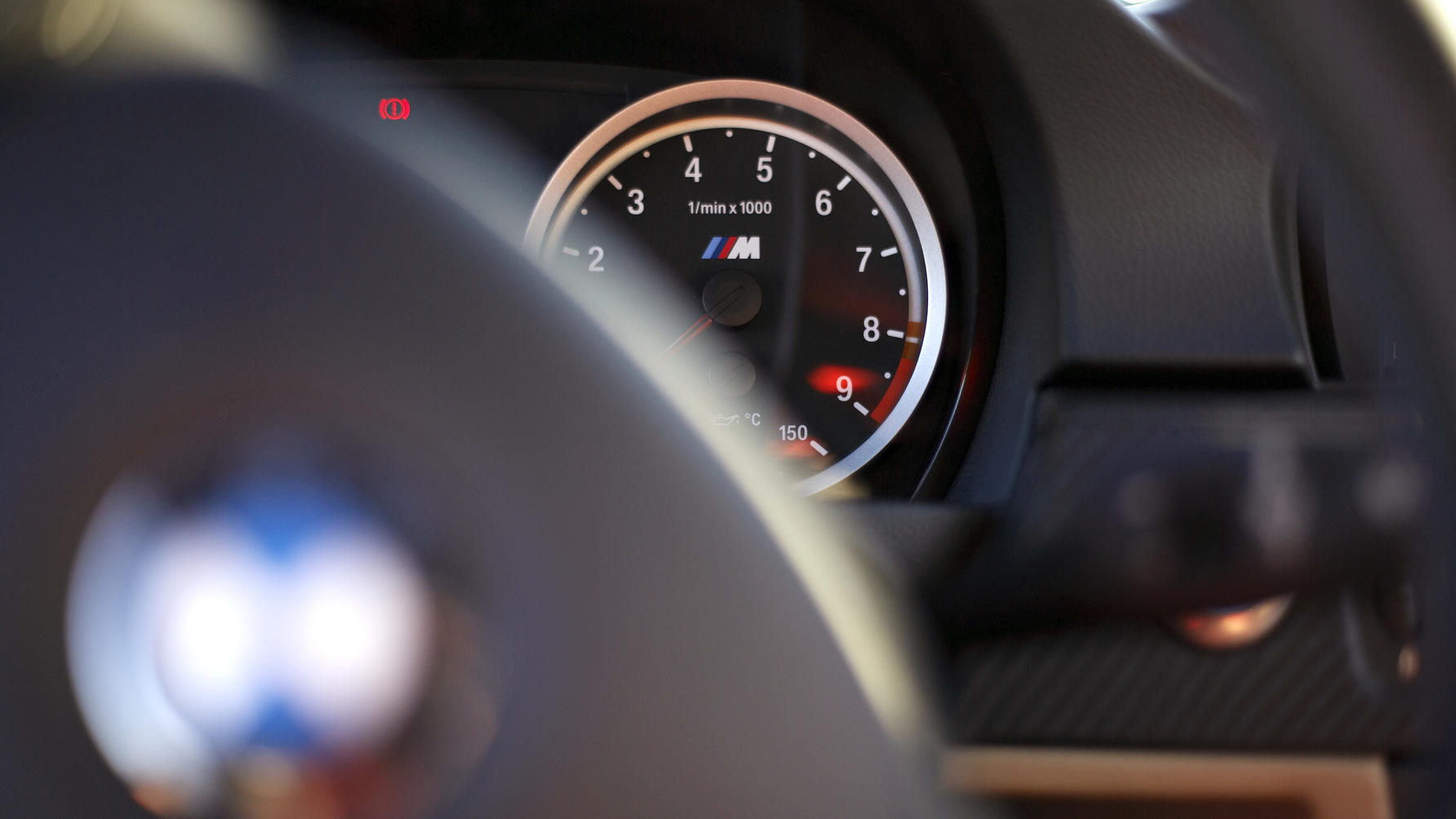
The engine is the heart, soul and lungs of the M3 – the reason this car elevates itself into its own little niche. A 90-degree V8 (essentially an M5 V10 with the end two cylinders lopped off), producing nearly 420bhp and redlining at 8,400rpm. Sounds like a lot of revs, doesn’t it? Well, this is an engine that Ferrari would be proud of, except that Ferrari would never have managed to create an engine like this, because someone overdosing on industrial strength espresso would have gone out to buy a packet of cigarettes halfway through the build and forgotten to put the spark plugs in. This is an engine that is precision itself, tyrannical perfection. This is an engine that could only have come from Germany.
The basics are that it is a 4.0-litre V8 with the M-Power trademark 100bhp-per-litre and some exceedingly trick internals to help it achieve hugely addictive high-revving and linear performance. You should see the power and torque curves – the power simply hoicks up in a Space Shuttle gentle-fade trajectory and the peak torque masses relatively late at 3,900rpm, but then stays like a tabletop all the way through the rev-range.
Get all the latest news, reviews and exclusives, direct to your inbox.
A total of 295lb ft isn’t a breathtaking amount, but when you realise that 85 per cent of it hangs around for a full 6,500rpm cycle, you start to build a picture in your mind of an engine that feels responsive everywhere. There’s a distinct lack of a peaky, cam-reliant powerband that suddenly twangs into life at the top of the rev-range – this is an engine that just builds and builds. Not in the same big-capacity way that the twin-turbo Mercedes units do, all shoulders and prop-forward bulk, but in a more frenetic, light-footed, racy way.
The technology is right up there with M5 levels of over-complication, but with a seemingly less involved presentation. Stuff you don’t see includes spark plugs used as sensors to monitor the conductivity of the fuel/air mixture, work out how optimum it is using complicated maths, then make adjustments accordingly to prevent any kind of misfire or engine knock. The fact that each 500cc cylinder has its own throttle butterfly to make sure response is as instant as thought, variable double-Vanos fiddling the camshaft and valve timing along the way, is something you appreciate only when you really start to push.
There’s even a double wet sump system that uses an industrial-grade oil pump to make sure that even when you’re trying to tear the tyres off, the engine won’t starve of oil, and I won’t even mention that it uses brake-regeneration to remove some of the electrical load from the engine, freeing up more power. Because that would upset people who care for the environment, by making them think we were perverting green technology for our own ends. Which would be bad, of course.
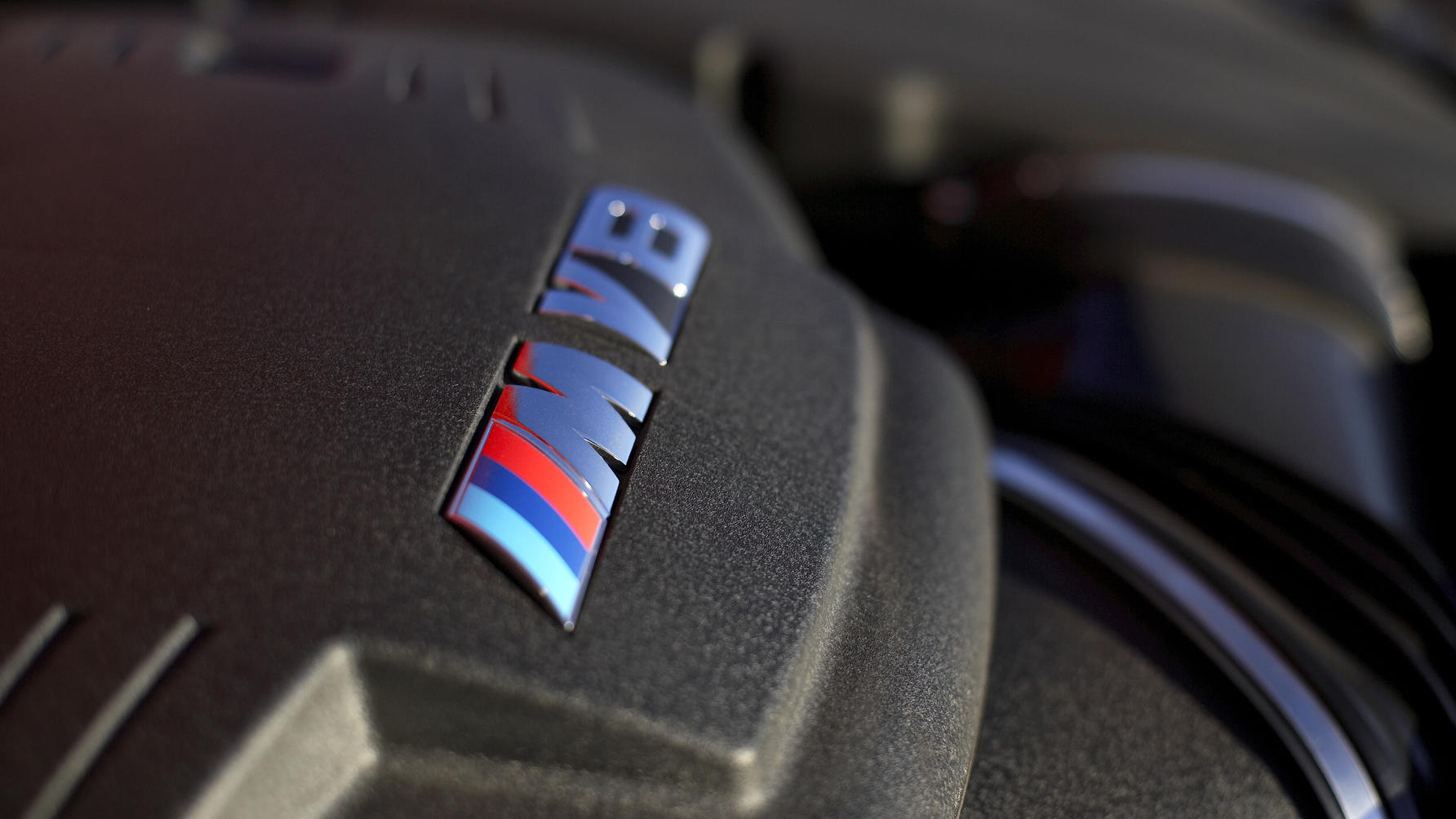
Some of the other good stuff is just plain old physics rather than fancy engineering. The engine itself is 15 kilos lighter than the old straight six, the use of plenty of aluminium-silicon alloy more than offsetting the addition of the extra cylinders, and everything is tucked and packed just so. It’s a neat thing, very square, and when you lift the bonnet you realise the reason for that bonnet bulge and the lengths that the M division will go to get the car properly balanced. The block sticks out in line with the base of the windscreen – albeit well back in the engine bay – as the rest of the bodywork drops away.
It’s not just the engine that gets the industrial-grade nerdiness, either. Like the M5, you can adjust most of the parameters of the M3’s delivery. The damping can be altered to one of three settings via the EDC (electronic damper control), the throttle map can be changed, the servotronic steering adjusted and the traction control tweaked. You won’t be able to alter how fast the gearbox changes, because this time it’s down to you; yup, the M3 gets an SMG soon enough, but for now it’s furnished with a good old-fashioned six-speed manual. And it does feel a little bit old-fashioned, to be honest. I’d prefer the SMG from the CSL. But maybe I’m just an early-adopter.
Of course, after you’ve fiddled for a while, you set the iDrive with your favourite settings which are then all remembered by the ‘M’ button on the steering wheel. One thumb twitch and you’re looking at whatever you’ve programmed it with – in my case everything with cheese, traction control on the side.
Thing is, even when everything is set to turbo-nutter mode, the car is very predictable – BMW has gone for balance. Insanely fast balance, true, but balance nonetheless. The reason being that when you point it at a tightening hairpin at an entirely unreasonable 45mph and throw in some inelegant mid-corner braking, the M3 reacts exactly as you expect it to. And not in the sense that it flicks you off into the rocks like a big red tiddlywink. I know this, because despite my better nature, I keep doing it on these sweeping Spanish mountain roads and the car isn’t in several large and indeterminate pieces.
It’s almost comically perfect; do it right and you’ll get understeer, then neutrality shading to oversteer if you feed in the power, just like it should be in the Big Handling Instruction Manual. Be the hooligan that the M3 wants you to be and you end up arriving way too quickly and turning in too late. Then you get understeer that can be cured by a) backing off a bit or b) prodding the throttle like you’re having some sort of man-tantrum, or ‘mantrum’ as I’ve just decided to start calling them.
Course of action a) is safer, but less fun. While b) is what I assume they mean by ‘steering on the throttle’. The thought process goes a bit like this; ‘aaargh, too fast, too much, facing the wrong way. Prod. Twirl. Oh. Oh, cool. Let’s do that again.’ of course, you actually have to be going a bit too fast for comfort to get it to do this in the first place, but it’s a trick well worth discovering if you’re ever at a racetrack. Doing it on a mountainside with a 1,000m drop off one side would just be silly...
The brilliant thing is that the Sierra Nevada consists of one big road, the A395, that thrusts up to the top of the mountain like an enormous demented race track built specifically for a car like the M3. The main road is wide and smooth and very, very tempting. But it’s the little offshoots that offer the biggest tests, because they haven’t got people on them and they’re bumpy and oddly-cambered and generally less amenable to mistake-making. They punish the M3’s initial understeer with sandy, gravely margins – put a boot wrong here and there’ll be nothing you can do but pucker up and prepare to get intimate with the airbag.
And they are twisty. Intricate and complicated like big swathes of Norwegian coastline shrunk to fit on a mountain. And they get addictive. The M3, with 8,400rpm to play with, only really ever uses second and third, with brief forays into fourth on some of the straighter bits. It always feels like a saloon, so you have to work with the weight, but never feels like it isn’t on your side. Where the old M3 felt like it had something in reserve, this is a scarily-quick car that is somehow friendlier.
If you like your friendly with teeth, that is.
It’s not a surprise to hear that on roads like these, brakes take a complete hammering. Every section requires huge acceleration followed by lobbing out the anchors ready to take second or third gear bends. Weirdly, the M3’s stoppers never break even a significant sweat, and take an absolute age to get warm, squeaking like someone lawn-mowering a mouse village. We later find out that BMW has fitted competition pads (noisy as hell, but brick-wall effective with temperature), so judgement on the road-going system will have to wait.
Of course this emphatic and gratuitous use of the full rev-range means that you get the full aural from the V8 bouncing randomly from the rocks of the Spanish countryside, and it’s a remarkable sonic experience. It revs way past the point where you’ve reached-and-hesitated for the next gear – so far in fact, that you end up putting your hand back on the steering wheel. It could do with a proper race car rev limiter though – I’m not keen on the soft version. But when you really stretch, it warbles, then grunts, then screams. Totally unlike the metallic, slightly oil-less sounding wail of the old straight-six – and I’m not even saying it’s better – just different. Saying that, it has a vocal range that would leave Mariah Carey popping an eyeball.
But amongst all this you’ve got a stiff car that rides quite well, potters nicely, deals with the day-to-day. It isn’t the most hardcore car BMW could have made. For me though, that’s the best thing about it; its real accessible speed. What is an open-handed slap of performance closes into a fist when you stab the ‘M’ button on the steering wheel and concentrate – it delivers on the fun factor from two perspectives. BMW has said that the likelihood is very high of a CSL version and you can see where that car can take up the slack in the standard car – though I doubt a super-focussed track saloon will be to everyone’s taste – there’s a bit of a false start in there for me in the first place.
It remains that the M3 is a very special car. A car that can be driven by the legions of rich people who just want the top-spec 3 Series. A car that can be driven without making anyone sweat enough to make their fake tan run. But it’s also a car that’s furious enough to make you realise that when it comes to making fast saloon cars, BMW really know what they’re doing. Bring on the group tests, bring on the awards discussion meetings – I’ll bring the M3.
Photography: Lee Brimble
Get all the latest news, reviews and exclusives, direct to your inbox.
