



25
CYBEX is rethinking child safety with pioneering airbag technology
Blink and you’ll miss it. We nearly did.
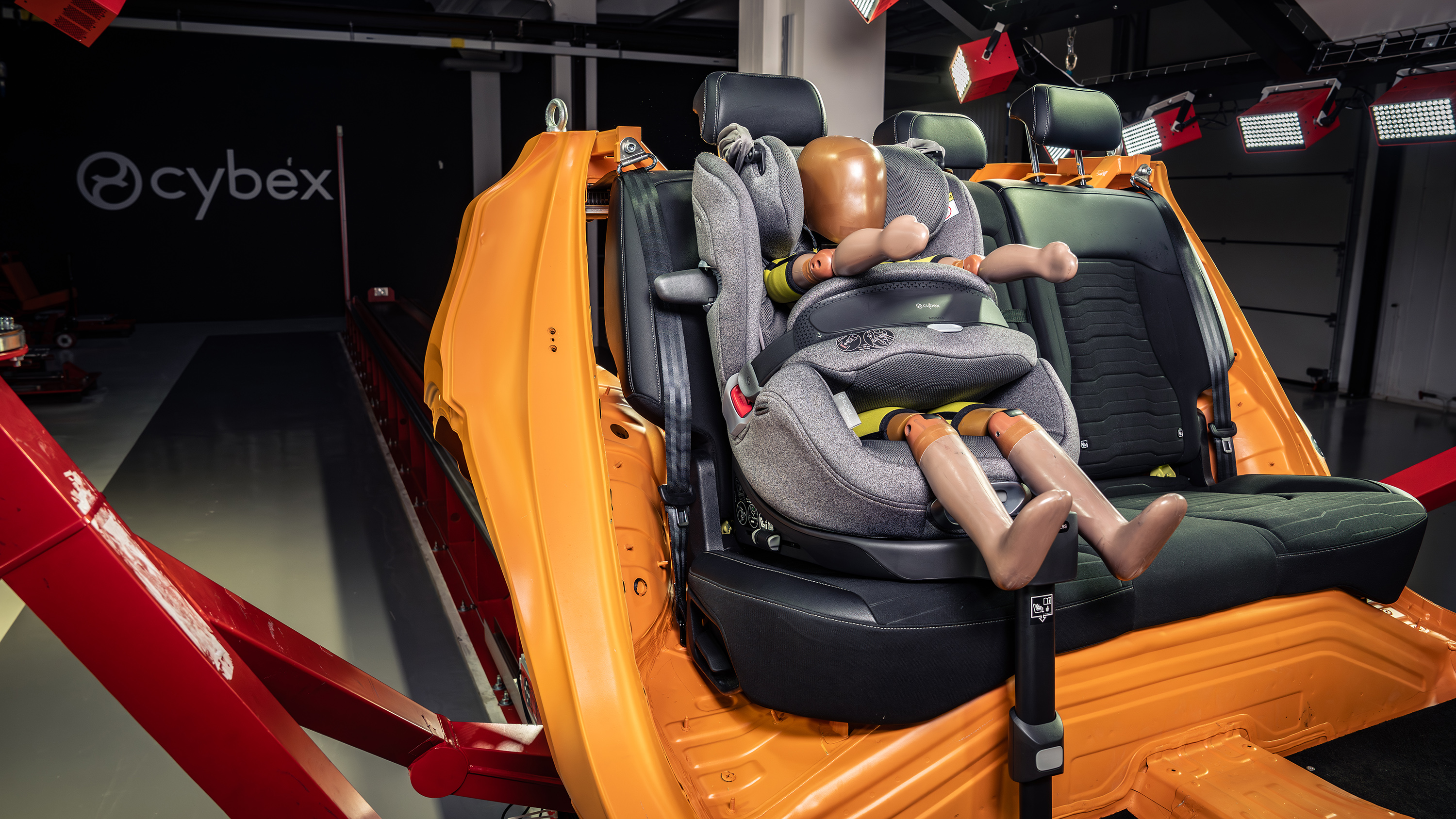
Inside CYBEX’s multi-million-euro crash-test facility in Bayreuth, Germany – the sort of place that’s understated from the outside but deeply fascinating and secretive within – a faceless child dummy is strapped into one of CYBEX’s latest seats. It is realistically weighted, threaded with sensors and cabling, surrounded by high-speed cameras, and pointed towards a moment no parent ever wants to imagine.
Then the bright orange sled fires.
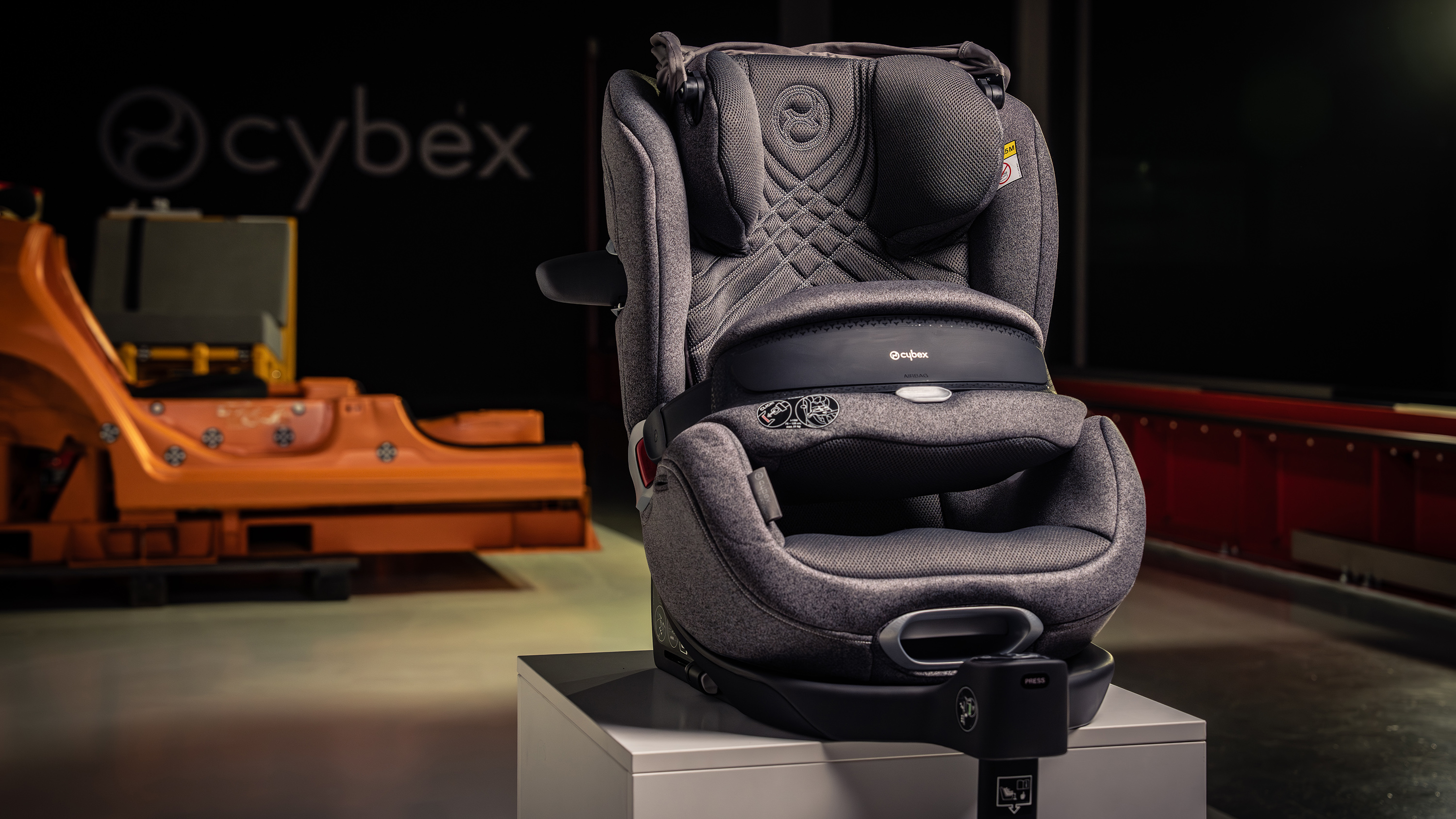
In an instant, the rig recreates the violence of a 40g crash. Forces spike. Cameras capture thousands of frames per second. And in the middle of it all sits one of the cleverest bits of child-safety kit we’ve seen in years: the CYBEX Anoris T2, part of the first-ever car seat series to feature a full-body airbag. Which tells you straight away that this is not just another piece of baby gear dressed up in soft fabrics and muted colours. This is engineering. Serious engineering.
Because if the car industry has spent decades perfecting airbags for adults – in steering wheels, dashboards, side curtains and just about every spare cavity available – then the obvious question is this: why should children make do with anything less sophisticated? Well, because it’s extremely difficult. But CYBEX has pulled it off with the Anoris T2.
Designed for children from 15 months to roughly seven years old, its standout feature is an airbag built into the impact shield in front of the child. In a frontal collision, that airbag inflates in milliseconds and forms a C-shape around the shield, helping to protect the child’s head, neck and torso while distributing crash forces across a broader area.
In other words, it is trying to solve one of the trickiest compromises in child safety.
CYBEX, like many experts, still recommends rear-facing travel for as long as possible – ideally up to the age of four – because in a frontal collision it offers excellent protection for a child’s still-developing neck and spine. But parents live in the real world, not the ideal one. Children get travel sick. Cars get smaller. Families need easier access. Some toddlers simply hate being unable to see what is going on.
That is where the Anoris concept becomes interesting. CYBEX’s airbag-equipped forward-facing design can offer protection comparable to, or in some cases better than, rear-facing seats in a frontal collision, and up to 50 per cent better safety than a comparable forward-facing seat using a conventional five-point harness.
That is a bold claim, but then this is a bold product. And CYBEX is a company dedicated to the combination of unique Design, unsurpassed Safety and quality and intelligent Functionality. This three-pronged strategy has led not only to the development of a pioneering car seat, but over 500 awards along the way.
The reason CYBEX has pursued this so aggressively is that many parents move children into forward-facing seats earlier than safety experts would like. According to research cited by the brand, a large proportion of parents put children forward-facing before the age of two – often for practical reasons rather than reckless ones. Eye contact. More legroom. Less fuss. Reduced motion sickness. More space in the car. All understandable. None unusual.
CYBEX’s argument is that if the real world is pushing many families towards forward-facing travel sooner than expected, then the answer is not to shrug and accept it. The answer is to make forward-facing dramatically safer. That is exactly the space the Anoris T2 and its airbag is trying to occupy.
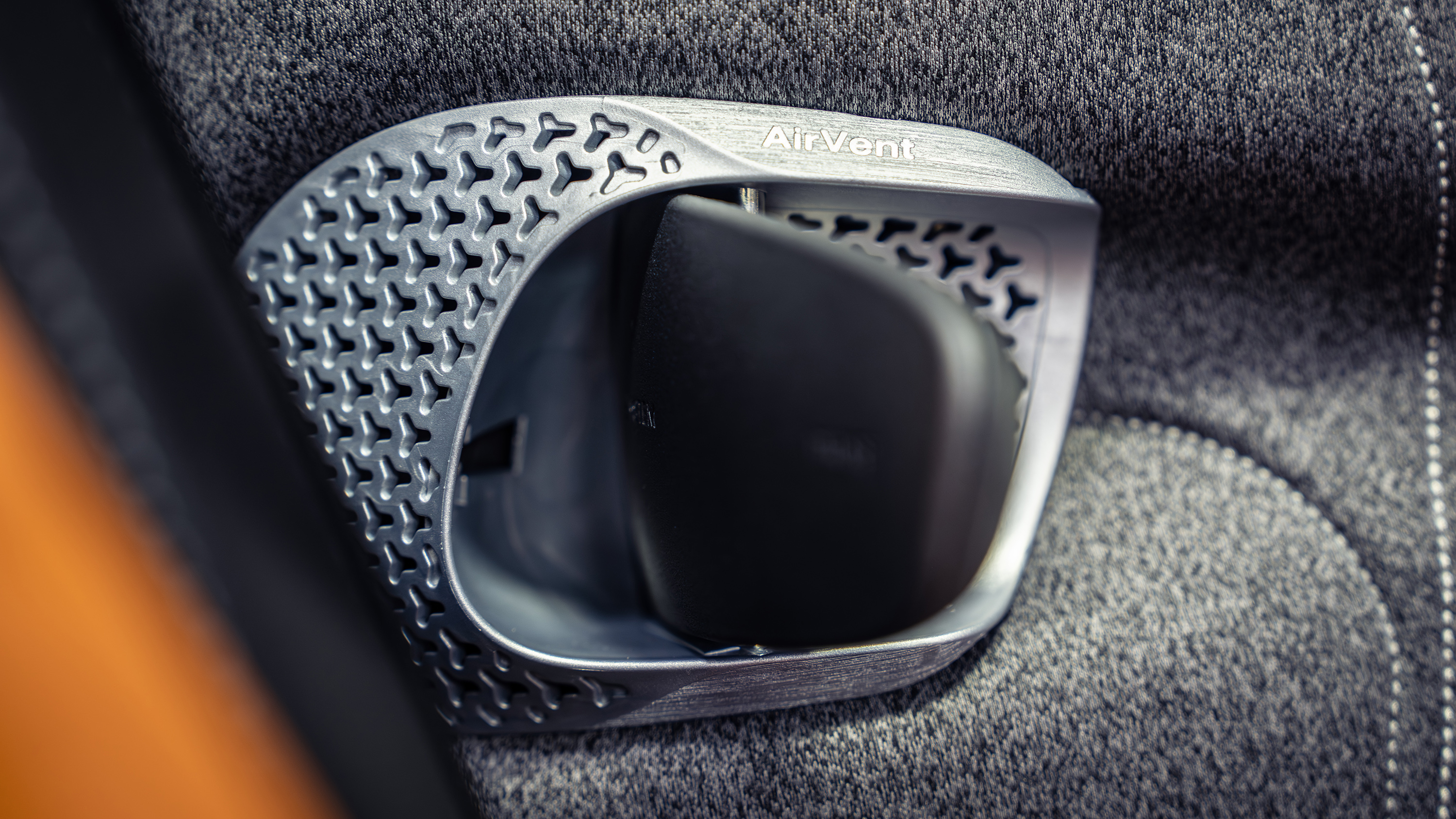
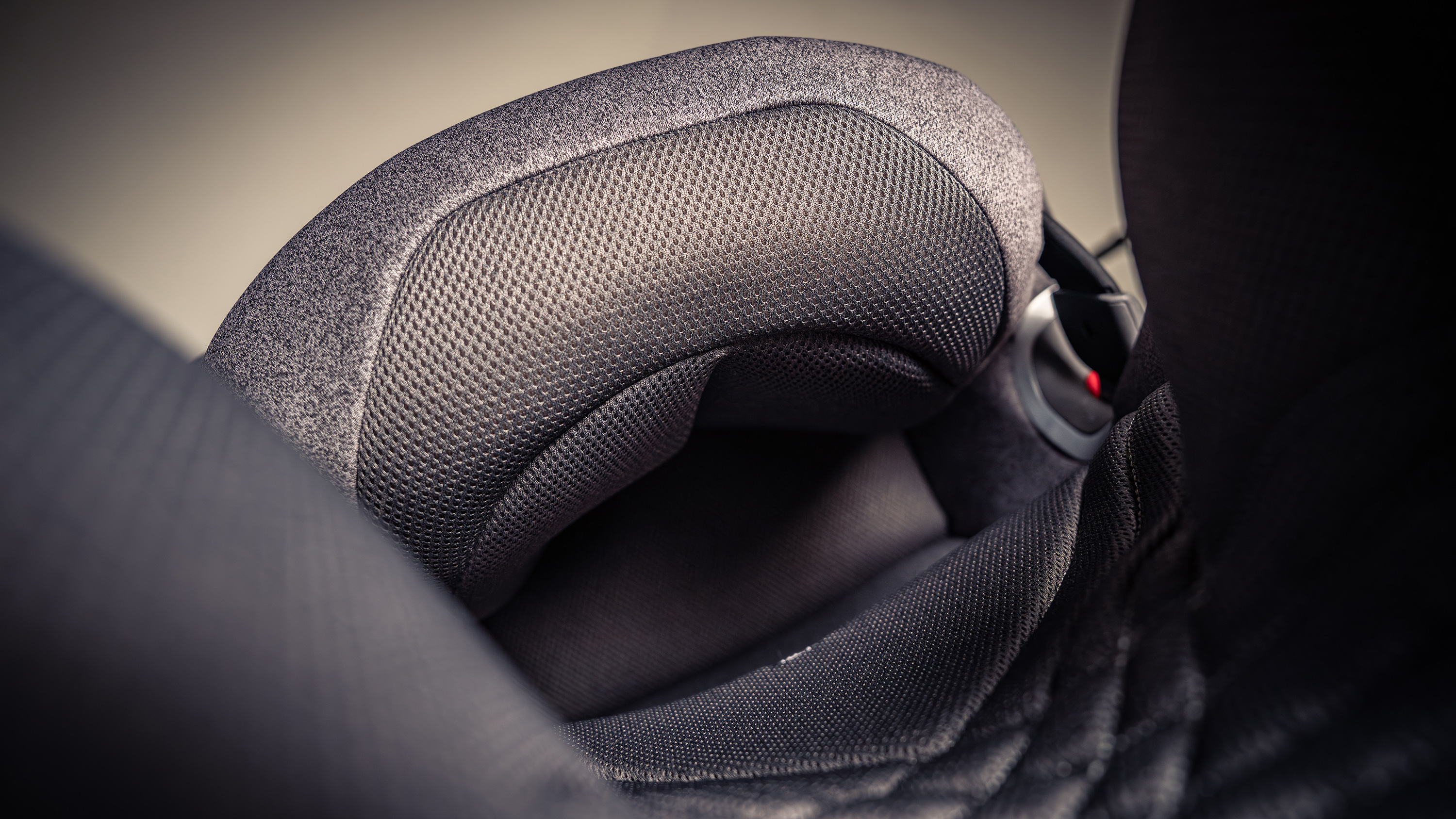
It would be easy to reduce the Anoris T2 to the headline-grabbing bit – the airbag – and stop there. But that would miss the broader point. Good safety is never one trick. It is layers. The Anoris T2 combines its airbag system with an onboard safety assistant, side-impact protection, recline functions, breathable fabrics and a design intended to make daily use easier rather than more intimidating. That matters, because even the most advanced safety system in the world is compromised if parents find it fiddly, confusing or unpleasant to use.
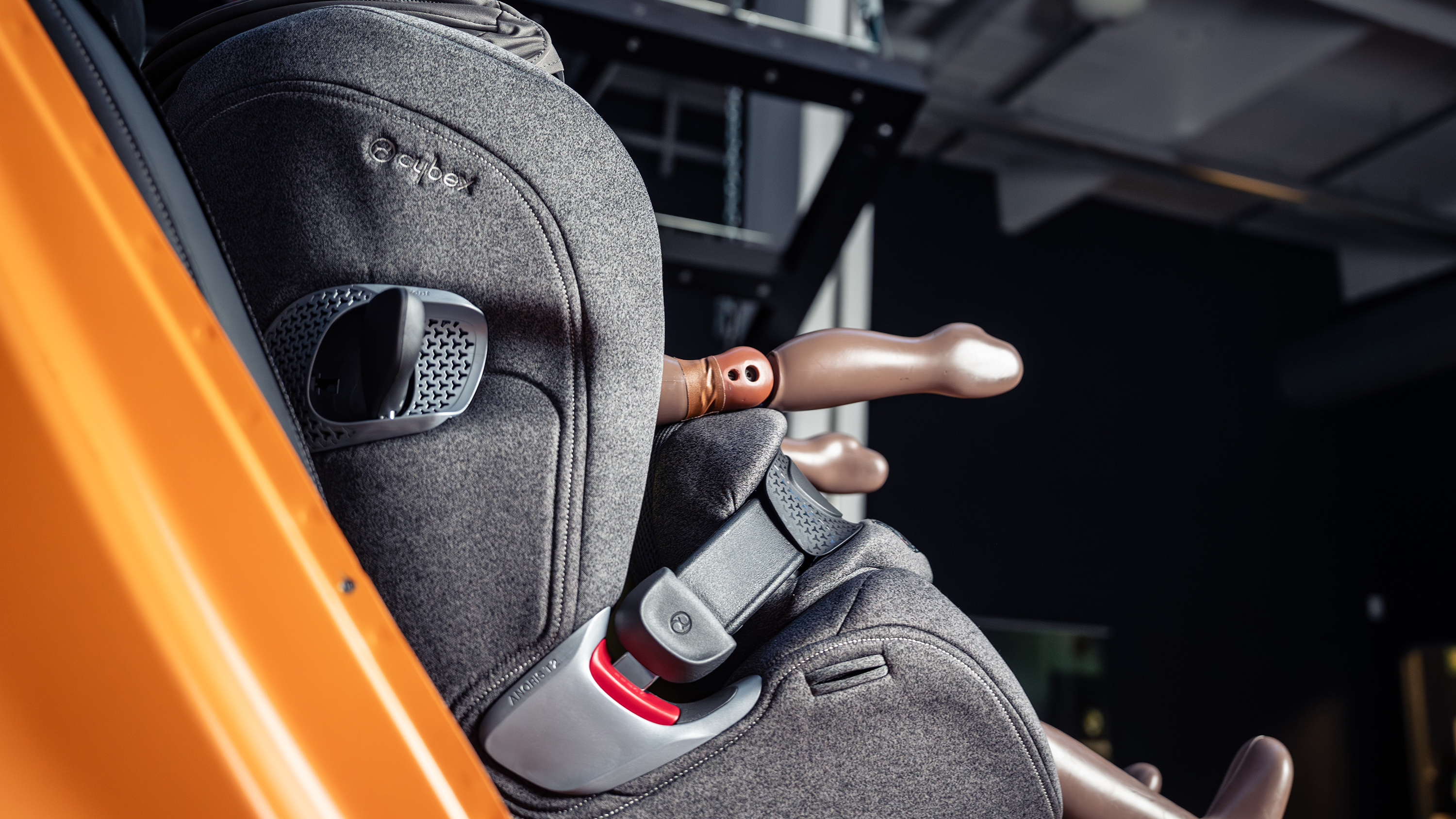
There is also Advanced Linear Side-impact Protection, designed to transfer impact forces away from the child and into the energy-absorbing shell of the seat. Side impacts may be less common than frontal crashes, but they are especially serious because there is simply less space between occupant and intrusion. The side protection can reduce forces by around 20 per cent in combination with the seat shell.
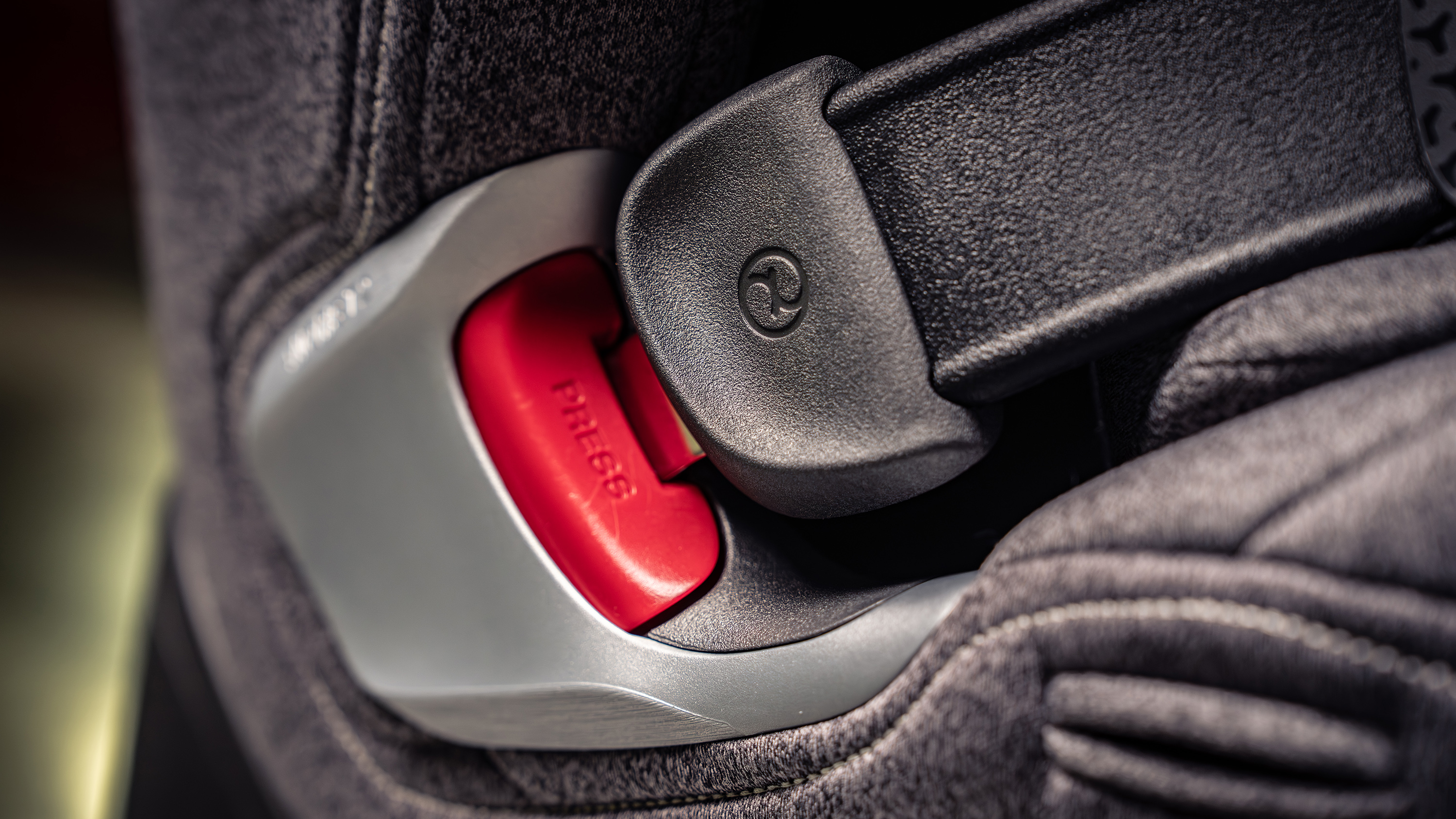
Then there are the details parents will appreciate at 7am in a supermarket car park rather than in a lab. A one-click shield. LED safety checks. Recline settings for sleeping passengers. An integrated sun canopy. The sort of features that make a product feel considered rather than merely clever.
For all the talk of branding and innovation, the most reassuring part of the CYBEX story is arguably the least glamorous: testing. The family of faceless dummies and the big, orange sleds live in Cybex’s first crash test facility in Europe, alongside existing facilities in China and the US. That gives CYBEX more control over development and allows engineers to push seats through repeated impact scenarios all around the clock, crashing thousands and thousands of seats refining performance long before an independent body gets involved.
And those independent tests matter. CYBEX car seats are regularly assessed by organisations such as ADAC, TCS, ÖAMTC and Stiftung Warentest, which do far more than just smash things into barriers. They examine front and side impacts, yes, but also misuse potential, ergonomics, handling, cleaning, workmanship and harmful substances. In other words, they test for life as well as lab conditions.
The front-impact scenario used by ADAC, for instance, simulates a collision at 50km/h against a rigid barrier using a heavier vehicle, while the side-impact test is carried out at 60km/h. Different dummies are used to represent varying ages and sizes, because a product intended for children cannot rely on a one-size-fits-all understanding of injury risk.
This is where that crash lab imagery starts to matter. The multi-head high-speed camera systems, the sensor-packed dummies, the repeated simulations – up to hundreds, even thousands, of tests a year – are not there for theatre. They exist because child safety is unforgiving. A seat cannot merely pass regulation and call it a day. It has to perform in a way that earns trust from engineers, safety bodies and, ultimately, parents.
The Anoris T2is not just another premium child seat making premium child seat noises. It is CYBEX looking at one of the most established safety devices in motoring – the airbag – and asking why children have been left out of that conversation for so long.
Get all the latest news, reviews and exclusives, direct to your inbox.
