





Big Reads
Loched and loaded: Lamborghini Temerario vs Porsche 911 Turbo S
A Scottish shootout between two old foes... can the hybridised Lambo outgun the latest 911 Turbo?
The Porsche leads. The Lambo follows. Both historically and literally. It leads because it instigated the whole ‘daily supercar’ thing, and because if it follows, its windscreen will have been turned into a map of the cosmos within a few hundred yards.
What rule has Lamborghini dodged to leave so much of the rear tyre exposed? It’s like an angler fish on the road, a tempting visual lure dangled in front of its car spotting prey, and then the moment they stray within range, opening up with a pebble dash barrage of grit, dirt and gravel. For the entire journey up to Scotland Ollie Kew has witnessed a succession of cars weave in behind to get a closer look and then immediately swerve back out and retreat to a safe distance.
Advertisement - Page continues below
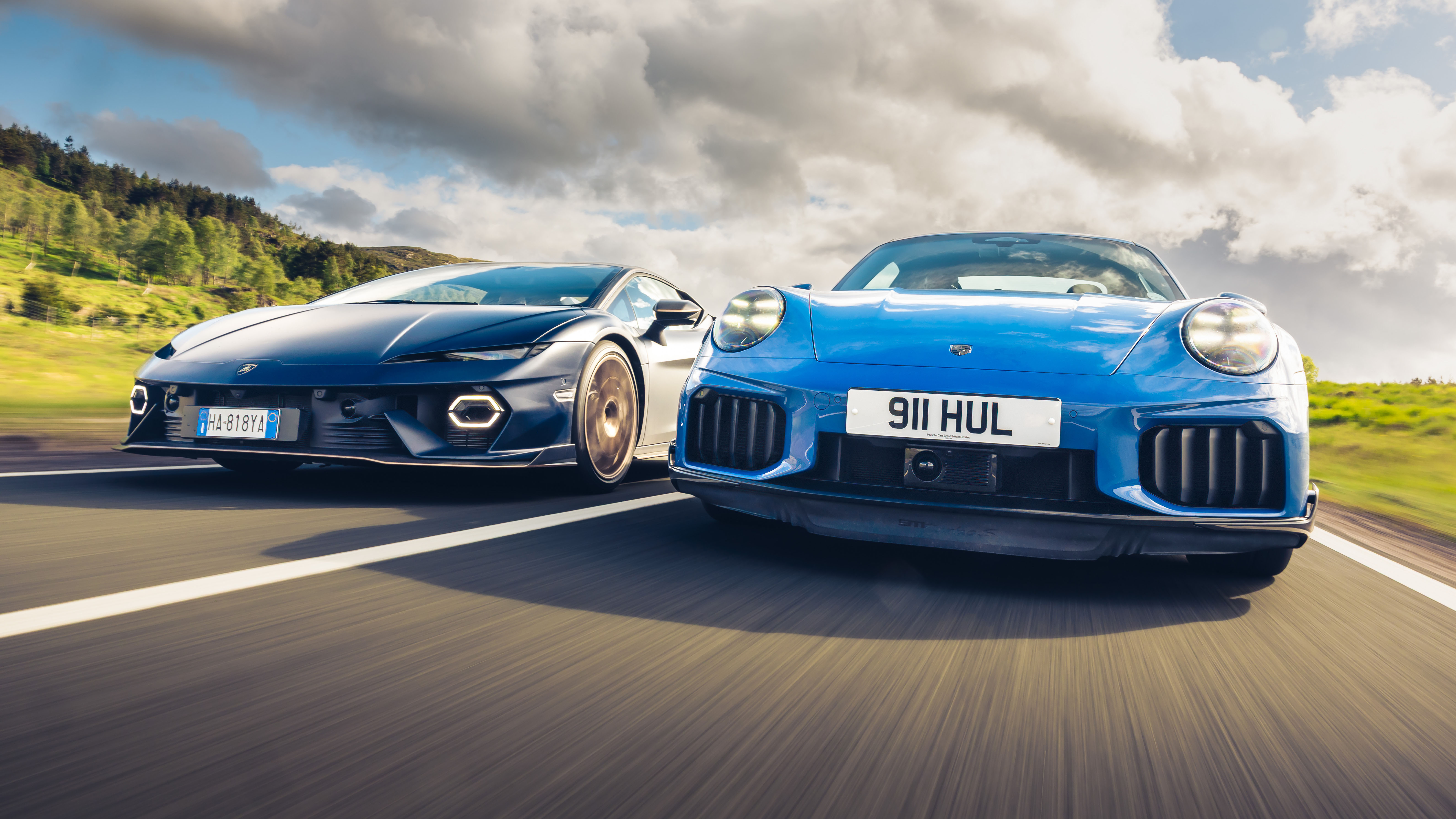
Temerario. It’s not the name of a bull this time. It translates as ‘reckless’. Pretty apt. It’s not a direct competitor for Porsche’s 911 Turbo S, but they do throw interesting light on each other, which is why we’ve got them together. Both are 4WD, newly electrified and aimed at regular daily use.
Photography: Jonny Fleetwood
Lamborghini first stepped into this realm with the Gallardo back in 2003 and hit a real sweet spot with the Huracán from 2014. Now it’s all change. No more naturally aspirated V10. They may have managed to keep the V12 alive for the Revuelto, but here downsizing and forced induction has arrived. Together with electric motors, batteries, plug sockets and hybridity. For Lamborghini’s typical customer this is a wheeled controversy. It rocks the boat, and to follow that metaphor further, risks capsizing the good ship Raging Bull.
They’ve got away with it for the Urus, but that’s an SUV. Trying to combine supercars with electric motors is like trying to push opposing magnets together. This, however, is merely a v1.0 and plenty of other versions will follow with names like Performante, STO and, hopefully, Sterrato. Given the rumours that Ferrari is going to do a lightweight 296 with the electric motors removed, what hope Lambo following suit? Good, we reckon. But how has Porsche managed to dodge all of this in the first place? Its concession to electrification is to drive its twin turbos electrically.
Advertisement - Page continues below
Which drastically reduces lag, increases performance and seemingly has zero downsides. My near 600-mile run up here in the Porsche has simply revealed that this is the most effective overtaking device mankind has yet devised. The roads of northern Scotland are a constant sluggish weaving tailback of camper vans. Not for long when you can throw 590lb ft at them anywhere from 2,300–6,000rpm.
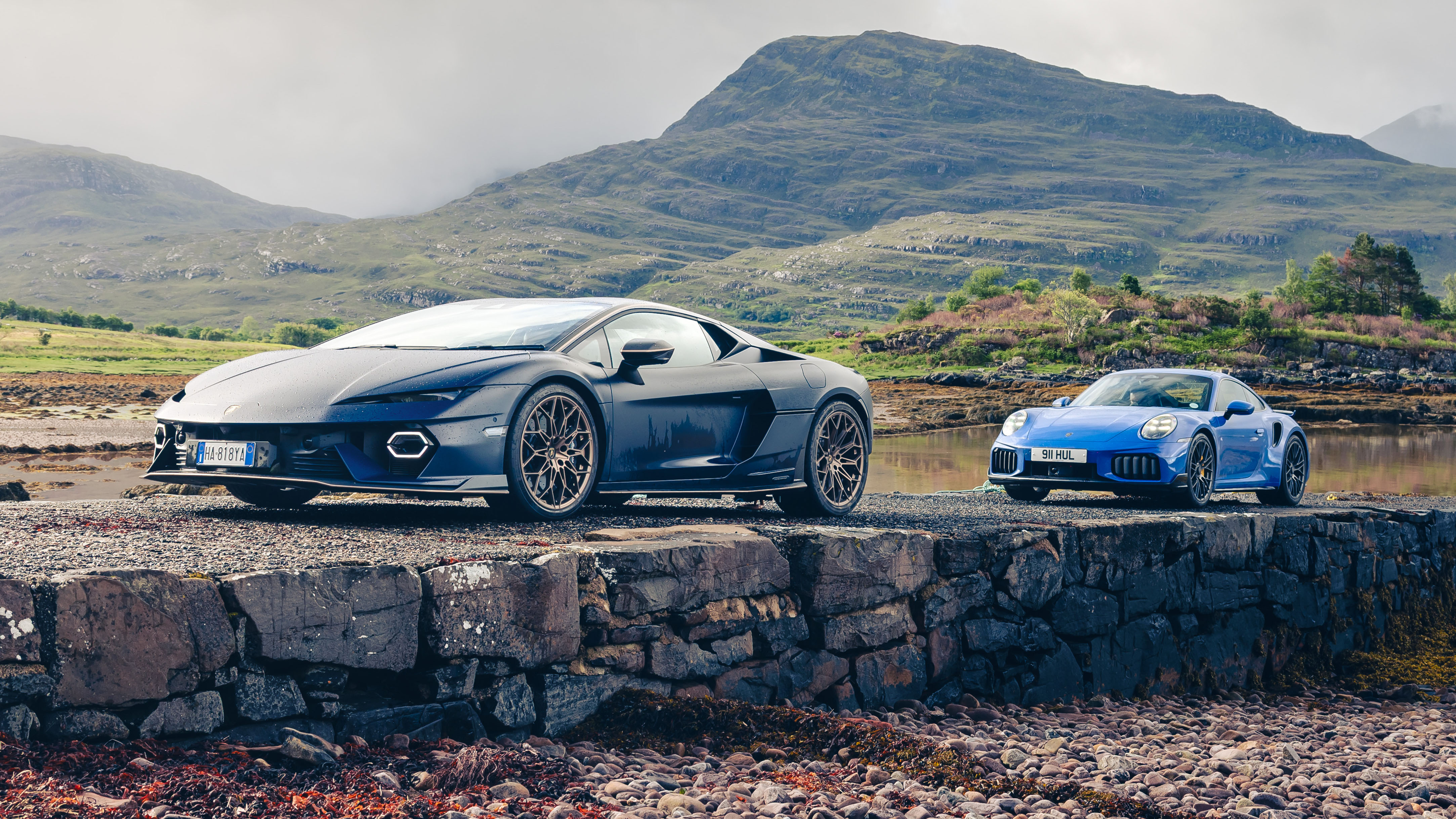
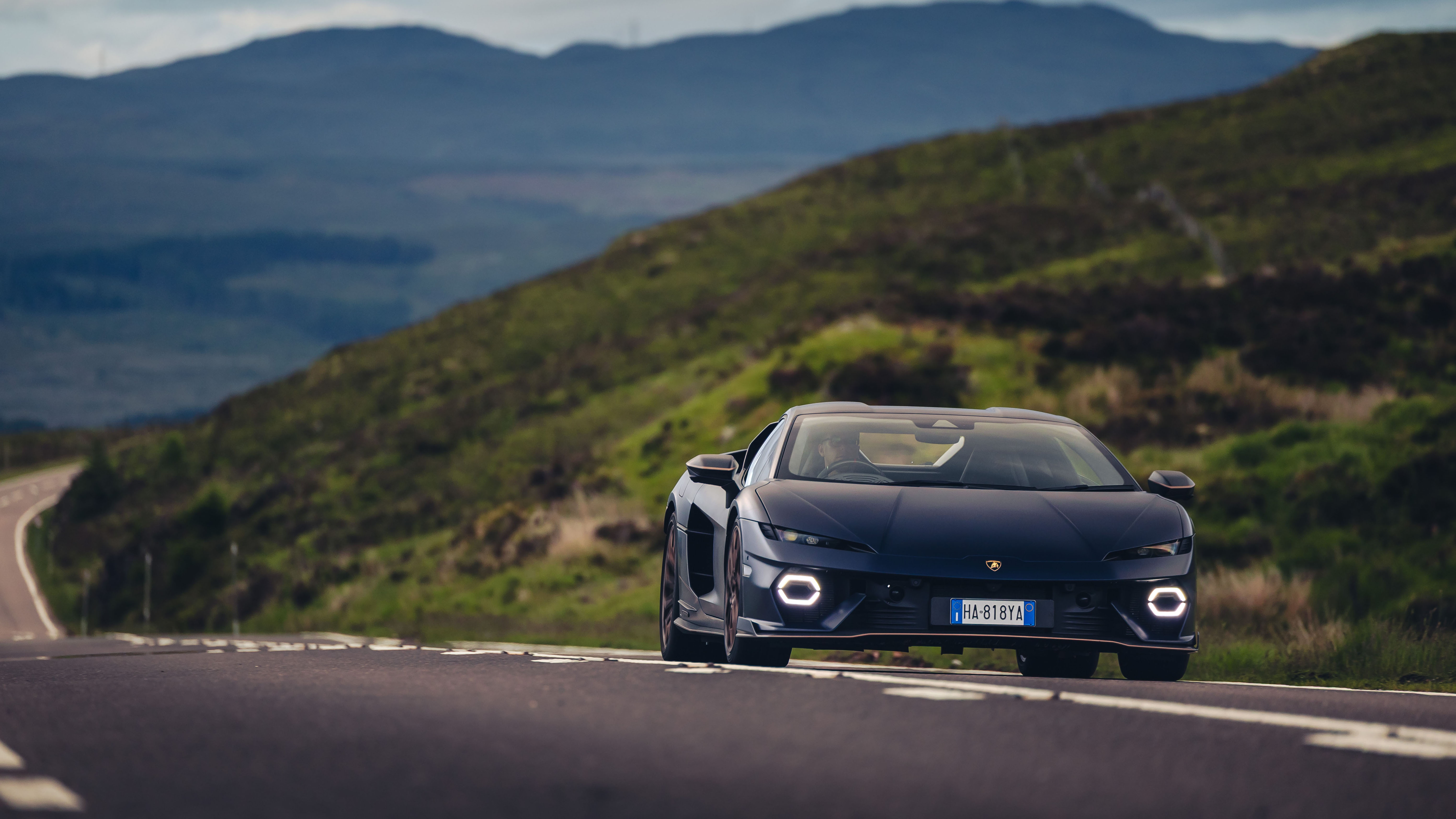
Just to challenge itself a bit, Porsche has reduced the Turbo S’s engine capacity from 3,745cc to 3,591. Yet it’s still gained 50bhp. Over 700bhp now, pushing 1,725kg. It’s a monster. And then the Temerario brings out its spec sheet: 907bhp and 10,250rpm from a 3,995cc twin turbo V8. It quotes 2.7secs to 62mph, but I reckon that’s only to stop it humbling the 2.5 second Revuelto. At the top end, the Turbo S can’t live with it. But that’s not the role of this test. We’ve driven both of these cars on track before, but they’re not track cars. They’re designed to live in the real world. So how much of the capabilities can you use out here? And are they engaging and fun at everyday speeds? What about that long haul roadtrip?
Step forward Scotland, a 10-plus hour drag up a broad selection of poorly surfaced, heavily dieseled motorways. But god, is it good when you get there. The traffic evaporates after 5pm, the vans off to dock at campsites and fire up the BBQs. The last miles heading past Lochs Loyne and Cluanie are heavenly. This is not scenery you blast through, eyes laser focused on the road’s vanishing point; it’s landscape to absorb, to spool calmly through.
I can’t say why exactly, but driving on these, the best roads anywhere in the British Isles, makes me want to drive better, to live up to the landscape. When there’s no other traffic around I find it almost dreamlike. Especially when the deer appear. This latest 992.2 Turbo S has been brilliant the whole way, riding more gently and calmly than I remember from the 992.1, less cabin noise too. So settled and accurate at speed that I rarely even bother to switch the lane keep off because it’s no effort to put it exactly where you want. And 30.2mpg.
They’re fine for about an hour, and then one of your buttocks goes numb
Ollie Kew rolls in an hour later. Roll being the operative word, given his lurching gait. Apparently the Lambo’s seats are to blame. “They’re fine for about an hour, and then one of your buttocks goes numb,” comments Ollie. This, we agree, is a major step forward from Lambos of old. He’s achieved 23.5mpg, about 300 miles per tank when the Porsche has knocked on 400.
The next morning we’re up early for the empty roads – specifically the one that heads to a viewpoint above Upper Loch Torridon. It’s one of my favourite spots, off the North Coast 500 route and the perfect spot to appraise these two. The Porsche, we agree, has heavy haunches. From behind those rear arches have lost whatever visual tension they used to have and that down draught venting from the rear rads adds a bit more visual droop. Plus those strakes on the engine deck lid and pheasant-filleting front flaps aren’t elegant. New and excellent rear wing aside, it’s not drawing us in.
Top Gear
Newsletter
Get all the latest news, reviews and exclusives, direct to your inbox.
But nor is the Temerario. It’s not a great name for starters. We immediately dismantle it, so it gets referred to as everything from the Demi Lovato to the teeny Mario. The hexagons are all present and correct, but there’s SO MUCH STYLING. It’s like they couldn’t leave it alone, kept tweaking the details and adding bits, and lost sight of the bigger picture. Not as successful as the Revuelto, we agree, plus the way the centre rear section protrudes is horribly ungainly and the engine cover, well, don’t be tempted to remove it. What lies beneath may be a powerhouse, but the sea of heat shielding, cables, tie wraps and expansion tanks ain’t pretty. No tease of cylinder banks and burnished metal here.
But let’s face it, neither is a Luce-level disaster. Remove the badges from either and you still know exactly who built it. And it’s the same inside. The Porsche is peerless in so many ways – the knurled switchgear, the ergonomic layout, the seats and driving position, the view out, even the screen operation. It’s all super hard to criticise. But then you step out and think “is that the cabin of a 200 grand car?”
The Lambo definitely has the cabin of a 260 grand car. In fact it has the cabin of a 450 grand car given it’s all but identical to the Revuelto in here. Nothing wrong with that. Yes, the screen is a bit more of a fiddle to operate and we're not sure the steering wheel really needed 30 (yes, 30 – there are 10 on the back) buttons, but this is rock star life: all killer, no filler. Some filler would have been good. Padding on the doors, for instance.
And given the doors don’t open upwards (a consistent oversight from Lambo across Gallardo and Huracán as well), there’s no reason it can’t have door pockets. But what the Demerara cabin does do, is get the message across. It feels fast in here. And this despite having good visibility thanks to a low window line and surprising practicality. There’s a parcel shelf, plus a decent front boot despite the packaging challenges presented by a pair of electric motors driving the front wheels.
Does a supercar need to be that practical? No
I brought my gravel bike to Scotland inside the Porsche. Frame and one wheel fitted in the back once the rear seats were folded, another wheel slotted into the nose boot. Niche test, I appreciate, but there’s no challenge this side of a grand piano that the 911 can’t rise to. Does a supercar need to be that practical? No. As long as there’s enough stowage for two people to head away for a long weekend, you’re there. The sheer versatility of the Porsche means it’s not a supercar.
Too sensible. But the depth of engineering... oh my word. Everything operates on the exact same wavelength. Admittedly there’s less drama to its performance, less sense of occasion. It asks less of you. This is the reason it helps to drive the Turbo S back to back with something else. Because you don’t realise just how astonishingly good it is if you don’t have something to compare it to. You can drive around taking it for granted, not noticing how absurdly stable and accurate it is on the road, how traction is impeccably managed even given the berries in second, how dialled in the steering is, how every gearchange is patted perfectly through.
You have to concentrate on the car, to think about what it’s doing and how it’s doing it, to really get the most out of it. It’s not overloaded with charisma, but it is overloaded with ability. It means people dismiss it as ruthlessly efficient – they’re not wrong, they just get their satisfaction in different ways. The 992.1 was more hardcore than this, felt tougher and more dialled in. This is smoother, more polished. For these roads, surfing the torque and carrying speed, it’s plain wonderful.
There is still lag incidentally. The electric motors spin the turbos way earlier than exhaust gases ever could, but that pressure still has to be forced back into the intakes. The delay is minimal, and this rapid, predictable response contributes significantly to the ease of sweeping past slow traffic. Plus the shove is just wonderfully linear, building progressively across the rev range. I mean it thumps in from 2,000rpm, but up at the top it’s a force of nature.
Likewise the Lamborghini. From 8–10,000rpm even the Turbo S has to bow before the Temerario. It wails and screams, goes like a superbike and generally feels every inch the Lambo experience we know and love. The trouble is what happens everywhere that isn’t 8–10,000rpm. Opportunities to visit that realm are rare, or more correctly, impossible, given that you can only experience them (legally) in first gear. So you’re stuck much lower down the rev range. Where the flat-plane cranked Lambo does a passable impression of a turgid and disinterested four cylinder hatchback. Where’s the music? Yes, it powers ahead strongly enough, but it drones. No Lamborghini I can think of has ever droned before. It’s not right. I can get on board with EV mode giving me a front-drive silent running supercar (for about five miles given the tiny 3.8kWh battery), can forgive the system lag that sees the 911 pull out a length, but not a droning, disinterested V8.
And that’s not the end of the issues. The overall driving experience is disjointed. The steering is sharp, but glassy, you don’t get the sense that the Temerario is digging into corners, but skating round them. Body control isn’t good enough and you have to be careful accelerating out because the axles don’t pull together seamlessly. And why do we still have to have head-nodding gear changes? And patchy regen braking? I find myself driving more tentatively, not fully connected. It doesn’t feel harmonious or gel as a driving experience.
It doesn’t feel harmonious or gel as a driving experience
Which is weird given the Revuelto is genuinely superb, a worthy podium finisher at our performance car test last year. That car justifies its sky-rocketing price. I can just about accept the £259,570 starting price here, but the options boost it to £416,938. Where’s the money gone? Well, as you’d expect into lashings of carbon and the weight saving (all 25kg of it for £61,860) Alleggerita pack. No sign on the options list of the thing it really needs: mudflaps.
Now, we’d probably forgive the price and way it drives if it had a whipcrack engine that sounded amazing, but it doesn’t. The Huracán was both a purer and more dramatic experience than this. I drove up here hoping the Tamagotchi would sing through the glens – one of my strongest memories is howling along these same roads 15 years ago in a Murciélago SV – but this one drives like it’s distracted by an itch. It’ll daily without much fuss, but the magic is just too hard to access, too far away. And in between those extremes where you expect to use it and enjoy it, there’s no sweet spot.
The Porsche is pulverising, but it’s also nuanced, flattering and engaging. It is a fabulously complete car, the only downside is that it makes excellence feel ordinary. But hey, if being an extrovert means trailing a shrapnel rooster tail behind you... well, put it this way, we go out where we came in. The Porsche leads, the Lambo follows.
Porsche 911 Turbo S
Price: £199,100 (£218,797 as tested)
Engine: 3.6-litre twin turbo flat six, 701bhp, 590lb ft
Transmission: 8spd PDK, AWD
Performance: 0–62mph in 2.5secs, 200mph
Weight: 1,725kg
Lamborghini Temerario
Price: £259,570 (£416,938 as tested)
Engine: 4.0-litre twin turbo V8 + 3x e-motors, 907bhp, 590lb ft
Transmission: 8spd DCT, AWD
Performance: 0–62mph in 2.7secs, 213mph
Weight: c1,880kg

Trending this week
- Car Review
Mercedes-Benz C-Class Electric