

12
From dainty flyweights and drift missiles to twin-turbo touring cars and rally monsters, there’s something for everyone

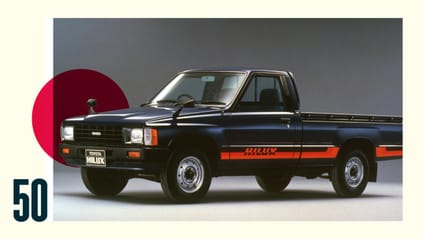
The unkillable car. Trust us, we tried once on the telly show. Set it on fire, drowned it, even dropped a caravan on it (ah, the good old days). It hardly flinched. A TG icon and champion of that most Japanese of automotive traits: bombproof reliability.
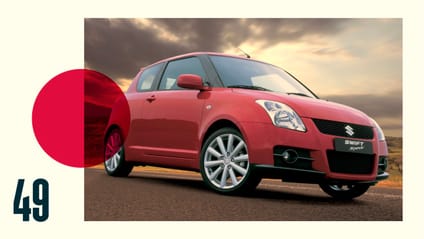
Not a hot hatch, but certainly not room temp either, the diminutive Swift Sport like so many great Japanese driver’s cars prioritised sensation over speed. With 123bhp, a delicious gear shift, and the footprint of a flip-flop, it was a car you could have the time of your life in, while barely keeping up with cyclists.
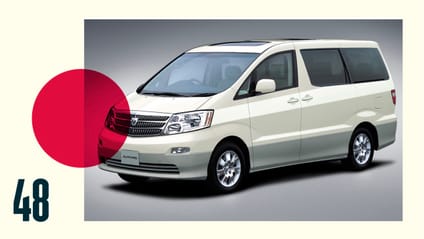
High end SUVs are the vehicular status symbol of choice in the Western world, but in Japan, anyone who’s anyone wafts around in a luxury minivan. Further proof that theirs is a more advanced society than ours. With private jet seating and legroom measured in metres, the Alphard and its ilk expose our beloved crossovers for the frivolous packaging disasters they are.
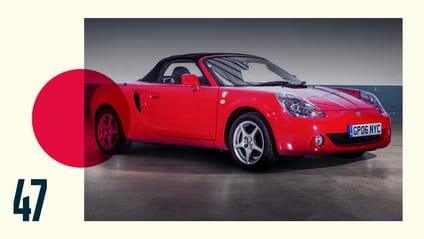
Toyota bucked the trend of automotive bloating with the third-generation MR2, producing a car that was both smaller and lighter than its predecessor. Extra impressive considering the Mk3 was a roadster and required additional stiffening to stop things getting all bendy down a twisty. It was never quite able to escape the MX-5’s shadow — but to drive, it was every bit as special.
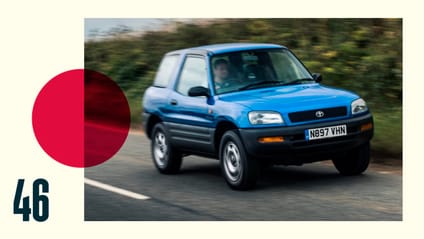
You often hear the Nissan Qashqai credited with/blamed for inventing the crossover SUV, a category that, in Europe at least, has gone on to absorb all others. But it was in fact the RAV4 that first introduced the world to the idea of the soft-roader: a car with SUV proportions and respectable road manners. The difference being that the RAV4 could still actually, you know, go off-road, whereas Qashqais can be thwarted by large puddles.
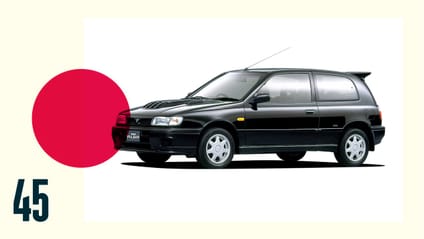
The Pulsar GTI-R may have looked like a haphazard Halfords job — its louvred bonnet scoop and giant wing incongruous with its unswollen arches and shopping trolley wheels — but it was a proper Group A homologation special, and serious bit of kit. If the Skyline was Godzilla, the Pulsar was your feisty pet iguana.
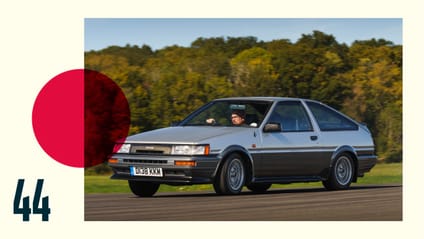
In truth it was little more than a rear-drive Corolla with pop-up headlights, but perfect weight distribution and innate balance saw the AE86 humble more powerful FWD machinery in touring car racing, while a starring role in the Initial D manga series cemented it as the defining icon of Japan’s greatest art form. No, not haikus, the other one.
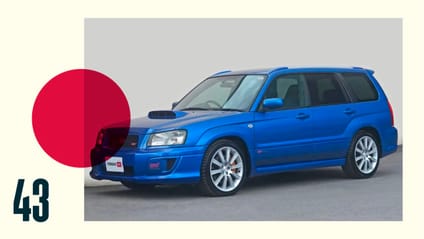
Some would have you believe that British and Japanese cultures are disparate. But here’s some empirical evidence that deep down, we’re so not different after all. Because what could be more British than dropping a dog-hauling estate onto rally car gubbins? Turns out the language of muddy B-road blasting is universal.
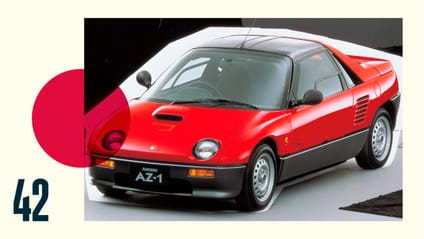
With its 65bhp power cap, the kei car category hardly lends itself to sportiness. But that didn’t stop Japan’s best and brightest from giving it a bloody good go in the early 90s. The result was a trio of sporty flyweights known collectively as the “ABC of kei cars”. This was A. With gullwing doors and supercar styling, the AZ-1 was the most exotic of the three and — thanks to its relatively high price — by far the least successful.
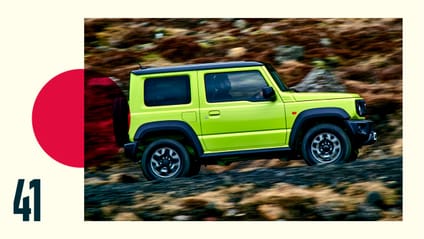
Imagine ski boots suddenly became fashionable, and people started clumping around town in them just for the aesthetic. That’s the Gen 4 Jimny. Its delightful design made it London’s must-have accessory of 2018 despite comically pants road manners. Had urbanite owners dared get theirs muddy, they’d have discovered off-road capabilities that more than made up for it.
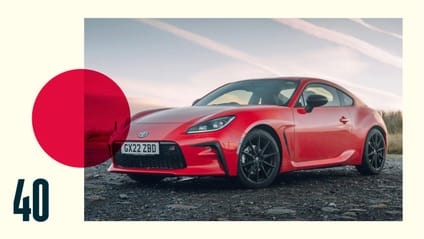
The GT86 was a bastion of “fun over fast” and a bloody good car. But we were never able to shake the feeling it could have done with just a little more fire in its belly. Clearly, Toyota agreed, because the subsequent GR86 delivered precisely that. The result is a proper Goldilocks sports car: utterly accessible yet genuinely thrilling.
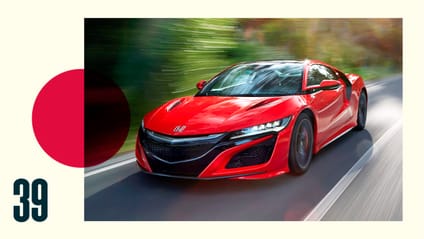
It’s hard to draw a line from the original, blissfully straightforward NSX to this, its AWD, twin-turbo, tri-motor successor. And that put us off a bit at first. But once we were done being mopey old nostalgics and gave the thing a proper go, all that washed away. The Gen 2 NSX is a technological tour de force with proper face-melting performance. One of the most underrated supercars of this century.
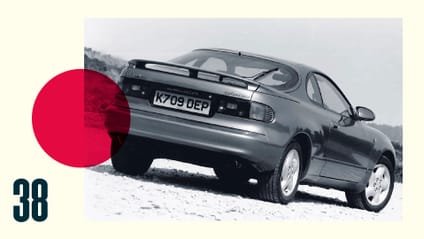
Resplendent in its iconic Castrol livery, the GT-Four terrorised WRC in the early 90s before Toyota was banned from the sport for two years, in one of rally’s most infamous scandals. Perhaps that, plus its steep £30k price when new, explains why the sublime GT-Four road car is so criminally overlooked in discussions about the great homologation specials.
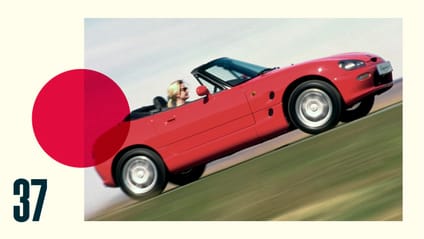
Remember the “ABC of kei cars” we mentioned? Here’s C. Like the AZ-1, the Cappuccino exploited Japan’s slight relaxation of Kei car restrictions in the 90s which permitted a monstrous 660cc of displacement. About the same as your lawnmower. Of the trio, it was the only one ever officially sold in the UK, albeit for just two years.
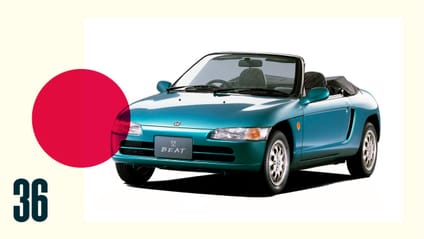
The last model overseen by the great Soichiro Honda, The Beat completes our trio of sporty kei cars. It combined a feral 8,500rpm redline with Happy Meal toy proportions, resulting in a driving experience that is exactly as hilarious as that sounds.

A Dakar icon, the bat-winged Pajero Evo turned the world’s most gruelling motor race into its personal playground in the Noughties, winning outright seven years in a row. In many ways, its bonkers homologation car is an ideal daily — just think how much time you’d save on the commute by driving as the crow flies.
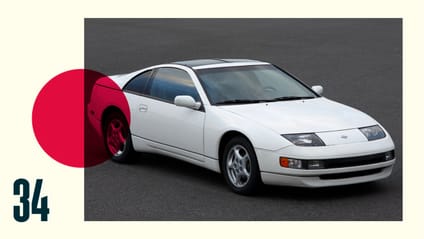
Over here, it’s certainly the least revered of Japan’s 90s sports car holy trinity. That’s somewhat understandable: the Supra punched harder and the RX-7 was sharper. But as a daily, the ZX with its refined interior and GT maturity had them both beat. And that’s not to say it was a slouch — with 300bhp, it laughed in the face of the Japanese OEMs’ famous Gentleman’s Agreement of the late 80s, which set a 276bhp power cap for all sports cars.
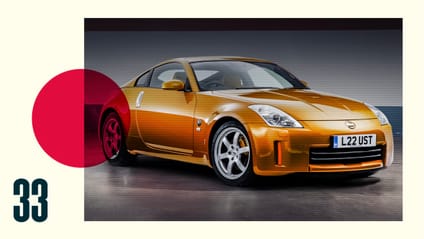
Japanese cars are either restrained and sophisticated, or unhinged and outrageous — there is no in-between. This orange lozenge of obnoxiousness falls firmly into the latter camp. Dishing out 911 thrills for Mondeo money, it burbled its way deep into our hearts in the Noughties, securing TG's car of the year award in 2004.
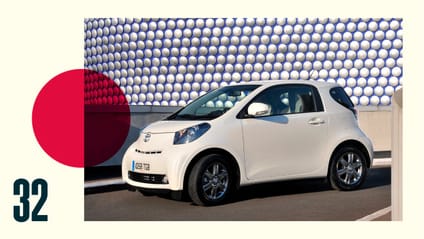
Measuring less than three metres long and resembling a normal car that’s crashed into a wall in a Tom and Jerry cartoon, the iQ is the smallest ever four-seater and a shining example of the engineering ingenuity Toyota is capable of at its brilliant best. It’s also a sobering reminder how little of that flair Toyota has shown of late…
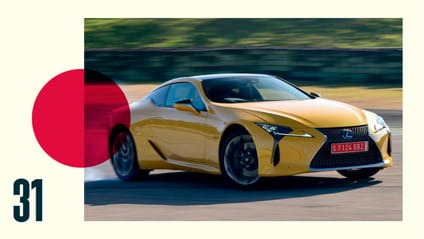
Japan rarely stoops to the uncouth indulgence of big displacement — it’s rare that anything with more than three litres or six cylinders emerges from The Land of the Rising Sun. The LC500, with its sonorous V8 fury, highlights what a massive bloody shame that is.
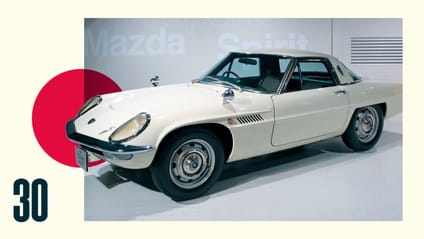
Not the first rotary-engined production car — that accolade goes to the NSU Spider, developed by Felix Heinrich Wankel, who invented the technology and gave it that definitely-not-funny name. But the Cosmo was the first to make it work. It looked like a spaceship and, thanks to its smooth, revvy, twin-rotor powertrain, it went like one too, establishing Mazda’s credentials as the automotive world’s rotary specialist.

There’s an old Aussie saying: “Going into the bush? Take the Land Rover. Want to get out again? Take the Land Cruiser”. Instead of being designed for ease of repair, Toyota’s workhorse was designed to never break in the first place. There is surely no car more synonymous with rugged reliability. So beloved was the gorgeous Mk1 that Toyota kept it in production for over four decades, alongside new versions.
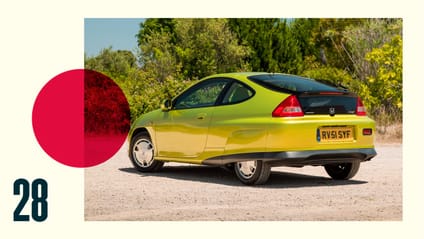
With a groundbreaking hybrid system and the drag coefficient of a lubed-up eel, Honda’s first foray into electrification set fuel economy records that the subsequent gen 2 Prius could only dream of matching. As a car, it was hopelessly flawed — that slippery rear end left no room for rear seats or a decent boot — but as a feat of engineering and insight (wahey) into the future potential of hybrid tech, it was staggering.
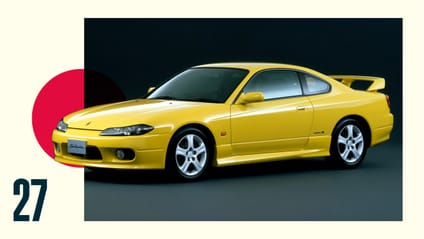
Arriving in ’99, facing backward and in a cloud of tyre smoke, the S15 was the final generation of Silvia, and the one most revered by the drift scene. If the Sprinter Trueno was drifting’s poster child, the Silvia was its king: light, balanced, and endlessly tuneable.
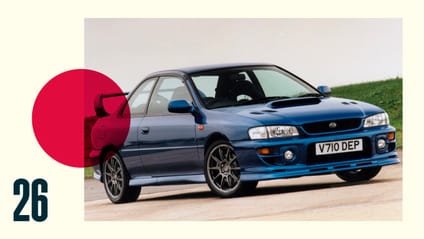
Like Wagamama, the P1 was of Japanese descent, but actually made in the UK. Unlike Wagamama, it didn’t leave you disappointed. Or make you touch knees with strangers. Developed by Prodrive, it took the best bits of an STI and tweaked the suspension to better suit the collection of small craters the Brits charmingly call ‘roads’.
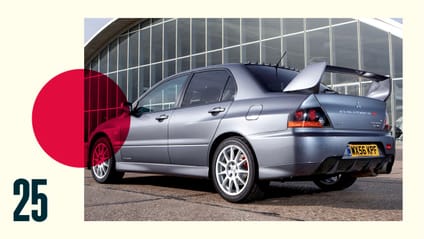
Another UK-only special edition of a Japanese legend. FQ-badged Evos were a tiny run of cars fettled by Ralliart, freed from the constraints of the Gentleman’s Agreement and dialled up to 11. Possibly 12. The magnitude of the Evo’s impact on British culture is best illustrated by the swathes of Corsas, Polos and Fiestas that sprouted vortex generator roof spikes during the 2000s.
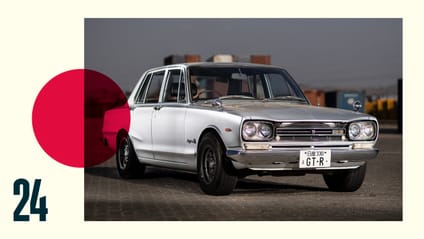
In the late 60s Nissan, keen to prove itself as more than just a producer of white goods, decided to dabble in motorsport. Quite a dabble it was, too. Its contestant, the Skyline GT-R, notched 49 Japanese Touring Car victories. In a row. A legend was born, and a bloodline of giant killer road cars established. There’d be no Godzilla if it wasn’t for the “Hakosuka".
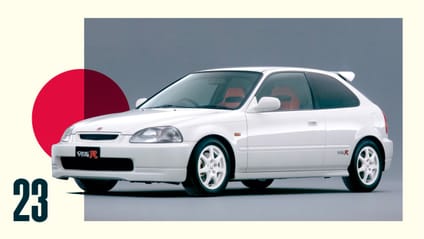
Sometimes, a great deal of squinting is required to see the connection between the originator of a lineage and its descendants. Not so much with the Civic Type R. Low weight, red seats, and a masochistic desire to be thrashed like a wealthy businessman with mommy issues — it was all there from the beginning.
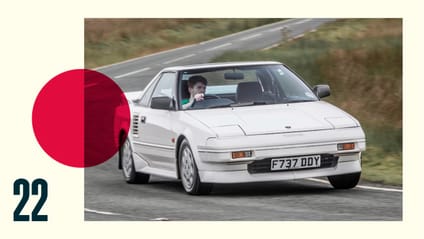
The middle of a car is the best place for an engine. It just is. But before 1984, you had to be fairly loaded to afford something that employed that sacred setup. That changed with the MR2. Created in direct response to the 1970s global oil crisis, it uniquely blended mid-engined chassis balance and supercar proportions with ultra-low running costs. Two generations followed, each quite different, all utterly magnificent.
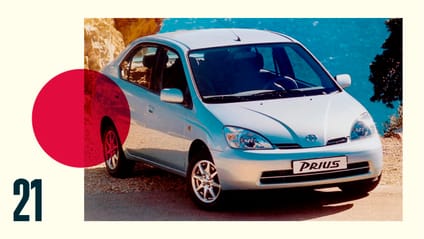
Not the first hybrid car, but the one that took the technology mainstream. Marrying a 1.5-litre engine to a 40bhp electric motor, the Prius’ huge fuel economy and miniscule emissions made it a smash hit with frugal cabbies and virtue-signalling celebs. About as desirable as a verruca, but easily one of the most influential cars ever made.
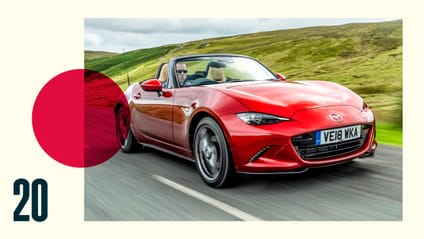
The MX-5 has never missed a beat. Every iteration has refined the recipe and improved on the one before (yes, even the blobby NC), which is why this latest iteration is the best Miata ever. It’s a looker too, especially in Soul Red Crystal — a colour which, when we come to power, all Mazdas will be painted by law.
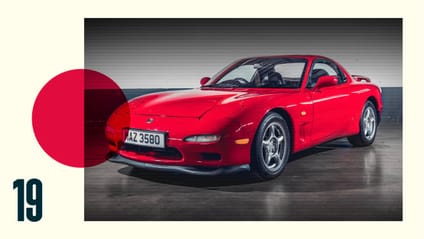
There are good reasons why the rotary never caught on. They’re too fussy for road car use, too high maintenance. But just because something is flawed, doesn’t mean it can’t be fun — the physics abomination that is the Porsche 911 neatly illustrates that. The RX-7 is comfortably the finest road car ever to utilise the idiosyncratic engine, with styling and handling as sharp as the triangular blades maniacally spinning under its bonnet.
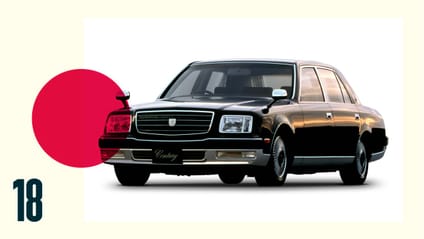
The first and only V12 Japanese barge, the Century was a glorious marriage of Japanese craftsmanship and high-end luxury that left us desperately wishing the two would wed more often. Also a refreshing reminder that posh cars don’t have to always be cocoons of leather and gadgetry. We’ll take our Century with the lovely wool interior please, lace seat-covers and all.
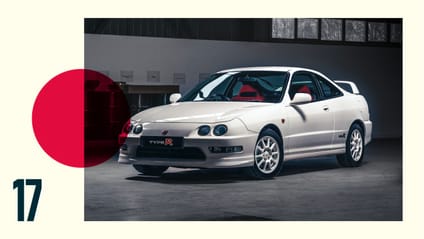
The Civic Type R’s slightly more grown-up sibling (to the extent that a car with red seats and white wheels can be described as such) is one of the all-time great FWD driver’s cars. What it manages with a mere 187bhp remains unfathomable. But is it THE best? We can think of one that edges it. Ha! Now you’ll have to finish the article...
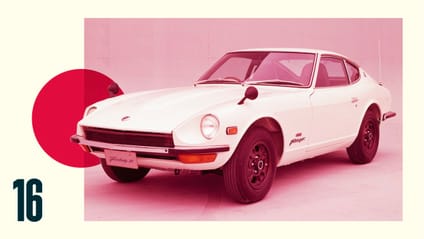
The first Japanese sports car to attract international appreciation, the Z felt every bit as special as contemporary MGs and Triumphs and offered the added bonus of… actually working properly most of the time. Durable, muscular, and achingly beautiful, it paved the way for a lineage that (a few stinkers notwithstanding) gave us some of Japan’s greatest driver’s cars.
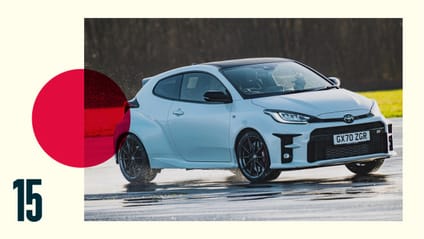
We’d just about made peace with the fact that rally homologation specials had had their chips. Then this angry little nugget showed up and rocked our world. Boasting the most powerful three-cylinder engine ever made and oozing that delicious sense of hefty, chunky solidity intrinsic to rally weaponry, the GR Yaris was an instant classic.
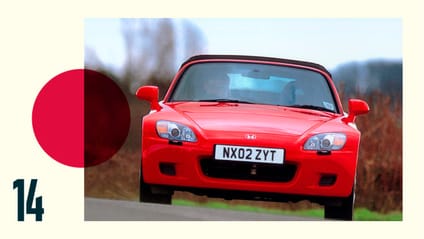
Contrary to popular belief, Honda did not simply take the raucous VTEC four pot out of the Integra and dump it into a low-slung sports car. It would’ve been perfectly brilliant if they did, but that wasn’t the Honda way. No, the S2000’s screaming F20C was developed from the ground up by the team behind a certain supercar that we’ll get onto shortly. To find a sweeter, revvier, more eager four cylinder, you’d need to go superbike shopping.
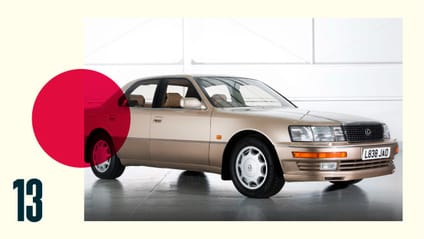
Legend has it $1 billion and 1,400 engineers were invested into its development, all in the name of ensuring the end product was the quietest car ever made. While big, wafty Mercs and BMWs always endeavored to offer a dash of sportiness, the LS pursued comfort with absolute singular focus. We’ve had warm baths more stressful than piloting one of these.
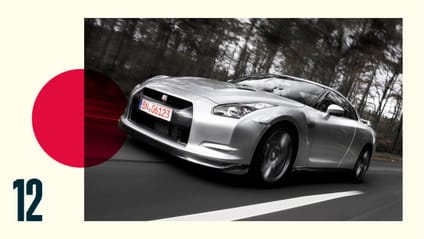
Only Nissan’s four most skilled Takumi (master craftsmen) were permitted in the room where the GT-R’s blistering V6 was meticulously hand built. All that just for some bloke called Gazza to buy one and fit it with fart cans and a remap. Still, what a machine — a science lab dressed as a sports coupe that, even now production has ended, still gives supercar owners nightmares.
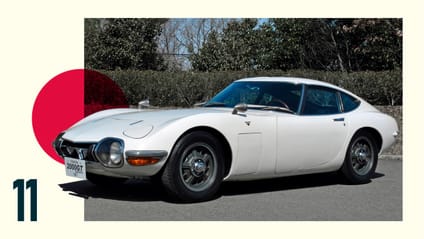
The convertible model that starred in You Only Live Twice was never actually supposed to exist — cutting the roof off was just the only way they could cram all 6ft 2in of Sean Connery in. Had they known at the time that the 2000GT would go on to become the most valuable Japanese car ever built, one wonders if they might have tried hacking some bits off Bond first. Only 351 examples of the jaw-dropping GT were ever produced.
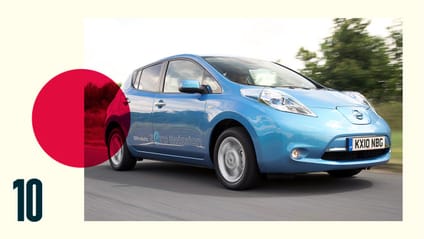
As the first ever mass-produced electric car, the Leaf was, understandably, a tad crude. Range was better measured in metres than miles, battery degradation was catastrophic, and the design… well, there wasn’t one. But we had to start somewhere. And if it wasn’t for this frumpy lump showing up so ahead of its time, we’d still be waiting on the 300+ mile, rapid charging EVs that we’re now up to our eyeballs in.
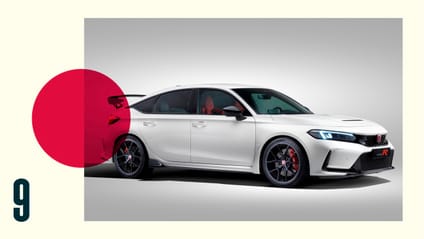
The greatest FWD driver’s car ever made. The FL5 added in almost all regards to the magnificence of its predecessor, while addressing its fatal flaw: the Power Ranger styling. Astronomically expensive, yet somehow totally worth it. If it proves to be the last ever hot Civic — and alas, it looks like it might be — we couldn’t think of a more perfect sendoff.
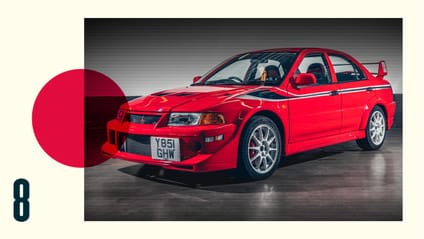
The ultimate version of the ultimate Evo. There were major upgrades to the hardware, but it was the little things that made the TME so desirable, like the go-faster stripes as seen on the Flying Finn’s WRC car. It even shed its fog lights from the front splitter in the name of extra cooling, just like Big Mäk’s. Imagine trying to explain to a non-car person how cool that is.
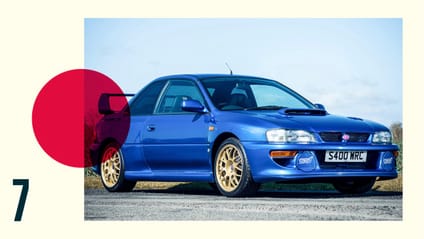
If you wanted to look like a rally driver, the TME was unparalleled. But if you wanted to feel like one? This was the car. With its flared arches, bored out 2.2-litre engine and trick power distribution system allowing for on-the-fly adjustments to front/rear bias, the 22B was the realest of deals. To feel any more like McCrae tackling the Safari Rally, you’d need to rub sand into your eyes.
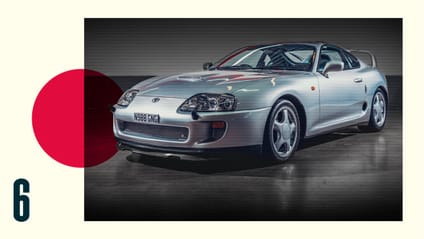
One of the more creative approaches to flouting the famed Gentleman’s Agreement, the Supra wasn’t so much a car as a starting point. With its unkillable cast iron engine block, oversized radiator and wildly over-engineered gearbox, it didn’t just withstand aggressive aftermarket modification — it actively encouraged it. But, so long as you, the owner, were the one cranking it up to 1,000bhp, no rules were broken, right?
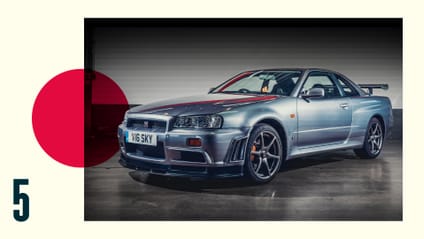
Every gamer’s dream car. Not just because it starred in every racing game of the 2000s, but because of the onslaught of data the R34’s space age dash supplied, with digital dials updating you on everything from boost to G-force. That sounds tiresome today, now that cars are iPads with wheels, but in 1999 it was like a spaceship had crash landed on Earth. Performance was similarly otherworldly. The ballistic, astonishing swansong for Japan’s greatest ever sports saloon.
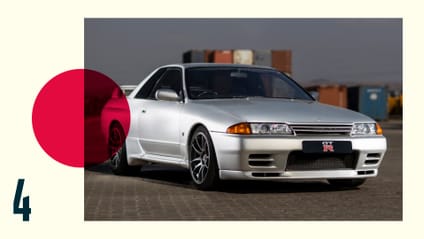
After a 16-year hiatus (presumably to give someone else the chance to win a race or two), Nissan revived its Skyline GT-R program. Among countless innovations, the new car, codenamed R32, sported a new electronic brain that could redistribute torque to different wheels 100 times per second to almost entirely negate the understeer AWD cars typically suffer from. We are talking about a machine from the 80s. What followed was a period of motorsport dominance that made the Schuey years at Ferrari look like a dead heat, and a road car that had Sierra RSs and M3s trembling in their sheds. Later generations improved the formula, but for sheer cultural impact, no Skyline holds a candle to the original Godzilla.
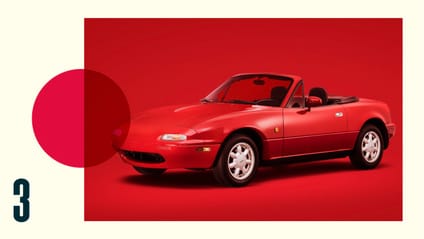
The twin-turbo axe murderer supercomputers are wonderful — but if we close our eyes and picture a Japanese driver’s car, this is what appears. The first MX-5 was a pure, joyful expression of Japan’s most fundamental automotive values: tactility, simplicity, and balance. In a world of ballooning weight and power figures, it provides an increasingly powerful reminder of what truly matters in a sports car. Namely, pop-up headlights.
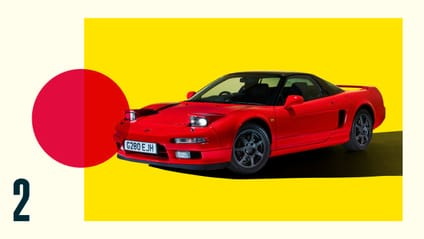
Today, the idea of a supercar you could happily daily isn’t remotely strange, but pre-2002, it was unthinkable. Seriously, try parallel parking a Diablo. Try tackling a wet M25 in a Viper. You wouldn’t wish it on your worst enemy. The NSX, with its big boot, Honda reliability and Labrador personality showed there was another way. Was it a “proper supercar”? Open the taps on that naturally aspirated V6 and have a listen. Somewhere around 8,000rpm, the answer becomes clear.
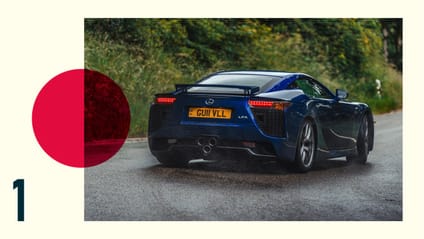
What happens when Toyota applies its unmatched engineering might to creating an evocative supercar engine, then hires the acoustics boffins at Yamaha to help make it sound exciting? Good things, as it turns out. Specifically, a V10 that howls like an old F1 car and revs so fast that it requires a digital rev counter, because an analogue needle just can’t keep up. The LFA’s astonishing engine feels like a neat analogy for what we so love about great Japanese cars: superlative engineering, but an emphasis on sensation over performance figures. That’s why, for us, it’s the best Japanese car ever made.
Get all the latest news, reviews and exclusives, direct to your inbox.