

the fastest
SQ5 TFSI Quattro Black Edition 5dr S Tronic
- 0-624.5s
- CO2
- BHP362.1
- MPG
- Price£69,830
There are no mechanical differences between the SUV and Sportback, so consider our opinions on both powertrains applicable to both rooflines.
Worth noting that every variant of Q5 we’ve driven has come equipped with the optional £1,725 air suspension, and we’re yet to try a car with the standard ‘comfort’ or ‘sport’ suspension setups.
We’ll start with the TFSI petrol. It’s a 2.0-litre turbo engine connected to a 48-volt hybrid system that Audi refers to as ‘MHEV Plus’. And it does genuinely do more than a standard mild-hybrid system, not least because Audi has plumbed in two electric motors (one starter generator, and one on the back of the gearbox) plus a 1.7kWh battery.
That means the engine (whether it’s petrol or diesel) can switch off fully at low speeds or when the car is coasting. The motor connected to the gearbox can also send an extra 24bhp boost to the wheels when a bit of extra oomph is needed, and regen braking is deployed to keep the battery fed.
It’s all very clever and yet requires no thinking from you whatsoever, and because the petrol engine is generally very smooth, quiet and refined at low revs, it’s pretty imperceptible when the Q5 switches between petrol and electric running. On one short drive through town, we saw over 36mpg versus Audi’s claimed 40.4mpg.
The 2.0-litre turbo diesel engine offers a noticeable amount more torque than the petrol (295lb ft vs 251lb ft), but it’s actually two tenths slower to 62mph (7.4 seconds vs 7.2) and there’s a more prominent grumble at low speeds.
If you’re doing long distances regularly it might still be the engine to have though, sounding brawnier than the petrol and settling nicely at motorway speeds too. Over a couple of long runs up and down the M25 we averaged 49.1mpg, beating Audi’s claimed 45.6mpg figure. Good for your wallet, see.
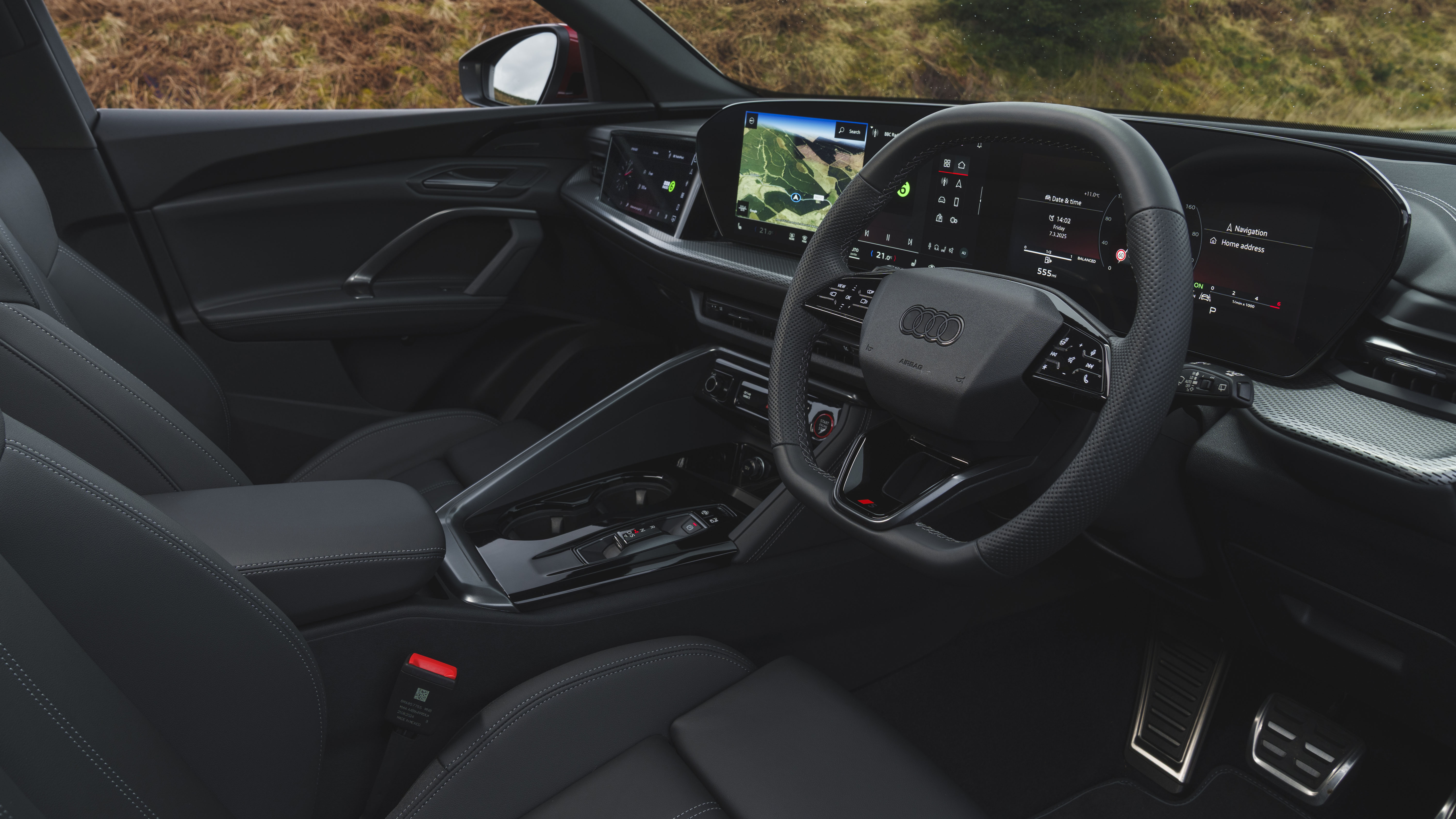
The seven-speed dual-clutch auto is the only gearbox that you can have in the Q5, and because its primary focus is efficiency, it can be a little sluggish when paired with either engine. There is a sport mode that favours lower gears, or you can take control yourself with the wheel-mounted paddles. But we’d like the standard setup to be a little quicker to respond.
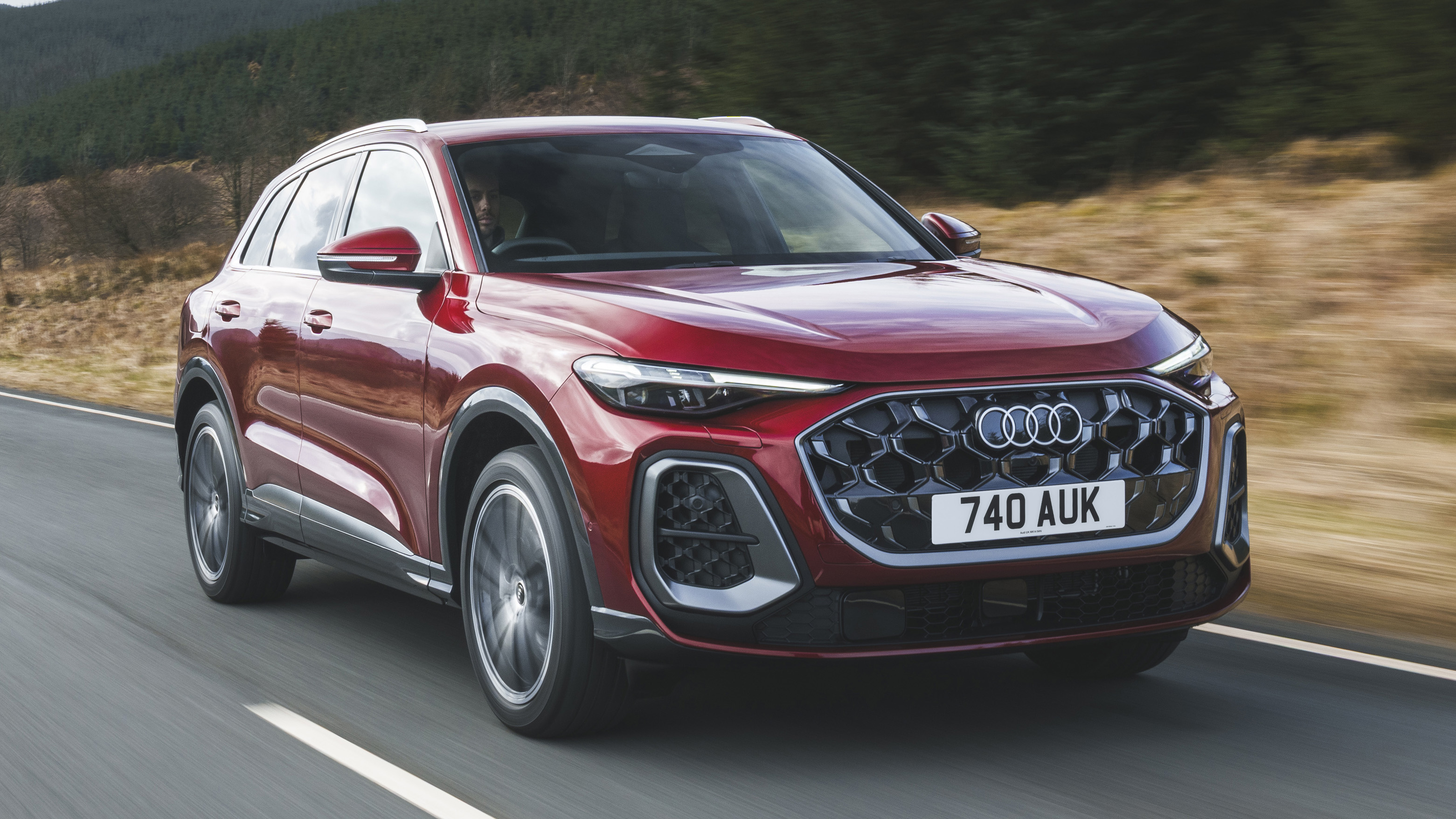
With some big wheels specced and the box ticked for the optional air suspension, you might find that the ride in the Q5 is surprisingly firm, with bumps crashing through the cabin a fair bit. Then again, Audi does want the Q5 to be a ‘sporty all-rounder’ so perhaps we shouldn’t be too surprised.
The stiffer suspension setup does mean that there’s less roll through corners than you might expect. Sure, the extra height over an A5 (previously known as the A4 – please see Audi's latest naming strategy u-turn) means there’s more lean than in a saloon or estate, but the Q5 is very composed through twisty stuff.
Progressive steering is standard too, so while the wheel feels light at low speeds it's weightier in Dynamic mode, making it easier to place the car on the road.
The brake pedal is slightly more difficult to gel with. Because of the regen braking you aren’t always pressing the pad onto the disc when you hit the pedal, but Audi has given the brake a firm feel and as a result it can be tricky to slow the Q5 smoothly. Not ideal if the kids in the back suffer from motion sickness.
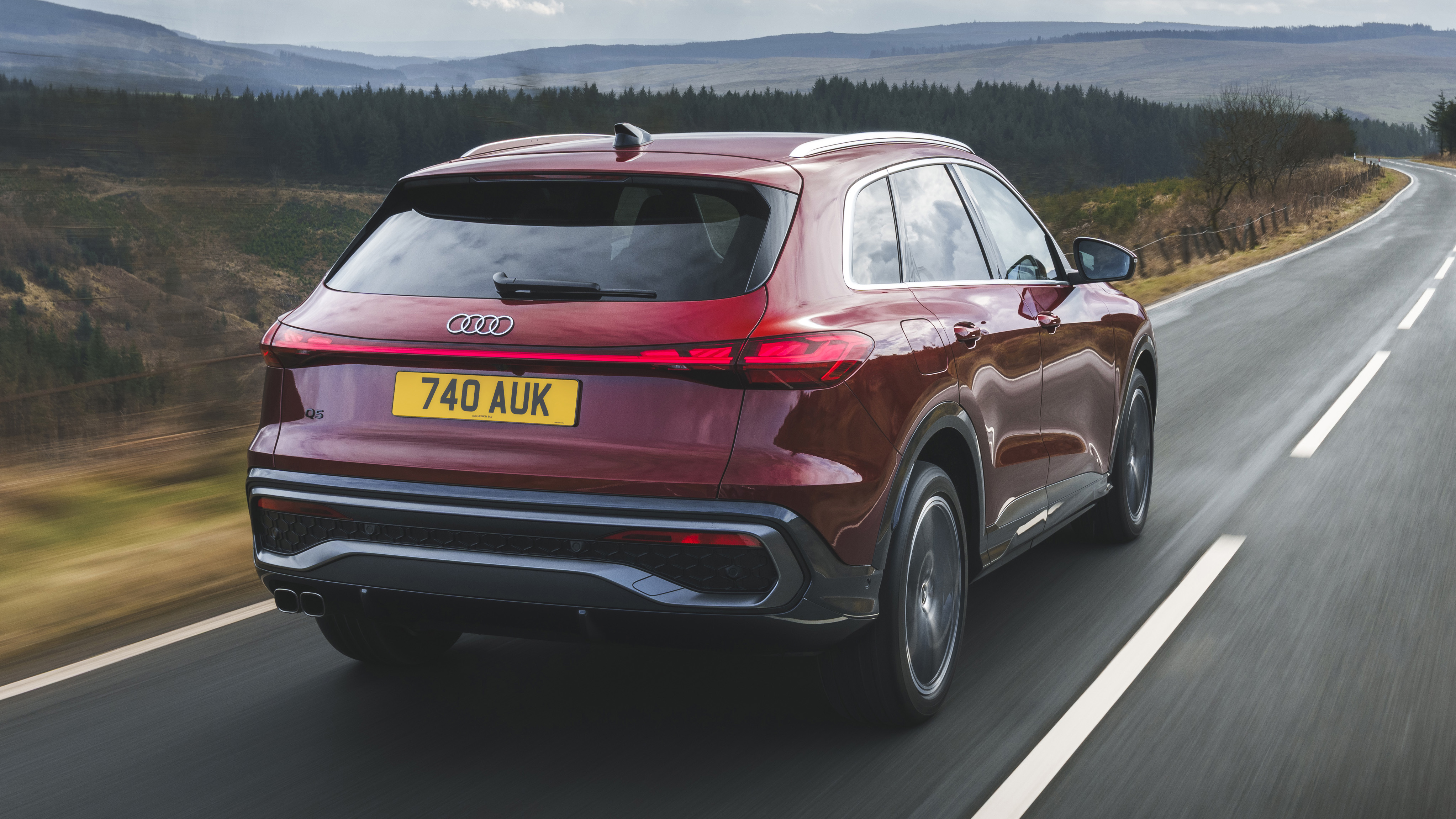
Worst of all, however, is the road roar, which even on the middlemost 20-inch alloys was up there with the most deafening we’ve tried on the concrete sections of the M25. We dread to think what it’s like on the 21s, which we’d suggest you avoid.
The Q5 e-hybrid seems like something designed to satisfy many criteria, which makes it disappear into that mid-sized SUV/crossover amorphous blob of cars offered by, well, everyone. Easy to understand but hard to really care about. The question is whether it can show some true character or capability to lift itself out of the generic mire.
It can’t. This is a superbly practical family car. It’s got pretty strong performance, the electric range is decent (although we found the range to be more like 40 miles than 62 in practice) and it does the Audi feelgood thing very nicely. However, the ride still isn’t great, the transition from regenerative braking to friction braking feels unsophisticated and somehow the whole experience is deeply forgettable.
Hybrid mode does a good job of blending EV-only driving and the combined ICE and electric motor mode, but there is quite a marked difference in performance and hence this on-paper pretty fast car can feel a bit lazy and unresponsive in EV mode.
In one sense, this is okay. If you just want a vehicle to slip into your life, almost unnoticed, and do everything competently, the Q5 e-hybrid delivers. On the other hand, surely Audi can inject a little more personality, a little more star quality into its cars than this?
The price premium over a ‘lesser’ marque’s similar vehicle demands a bit more sparkle than just the four-rings on the grille. As it is, the Q5 e-hybrid feels deeply average.
Get all the latest news, reviews and exclusives, direct to your inbox.