

MITSUBISHI
2.4 PHEV Nativa 5dr Auto
£46,825
A seven-seat PHEV with 4WD is an uncommon trio, smoothly integrated drive, pleasant cabin, good at towing
But unless you do tow, PHEVs are all a bit pointless
While a medium-to-large plug-in hybrid family crossover doesn't sound anything special now, remember the Outlander kickstarted the PHEV boom in Britain back in 2014. Outlanders of that generation are still widely loved by a spectrum of drivers from the rural who use its 4WD to urban ride-hailists who use its plug socket.
The new one is just about big enough for its seven-seat layout, although you get that only in the cheaper version, called Nativa. The top one of the pair, Diamond, has an epic stereo with a big sub in the boot where the third row would go.
The plug-in system operates mostly as a range-extender, AKA a series hybrid. Even with the engine humming in the background, it drives like an EV. Its engine is a 2.4-litre naturally aspirated job turning a generator, and the wheels are driven by an electric motor for the fronts and another for the rears.
When you've got charge in the battery, there's generally no combustion. But when you ask for more power than the electric system can deliver, the engine sparks up to generate some extra electric urge for the motors. Also, when the battery charge falls below 20 per cent then the engine runs more often, generating electricity to keep the battery buffered.
Finally, on motorways when it's more efficient for the engine to connect directly to the front wheels, that's what happens – commonly known as parallel hybrid operation. Even then if the engine's making more power than the wheels need, the rest is squirrelled back to the battery via the generator. The system's talent is you're hardly aware of the boundaries between all these different states.
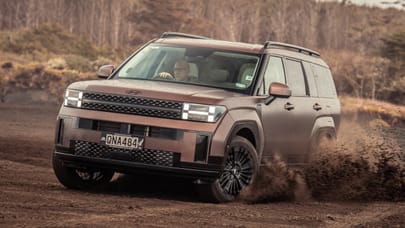
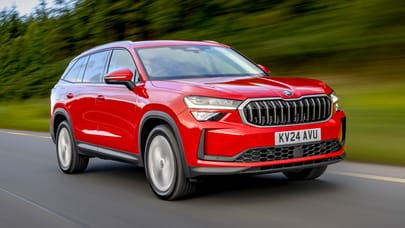
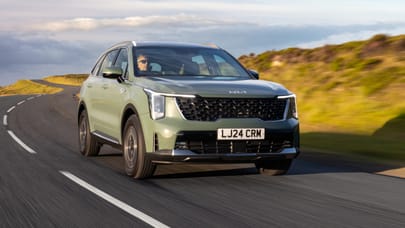
Once upon a time, 2014, the Outlander PHEV was the only car of its type. Over the years it sold more than 50,000 copies in the UK and rolled the pitch for the PHEV versions of the RAV4, CR-V, Discovery Sport, Grandland, 5008, Santa Fe, Sorrento, and Kodiaq. Some but not all of these can offer the combo of seven seats and four-wheel drive, so if that's important the field narrows.
If you're reading this in America, your Nissan dealer will sell you a badge-engineered version, called the Rogue PHEV. This isn't so weird, as Nissan and Mitsubishi have an alliance and the Outlander is actually based on a lower-body platform shared with their Rogue, our Qashqai and some bigger Renaults.
Since Mitsubishi left the UK five years ago, we've seen a huge disruption. A flotilla of Chinese PHEV crossovers have arrived, notably the BYD Seal U, and various MGs, Jaecoos, Omodas, Leapmotors, Geelys and Chery Tiggos, with a big Aion to come. And they're a heap cheaper.
The Outlander has the advantage of thousands of satisfied users ready to trade in to a new one. Is it good enough to reward their trust?
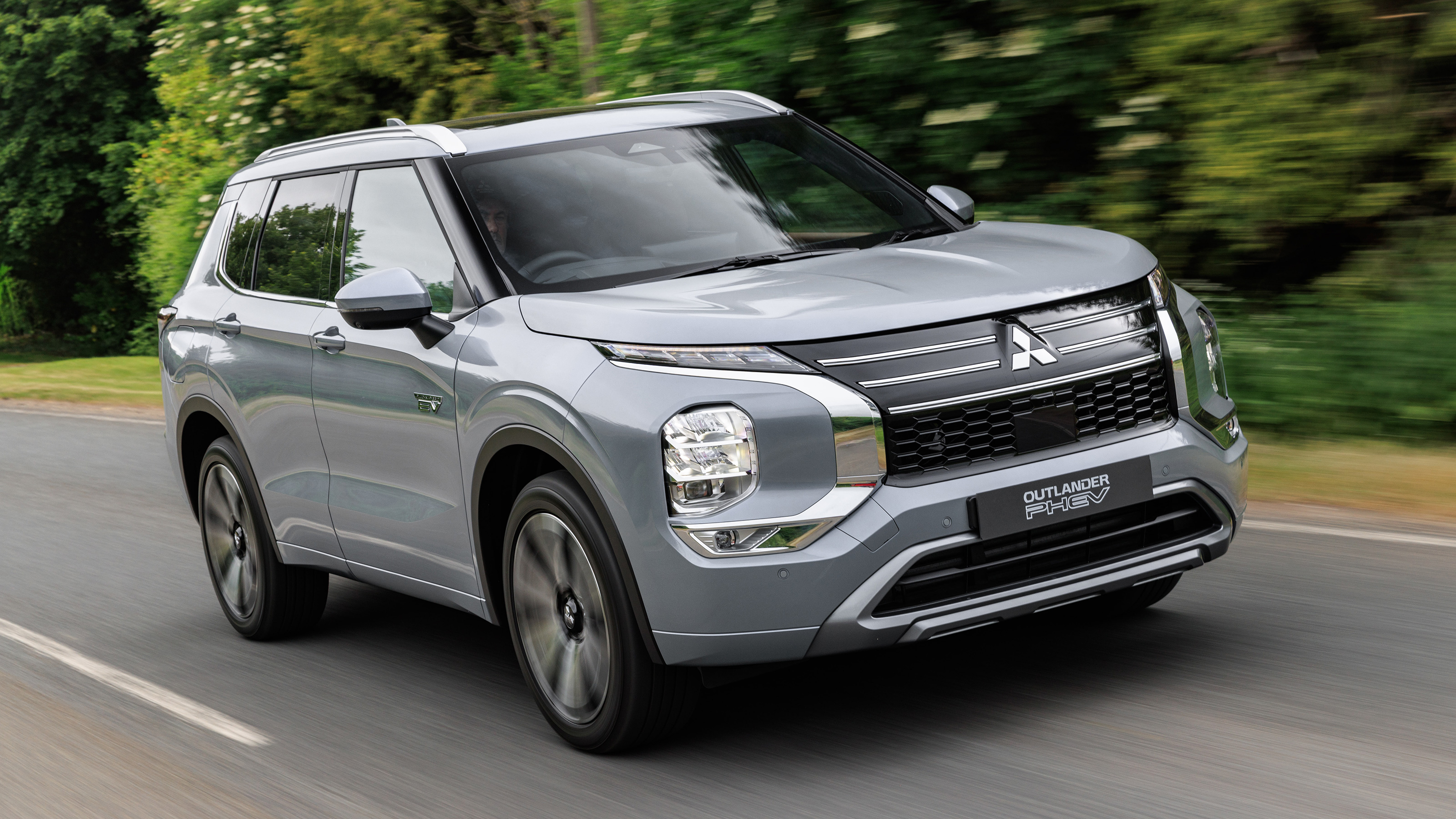
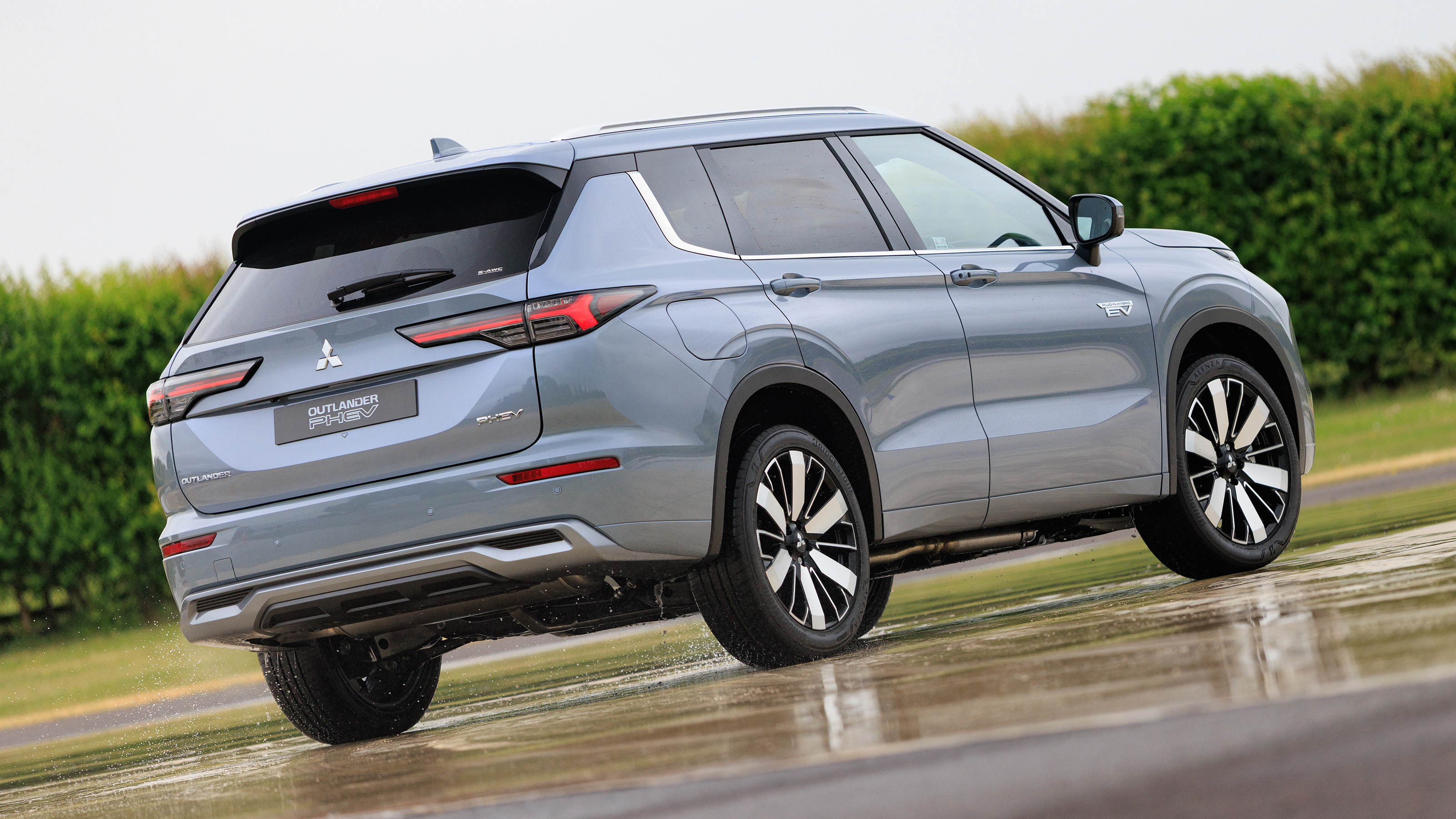
Yes, Mitsubishi has always done better when it plays to a pure SUV heritage than the crossover crowd. So it has a flat bonnet and upright sides. The wheels, 20-inchers, help the stance.
Its face looks stern, the eyes wide alert, but oddly its chrome detailing is more like the previous-generation Mitsubishi L200 pickup's not the current L200's. Then again, this Outlander was introduced in Japan four years ago, which makes it due a facelift. So if you don't like that chromey face, maybe just hold on a bit.
Inside, there's plenty of space for five. The sixth and seventh seats are more cramped obviously. Most refreshing of all is the number of hardware switches for climate and the drive systems. It's all reassuring and easy to learn.
The Outlander carries a 22.7kWh battery good for 53 miles of WLTP range. The rated fuel consumption on the WLTP cycle is 313mpg, but that doesn't count the energy that came down the recharging cable. Mitsubishi is transparent enough to agree that once the battery is depleted and you're out in the countryside or motorway in hybrid driving, you'll get what we got: around 35mpg.
Engine power alone is a pretty meaningless number, not even quoted in the Mitsubishi specs, because it never runs at full effort without being electrically enhanced. What you need to know is total system power peaks at 299bhp, against a 2,150kg kerb weight.
That gives a zero-to-62mph run of 7.9 seconds and top speed 106mph. That's no more than an on-par acceleration number, but it happens progressively – too many rival PHEVs are lethargic on first hit of the throttle, then lunge their full amount after a second or two. The Outlander also has useful regeneration paddles to give you extra control downhill or on twisty sections.
The suspension isn't soft but it takes the sharp edges off bumps so you soon stop thinking about it. Steering and brake pedal don't have much feedback but do what you tell them.
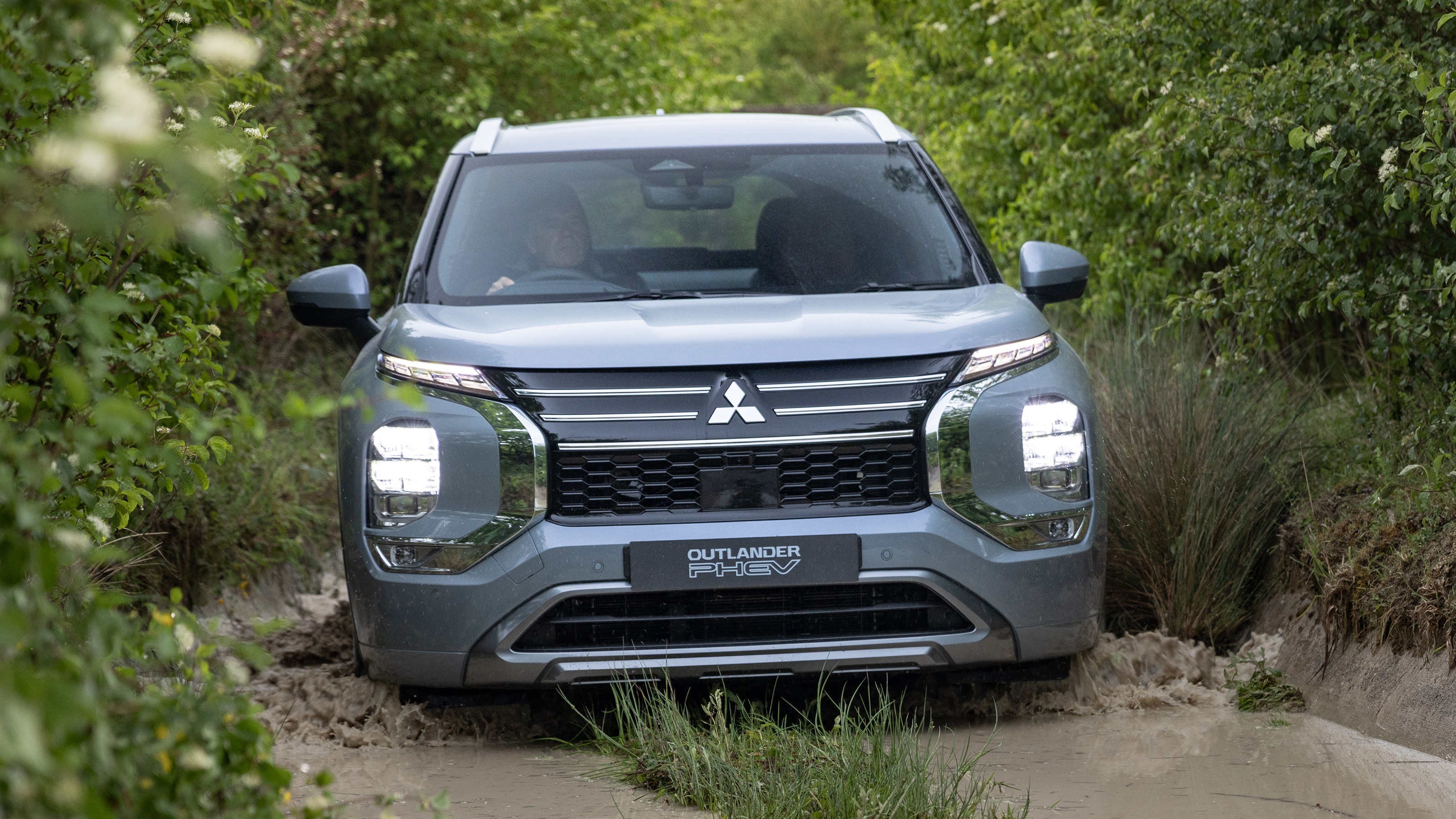
It's also capable of moderate off-roading, with traction-control and powertrain modes calibrated for gravel, snow and mud. Ground clearance is higher than most soft roaders too.
The Outlander meets the aims its makers set. The drive system operates more smoothly than the Chinese rivals (mostly EREV that are similar in principle) or the VW Group, Korean and Stellantis (which have multi-speed autoboxes). It rides and corners acceptably, is distinctively designed and feels well made. Of course it's practical, thanks to the ability to carry lots of people or stuff in bad weather or over tricky terrain.
But you need to think about what a PHEV is for. If you don't have home charging, it's no cheaper to run than a non-plug hybrid. And you won't recharge it on a long journey because even though it can take DC charging it's still slow – half an hour to 80 per cent. Yet without the electric supplement, a PHEV's motorway petrol consumption is nothing special. Remember, pretty well any modern, pure EV in this price range can easily tackle 600-mile days.
But a full EV is hamstrung when towing. Range falls, and you often have to unhook to fit a charger bay. If you tow, a PHEV makes a lot of sense. The Outlander has a very well integrated powertrain, and can take a 1,600kg trailer and make good use of its 4WD. If that's your intended use, the Outlander is a fine choice.
Get all the latest news, reviews and exclusives, direct to your inbox.