the fastest
Performance AWD 5dr Auto
- 0-623.5s
- CO20
- BHP453.3
- MPG
- Price£61,925
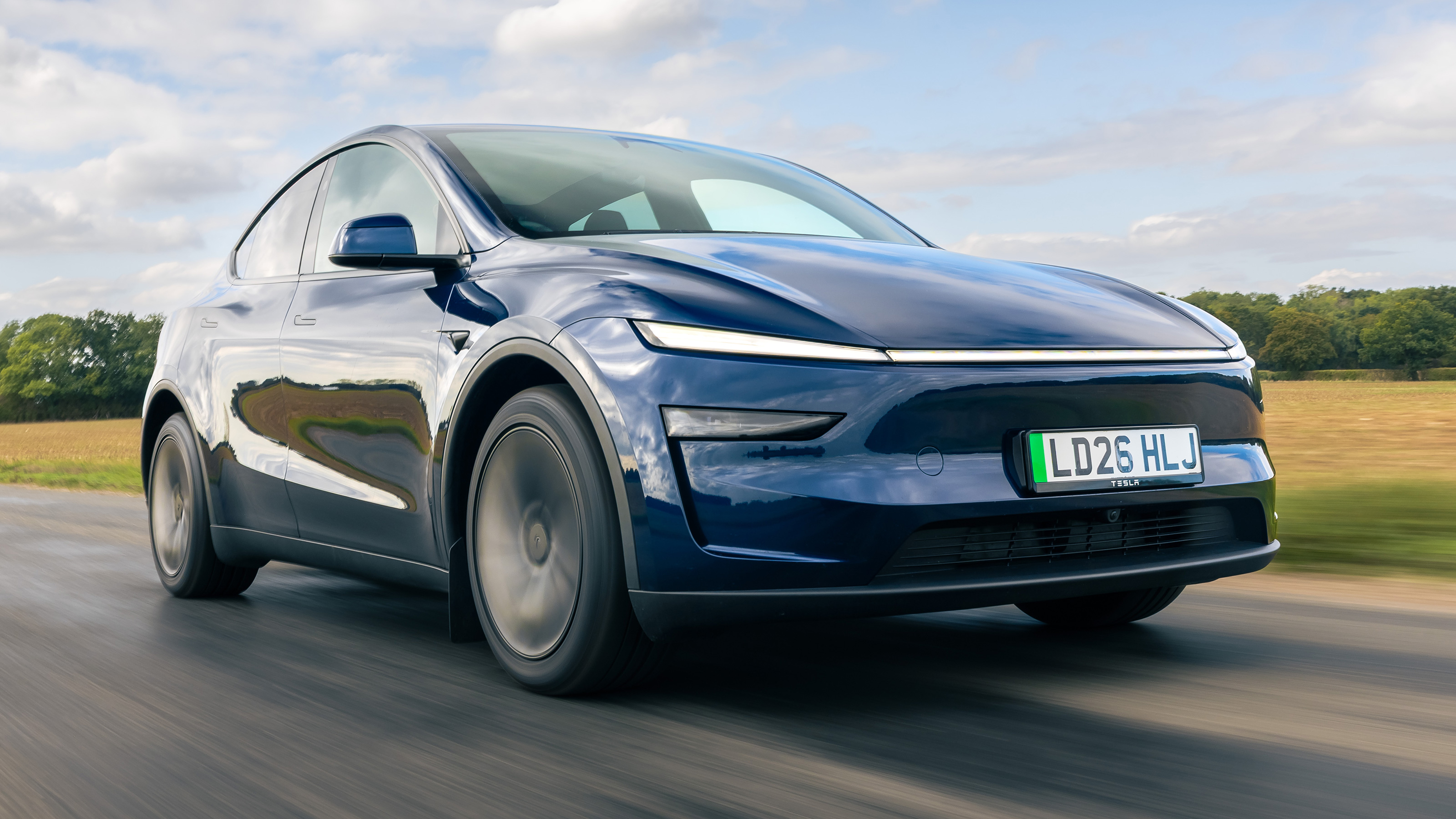
The driving experience has improved immeasurably. Or measurably, if you’ve got ears and a sense of touch. It’s still a heavy car at around two tonnes, but it doesn’t feel too hefty, at least in terms of EVs. The initial impression is one of quiet, compliance and sophistication that was missing before. It’s a car that feels more expensive.
Most of that is down to new manufacturing practices around the core of the car that cut down components and add rigidity. Different kinematics to allow the suspension to do its job, softer anti-roll bars, tyres with bespoke compounds, acoustic glass all-round, even better layers of wheelarch sound-deadening. It’s all in there.
So the car rides better, smothers bumps and holes with more authority. And the steering has been slowed slightly to make the car feel calmer from initial turn-in. It’s not diving at a curve now, and that helps the car feel more mature. There’s plenty of grip and it’s reliable, repeatable and predictable – perfect for a family car. The brakes are well sorted for normal driving, but lack feel and bite if you push on a bit.
Well, if you're talking about the generic mid-range Premium models (you can choose between rear- and all-wheel drive), they're nice, but you won’t go hooning for the sake of it. But really, who does that in what usually ends up as a family hack?
Still, the Long Range All-Wheel Drive car gets from 0-60mph in just 4.4 seconds, and has the usual EV ‘in-gear’ shove, even though it obviously only has one gear to push with.
The typical overtaking speeds you use are very healthy. That’s 364lb ft of torque doing the work, and around 375bhp for a family SUV isn’t slouchy. So you can still be childish at the lights.
But it does mean that the one you probably want is the less aggressive, cheaper Long Range Rear-Wheel Drive version. That returns 375 miles on the WLTP test, versus 387 miles for the All-Wheel Drive.
In our experience the Model Y is very efficient, and in the right conditions it'll return 4.0 mi/kWh and above – even on the motorway, where electric motors have to work harder. So you ought to get 320-ish miles out of versions with the 83kWh battery, and a bit less in the winter.
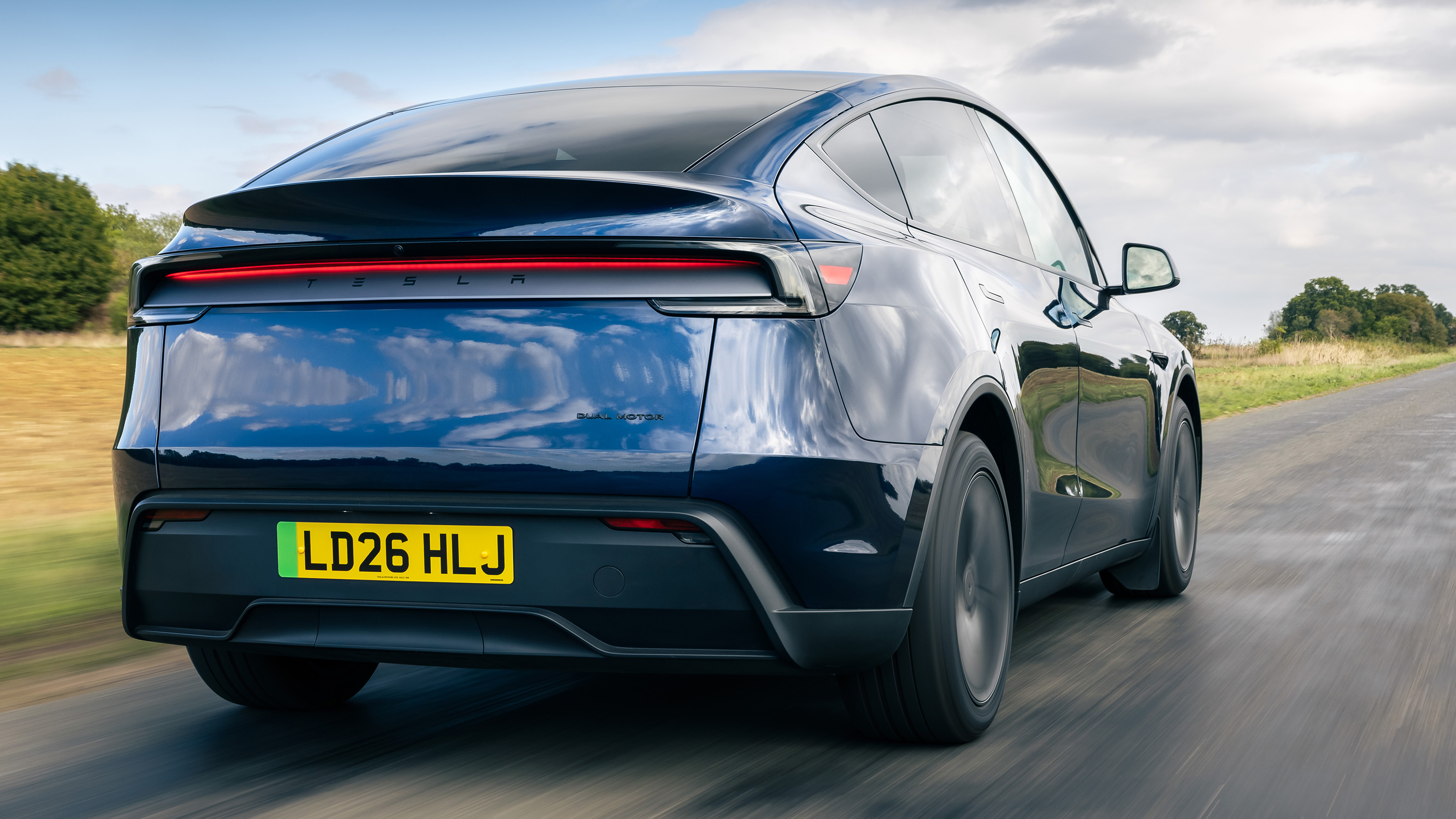
Then it's the twin-motor, 460bhp Model Y Performance that you require. As well as the extra grunt, this nabs the adaptive suspension from the Model 3 Performance and was apparently tested at the Nürburgring. There are new bushings and dampers too, plus extra bracing around the rear suspension. It’s not night and day better than the standard vehicle, but it’s got more deliberate intention.
And yet, does the Model Y really need a Performance line? A Y is a family SUV, so more go isn’t needed – the fast stuff makes more sense in, say, a Model 3. And then there’s the fact the standard all-wheel drive long range car is still sub-five to 62mph, has a smidge more range, doesn’t look much different and costs a straight £10k less.
But that’s not to say that the Y can’t hustle, it’s just that it’s not at the centre of its mission statement. Once you push, you find generous grip edged out with progressive – very four-wheel drive-feeling – understeer. But you’ll end up in the traction-control systems way before anything gets too out of hand. At speed it’s rock solid and very quiet, even for an EV.
Well, if we're talking about the way it drives then it's really not very different from other Model Ys. Yes, the motor has been reined in slightly, but it still accelerates with decent force. The passive suspension setup is also perfectly fine – it's perhaps a little firm but with decent sidewall on the tyres it copes with bumps in the road perfectly adequately.
The only real consideration you'll need to make is whether a 60kWh battery is big enough for how you'll use the car. Pottering around town and taking the kids to school? Absolutely fine. Pounding Britain's motorways and frequently using the Supercharger network? You'll probably want more than the claimed 314 miles of range. Particularly as on a cold day in the UK we saw an average of 3.6 mi/kWh, which means a likely real-world range of 220 miles in winter. Eek.
Get all the latest news, reviews and exclusives, direct to your inbox.