




Big Reads
'A scaled down Ferrari 812 Superfast': is the Donkervoort P24 RS worth £312k+?
It's the Dutch carmaker’s most extreme model yet – a featherweight with Ferrari F80-troubling performance
Most of us don’t realise or admit it, but part of identifying with one sports car manufacturer or another is wrapped up in its history. Ferrari is the ultimate example: Enzo, the fearsome racer-turned-constructor with an unquenchable thirst for victory, a fascination only with the most talented drivers and a disdain for aerodynamics and the very road cars that funded Ferrari’s motorsport glory. The guy who impolitely showed Ford the door from behind those iconic sunglasses. What a story!
Lamborghini, Lotus, McLaren, Porsche and now even newer entrants like Pagani and GMA have their lore, too. We love tales of disgruntled customers, engineering visionaries, incredibly motivated drivers or mysterious characters who see the world through a very different lens.
Advertisement - Page continues below
Of course, it helps if they have a cool name, too. Surely Horacio Pagani’s parents knew he would someday launch a car company before he was even born...
Photography: Mark Riccioni
Which brings us to Donkervoort. Maybe it’s just to our (or my?) English ears, but the name doesn’t have the magic of one of those thoroughbred Italian marques. Its location, just a short drive from Amsterdam, isn’t romantic or evocative, either. Unlike Modena there isn’t the history of crazy young engineers with names like Bizzarrini, Colombo, Materazzi and Dallara pushing against convention and beyond the limits in ramshackle workshops.
And Donkervoort’s history? Well, here it gets interesting; stretching back to 1978 and with suitably purist beginnings. The story starts when founder Joop Donkervoort won the rights to import the Lotus Seven to the Netherlands, but then realised it would be impossible to get it through local Type Approval. Undaunted, he developed his own car in the Lotus’ image, the Donkervoort S7. Each subsequent Donkervoort’s philosophy has stayed true to the Seven ideals of lightweight engineering, dynamic purity and a front engine/rear drive layout with open front wheels. Nearly five decades of consistently striving for pure driving joy feels like a strong reason to align with and covet a Donkervoort.
Advertisement - Page continues below
It remains a family owned business, too. Joop’s son Denis is the current CEO, test driver and creative force behind the company. He’s also a lovely guy and whilst the name Denis Donkervoort might not ring through the ages like Giotto Bizzarrini or Giampaolo Dallara, well, you can attribute that to the romance of the Italian language as much as anything else. Not exactly in their control...
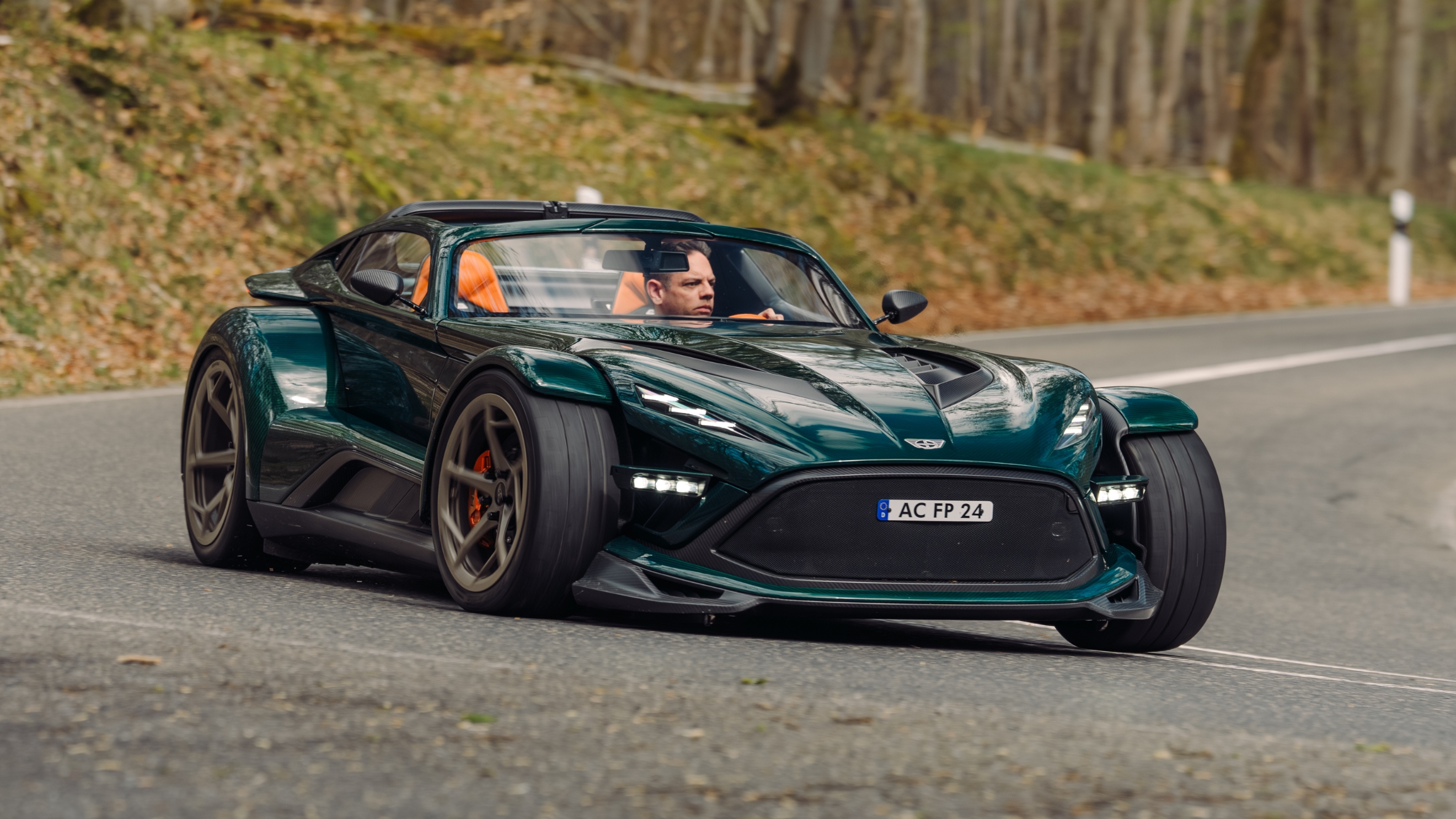
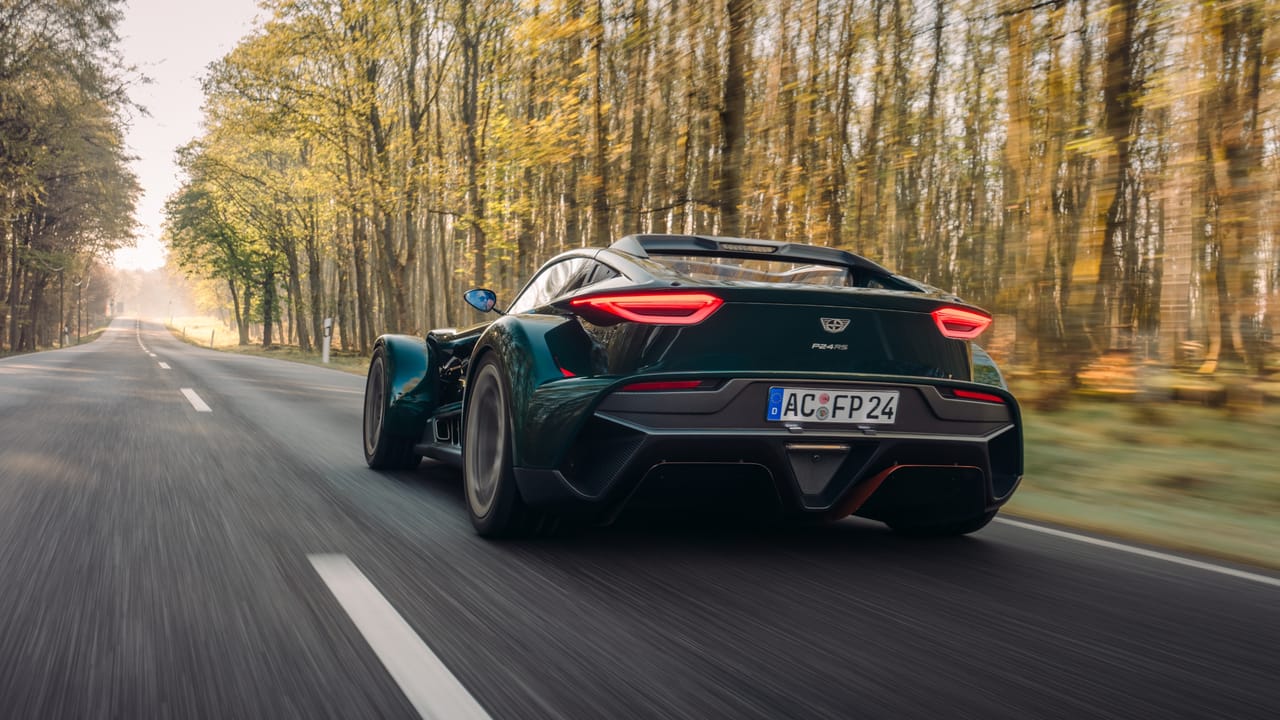
Anyway, this simplicity, mission focus and commitment to pure driving thrills is right up my street. But what’s really fascinating is how wildly Donkervoort has diverged from that early Lotus Seven-style model whilst retaining its core principles and proportions. The latest P24 RS – the prototype finished in beautiful exposed carbon fibre with layers of green clearcoat and forged wheels in gold – is so far from a current Caterham that it’s not really even in the conversation. Unless you imagine a parallel reality where Colin Chapman is a young man in 2026 and just conceived the Seven with knowledge of all the current materials technology and access to some seriously feisty hardware...
So, the basics. The P24 RS is a two-seat sports car that weighs just 780kg dry. It has a tubular steel chassis reinforced with ‘Ex-core’ side panels and a front structure entirely made from this proprietary carbon fibre process that combines traditional pre-preg carbon lay-up with a unique foam core. The powdery foam is sandwiched between the carbon layers and laid in an aluminium mould. Heating elements then cure the foam and carbon.
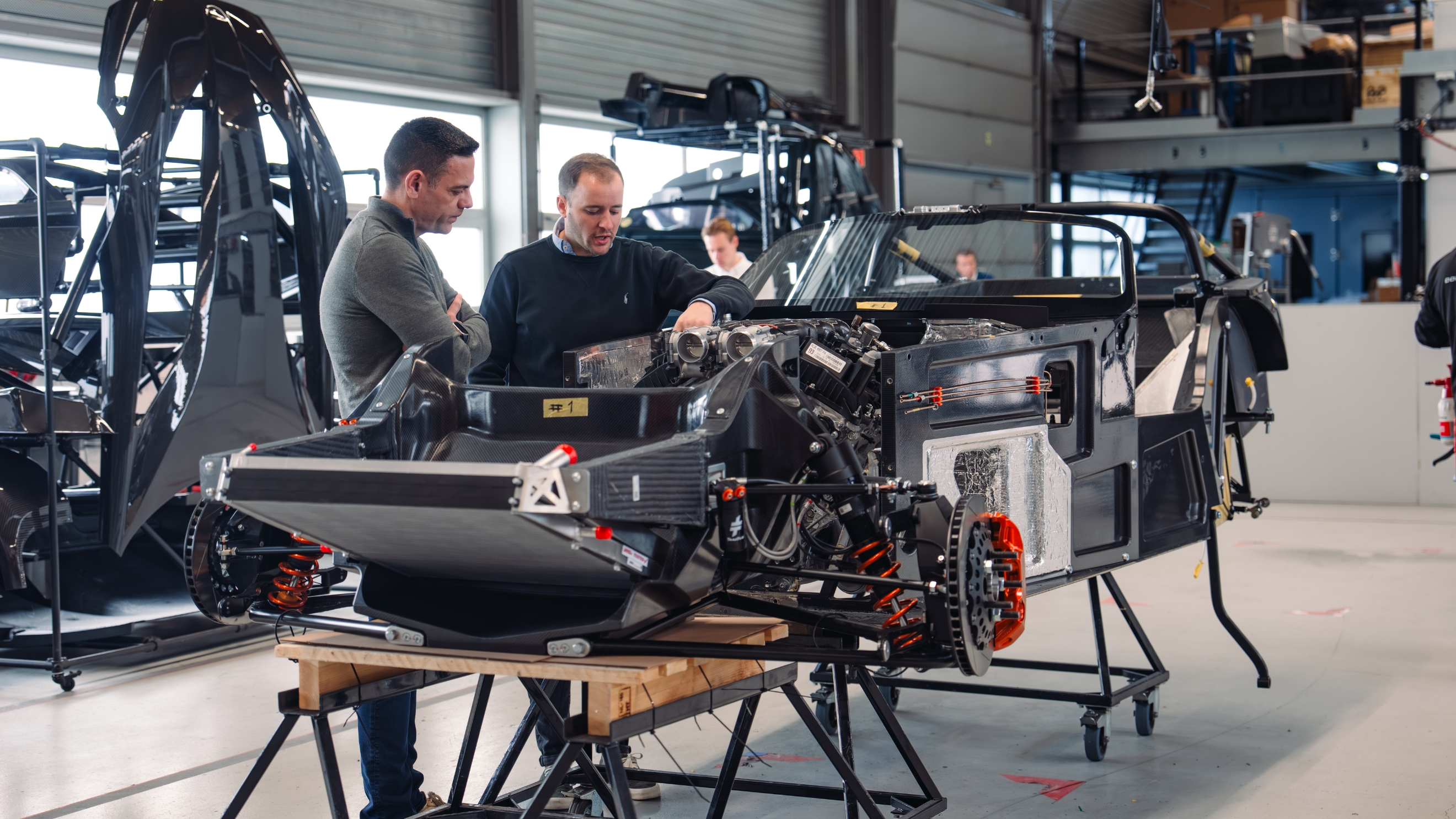
No pressure is required, no autoclave necessary and it allows for intricate, complex shapes and you can even insert metal fixings into the part to 0.1mm accuracy. It’s a much faster process, too. Ex-core is now a standalone company and the technology is licensed to Toyota for its WEC programme and several F1 teams.
The upshot for the P24 RS is a chassis with incredible integrity – 58,000Nm per degree is getting close to Koenigsegg’s fully enclosed vault-like carbon fibre tub.
Light, stiff, featuring double wishbones at each corner and trick Tractive dampers that are electronically adjustable and negate the need for anti-roll bars, the P24 RS is a pretty impressive platform. It also features optional carbon ceramic brakes, adjustable ABS and traction control (yes, you can buy it without and even power steering is an option, so you can go for a completely ‘analogue’ car if you so wish) and lists things such as magnesium rims as an option, too. It’s supercar or even hypercar stuff but built to a smaller scale. The footprint is slightly longer than an MX-5 but much wider and lower.
One thing that’s not scaled down is the performance. Donkervoort has been using Audi engines since 1999 and the previous F22 model was blessed with the superb five cylinder turbocharged unit. However, Audi is quite prescriptive in terms of engine management and mechanical changes to its engines and the P24 RS needed a more flexible and powerful solution. Enter the 3.5-litre twin turbocharged V6 engine labelled the ‘Power to Choose’ or PTC.
Top Gear
Newsletter
Get all the latest news, reviews and exclusives, direct to your inbox.
![[node:field_carousel-themed]](/sites/default/files/styles/media_embed/public/2026/06/Donkervoort%20P24%20RS%20%2810%29.jpg?itok=PS6rN4oe)
Based on the Ford Ecoboost V6 as seen in the GT but with a bespoke dry-sump system, unique smaller turbochargers by Van Der Lee, 3D-printed exhaust manifolds and a unique intake system, it lives up to the PTC tag with Comfort, Touring and Performance modes, which deliver 394-, 493- and 592bhp (400-, 500- and 600PS) respectively.
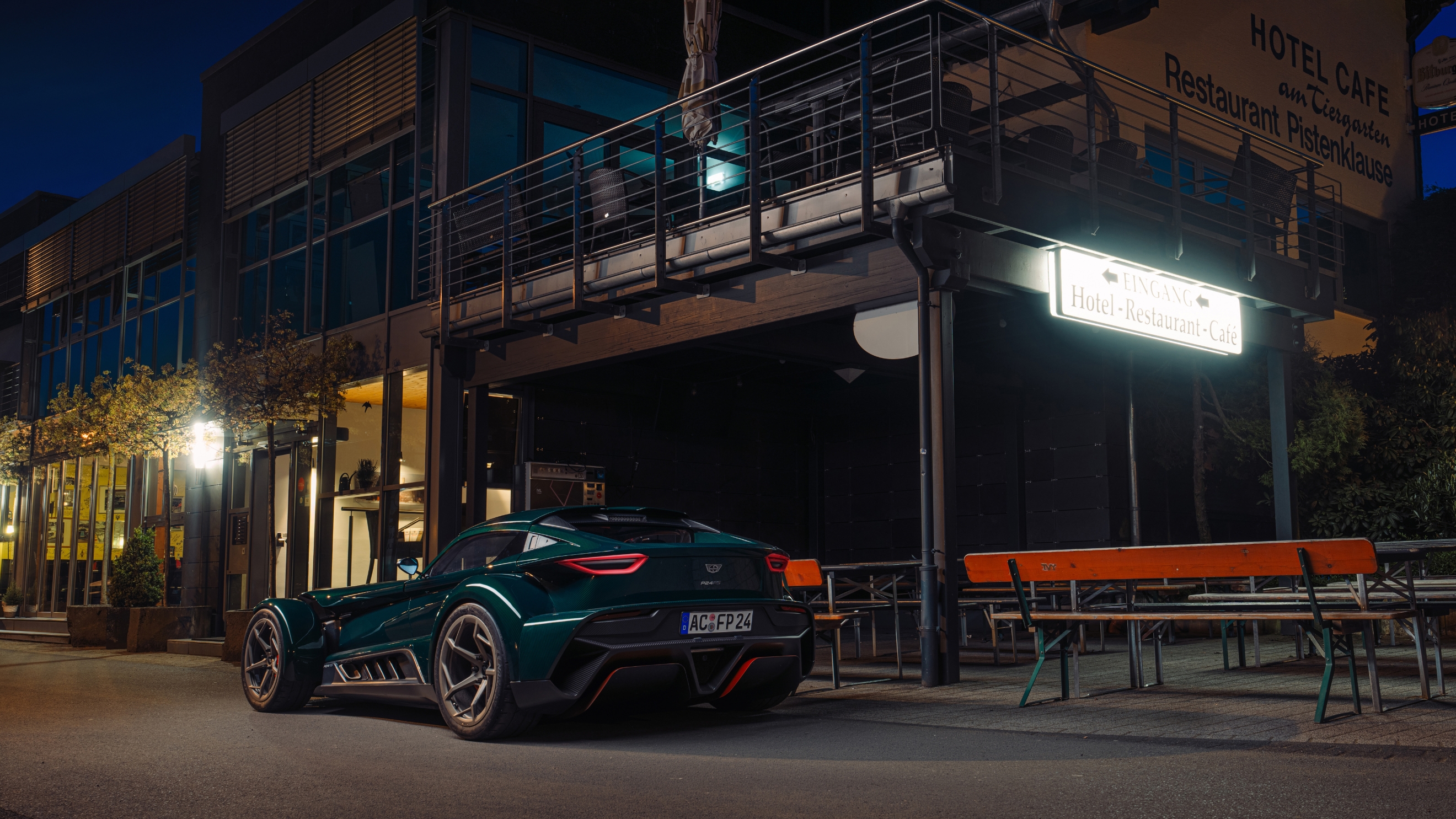
The power-to-weight ratio is similar to a Ferrari F80, which gives the bespoke Nankang CR-S tyres plenty to think about. Donkervoort claims 0–124mph in 7.4 seconds, a top speed of over 186mph and 2.3g of cornering force even before you fit the track-only aero kit, which consists of a very cool front splitter and C-shaped rear winglets not unlike a Ferrari 296 Speciale for 90kg of downforce front and rear. This is a hardcore car but with a carbon fibre targa roof it’s eminently useable and even has 300 litres of bootspace. That’s more than twice the capacity of a Porsche 911.
Getting in is a reminder that the P24 RS is very much not a 911, though. Or a McLaren or Ferrari. Because whilst there’s actually plenty of room even for two metre Dutch toddlers once inside, the act of getting behind the wheel requires good flexibility, a disregard for dignity and an acceptance that lightweight thrills require a degree of sacrifice to enjoy on a daily basis. The steering wheel is removable, but I can just about thread my legs into the footwell whilst sitting on the sill and then shuffle down into the driver’s seat with it in place. Although it’s a good job I’ve already had enough children.
Once ensconced it really is roomy and I have to slide the seat well forward (damn my less-than-Dutch frame) to comfortably reach the pedals. The view and seating position is really cool. There’s the feeling that you’re right on the rear axle – just like a Caterham – but there’s a higher bonnet line, a really simple but beautifully executed interior and just more substance.
![[node:field_carousel-themed]](/sites/default/files/styles/media_embed/public/2026/06/Donkervoort%20P24%20RS%20%2811%29.jpg?itok=B8QD-HUd)
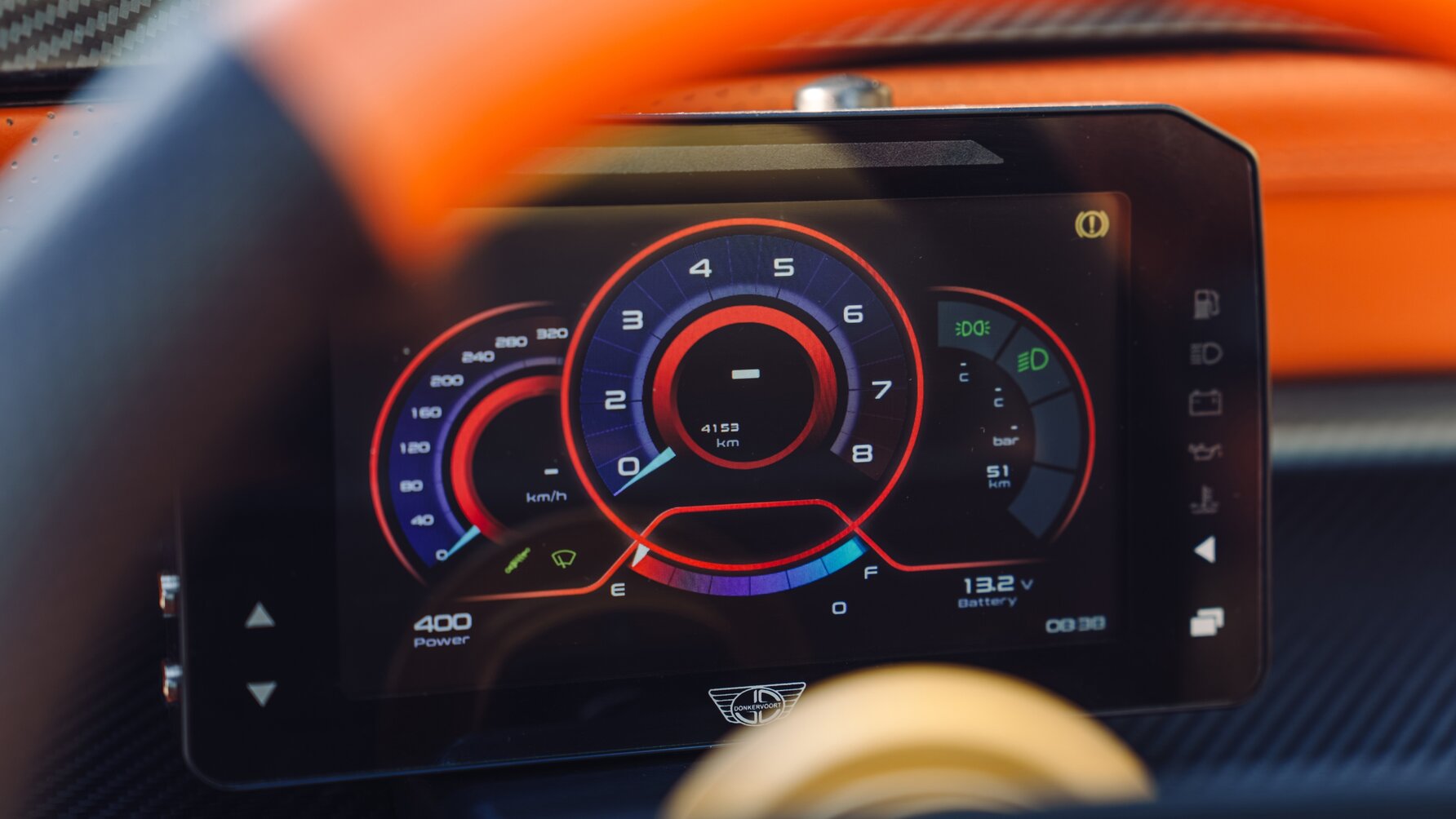
To my mind it feels more scaled down Ferrari 812 Superfast than scaled up Seven. Perhaps the small dash screen by Aim is a little incongruous in this self-proclaimed analogue car, but there are lots of physical buttons and, of course, a stubby gearlever for the five-speed manual ’box.
Donkervoort says a sixth ratio would add weight and isn’t necessary with such immense power-to-weight. It’s probably right, but a 780kg car with 592bhp isn’t necessary, and I can’t help thinking that more ratios means more shifts means more interaction, which is surely the point?
Starting the P24 RS involves a small, highly convenient metal device inserted into an ‘ignition barrel’. Twist this ‘key’ – an innovation more manufacturers should adopt – and the engine wakes up with an angry, barrel-chested blare that’s not exactly pretty but does create a great deal of anticipation.
It feels and sounds like a very big engine for a very small car. The side exit exhausts are incredibly short, perhaps 300mm between turbos and the exit, and aren’t linked for a more traditional V6 noise, so it’s hard to place the configuration. A very different experience to the distinctive burr of the old Audi five cylinder, then.
Even so, the P24 RS at idle is both intimidating and deeply fascinating. Just what is this creature all about? It reveals itself quickly. With suspension set to one (out of five, with a zero setting that leaves the active elements of the dampers untapped), the P24 RS takes the edge off sharp bumps and the chassis rigidity is obvious with superb wheel control and general composure. But it’s alert and alive, with such a tangible sense of agility. The lack of mass shines bright.
The five-speed ’box is hefty, though. The throw is short – perhaps slightly too short, which makes juggling between second, third and fourth tricky at times – and requires a strong hand. Sport mode, for sharper throttle response and more exhaust theatrics, will also provide a rev match function, but it’s not yet programmed on this prototype and the throttle pedal is set too low for easy heel-toe downshifts. I can live without the rev match tech, but would like a fix for the pedal placement.
Even so, within even a few miles the Donkervoort feels like a properly sorted car and melds so many elements into a cohesive and seriously appealing whole. Riotous, nimble and brimming with feedback like a lightweight track car; bespoke, hand crafted and analogue like a gold standard restomod and with the material technology and finish of a high end supercar. The P24 RS feels unique and blows my preconceptions apart. This left-field, super rare concoction makes perfect sense.
It’s sunny but cool and despite bespoke Nankang tyres designed to get up to temperature quickly for the super light Donkervoort (a traditional supercar tyre would be way too hard), the P24 RS demands respect. I’m still in Touring mode with 493bhp but the adjustable motorsport style traction control sends machine gun style reports as it cuts ignition to temper rear wheel overspeed even well above the UK national speed limit. Gulp. But in the corners and thanks to superbly judged steering and the information that bubbles up through the carbon fibre Recaro seat, there’s entertainment rather than intimidation.
The balance is lovely, with just a smidge of understeer followed by shallow angles of power oversteer. Something about how you sit so connected to the rear axle and the characteristics of the mechanical limited-slip diff creates such a clear sense of what’s happening down where tyre meets road. Even so, this is not a beginner’s car. Turn up the wick to 592bhp and you really need a good handle on car control and a brain attuned to reading the surface. Talk about engagement. The P24 RS ensures you’re absolutely dialled in to the dynamics and immersed in the environment around you. Although should you feel brave enough to wind the traction control off and select the most powerful engine map even a dry road is best considered wet...
So, it’s a challenge. Yet the tools it provides the driver are of really high quality. As well as the intuitive steering and excellent body control, the pedal feel and progression for the ceramic brakes is exceptional and the engine’s power delivery is absolutely ferocious but also predictable and natural. Those small turbos spool quickly but don’t fade at the top end and the performance has a surreal, physical presence. You never quite get used to it. Donkervoort doesn’t want to be compared to a Caterham. Ever. But I hold the Seven in such high regard that to do so is far from a disservice. That the P24 RS retains the mesmerising tactile involvement of a high power Caterham and combines it with quality, drama and a supercar sense of occasion is deeply impressive.
![[node:field_carousel-themed]](/sites/default/files/styles/media_embed/public/2026/06/Donkervoort%20P24%20RS%20%289%29.jpg?itok=EroW6-PR)
With the roof up the P24 RS really is a useable car. It has air conditioning, heated seats, the cabin is roomy and comfortable and with all that luggage space it would be a breeze to go away for a long weekend. However, once enclosed you are made aware that it’s still a pretty hardcore proposition. Getting in requires even more gymnastics and the V6 sounds raucous under any load at all, plus the lightweight flywheel rattles thorough the transmission tunnel and there’s a fair amount of wind noise, too. This is not a McLaren 750S-style everyday, any situation machine. Well, not for most.
I keep mentioning supercars for a reason. The P24 RS costs from €298,000 plus local taxes. Call it £312,000. However, the options add up fast. For example, carbon ceramics are another £20,000 or so, an exposed carbon body getting on for £60,000. This prototype model was listed at €580,000 for insurance purposes. Donkervoort will produce 150 of these cars at a rate of around 40 per year, so it remains the preserve of a very particular customer.
Sceptical? Well, it’s sold over 80 so far and on our three-day visit orders came in for eight further P24 RS... so the buyers are out there. Before visiting Donkervoort and driving the P24 RS I wouldn’t have seen the logic. Now? I get it. It’s a special car that values all the things that enthusiasts hold dear. Donkervoort’s history might not shimmer with F1, Can-Am or Le Mans glory and the name isn’t as evocative as the Italian companies we’ve come to adore, but the end product is fantastic. It’s writing its own story right now. Quietly and in a characteristically no nonsense Dutch style. Believe me, it’s one you should follow and celebrate.
Price: £312,000 (£500,000 as tested)
Powertrain: 3.5-litre twin turbo V6, 592bhp, 590lb ft
Transmission: 5spd man, RWD
Performance: 0–62mph in n/a secs (0–124mph in 7.4secs), 186+mph vmax
Economy: 28.5mpg, 231g/km CO2
Weight: 780kg (dry)
Trending this week
- Long Term Review
We lived with the bestselling Alfa for six months. Should you?