




Supercars
"A sublime mix of analogue and digital": why the Ferrari 296 Speciale is our supercar of the year
Ferrari has taken its 296 and added some extra spice. The result takes it to a level its competition can’t handle
The world is governed by algorithms. But is it possible to determine driving pleasure empirically? Ferrari, not always the epicentre of rational thought, says that it is. The 296 Speciale – priced from £359,779 – has been developed according to strict metrics, the primary focus of which is lateral and longitudinal acceleration, gear shifting, braking performance, and the soundtrack. Get these right and sheer driving satisfaction should follow. Like Coca-Cola, though, the exact recipe remains secret.
The Speciale – dusting down a name previously used on the epochal 458 Speciale, Ferrari’s last nat asp V8 – is not a car into which you just jump and hit the go button. Not least because there are so many buttons inside it takes time to figure out which does what. There’s also a surfeit of power, 868bhp all told, fired exclusively through the rear wheels. And those are wrapped in bespoke Michelin Pilot Sport Cup 2 tyres. Aren’t they generally a bit temperature sensitive?
Advertisement - Page continues below
So what you want is a lovely warm day. Instead, a leaden sky is disgorging globules of water that are bouncing off the surface in a way that’s semaphoring the word ‘aquaplane’. Having figured out how to operate the wipers, I can tell you that right now is no place for a mid-engined 868bhp Italian supercar. We press on.
Photography: Jonny Fleetwood
Despite assurances that the Cup 2s (305/35 ZR 20s on the rear) really are versatile, easy does it. The ‘bumpy road’ and ‘wet’ setting on the manettino are fully engaged; the hero to zero margin is wafer thin today. But the surprises arrive swiftly, and you’d swear there’s toasty tarmac under the wheels. Ferrari’s mastery of the hardware is a given these days, but its software guys are geniuses, too. The car doesn’t blink, even when I mash the throttle pedal. It just warps forward with barely a shimmy, conjuring traction where none should really exist.
Then there’s its suspension. A polished ride quality has been a Ferrari signature since the 458 Italia, but the way this latest incarnation ‘breathes’ down the road is insanely good. Italy doesn’t quite do UK potholes but it is earthquake territory so there are odd cambers and nasty ridges. The Speciale simply refuses to run out of answers – or damping. Its Magneride is magic. (It’s an option, as is the bumpy ride setup, but Ferrari GB is lobbying for both to be standard.)
Advertisement - Page continues below
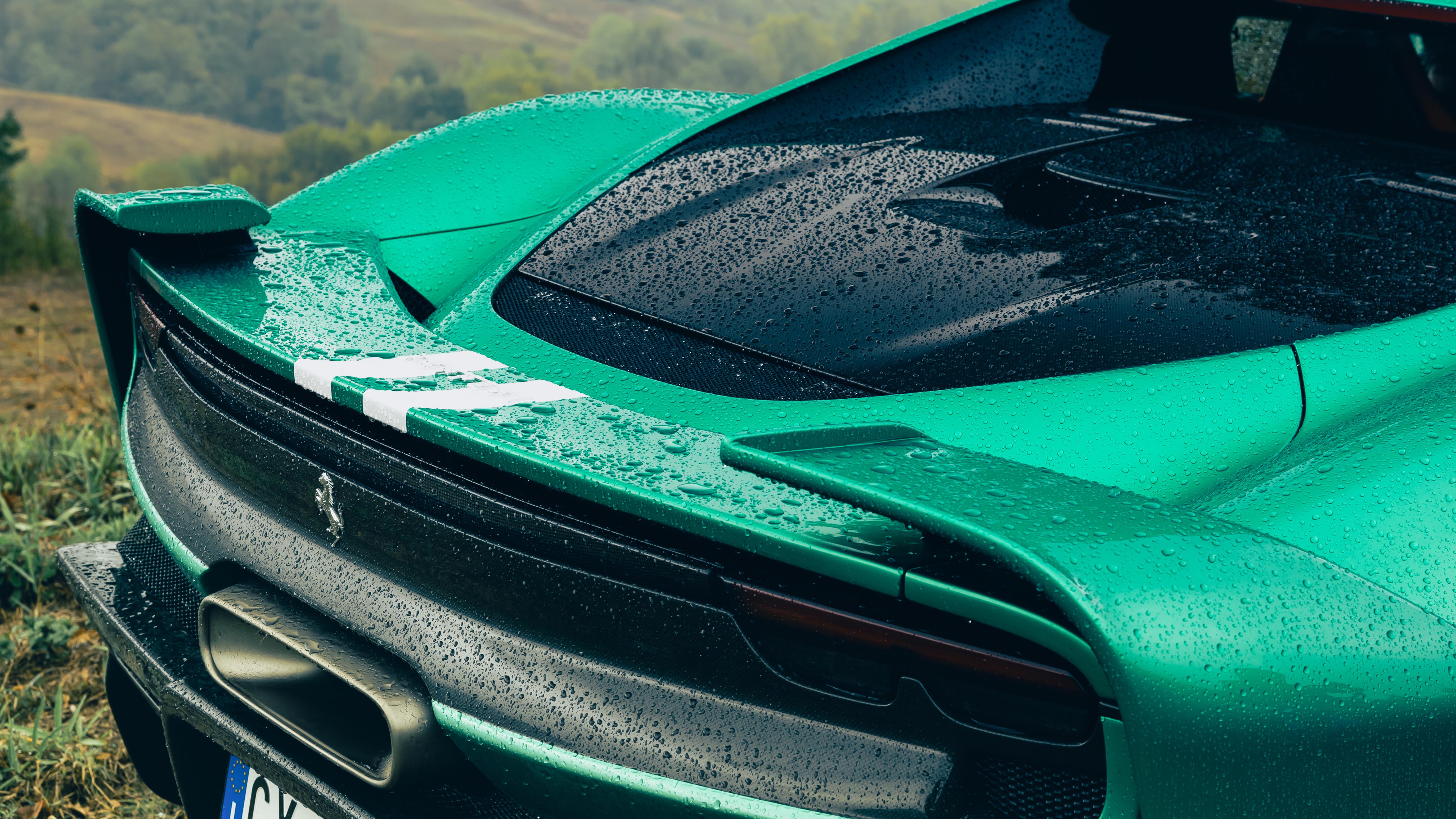
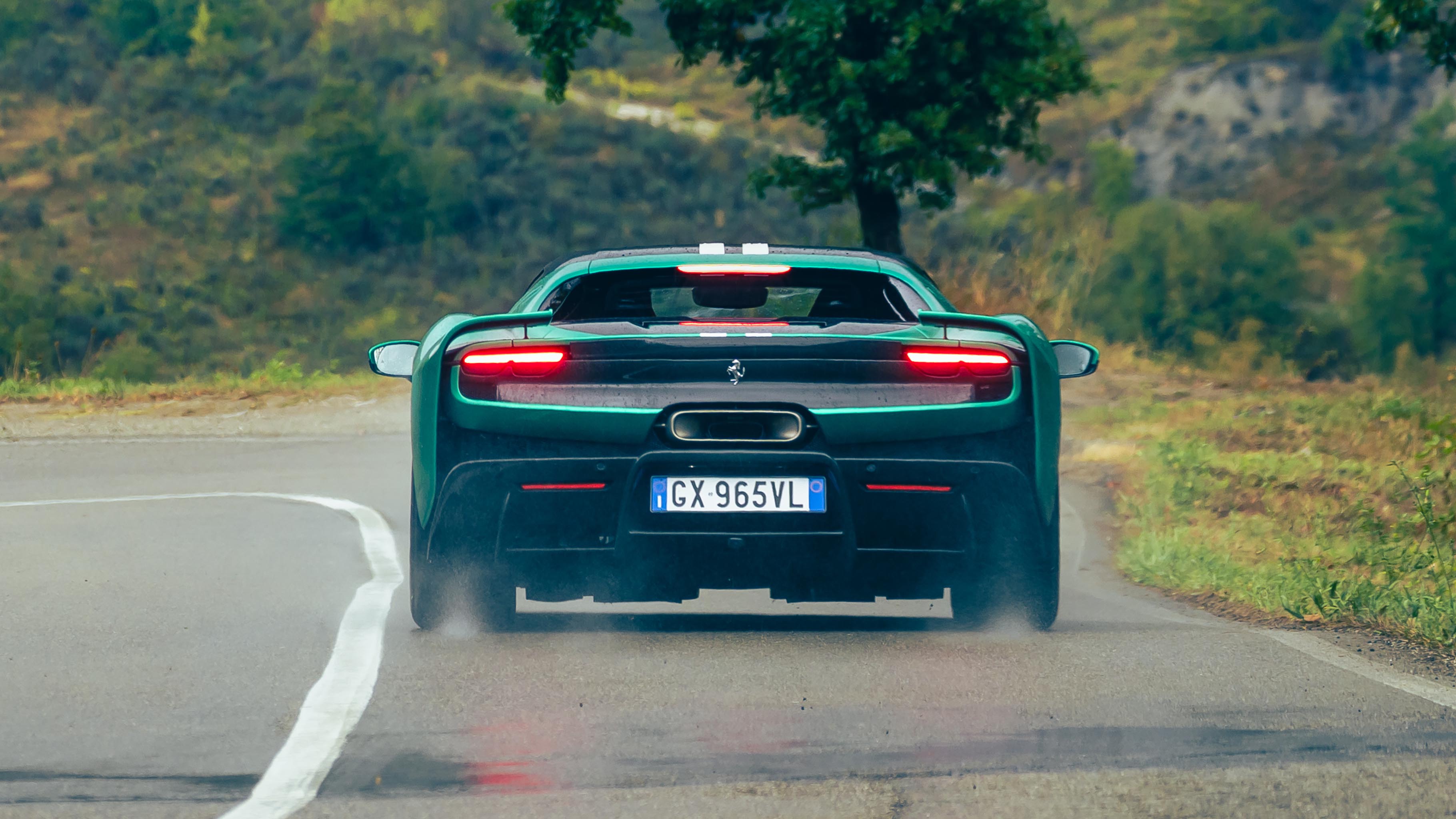
We up the ante as we head away from the urban areas abutting Maranello and into the hills. Now you notice that the steering is calmer, that the 296 Speciale is another new gen Ferrari that you drive using your forearms rather than wrists. It feels meatier, less skittish than some of its celebrated predecessors. It also turns in beautifully and feels supremely agile in all three cornering phases. Switch to ‘race’ mode, and things become more interactive while keeping the traction guardians in play – up to a point.
The Side Slip Control software has reached v9.0, and it’s now so good it’s surely only a few stops away from turning the Ferrari into a fully sentient being. By analysing the car’s slip angle in real time and comparing it to a target value, it translates steering and throttle inputs into meaningful activity on the road. Basically, it works out what the driver wants to do and aims to deliver it without coming off as interfering.
It gives us time to appreciate the interior changes. It’s the 296 GTB, but simplified. There’s lots of carbon fibre and Alcantara which looks great and saves weight. The door panel is Speciale specific, and it’s made of a single piece of carbon fibre. The sound from the woofers passes through holes cut in the carbon. Motorsport inspired minimalism means exposed fasteners and no carpet. Or door bins.
A shortcut on the wheel dispenses with the ADAS nonsense. Rarely has there been a machine in which lane assist has been less welcome. Accessing the audio is fiddly but we like the gear selector layout that mimics the classic manual setup. And the seats and driving position are faultless, although we’d think twice about the optional four point harness.
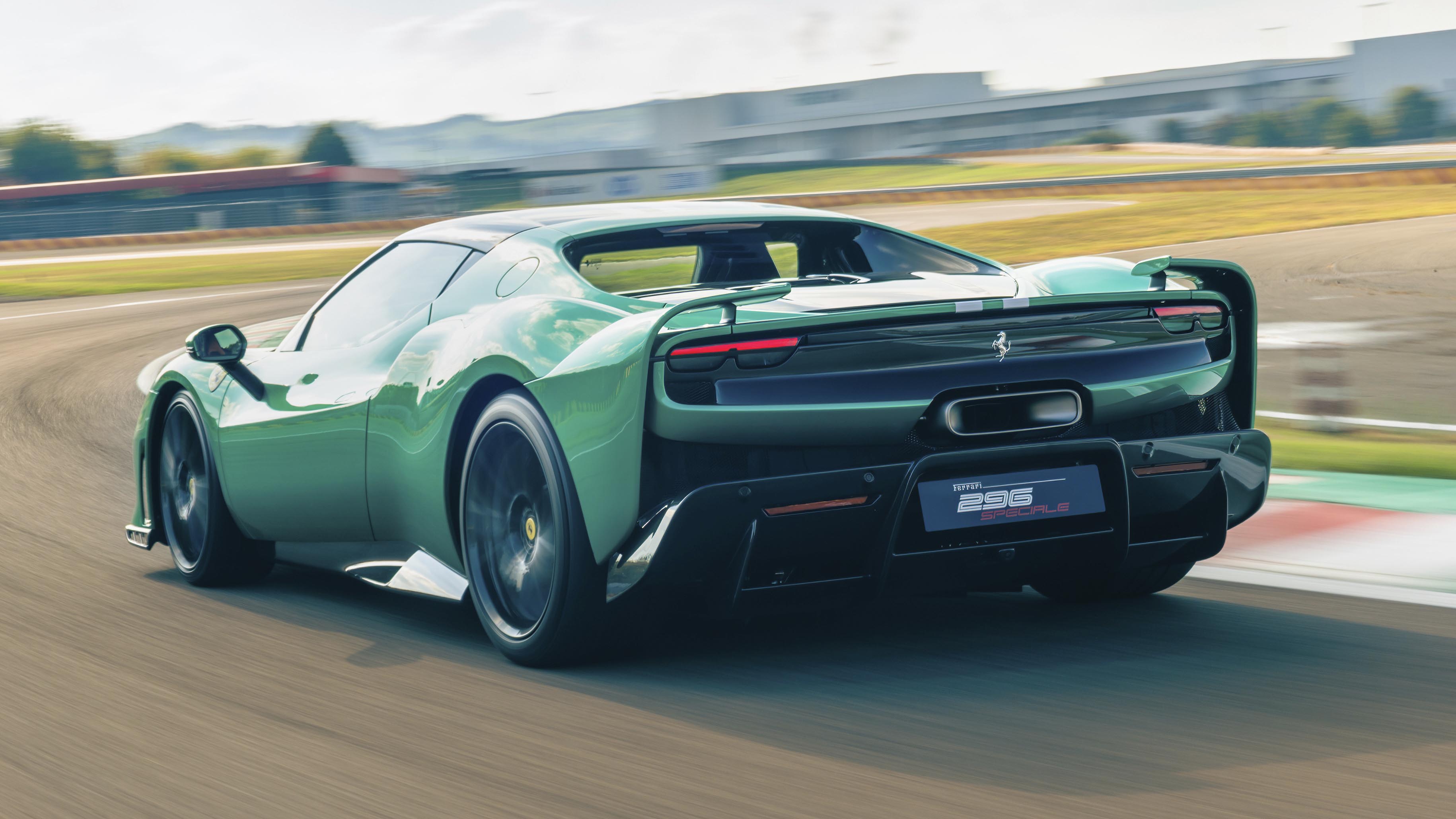
Finally, with the rain easing, we cycle through ‘Race’ and brave ‘CT Off’ to get a feel for things as the road dries out. Lively is the answer, but still tenable. A new profile on the 8spd DCT means intergalactically fast shift times. It revs to 8,500rpm and the hybrid tech gives you torque fill so there’s no interruption. It sounds better than before, too. Acoustic ducts pump up the sound of the V6 and there are twice as many in the Speciale, tuned for max mid to high frequency response. It’s angrier, but still sonorous.
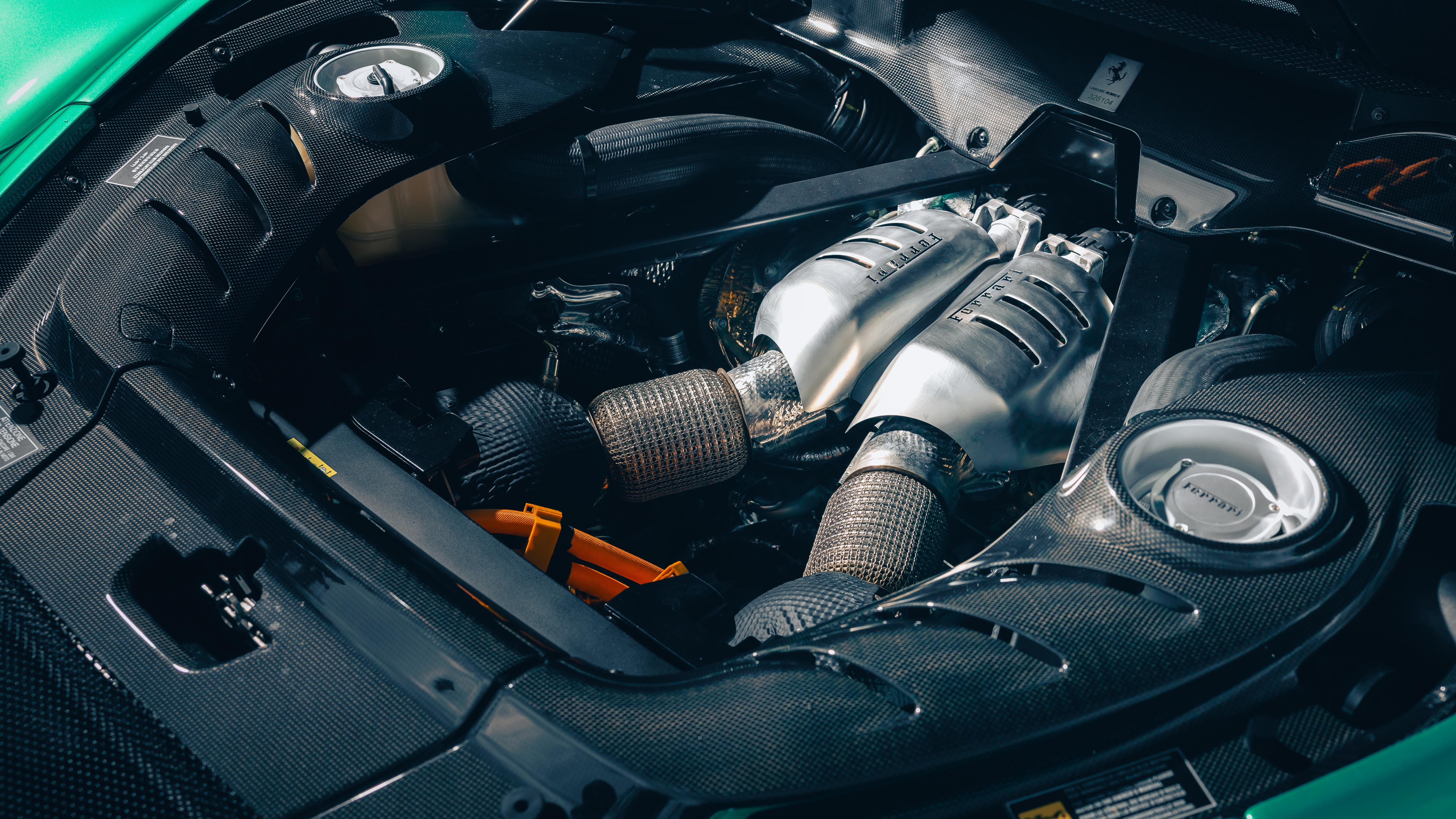
The engine is an evolution of the unit in the 296 GTB, so it’s a turbocharged 3.0-litre V6 hybrid with an axial flux electric motor and a 7.45kWh battery. By playing with the turbo boost and lifting the mapping from the 296 Challenge racecar, Ferrari has managed to liberate an extra 36bhp from the combustion engine. The e-motor that occupies the space between the ICE and the DCT now makes 177bhp. Hence 868bhp.
Top Gear
Newsletter
Get all the latest news, reviews and exclusives, direct to your inbox.
Ferrari says it could have whacked up the boost pressure on the turbos even more aggressively but that’s not really its bag. We’ve noted before how harmonious the various components on the 296 GTB feel, the wizardry that’s helped integrate the e-motor and all the ancillaries. And besides, on what planet is 868bhp not amazing? The Speciale is also 60kg lighter than the regular car, which is arguably the more important metric here, for a dry weight overall of 1,410kg.
How has Ferrari done it? By reducing the weight of the engine, among other things. There’s titanium in the connecting rods – the same ones used in the F80 – and lightened nitrided steel in the crankshaft, for a 9kg weight saving. That also improves engine response. The block and crankcase have been specially machined to shave off excess metal. There are also titanium screws and fasteners in here, the sort of thing Ferrari uses on its 499P endurance racer. It’s a detail nerd’s dream, this car, which is a big part of the appeal.
The 296 Speciale generates 435kg of downforce at 155mph, 20 per cent more than on the standard car. All those 296 Challenge racecars pounding the world’s circuits are basically mobile laboratories, and the Speciale imports some of their tricks. There’s a new S duct which links the front undertray to the bonnet, channelling the airflow to the edge of the windscreen and beyond. There are louvres in the wings to reduce pressure and turbulent airflow around that area. At the rear you’ll find vertical fins and extra little wings which work in tandem with the active rear spoiler. That now works faster than before as it moves between Low Drag and High Downforce configurations. There’s also a new Medium Downforce setting.
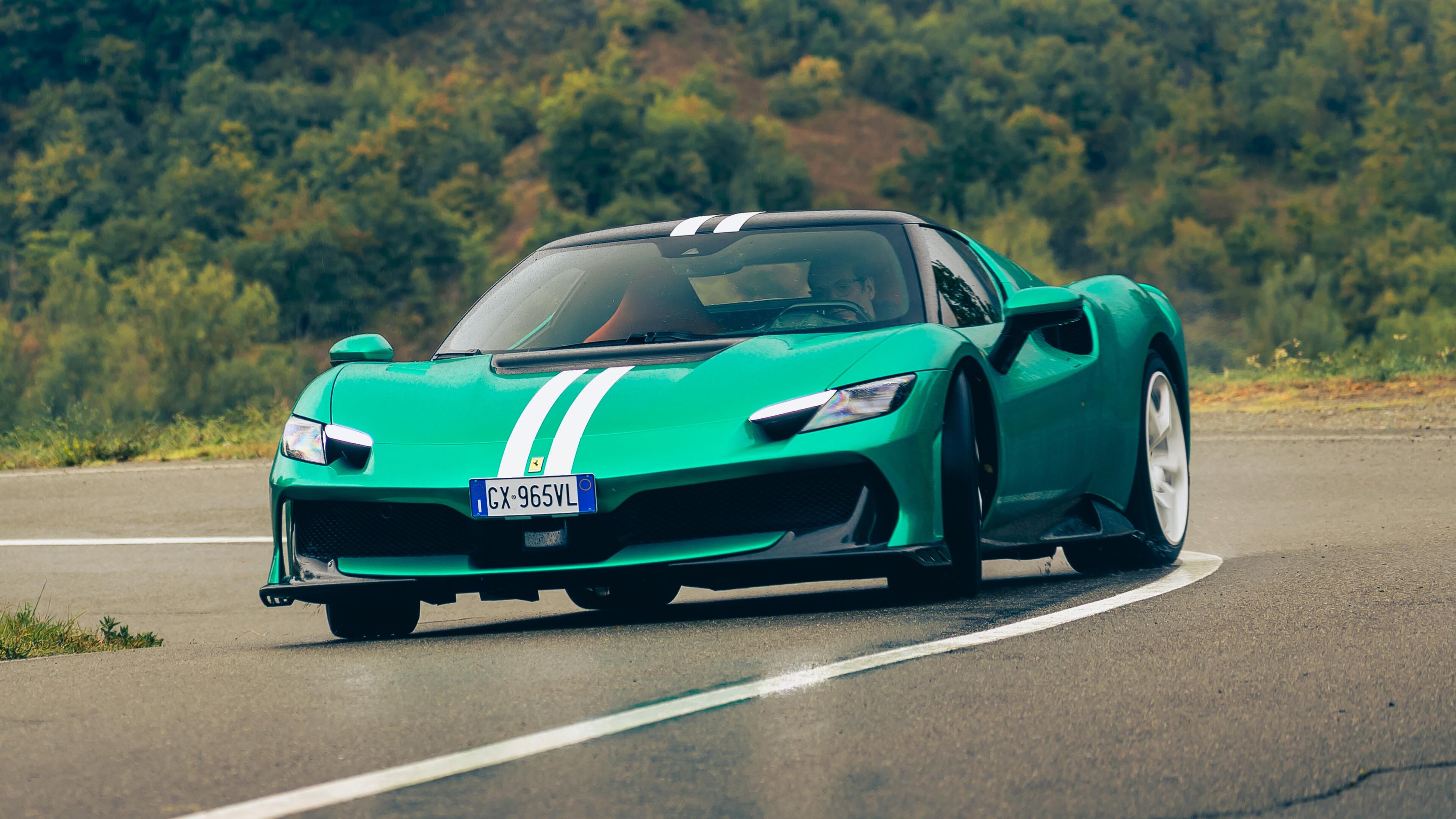
This is all in the name of more consistent and linear response during cornering and under braking. A Porsche 911 GT3 RS generates more downforce and is obviously more extravagantly bewinged. That’s never really been Ferrari’s style, though the Speciale is hardly lacking in visual drama. As with most (but not all) modern Ferraris, it looks bewitching in the flesh, with a presence that photos can’t capture.
The car rides 5mm lower than the 296 GTB, so it rolls less on cornering. By 13 per cent, according to Ferrari. Zero to 62mph takes just 2.8secs, 124mph is done in 7.0secs, and the top speed is 205mph. It feels explosive. It will also lap Fiorano, in the hands of a Ferrari test driver, in 1min 19secs. Two seconds faster than a GTB, 7.5secs faster than the 360 CS, and 0.7secs quicker than the LaFerrari. Such is the rate of progress in Maranello.
In addition to the chassis manettino, there are four hidden till lit buttons on the opposite side of the steering wheel. Like the regular car, the Speciale starts in e-mode, using the MGU-K for a silent getaway and neighbourly behaviour. The range in this setting is about 15 miles.
But you quickly yearn to hear the combustion engine. So engage hybrid mode for a mix between the two and get on with it. Performance is more interesting; it keeps the engine running and emphasises battery charge over efficiency. All the power is there, all the time. And there’s a new one for the Speciale, Qualify mode, similar to the function in the SF90 XX Stradale, and supplier of an extra 177bhp from 6,000rpm on corner exits. The system is so clever that it keeps an eye on the engine’s thermal stress level and meters out the extra grunt accordingly. A yellow strip on the main instrument readout tells you how much you’ve got left.
Mercifully, it’s almost dry by the time TG’s Fiorano window opens. The track cars are fitted with Multimatic’s single rate shock absorbers and titanium springs – similar to the 296 GT3’s spec – and this passive damping setup makes an immediate difference. Even on this smoothly surfaced track you’re aware of extra oscillations, a bit of jiggliness that wasn’t present before. But it deepens the connection with the surface even more. It’s so good you’ll swear you can feel the rubber beneath you expand and contract. The 296 Speciale positively overflows with feel, energy and response.
It’s difficult to establish a hierarchy of brilliance here. It could be the chassis, the sheer level of control and clarity the Speciale serves up. Or maybe it’s the gearshift, a process that’s now so fast you fear for the wellbeing of the mechanical bits tasked with carrying it out.
Or it might actually be the braking. The Speciale is dramatically undramatic, allows you to go deeper into the corner, bleeding off the brakes as the car hooks up for the next challenge. Ferrari’s ABS Evo controller software uses a 6D sensor to expand on the oversight it has on the dynamics, and optimises the brake distribution on each wheel with uncanny precision. The discs are 398mm carbon ceramics upfront, 360mm at the rear. The combination of feel and repeatability is terrific. The boost function in Qualify mode apparently works 14 times over two laps of Fiorano. Honestly, this might be verging on overkill for our tastes, but when the rest of it is so good we’ll let them off.
Talking to members of the development team, it’s clear that the aim was to create a track focused Ferrari with greater dynamic bandwidth than ever. It’s civilised enough that you wouldn’t think twice about hammering the 296 Speciale round Silverstone and then driving it home – to Spain. Sure, a Porsche 911 GT3 RS is a more visceral experience overall, and the door is temptingly open to a more extreme 296 Speciale XX. But as it is, the 296 Speciale raises the bar yet again in all the key measurables, and plenty that aren’t algorithmic. A sublime mix of analogue and digital, it’s TG’s best supercar of 2026.
Trending this week
- Car Review
Jaecoo 7