





Big Reads
Can the high-revving V8 Lambo Temerario compare to the old nat-asp V10?
The Huracán and its ten-cylinder masterpiece are dead. Time to see if the wild new V8 can shock in the same way
Storm chasers chase storms. But does anyone pursue clear skies? A substantially less dramatic proposition, no question, but that’s where we find ourselves right now. This is in the interests of non-murky imagery for your enjoyment, but also because dry weather is obviously helpful when it comes to this, our first proper road test of the Lamborghini Temerario.
Thus far, its maker has restricted evaluations to a handful of circuits, great for rinsing every last drop of performance and doing skids, but a denial of the full picture. And we suspect there are nuances to the Temerario that definitely need real world exploration.
Advertisement - Page continues below
Lest we forget, Lambo’s newbie has a box fresh 4.0-litre V8 engine with two socking great turbos above the vee of the cylinder banks, for 789bhp and 538lb ft of torque. Very much à la mode, the Temerario is also a plug-in hybrid, its V8 aided and abetted by a 3.8kWh battery mounted in the transmission tunnel and three axial flux electric motors. There’s one on each front wheel to supply additional drive and sharpen response, and a third nestled between the engine and the rear mounted eight-speed dual clutch transmission which performs torque fill duties.
Photography: Mark Fagelson

So the total power output is 907bhp, a figure which nudges the Temerario closer to its big brother, the naturally aspirated V12 Revuelto, but crucially also puts some serious fresh air between it and the Ferrari 296 GTB and McLaren Artura. You could say it’s out on its own.
Above and beyond all of that, though, is the fact that the engine spins to a genuinely dizzying 10,000rpm. Well, as the successor to the Huracán – which reached its zenith in runout Tecnica and off-road Sterrato guise and whose V10 is a Hall of Famer – the new machine had to have something seriously spicy in its armoury.
Advertisement - Page continues below
Launch hoopla now done, Top Gear gets to do things the traditional way and turns up at the Sant’Agata factory to collect the car. It’s a rite of passage that never loses its thrill. This being Italy, however, we’re spirited across the road to fuel up on industrial grade espresso while a missing piece of paperwork is located and the security man calms down. Nebbia rosso, I think it’s called.
When we hit the road, the skies are still sullen, and a non-negotiable 5pm return time adds another significant hurdle. Mark Fagelson, TG’s legendarily unflappable photographer, is, well, flapping slightly. This will be no languorous mooch around Emilia-Romagna or Tuscany, punctuated with an agreeable pasta lunch, but a hard and fast immersion. That’ll be a test in its own right for this furiously techy new Lamborghini. Back in the day, these things would make mincemeat of the unwary, but now?
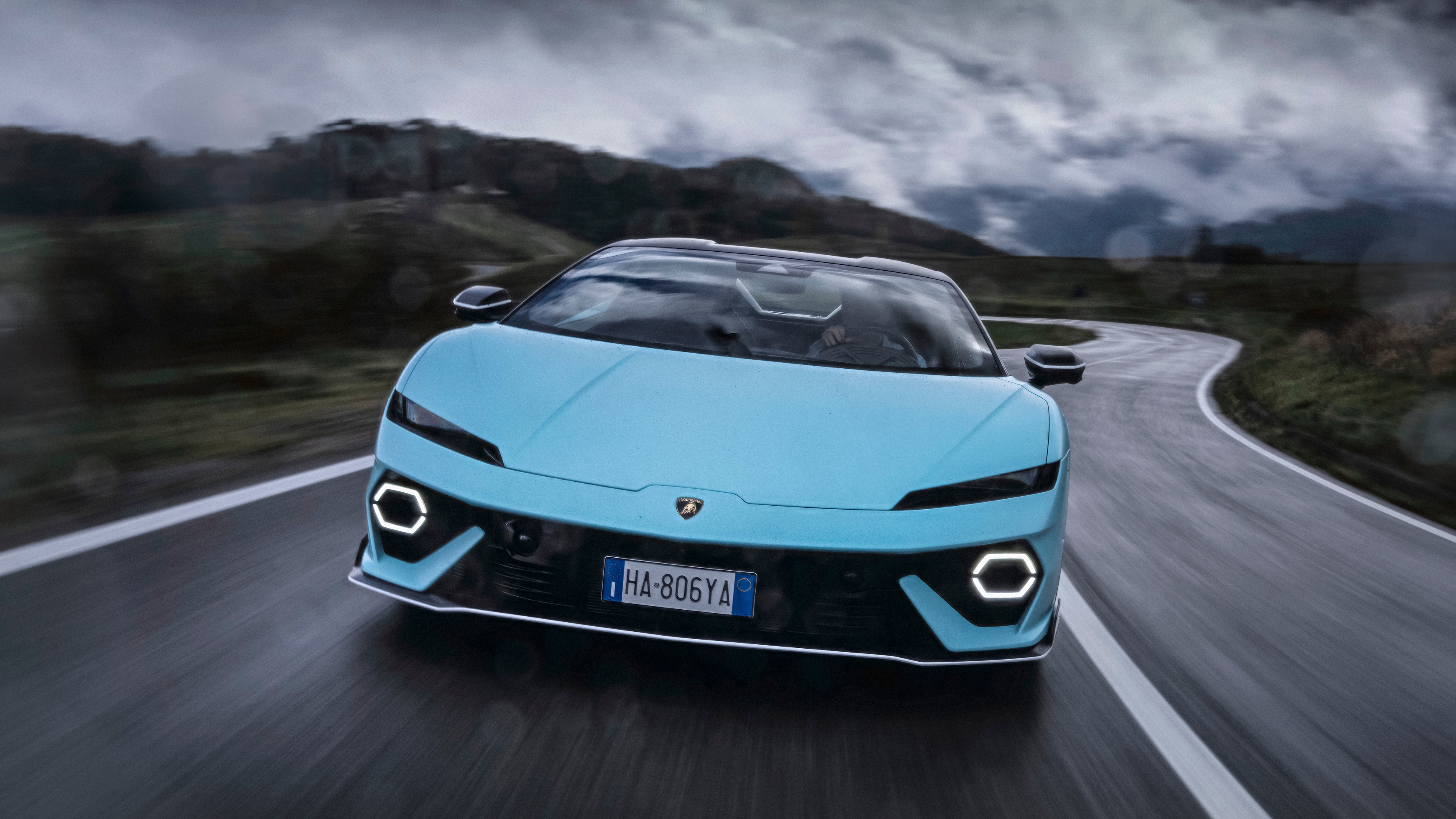
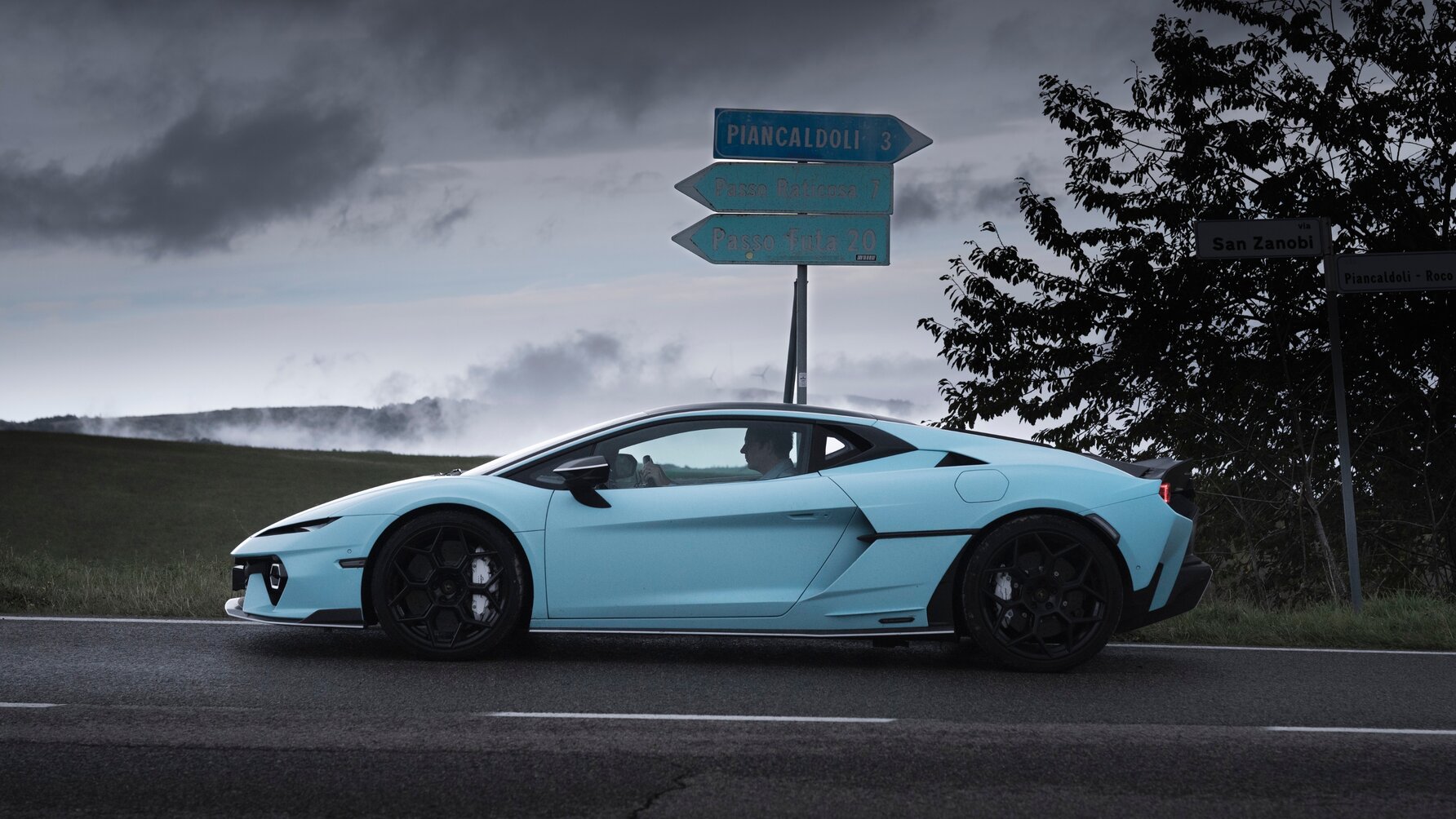
A decision is made: we’ll head to the Passo della Raticosa, a highpoint between Bologna and Florence on the Strada Provinciale 65, a few hours south. It’s a popular route with bikers and cyclists, and also part of the original (and indeed modern) Mille Miglia. Back in 1955, Stirling Moss and co-driver Denis Jenkinson famously did the run between those two sublime cities in 61 extraordinary minutes, on the way to that immortal 10hrs 7mins overall winning time. “On we went, up and over the Raticosa Pass,” wrote Jenks, “plunging down the other side in one long series of slides that to me felt completely uncontrolled but to Moss were obviously intentional.” Words to conjure with, especially as I get to grips with 900-plus horsepowers and a still greasy road surface.
Pity the people charged with designing a new Lamborghini. The Huracán took its time finding its dynamic groove but looked bang on out of the box visually. Current design boss Mitja Borkert and the Centro Stile team understand how to marry flamboyance with rigour. (Mitja grew up in East Germany behind the Iron Curtain; fun fact, the first Marcello Gandini designed car he ever saw was a Citroen BX.)
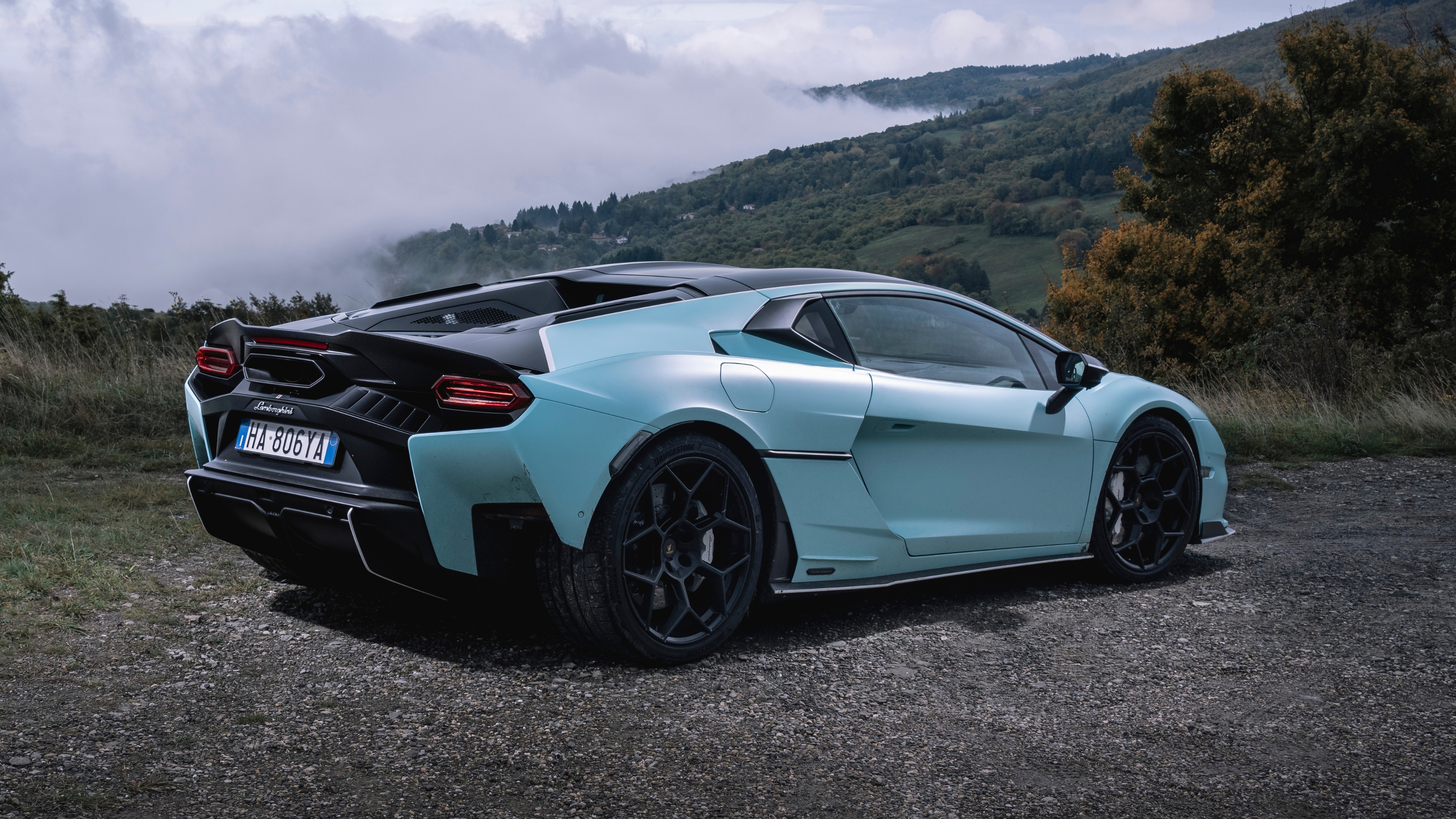
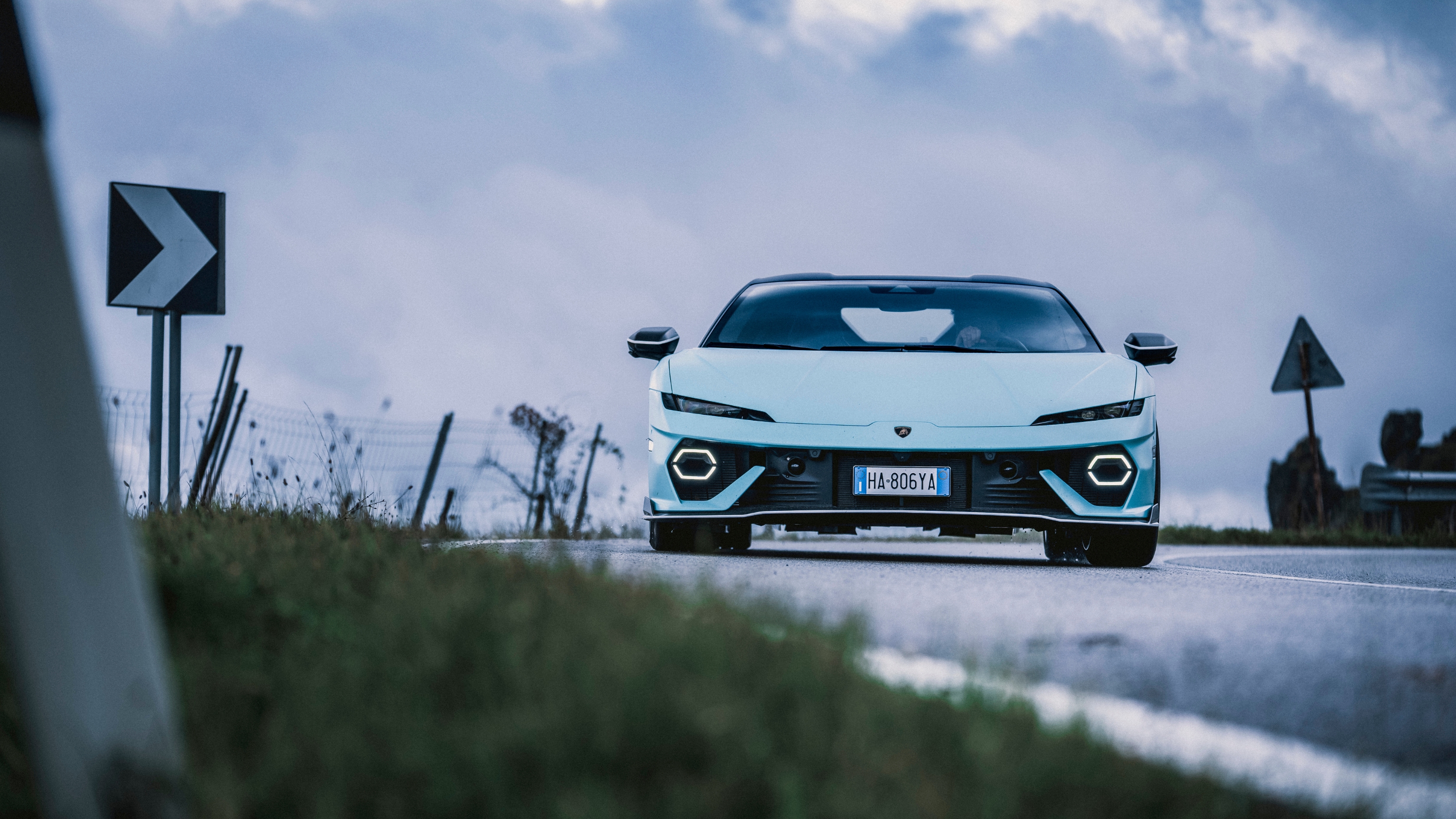
The Temerario is longer and taller than the Huracán but disguises its increased size effectively. It’s also strongly aero influenced, with hollow areas to hustle air under, over and through the body for downforce and cooling reasons. There are playful graphics galore, including the trademark hexagon motifs in the lights. Maybe too many, but it’s certainly dramatic.
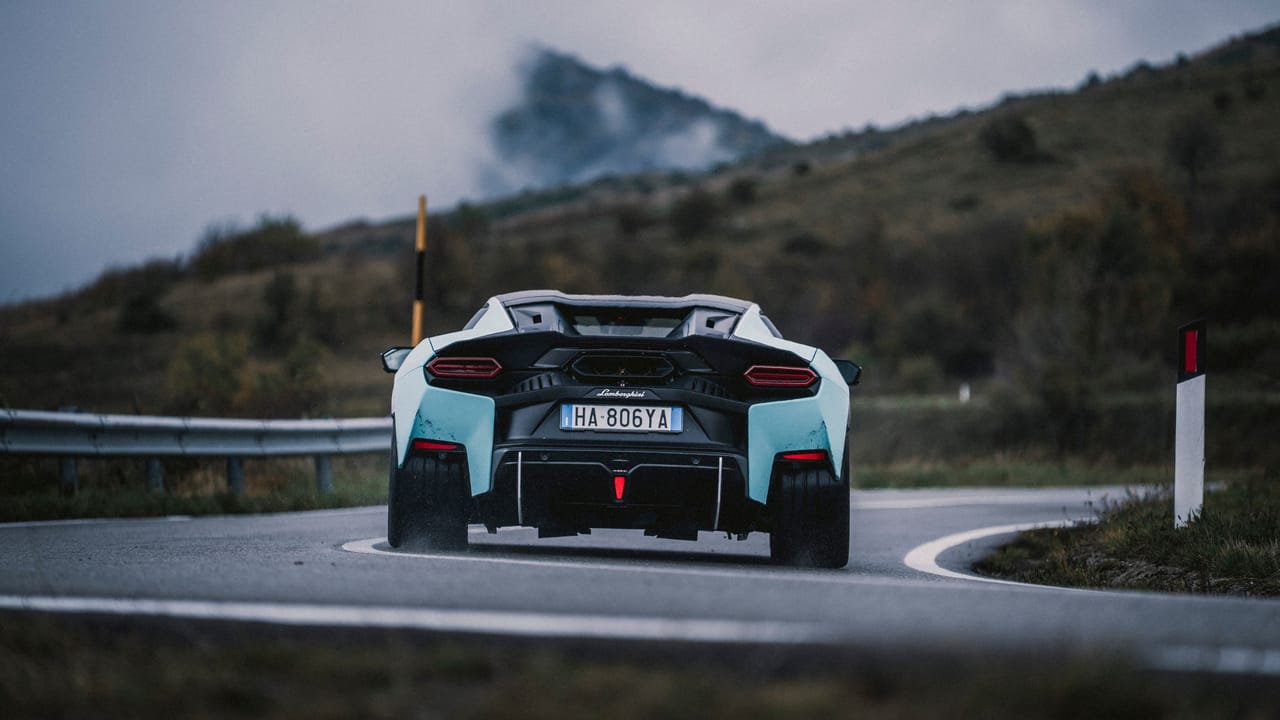
Highlights? The cutout sections in the rear bumper, which leave a hefty chunk of 325-section Bridgestone rubber exposed on either side. Peeling back the layers and showcasing elements that are usually hidden is part of Lamborghini’s design MO, and it’s a cool thing indeed from behind. But it also means that it chucks up debris, so if you see one in the wild don’t get too close while you try to film it for the ’gram.
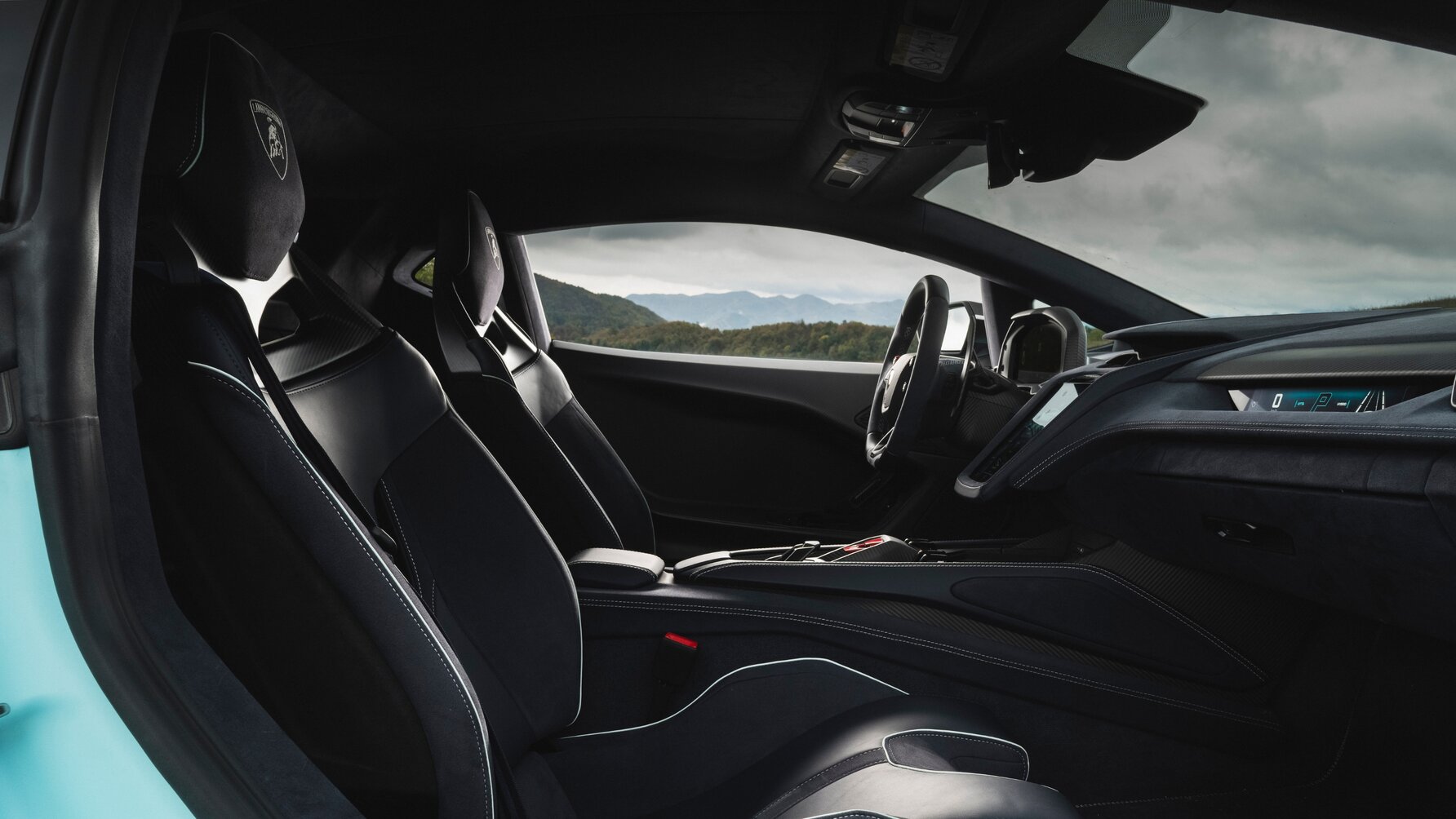
Our car’s visual impact is heightened by the Alleggerita package, a £37,200 option whose primary functions are to reduce weight, enhance the aero, and deplete bank accounts yet further. With new carbon panels for the front splitter, floor, side skirts, engine cover and a more aggressively angled rear spoiler, the weight saving is 12.5kg, with the same again available if you spring for the carbon fibre wheels and titanium exhaust. You also get lightweight seats and more carbon inside.
Top Gear
Newsletter
Get all the latest news, reviews and exclusives, direct to your inbox.
Like the Huracán, the Temerario has an aluminium spaceframe, but it’s all new and Lamborghini says torsional rigidity is improved by 20 per cent. There are new high strength alloys in here, with hollow castings, hydroformed extrusions and clever new welding techniques employed. Lamborghini says there are 50 per cent fewer components overall. This isn’t all just for show; the new powertrain sees the Temerario’s dry weight balloon to a claimed 1,690kg (dry), a 250kg uplift on its predecessor and the sort of immoveable physical impediment that has given tech boss Rouven Mohr’s brain a major workout. (Remember 2010’s all carbon Sesto Elemento limited run special, that weighed 999kg? Now unremember it.)
Having driven a prototype back in April, I have some idea what to expect. Anyone who jumps into a new mid-engined Italian supercar without feeling a teensy bit intimidated at first is a bit of a pranny. Forget the monumental power output or potential for splitter strafing embarrassment, just check the steering wheel and infotainment screen. My nephew flies a Boeing 787 Dreamliner for an Australian airline and he’d probably struggle in here at first glance.
And yet. Pretty much everything you need to operate the car is done via buttons on the wheel, and it all becomes familiar remarkably quickly. Prime among them are the controls for the powertrain, dampers, headlights and nose lift (important, that one), with infotainment buttons less easily accessible on the back side of the wheel.
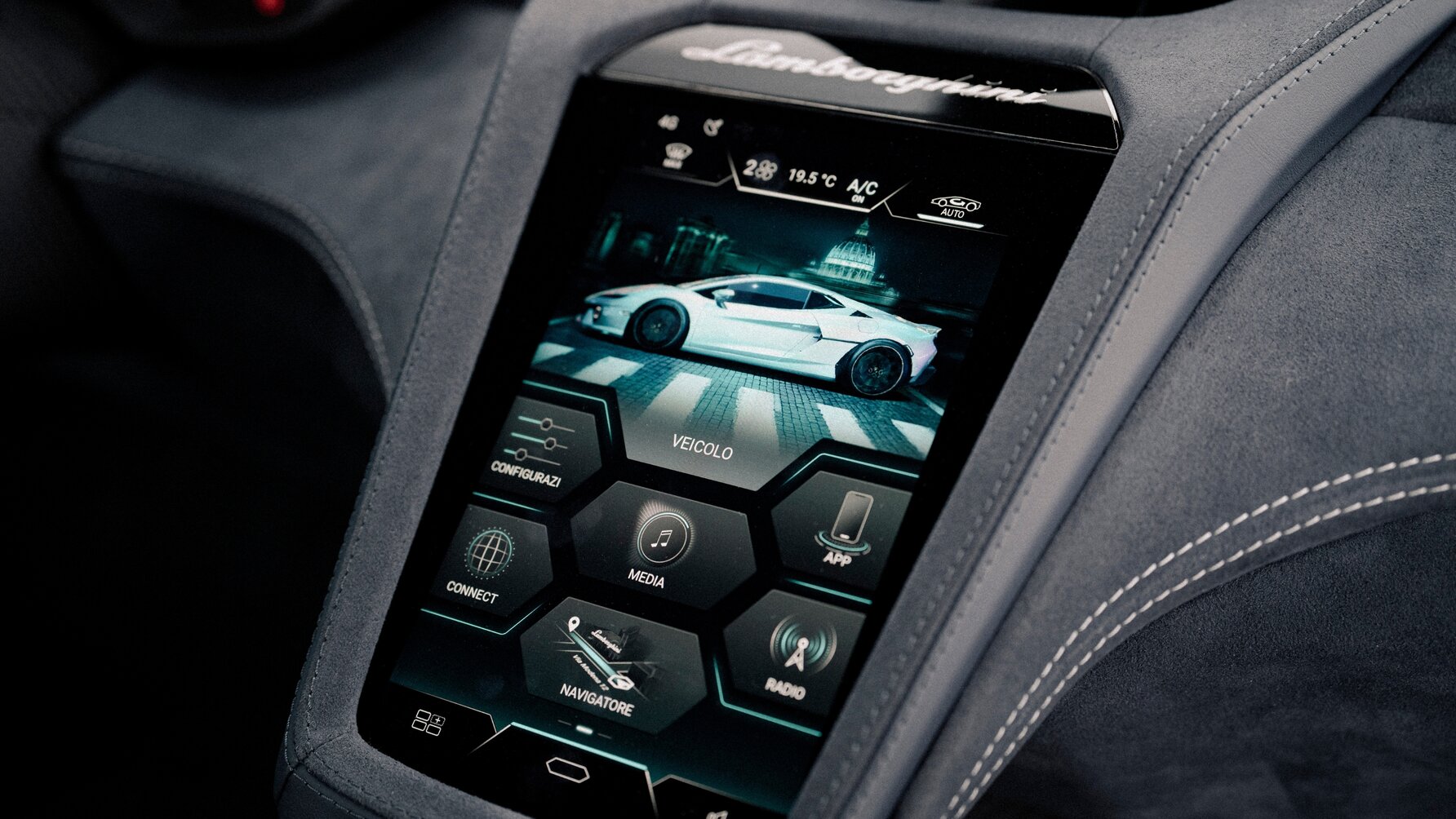
Huge paddleshifts preclude the inclusion of any stalks, but the indicator buttons are better than the ones Ferrari uses. Neither maker has nailed the central touchscreen, though, and while the Lamborghini has a potent Sonus Faber audio system (a £5,208 option), you might prefer to tune into the engine’s natural rhythms.
Or maybe not. There’s no doubt that Lambo’s ‘L411’ engine is a masterpiece of engineering ingenuity. It features a 180° flat-plane crank for an even firing order between the two cylinder banks, titanium conrods and a head cast in an exotic form of aluminium usually reserved for competition cars. As is a valvetrain that uses finger-followers coated in DLC (Diamond Like Carbon), a solution which means that 11,000rpm is doable. If they could have fitted it in, the kitchen sink would likely have made an appearance.
Unfortunately, it just doesn’t sound all that lovely at low revs. And by low revs, I mean anything up to about 6,000rpm, which is clearly not very low at all. By this point in a Huracán, the occupants found themselves in the midst of a sonic thunderstorm. The Temerario sounds like Pavarotti with strep throat.
Until you get a chance to fully uncork it, at which point things become more stimulating. Even then, though, it’s the engine’s ravenous appetite for revs that’s most impressive, rather than the noise it makes as its crank spins like the Looney Tunes Tasmanian Devil. As with the Ferrari 296, you can only marvel at the manner in which the e-motors, battery, and turbos have been persuaded to do such amazing work together.
Given that it’ll accelerate to 62mph in 2.7 seconds and 100 in about five, its performance is beyond exhilarating, and it pulls the big numbers with a mechanised ferocity no mega EV can match. As we know from our track experience, the Temerario is relentless, breathtaking, utterly unconstrained by the presence of turbos or hybridisation. It’s savagely kinetic.
But there are problems. The first is subjective, and it’s do with the engine’s overly manic character and thrash metal sonics. More worrying is the fact that you’re doing 86mph in second as you hit the 9,900rpm redline. Away from the track, there are vanishingly few opportunities to explore what this amazing powertrain can do. You’re stuck with Pavarotti and his throat sweets.
The run to the Raticosa only confirms this, as we battle traffic and wait for the road to fully unspool. The Temerario can feel oddly blunt in this context, a bit thuggish compared to the 296 GTB and lacking the lucidity that’s a McLaren hallmark. Sad to say those skinny seats aren’t very comfortable, either. But when you start pushing it all comes into focus. Choose Sport mode via the wheel button (Città, Strada and Corsa are the others) and the shifts from the eight-speed DCT are precise, with just enough trace DNA from the gnarly old single clutch Lambo ’box to keep things interesting without being remotely crude.
Sport is the one you want on the road, really, for an authentically rear drive level of interactivity, and modest amounts of torque vectoring from the electrified front axle. There’s so much algorithmic cleverness going on, and so many permutations, that the Temerario risks driver befuddlement. But the chassis is fundamentally great, the magnetic dampers do a fabulous job of ironing out nasty surfaces, and the car generally feels lighter than it is. It’s playful but approachable, happy to slide if that’s your bag. We’d leave the drift mode for the circuit, though.
More steering feel would definitely be welcome, but given what a herculean task all the sensors have to do and the amount of calibration that’s gone on, we’ll let that go. The brakes are sensational, though, 410mm carbon-ceramics up front with 10 piston calipers, effective and full of feel even with the amount of front axle regen that’s going on.
We head back, now under clear skies. Wouldn’t you just know it. My head’s a bit cloudy, though. There’s zero doubt that the Temerario is a milestone engineering achievement, and very clever indeed. Lamborghini also knows its customers intimately, and has become very adept at catering to them.
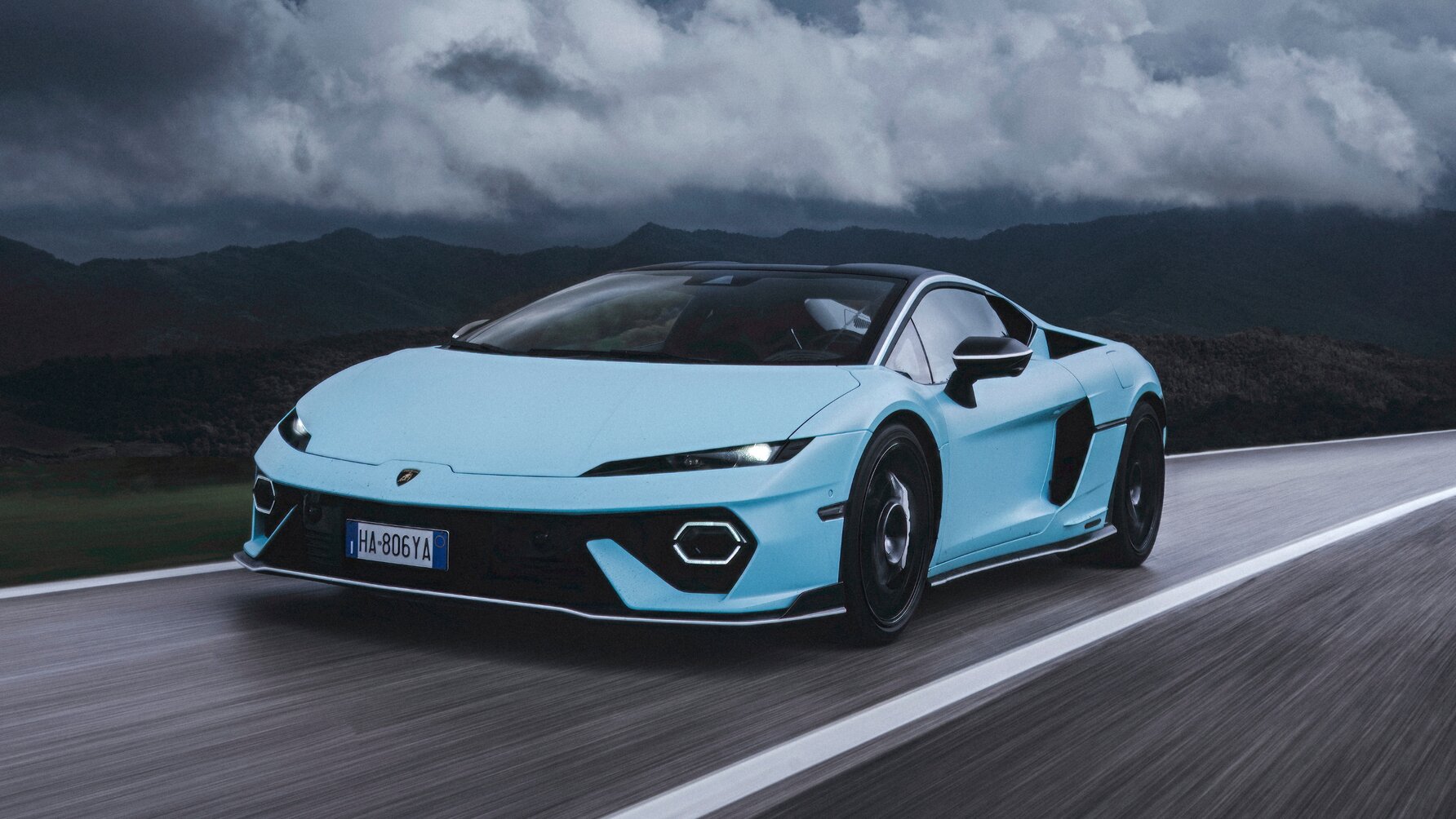
This is a showbiz supercar, with a compellingly reframed USP and truly skyscraping performance. The options list is long and expensive, the £259,570 list price merely the starting point. But the last time I checked it didn’t include a racing circuit, and that’s what this thing really needs to do its best work.
Lamborghini Temerario
Price: £259,570
Engine: 3,995cc V8 twin turbo + 3 x e-motors, 907bhp, 538lb ft
Transmission: 8spd dual clutch auto, AWD
Performance: 0–62mph in 2.7secs, 213mph
Economy: 25.2mpg, 272g/km CO2
Weight: 1,690kg (dry)

Trending this week
- Car Review
Mercedes-Benz C-Class Electric