




Big Reads
"Just a bloke in a shed": this man built an 800bhp F1-inspired hypercar... in his garage
The Quantum GP700 is an Ariel Atom lookalike built by a bloke called Jeff. We had to meet him
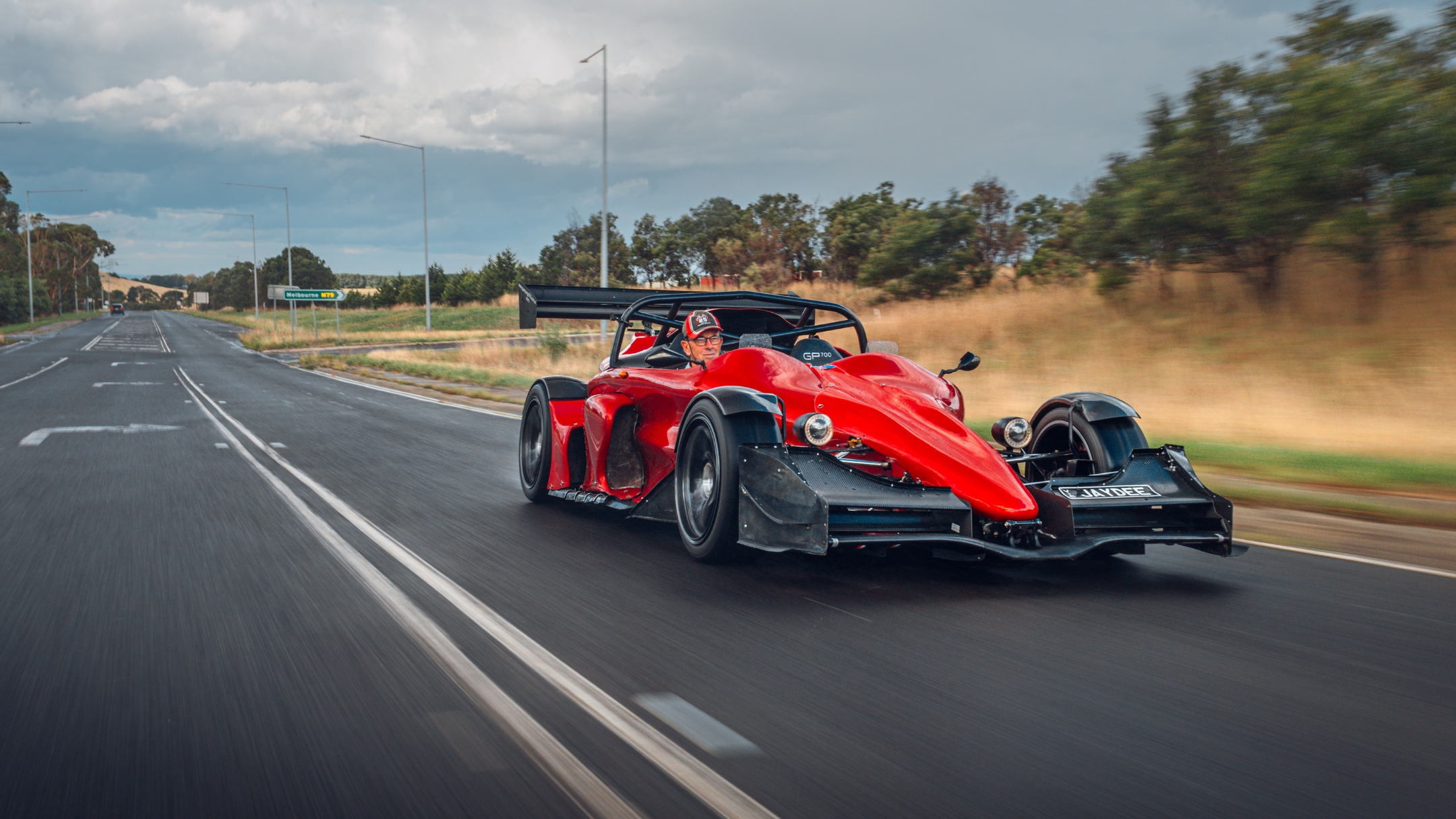
I point to a graffiti-covered bus stop in a layby, signalling to stop for a quick photo. That’s the excuse, anyway. In truth, I need a moment to stand on solid ground. After riding shotgun with Jeff, my head feels like I’ve just been bench pressing 160kg with my neck. Then again, 1.2g under acceleration will do that.
The numbers behind the Quantum GP700 are impressive: 800bhp, 748kg (wet), 0–100mph in 4.4 seconds. Top speed remains untested, though it’s geared for 193mph. Fastestlaps.com shows a 1:25.60 lap time around Winton National Circuit – nearly four seconds faster than a Merc-AMG GT R Pro.
Advertisement - Page continues below
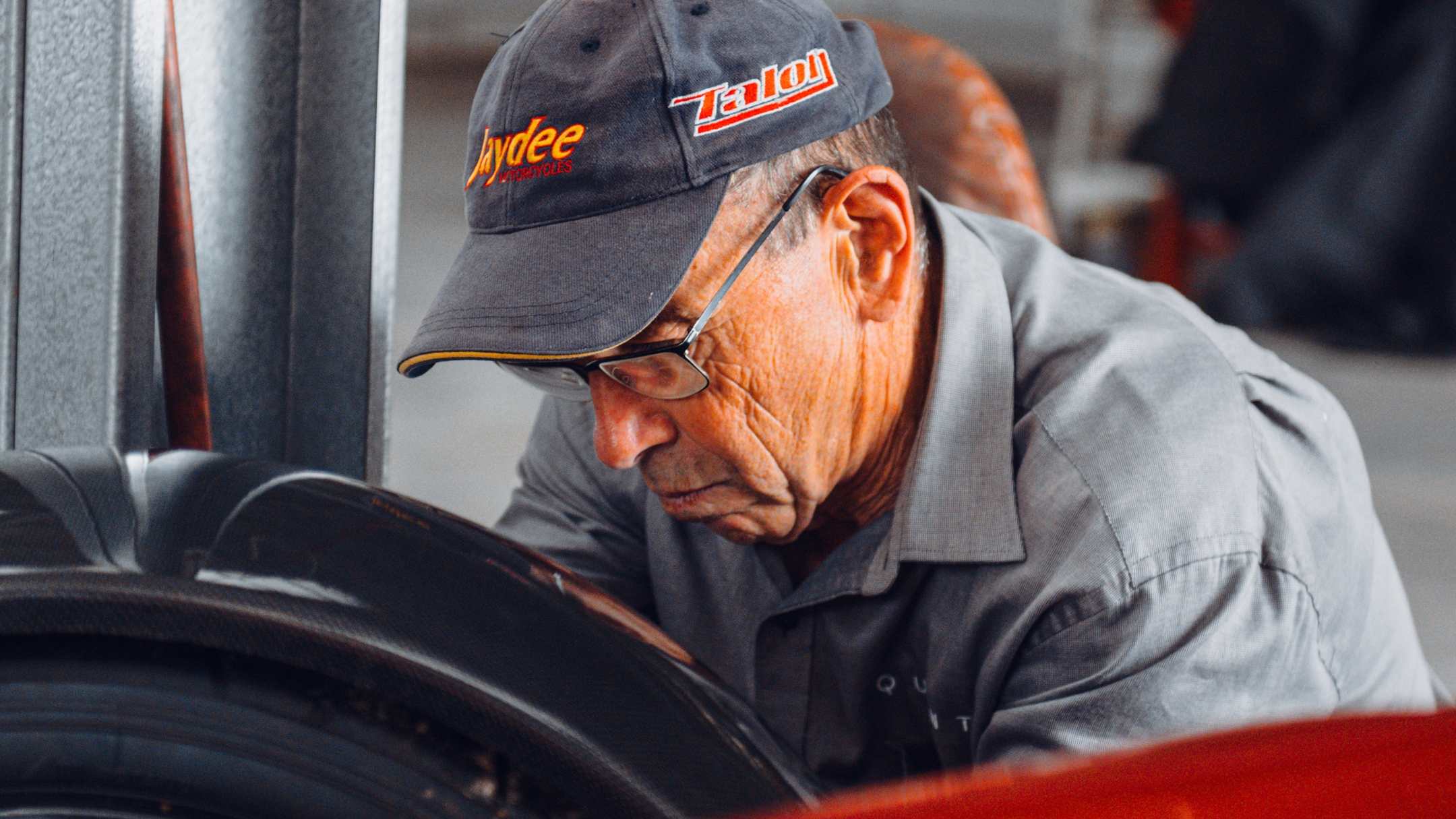
I meet Jeff David at his Gisborne property in the Australian state of Victoria to figure out how something this extreme could emerge from a backyard workshop without commercial backing. Jeff insists he’s “just a bloke in a shed”, but most blokes aren’t using a digger to simulate downforce on their homemade, F1-inspired hypercar.
Words and photography: Toby Thyer


Jeff’s story starts with bikes. He spent years as a KTM team rider and has a wall of trophies to prove it. So why not stick with motorcycles? “I was getting too old for dirt bikes and fast road bikes are just too dangerous,” he says.
“The only place you can use that kind of speed safely is on a circuit. I wanted something like an Atom after seeing Clarkson on Top Gear. It just made sense. Fast, but usable.”
Advertisement - Page continues below
He imported an Ariel Atom in 2005, but even after the painful process of getting it road legalised, it proved unsatisfactory on public roads. Jeff started pulling it to pieces and reworking every single part. At one point, he even sent pushrods to a mate at McLaren for fitting strain gauges. It turned out that when all 400bhp was unleashed, only 15kg was being carried by each front wheel. That’s not a great recipe for handling.
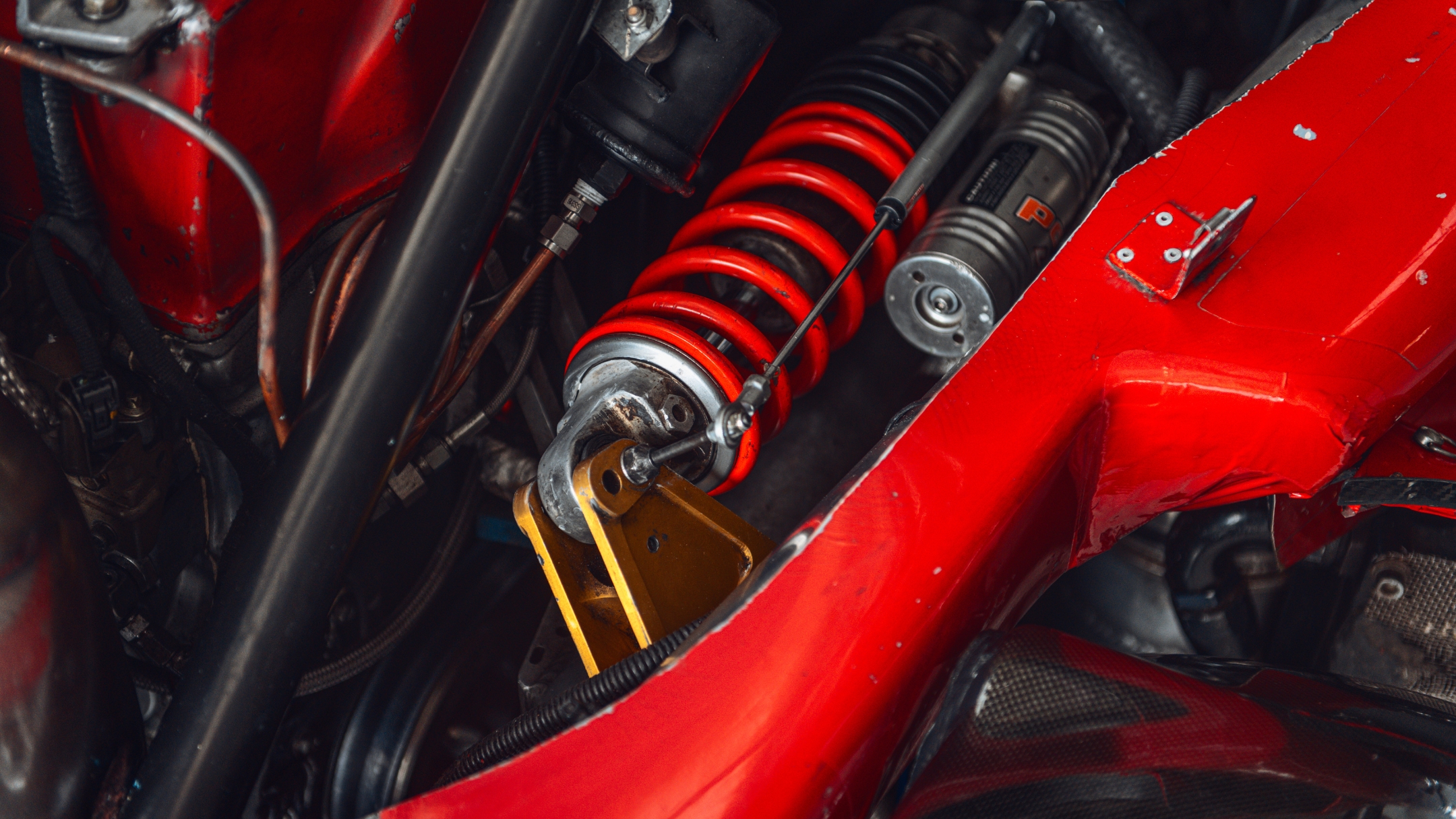
Armed with data from MoTeC systems and simulation tools like Bosch’s motorsport suspension software, Jeff made a bold decision. He cut into the Atom’s chassis and extended the frame by 12cm. “It instantly improved handling,” he says, “but it was never going to be a 2g car as it lacked aero. I decided to build my own, using what I had learned and starting with a blank sheet of paper. But its concepts were based on F1 and F2 of that era.”
Jeff’s background in dirt bikes became the foundation for the GP700. “I tuned suspension for bikes that won their class at Finke,” he explains, referring to Australia’s brutal desert endurance race. “Eventually I was tuning bikes regularly on my dyno.” That hands on approach evolved into a deep understanding of everything from combustion chamber design to suspension witchcraft.
“Compared to bike suspension, road car suspension is prehistoric,” he says. “The systems I use date back to 1998.” Jeff logged suspension data from one of his best performing bikes, translated it into spreadsheets, and built a kinematic model in a 3D CAD software called SolidWorks. “That let me apply 40 years of bike suspension development directly to the car.”
The engine is an imaginative mongrel based on Honda’s K-series – a CR-V block teamed with a Type R head and an S2000 F22C crank. But beyond the base castings, everything is custom. Sleeves, rods, pistons, cams, porting, manifolds – the lot.
“About 30 per cent of my effort has gone into developing the K-series,” Jeff says, lovingly describing his bespoke internals. “Piston crowns were shaped by hand, porting optimised and tested on the dyno until I got the results I wanted. They eventually became off the shelf products – without asking me,” he adds. He also sent a hand ported cylinder head to 4Piston Racing, who sent back two CNC ported heads in return.
The gearbox is equally bespoke, a six speed, air-shifted Holinger unit. “They used CAD data from my rear chassis to design a custom gearbox,” Jeff explains. “I couldn’t afford the rights, so they kept it – and it ended up as OEM equipment on the KTM X-Bow.” It’s coping with two times its rated torque.
Top Gear
Newsletter
Get all the latest news, reviews and exclusives, direct to your inbox.
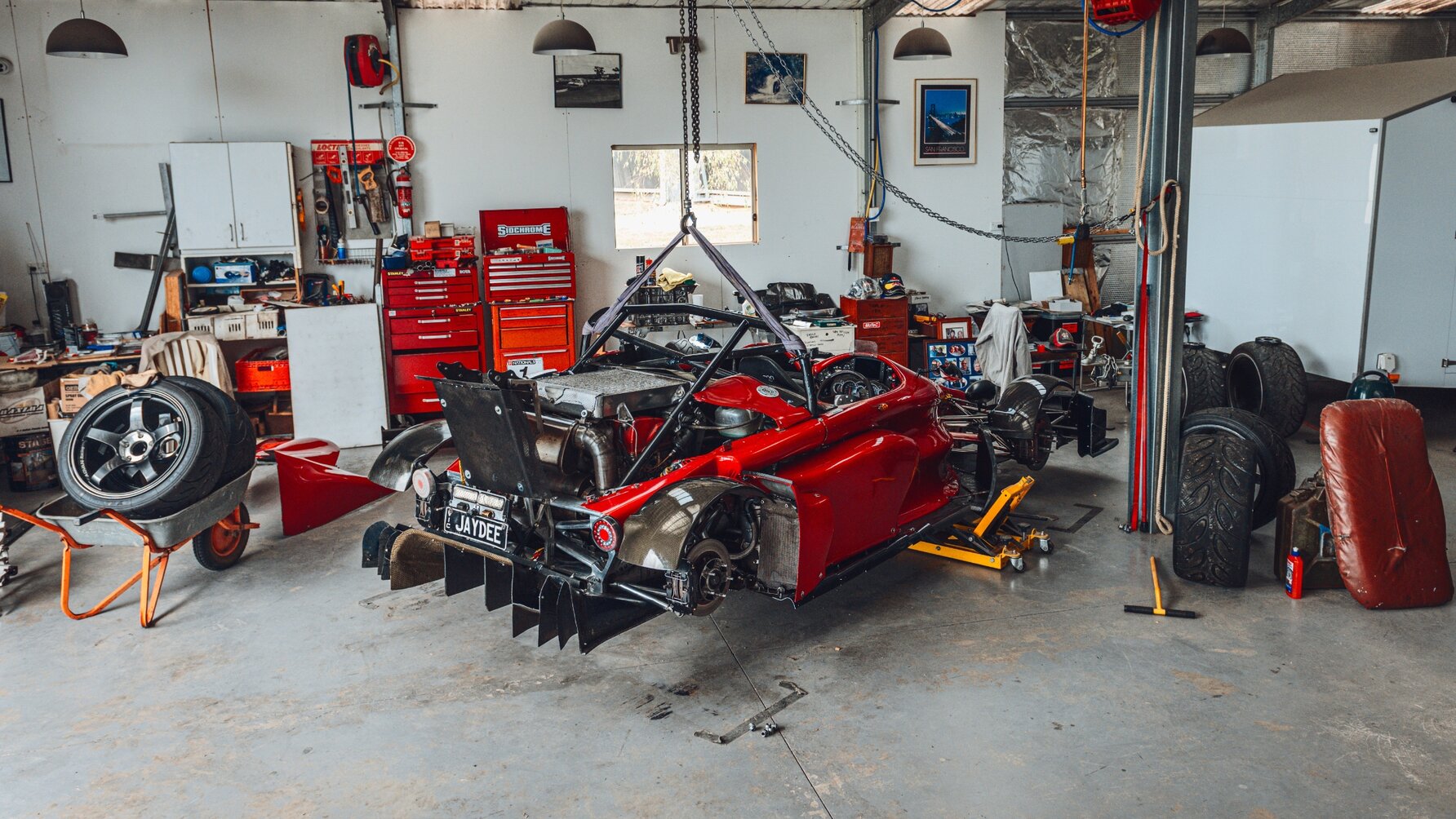
When he committed to building a new chassis from scratch, weight and strength were the priorities. It also needed to meet Victoria’s strict road registration standards. To accelerate development, Jeff enlisted 11 university students completing their final year theses. “I was the industry supervisor and had three students focused on the chassis – CAD, torsional rigidity, all of it,” he says.
Testing was all done in his shed. “I bolted the rear of the chassis to the concrete slab, attached a pipe to the middle, hung a cement bag off it – because I’m old school, and measured deflection with a steel ruler,” he laughs.
“Between that and the CAD work, we nailed it.” Insights from cracking aluminium dirt bike frames informed the design, resulting in a lightweight yet immensely strong structure. The rear cross member, cut with a high pressure water jet, weighs just 2.5kg but can handle 800bhp.
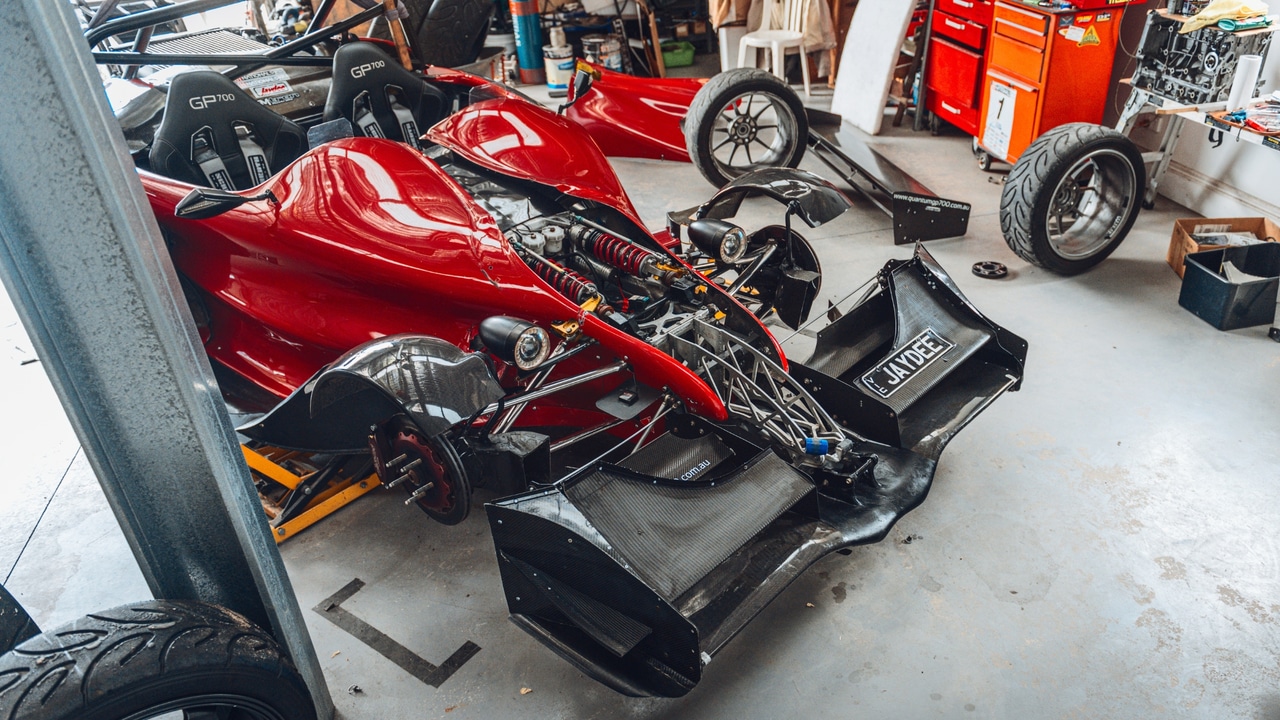
Alignment was also carefully considered – “I didn’t want it to be difficult to build straight,” Jeff says. “The nose section dovetails together, so as long as the jig is accurate, suspension alignment is accurate to within half a millimeter.” The bodywork keeps a hands on approach. “I knew it needed a Formula One-style front wing and nose,” he says.

The design went from Jeff’s imagination into Maya [3D modelling software], and with help from his son Andrew, he refined the surfaces. Foam blocks were CNC routed, layered with raw carbon fibre, and finished by a body shop. “I’ve still got the moulds upstairs.”
Electronics tie everything together – before all this, Jeff worked as an electrical engineer for Honeywell, a kind of Winston Wolfe for critical systems across industries from oil rigs to airports, and it’s clear he’s well versed in speaking technically. “Some calculations happen in Emtron, some in MoTeC, and they share data, much like a computer network,” he explains. Righto. “Many sensors are off the shelf, but the data analysis has been customised over decades of refinement.” Yes. Good. And it’s painted red you say?
The big question then: where can we buy one? “I had potential investors,” Jeff says, “but it all fell through. It would cost too much to build them here.” It’s a bittersweet conclusion. The Quantum GP700 is a masterpiece of engineering, born from decades of experience, ingenuity, and persistence – all inside a shed by a bloke with a vision as wide as Australia itself.
If this is where the story ends, it feels like a loss. But for now, the GP700 exists as proof of what one bloke in a shed can achieve with passion, know-how and a very patient wife.

Trending this week
- Car Review
Tesla Model Y
- Car Review
Renault 4