

Report 4
There’s a buzz about teeny city cars again, and not because of thrummy three pots. Nope, even the electric ones are making a noise...
You wouldn't drink tea-flavoured coffee. So why have an EV with a noise that impersonates a petrol car? If you love cars you surely love engineering honesty. We get it. But... sound isn’t just an evocation of petrolheadedness.
It gives you an indication of speed and powertrain effort, especially into and through a corner when you wouldn’t be looking down at the speedo. So it’s not just about involvement, but about giving you the ability to drive better, and we’re surely all up for that. Sound generation in a silent electric car, if done well, isn’t just the silliness of a bubblegum-flavour alcopop. So that’s why we’ve brought these two together.
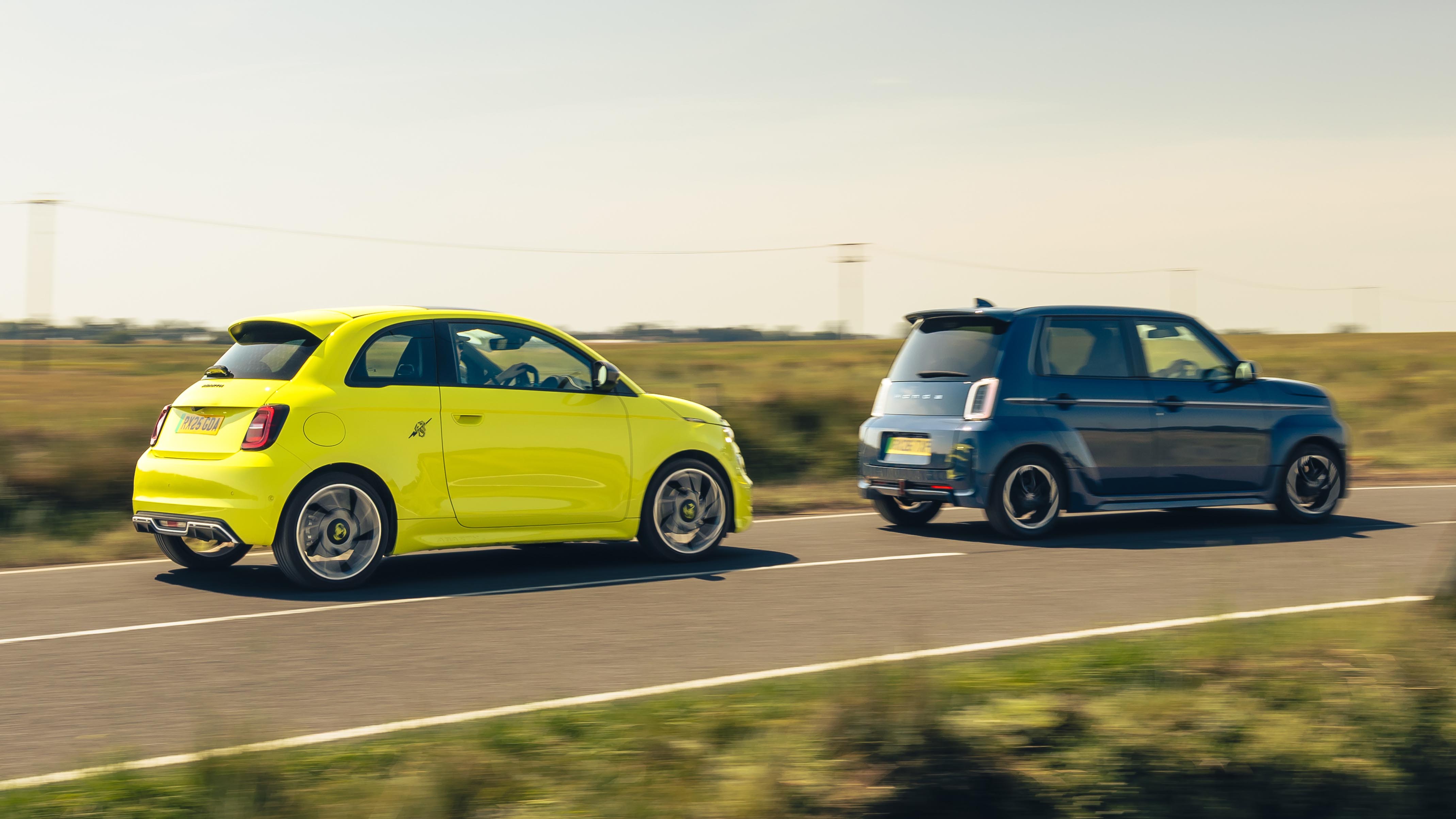
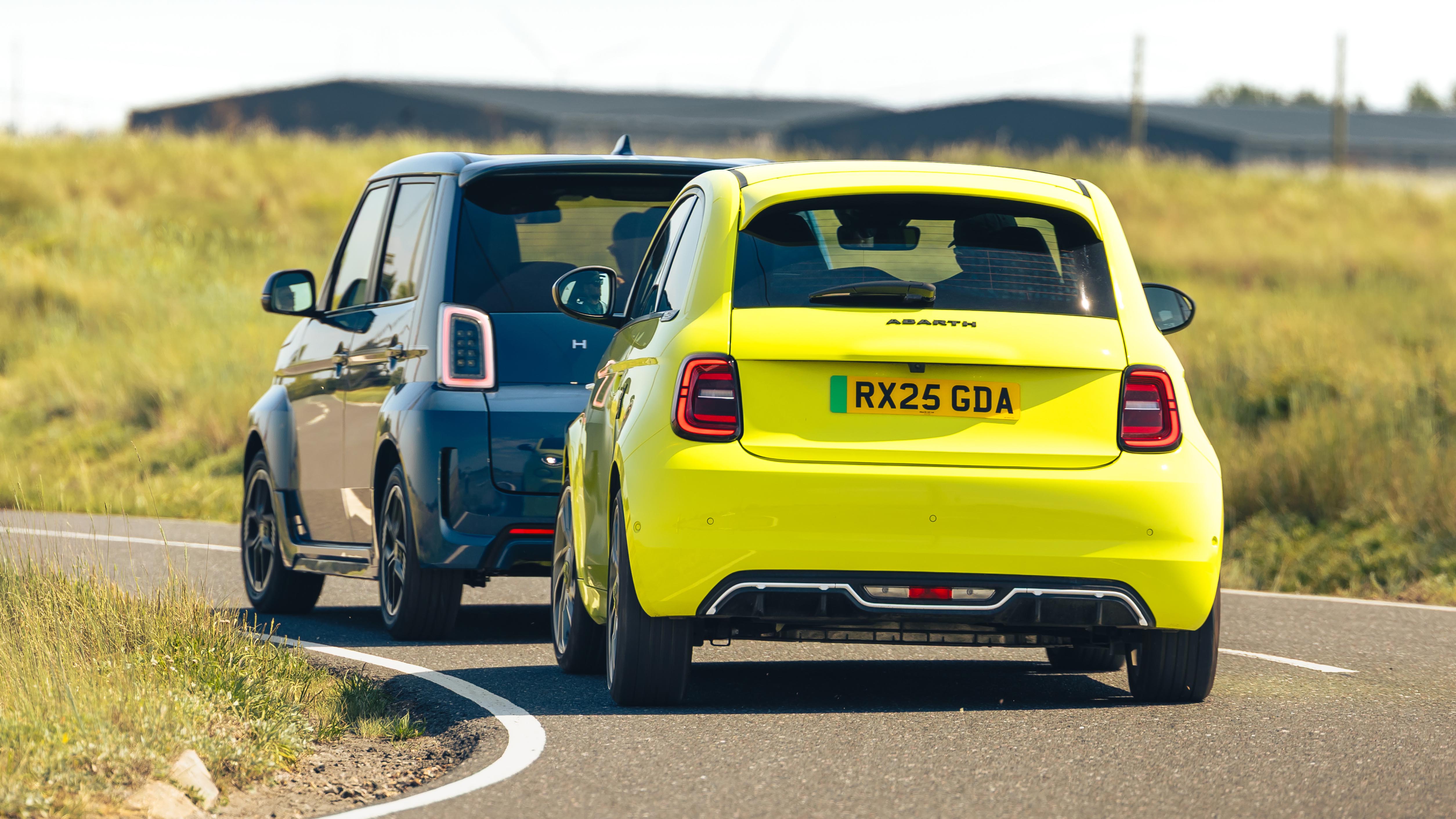
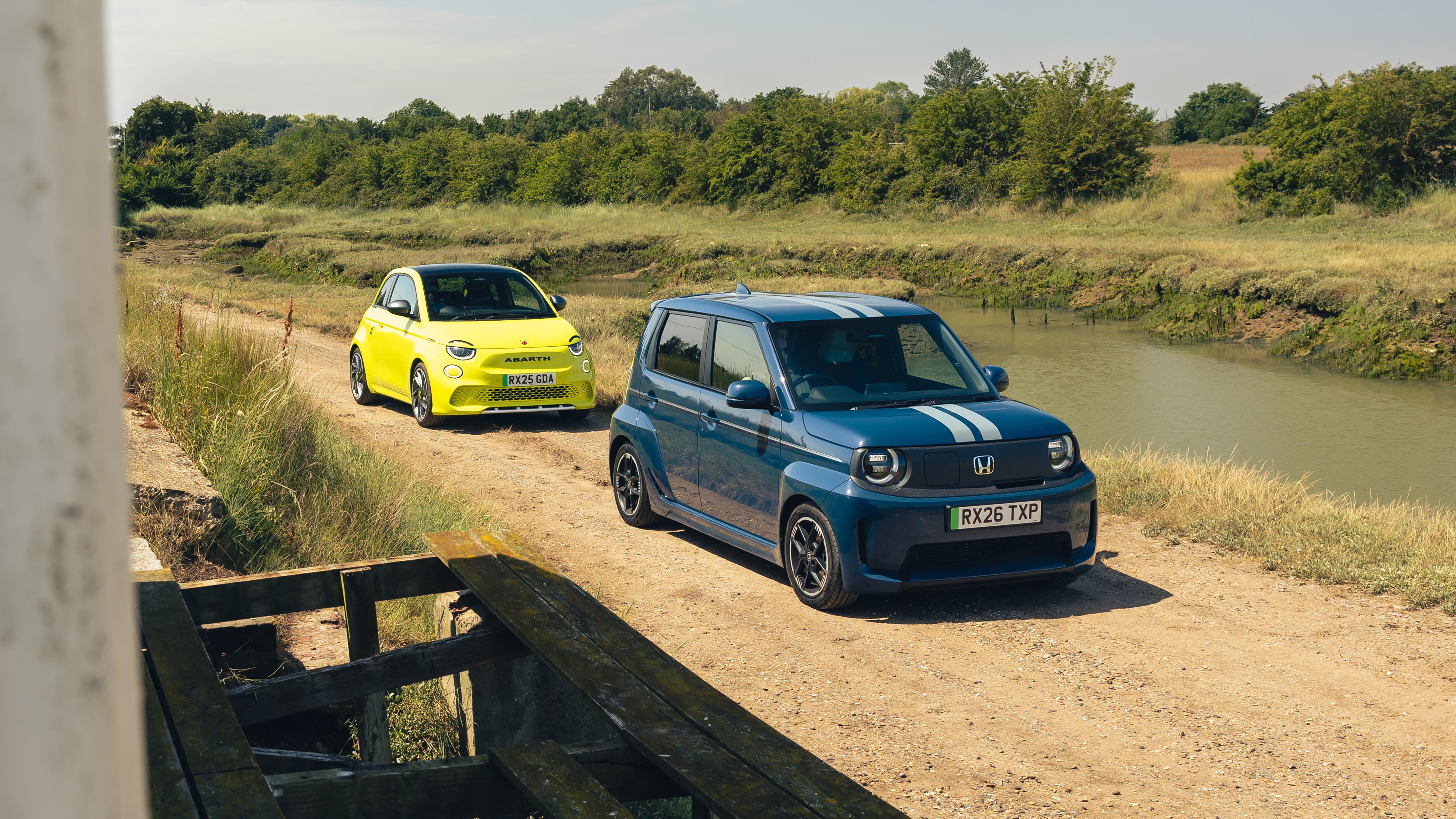
Even if it is in other ways an unfair contest, setting one sporty electric baby hatch against another that’s half as powerful again, and pricier by the same ratio (although just prior to publishing, the Abarth qualified for the £3,750 government Electric Car Grant, cutting it to £27,245). Still, they share a role and attitude, plus simulated – OK OK, fake – engine sounds.
Photography: Jonny Fleetwood
Not just sounds. The Honda also has a gearshift mode: there are seven simulated ratios. Higher gears mean less acceleration and regeneration, but greater potential speed; lower ones mean more shove and more ‘engine braking’ (regeneration) but a lower max speed. A little ‘rev counter’ moves in pitch with the sound. Indeed, hit the top speed for a given gear in ‘manual’ mode and you bounce against a ‘rev-limiter’.
Well, that’s how it feels. Actually no shifts happen; it’s all software. In auto, the car picks its own gears but the effect’s the same. The ‘engine’ sound at the centre of all this is a gruff little thing, not unlike one of the triples that power Japanese kei cars, but without the turbo lag.
The Abarth has a single ‘gear’ which certainly makes it less of a fake, even if it has the disadvantage of diminishing one of the cues of speed, because the rise and fall of ‘engine’ pitch has to cover the car’s whole speed range. So sonically you might be stuck in third, even if accelerationally (that’s a word because we say it is) it behaves like a proper EV and gives you all the shove all the time.
This sound was to an extent crowd-sourced, as Abarth fans were asked to vote on several choices. It sounds like a four-cylinder petrol with a fruity exhaust, because at the time of the survey Abarth fans skewed heavily combustion. The Abarth’s noise comes from a generator mounted externally, under the boot floor where an exhaust back box would be, so it’s audible outside the car.
Too audible really: it hits the legal decibel limit for petrol cars, and it emits a revving-up effect when you touch the accelerator at rest. That aspect of its operation is frankly juvenile and embarrassing and we turned it off in towns. But out in the country it’s effective fun. If only Mercedes-AMG G63 drivers could turn off their sound when driving past a funeral.
The Honda Super-N isn’t the exact opposite of a G63, but it nearly is. The basic car conforms to Japanese kei city car norms, which constrain the length and width and power, in return for significant tax and parking exemptions. Japanese makers respond with cars that simply fill that notional box.
None of which stops it looking like a cereal box on a roller skate
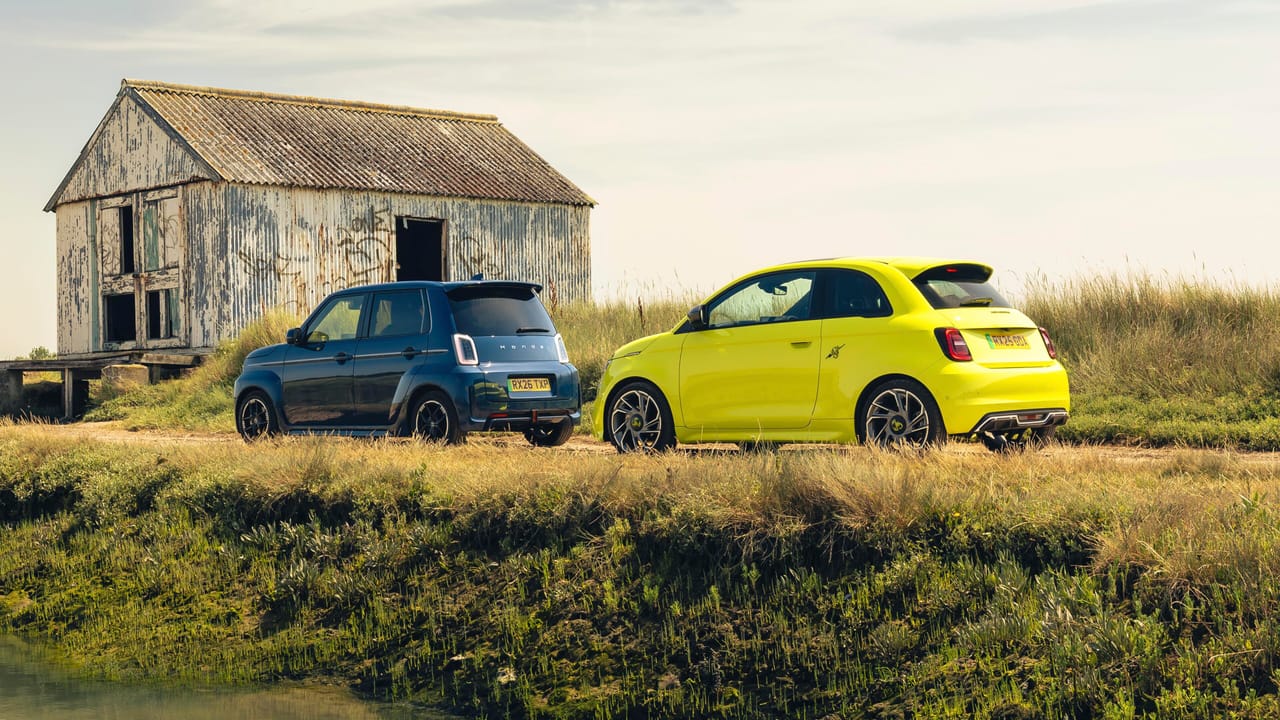
The Super-N, revised for our market where such rules don’t apply, gains extra power, plus stability through a widened track covered by little arch extensions. None of which stops it looking like a cereal box on a roller skate. On the upside, its toy-like narrowness is a huge aid in aiming down city streets and country lanes. Suddenly they’re wider.
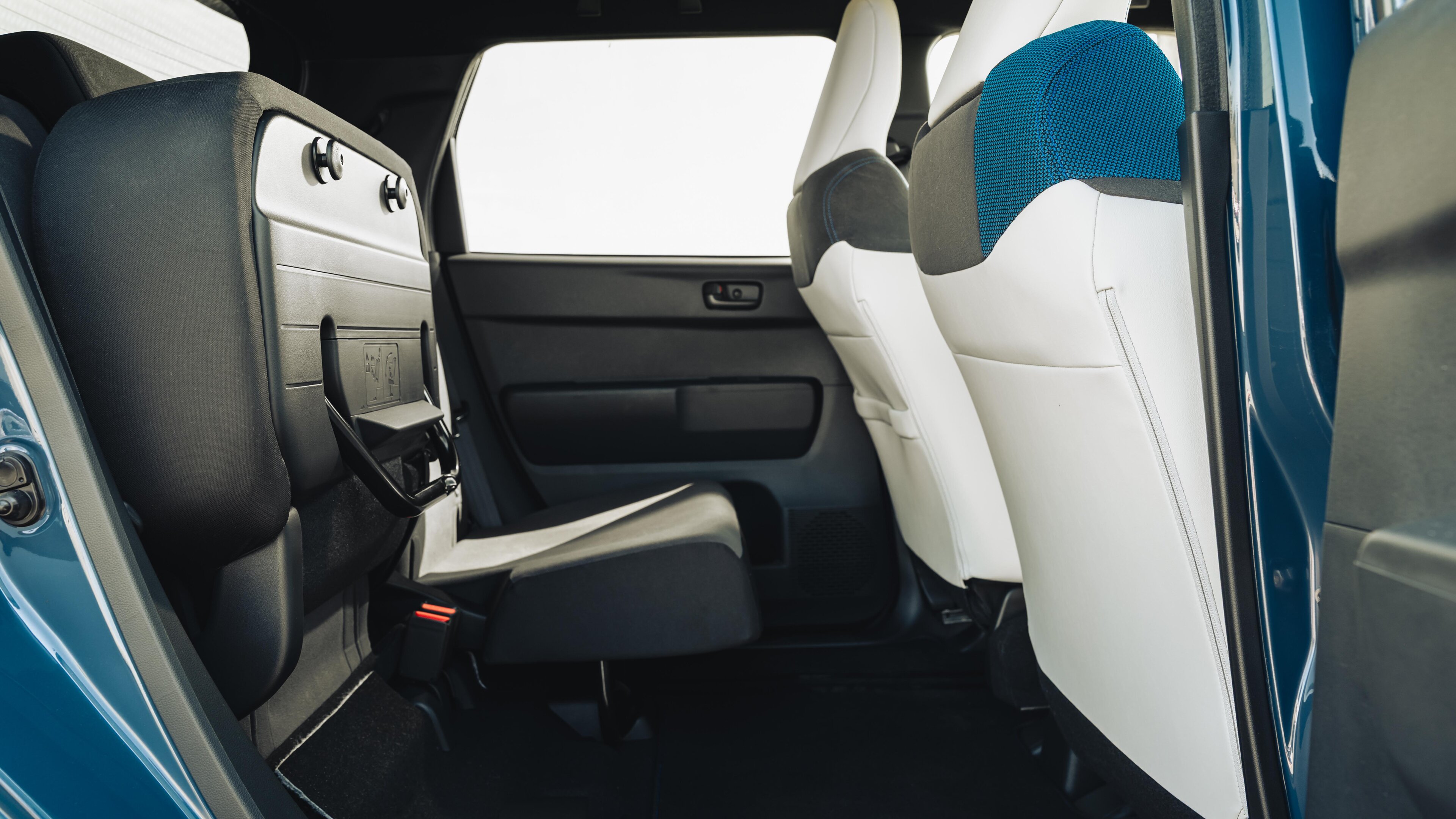
The box-like package is unfeasibly roomy. Just for four of course, but that aside there’s enough rear legroom – partly because the battery is physically small – and head clearance. The doors are so thin they make you feel a little vulnerable, but they open wide. In the back it has Honda’s uplifting Magic Seats, a great space for tall items, or a pen for a dog. The boot’s tiny, mind. You’ve got narrow but clinching seats, cheerily trimmed, and lots of actual switches including a full set for climate. You can opt for a diddy fake tacho in the cluster when in the geared modes.
Get all the latest news, reviews and exclusives, direct to your inbox.
While the Honda is modified from a utility-first design, the Abarth is a derivative of a style-first car, the Fiat 500. Essentially it’s a small coupe, which brings awful privations for the people in the back – their legs, their heads, their vision. In front you sit a bit high, but comfortably in excellent sports seats.
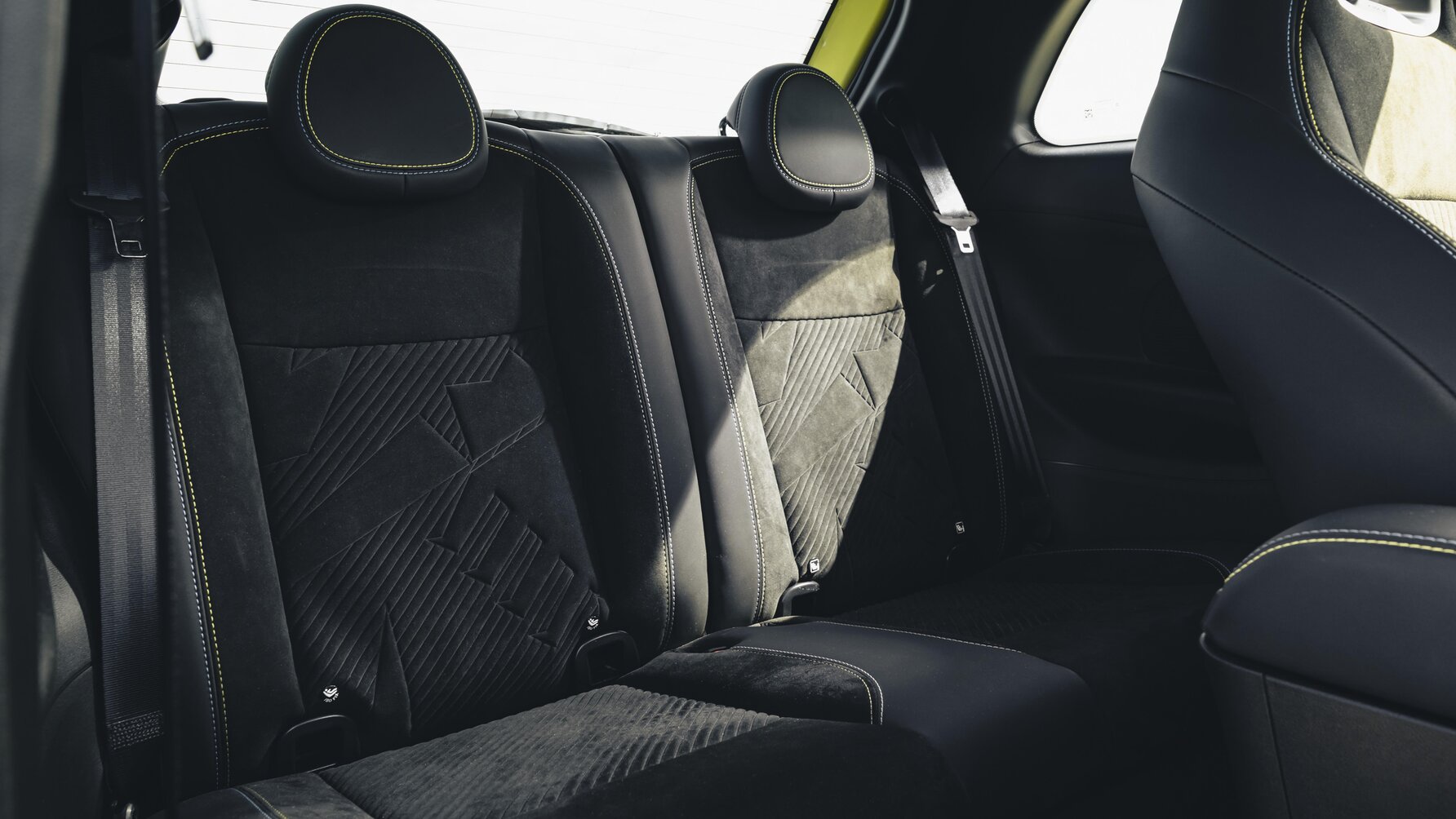
Its trim gets a boost from Alcantara across the dash, and the screen system is both good-looking and pretty logical, as is the instrument pack. And as per the Honda you get lots of real switches for climate and lighting. The extra width over the Honda manifests itself as door bins and storage between the front seats. Plus a larger battery. We’ll come to that.
The Honda isn’t as weird to drive as it looks. Certainly not as strange as the earlier generation of superheated kei cars like the peppery 4WD turbo Daihatsu Cuore TR-XX Avanzato R4. Normally speaking you’ve got a fairly meek electric motor of 64bhp, and a choice of modes including Eco which turns off the aircon, City which adds regeneration, and Normal which is what it says. So far so BYD Dolphin Surf.
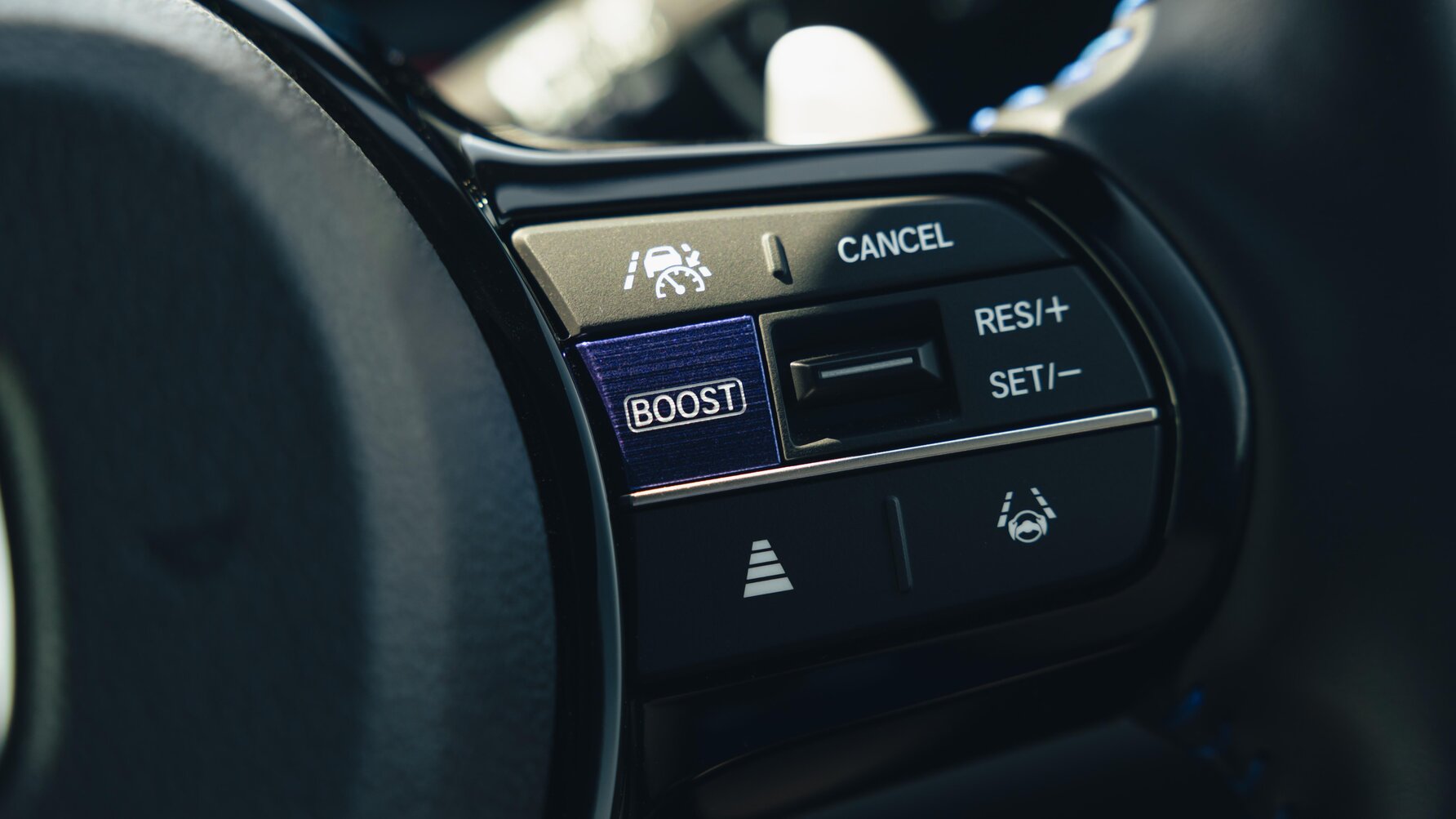
Then you hit a purple button on the steering wheel, and Boost mode arrives. The power jumps to 94bhp, and in comes the noise and the simulated gears. The best part of five seconds is wiped off the 0–62mph time. If you didn’t notice that, the instrument panel turns purple, and you can now use the paddles. They’re useful for regen and for the noise. The gear tuning isn’t perfect, as the ‘engine’ is low-pitched so doesn’t sound ready for an upshift when you start bouncing off that fake limiter. So mostly we drove in ‘auto’, enjoying the sound cues, and ‘downshifting’ to get regen for corner entry.
The Abarth is almost loutishly loud, if a cheery and amusing racket and quite petrol-ish. Its tone and texture are shaped by accelerator inputs, so it is a useful cue to your driving efforts. Annoyingly, to switch it on or off demands a deep dive into menus, and you can do that only at rest.
The Abarth has usefully more poke than the Honda. Its battery has the same capacity as a regular Fiat 500’s but its wiring can release higher current. The motor, too, is physically the same as the Fiat’s but juiced by more robust electronics, and it runs through a lower-ratio final drive. Result is 7.0 seconds 0–62mph versus 10.0 for the Boosted Honda, despite the fact the Honda is commendably light at 1,097kg. Again, its small battery helps cut weight, but that brings other obvious disadvantages.
Through sharp corners the lightness is your friend. The Honda might look like it’ll topple, but it feels well planted and scuttles through a series of curves with delicate flik-flak motions. The steering’s progressive and feels natural. It’s always more fun thrashing a small slow car to the very outermost of its ability than it is to drive a big quick one when constrained by limits and vision.
There’s a lot of road noise to remind you it’s somewhat of a sardine tin
To the Super-N, all roads are wide, all corners sweeping, all speed limits generous. It’s so refreshing. But in the end a little monotonic. You can’t throttle-trim the line like with the best little cars. The tyres squeal and traction’s an issue. There’s a lot of road noise to remind you it’s somewhat of a sardine tin.
The Abarth 500e is more grown up. Not a sentence we ever thought we’d write. It grips harder and goes harder, but it also has some more subtle moves. The steering is a little light and the brake pedal a little long, but when you give this car some work to do it leans in and responds. The front tyres are full of enthusiasm – keep turning the wheel and the car keeps pivoting. The ride, which feels a little punishing at town speed, begins to breathe when you’re out on B-roads so you’ve got a lot of control. It’s still tauter than the Honda, making the car feel more responsive, but mid-corner bumps don’t throw you in every direction like they did with the 2010s petrol Abarth 595s and 695s.
The ‘engine’ note does help you judge cornering. Abarth provides no regeneration paddles, but you can summon more of it with the drive mode switch beside your knee. Off-throttle, summoning Scorpion Street from Scorpion Track gives the effect of a downshift.
If you had far to travel you’d want to be in the Abarth. It’s more civilised provided you turn off the sonic boom, even if it doesn’t have the Honda’s adaptive cruise control. The Abarth can go further too. Its battery is 37.3kWh usable, which sounds pale until you realise the Honda’s is 28kWh. So the Super-N’s WLTP range is a not-super 128 miles, to the Abarth’s 157 in Turismo spec with 18in wheels. (The base version on 17s saves £3k and goes
seven miles further.)
But we found the range gap to be bigger. Same driver, same mixed roads, the Honda was less efficient at 3.5mpkWh, for a scant 100 miles. The Abarth scored 3.9mpkWh for 145 miles. Further denting the Honda’s journey ability is the recharging. The rated peak is just 50kW and on a hot day it drew a lot less, taking 50 minutes for 20–80 per cent. On a motorway that’d get you barely more than 50 minutes driving, before another 50 minute charge.
Racing stripes do not a GT car make. The Abarth on the same charger took 40 minutes for a bigger percentage gain, adding about double the miles. In optimum weather they’re 20–80 in half an hour for the Honda (60 real miles) and 5–80 in half an hour for the Abarth (110 real miles).
If you had far to travel you’d want to be in the Abarth
So for single-car households the Super-N is hobbled just as the Honda e was, and it’s not so sophisticated inside or out. But half price goes a long way. Lots of early Leaf and Zoe drivers coped with those range and charging limitations. As a second car the Super-N would be a hoot, and good value, even if it insists that you’re hip to its JDM looks.
The Abarth isn’t as accommodating inside, but otherwise is more car for more money. Actually you can get a shiny approved used one for the price of a Honda. We would. And use the switchable noise to enjoy our different caffeinated beverages at appropriate times.
Honda Super-N: 7/10
The Super-N is an urban scootabout that’ll lift your spirits. It’s fun at low speed and amazingly roomy. But the knowing joke of its styling might wear off, and a long trip will wipe the smile off your face
Abarth 500e: 8/10
The curvy 500 design and smart detailing has charmed for years, even if it cramps rear space. It drives well, taking its EV urgency well outside the ring road. Switchable noise good, if less so than fake gears
Get all the latest news, reviews and exclusives, direct to your inbox.