




Big Reads
Supercars are boring: what you need is this gorgeous V6-engined lightweight instead
More than half a century after the concept was born, the Bertone Runabout lives and breathes...
Supercars are boring. An unpopular opinion, but mid-engined layouts and aero require largely the same solutions, never used 200+mph capability casting the cars into similar profiles. They’re filled with genius level traction control systems necessary to deal with Richter scale outputs, and the active aero is going to give mechanics of 2036 a nosebleed. They are distance bought cheaply with horsepower, the only payment received for the effort a vague feeling that a very short time has become a surprisingly long distance. That’s not driving. That’s management. Bah, and indeed, humbug.
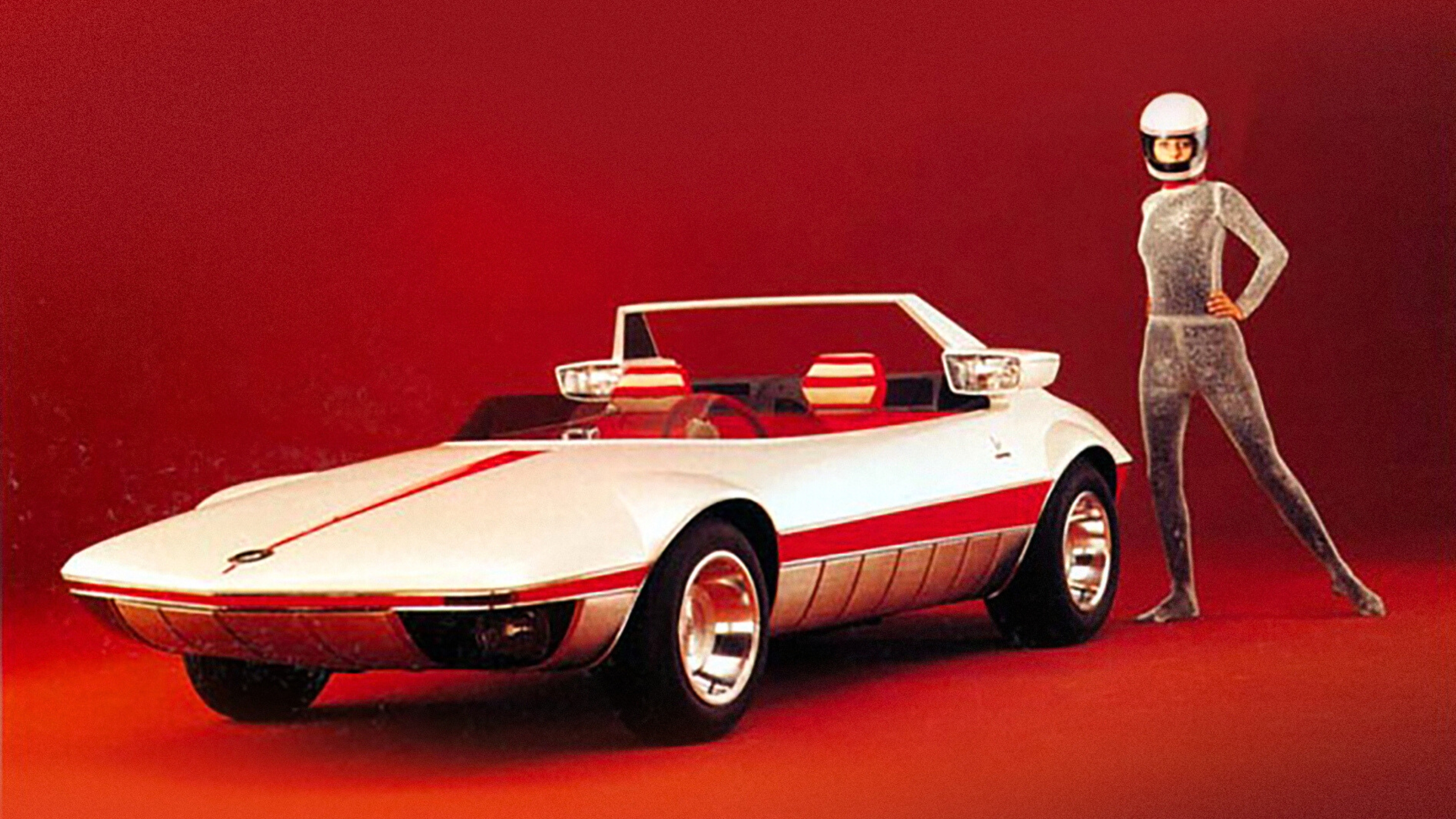
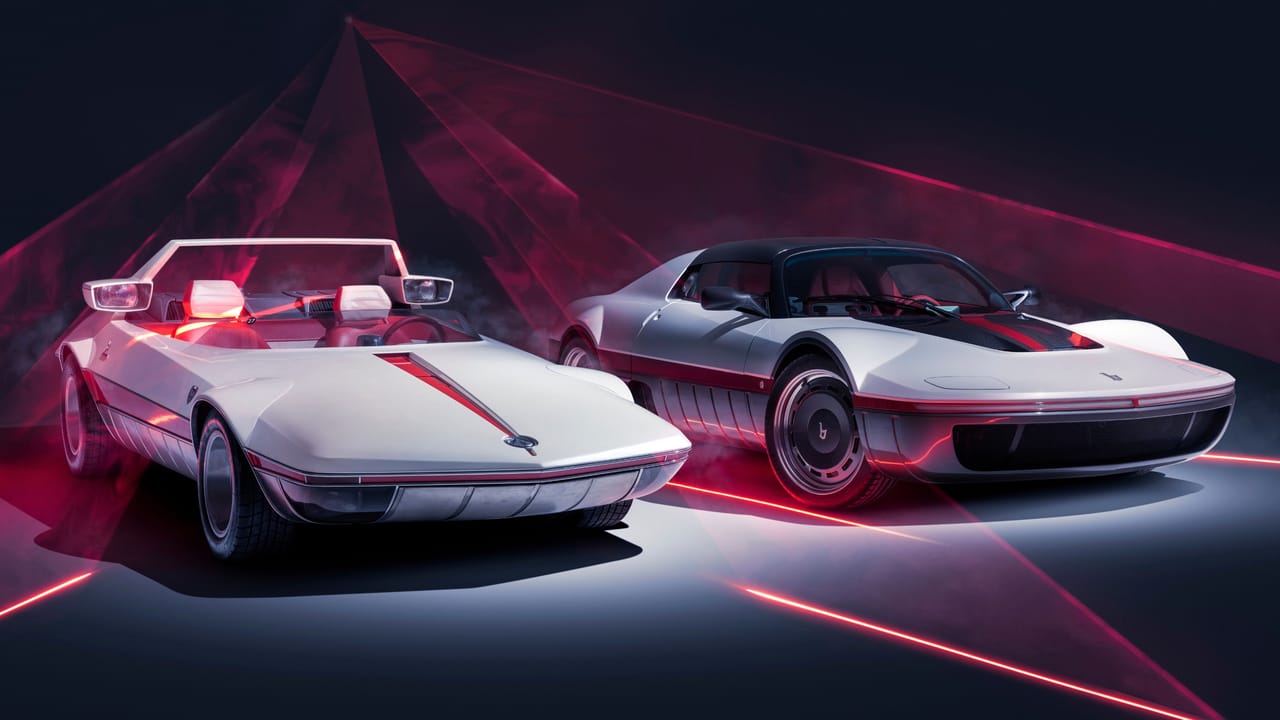
Sounds like the rant of a person with wrinkles and a raft of stories about how it was better ‘in the good old days’. But there are more visceral rabbit holes to disappear into, even in 2026. And the Bertone Runabout appears to be one of them. Its maker describes it as a ‘Neo-retro’ reworking of the Autobianchi A112 Runabout concept from the 1969 Turin Motor Show, a car designed by Marcello Gandini under the auspices of the Bertone atelier and inspired (fairly boldly) by contemporary speedboats.
Advertisement - Page continues below
Hello Jetsons whimsy and matching helmets, pointy design cues and impractical spotlights. The relationship to the original is both obvious and sympathetic, themic without being tryhard. Basically, you can look at this car without knowledge of the muse and think it’s cool, but the lens of the original one-off gives it sharper focus.
Photography: John Wycherley

The original car inspired the wedgetastic Fiat X1/9 and arguably the Lancia Stratos (Bertone did the Stratos Zero Concept pre-production), so there’s solid foundations for a tribute album. But as mentioned, it’s a good looking thing on its own. The first thing you notice is the smallness, because the modern Runabout is not a big car. Dainty, even. No, it’s not got the almost fragile looking – to modern eyes, at least – pillars and panels of 1960s and 70s cars, but it looks to have got fitter rather than fatter.
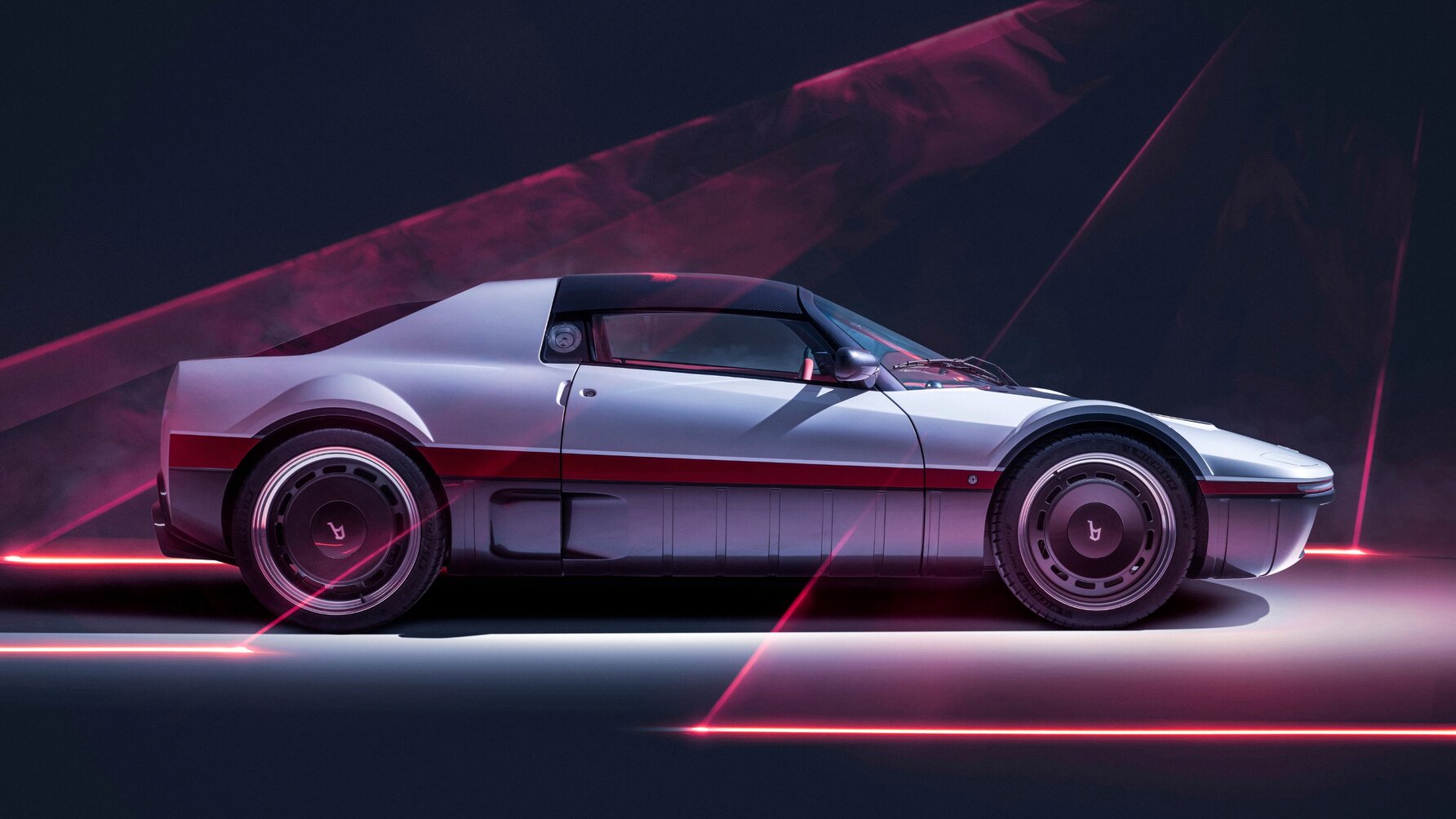
There’s a rising swage line from a slight beak at the front that runs backwards into the visual weight of the rear, accentuated by vertically contoured bodysides like the 1969 OG. Pop-up lights sit on the edges of the nose, and a bonnet vent (you can see the fans below) stops the front being one big slab. It comes in two versions, Barchetta and Targa, the former being a fly-screened and permanently exposed closer homage to the original, the Targa a more practical variant for those who live with actual weather and prefer their faces without weirdly realistic fly tattoos.
Advertisement - Page continues below
The wheelarches ape the original, formed deep towards the middle of the car on the front and framing the 18in wheels perfectly, the rears with the same radius, but more petite, wrapping 19in wheels at the rear. They’re both lovely.
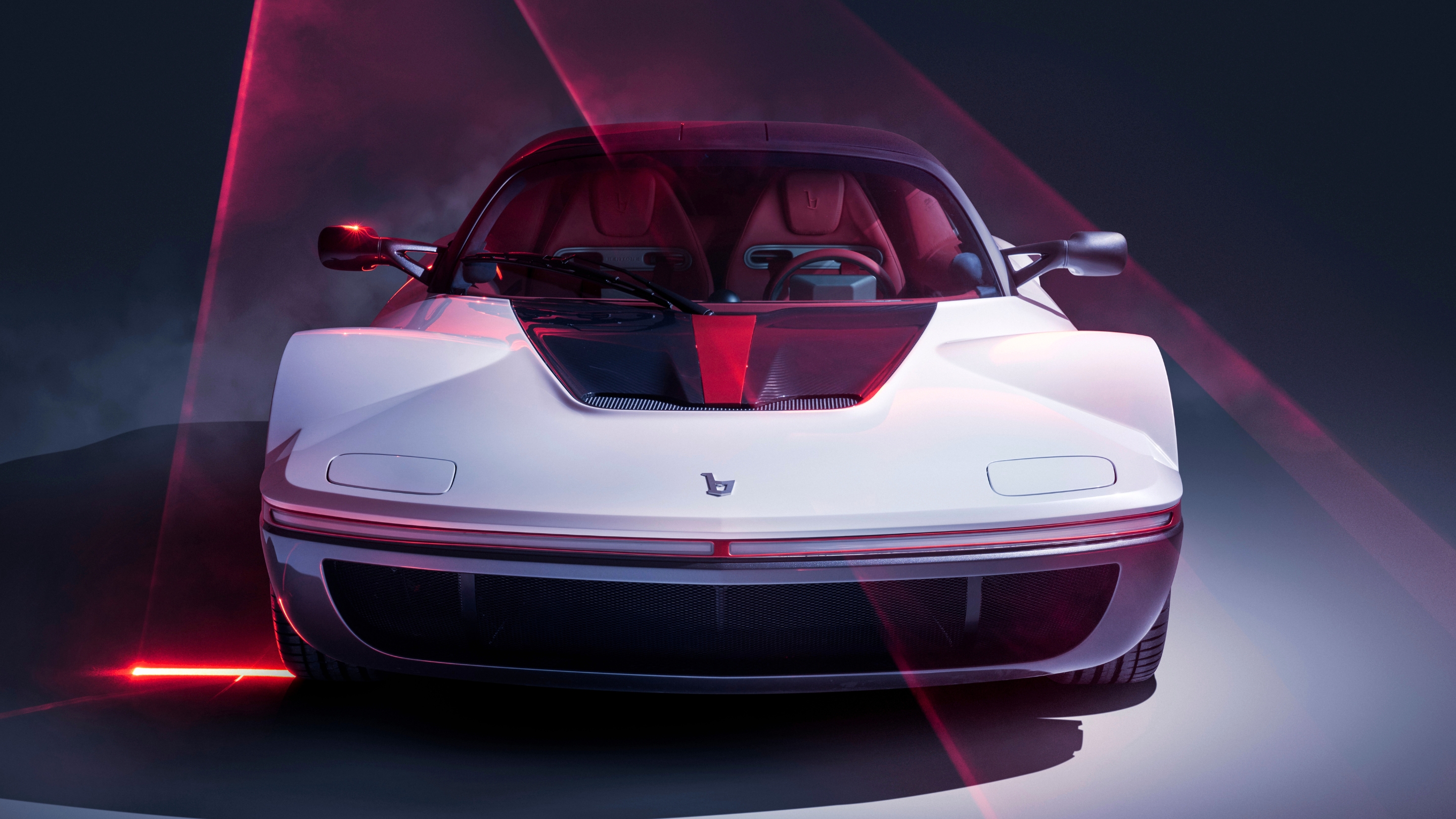
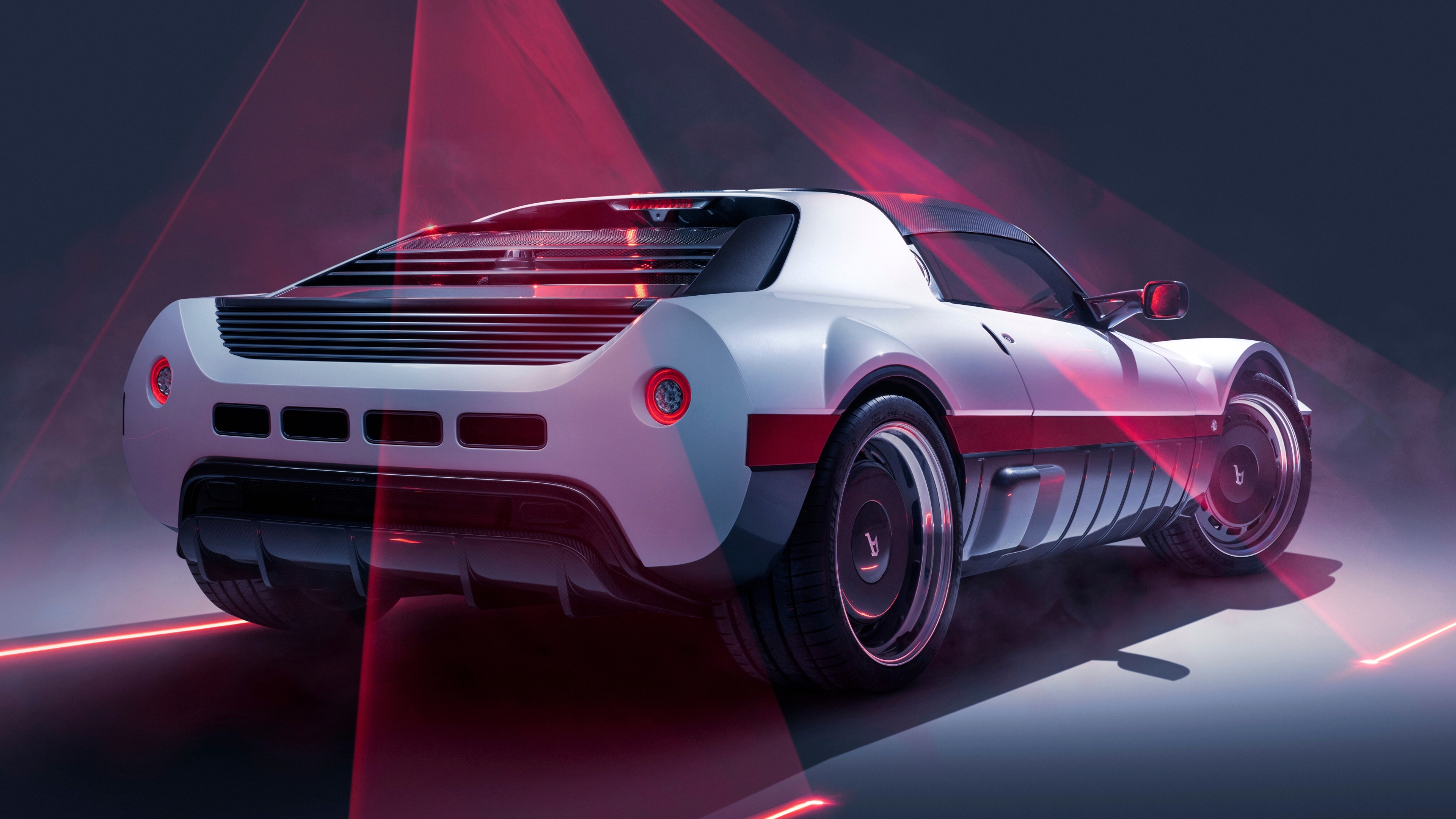
The wing mirrors mounted on the pillars on the tops of the doors look a little heavy, mind, and if you were going for that really retro look it could possibly have an inch smaller forged alloy all round, but it works on lots of levels. The rear is also simple, framed by slats over the engine and a dogbone of a rear valance with four vents underneath and circular rear lights.
It’s fun, not overly self-obsessed and feels clean. A car that puts a smile on your face. And yes, you can see the X1/9 in there, plus maybe a Ferrari 348 GTB, or perhaps a whiff of Corvette. But design ghosts appear in most cars and there’s no escaping the imagination of the viewer.
The interior is simple, pared back and the better for it. There are slim leather sports seats dressed to ape the colourways in the concept, milled aluminium for the wheel and the small set of knobs in the centre console that control the lights, aircon and various other bits. A small digital screen sits in front of the driver, but there’s a distinct lack of overly lit AI-powered gigabrains in here, and it works – although the pedals are offset (to the right in this left-hand drive car) and the exposed linkage for the 6spd manual is hard not to want to look at. The floating compass embedded in the dash is a nice touch, too – although that gets a bit meta, seeing as it’s a reference to the concept that was itself a nod to the original maritime inspiration.
As nice as all the Italian design flair is, there’s solid backup in terms of the mechanical side. Mounted behind the driver is a Toyota-sourced supercharged V6 putting out 468bhp through that six-speed manual. The car is rear-wheel drive, forgoes too many traction nannies and weighs just 1,150kg – that’s a smidge more than something like an Alpine A110 with a bigger set of lungs and just under 350lb ft of thigh muscles. The paper stats indicate that it’ll be fast, but not sickening, deft rather than bruising.
The weight management is controlled mainly by sheer lack of size, but also an extruded and bonded aluminium chassis supporting aluminium wishbones and adjustable damping. Which sounds dangerously familiar. Which it is. Sort of.
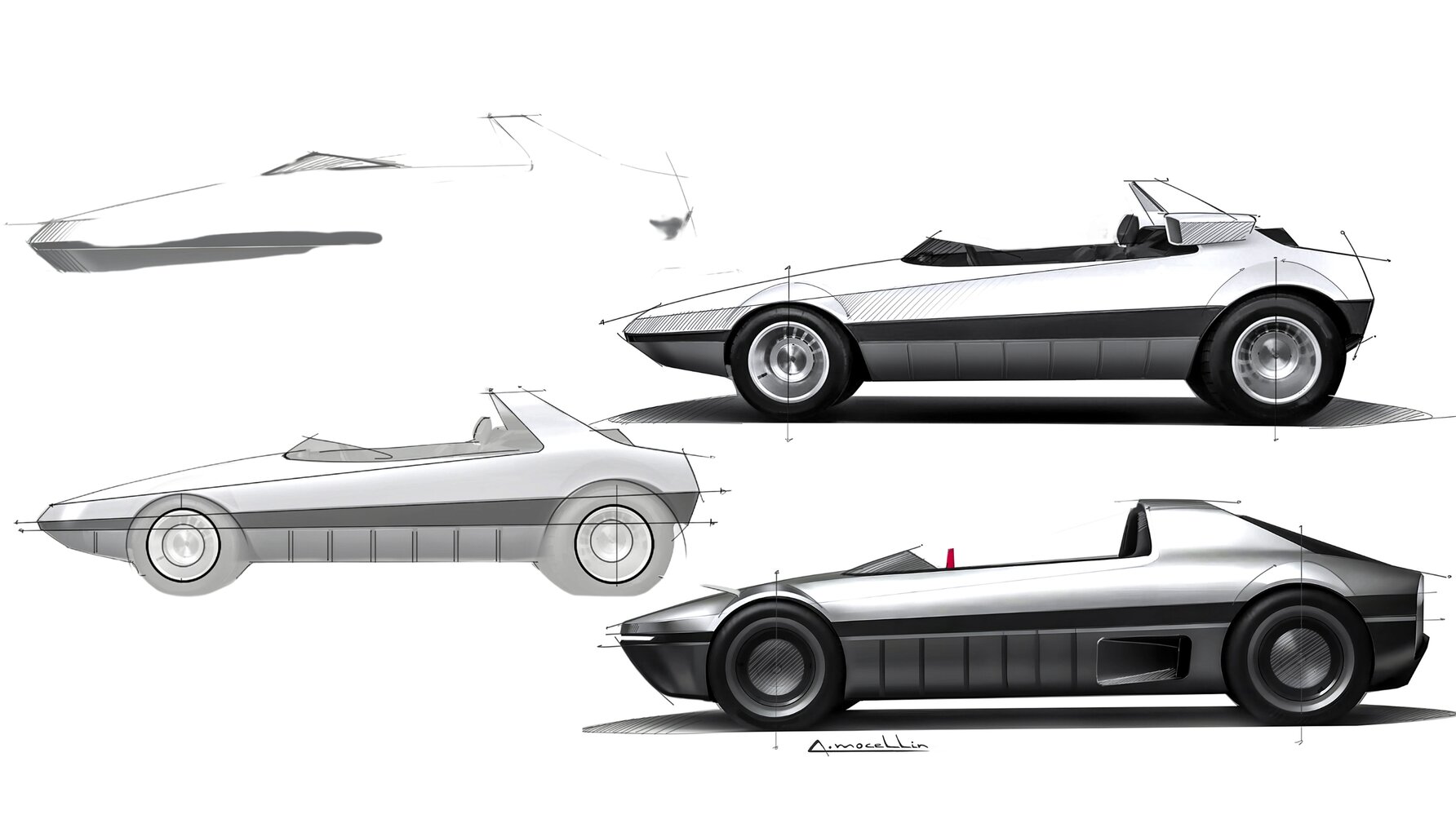
So what’s going on here? The specs of the skeleton scream Lotus. And it kind of is, but not in the way that you might think. The chassis is a virgin item sourced from a supplier and modified by Bertone. The engine is sourced directly from Toyota and given a bespoke setup for tune and things like induction, exhaust and placement, and the whole thing has a new car VIN. So bluntly, there’s a lot of late model Exige architecture in there, but this isn’t a car that’s been taken and rebodied. This never left anyone else’s factory as a complete vehicle, so it’s not a restomod.
Top Gear
Newsletter
Get all the latest news, reviews and exclusives, direct to your inbox.
Hence Bertone calling it ‘Neo-retro’ – which is a reference to the styling inspiration rather than the guts. But on the more practical side, no one ever drove an Exige and thought it was rubbish, so there’s plenty of joy in the fact that Bertone pretty much knew what it was working with in terms of components.
Still, Bertone was always famous for being a coachbuilder of some repute, so there’s no problem with it now. And that’s what sets this car apart from the usual few-off specials; the fact that it comes from Bertone. The company was bought relatively recently by entrepreneurs the Ricci brothers (Mauro and Jean-Franck), who revived the brand in 2022 and set about bringing this venerable marque back to life.
First came the scissor-doored GB110 supercar based on Lamborghini bones; the Runabout is the second model in the line of super limited production cars. But Bertone stretches back all the way to 1912, when it was first established as an industrial design company by Giovanni Bertone. A company that made horse-drawn carriages. After World War Two, second son Guiseppe ‘Nuccio’ Bertone took the reins, and basically became the world’s best talent scout for automotive designers, pulling the likes of Giorgetto Giugiaro, Marcello Gandini and Franco Scaglione under Bertone’s wing. Rockstar designers.
Some of the most famous and striking cars of the era were produced under the auspices of the company, albeit likely more associated with the men who actually penned the sketches, or the companies that commissioned them. So this is a badge steeped in design history with a back catalogue fermented in one of the best eras of car design.
As for the Runabout, with only 25 being made, it’s got that element of collectability that will no doubt see some of them mummified in collections. That would be a massive shame; the guts of this thing mean it was made to be driven, in the real world, doing real world things, being small and nippy and fast and playful.
Yes, the Barchetta will likely be a Riviera boulevardier, but the Targa is no more impractical than many light sports cars. There’s even a slim bootspace. But what’s striking here is that this is a design led, mechanically solid, characterful, interesting, exciting car that sweats personality from every pore, and one that won’t need a race licence or runway to get the most from.
Supercars might have become a little bland, but there are different definitions for super cars. And the reimagined Runabout might just be one of them.
Bertone Runabout
Price: €390,000
Engine: 3.5-litre supercharged V6, 468bhp, 347lb ft
Transmission: 6spd manual, rear-wheel drive
Performance: 0–62mph in 4.1secs, 168mph
Weight: 1,150kg
Trending this week
- Car Review
Mercedes-Benz C-Class Electric