

11
Anyone for a rear-engined 'Vette? 4WD Peugeot? Foam-bumpered safety car?
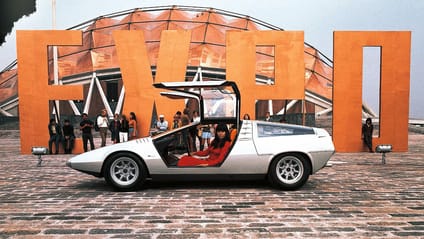
It’s not clear why Porsche named this 1970 concept after the Italian word for a snouty jungle mammal. There were two sets of gullwing doors: one for the passenger cabin and one for the luggage compartments. It was displayed at motor shows, but never made it into production.
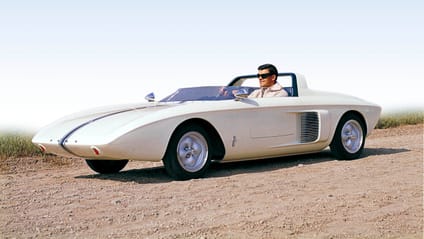
This 1964 concept looked nothing like the car it became. It didn’t even have a V8. Instead, it had a 1.5-litre V4, and – with an eye on little British roadsters – used aluminium bodywork to save weight. Ford’s marketing boss ultimately decided this design was “too far out” and, more importantly, too expensive to make. What people really wanted was a cheap muscle car, he said. With more than eight million sold around the world since then, he was probably right…
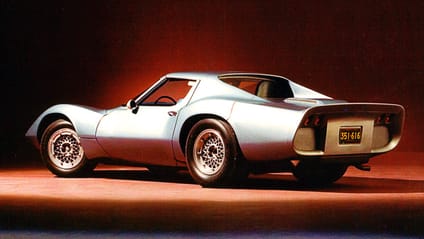
It was 1964. Porsche had recently stuffed an engine in the back of a sports car and called it the 911. Not wishing to be left out, Chevrolet’s engineers decided they too would put an engine in the back of a Corvette. However, the engine was not a compact flat-six, but a full-fat V8. All that weight over the rear gave it some curious handling qualities, and during a high-speed test it veered wildly and bounced off two walls.
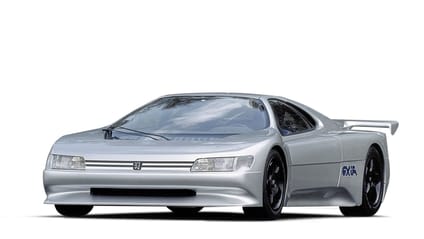
The Oxia produced 670bhp, had 4WD, four-wheel steer and a carbon-Kevlar skin. Aside from terrifying performance, it also demoed future in-car tech – this was one of the first cars to have a new-fangled CD player.
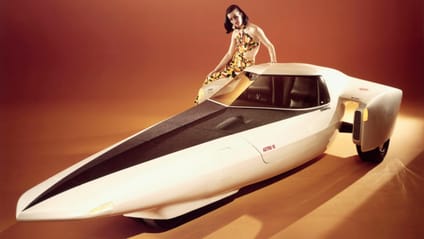
The 1969 Astro was Chevy’s way of showing off alternative tech. It was powered by a 317bhp jet-turbine engine, because it was light and easy to package. Instead of a rear-view mirror, a camera streamed images to a screen. The canopy popped up and levered forwards, so you could step into the seats.
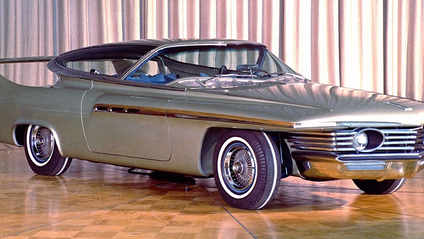
It had huge throttle and brake pedals, which took up all the footwell. No footrest here – you had to use the brake pedal instead. The roof canopy automatically raised when you opened either of the doors (just a year later, The Jetsons first aired on American TV… a coincidence?), and we should all be grateful for the massive rear wing, because it acted as a crude sort of airbrake – paving the way for future air-brakers like the Veyron and McLaren P1.
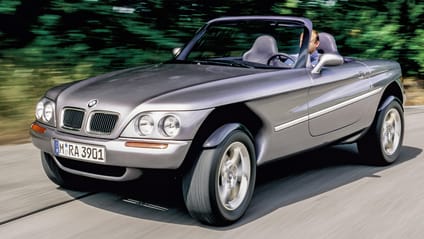
How else do you explain a convertible 4x4 (an... off-roadster) inspired by enduro bikes and styled like a boat? The Z18 was BMW’s first 4x4; shown in 1995, it predated the X5 – to which it donated a 4.4-litre V8 – by four years.
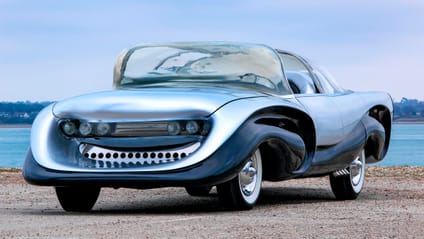
All occupants had rotating seats that, if spun fast enough, would “beat the impact of a collision”. And there was a reason for that pout: the front end was designed to scoop wayward pedestrians into the foam-filled bumpers.
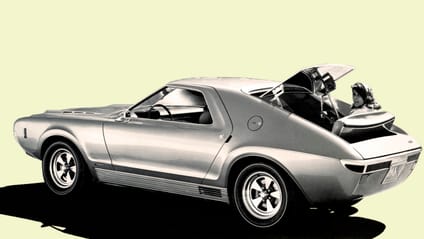
Yes, that’s a lady in the boot. She’s sat upon a dickie seat, which – in old motor carriages – is where one put the servants. But she is not a servant, and this is not an old motor carriage. It’s a 2+2 coupe, with a flip-up hatch above the rear seats. It allows a human head to go al fresco, whereupon the rear window is transformed into a speedboat-style screen.
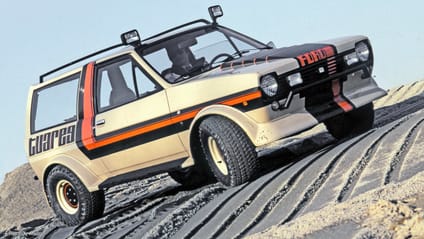
The Tuareg – based on a MkI Fiesta – was built in partnership with Italian styling house Ghia, who propped up the C-pillar and extended the roof to give it an estate-like shape. The suspension was toughened and raised, the arches were puffed out to house chunky tyres, and the bonnet was cut like a cheese grater for better airflow.
Get all the latest news, reviews and exclusives, direct to your inbox.