

11
The cars that arrived in a blaze of technological glory, but fizzled out just as fast
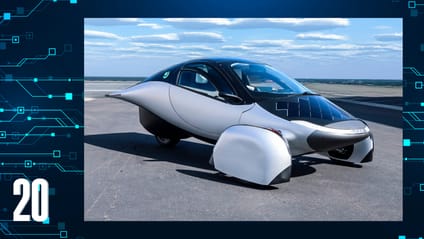
In 2010, the world got a first look at the Aptera Motors 2e: a tiny, electric, futuristic-looking three-wheeler. Sixteen years later, Aptera Motors’ three-wheeler looks like a modernised version of that car from 2010, and it has big solar panels.
But the car is still in limbo. The Aptera Motors website says: “We are committed to commencing production and delivery as soon as possible. However, the exact timing remains uncertain.”
Aptera Motors’ three-wheeler grabbed attention in the 2010s with its fun looks, but its delays over the past 16 years have distracted from its potential.
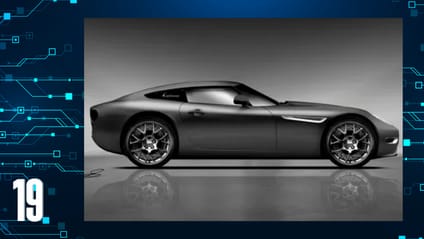
An electric vehicle called the Lightning GT got international attention in 2008, with outlets calling it a “green supercar".
But the car didn’t pan out. The British Motor Museum claimed to have one of two Lightning GTs ever made in its possession through at least 2024, saying the car “showed the world electric cars could be both stylish and conventional".
Too bad there apparently weren’t more than two of those stylish and conventional models.
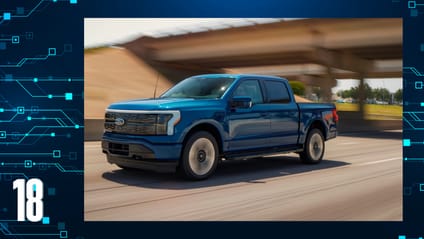
The all-electric Ford F-150 Lightning pickup truck debuted in 2021, with Ford saying: “The truck of the future is here.” It came at a time when new electric automakers had flashy EV offerings, such as the Rivian R1T pickup.
Ford said at the Lightning’s debut that the target was 563hp and 775lb ft of torque, giving it, at the time, the most torque of any F-150 ever. Ford also said the F-150 Lightning would be able to power homes when needed, such as during power outages.
At the end of 2025, the all-electric F-150 Lightning came to an end. Ford said it will be replaced by an extended-range Lightning with a generator, offering more than 700 miles of range.
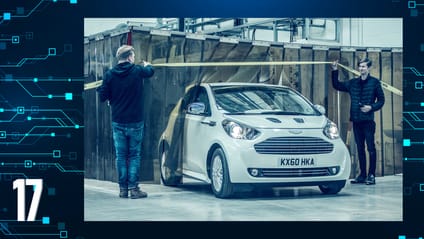
The Scion iQ was a tiny city car of the 2010s, which had both Toyota and Aston Martin (yes, really!) variants. Aston Martin’s version was the Cygnet, and Aston said it was “designed as a luxury solution to urban mobility". It had about 97hp, and it could be bought with either a six-speed manual transmission or a continuously variable automatic.
The Cygnet was meant to lower Aston Martin’s emissions to meet European Union regulations, and Aston targeted annual sales of about 4,000 Cygnets when the car debuted. After three years of production, Aston sold less than 150 total, relegating the car to a quirk in history.
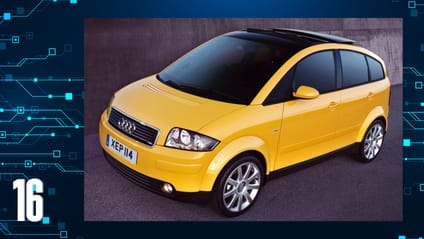
The Audi A2 was a minivan-shaped compact car that arrived at the turn of the century, and it had an aluminum body with the goal of making it light, aerodynamic, and economical with its fuel consumption.
According to Audi, 176,377 A2 models had been built by mid 2005 — a number that “couldn’t meet the high expectations originally set for it". Now that the car is approaching import age in America, it’s getting more traction among car enthusiasts.
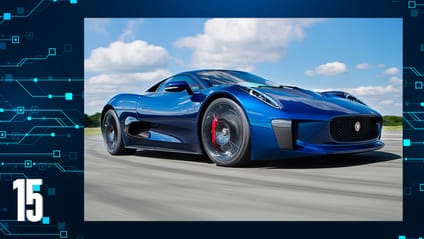
In 2010, Jaguar unveiled what it called “the most advanced Jaguar ever”: the C-X75. It was an all-wheel-drive, hybrid concept supercar with a 1.6-litre, turbocharged and supercharged four-cylinder engine. The company planned to build 250 of these million-dollar models.
The C-X75 program ended in 2012. The economy was still reeling from the Great Recession, and Jaguar decided it wasn’t the right time for such an expensive supercar.
Top Gear got to drive one in 2015, once it was already gone.
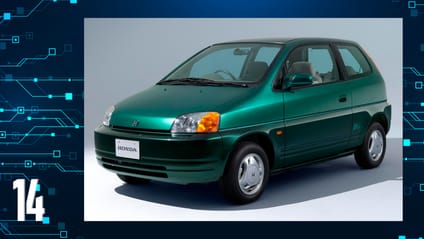
The Honda EV Plus arrived in the 1990s as an electric car with about 66hp, a nickel-metal hydride battery, and about 80 miles of range.
The MSRP on the Honda EV Plus was about $54,000 ($110,000 today), but Honda instead offered them as 36-month leases for a monthly payment of $499 ($1,000 today). Woof!
Honda didn’t make many examples of the EV Plus, and in 1999, the Los Angeles Times reported that the company had quietly stopped making the car.
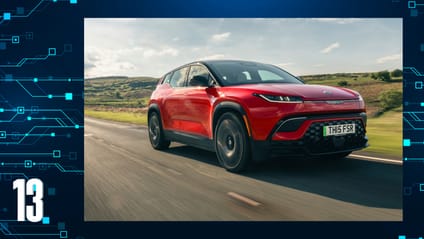
Fisker’s founder and namesake, Henrik Fisker, returned in 2016 with Fisker, Inc. as a successor to Fisker Automotive. New Fisker released the Ocean SUV, whose fate was similar to that of the Karma sports car.
The Ocean was meant to be a modern electric SUV competitor with a large, rotating center screen and a “California Mode” to open all the glass for a more convertible-style feel. Reviewers reported issues with the key fobs, software, California Mode, and more.
New Fisker was back on the bankruptcy train in 2024, putting an end to the modern era of the company and the Ocean SUV.
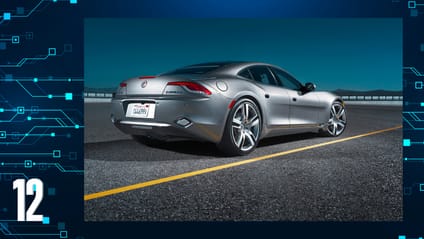
The Fisker Karma was a 2010s-era hybrid sports car from Fisker Automotive, which had all kinds of build-quality and reliability problems. There were panel gaps, fires, and explosions, to name a few.
Fisker was in bankruptcy court by 2014, and the Karma came back as the “GS-6” under a new banner, Karma Automotive. Car reviewers criticised its performance and features, and in 2021, Motor Trend said: “In the end, the Karma GS-6 failed to score highly in any of our key criteria.”
The Fisker Karma’s beauty wasn’t enough to overcome its issues, relegating it in history as a car that never realised its potential.
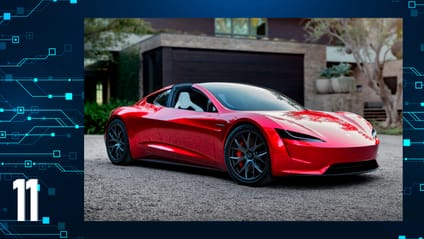
The original Tesla Roadster was a little electric sports car made from Lotus Elise architecture. Tesla showed off the second generation of the car in 2017, and people put down $50,000 deposits for it. The car is still not here.
In the time between, Tesla CEO Elon Musk has sent a Tesla Roadster into space, led a demonstration where the Cybertruck’s “armoured” glass got smashed by a metal ball, and bought Twitter (now called X).
Musk now says the production second-generation Tesla Roadster will debut on 1 April, 2026, which is April Fools’ Day. “I have some deniability, because I could say I was just kidding,” Musk said in late 2025.
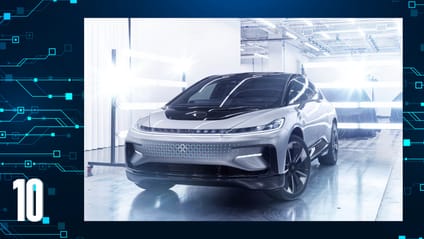
In 2017, the world got a first look at the Faraday Future FF 91: a new electric car that advertised a 0-60mph time of less than 2.4 seconds.
In the time since, Faraday Future’s had all kinds of issues, including exploding prototypes and having to avoid eviction at its Los Angeles headquarters. Faraday Future eventually reported delivering some cars, but the company’s extensive troubles squandered all of its marketing momentum.
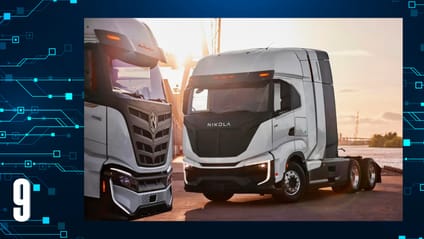
Founded in 2014, Nikola Corporation got a lot of media coverage for the company’s Nikola One hydrogen-fueled semi truck. As the years went on, Nikola Corporation teased other trucks like the Nikola Two and Nikola Tre.
Provisional orders for Nikola’s trucks rolled in, including from major companies like beer giant Anheuser-Busch.
By 2020, the U.S. Securities and Exchange Commission was investigating Nikola for fraud, and founder Trevor Milton stepped down. The company went bankrupt in 2025.
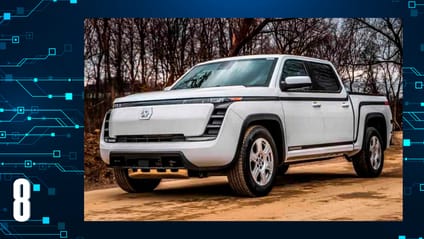
Lordstown Motors was founded in the late 2010s as a new, flashy electric-car company in America. In 2023, the company filed for bankruptcy, put itself up for sale, and sued a major investor for trying to “destroy” the business.
Before things went south, Lordstown advertised an electric pickup truck called the Endurance. The idea was for the truck to have 440hp, a towing capacity of 8,000 pounds, and a range of about 200 miles. It would’ve joined other flashy, previously unknown electric pickups like the Rivian R1T on the market.
But Lordstown is gone, and the company is now called Nu Ride. Instead of products, its website now lists financials, stock details, and other investor information.
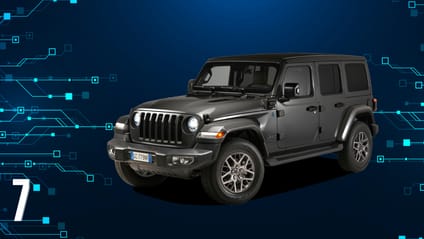
The Jeep Wrangler 4xe debuted in 2021 as a plug-in hybrid version of the Jeep Wrangler. In 2022, Jeep’s parent company, Stellantis, announced that the 4xe was the best-selling plug-in hybrid in America.
The 4xe’s had some issues — including a buggy software update, engine fire recall, and a stop-sale — and in early 2026, Stellantis announced that it would discontinue the vehicle alongside other hybrids like the Jeep Grand Cherokee 4xe and Chrysler Pacifica Hybrid. What was once a hybrid version of one of America’s most iconic off-roaders is now no more.
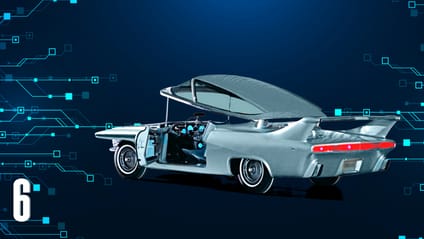
In the 1960s, Chrysler popped turbine power into a Ghia body with the Chrysler Turbine Car. The car made 130hp and 425lb ft of torque, and the National Museum of Transportation in St. Louis, Missouri, U.S. says a total of 55 cars were built.
The high cost of building turbine cars didn’t outweigh the benefits, relegating Chrysler’s turbine era to a small part of its history. Normal engines won out over turbine engines, despite the fame that came with producing such a uniquely powered vehicle.
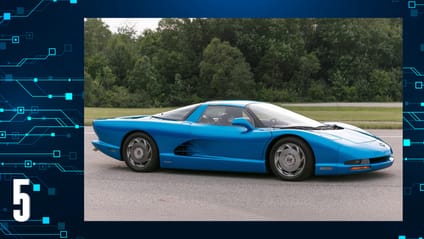
The Chevrolet Corvette’s history is full of experimental concepts and research vehicles, and one set of those vehicles went by the naming structure of "Chevrolet Engineering Research Vehicle": CERV, for short.
One model was the mid-engine CERV III around 1990, which came to the Detroit Auto Show with a Corvette badge, Car and Driver said, leading people to think it would be the fifth-generation car. As mid-engine Corvette rumors still roared, people thought the CERV III’s depiction might be the one.
But it wasn’t meant to be. The fifth-generation Corvette arrived with its engine up front, as usual. And, as opposed to the CERV III's four-wheel-drive system, the fifth-gen powered the rear wheels — as usual.
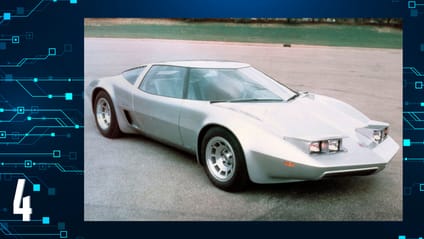
In June 1970, a Motor Trend cover story described the events of the New York Auto Show: an apparently mid-engined Corvette, later dubbed the Experimental Project 882 (or just the XP-882), came out.
Mid-engined Corvette rumors occurred for decades before the car finally got the layout in 2020, since the father of the Corvette, Zora Arkus-Duntov, had envisioned putting the engine behind the driver since 1957.
Over the years, there were all kinds of mid-engined Corvette concepts, teasing reporters and car enthusiasts alike. But it took until the eighth-generation Corvette in 2020 for that move to finally occur — more than 60 years after Arkus-Duntov said it needed to happen, and more than 20 years after his death.
The modern Kia Telluride SUV took America by storm. For years, the easiest way to get more traffic on a car website was to simply review a Telluride. People couldn’t get enough of them, and Kia couldn’t make enough of them for all those people.
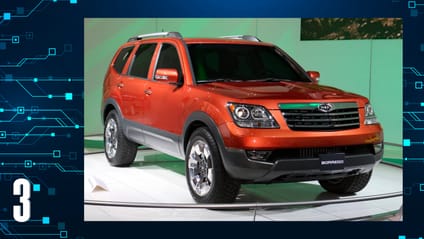
But before the Telluride came another vehicle. Back in 2008, Kia announced a new three-row, seven-passenger SUV that would soon come to the U.S. market: the Kia Borrego. The Borrego wasn’t just Kia’s new entry to the large-SUV market; it also featured Kia’s first-ever V8 engine, and that V8 made 337hp. Kia said the SUV would arrive for the 2009 model year, and the company said it was “set to be extremely competitive in the midsize SUV segment".
The Borrego ended up being extremely uncompetitive. In 2008 came the Great Recession, when gas prices soared, the stock market tumbled, and Americans reduced their spending in order to get by. Launching a new, large SUV with a flagship V8 wasn’t the smartest move and in 2009, Kia discontinued the Borrego in the U.S. due to tumbling sales.
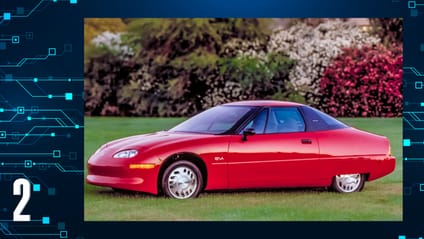
In the 1990s, General Motors released a cute, futuristic little electric car: the EV1. The car had 110hp, 137lb ft of torque, and less than 100 miles of real-world range.
GM leased the EV1 to about 1,100 customers, but because it was the 1990s, the demand and infrastructure in America didn’t realistically support the program.
The company repossessed all the cars, which is why it’s so rare to see an EV1 today. If you do, you’re probably in a museum.
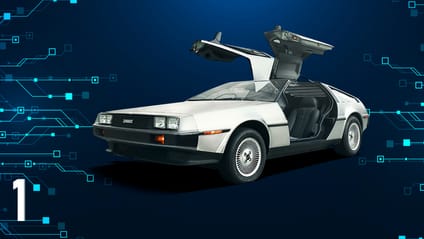
The DMC DeLorean is an American pop-culture icon, with the first DeLorean production cars arriving in 1981. They left the factory with wedge bodies, gullwing doors, and raw stainless-steel bodies. The DeLorean’s V6 engine had a slightly pathetic 130hp and a 0-60mph time somewhere in the nine-second range. Its role in Back to the Future (it’s a film, you might have heard of it) solidified its fame.
Despite the DeLorean’s icon status, the DeLorean Motor Company itself (and thus, the production DeLorean) didn’t sell well. There were all kinds of issues with both the car and the company’s founder, John DeLorean. Reports of the company’s shutdown came in October 1982, and overall, DMC only built about 9,000 units.
Get all the latest news, reviews and exclusives, direct to your inbox.