

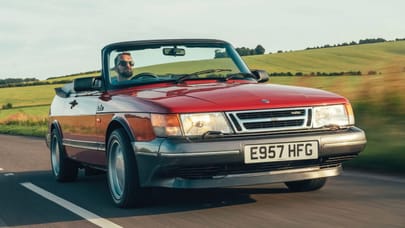
11
A time before flappy paddles and electronic nannies, but after brakes and headlights that worked properly
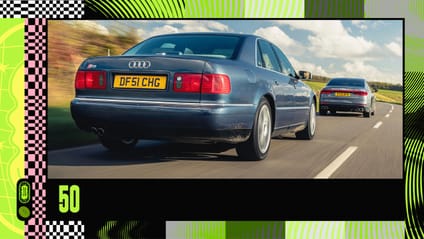
If we were sensible types, we’d use this entry to celebrate the ingenuity of the first gen A8 - how its innovative aluminium construction offset the additional weight of its AWD system and whatnot. But we aren’t.
So instead, we choose the burbly S8, with its uprated 4.2L V8 and penchant for punting Citroen XMs off the road, as evidenced in the iconic chase scene in 1996’s Ronin.
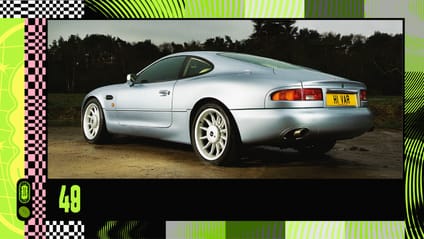
A parts bin mongrel built to a miniscule budget, using a wildly outdated Jaguar platform and the brake lights off an old Mazda. And yet, look at it. The magnificence of Ian Callum’s design helped the DB7 to immense commercial success despite its shonky underbits. The car that simultaneously rescued and reinvented Aston Martin.
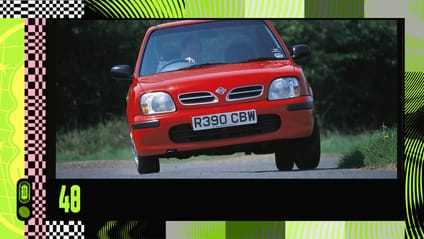
It may look like something you’d find inside a Kinder Egg, but the K11 Micra was a fearsome feat of engineering. Its combination of bombproof reliability, idiotproof handling and surprisingly impressive refinement saw it crowned European car of the year in 1993 - something no Japanese car had done before. That it’s still a common sight on the road today tells you everything you need to know about it.
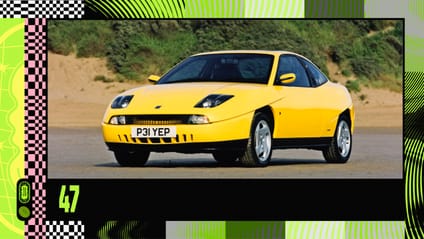
A little gem from the mind of designer, Chris Bangle, AKA the chap who gave the BMW 5 Series eyebrows. The Coupe’s angular nose and iconic slashed wheel arches exuded “baby Ferrari”, while a fizzy five pot and limited slip diff ensured it wasn’t just exciting to look at.
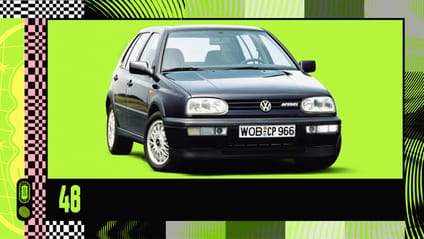
The Mk3 Golf GTI may have been a bit floppy, but the VR6 more than made up for it. By innovating an ultra-narrow V shaped engine where the two banks shared one cylinder head, VW managed to cram 2.8 litres of creamy six cylinder goodness into its beloved family car, imbuing it with a luxurious, smooth power delivery previously limited to bigger, more expensive machinery.
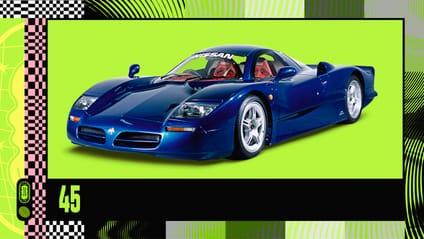
Group B rally had popped its clogs by the 90s, but happily, GT racing was entering a golden era that would provide a batch of even more unhinged homologation specials, like this: the R390.
Only one road car was ever made, but cameos in countless racing games have nonetheless cemented Nissan’s moustachioed racer as one of GT1’s most iconic participants.
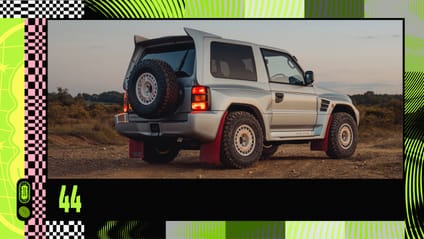
Another feral homologation special, the Evo was designed to conquer the Paris-Dakar. And conquer it did, locking out the top four spots in 1998. 2,500 road cars were built, one of which found itself under the custodianship of Top Gear photographer supremo, Mark Riccioni.
He insisted it was a highly practical daily, but take that with a pinch of salt - he said the same about his Dodge Viper.
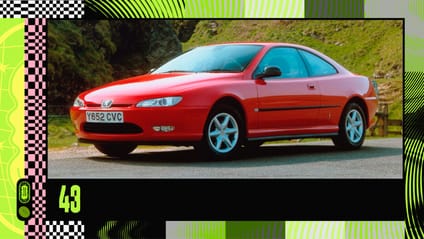
Ah, the mildly sporty coupe. It’s a rarity in today’s car park, but in the 90s you couldn’t move for Celicas and Supras, GTOs and GTVs, Cougars and Calibras. Admittedly, the 406 is right down the “lemon & herb” end of the sportiness scale, but we love it anyway.
The boggo four door car was nothing special, but a few nips and tucks from Pininfarina transformed it into an object of real desire. Let’s bring back lopping doors off stuff in 2026.
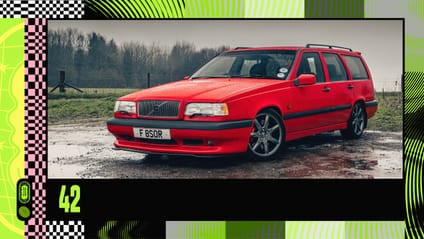
In the 90s, Volvo was fed up with its long-standing “Geography teacher’s car” stereotype and set out in search of some street cred. What followed was one of history’s most glorious acts of overcompensation.
Not only did it create the 850R, transforming its sensible family hauler into a fizzy, turbocharged, torque steering menace, it even entered the thing into BTCC - and for one glorious year, it was the estate version that participated. The “Flying Wardrobe” never managed better than a 5th place finish, but Volvo’s perception as a boring brand was rightly shattered forever.
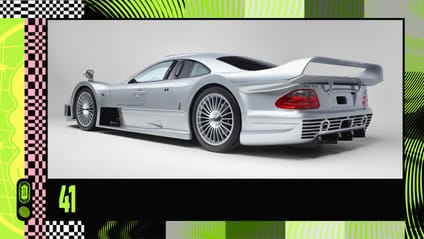
On reflection, we wonder if it was intended as a sick joke from Merc that one of the only modifications for the road going CLK GTR was leather upholstery, considering its giant V12’s tendency to transform the cramped cabin into a tiny sauna within minutes of driving.
Owners were known to keep spatulas in the glovebox to separate themselves from the seats upon arrival at their destination - assuming they made it to their destination without the primitive sequential gearbox disintegrating. No car better illustrates just how wonderfully absurd GT1 homologations were.
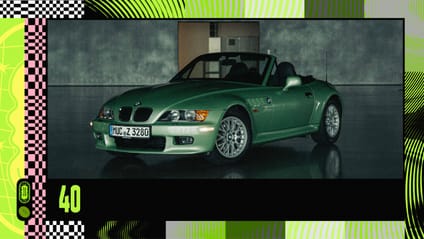
Dynamically, it was no match for its Japanese adversaries - but then again, you’d never catch Bond in an MX-5, would you? The Z3 had a laid back elegance that made it a hit with older types who weren’t in a hurry - even more so after 007 drove one.
And if you wanted something a little more rorty, there was always the demonic clown shoe: the M Coupe.
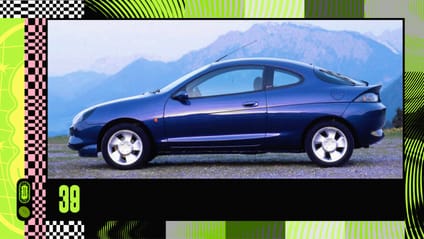
In truth, the Puma was little more than a souped up, coupe-fied Mk4 Fiesta - but the Fiesta was sodding excellent to drive in the first place. So, when Ford added a wider track, stiffer suspension and a revvy 1.7L engine fettled by bike/boat/piano whisperers, Yamaha, the resulting dinky sports car was an utterly joyous thing.
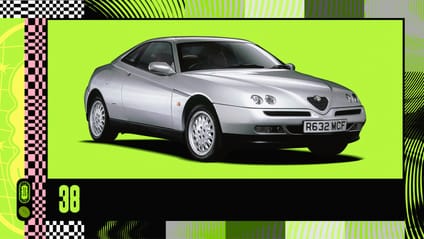
Alfas don’t get much more Alfa than this. The GTV was staggeringly beautiful, great to drive and not especially fond of working properly. Often seen on the hard shoulder, their owner looking to the heavens, cursing Clarkson’s name for convincing them to buy one. But on its day? Mamma Mia.
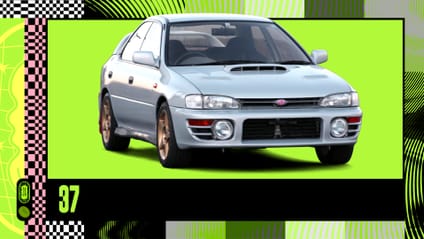
Group B may have had its chips, but that didn’t stop the World Rally Championship from thriving in the 90s. Countless iconic machines graced the period but - thanks in no small part to a softly spoken Scottish chap named Colin - it’s an era synonymous with one manufacturer above all others: Subaru. This is the genesis of the dynasty - the first ever Impreza WRX STI.
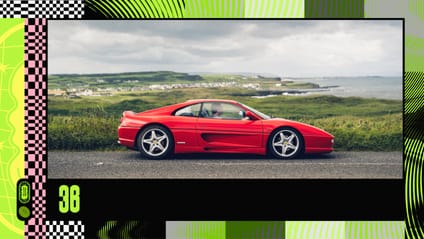
For the 30 year anniversary edition of Top Gear magazine, we went for a drive in a defining car from every decade it’s been around for. The F355 was our representative for the 90s - and only partly because Jason Barlow A) owns one and B) really fancied a pootle in it that week.
It really is a great ambassador for 90s motoring - an era that saw the zenith of naturally aspirated manual gearboxery, before turbos, flappy paddles and electronic aids went mainstream.
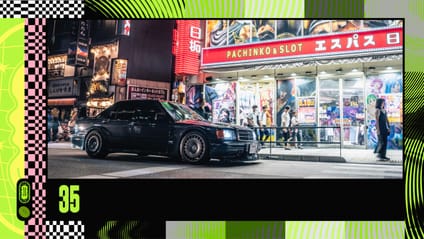
A DTM homologation special designed first and foremost to royally piss off BMW and secondly to win races. It did both emphatically.
Bimmer’s head of R&D, upon seeing its giant rear wing for the first time at the 1990 Geneva motorshow, scoffed and declared that the “laws of physics must be different in Stuttgart”. Cue much egg on face when it delivered Merc’s first ever DTM title.
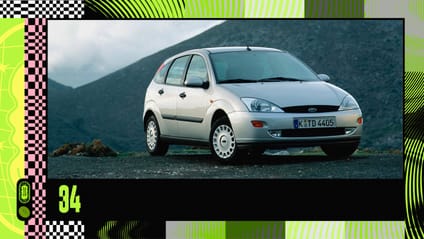
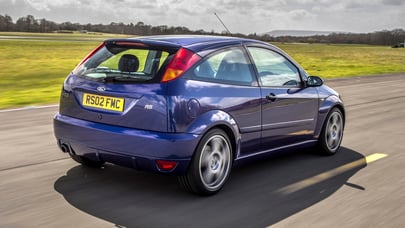
A testament to Ford’s apparent inability to help itself from wildly overengineering everything in the 90s, the Mk1 Focus boasted trick multi-link rear suspension and drove better than it had any right (or indeed need) to.
But it wasn’t just about the handling - aside from a proclivity for rotting, it had almost no shortcomings whatsoever. To this day, it’s one of the finest executions of the C-segment family car.
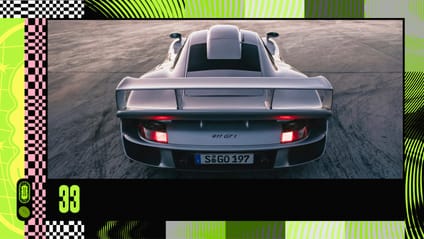
We reckon this is the definitive icon of GT1 - and no, we’re not just saying that because we got to drive in a convoy of 25 of them in the Austrian Alps that one time. Combining the recognisable face of one of the world’s most beloved road cars with the long tailed bodywork of an endurance racer, the familiar yet otherworldly Strassenversion epitomises what the category was all about.
Top flight GT racers only got more spaceshippy and homogenous from here on and, in our opinion, worse for it.
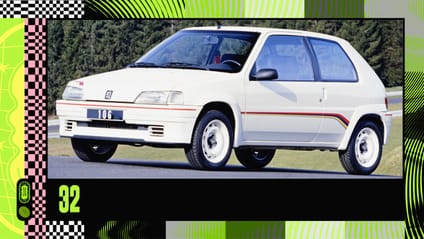
Wouldn’t everything be better with white steelies and little colourful decals? More to the point, why is the stripped out “lightweight special” treatment only offered on six figure supercars these days? Regular cars benefit far more from a bit of radical dieting. The enthralling Rallye - with its modest 103bhp and 865kg kerbweight - neatly proves that point.
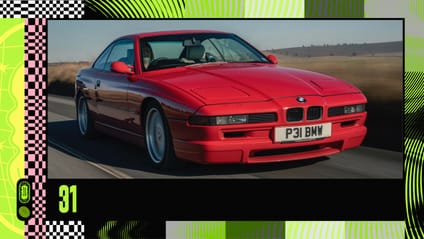
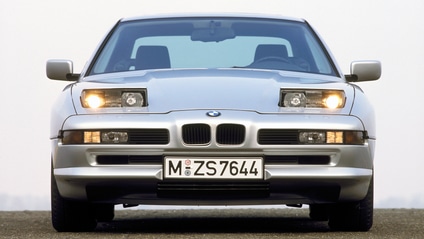
So momentous was the introduction of this all new range topping model that BMW sunk 1.5 billion Deutschemarks into its research and development.
The resulting car was a technological marvel and, more importantly, is one of very few in history to combine all three elements of the driving enthusiast’s holy trinity: a V12, a manual gearbox and pop-up headlights.
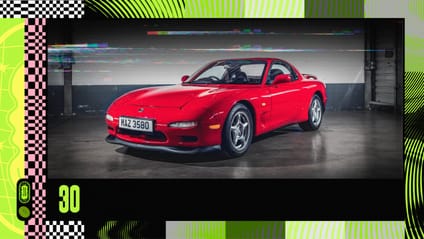
Mazda had been wankeling about with rotary engines for over two decades by the time the 90s rolled around but the FD - the third generation RX-7 - was by far the brand’s best execution of the technology.
It wasn’t all about the big spinny blades under the bonnet either - Mazda’s obsessive dedication to weight saving meant the twin-turbo FD was actually lighter than its predecessor.
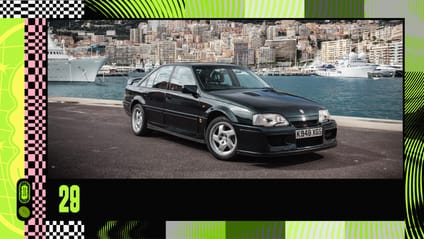
A car so fast, it was deemed an affront to nature and efforts were made to have it banned. That’s understandable really - 176mph in what started life as a Vauxhall Omega is unnatural.
Only through the use of two whopping Garret turbos was that straight line speed achieved - and only through the chassis fettling of Lotus was it achieved while staying the right way up.
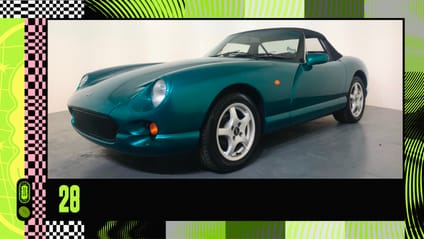
If you were someone who got off on regularly flipping death the bird, you bought a Griffith. Otherwise, you bought a Chimera. That’s not to say it was a pussycat - like all 90s TVRs it had none of the electronic assists that then-owner Peter Wheeler once famously decried as “dangerous”.
But by TVR standards it was a softer, more usable machine.
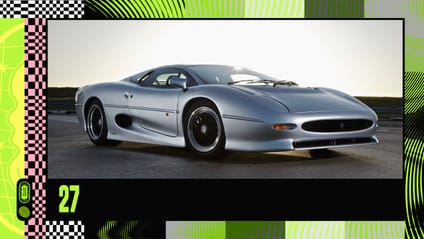
You can understand why it was deemed a letdown at the time. Buyers were promised an AWD V12, and received a RWD V6. That’s a bit like ordering a burger at a fancy restaurant, only for the waiter to eat your chips on the way over to the table.
Nonetheless, its sleek bodywork and record-breaking top speed cemented the XJ220 as a bedroom wall poster mainstay of the 90s.
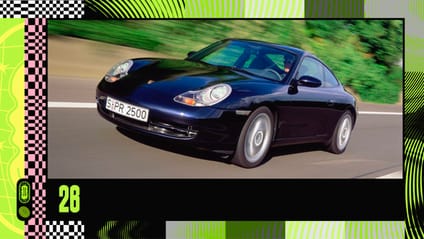
People get terribly upset when Porsche fiddles with the 911. Entire towns in Germany were razed to the ground when the 993 added a sixth gear to the manual ‘box. Small wonder then that the 996 - with its not round headlights and not air-cooled engine - had the hardcores sharpening their pitchforks.
But, like all 911s, appreciation for it has grown with time. It also helped save Porsche from ruin - but more on that when we get to the Boxster.
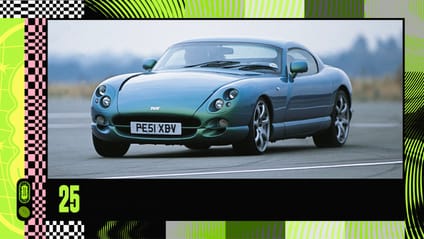
Emboldened by an unusually long stint without bankruptcy, TVR decided to push the envelope and develop its very own six cylinder engine for the new Cerebra 2+2 - an extraordinarily ambitious endeavour for such a small car brand.
To many people’s surprise, TVR completed the project, emphatically. And then went bankrupt.
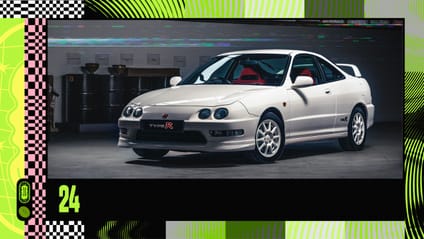
We love a languid, lazy V12 as much as the next enthusiast, but there’s just as much joy in a fizzy four pot that needs thrashing to be properly enjoyed. The Integra R proves that better than just about anything.
Its VTEC engine goaded you into delaying your upshifts until you’d bounced off the rev limiter, while the durability of its motorsport grade engineering meant you could do so over and over without fear. It’s comfortably one of the most exciting FWD cars of all time.
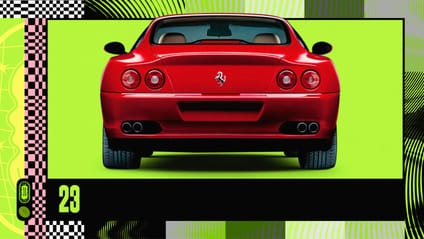
Ferrari’s first front-engined V12 since the Daytona beautifully encapsulates why the 90s was such a sweet spot for driver’s cars. Which is to say the brakes, heater and headlights actually worked, but you still got to pull your own gears through a deliciously oldschool gated manual.
After the 550, Ferraris got dramatically clever and faster - but were they ever this engaging again?
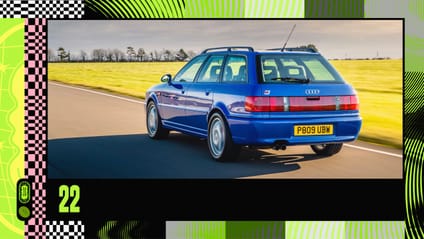
Really, it’s remarkable that it took Audi so long to figure out that super estates were a good idea. By 1994, hot hatches were well established and super saloons had been around for a decade. Yet only with the vision of Ferdinand Piech and engineering assistance from Porsche did Audi finally see the light.
Mind you, it was worth the wait - the RS2’s 322bhp propelled it from 0-30mph faster than a McLaren F1. Incidents of dogs vomiting in cars spiked in 1994.
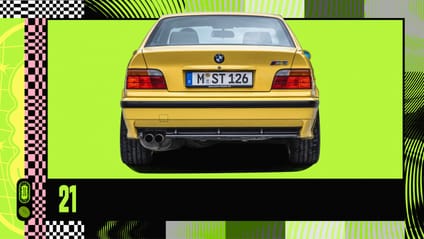
Please don’t send poo to our PO Box for saying this - but this is where the M3 lineage really began in earnest. The E30 is a legend, but it was a rough-edged touring car with number plates.
By contrast, the E36 with its beautiful balance of tautness and refinement and six cylinder powerplant is where the recipe was refined into what it’s been ever since, barring a brief fling with a hairy chested V8 in the 00s.
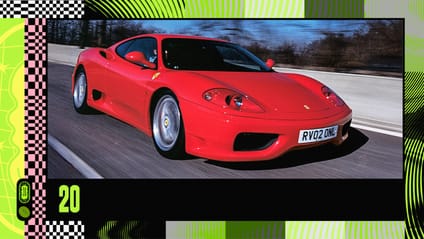
“Modena” was an apt name considering it was so much modern-er than what came before it, eh? Anyone? Arriving in ‘99, the 360 was Ferrari’s statement of intent for the 21st century. Its aluminium construction made it significantly stiffer and lighter than the F355, enabling it to lap the infamous Fiorano test track a full three seconds faster.
But much more importantly, this was the first mid-engined Ferrari to add a glass window to the rear clamshell so that you and everyone else could admire your V8 when parked up - a feature it is now almost impossible to imagine a supercar without.
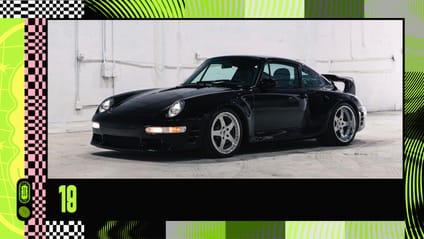
Think of it less as a souped up 911, more as a ballistic missile dressed up as Porsche. Later versions of the 993-derived CTR2 pushed out a frankly ridiculous 580bhp - some 130 more than Porsche’s own Turbo S.
The result was a top speed trumped only by the McLaren F1, and a surge in the popularity of brown trousers in Bavaria.
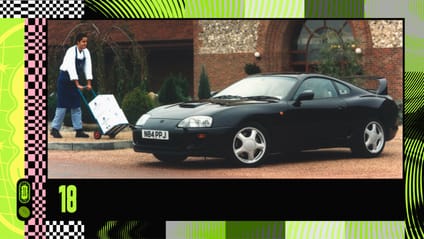
When an engine’s codename becomes as famous as the car it powered, you know it’s something a bit special. Stock, the Mk4 Supra’s legendary 2JZ pushed out an ample 276 ponies - but with not a lot of fiddling, it was possible to quadruple that.
As you can imagine, most owners were incredibly tasteful and restrained with their modifications.
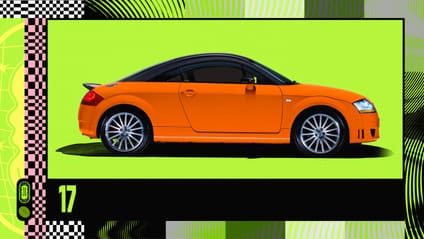
Has any car ever aged better? True, it was never the most exhilarating sports car to drive, but with every passing year it becomes more and more clear that the OG TT was one of the twentieth century’s finest pieces of automotive design - both inside and out. Early examples were notorious for spitting drivers off the road at high speed.
The story goes that Audi fixed this with the addition of a rear wing. The truth? The wing was pure placebo - it was a suspension retune that addressed the high speed stability issue (and created the slightly squidgy handling).
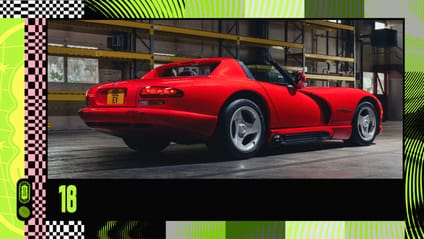
Those cartoonish proportions. That monstrous 8.0 litre V10. The name! The Dodge Viper was pure pantomime villain. Oh yes it was. Step out of line, and it’d bite you. Tread carefully, and it would try and bite you anyway, just for its own amusement.
It’s a relic of a time when supercars were to be treated with equal measures of respect and fear.
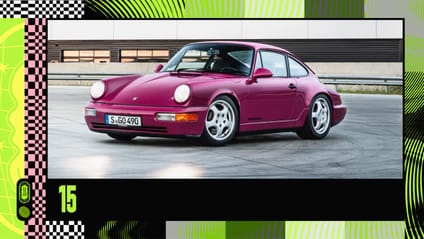
The 964 was the heaviest and most refined generation of 911 when it came along in 1989 - but 1992’s Carrera RS was a pointed reminder that Porsche still knew its way around a racetrack. The formula is one now familiar to us through decades of GT badged Weissach specials: turn the engine up to 11, increase stiffness, reduce weight.
But here, as with so many special 911s, the end result was so much greater than the sum of its parts. For many, it’s the ultimate air-cooled 911.
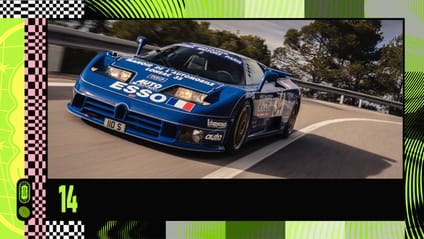
Bugatti’s false dawn. In the 90s, new ownership looked to revive the long dormant marque, but only one production model - the EB110 - was produced before bankruptcy came knocking once more. Still, with its quad-turbo AWD setup, it laid some excellent groundwork for what was to follow.
Bugatti even tested a 16 cylinder powertrain before ultimately opting for a lighter, more compact, V12. It’s fair to say that without this slightly odd looking wedge of a thing, the world may never have been treated to Veyron and Chiron.
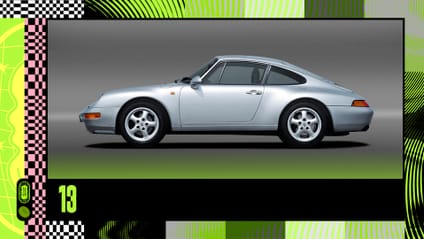
More than just the air-cooled 911’s swansong, the 993 represents the twilight of a period when Porsche was seemingly happy to bleed cash in the name of engineering everything to the Nth degree.
Later generations were hardly bodge jobs, but there is something about this, the final hand-built 911, that oozes quality and craftsmanship. Also, surely the prettiest 911?
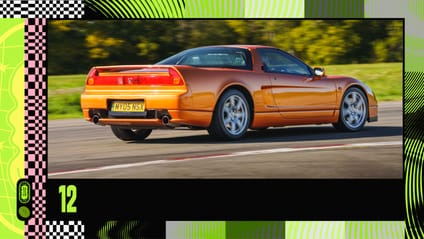
Built around an outrageous, groundbreaking idea: that perhaps supercars didn’t have to be absolutely dreadful at being cars. It was reliable, usable and practical, at a time when Lambos and Ferraris required you to fit all your luggage into an A4 envelope and detach your legs from your body to access the pedals.
That’s not to say it lacked character - the bark of its eager, naturally aspirated V6 ranks just behind Mariah Carey’s high note on Emotions on a list of the 90s’ best sounds.
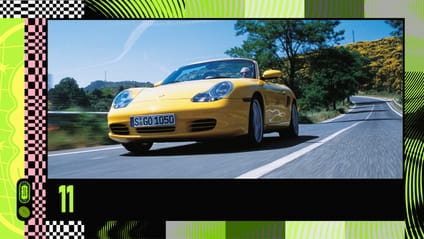
Why is this the most important Porsche of the 90s? Because the unveiling of the Boxster concept at the 1993 Detroit Motor Show represents the exact moment the company’s financial fortunes began to turn, after decades flirting with bankruptcy.
Its ingenious design leaned heavily on 996 parts, making it more affordable to build. As did its streamlined production: Porsche hired a group of ex-Toyota execs to do a Supernanny on its disorganised factory, slashing the production time of a car from 120 to 40 hours. This, combined with the Boxster’s immense popularity put Porsche firmly in the black.
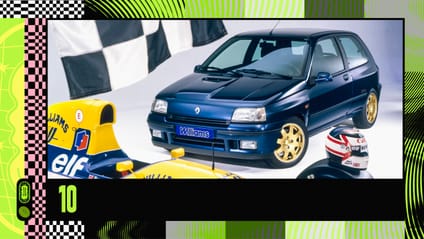
F1 edition road cars can often be a little contrived. We’re looking at you, Fiat Seicento Michael Schumacher Edition. But for its tribute to the dominant Williams F1 team, Renault did not muck around.
With its meaty 2.0-litre engine, beefed up suspension and willingness to cock one of its gold wheels through sharp corners, it remains one of the most rewarding - and coolest - hot hatches ever produced.
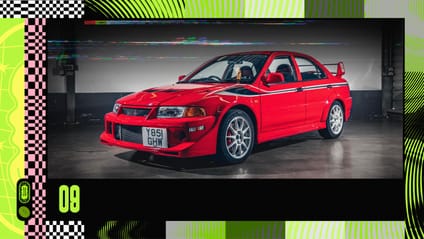
We could so easily have filled half this list up with endless versions of Evos and Imprezas but the ensuing argument in the office about the correct order of them could easily have ended in fisticuffs, so let’s simply focus on the ultimate version of each.
For Mitsubishi, that of course means the TME VI built to commemorate the Flying Finn’s fourth WRC title. It wasn’t just a case of a fancy livery and metal plaque either - a new bumper design and upgraded turbo saw improvements to both cooling and spooling.
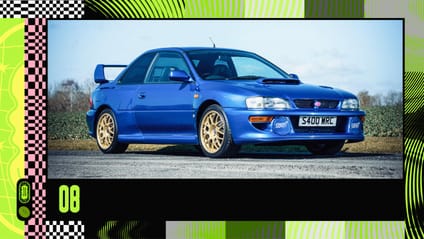
Picking the ultimate 90s Scooby is a little trickier - some will point to Prodrive’s more refined and usable P1. But for us, the ultimate Impreza is the one that makes you feel the most like McRae. That’s the 22B.
With its widebody kit, no ABS and a trick system that allowed the driver to manually adjust the power ratio between front and rear axle, Subaru’s 40th birthday present to itself is the most authentic rally car experience ever served up by a production car.
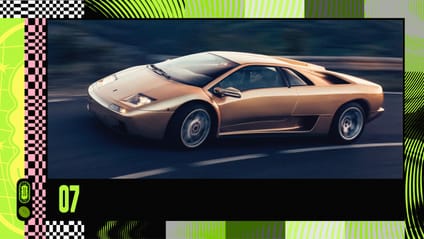
How do you replace the Countach? Simple - you can’t. So instead of trying, Lamborghini built something so terrifying to drive that anyone at the wheel would be too busy trying to stay alive to pontificate about how it stacks up against its predecessor. Genius.
The Diablo was the last Lambo produced before Audi bought the company. Subsequent models were undeniably more complete cars, but some of the raw fury was forever lost in the process of softening those edges.
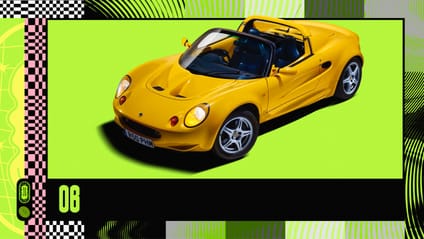
Plagued by financial woes, Lotus decided to go back to its roots for its 90s sports car. The result was a 725kg dose of pure Chapmannery.
Not since the original Elan had a Lotus so strictly adhered to the “simplify and add lightness” mantra - the result was one of the most deliciously tactile, endlessly rewarding sports cars ever made.
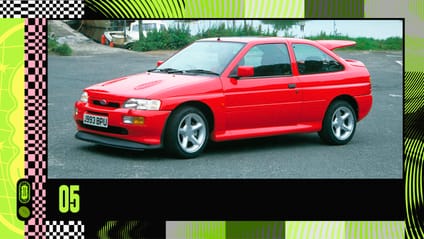
Penned by none other than design maestro and TG contributor, Frank Stephenson, the whale tailed Cossie ranks among the very finest fast Fords. A Group A homologation special, it jammed Sierra Cosworth running gear into smaller, more thuggish body with hilariously naughty results.
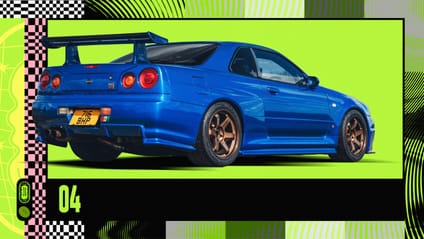
Japan’s greatest contribution to society since the noodle. With rear-wheel steer, a groundbreaking torque vectoring system and a tidal wave of turbocharged oomph, the GT-R was a rolling science lab that could school supercars through corners.
Immortalisation through films and video games made it an entire generation’s dream car, its mystique only added to by the fact it was never sold over here. If you ever get the chance to have a go in one, rest assured: this is a hero you will not be disappointed to meet.
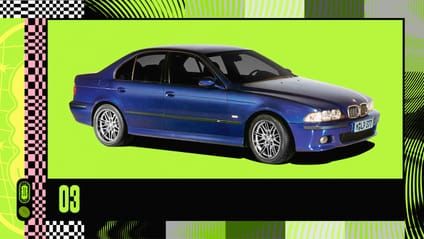
Predictably, adding a 4.9-litre naturally aspirated V8 to the best BMW ever made produced something rather special. The E39 M5 retained the understated good looks and weapons grade build quality that made the base 5er so wonderful and added volcanic fury.
It remains one of the most exciting engines ever fitted to a production car - all the better for the fact that you get to experience it while sitting in an exquisite luxury saloon, via a manual. It could only have happened in the 90s.
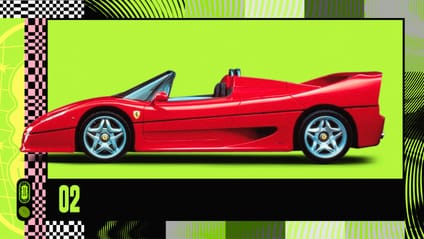
Extraordinary to think it was maligned when new. Its crime? Not being an F40. So magnificent was its predecessor, the world unanimously decided all Ferraris henceforth must weigh no more than a bag of crisps and have string for door handles. Happily, Ferrari saw the bigger picture.
Whether the F50’s 5.7-litre V12 is really derived from Formula 1 as the legends claim remains eternally up for debate. What is less debatable is this: at its 8,500rpm redline, the Ferrari F50 was the most visceral car of the decade.
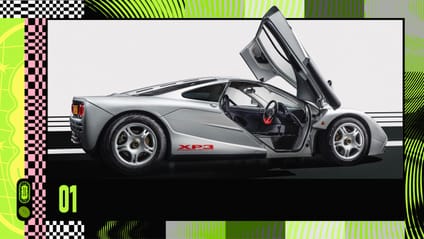
What else? It obliterated the top speed record. It won at Le Mans on first try. It opened our eyes to what supercars could be when they showed no interest in turning heads or flaunting cash and focused entirely on performance and experience.
The McLaren F1 is the greatest supercar ever made - and surely the finest car of the 1990s.
Get all the latest news, reviews and exclusives, direct to your inbox.