

12
Bandwagon. World Cup. Cars. Join us as we attempt to figure out what car each team would be. All 48 of them

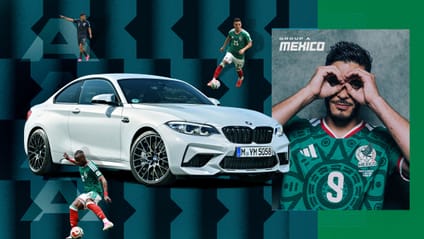
Did you know that every single example worldwide of the current BMW M2 is built in Mexico? As one of the three host nations, that’d give the littlest M car a real home advantage in the Car World Cup, especially given the relatively easy competition it’s drawn for the group stages.
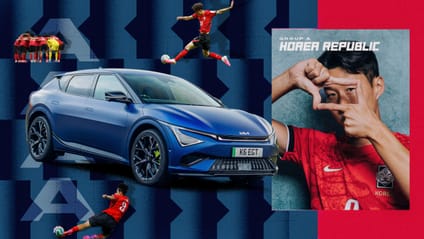
A stronger South Korean squad might have earned comparison with the nation’s current performance hero, the Hyundai Ioniq 5 N, but as it stands, an unpopular coach playing it relatively safe means the country is instead represented here by its sister car, the still very good but not quite spectacular Kia EV6 GT.

Hard-working, practical and dependable underdogs appearing in the World Cup for the first time since 2006 – that’s the headline with this year’s Czech team, making this one nice and easy. Do cars get more hard-working, practical, dependable or underdoggish than Czechia’s own Skoda Superb Estate? We think not.
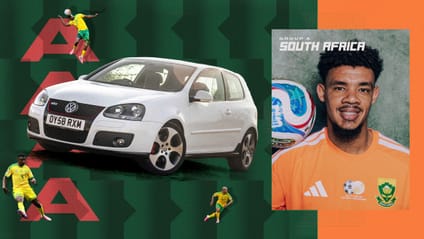
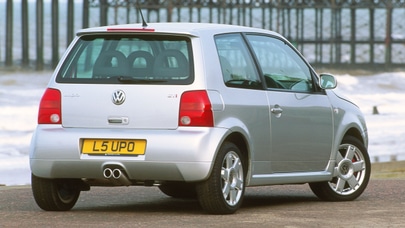
Though they qualified as the host nation in 2010, this year is the first since 2002 that South Africa has made it to the World Cup on results, so the team’s looking to make amends after that run of mediocrity. Where have we heard something similar in the automotive world? With the sensational fifth-generation Volkswagen Golf GTI. As an added bonus, the Mk5 Golf (though not the GTI) was built in South Africa for some markets.

Switzerland has a proven record as a strong contender, 2026 marking the nation’s seventh consecutive international tournament appearance, but it’s never quite been able to get out of the shadow of bigger rivals – a lot like the Saab 9-5. Although last time we checked, Switzerland still exists, unlike Saab.

Canada is another joint host that can rely on a domestic automotive industry for a home advantage, for while the supercharged Dodge Challenger hellcat appeared as American as a bald eagle diving headfirst into some of mom’s apple pie, it was actually built by the country’s polite northern neighbours. With at least 707bhp on tap, the Hellcat suits the fast, energetic style of play being pushed by coach Jesse Marsch too.
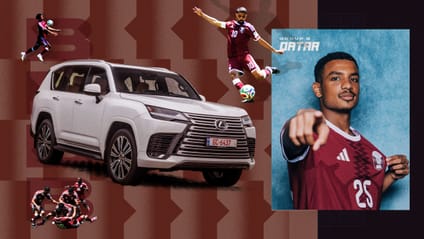
The fourth generation Lexus LX, one of Qatar’s favourite cars and essentially a posh Toyota Land Cruiser, is the best one yet, just as Qatar’s football team is at its strongest ever, qualifying for the World Cup on results for the first time this year. And yet, just as there are many teams to bet on in terms of performance over Qatar, we’re not entirely sure why you wouldn’t just get a Land Cruiser.
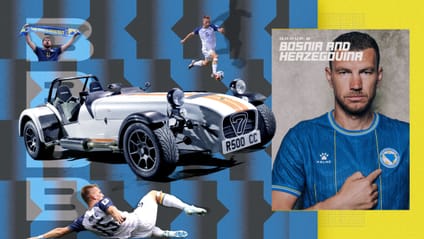
Bosnia-Herzegovina, a nation with a population roughly the same as Greater Manchester, has already delivered one of the World Cup’s biggest underdog stories when it prevented Italy from qualifying with a win on penalties. Anyone else getting flashbacks to when the little Caterham R500 minced the likes of the Zonda F, MC12 and Enzo around the TG Test Track?
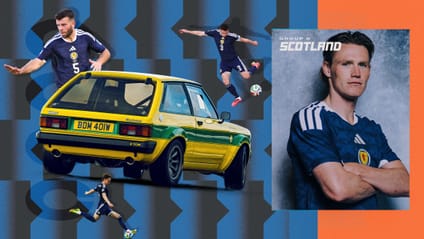
And not just because it was built near Glasgow, although that definitely helps. The World Cup knockout stages have always been elusive to Scotland, but 2026 is reckoned to be one of the squad’s best shots yet at slaying a few giants, just as the Lotus-fettled Sunbeam, from comparative minnow Talbot, did when it won the 1981 World Rally Championship.
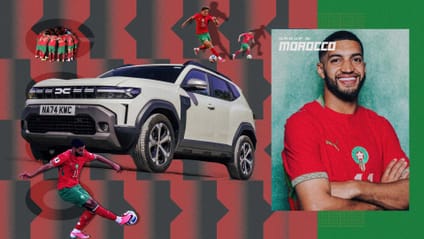
Long considered underdogs, the Moroccan squad now stands firmly as one of the best on the planet, with a world ranking of eighth. It’s essentially the same trajectory taken by the Dacia Duster in recent years as it’s quickly become one of our very favourite dependable all-rounders – and it also happens to be one of Morocco’s most popular cars.
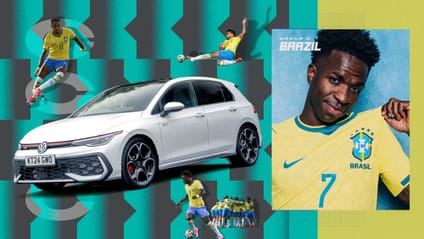
Brazil is one of the absolute titans of world football, having racked up a record of five World Cups. Despite that, it’s seen a bit of a dip in form lately, which it’s aiming to course-correct with some small but important changes. Remind you of anything? Yep, the current Volkswagen Golf GTI is the Brazilian football team on four wheels.
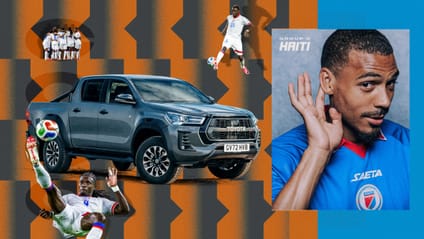
Haiti has overcome incredible odds to even be at the World Cup. The socioeconomic situation in the country means it’s not even been able to play its qualifying matches at home, and it’s taken a lot of grit and determination from the Caribbean nation to make it. Perhaps unsurprisingly, one of Haiti’s most popular cars is the Toyota Hilux, a truck we’re very much aware can overcome some remarkable odds, just like the football team.

YEAAAHHH! FREEDOM! EAGLES! RAAAAH! Ahem. Sorry, where were we? Yes, with the US playing host to the greatest number of venues of the three co-host nations, it’s only appropriate that the US team is represented by the most ’Murican car possible. The nation’s best-selling vehicle, complete with a fuel-guzzing supercharged V8 inserted in its nose, should do the trick.

This year’s Aussie squad is tough, resilient and powerful, so one of the country’s equally robust homegrown muscle cars slots right in as its automotive representative – the supercharged, 585bhp HSV GTS will do nicely. Nevertheless, the Socceroos’ coach, Tony Popovic, has instilled a hardworking, practical side in the team too. Good thing the GTS came as a ute, mate.
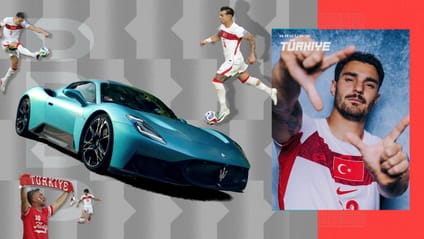
Turkey is a team regarded as a perennial underdog which, this year, is playing a hard-charging, energetic game that could see it triumph over some bigger rivals. Maserati is a manufacturer regarded as a perennial underdog and the MCPura is a hard-charging, energetic car that’s proven to be capable of triumphing over some bigger rivals. We’re still not used to it not being called the MC20, though.

Apologies in advance to the beautiful and culturally rich nation of Paraguay. And Qashqai owners. Unfortunately for you both, what’s defined the Paraguayan squad’s road to the 2026 World Cup has been safe, pragmatic and entirely unspectacular play, and nothing sums up those qualities quite like the go-to generic family crossover. At least that makes the Paraguayan football team, erm… well-equipped?

Germany have been World Cup stalwarts for decades, just as the Porsche 911 has long been the dominant force in the sports car world for most of its life. The German team has been experiencing something of a rough patch of late that it wants to turn around, much as Porsche itself has – and shiny new 911 variants like the GT3 S/C will play a big role in that.
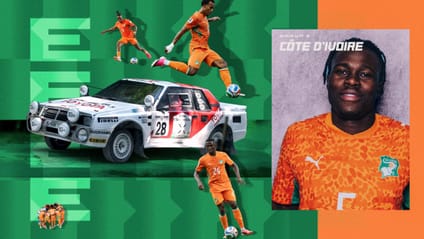
One of the teams tipped as capable of delivering some giant-slaying upsets this year, Ivory Coast was the venue for several of these itself in the automotive world in the 1980s. In 1983, ’85 and ’86, the rugged rear-wheel drive Toyota Celica dominated the gruelling Rallye Côte d’Ivoire, delivering several rare wins for a two-wheel drive Group B machine and cementing itself as one of rallying’s great underdog heroes in the process.

Before losing to the Ivory Coast, Ecuador hadn’t suffered a loss in 19 games, an absolute age in football terms. The same sort of age, in fact, as the original Land Rover Defender’s production run in car terms. And how did Ecuador go so long without a loss? Because of some incredibly strong… defenders. Geddit? Defenders?

Erm, right. Curaçao, a tiny island nation smaller than the Isle of Man, and making its World Cup debut this year. This is going to be tough, but if we can think of one car that befits a small, sunny island and is known for punching above its weight, it’s the little Citroen Mehari. Much like nobody can truly dislike the Mehari, we’re sure that everyone, no matter where they’re from, will be at least partly rooting for Curaçao too.

Ahead of the World Cup, Sweden appointed a British coach, Graham Potter, who appears to have given the squad a new lease of life, and it boasts some incredibly quick, powerful strikers too. In Performance guise, the Swedish Polestar 5 will hit 62mph in a suitably rapid 3.2 seconds, and it too has benefitted from some British fettling in the form of Polestar’s UK R&D team. Admittedly, this analogy somewhat falls apart when you realise the 5 is built in China, so just ignore that part.

Could it really be anything else? Japan has the most successful footballing record of any Asian nation, and the Nissan GT-R and its Skyline forebears arguably have the strongest runs of performance success of any Japanese car. What’s more, both the team and the GT-R can put at least some of their success down to a depth of quality and attention to detail rooted in the culture of Japan.
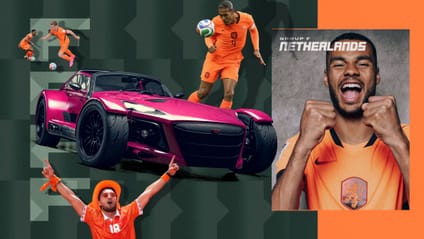
Energy and creativity have always defined the way football has been played by the Netherlands, a country whose international success has often belied its relatively modest size. Even more modest in size is the country’s car industry, but what you do get is typically Dutch – stuff like the unhinged Donkervoort D8 GTO, a snorting five-cylinder futuro-Caterham that can easily show bigger, more established companies a thing or two when it comes to thrills.
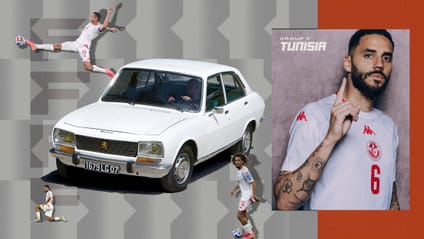
Head to Tunisia today and there’s still a very good chance you’ll encounter a few Peugeot 504s. There’s a reason these workhorses have always been spectacularly popular in the hot, rugged landscapes of North Africa, and it’s because they’re hard-working, tough to break and have plenty of experience behind them – just like Tunisia’s stellar defensive squad at this year’s World Cup.
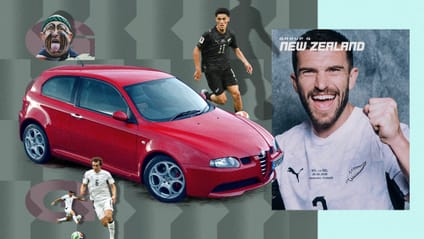
We don’t think even the most dedicated Kiwi football fans will mind us saying that it’s not really the nation’s sport – it’s a country that prefers its balls egg-shaped and pick-uppable. The lowest-ranked team in this year’s tournament, they nevertheless have one ace up their sleeve – incredibly powerful forward Chris Wood. You know what else is something mighty at the front of a package that’s otherwise on the back foot? The glorious 3.2-litre Busso engine in the nose of the Alfa Romeo 147 GTA.

Arguably more than any other team, Iran has overcome a lot to make it to the World Cup, especially given one of this year’s host nations. Meanwhile, the Peugeot 405 is a car that overcame some admittedly much less unfortunate odds of its own to stay in production for 30 years in – yes – Iran. Local production ended in 2022, but it remains one of the country’s most popular cars.

Until recently, Belgium was enjoying what many regarded as a golden era of football, but that’s been fading over the last few years. Sounds a lot like the leap from V8 to four-cylinder hybrid experienced by the Mercedes-AMG C63. With fresh young talent on the way in, though, the Belgian squad will be hoping to turn that perception around, just as Mercedes is hoping to get things back on track with a future straight-six-powered C53.

In recent years, the Egyptian football team has proven itself to be robust, adaptable and defensively sturdy with a star striker to call on in the form of Mo Salah. Sturdy, practical and secure with something mightily powerful up front, you say? Sounds like an Audi RS6 Avant to us. There aren’t really many Egyptian cars, please just work with us here.

Uruguay’s squad is packed with talent, experience and technical prowess, but in the run-up to the World Cup, it’s been dogged by some very public poor relations between players and manager Marcelo Bielsa. It reminds us, oddly, of the Jaguar XJ-S, a striking, ahead-of-its-time and technically incredible product that ended up being viewed as a dud in the public eye because poor industrial relations at BL seriously affected its quality. Hopefully for Uruguay, the World Cup will bring the same moment in the sun the XJ-S is now having.

Just 59 days before the World Cup started, Saudi Arabia gained a new manager in a move to turn around flagging performance that was leaving a sour taste in fans’ mouths. It’s a similar task faced by new North American Stellantis boss Tim Kuniskis who, following his 2025 appointment, was quick to reverse the unpopular decision to ditch the Hemi V8, which now lives in a revived Ram TRX uber-truck with 777bhp. In both cases, the change of management seems to be paying off.
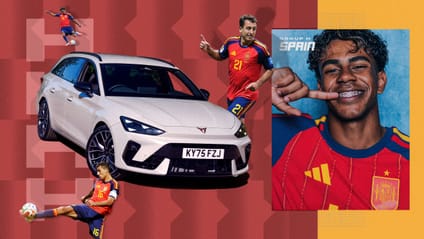
Spain can always be relied on to be a formidable all-rounder in football, and that rings true this year, particularly in the midfield. Handily, the country also makes a car that matches these attributes perfectly: the 329bhp Cupra Leon Estate. Just like the car, the Spanish team is fast and brings a dash of flair over more prosaic rivals, and yet is practical and… surprisingly fuel efficient? Okay, maybe they’re not exactly like the car.

Yeah, another tricky one, this. Or at least it was until world cup debutants Cape Verde somehow managed to hold off Spain to a 0-0 draw in their opening game of the tournament. It’s a proper David versus Goliath story, just like how the little Suzuki Jimny can show up far bigger, beefier 4x4s in the rough stuff. Unsurprisingly for a series of small, tourist-centric volcanic islands, the Jimny is a pretty popular choice in Cape Verde too.

A nation where electric cars now make up a staggering 98 per cent of the new car market simply had to be represented by an EV in the Car World Cup, and with one of the most formidable striker combos in the tournament, led by the force of nature that is Erling Haaland, there’s only one car for the job: the completely physics-defying McMurty Spéirling.
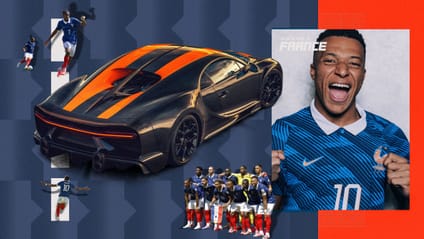
Ranked number one in the world, with a world-class bunch of forwards and a very real shout of upping their tally of World Cup wins to three this year, there’s no question that France’s football team should be represented by some sort of Bugatti, but which one? As impressive as the Tourbillon is, only the 300mph achieved by the Chiron Super Sport matches the astonishing level France is playing at right now.

Tipped as one of the favourites among the record-setting 10 African nations in the World Cup this year, what better car is there to represent Senegal than the Mitsubishi Pajero? After all, it’s the most successful car by miles in the Dakar Rally, which had its traditional end point in the country.

With early bookies’ odds suggesting that Iraq would be the first team to be knocked out of the World Cup, they entered the tournament as extremely long-shot outsiders, whose biggest strength comes at the front of the field. A minnow with plenty of power up front, you say? How about a TVR Cerbera? What do you mean ‘it’s a stretch’?
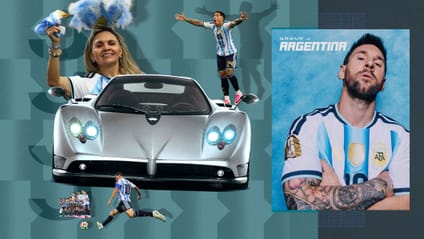
While Argentina doesn’t have much of an automotive industry of its own, Alejandro de Tomaso and Horacio Pagani both hail from the country originally. That gives us plenty of choice for a high-performing car to match Argentina’s incredibly high-performing team, but we’ve picked the Zonda F because of what that ‘F’ stands for – Fangio, as in Juan Manuel, arguably the nation’s greatest non-football sports hero.

Unquestionably Austria’s most famous automotive export (with apologies to the Mini Paceman), the Mercedes G-Class also offers a nice parallel to the first Austrian World Cup squad in 28 years. For 2026, the squad is experienced and well-integrated with plenty of pedigree to call on, just like the Geländewagen itself.
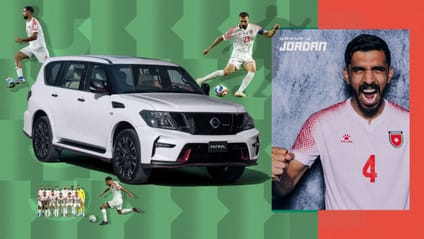
Jordan has spent the last few years as an increasingly potent outfit in football across the Middle East and the wider Asian continent. It’s a country in a part of the world where big 4x4s like the Toyota Land Cruiser and Nissan Patrol are seriously big business, and with the Patrol now available in faintly ludicrous 488bhp Nismo form, it’s a perfect fit for a Middle Eastern team on the up.
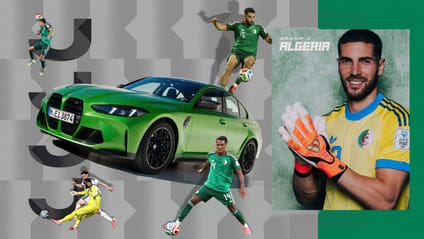
Plenty of attacking talent, enormous potential on the breakaway and hugely entertaining to watch when everything comes together: they’re the key strengths of the Algerian team this year, strengths we also think are embodied by the BMW M3, and no, we’re definitely not running out of ideas.
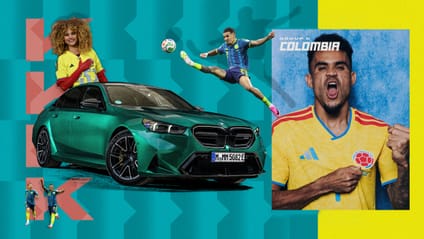
This year, Colombia’s got a lineup with plenty of pedigree and experience and lots of power up front, but enormously talented captain James Rodriguez turns 35 during the tournament – practically ancient in football terms – and hasn’t played much at the club level lately, raising concerns around fitness. So, a massively experienced, powerful entity with just a few questions around its current dynamism? Remind anyone else of the latest BMW M5?
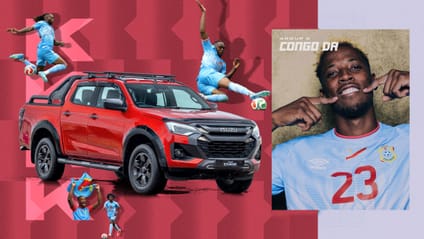
The Isuzu D-Max is apparently one of the best-selling cars in the DR Congo, which is partly why we’ve included it here. But despite being tough and highly capable, it’s always remained a bit of an underrated underdog next to trucks like the Toyota Hilux and Ford Ranger – exactly what the Congolese team is expected to be in this tournament, and a status it’s already reinforced with a draw with world number nines, Portugal.

To casual observers, Portugal feels like a country that should have at least a couple of World Cup titles, yet it’s never gone further than the third-place playoffs. Those same casual observers might also wonder why people haven’t queued around the block to buy a car as wonderful as the Alfa Romeo Giulia Quadrifoglio. The similarities don’t end there: in car terms, the 10-year-old Giulia is as pensionable as 41-year-old Cristiano Ronaldo for a footballer, but both are still formidable talents.

Making its World Cup debut, actual football experts (i.e. not us) say Uzbekistan is an underdog side with a happily settled and well-experienced squad and a tough, fighting spirit. Something else that hails from the former Soviet Union, doesn’t change particularly often and can withstand plenty of knocks is, of course, the Lada Niva.

Seeking to end 60 years of hurt, England’s sole World Cup win came when the original Land Rover was an 18-year-old spring chicken. The Defender and the England squad are very different today, but faintly ironically given who England faced in the 1966 final, it’s some German motivation that’s turned both into powerhouses this year – new manager Thomas Tuchel for the footy team, and a BMW V8 for the astonishing Defender Octa.

Ghana’s a bit of an unknown quantity this year, given that like a couple of other teams, it brought a new coach onboard within just a couple of months of the start of the tournament. Nevertheless, both the Ghanaian squad and new coach Carlos Quieroz are known for tough, practical and no-nonsense styles of play, which brings us tenuously onto the Ineos Grenadier, a hard-as-nails relative unknown in the car world.
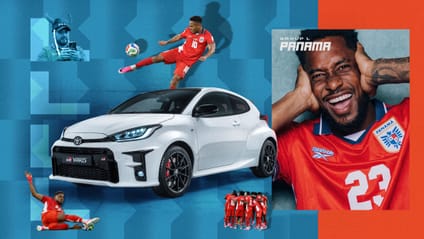
Yeah, we had no idea about this one. We were trying to think of something to do with ships. We’re told, though, that the Panama squad is light on its feet, adaptable and benefits from a compact but tough defensive structure. This makes the Toyota GR Yaris the perfect fit. In our mind.

Ah good, a nice easy one to finish things off. Once a low-odds outsider among European teams, Croatia’s shot to footballing prominence lately, finishing second and third in the last two World Cups. It’s also shot to hypercar prominence, thanks to the mind-breakingly fast Rimac Nevera putting the country on the automotive map almost singlehandedly.
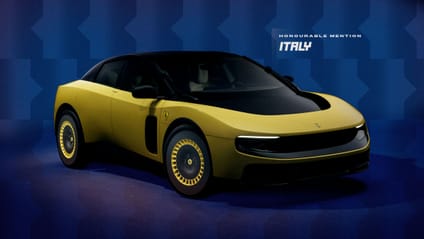
Oh dear. Four-time champions Italy have had another football-based shocker this year, failing to qualify for the World Cup for the third time in a row. We have to imagine the country’s football fans are pretty despondent about this, but arguably not as despondent as its car fans when the covers first came off the Ferrari Luce last month. Kimi Antonelli’s F1 success couldn’t have come at a better time. Oh yeah, and the food’s still amazing. Honourable mention.
Get all the latest news, reviews and exclusives, direct to your inbox.