

11
Where does the Luce reveal rank in Maranello’s oft-contentious history? Warning: contains dangerous levels of Enzo
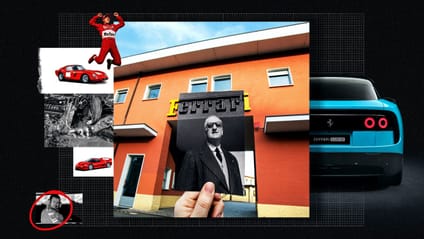
A couple of weeks ago, a car company revealed an electric car. And then the world exploded a bit.
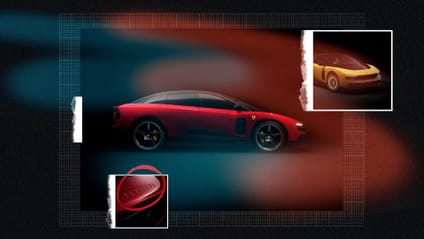
If Ferrari wanted the Luce to ignite the EV conversation, it certainly succeeded. One suspects Ferrari would have preferred those conversations not to include topics such as ‘why does it look like a swollen Nissan Leaf?’ and ‘what in the name of Enzo is this?’ and ‘why am I so angry about everything all the time?’ but hey, engagement’s engagement, right?
But where does the 1,035bhp, 192mph, 2,260kg Luce rank in Ferrari’s (impressively extensive) history of controversial moments? Here are 13 times Maranello made headlines – on the road and track, in the boardroom and sometimes the courtroom – containing plenty of Michael Schumacher and even more Enzo.
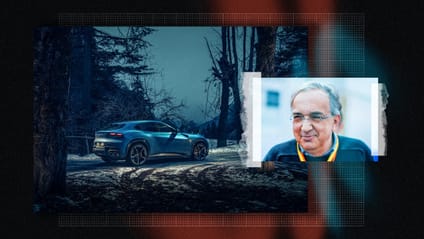
“You’d have to shoot me first,” proclaimed Sergio Marchionne.
“Never. It’s not within our DNA and it’s not something we’re ever going to look at. Enzo Ferrari would turn in his grave,” agreed design director Flavio Manzoni.
The question, of course, was, “Will Ferrari ever build an SUV?” Ferrari’s answer was, for many years, unequivocal. No, non, nein, não, nej, not gonna happen. Until it did.
The Purosangue landed in 2022, accompanied, presumably, by a faint splintering sound somewhere beneath a field in Modena. Ferrari claimed it hadn’t broken its promise, as the Pur’ wasn’t an SUV, but an FUV. Yep, a Ferrari Utility Vehicle.
You know what they say. If it looks like a high-riding, four-wheel drive, V12-powered motorcar, and it sounds like a high-riding, four-wheel drive, V12-powered motorcar…
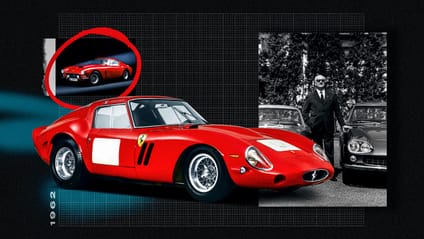
In 1962, FIA rules required 100 road-going examples of a car to be built to qualify for Group 3 GT racing. But Ferrari had made just 36 gloriously brutal 250 GTOs. To solve this knotty issue, Enzo cheerily claimed the GTO was merely a continuation of the 250 GT SWB road car.
This was, to put it generously, a creative interpretation. The GTO had a completely different gearbox, dry-sump lubrication, and non-sequential chassis numbers apparently designed to make the production run look larger than it was. The FIA – presumably as terrified of Enzo as everyone else was – waved the GTO through.
Three years later, Il Commendatore tried the same trick with the 250 LM, arguing – whether with a straight face, history does not record – that his mid-engined LM was an evolution of the front-engined GTO it had just replaced. Even the FIA couldn’t let that one slide. 250 GTOs are now worth £50 million. After all, Ferrari only ever building three dozen of them.
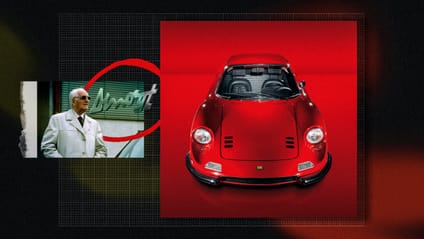
Enzo Ferrari had one rule. Actually that’s not true, he had loads of rules. But one of Enzo’s rules was: no car bearing his name would have fewer than twelve cylinders.
In the Sixties, with his customers demanding a cheaper sports car to compete with the Porsche 911, Papa Ferrari relented… but refused to put his badge on it. Named for Enzo’s late son, the Dino 206 GT was sold in Ferrari dealerships, built in the Ferrari factory – albeit around a Fiat-built V6 – and maintained by Ferrari mechanics, but officially it had nothing to do with Ferrari. American dealers reportedly glued Ferrari badges to their Dinos anyhow.
Now trading for half a million quid apiece, the Dino directly fathered every mid-engined Ferrari that followed. The genesis of the F40 was never acknowledged by Enzo as his own.
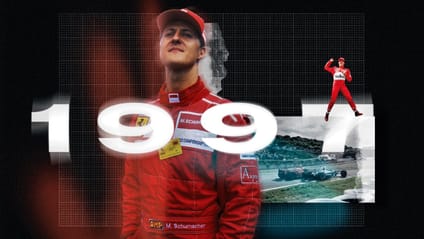
Jerez, 1997. The final race of the F1 season. Ferrari’s Michael Schumacher leads Williams’ Jacques Villeneuve by a single point. With 21 laps to run, Villeneuve dives up the inside. Schumacher turns in on him. The two cars collide, both sustaining damage.
Three years earlier in a Benetton, Schumacher had been involved in a similar coming-together with Damon Hill at Adelaide. That day, the Aussie stewards took no action. Big Schu took the title.
This time, though, Schumacher ends up in the gravel. Villeneuve limps home in third, securing the title. The FIA declares Schumacher’s manoeuvre deliberate, stripping him of second place in the championship. But at least he learned his lesson, right? Right?
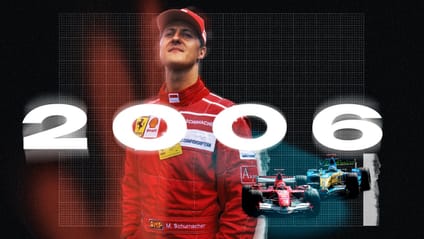
2006 Monaco Grand Prix, qualifying. Michael Schumacher smashes out the fastest lap. Renault’s Fernando Alonso is going quicker. At which point, Schumacher’s Ferrari grinds to a mysterious halt at La Rascasse, conveniently slowing the cars behind and ensuring pole for Ferrari. Schumacher claims it was an innocent driver error. No one buys it.
Would he do something like that deliberately? “Not the Michael I know,” states technical director Ross Brawn. The FIA disagrees, slapping Schumacher with the brutal punishment of… demotion to the back of the grid. But at least Ferrari would never push the rules so brazenly again, right? Right?
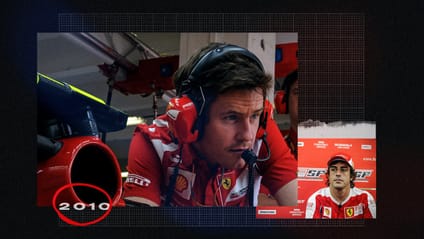
Ferrari driver Felipe Massa is leading the 2010 German Grand Prix. Ferrari driver Fernando Alonso is running second. Massa’s engineer Rob Smedley gets on the radio with what is definitely not a team order, because team orders are banned in F1: “Fernando is faster than you. Can you confirm you understood that message?”
To recap: not a team order. Entirely coincidentally, Massa pulls aside. Alonso wins. Ferrari insist Smedley’s missive was merely a whimsical observation on the state of the world. The FIA once again disagrees, fining Ferrari $100,000 for issuing team orders… before legalising them the following year. If you can’t beat ‘em…
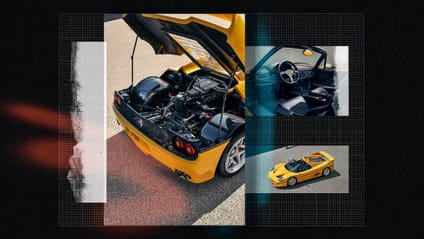
As ‘big shoes to fill’ go, the F40 was a pair of size 58 clown boots. The final car personally approved by Enzo, the epitome of hosed-to-the-bone driving thrills, the first 200mph supercar (maybe, kinda). Following it was always going to ruffle feathers.
The F50 ruffled hard. Softer and heavier than its predecessor, and boasting styling best described as ‘a bit melty’, consensus at the time was that Ferrari had dropped the ball. Most insultingly, Road and Track claimed the F50 wouldn’t hit its quoted 202mph top speed – just as the McLaren F1 was cracking 240mph.
Only 349 F50s were built, barely a quarter of the F40's production run. Rehabilitation of the F50 took decades. Eventually the world figured that a manual hypercar powered by a V12 nat-asp F1 engine was… yeah, quite cool actually. Today, you'll need upwards of £4m to buy one. Rehabilitation complete.
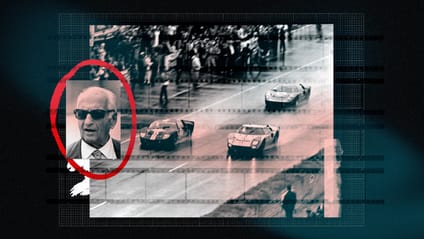
The story is well known, but worth retelling. In the early Sixties, Ford wanted to buy Ferrari. In ’63, the Blue Oval sent a team to Maranello, who inspected the factory and put a $10m offer on the table. Over the following months, the buyout inched towards completion. “We had a final deal,” Ford’s company archivist told reporters. “Enzo had approved it, and we were all the way to the end with the signature.”
But Enzo pulled the plug at the last second, over a clause that gave Ford control of the racing budget. Henry Ford II was incandescent.
“If that’s the way he wants it,” growled the Blue Oval boss, “we’ll go out and whip his ass.” They did, the GT40 eventually destroying Ferrari at Le Mans, winning the 24-hour race four times on the trot (a four-peat?). Trust Enzo’s ego to trigger the greatest act of corporate revenge in motorsport history.
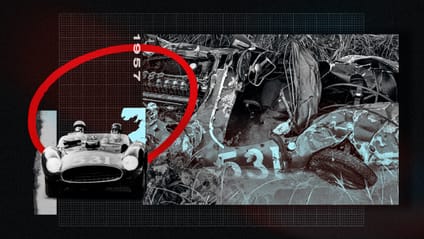
In 1957, Ferrari driver Alfonso de Portago blew a tyre at the terrifying Mille Miglia road race. The accident killed de Portago, his co-driver and nine spectators. The outrage was widespread. The Italian government immediately moved to ban road racing.
As the car's manufacturer, Enzo Ferrari was charged with eleven counts of manslaughter. The prosecution argued he had sent drivers out on unfit tyres. Enzo’s passport was confiscated. He faced prison. Historians suggest that Ferrari, as a company, would not have survived a guilty verdict.
Enzo was acquitted in 1961 after a panel of engineers concluded the blowout was most likely caused by the car striking a road marker. The Prancing Horse, saved by a cat’s eye.
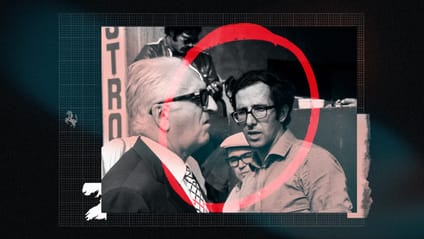
In 1961, Ferrari director Girolami Gardini issued an ultimatum to Enzo: either Laura, Enzo’s wife, stepped back from factory operations, or Gardini would quit. Enzo sided with his wife and ditched Gardini.
Then, in what became known as ‘the palace revolt’, eight of Enzo’s most senior consiglieres – including engineers Carlo Chiti and Giotto Bizzarrini – wrote a letter to Enzo, demanding he reinstate Gardini. So Enzo, being Enzo, fired the lot of them.
Gutting the entire technical department – the men who had just delivered the championship-winning ‘sharknose’ 156 F1 racer and were halfway through developing the 250 GTO – over a personal dispute? An act of breathtaking recklessness. And also business as usual for Il Commendatore.
Enzo promoted a 26-year-old, Mauro Forghieri, to the top job. Forghieri would go on to deliver 54 grand prix wins, four drivers' titles and seven constructors' championships over the next two decades. Recklessness, rewarded.
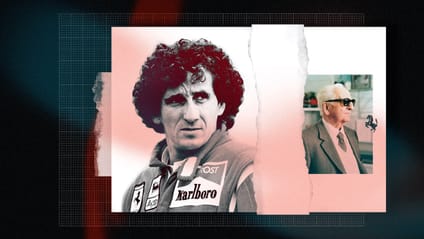
1990 was a good year for Alain Prost at Ferrari, the Frenchman finishing a close second to Ayrton Senna and winning five races along the way. 1991 was… less fruitful. Fifteen races in, Prost hadn’t won a race when, at the Japanese Grand Prix, a shock absorber failed on his (very pretty, very sonorous, very unreliable) 643 racer. Prost limped home in fourth.
“I’ve never driven such a bad car,” he snapped after the race. “I did not feel like an F1 driver, because a good truck driver with big arms could have done just as well. It was like a horrible truck to drive.”
Maranello management didn’t appreciate the comparison. Despite Prost being contracted to Ferrari for the following year – and in discussions to become their technical director, too – he was shown the door with one race remaining in the season. The Frenchman would never drive for Ferrari again. Moral of the story: badmouth Ferraris at your peril.
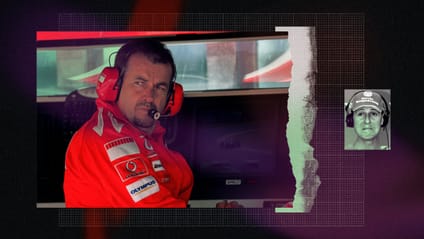
By the mid-Noughties, Nigel Stepney had spent more than a decade as the Scuderia’s chief mechanic, responsible for Schumacher’s most dominant F1 machines. When Big Schu and Ross Brawn left Ferrari at the end of 2006, Stepney expected a promotion. Instead, Ferrari moved him sideways, away from the race-day paddock.
In 2007, Stepney responded by leaking 780 pages of the team’s most sensitive technical documents to McLaren designer Mike Coughlan. The contraband was discovered when Coughlan's wife took them to a print shop in Woking, whose owner happened to be a Ferrari fan.
Stepney was found guilty of industrial espionage in an Italian court. McLaren were slapped with a Dr Evil-spec $100 million penalty, the largest fine in sporting history.
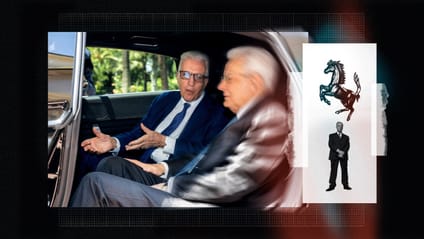
For over a decade, Enzo Ferrari's second son worked inside the Ferrari factory under his mother's surname. Piero Lardi was born in 1945 to Enzo's long-term mistress Lina Lardi, a relationship that ran from the late 1930s until Enzo's death in 1988.
But Enzo was already married to Laura Ferrari, and Italian law made divorce illegal, so formally recognising Piero was impossible.
After Laura died in 1978, Enzo was finally able to acknowledge Piero as his son. He didn’t legally take the Ferrari surname until 1990, two years after Enzo himself was gone.
Piero is now vice-chairman of Ferrari, described as “the conduit bridging the classic era […] with the modern one”. The son Enzo couldn’t name is the custodian of Ferrari history. And boy, there’s a lot of history…
Get all the latest news, reviews and exclusives, direct to your inbox.