

12
America has produced some truly iconic cars over the years… and also these absolute weirdos
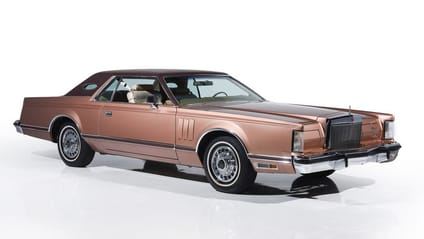
Spun off from the main Continental sedan in 1956, the Lincoln Mark series began as an elegant coupe and then spent several generations getting steadily more gaudy and tasteless. That downward trend arguably reached its zenith with the arrival of the Mark V in 1970, which clumsily blended throwback styling cues like opera windows and a big, upright grille with of-the-moment stuff like hidden headlamps. This is why everyone laughs at ’70s American cars.
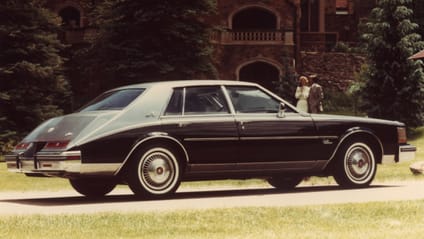
And ’80s American cars, for that matter. The second-gen Cadillac Seville ushered in the decade of excess with its appalling ‘bustleback’ rear, a misguided attempt to evoke the silhouette of older Rolls-Royces and Bentleys. The result was as inelegant as you might imagine, especially when paired with GM’s optional and notoriously troublesome V8 diesel engine.
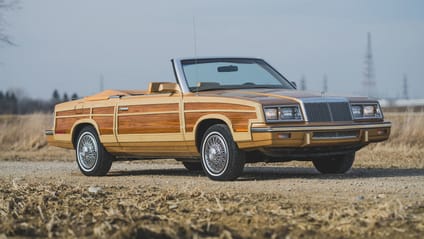
Kitty/Karen, the protagonist of Cake’s 2001 trumpet-laced funk rock classic ‘Short Skirt/Long Jacket’, is said to be ‘trading her MG for a white Chrysler LeBaron’. Quite why she’d do that is beyond us: we’re not sure the Chrysler would be any more reliable than even a ratty MGB, and it certainly won’t make her look any cooler, especially if it’s the horrid faux-wood-panelled Town & Country version. Just keep the MG, Kitty. Or Karen.
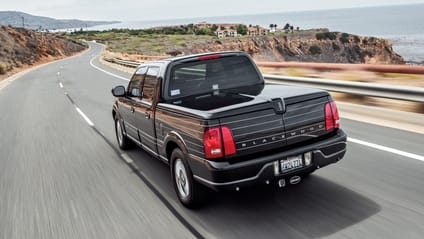
Speaking of faux wood, that’s the entire reason the Lincoln Blackwood got its name: it came from the trim on the weird lockable cargo box that replaced its truck bed. The recipe was simple: take a Ford F-150, slap on posher badges, capitalise on growing early 2000s demand for luxury pickups. Unfortunately for Ford, just under 3,400 Blackwoods were shifted across two years, at a time when it moved nearly 2,500 F-series pickups a day.
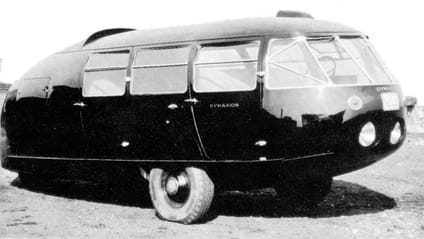
This flight of early 1930s fantasy was designed by architect Buckminster Fuller, for whom those carbon molecules you vaguely remember learning about in GCSE chemistry are named after. His take on the car of the future was, with its emphasis on aero efficiency, very forward-thinking. Less successful was the choice of a rear-mounted V8 engine, front-wheel drive and steering handled by a single rear wheel, all of which made handling… interesting.
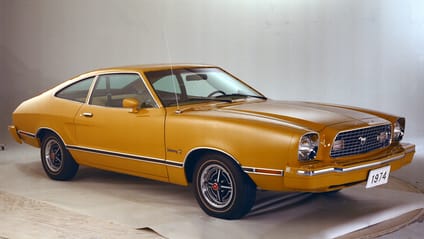
In many ways, Ford did the best it could with the second-generation Mustang, a car that arrived in 1973, just as the American car industry was dealing with the oil crisis and stringent new fuel economy rules. Unfortunately, this also coincided with a period in which American car stylists decided that taste, restraint and decent proportions were concepts that should be left in the 1960s, cementing the Mustang II’s unfortunate reputation there and then.
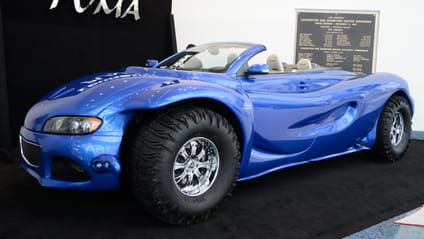
We must be careful what we say here, because the Youabian Puma’s creator got a bit lawyer-happy after, for some reason, journalists reacted negatively to it following its 2014 LA Auto Show debut. So, the Puma: it is most certainly a car, and it was indeed designed. This, we can say without risking an angry email from Mr Youabian’s lawyers. Everything else, you’ll need to form your own opinion on.
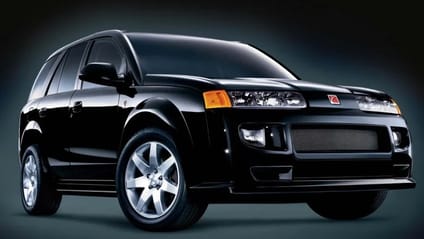
Saturn was a reasonably short-lived GM sub-brand which, in its day, did a decent job of selling unpretentious, interestingly styled cars at an attainable price. One of its stranger experiments, though, was the Vue Red Line, an attempt at a ‘performance’ SUV which in fact offered no extra performance from the standard car’s 250bhp Honda V6, but did bring lowered suspension and, in hindsight, quite a questionable bodykit.
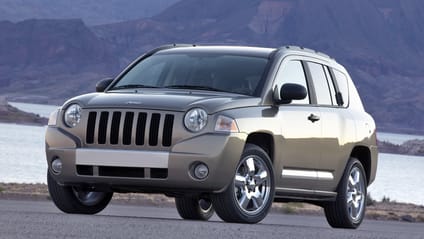
We rather like the latest Jeep Compass at TG. It’s more interesting to look at than most of its mid-size crossover rivals, and way better to drive and sit in than its very average predecessor. Said predecessor, though, looked like an absolute triumph next to the original Compass, a car which, back in 2009, we called “a brilliant symbol of Jeep's disintegration into failure". In hindsight, that might have been going easy on it.
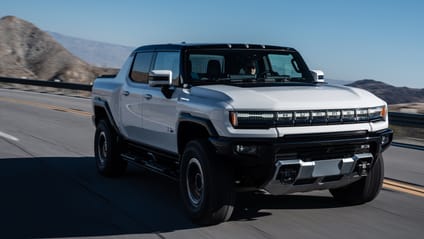
Irony is a notoriously difficult concept to clearly define, but from now on, we might just point people to the GMC Hummer EV. It’s a name that was once the ultimate symbol of environmentally-driven anti-SUV hate, revived as an electric car to help clean up its image… just before a climate-skeptic US administration slashed EV incentives and effectively made fuel economy standards redundant. Things you simply cannot make up: this.
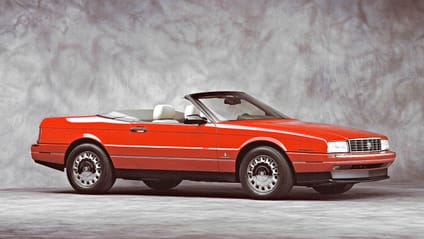
Most cars will maybe travel a mile or so at most as they’re rolled along production lines during assembly. The Cadillac Allanté covered nearly 4,300 miles. That’s because Pininfarina not only styled this largely unsuccessful front-wheel drive Mercedes SL rival, but built the bodies near Turin, which then had to be flown across the Atlantic in a fleet of specially-modified Boeing 747s to have the oily bits fitted in Detroit.
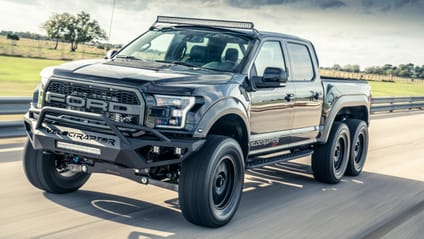
Even relative to the rest of the US, ‘small’ and ‘subtle’ are not words you’ll often hear in the Texan vocabulary. Where else but the Lone Star State, then, could be the birthplace of the VelociRaptor 6x6, an already very un-small, un-subtle Ford F-150 Raptor with the small matter of an extra axle – diff lock and all – grafted onto the back end? There’s now a 700bhp one based on the supercharged V8 Raptor R, too. The mind well and truly boggles.
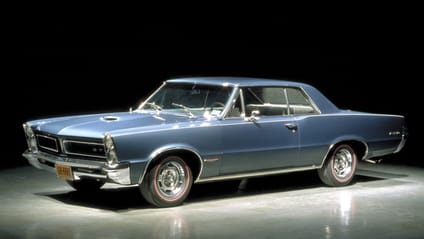
The original Pontiac GTO kicked off the muscle car era in spectacular, fuel-guzzling, tyre-smoking fashion in 1964, an era that closed equally abruptly following the 1973 oil crisis. How did Pontiac respond? By taking its second-smallest car, the Ventura, and giving it a half-hearted GTO package that could only muster 200bhp and struggled to clear 60mph in under 10 seconds. Oh dear.
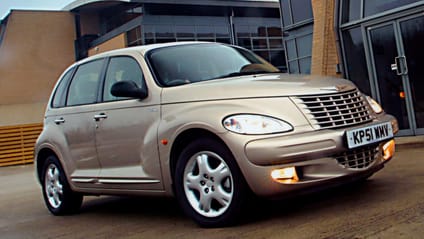
When the Chrysler PT Cruiser was first shown to the world in the spring of 2000, people – perhaps still riding a high of Y2K bug relief – were tripping over one another to buy them. Yet, by the time it was finally discontinued in 2010, it was a total laughing stock, reviled for its sludgy handling, cheap interior and cargo-shorts-with-Hawaiian-shirt image. On balance, we’re happy to side with the more recent consensus here.
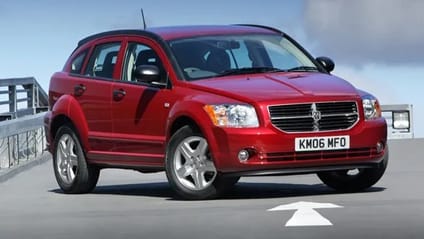
As one of the very first of the modern breed of crossovers, the Dodge Caliber was actually quite ahead of its time, but that didn’t make it any less deserving of TG naming it one of the 13 worst cars of the last 20 years back in 2013. Could a hot turbocharged version that tasked the front wheels alone with handling 300bhp as well as, y’know, steering, improve things? No. No it could not.
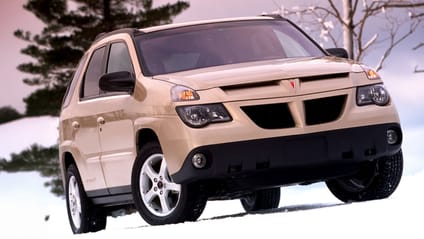
Weirdly, the Pontiac Aztek has followed basically the complete opposite trajectory to the PT Cruiser we were talking about a few entries back. Met with nothing but mockery and derision at launch for its lifestyle faux-by-four aspirations and extraterrestrial looks, you’ll now see the phrase ‘ahead of its time’ lobbed about with reckless abandon in retrospectives. Who’d have thought Walter White would make such a good car salesman?
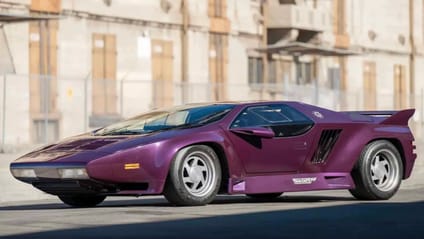
There aren’t many homegrown American supercars, but the Vector W8, looking like it had escaped straight out of an ’80s computer game, was one of them. Right down to the GM-sourced three-speed automatic it came with. Slushy. With an asking price of over $1 million in modern money, an unproven name behind it and some questionable build quality, the W8 was an inevitable flop, but that matters not because just look at it.
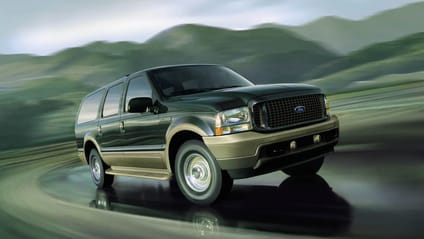
There was a lot of anti-SUV sentiment around in the 2000s, and when stuff like the Ford Excursion existed, you can sort of see why. Based on the vast F-250 pickup, it was as long as a Rolls-Royce Phantom, weighed 3.5 tonnes in its heaviest form, and, just to really annoy people, was offered with the option of a 6.8-litre V10. No wonder stuff like this was getting its tyres let down on a regular basis.
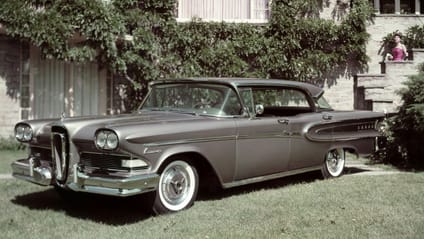
Lasting all of three years and costing Ford the late ’50s equivalent of nearly $3 billion, the Edsel sub-brand has become shorthand for how not to launch a product. The problems were manifold: a lack of a clear vision for the brand, consumer confusion, a late ’50s recession, styling that appeared to have been influenced by something unmentionable in polite company. The result was one of the biggest disasters in car industry history.
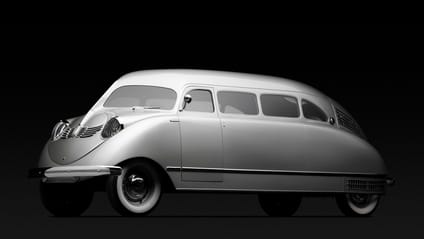
Every so often, there’ll be a visionary thinker in the car industry whose ideas sound good on paper but are just too plain weird to be successful. In the 1930s, William Bushnell Stout was one of those people. His creation, the Stout Scarab pushed boundaries with its streamlined body and effectively nailed the minivan recipe half a century before the segment boomed, but at the same time, it’s easy to see why fewer than 10 were ever built.
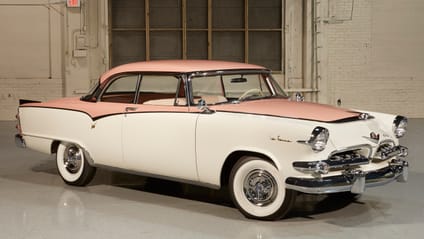
Here’s something that’s bound to shock you: an attempt by a group of 1950s auto executives to design a car exclusively for women came across as wildly misjudged and patronising. We know, right? What Dodge thought female drivers wanted – instead of, y’know, a normal car – was pink paint, floral-patterned upholstery and a smattering of half-hearted beauty accessories. Surprisingly enough, the La Femme flopped hard.
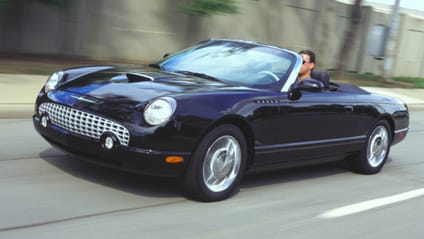
Over a remarkable 10 generations, the Ford Thunderbird went from a stylish ’50s two-seater Corvette rival to a generically gaudy ’70s lump to a genuinely sporty, upmarket Mustang alternative in the ’90s… before Ford went full circle and made the 11th and final generation an homage to the first, except with that genuine 1950s elegance replaced with a tacky, pale Noughties imitation. So close, yet so far, Ford.
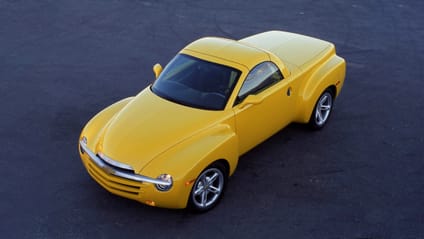
Imagine if extraterrestrials visited Earth, and we explained to them what a car was. They’d probably be able to grasp the logic behind them perfectly well. And then, we’d show them a Chevrolet SSR, and their heads would explode. Part pickup truck, part two-seater roadster, part muscle car, part retro homage, it sounds like the worst kind of design by committee. Indeed it was the target of much derision when new, but we can’t help but sort of love it now.
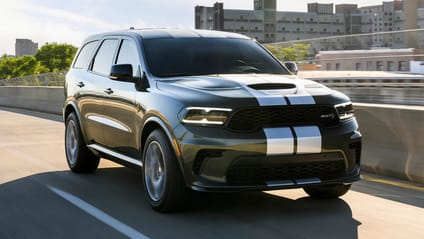
We thought it was pretty silly when Dodge first gave the Challenger the 707bhp, 6.2-litre supercharged Hellcat V8 engine, but it turns out that was just the tip of a brilliantly silly iceberg. Enter the Durango Hellcat Jailbreak, an ancient seven-seater SUV that just so happens to have more power than the average supercar did not too long ago and a soundtrack that could bring entire mountain ranges crumbling to the ground.
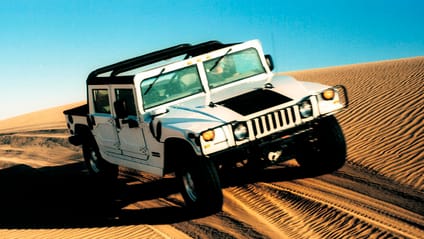
The idea of turning a military 4x4 into a civilian go-anywhere vehicle is nothing new. It’s how cars like the Jeep Wrangler, Mercedes G-Class and Toyota Land Cruiser got started. But those cars were at least a slightly sensible size for the typical road. Not so for the Humvee, which swapped its army fatigues for a suit and tie to become the Hummer H1, still one of the most ridiculous vehicles ever to go on sale to the general public.
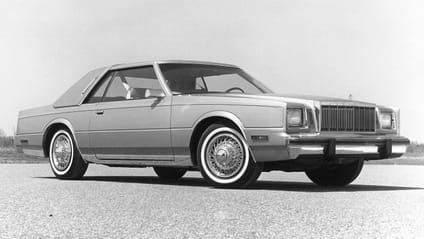
Not many cars spawn an entire memeworthy phrase, but the Chrysler Cordoba did: its adverts, featuring the dulcet tones of actor Ricardo Montalbán, gave rise to the endlessly lampooned concept of ‘rich Corinthian leather’. Just one problem: ‘Corinthian leather’ isn’t a thing. Neither the modern nor ancient Greek cities of Corinth have any association with leather production, and it was just some vaguely exotic-sounding marketing speak.
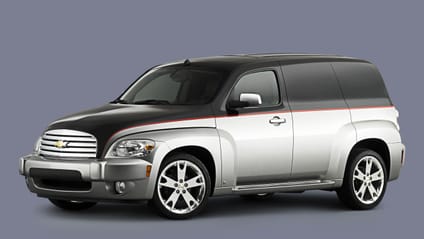
The Chevrolet HHR was an unashamed attempt to cash in on the success of the Chrysler PT Cruiser. It was even styled by the same man. The HHR, though, launched in 2005, when the Chrysler was already well into its journey from object of overwhelming desire to embarrassing laughing stock, sealing the Chevy’s fate from day one. Even the slightly insane 235bhp SS model couldn’t save it.
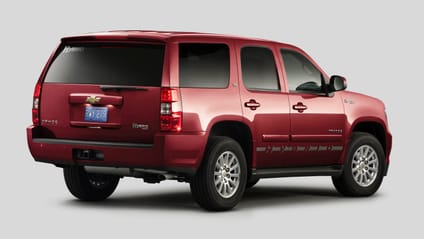
With the Toyota Prius the car of choice for anyone wanting to flout their Noughties eco-cred, other car companies were scrambling to jump on the hybrid bandwagon, including GM. For reasons that remain baffling to this day, though, the vehicle it chose to hybridise was the 6.0-litre V8 Tahoe SUV, which gained a hilariously small 1.53kWh battery. Precisely nobody was fooled, except the panel who somehow voted it 2008’s Green Car of the Year.
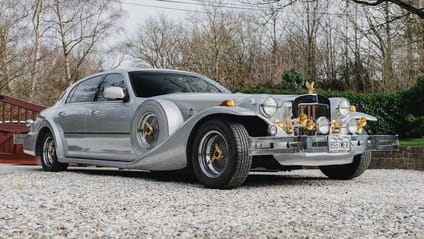
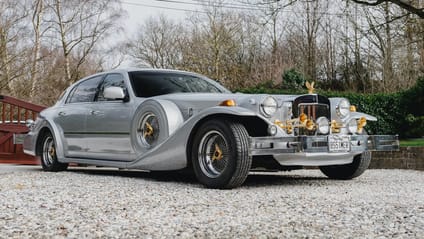
Sim simma, who got the keys to my… Zimmer? Not to be confused with Hans or frame, the Zimmer car company is part of the ill-advised ‘neo-classic’ subgenre, which involves taking contemporary underpinnings (in this case usually a Ford Mustang) and clothing them in a body which you might be convinced hails from the 1930s. If you’re squinting. And standing a couple of hundred metres away. And it’s dark.
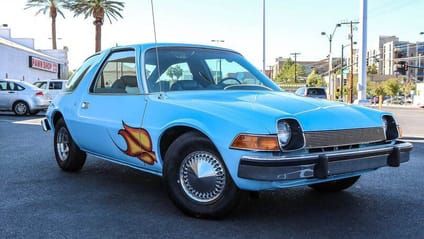
Is this the real life? Is this just fantasy? The former, unfortunately. There’s a reason the Pacer was selected as the wheels of choice for Mike Meyers’ and Dana Carvey’s down-at-heel wannabe rock stars in Wayne’s World. For all of AMC’s earnest effort to build a compact car that would appeal to Americans, the Pacer just looks funny. Oh, and about the ‘compact’ part – the Pacer was wider than a Rolls-Royce Silver Shadow. Hmm.
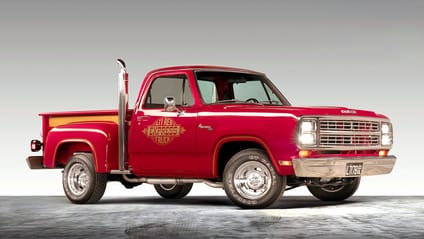
Is this the most ’70s vehicle in existence? An early (and for its day, potent) crack at a performance pickup, Dodge could have stopped at giving this special edition D-series truck a 225hp, 5.9-litre police-spec V8. Instead, though, it also received some semi-truck-style vertical exhaust stacks and one of the kitschiest names ever bestowed upon a factory-built vehicle. Imagine if Prince had chosen this as the basis for a sleazy metaphor instead of a little red Corvette?
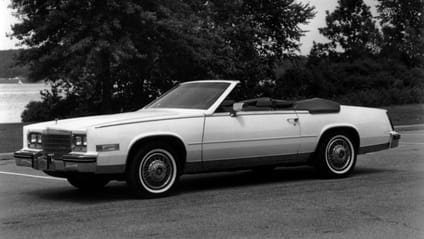
For proof of quite how bad things got for the US car industry in the ’70s, you need look no further than the era’s Cadillac Eldorado. In 1970, Caddy had introduced an elephantine 8.2-litre V8, which initially made a healthy 400bhp. Partly thanks to a change in the way power was measured, but mainly due to the effects of the oil crisis, it was producing just 190hp by 1976 – less than 24 horsepower per litre. Oh yeah, and did we mention this era of Eldorado was front-wheel drive too?
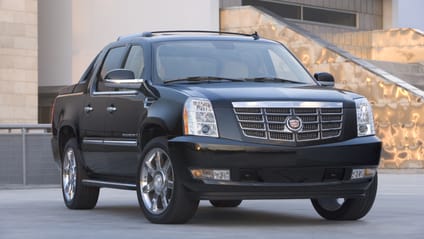
How many people were really crying out for a Cadillac pickup truck? Not many, apparently, but that didn’t stop Caddy building one anyway, for two generations and 12 years, no less. Only in its first two years did the Escalade EXT manage to (just) break into five-figure sales numbers, but the figures shrunk almost every consecutive year it was on sale, leaving it looking like a bit of a white elephant for the company. Quite literally, if it was painted white.
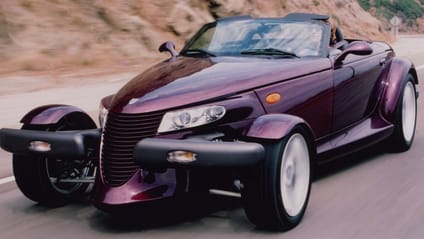
Ah, the Plymouth Prowler. You’ll either adore this car or think it’s a ridiculous, underperforming, gaudy abomination for the people who refused to accept that the ’50s were over 40 years ago when it launched, but one thing’s for sure: we miss the car industry being the sort of free-spirited place with enough disposable cash to allow silly stuff like this to happen. Maybe if something similar made a comeback today, people would be a bit less rude about it.
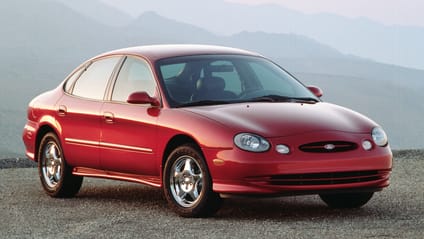
The original Ford Taurus had breathed new life into the American sedan market in 1986, but a decade on, it was starting to look a bit stale itself next to fresher, more daringly-styled rivals. We’d venture the 1996 third-generation car was something of an overcorrection, though. Unquestionably a good car, enough people were nevertheless scared off by its, erm, interesting styling that just four years later it was given a thorough, and much safer, redesign.
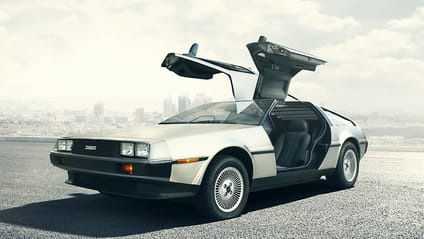
You’ve heard this one a bazillion times by now: sports car of the future, promising concept, flawed execution, production problems, commercial flop, drug trafficking charges, Back to the Future. The DeLorean’s story has been retold so often that it kind of overshadows what a strange beast this gullwing-doored, stainless steel, rear-engined sports car was compared to everything else being designed in America at the time.
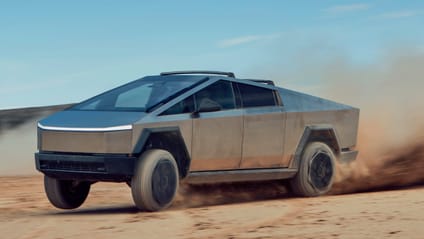
Seriously? Do we really need to explain this one to you?
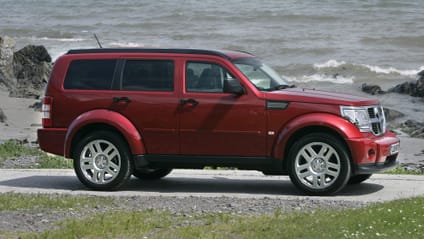
If there’s one thing you can give credit to the Chrysler Group for during the Noughties, it’s the fact that it wasn’t afraid to chuck stuff at the wall and see what stuck. Some things, like the Dodge Charger and Challenger, were runaway successes. That same attitude, though, led to the Dodge Nitro, a boxy SUV which certainly looked distinctive, and… No, never mind. We’ve run out of nice things to say about it.
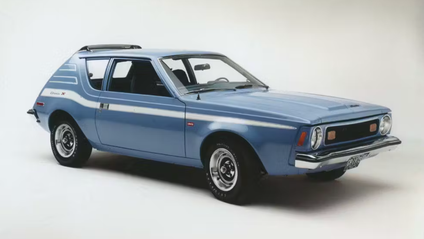
An early response to the growing late ’60s popularity of imported compact cars, the AMC Gremlin’s design originated on the back of an air sickness bag, or so the story goes. AMC design boss Dick Teague allegedly sketched out a version of the company’s Javelin coupe with the back arbitrarily cut off to turn it into a hatchback. The finished product was a bit more complex than that, but it still resulted in one of the oddest looking American cars ever.
Get all the latest news, reviews and exclusives, direct to your inbox.