

12
Manufacturers invested in technologies and engineering solutions, only to bin them. Whoops
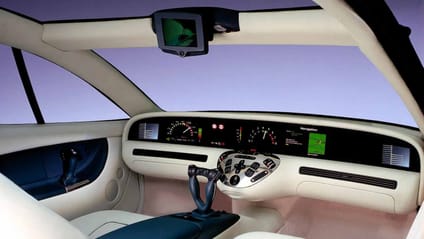
You know that saying about reinventing the wheel? Turns out that was the chosen metaphor because wheels are generally pretty good at their job. Nevertheless, in the ’90s, Mercedes and Saab both built concepts and prototypes that were steered with joysticks instead. Presumably the latter got on board because it wanted to take the whole ‘fighter jet for the road’ thing to its logical conclusion. While a joystick makes sense for executing high-G manoeuvres in a Eurofighter, though, it’s a lot less convenient for steering a mid-size Swedish saloon down the A40, so thankfully, unlike a fighter jet, this one never got off the ground.
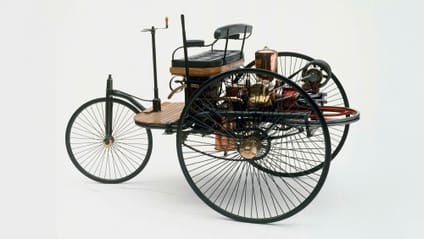
The early days of the car were a bit of a free-for-all in terms of control layouts, and plenty thought it was perfectly reasonable that a steering system borrowed from the world of boats should work for these newfangled horseless carriages too. In fact, the very first car as we know it, the Benz-Patent Motorwagen, used a tiller. Thankfully, this particular brand of old-timey nonsense disappeared not long after French company Panhard figured out that actually, this is an idiotic way of steering a car, in 1894.
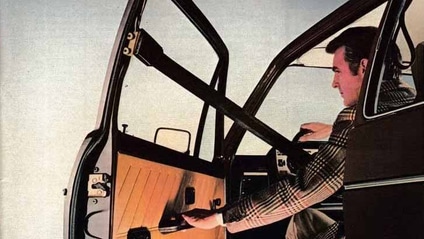
These wacky contraptions were mostly a thing in the US in the ’80s and ’90s, before airbags became mandatory but also before most states had introduced seat belt laws. The intention was good, then, even if the execution often wasn’t: the complicated automatic belts were less secure and less comfortable than a simple three-point manual one, and the motors that powered them could and did fail. Their time was up as soon as most states realised that if anyone still thought the simple task of buckling a manual belt was an infringement of their human rights, it was probably easier to just fine them.

Before the advent of cassettes, you were out of luck if you wanted to listen to your own music in the car, and stuck with whatever rubbish was on the radio. Well, almost: a few companies came up with ways of playing vinyl records in cars. Spotted the obvious issue? Even sneezing near a vinyl that’s being played normally can damage it, so even the specially-designed records used for in-car playing were usually toast after a few runs down a bumpy road. Sensibly, this is one area the 21st century vinyl revival hasn’t touched.
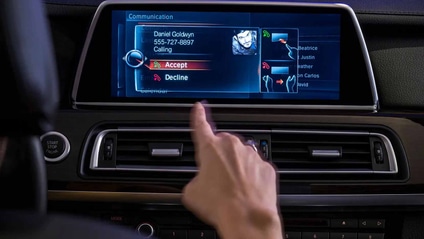
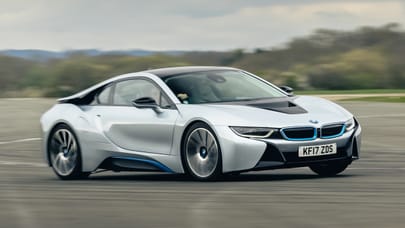
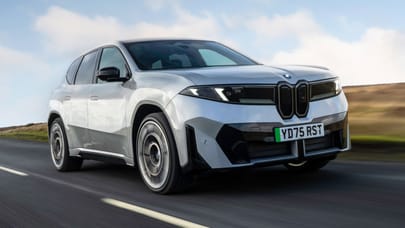
This turned up in the mid 2010s when car companies began their systematic removal of physical controls from interiors, because technology, innit. Gesture controls seemed, on the surface, like a good alternative to jabbing at a screen, and they probably would be… if they worked. Instead, you mostly just ended up waving your hand about like a confused conductor while your infotainment did the exact opposite to the thing you wanted it to. A few manufacturers gave it a go, but even BMW, its biggest proponent, is now hand-waving it out of existence across its range.

By the ’90s, having a phone mounted in the centre console of your top-end exec saloon was a sure-fire way of telling the world that you’d made it. Just picture it, swooshing down the outside lane of the motorway from meeting to golf club as you took an all-important call with the team back at the office, demanding the Anderson report on your desk first thing tomorrow. It’s the future. Wait, what’s that? Bluetooth? Hands free kits? The general realisation that actually, using a phone while you drive is a terrible idea, and the subsequent legislation? Ah.
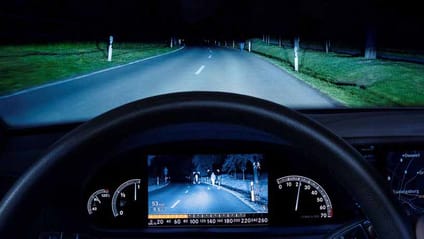
Nothing too flawed behind the thinking here. After all, an infrared night vision camera is going to do a better job of spotting things like errant deer on a dark country road than your weak, pathetic human eyes. The problem with them is that to get the best out of them, you need to be looking at the screen showing their feed, rather than arguably more important places like, y’know, directly out of your windscreen. Most manufacturers have abandoned these systems as a result, although there are still aftermarket systems if you’re dead set on pretending you’re in an old James Bond film.
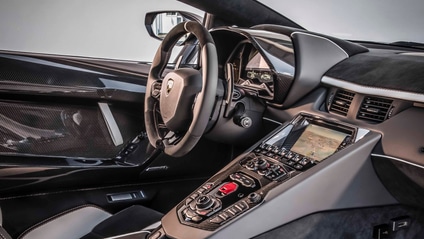
‘Flappy paddle’ automated manual setups started popping up in performance cars around the turn of the millennium, and they were essentially all rubbish. They turned low-speed manoeuvering into a teeth-grindingly stressful experience, and a few high-speed upshifts would send you crawling to the chiropractor. The clock was already ticking by the time VW mastered the dual-clutch gearbox, and once trad torque-converter automatics got good too, it was pretty much game over. The last mainstream holdout, the Lamborghini Aventador, died a few years ago, and thankfully, it seems that’s that for the automated manual.
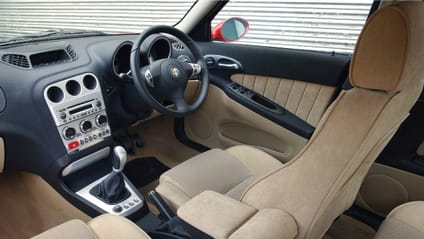
The flappy paddle ’box wasn’t the only attempt to reinvent the manual for the 21st century. After all, the hardest part of learning to use an H-pattern is mastering clutch control, so what if this could be eliminated, and you could just waggle the gearknob around without worrying about the clutch? The original Mercedes A-Class offered such a system, and then there was the Alfa Romeo 156’s utterly barmy ‘Q-System’ setup that could be switched between fully automatic and clutchless manual operation. Just one question: who exactly were these systems for? Not a lot of people, as both Merc and Alfa swiftly found out.
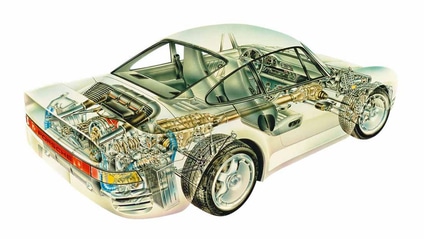
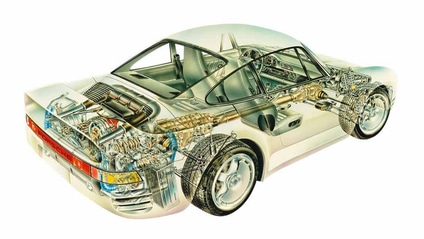
Pioneered by the Porsche 959 and democratised (somewhat) by the FD Mazda RX-7 and A80 Toyota Supra, sequential twin turbocharging seeks to mitigate turbolag by spinning up one, usually smaller turbo at low revs then opening up a valve to direct gases to a second one as they increase. Simple in principle, it’s actually incredibly complicated in practice thanks to the need for lots more complicated piping, and once modern turbos started getting more efficient and less laggy anyway, it was pretty much consigned to the history books.
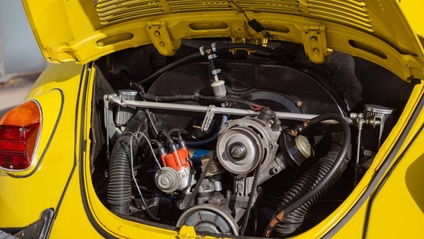
You likely associate the clatter of an air-cooled engine mostly with old VWs and Porsches, but plenty of other manufacturers, from Fiat to Chevrolet to Honda, have dabbled in them over the years. They are, after all, generally more simple and cost-effective to both build and maintain. They’re also noisier, rougher, and far more prone to overheating, all of which means that once the various kinks of water-cooled systems were largely ironed out, air-cooled engines were toast, except in some motorbikes. Let’s be honest, Porsche only stuck with it for as long as it did out of fear of an angry mob of die-hard 911 fans descending on Stuttgart.
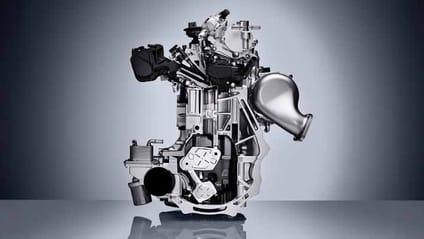
Without getting too much into the engineering nitty gritty, an engine that can alter its compression ratio on the fly could yield all sorts of benefits, allowing it to maximise both efficiency and power pretty much all the time. There’s just the small drawback of such a thing being hideously complicated to actually achieve – while companies including Saab and Peugeot have experimented with variable ratios, only Nissan’s actually managed to put it into production with its VC-Turbo engine, which uses an absurd multi-link conrod system to alter the piston stroke and therefore the compression ratio. We don’t see many companies rushing to follow its example, mainly because regular engines are so efficient now.
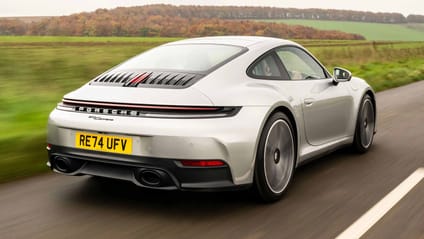
‘But what about the Porsche 911?’ Fair enough. But let’s be real: it’s only a rigorous adherence to tradition that’s led to Porsche doggedly sticking with an engine slung out behind the rear axle and refining it to such brilliant effect, rather than just switching to a front- or mid-engined layout decades ago like all its rivals did. They may be simple to engineer, but otherwise, from cooling to weight distribution, the cons of a rear-engined layout far outweigh the pros. They’re sort of making a comeback with rear-motor EVs, but it doesn’t take an engineering degree to realise that’s not really the same thing at all.
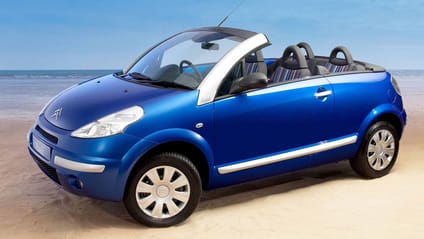
The expectation: a car that can be whatever you want it to be on any given day, switching between coupe, convertible, estate, and even pickup truck, as optimistically previewed by Mercedes’ 1995 VRC concept. The reality: awkward styling at best and lots of complicated latches, trapped fingers, heavy lifting and general swearing at worst, as unceremoniously demonstrated by the few production cars that have tried to put this concept into practice, like the Nissan EXA and Citroen C3 Pluriel.

A six-wheeled layout can bring benefits when you’re dealing with properly heavy-duty off-road trucks, and the Tyrrell P34 F1 car used it to brilliantly exploit an aerodynamic loophole in the rules, but deploying it on a roadgoing sports car like the Covini C6W, or a show-off pickup like the Mercedes G63 6x6? Not so much. There are, after all, many good reasons that the vast majority of the world’s car companies have settled on four wheels as an industry standard. Add any more, and the only real benefit is to further inflate the ego of a driver which, presumably, is already seriously close to bursting point.
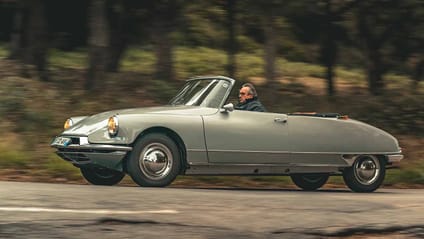
This tech stuck around longer than most on this list, and brought some genuine benefits, as multiple French presidents who spent their terms being wafted about in the supreme comfort of a big Citroen will no doubt confirm. British Leyland and later Rover used the similar Hydragas system for many years, too. Few other companies ever bothered, though, and it would appear that the advent of clever electrically-driven adaptive suspension has finally spelled the end of big, green and occasionally leaky spheres of fluid hidden away in the underparts of cars.

These have been one of those ‘just around the corner’ things for years, with several big tyre companies still actively working on prototypes. By using an internal structure for support instead of air, they have the potential to make punctures a thing of the past, but it’s hard to see a world in which they take over from trad pneumatic tyres, apart from possibly in a few fringe, specialised areas like urban delivery vans and small off-road vehicles. You’re certainly not going to be sticking a set of these on in place of some Trofeo Rs for your next track day.

At the dawn of the car, three different propulsion methods duked it out for industry supremacy. Internal combustion won out in the immediate term, electricity would later make a comeback once it emerged that this CO2 stuff was quite bad for the planet, and steam? That quickly fell by the wayside, becoming the domain of the beardy weekend enthusiast, not least because it was quickly realised that having a highly pressurised container full of boiling water just inches from where you’re sitting as you clatter along isn’t the greatest idea in the world.
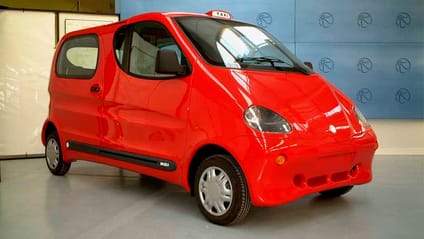
This is exactly what it sounds like: a car with an engine designed to run on compressed air. The environmental basis is sound: after all, by fuelling a car with air, the only thing that comes out of the exhaust is, well… air. Y’know, the stuff we all breathe anyway. It’s an idea that’s been actively explored by companies including Peugeot-Citroen and Tata, but ultimately abandoned by both, partly because compressed air has a horribly low energy density, and partly because all that air needs to be stored somewhere under an almighty amount of pressure. What could possibly go wrong?
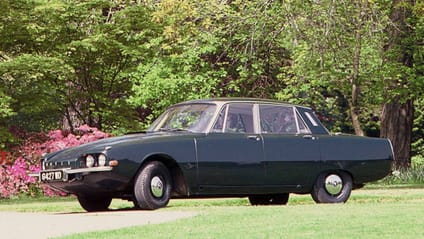
Turbine engines were rapidly being adopted by the aviation industry in the mid-20th century, so why exactly couldn’t they work for cars too? Besides the lethargic throttle response? And the spectacular fuel consumption? And deafening noise? And the general engineering lunacy of stuffing an aircraft engine into a car? Multiple companies, including Rover, experimented with this idea, and Chrysler actually loaned out 50 of its Turbine Cars for a public trial in the ’60s, but outside of stuff like speed record cars, turbine-powered cars were quickly abandoned when everyone realised they were a silly idea.
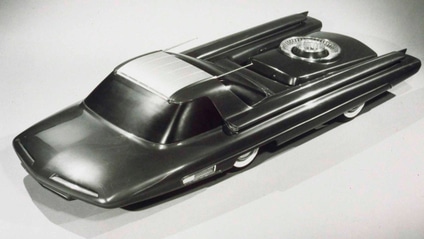
Not as silly as this, though. Around the same time as jet engines were becoming a thing, scientists were getting excited about nuclear fission as a method of everything from generating infinite, clean energy to wiping humanity off the face of the earth. Why couldn’t cars fit into that equation somewhere? As a result, several (non-functional) nuclear-powered concepts popped up in the 1950s, most famously the Ford Nucleon. It could theoretically go 5,000 miles before needing a refill of uranium, but that was slightly outweighed by the downsides of driving around with a LITERAL NUCLEAR REACTOR in your car. Thankfully, good sense prevailed here.
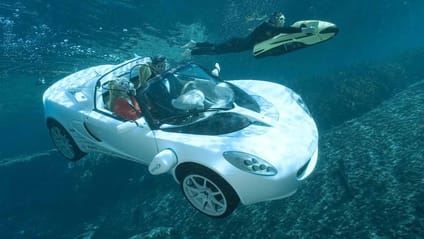
For decades, the sorts of earnest, wide-eyed dreamers that populate engineering’s cottage industry have tried to crack the amphibious car while bigger companies have got on with more practical ideas, and they’ve pretty much all flopped (although obviously, TG TV got the closest to success). There’s a simple reason for this: cars and boats are fundamentally very different vehicles, and while it’s technically possible to build something that can be both, the compromises you have to make mean it’ll be a bit rubbish as either.
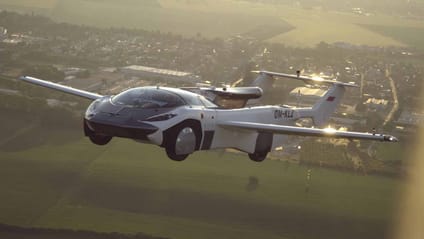
While big companies have mostly avoided trying to build cars that can also be boats, though, far too many have poured money into trying to prove the fruitless fallacy that they can be planes. And yes, once again, technically they can, but there are still very sound reasons why flying cars have perpetually been about 10 years away for the last 70 years. Again, any flying car is going to be inherently compromised as both a car and a plane, and can you imagine the regulatory process that’d need to take place to actually allow their use? We’re getting migraines just thinking about it. And then there’s the biggest question of all: what’s the point?
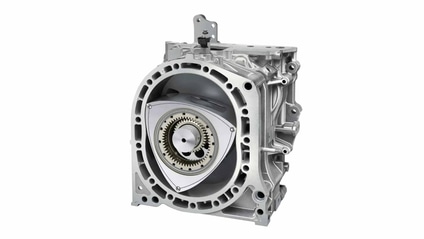
Look, please don’t hate us. We love the zingy nature of a rotary engine as much as the next enthusiast, but there are many good reasons why no company besides ever-eccentric Mazda has bothered putting serious effort into them. The poor efficiency, the high maintenance, the woeful torque… they’re brilliant, but they make no practical sense. Their automotive role has been reduced to being a titchy range extender in the Mazda MX-30, and even that’s gone off sale in most of the world. Mazda does at least seem fairly serious about their continued development, but we can’t see many others following its lead.
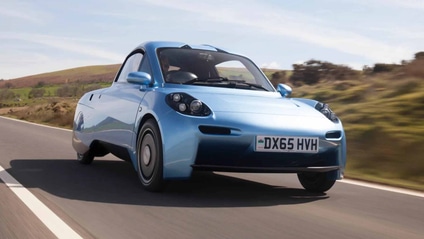
Fuel cells or hydrogen combustion – take your pick, because unless something suddenly changes, neither appears to have much of a mainstream future. Again, on the surface, it seems like a silver bullet: zero-emission propulsion using the most abundant element on the planet. But problems ranging from storage to energy density to the currently fairly nasty environmental effects of actually turning the stuff into fuel are still enormous hurdles, especially as EVs only get more convenient and less resource-intensive to build and charge. Maybe the companies still championing hydrogen, like BMW, Toyota and Hyundai, will one day prove us wrong, but we’ll believe it when we see it.
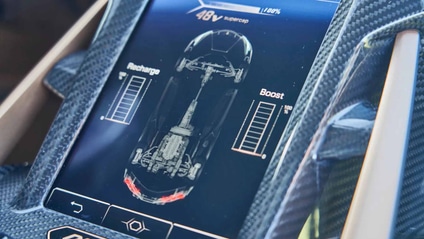
A supercapacitor hybrid uses a supercapacitor (quelle surprise) instead of a trad battery to store its electrical energy. They can store and then deliver that energy way faster, great for hybrid racing cars and supercars, but they’re also much more expensive and complicated and less energy-dense. The only road car to actually use such a system so far is the limited-run Lamborghini Sian, and tellingly, for its ‘regular’ range of PHEV production cars, the company has switched to a more traditional hybrid system. Maybe the tech just needs to come of age, but it’s hard to see it replacing regular batteries in anything other than very specialised applications.

We can only keep our fingers crossed. Yoke-based steering is still too new an idea to really say if it’s just a passing fad or something that’s here to stay, but we hope it’s the former. Not that there’s anything wrong with the steer-by-wire systems that facilitate a yoke’s use – in fact, they have huge potential to provide much more depth and variability to the way a car drives – but is there anything wrong with them being controlled by, y’know… a steering wheel?
Get all the latest news, reviews and exclusives, direct to your inbox.