

11
Sometimes, a car company’s fortunes can be reversed by one car, as these 28 prove
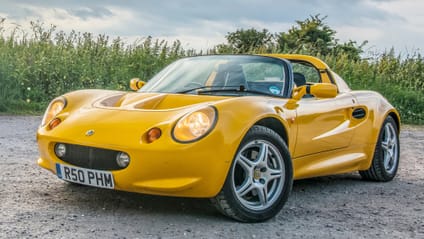
You could take the phrase ‘Lotus wasn’t in good financial shape in’, add pretty much any year to the end and have a factual statement, but Lotus really wasn’t in good financial shape in the early ’90s. Jettisoned by GM in 1993, it was now in the hands of Romano Artioli, the Italian businessman behind Bugatti’s ’90s resurrection, and its range consisted of the ancient Esprit and front-wheel drive Elan.
Its make-or-break solution was to return to its roots and develop a pared-back, lightweight roadster built around a new aluminium chassis. It was a big undertaking for a small company, but the resulting car – named the Elise after Artioli’s granddaughter – was an instant hint at its 1996 launch. Demand outstripped modest supply, and its success carried Lotus in the new millennium.
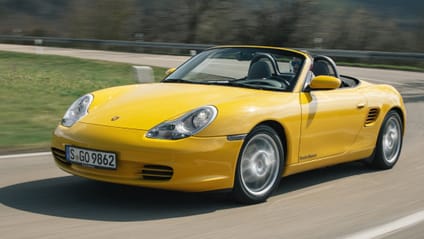
Even as it navigates a turbulent period today, it’s hard to imagine Porsche ever being properly on the ropes, but the fact is that in the early ’90s, it was flirting with bankruptcy. Its range was ageing and, amid a global recession, the flagship 911 and V8 928 weren’t selling. Only the smaller 944 and later 968 were keeping things ticking over.
At 1993’s Detroit Auto Show, though, it revealed a concept for a pretty mid-engined, sub-911 roadster called the Boxster. People fell in love, and the green light was quickly given. Most of the front half was shared with the upcoming 996 911, cutting development costs, and when the production car launched in 1996, buyers flocked to it, shoring up Porsche’s finances and making that year a vintage one for company-rescuing mid-engined roadsters.
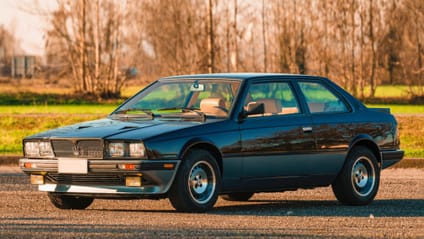
The 1970s hadn’t been a great time to be selling thirsty, expensive sports cars, especially for a company as perennially beleaguered as Maserati. The company’s new owner, Alejandro de Tomaso, knew this, and also noticed that well-to-do young Americans were increasingly gravitating towards small, sporty European saloons and coupes.
Seeking a slice of that pie, the company set about developing the Biturbo, launched in 1981. It may have had its many detractors for its boxy styling, its dilution of a once exclusive brand and, in the long run, its shocking build quality, but initially at least, it was a huge sales success for Maserati, and its platform carried the company through the 1980s and ’90s until Fiat purchased it and merged it with Ferrari.
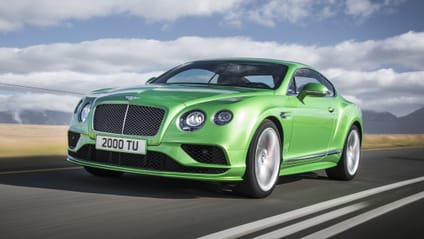
Volkswagen’s 1998 purchase of Bentley may have brought the company back from the brink, but its lineup was still hugely dated and it was building cars at a rate of just a few hundred a year – and that needed to change if it was to really thrive again.
The Continental GT was the car that made that change. Though it was anathema to long-time Bentley loyalists with its Volkswagen underpinnings (shared with the Phaeton and Audi A8), that platform sharing not only cut development costs but thrust the Bentley range into the new millennium, and allowed the company’s production output to increase many, many times over, helping establish it as a major player in the brave new world of 21st century luxury.
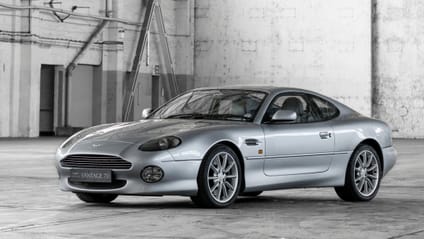
Spotting a bit of a theme here? Beloved but small-volume luxury/sports manufacturer approaches the end of the 21st century with a dated lineup and very little money to do anything about it? Aston Martin was yet another one, and this time, the investment it needed came from Ford, which had bought most of the company in 1987, followed by Jaguar a couple of years later.
Pooling the resources of the two companies, a near-finished but ultimately abandoned Jaguar sports car project was repurposed into the DB7. Its chassis and straight-six engine were effectively old Jag bits, but that didn’t matter – the DB7 was gorgeous and represented a new, more affordable entry point into an Aston. That, combined with a newfound ability to build it in decent volumes, reignited the company’s sales and paved the way for its 21st century renaissance.
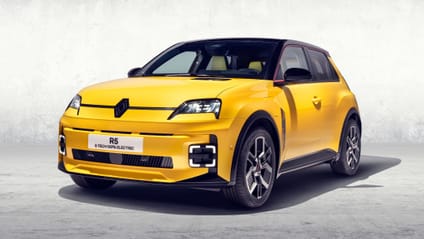
When Luca de Meo stepped in as CEO of Renault in 2020, the company had just posted a brutal €7.3 billion loss, and its range was mostly bland, underwhelming and without a real direction. When he left the company five years later, it was the most profitable it had ever been, its range was sweeping up awards, and its three brands – Renault, Dacia and Alpine – now had strong, distinct identities.
That was largely down to a plan instigated by de Meo under the hilarious/cringeworthy (delete as appropriate) name of Renaulution, and the car that spearheaded it was the reborn electric 5. Chic, stylish, affordable, and fun, its launch felt like a real new Mini moment for the company, and it got people all over Europe talking about Renault once again.
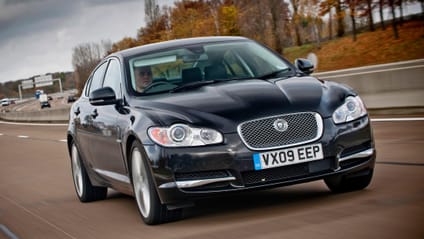
Ford’s purchase of Jaguar had given the brand a stay of execution, but it still struggled to find a real place for itself in the luxury market during the ’90s and Noughties, and by 2007, Detroit wanted out. It had a parting gift ready for whoever would buy the company, though.
That was the XF, Jag’s new mid-size exec saloon. It may have been based on the bones of the old S-Type, but where its predecessor was a retro pastiche, the new car was crisp and modern, emblematic of a company with a newfound confidence – and it drove well, too. It was an immediate success, and it served as the template for Jaguar’s eventual buyer, Tata, as the company entered the 2010s on a wave of products that could finally compete with the German brands without losing their Jag identity.
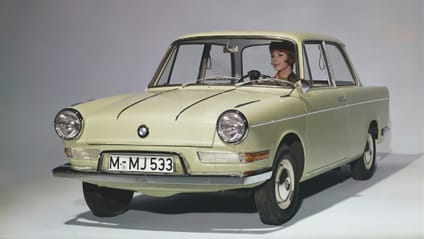
It’s almost impossible today to imagine a company as endlessly successful as BMW flirting with bankruptcy, but that’s where it was in the 1950s, stuck with a range consisting of several low-volume luxury cars and the spartan Isetta microcar – neither in market segments that were of much interest to Germany’s burgeoning middle classes.
The 700 solved that thorny issue in 1959. It borrowed an engine and modified platform from the 600 – itself essentially a stretched Isetta – but rather than looking like something that you’d expect 17 clowns to come piling out of, it was a stylish, practical and fun family car that was comfortably obtainable for thousands in a country that was in the midst of an economic boom. Buyers lapped it up, and it set BMW on the path to becoming the behemoth it is today.
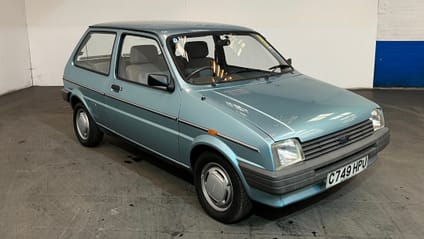
The tribulations of British Leyland in the 1970s are well-documented: lots of genuinely forward-thinking engineering hamstrung by the economy, endless labour disputes and a management structure that wouldn’t have looked out of place in sixth century Constantinople. The company, newly nationalised, was heading straight for financial disaster.
What it felt it needed was a competitor for the new genre of superminis arriving from the continent. That car was 1980’s Metro, and it worked – thanks in part to a flag-waving, borderline jingoistic marketing campaign, UK buyers bought this all-British supermini in their droves, weathering the many ongoing labour disputes which, shockingly enough, carried on into the Thatcher era, and carrying BL through the new decade.
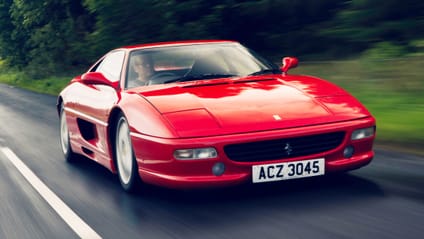
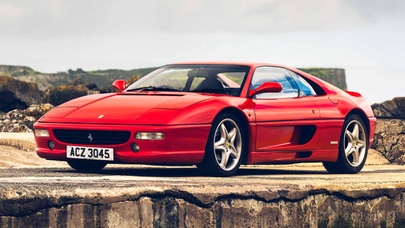
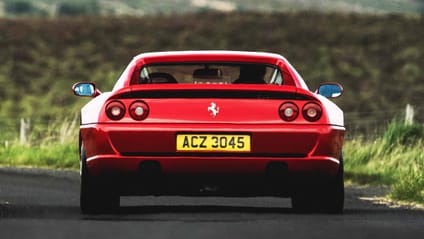
Ferrari was far from the brink of collapse when the mercurial Luca di Montezemolo took over as president in 1991, but its reputation heading into the ’90s was at an all-time low. Sure, the F40 was great, but otherwise it was selling variations on the ageing Testarossa, the widely-derided Mondial, and the underwhelming 348, which was about to receive a serious trouncing from the Honda NSX.
Di Montezemolo saw the need to modernise, kicking off in 1993 with a fresh spin on Ferrari’s traditional front-engined V12 GTs with the 456, but it was the F355 a couple of years later that really turned things around. Though it was essentially a heavily-updated 348, it corrected all the errors of its predecessor, from the less-than-stellar performance to the so-so looks. It won immediate praise and set Ferrari on a trajectory it hasn’t come down from since.
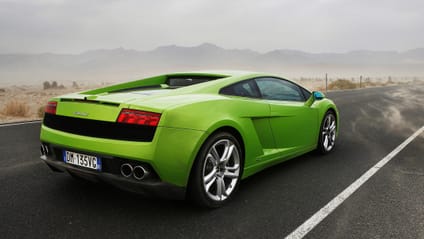
Lamborghini spent most of the first 40 years of its existence bouncing regularly between different owners, all of them unsure how to turn the brand’s unquestionably desirable status into long-term profitability.
If any buyer was going to change that, though, it would be Volkswagen, which snapped up Lambo during its luxury brand shopping spree of 1998 and set about giving the fabled Italian company what it really needed. First came the Murcielago, but it was 2003’s Gallardo, which gave Lambo a more attainable, usable ‘entry-level’ model that barely sacrificed any of the theatre the company was known for, that really set it on the path it remains on today.
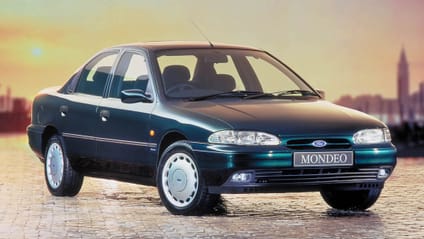
Ford’s range heading into the 1990s, particularly in Europe, was a shadow of the excellence the company had once been known for. It was mostly ancient stuff like the Sierra, or largely underwhelming new models like the third-gen Fiesta and fifth-gen Escort.
A big change was needed, and it came in the shape of the Sierra’s replacement, the Mondeo. Even though it moved to a front-wheel drive layout, it drove with a verve that was practically unheard of for a sales rep’s saloon, and combined with its understatedly handsome looks and affordable pricing, it became an instant smash. It paved the way for Ford’s 1990s renaissance, when it once again asserted itself as a maker of fantastic all-rounders beloved by the British public.
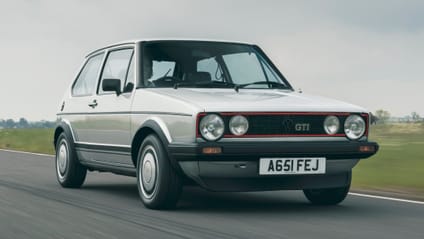
Although sales of the Beetle had remained strong, it was clear to Volkswagen that a replacement was needed as the 1970s rolled around. It had previously thought about further evolutions of the rear-engined, air-cooled platform that had been the company’s backbone from day one, but the car industry was increasingly moving away from that sort of car, and VW decided that if it couldn’t beat them it’d join them.
The unloved K70 – a repurposed NSU design – and the much more successful Passat had laid the groundwork for VW’s front-wheel drive revolution, but 1974’s Golf was the car with the task of taking over from the Beetle. It did so expertly, quickly becoming a sales smash and establishing the Golf name as the benchmark for family hatchbacks.
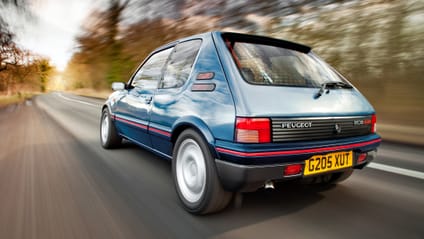
Peugeot was struggling in the late 1970s, thanks to a combination of rescuing the ailing Citroen and Chrysler Europe and sluggish sales of its own cars. It needed to turn things around, fast, and saw the booming supermini class as its opportunity.
The car it cooked up was the 205, launched in 1983. It was affordable, roomy, fun to drive, great to look at, and well-made – in other words, everything a supermini needed to be to become a sales phenomenon. From the bare bones base model to the sun-seeking convertible to the yuppie’s favourite GTi hot hatch, there was a version to suit everyone, and that broad appeal is what really cemented the 205 as a huge success that turned around Peugeot’s fortunes.
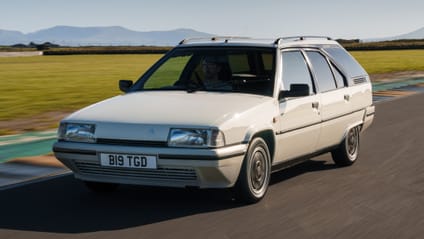
Of course, the 205 alone couldn’t cement the fortunes of the newly-formed PSA Group. Citroen’s ageing and disparate range needed a saviour too, and that came in the shape of 1982’s BX.
Effectively replacing the then 12-year-old GS, the wedgy, Gandini-penned BX may have shared a platform with the much more conservative Peugeot 405, but it looked like it had been pulled straight from a sci-fi comic book, maintaining Citroen’s reputation for avantgarde styling. There were other typically Citroen features too, like the hydropneumatic suspension, but the BX was the first new Citroen in decades that people actually bought in large numbers, helping reverse the company’s fortunes after a tricky 1970s.
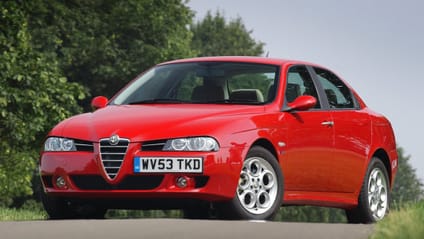
Alfa Romeo’s output throughout most of the 1980s and 1990s was a bit hit and miss, but none of it was particularly befitting of the brand’s illustrious history. That was especially true of the boxy and underwhelming 155, which had no chance against competitors like the E36 3 Series and Audi 80.
Sales reflected this, but the car that came along to replace it, the 156, marked a new dawn for Alfa in 1996. It brought back all the style that had gone missing from the company’s saloons, and most of the driving enjoyment too, despite still being front-wheel drive. It won plaudits across Europe and helped catapult Alfa’s global sales up above the 200,000 mark by 2000, marking an unquestionable high point for a company that’s weathered many peaks and troughs.
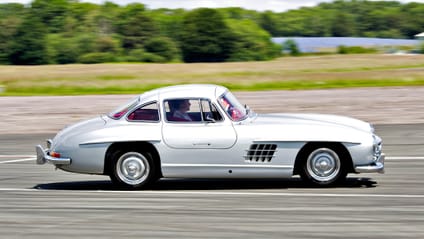
Mercedes was on its knees in the aftermath of the Second World War, stuck with no new models in the pipeline and several factories reduced to rubble. Getting back on its feet was a slow, steady process, one that began with the W120 saloon in 1953 as well as some racing successes with a pretty gullwing-doored coupe called the 300 SL.
It was the idea to turn that racer into a road car – one suggested by American importer Max Hoffman – that really turned things around for Mercedes. The roadgoing 300 SL debuted in 1954, turning it from a company which, less than a decade earlier, had been in a state of ruin, to one that was now selling the most desirable, glamorous car in the world, and one packed full of tech that would trickle down into more affordable models and cement Merc’s status as an innovator.
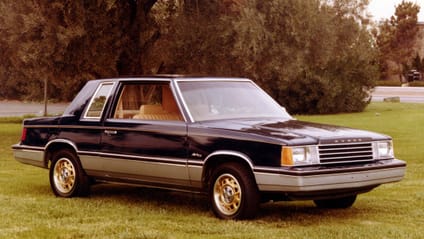
The 1970s had been a decade of disruption for the American car industry, with rising oil costs and encroaching regulation bringing it crashing down to earth after the V8-crazed ’60s. None of the big three had weathered this particularly well, but the Chrysler Group in particular was on the brink of bankruptcy.
Its last-ditch attempt at saving itself was the K platform, a new scalable front-wheel drive platform designed to cut costs by increasing parts sharing across the various Chrysler Group brands and segments. The cars the platform spawned are largely laughed at now, but it was exactly what Chrysler needed at the time. Its first two models, the Dodge Aries and Plymouth Reliant twins, won praise and sold in their masses, and the many that followed carried Chrysler through the 1980s.
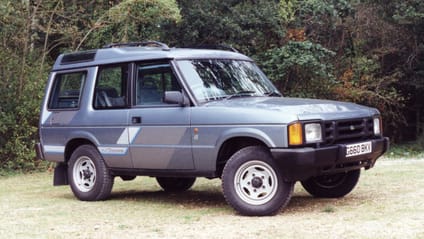
In the 1980s, Land Rover sold two models: the traditional Land Rover was for people who worked the land, and the Range Rover was for people who owned it. Neither of those market segments were particularly conducive to big sales, especially when cars like the Toyota Land Cruiser and Mitsubishi Shogun were increasingly offering a middle ground.
Land Rover’s response was to use the running gear and platform, and a few other major parts, from the Rangie to fast-track the development of a new model that would take on this new breed of capable yet plush and style-conscious 4x4s from Japan. It arrived in 1989 as the Discovery, which quite simply nailed the brief, boosting Landie’s sales and carrying it into its continued 21st century successes.
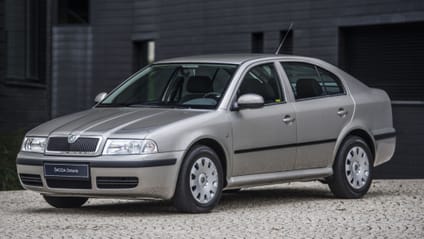
Because its cars had long been hamstrung by the strict regulations of a communist regime, Skoda was still seen as a bit of a joke in much of Europe by the time Volkswagen took it over in 1990. Those jokes quickly stopped, though. First came the Felicia in 1994, a respectable reworking of the old communist-developed Favorit.
But the car that really turned Skoda’s reputation around was 1996’s Octavia, its first model developed entirely by Volkswagen. Its price undercut a Golf but it offered space more like a Passat, and it benefitted from the unassailable build quality VW was known for at the time, turning Skoda from a punchline to a respected maker of well-made, great-value cars pretty much overnight.
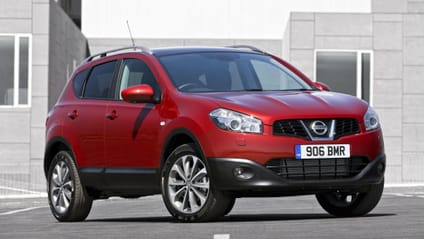
The Nissan Qashqai not only revitalised a struggling company, but it also – for better or worse – entirely and seemingly irreversibly changed the car landscape in 2006. At the time, the company’s range, save for the 350Z, was pitifully bland, and that was reflected in sales figures.
The Qashqai, then, with its strange blend of hatchback and SUV styling cues – a crossover, if you will – was a gamble, but we’re not sure even Nissan could have guessed how well it would pay off. Even if press reception was lukewarm, buyers simply couldn’t get enough of this new kind of family car, and Nissan’s fortunes were reversed thanks to it.
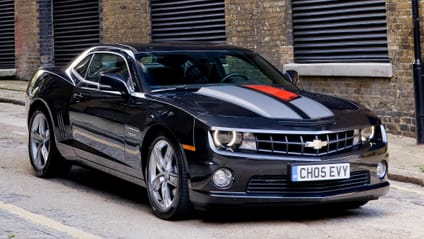
The recession of 2008 and 2009 had brought the American car industry to its knees, with General Motors and Chrysler both declaring bankruptcy and Ford only narrowly avoiding it. Amid all this, though, there was an unexpected muscle car revival underway, with demand staying strong for the retro-styled Ford Mustang and Dodge Challenger.
Chevrolet had already been working on a reborn Camaro to challenge them, and it was far enough along in development that it wasn’t killed off amid the recession. This proved to be a wise move, because in 2009, Chevy moved over 61,000 new Camaros, even though it had only gone on sale that April. It was just the success story a beleaguered GM needed, paving the way for a 2010s revitalisation.
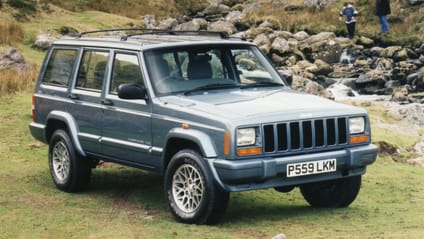
Heading into the 1980s, Jeep was part of the ‘other’ American car company, AMC, which was in a bit of a state at this point. Its AMC-branded cars weren’t cutting the mustard, nor was a range of America-specific Renaults, part of a joint venture with the French company. One other model that arrived as part of that tie-in, though, did make an impact.
The compact (by US standards), unibody XJ-generation Cherokee had been developed with Renault’s influence, with an eye on success in both North America and Europe, but the success it ultimately found smashed expectations and helped popularise the modern SUV recipe. When Chrysler started the process of buying AMC in 1987, it didn’t attempt to hide the fact that what it really wanted was Jeep, and the XJ Cherokee had been responsible for creating a huge amount of that brand value.
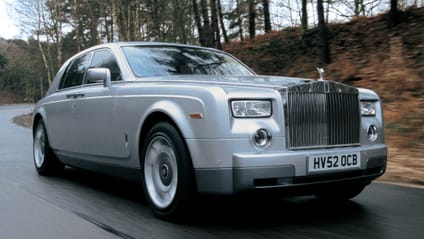
Rolls-Royce has often liked to proclaim that it makes ‘the best cars in the world’, but the truth is that 1998’s Silver Seraph, its final model developed when it was united with Bentley, simply wasn’t. There just wasn’t enough to separate it from its marginally less upmarket twin, the Bentley Arnage, but the Seraph was only really a stopgap while new owner BMW worked on the car that would re-establish Rolls as a luxury leader.
That car, the Phantom VII, arrived in 2003, and completely reset expectations of what a luxury car should be. It was unquestionably the most significant car in Rolls’ history, reasserting the company as the very last word in automotive luxury and helping open it up to a new generation of the uber-wealthy without sacrificing what had set it apart in the past.
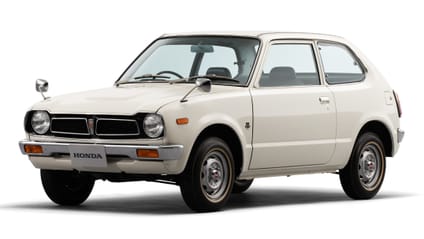
Honda hadn’t even been making cars for a decade in 1972, but it was already thinking about calling it quits and going back to just building bikes. Its small cars were unpopular outside of Japan, and its first attempt at a larger model, the curious air-cooled 1300, had been a flop too.
It decided to push on with the more conventional Civic, though, and it couldn’t have timed it better – just months after it went into production, the world was in the grip of an oil crisis, and all of a sudden, everyone wanted compact, fuel-efficient cars, making the Civic a worldwide hit. It also helped that it was an early indicator of the fantastic built quality Honda would go on to be known for, cementing the company as a major player in cars as well as motorbikes.
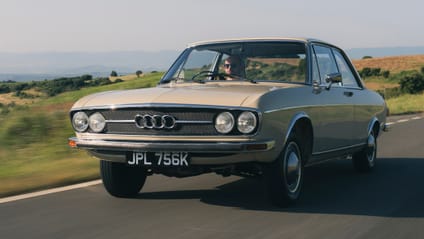
Audi’s history is long and complicated, having started as an independent marque before becoming part of Auto Union in 1932. Auto Union was then bought by Volkswagen in 1964, with the new owner immediately putting a halt on the company developing new models.
This was effectively going to spell the end of Auto Union, but undeterred, chief engineer Ludwig Kraus began secretly designing a new mid-size, front-wheel drive saloon. When VW bosses eventually discovered it, they were sufficiently convinced by it that a decision was made to put it into production. This kept Auto Union as a distinct, semi-independent part of the VW Group, with one major change – a few years earlier, VW had resurrected the dormant Audi brand, and the new Auto Union-developed car would become the Audi 100.
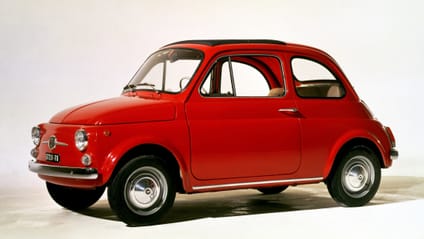
Italy was in poor economic shape after the Second World War, and there was little demand for new cars in the cash-strapped country. What Fiat, the nation’s biggest car company, and Italy itself needed was an affordable, simple and practical car for the masses, much like Germany already had in the Beetle and Britain was soon to get in the Mini.
It arrived in 1957 in the form of the original 500, a car that completely revolutionised the way people travelled in Italy. Suddenly, a car was within reach of people of even relatively modest income, and its cute, chic styling made it an icon overseas too. Nearly four million were built over 18 years, helping cement Fiat’s reputation as a master of small cars.
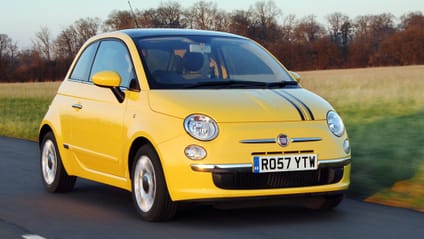
Fast forward half a century, and storm clouds were once again gathering over Fiat, this time thanks to an ageing and uninspired range redeemed only by the excellent second-gen Panda, which wasn’t going to cut it alone.
With the Volkswagen New Beetle having proven the merit of draping a retro body over off-the-shelf underpinnings, Fiat took the simple but inspired decision to use the Panda’s bones to create an ultra-cutesy new 500 inspired by the original. Launching in 2007 – satisfyingly, 50 years after the original – it was an instant hit. Fiat simply couldn’t build enough of them, and it remained popular enough to live for 17 years in Europe, very nearly matching the run of the original.
Get all the latest news, reviews and exclusives, direct to your inbox.