



25
690.6bhp
3.5s
202Mph
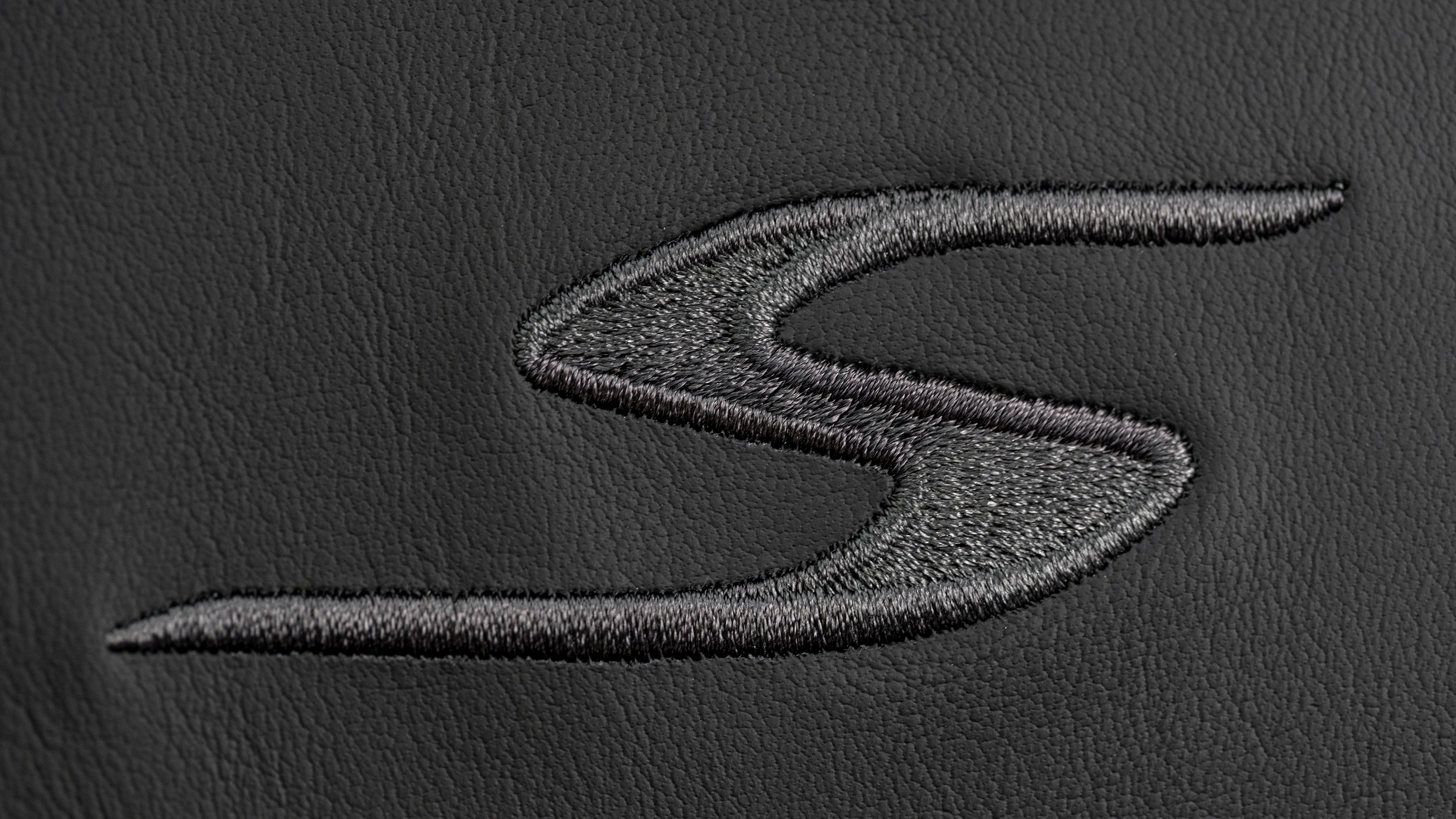
You’re right – S is very much the letter of the month when it comes to fast, luxurious cars. But what does the S suffix mean to Aston? More, basically. More power, more aggression, more noise, more intent. More good things.
And yes, Bentley did just tweak the Conti GT S, Porsche has brought out the new Turbo S and Ferrari is preparing for people to splash the cash on the new Amalfi. So Aston has sharpened the DB12, following in the footsteps of the DBX S and Vantage S, to keep its ‘world’s first Super Tourer’ fresh and relevant. Especially as people with a three-year old DB12 might be tempted to chop it in for a rival.
Not entirely. Aston’s S thing goes back to the DB3S road racer of 1953, so there is some heritage here rather than just a meeting room, a badge and someone from marketing saying “sporty”. More recently you may remember there have been Vanquish S, Vantage S and Rapide S models, so the DB12 S is at least wearing an old family signet ring more than anything.
The DB12 S is now the fastest and most powerful version of the DB12, thanks to a 19bhp boost from the 4.0-litre AMG-sourced V8 under that enormous bonnet. Aston quotes it as 700PS, which is the headline-friendly way of saying 690bhp. The normal DB12 – which is normal in the same way that a hand-built speedboat is normal – produces 671bhp. Torque stays the same at 590lb ft.
On its own? Not really. Thanks to powertrain tweaks, plus revisions to the launch control and gearshift software, 0-60mph now takes 3.4 seconds, a mighty 0.1 seconds than before. Top speed remains 202mph.
But the numbers are not really the point. Aston says gearshift times have been reduced by more than 50 per cent, which is more interesting than the tenth knocked off the sprint time. The DB12 S is about small changes adding up: sharper throttle response, quicker shifts, standard carbon ceramic brakes, damper revisions, E-diff tweaks and more assertive chassis settings.
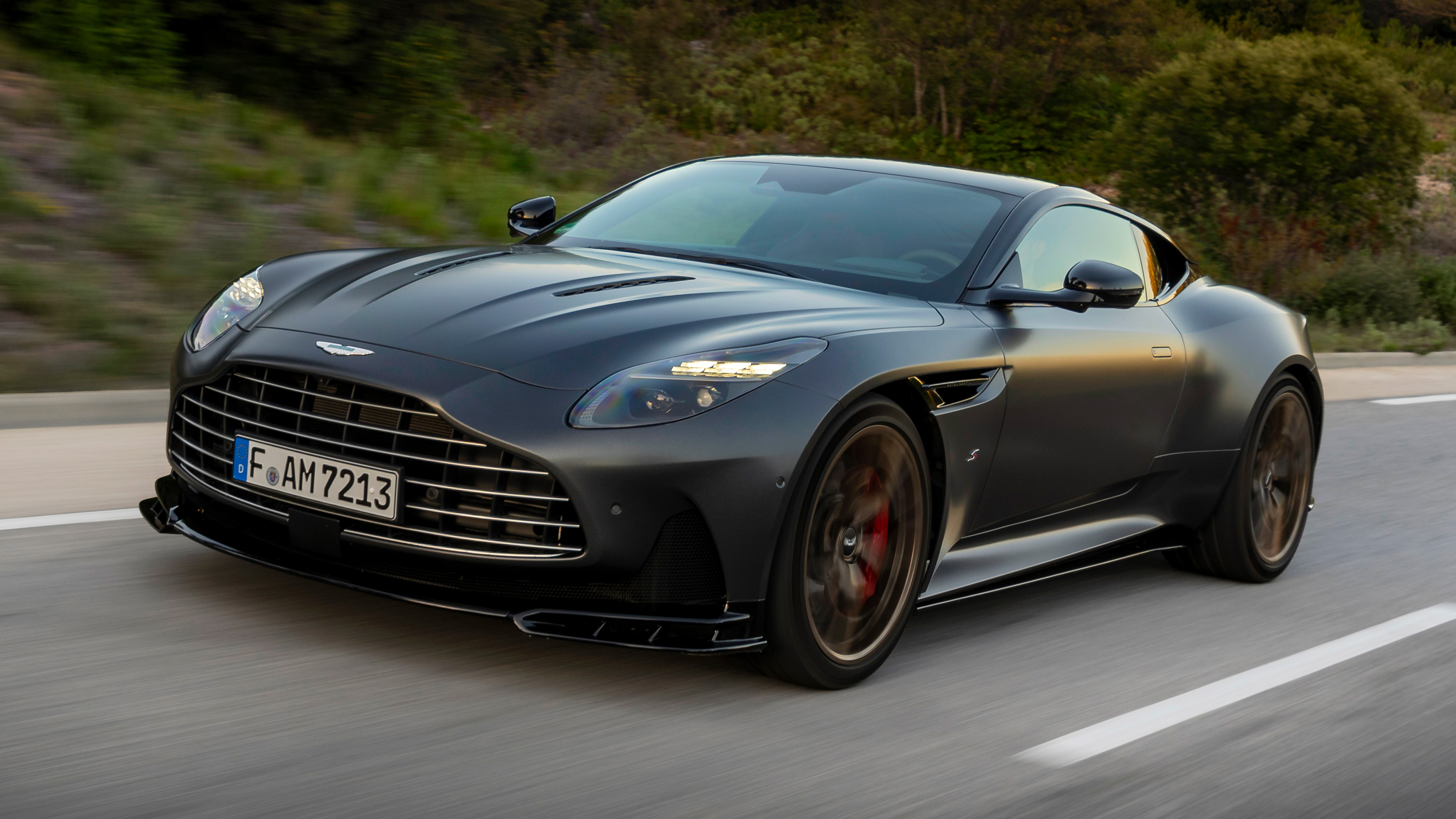
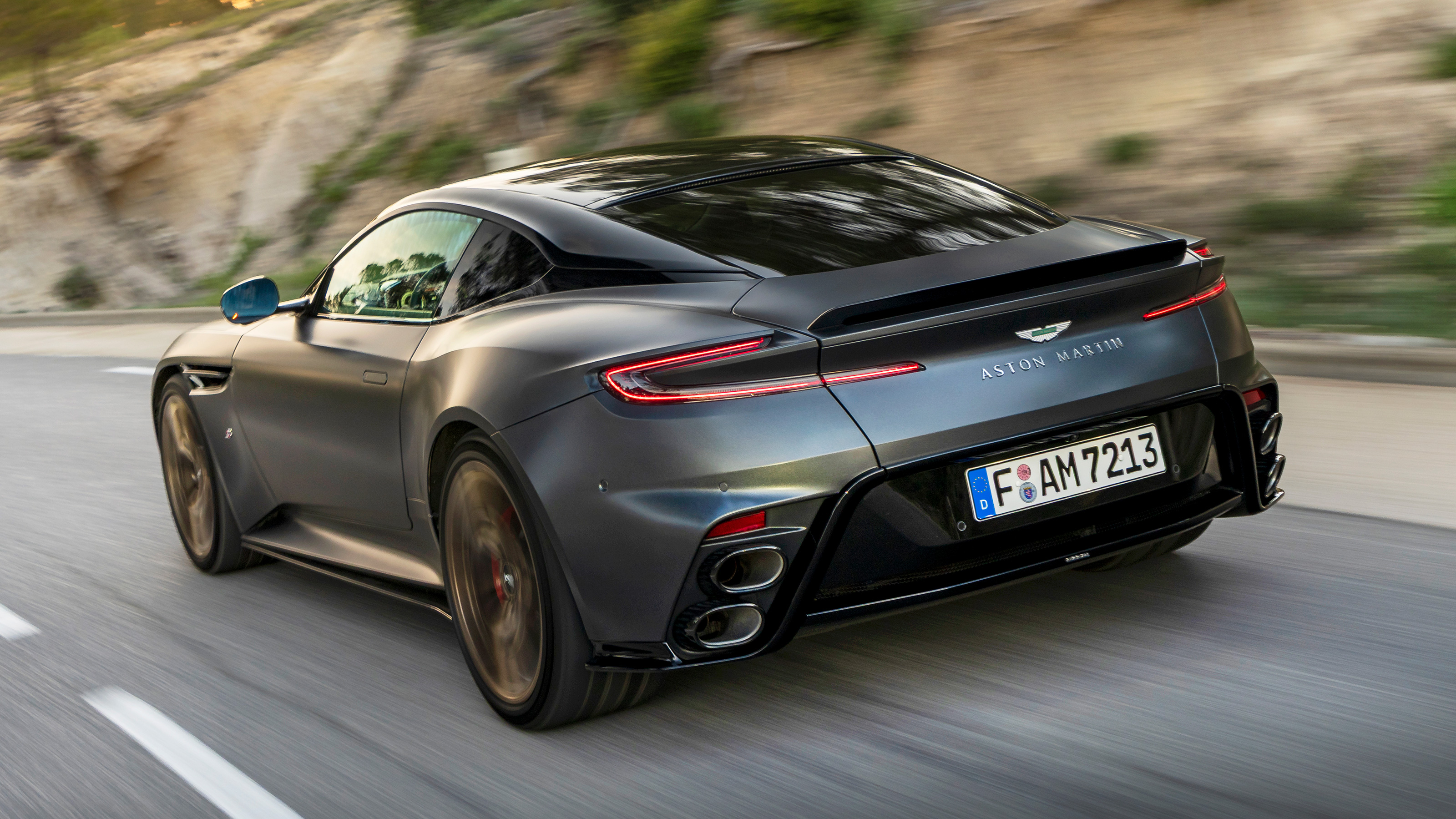
Of course they have. This is still a brutally handsome car, but with more presence and more muscle. The rear is where you notice the biggest change thanks to those new stacked quad exhausts that sit high and proud. As every child knows, the more exhaust pipes a car has, the faster it is. Stack them vertically and you unlock another layer of cool.
As every child knows, the more exhaust pipes a car has, the faster it is
To house them, Aston has pulled the teardrop taper of the DB12’s rear bodywork downwards, which makes the car look wider and more planted. There’s a trace of old Aston V600 about it, and some of that “noble rogue” language that marketing departments like because it sounds expensive. In plain English, it looks mean. Properly mean.
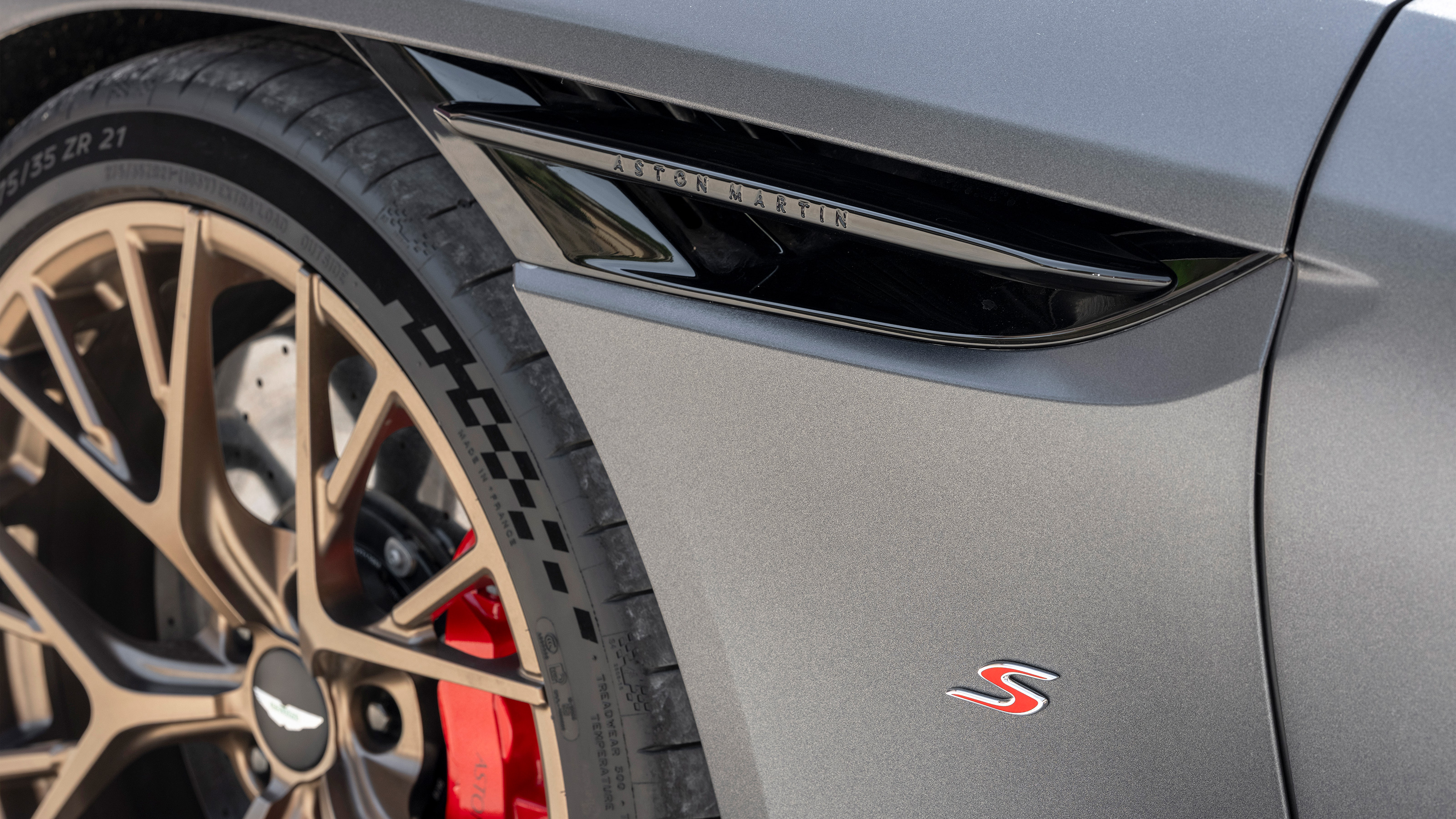
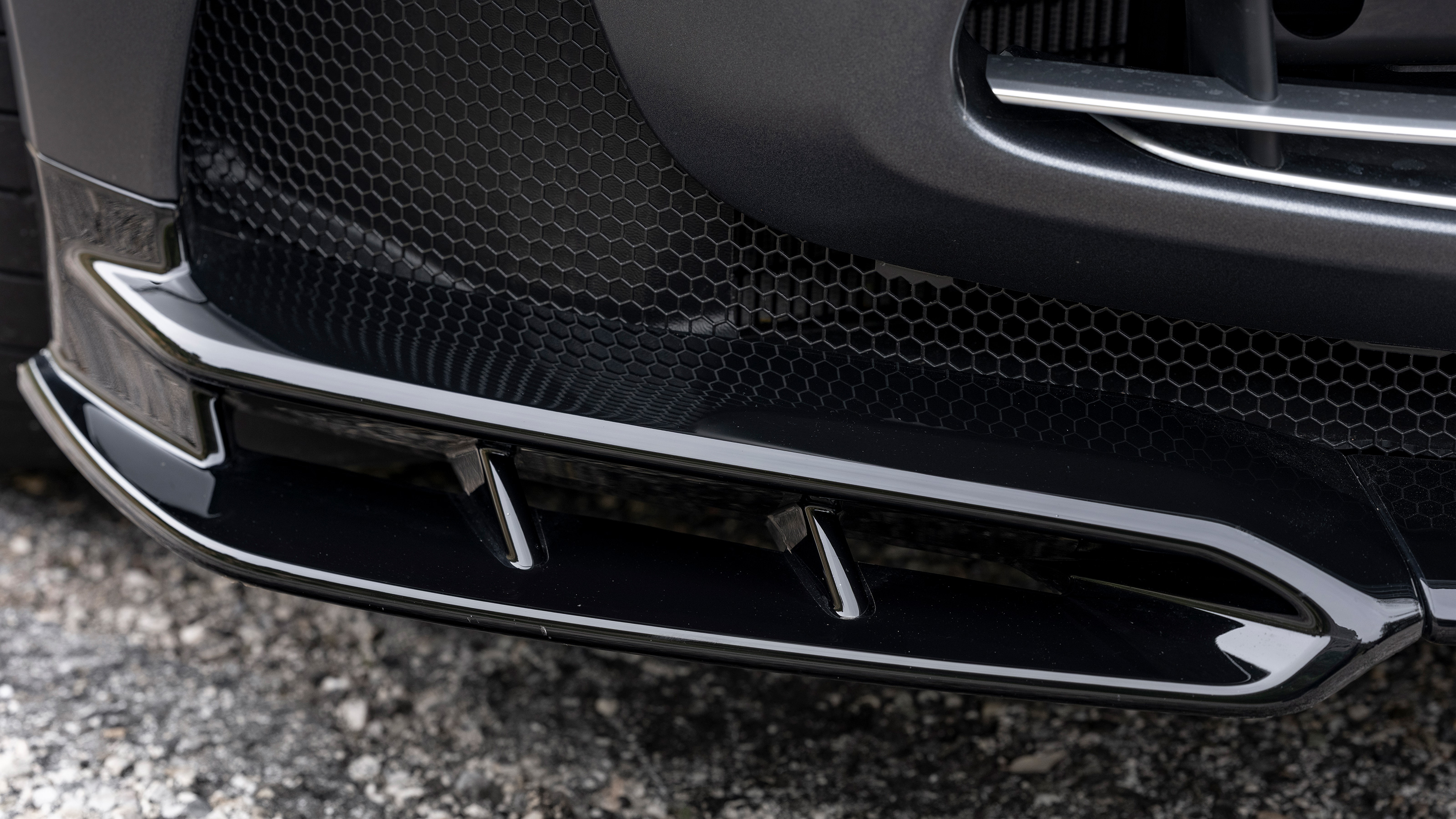
There’s also a new rear diffuser with carbon accents and a fixed carbon lip spoiler, replacing the retractable air wall that used to pop up on the standard car. Down the sides you get gloss black sill extensions and S badging. Up front, there’s a more technical dual-element splitter arrangement that visually lowers and widens the car. You can have that splitter in carbon too, which is perfect if you enjoy turning low-speed kerbing incidents into conversations with your bank manager.
Get all the latest news, reviews and exclusives, direct to your inbox.
A bit of both. The splitter helps manage airflow around the front wheelarches, stabilise the front end and reduce lift. The fixed rear spoiler and new diffuser also help reduce lift and increase high-speed stability, while creating the necessary room for those stacked tailpipes. There’s some F1-derived thinking in there, hence why it looks quite fiddly and not especially grand touring.
Not much has changed. You get a red knurled drive mode selector, some S badges and broadly the same cabin as before. That’s no bad thing, because the DB12 interior is one of Aston’s great recent victories. It has proper materials, proper tactility and a pleasing sense that someone has actually thought about how things feel. It now has Apple CarPlay Ultra, too, although it crashed on us during the test. The screen also remains difficult to read in bright sunlight. Progress, then, but not perfection.
Our advice? Spec the carbon interior elements. They lift the cabin enormously and feel much more special than the standard gloss black trim, which is shiny, flimsy and permanently covered in fingerprints.
Ironically, that’s the easiest way to feel the difference between a normal DB12 and a DB12 S.
Aston’s dynamic boffins have played with the DB12’s camber – more negative at the rear for a stancier look, but also better agility – plus the toe and castor geometry settings. The idea is to change the hysteresis, which is the nerdy car dynamics term for the lag or difference between steering input and the resulting vehicle action.
The result is that the already quick steering wants to self-centre more, adding weight and attitude. It’s great when driving quickly, giving you more feel, engagement and understanding of what’s happening with those front wheels far down that long bonnet. But it also adds more weight when steering at normal speeds, almost as if you’re fighting it, which isn’t especially GT-ish.
But the S leans harder into the DB12’s wonderful duplicity of being able to swap from being a leather-wrapped torpedo to being able to absorb mileage with effortless grace and style, only now it’s been sharpened for when you’re really attacking. But then you need to play with the big red knob.
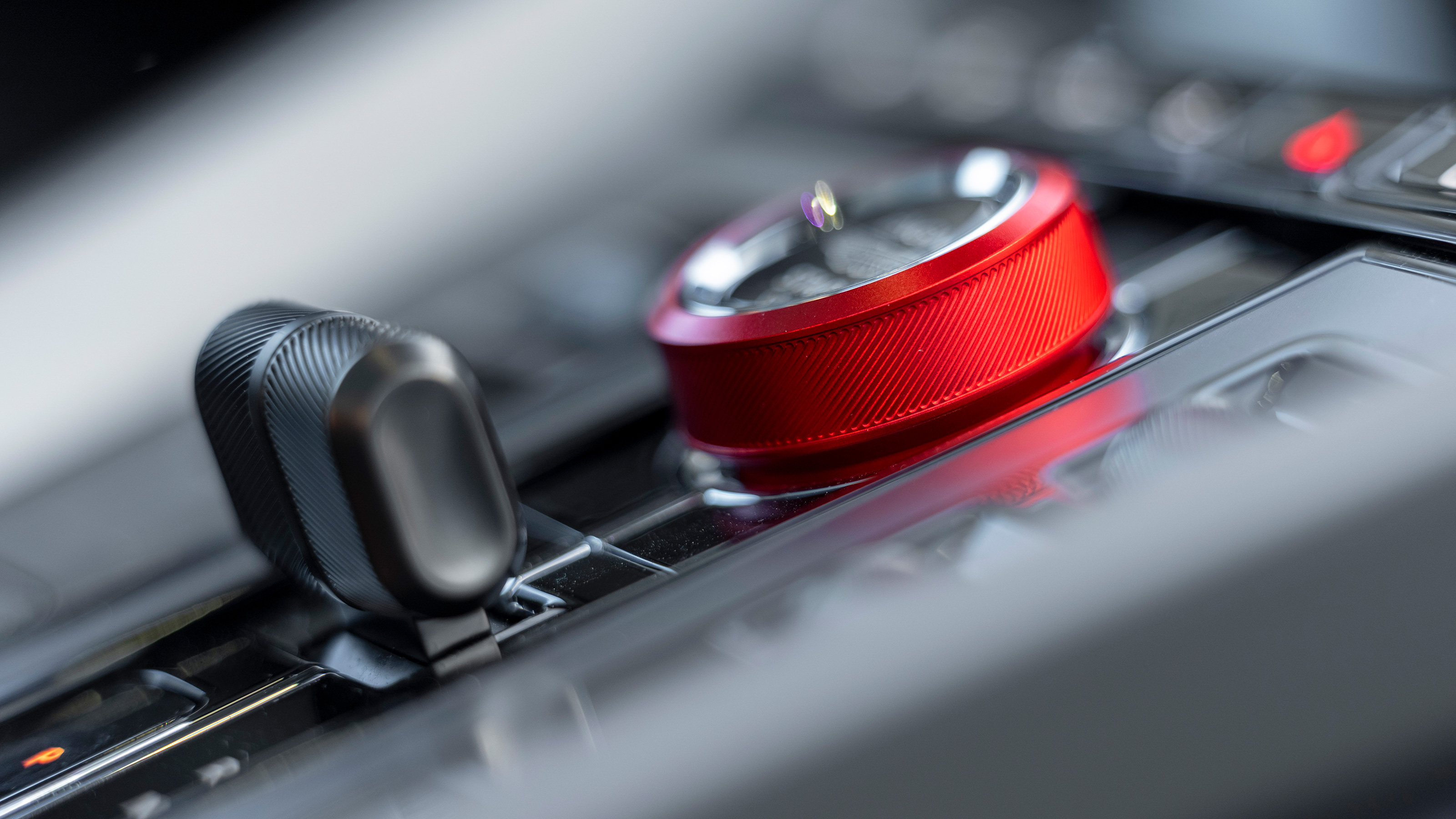
Twist your red knob and put the Aston into Sport or Sport+, then press and hold the traction control button, and the knob becomes something else entirely – a selector for the ten-stage TC system. It’s still counter-intuitive to know whether ‘1’ means lots of intervention or none, so be mindful. But as you slacken the system off, you move from subtly steering the rear with the throttle to allowing greater slip angles before it reins you in. Or wind it off entirely and you’re on your own, with a tasty bill potentially waiting at the other end. But you also have a car that’s free and wants to get places. Fast.
The DB12 S and its bespoke 325-section Michelin tyres have so much grip. The Merc-derived ‘hot-V’ V8 is still a fabulous engine, full of spirit and torque. To me, it has more character than its bigger brother Vanquish’s V12. It makes fantastic noises throughout the rev range, from a slight supercharger-ish whine low down (caused by the excessive exhaust rush through the system) to a hearty, hard-edged V8 bark in the middle, where the turbo torque hits you, before pulling hard at the top end.
Back off, go through the new, quicker and rather impressive eight-speed ZF gearbox, and the stainless steel exhaust whip-cracks and burbles. This can now be doubled down with the optional titanium exhaust, which saves an impressive 11.7kg too. And if you want more noise, you can spec the Volante, which chops the roof off, but undoes all of Aston’s weight-saving work by piling on another 100kg.
Considering it is a long, 1,820kg land yacht, it feels even more agile thanks to the reworked E-diff, which hooks up and slingshots you out of corners with immense traction. The adjustable Bilstein DTX dampers have been modified to improve roll and pitch control, while a stiffer rear anti-roll bar, revised camber and extra torque help the car pivot in a way a luxo GT really shouldn’t.
We were in warm Spain, on tight, twisty mountain roads where you’d expect it to understeer like a dog, but the crispness and front-end grip are deeply impressive. What is more of a challenge are the now-standard carbon ceramic brakes. They never fully inspire confidence. Cold, they offer all the reassurance of a soggy custard cream – no bite, no feel.
What is more of a challenge are the now-standard carbon ceramic brakes…. cold, they offer all the reassurance of a soggy custard cream
As they warmed up, things improved, but even with their broadsheet-sized 410mm discs at the front and 360mm discs at the rear, they never quite delivered the powerful initial bite you want. They do, however, lop 27kg off the unsprung mass, which helps agility, and their mirrored gunmetal finish looks marvellous behind the alloys.
Brilliant. If you remember how haphazard the DB11’s handling and chassis could be, the DB12 was a huge improvement – and the S is better again.
Driving around at Côte d’Azur harbour speeds, the suspension soaks up the day-to-day. It has a lovely sense of control. It compresses cleanly, rebounds neatly and keeps the body in check without becoming harsh. It doesn’t thump, it doesn’t wallow and it doesn’t constantly remind you that you chose the more serious version.
It doesn’t thump, it doesn’t wallow and it doesn’t constantly remind you that you chose the more serious version
In fact, the DB12 relishes the urban environment. The engine is docile, the gearbox subdued and the looks turn heads. Hit the motorway, autostrada, autobahn or whatever European main artery you fancy, and the engine isn’t stressed either, the cabin is quiet and life is good.
Umm. Well, it still has back seats. But they’re more useful for storing things than people, mind, as the boot remains annoying to use. You have to post everything through an awkward angle, and it only offers a wide, shallow 262-litre space. The Volante is tighter still, with 206 litres roof-up. We still yearn for the Vantage’s incredible and usable hatch on a DB12.
Prices start at £205,000 – not far off the standard DB12, which remains on sale. Given that carbon ceramics are included, and the S feels newer, sharper and broader in its abilities, that doesn’t seem outrageous.
Yes. Deeply. Aston’s configurator is vast, seductive and financially dangerous. A little carbon here, a bit of trim there, some heroic paintwork, a few interior flourishes, and suddenly your sensible £200k GT has become a small Kensington flat with quad exhausts.
The DB12 S is not a revolution. It doesn’t suddenly turn Aston’s Super Tourer into a track rat, and nor should it. What it does is give the DB12 more edge, more voice and more intent, without completely corrupting the long-legged grace that makes the car appealing in the first place. But it feels like it’s time for another group test to see what is best. One with a lot of Ss in it.
Get all the latest news, reviews and exclusives, direct to your inbox.
