



25
The PV5 Passenger starts at a scarcely believable £31,495, or £34,495 for the long range (including the government electric car grant, making it even cheaper than it was at launch). The PV5 Cargo is £27,465 or £30,145 respectively (excluding VAT).
Which, as already mentioned, makes it significantly cheaper than the Volkswagen ID. Buzz, which starts north of sixty grand unless you go for the VAT-shunning Cargo. And that's still two grand more than the rangiest PV5.
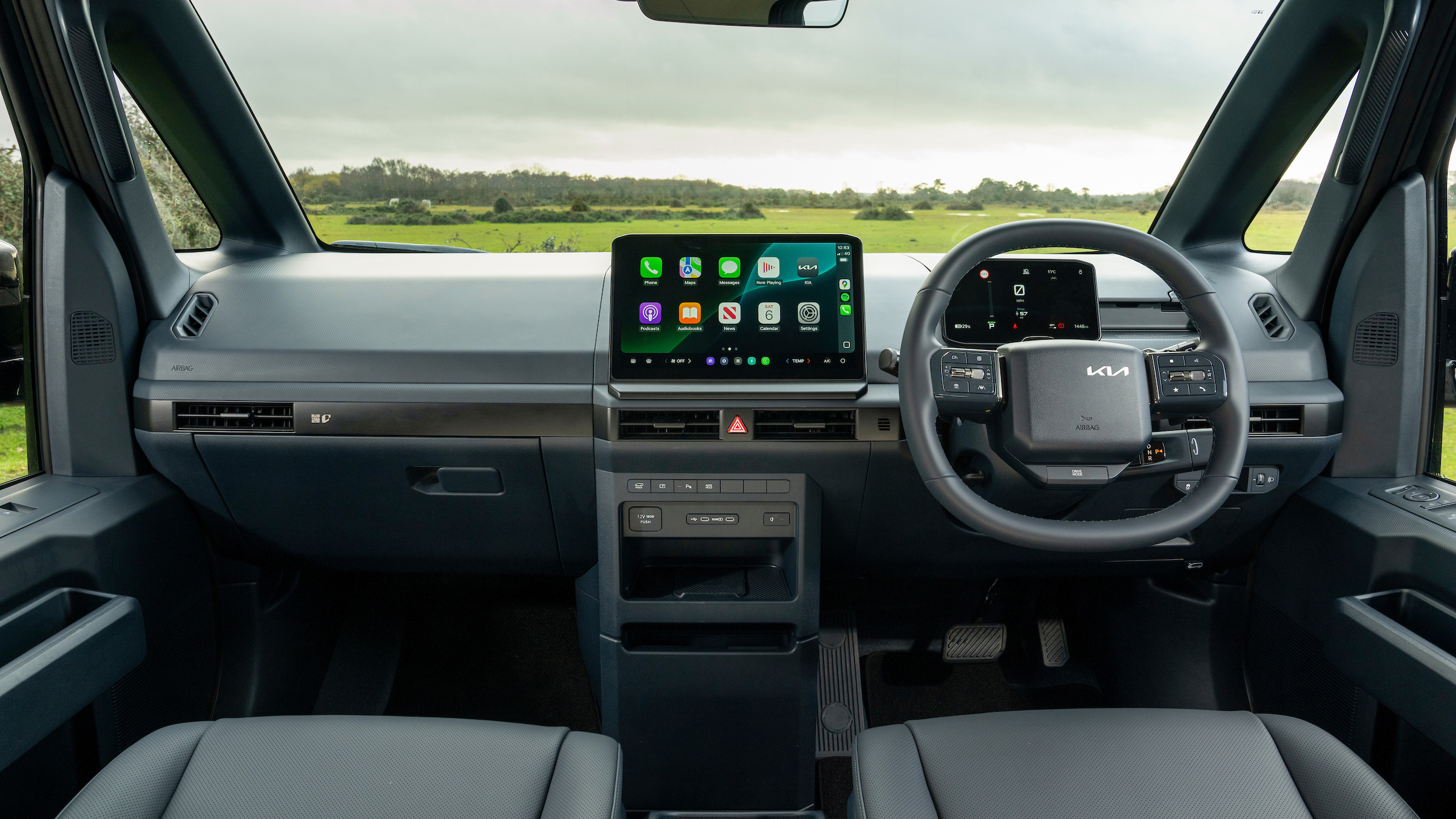
You’ve two trims to choose from, Essential or Plus. The former gets 16-inch steel wheels, LED headlights, the full 7.5in driver display and 12.9in touchscreen with wireless smartphone pairing, front and rear parking sensors and reversing camera, smart cruise control, keyless entry and start… the list goes on.
The Plus pack adds heated steering wheel, front seats and outer rear seats, a wireless phone charger, electric mirrors and tailgate, vehicle-to-load (V2L) capability, plus a couple of extra safety gizmos. Fully loaded, it’s £36,795 - we reckon that's remarkable value, certainly enough to excuse a few scratchy plastics. You also get the option of a £780 heat pump here.
The VW may look a bit more cheerful inside but that doesn’t come close to justifying that chasm in price - especially since, in all other ways, the Kia either matches it or beats it. We didn’t expect to ever say this about our 2022 EV of the Year, but you would now officially have to be a bit mad to purchase a new ID. Buzz.
We wouldn’t look below Plus trim, because you’ll surely appreciate the heated steering wheel and seats in winter, with the £780 heat pump an option well worth ticking.
In the Passenger variant this automatically steps you up to the bigger battery, but in the Cargo you get the option of both. Go for the latter.
All versions get Kia’s usual generous seven year/100,000 mile warranty, with the battery pack covered for eight years/100,000 miles.
Get all the latest news, reviews and exclusives, direct to your inbox.
