

AUDI
RS 5 TFSI e Quattro 5dr Tiptronic
£90,965
Goes, handles and stops very convincingly, has real character
Very heavy, expensive, can be complicated to figure out
Audi Sport’s first foray into the world of plug-in hybrids. And also the most complex car the company’s RS division has ever made, according to Chief Technical Officer Steffen Bamberger.
The 2.9-litre, 503bhp twin turbo V6 is joined by a 174bhp electric motor, fed by a 25.9kWh battery for a total system output of 630bhp and 590lb ft of torque. It also gets RS-specific front and rear axles, a faster steering rack, sports suspension that sticks with steel springs but has clever twin-valve dampers, and bespoke tyres with the option of 21in wheels and bigger rims on the rear. The body structure is 10 per cent stiffer than the regular A5’s, though the same PPE platform obviously underpins it.
There’s also the option of carbon ceramic brakes – they measure 440mm upfront and 410mm at the rear (only the Bentley Continental GT Speed and Lamborghini Urus can match that), and weigh 30kg less than the standard steel discs. Maximum brake feel and minimal fade are key attributes here. There’s magic going on, for sure, and Audi Sport boss Rolf Michl is big on tactility and character which bodes well.
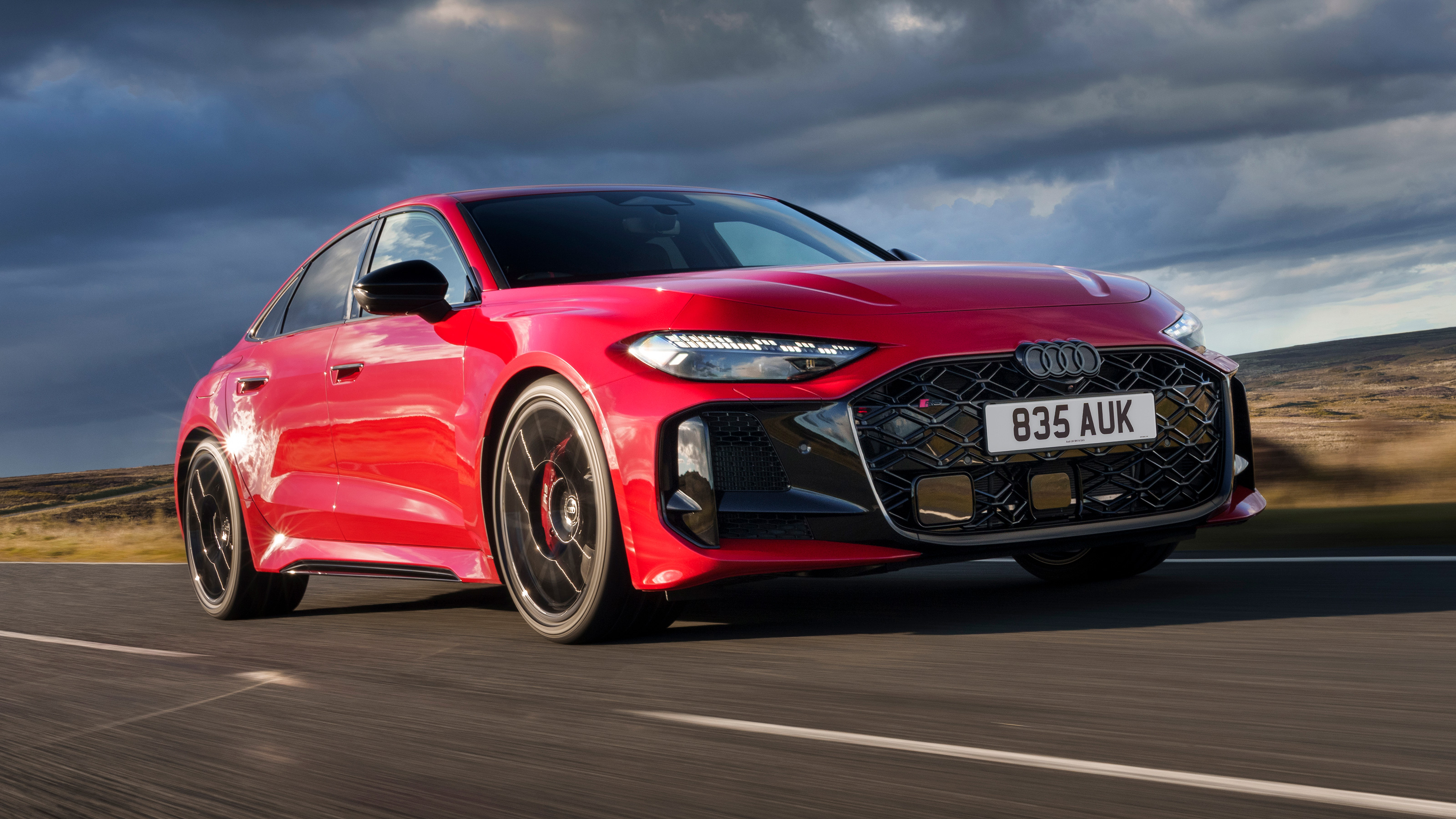
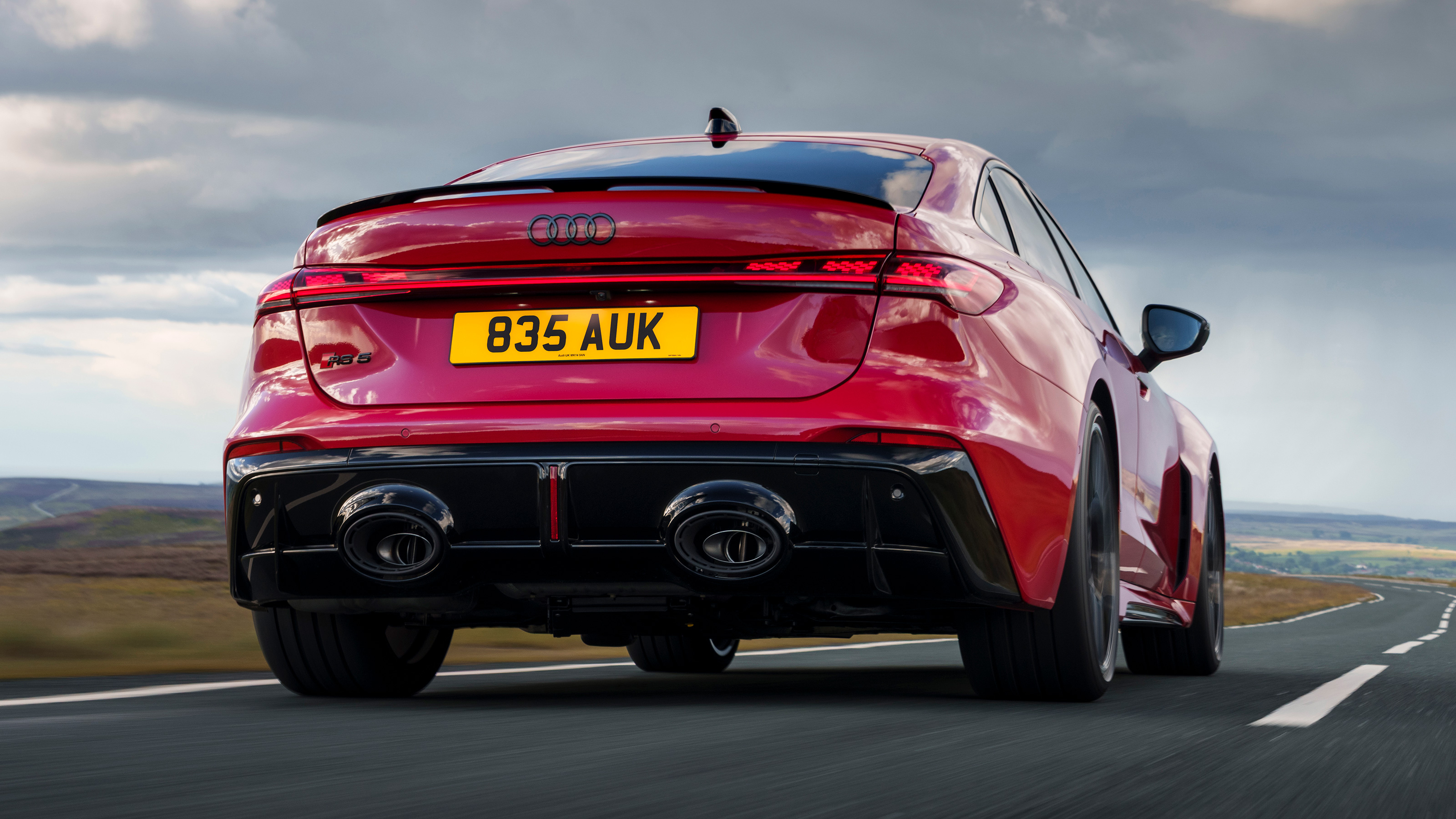
Absolutely. Head-on, it gives the rather under-nourished looking A5 the mother and father of all glow-ups. It’s even better from the rear; check out its shoulders and those planet-sized exhaust exits. They sit further inboard because of the exhaust’s L shape and muffler.
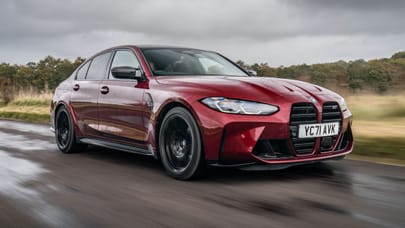
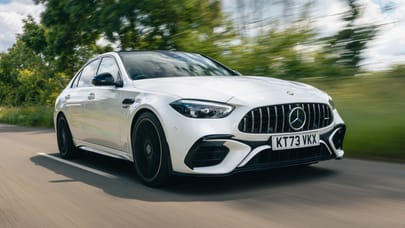
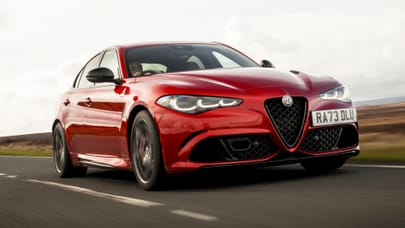
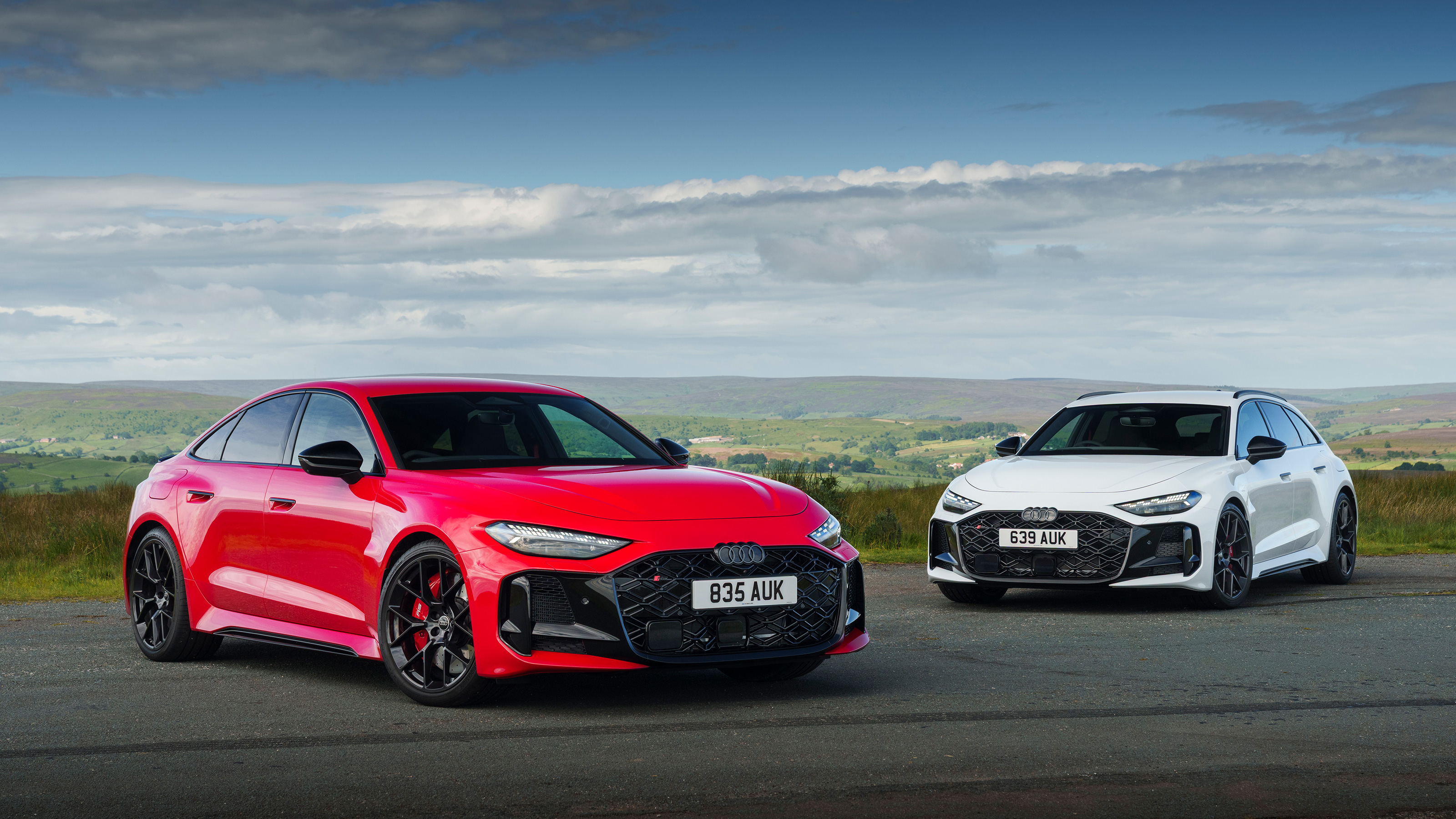
It’s up against old foes, the BMW M3 and Mercedes AMG C63 (with a nod to the ever-lovely Alfa Guilia Quadrifoglio), but in terms of presence and visual execution we reckon the RS5 has the edge. The saloon, too, not just the Avant.
Much of the exterior is new, and it’s 40mm wider overall. The new aero elements are finished in gloss black, or an optional carbon design, and there’s an RS matrix light signature. The rear lights also feature a ‘chequered flag’ pattern. Thankfully, the design team stopped short of tuner-style self-parody.
Audi will never deviate from its signature all-wheel drive recipe, but the new RS5 introduces what you might term a side hustle (sideways hustle?). It combines a Torsen centre differential with what it calls Dynamic Torque Vectoring on the rear axle – a world first, says the company. The centre diff might be a throwback to Quattros past but it’s state-of-the-art here; it has a preload function so that it’s always partially locked. The result is a torque split that varies between 70/30 and 15/85 front to rear, an unusually extrovert figure for an Audi with quattro functionality, and a pointer to the RS5’s more, shall we say, indulgent personality.
This is where the electrified rear transaxle comes in. A water-cooled permanent magnet e-motor operates as a high-voltage actuator to provide electro-mechanical torque vectoring to each of the rear wheels. It takes just 15 milliseconds, can cope with hefty torque loads (up to a theoretical 1,475lb ft), and does its thing on and off throttle and under braking.
Has Audi created a hi-tech sledgehammer in order to crack a traction-related nut? Perhaps. But there’s a genuine bandwidth here, and the promise of agility and interactivity to go with Audi’s trad insane grip levels. And remember, the RS5 can also travel a claimed 52 miles in pure electric mode, which is double the distance most people do in a day.
It’s been carried over from the previous RS4, but the engineers reckon about 60 per cent of it has been improved (power output from the engine is up 59bhp on the old RS4). The turbo’s geometry has been revised, there are new water-to-air intercoolers to reduce intake temperatures, and it runs on a Miller combustion cycle for enhanced efficiency. There’s also a revised fuel injection system.
The new RS5 will do 0-62mph in 3.6 seconds and 177mph all-out (with the Sport pack fitted). Audi claims 74mpg combined but even with the battery discharged the RS5 should be good for 29mpg. And while it might be packing 630bhp overall, its PHEV status obviously reduces its CO2 emissions and makes it much less punitive in terms of taxation.
It’s clever. The battery lives under the boot floor, and improved chemistry means that its power output remains impressive even if its state of charge is low. Thermal management has been improved, so it’s less temperature sensitive. The battery doesn’t just power the primary e-motor, it also supplies up to 8kW to the motor in the torque vectoring unit.
Here’s where it gets more complicated. The RS5 would feel half-baked if the battery’s state-of-charge was sub-optimal, so in RS Sport and RS torque rear (i.e. drift) modes, the state of charge is held at 90 per cent. Pumps, fans and heat exchangers keep things at around 20°C, the temperature at which the battery does its best work.
In Hybrid mode, the battery is always being topped up, although you can select a preferred SoC using a digital slider. There’s also a Boost mode, triggered by a button on the steering wheel, that summons up everything the car’s got for 10 seconds. You get a countdown on the instrument display.
Hmm. You might be alluding to the elephant in the room here, because the RS5 is unavoidably chunky. It has eaten some pies, and then gone back for seconds. In Avant form, it weighs 2,370kg, a daft figure for something in this segment, but that’s what you get when you add a second powerplant. That’s half a tonne more than an M3 Touring.
Of course, the RS team are adamant that the changes to the suspension and the DTV combine to serve up a car that feels much lighter and more agile. Like a car that doesn’t have a chunky hybrid apparatus, in other words. Being a PHEV, there are obvious benefits in terms of emissions and energy consumption. The RS5 wants to have its Black Forest gateau and eat it. To hell with the diet.
Because Audi well and truly ballsed up its naming strategy. A while ago it decreed all electric 'e-tron' models would have even numbered names (A2, A4, A6 and so on) and the odd numbers would be reserved for combustion cars. So the replacement for the A4 became the A5. Then Audi changed its mind and said it would keep the names and numbers we're all used to. But that decision came too late for the A5, and thus the S5, and the RS5. But really, it's the new RS4. Got that? Good.
The PHEV format means compromise, and there are plenty of us who yearn for simpler times. Maybe we’ve gotten used to it, or maybe the engineers are getting the hang of it all now, but the RS5 manages to surmount the various challenges and blend the elements more successfully than most.
Rather than wring their hands at the weight penalty, Audi’s RS team has taken the opportunities the hybrid system presents and run with it. Forget the drift mode – as fun as it is – the RS5 torque vectors its way out of trouble very convincingly. It might be heavy but there’s light and shade to its dynamics, and some real personality here, too.
Get all the latest news, reviews and exclusives, direct to your inbox.