



25
Mercedes has a brilliant history of model lines that maintain and justify their reputations for generations. Not just the S-Class, but the E-Class and C-Class too, and their predecessors even before they got those names. So when you realise the SL has been around for a staggering 72 years and seven generations, you'd expect a car with a consistent identity.
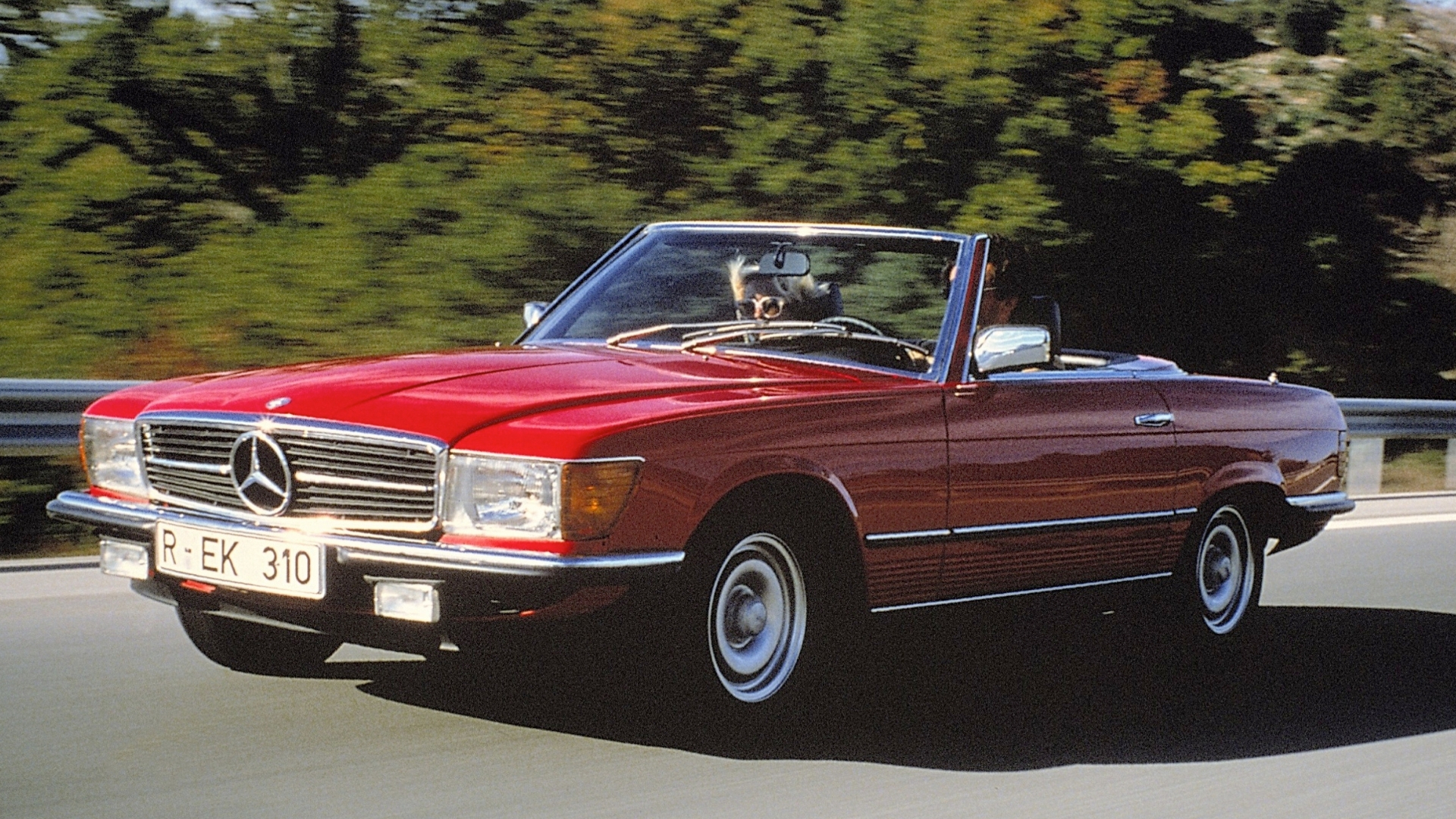
But it isn't. What began as a solid-gold long distance racing car, the Gullwing, became the delightful-looking sporty Pagoda, then morphed into this third generation, which was a bigger, softer cruiser. Never really a driver's car.
But don't be sad – and put Bobby Ewing out of your mind. People adored it. For good reasons.
The R107 lived from the start of one decade, 1971, to the end of the next, 1989. It sold nearly a quarter of a million copies. Which is extraordinary given its new price in its early days was nearly double an E-Type's. It set the template for later SLs: safe, comfortable and technically accomplished. And as a classic, it's very easy to own.
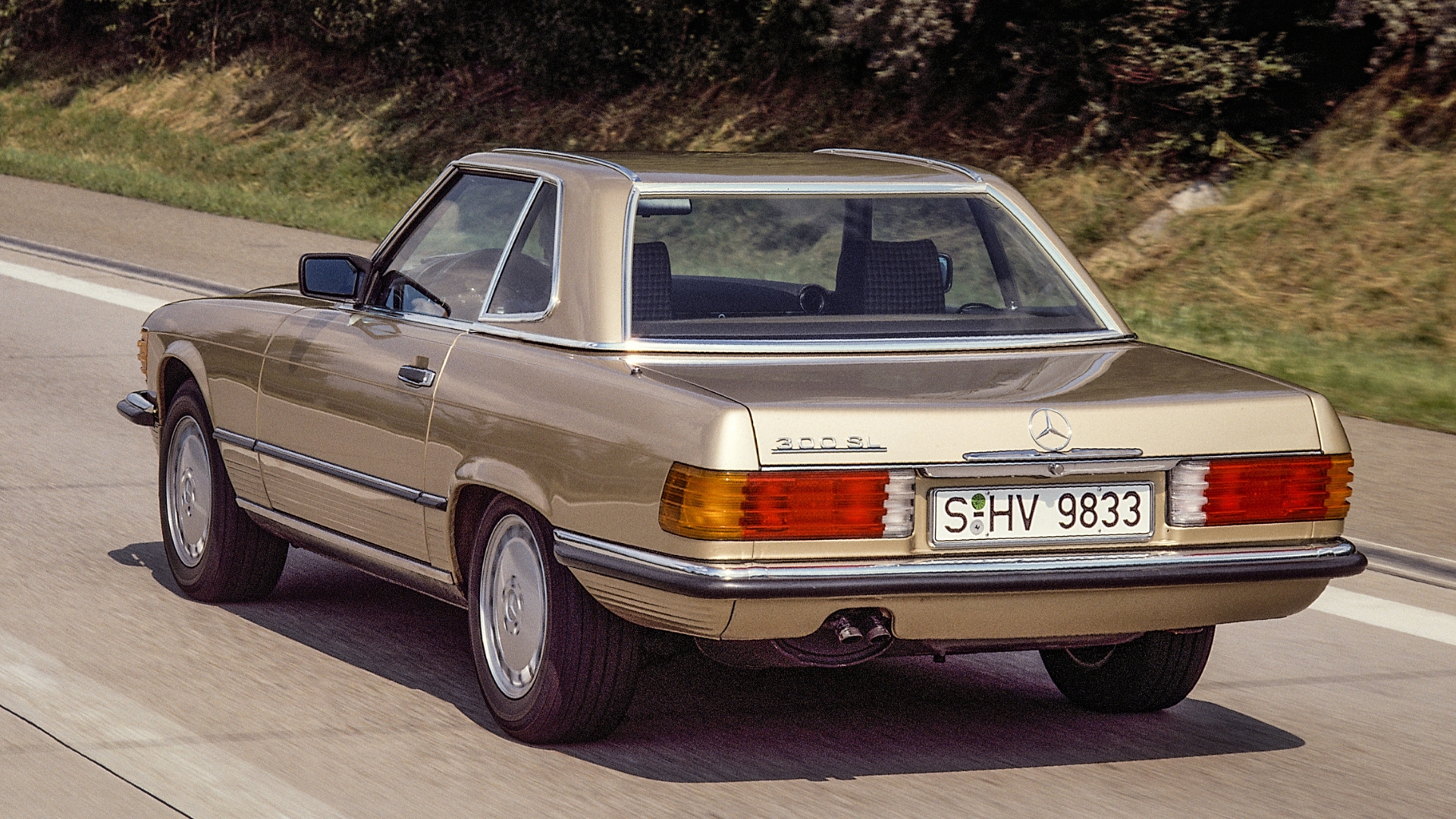
The format didn't change over its life and facelifts were minor. It was a steel-bodied convertible. A removable hardtop was often optioned, but the fabric roof was superbly protective and lived neatly under a metal cover, which made the erection task a little effortful. It was operated by human muscle, not electro-hydraulics.
Power came from various super-tough straight-six (M110 family) and V8 (M116/117 family) engines, with autoboxes of four then three then again four speeds, and some four-and five-speed manuals. Forgive me for not name-checking them all; there were multiple versions over the lifetime of the car. That includes some for specific markets: the late-model big-dog 5.6-litre V8, for example, was never sold here and was actually less powerful than the 245bhp 500SL that we got.
All had rear-drive and independent suspension. The underbody engineering came from the 1968 W115 mid-size saloons, the ones with vertically stacked headlamp clusters. The succeeding W123 saloon used much the same chassis by the way, so it wasn't old-fashioned, but rather incredibly well-proven and robust enough for thousands of half-million kilometre German taxis.
The SL was really a two-seater, its rear seats not even worth calling +2. The backrest folded down to make a luggage shelf. There was also a very decent boot, so you could park roof-down with your stuff locked away.
The SL's front chairs were big and squishy. Which set the tone for the drive, as we'll see. Facing you, a vast steering wheel and three big round clocks, blissfully easy to read. The leftmost dial which had three sub-gauges for fuel, temperature and oil pressure.
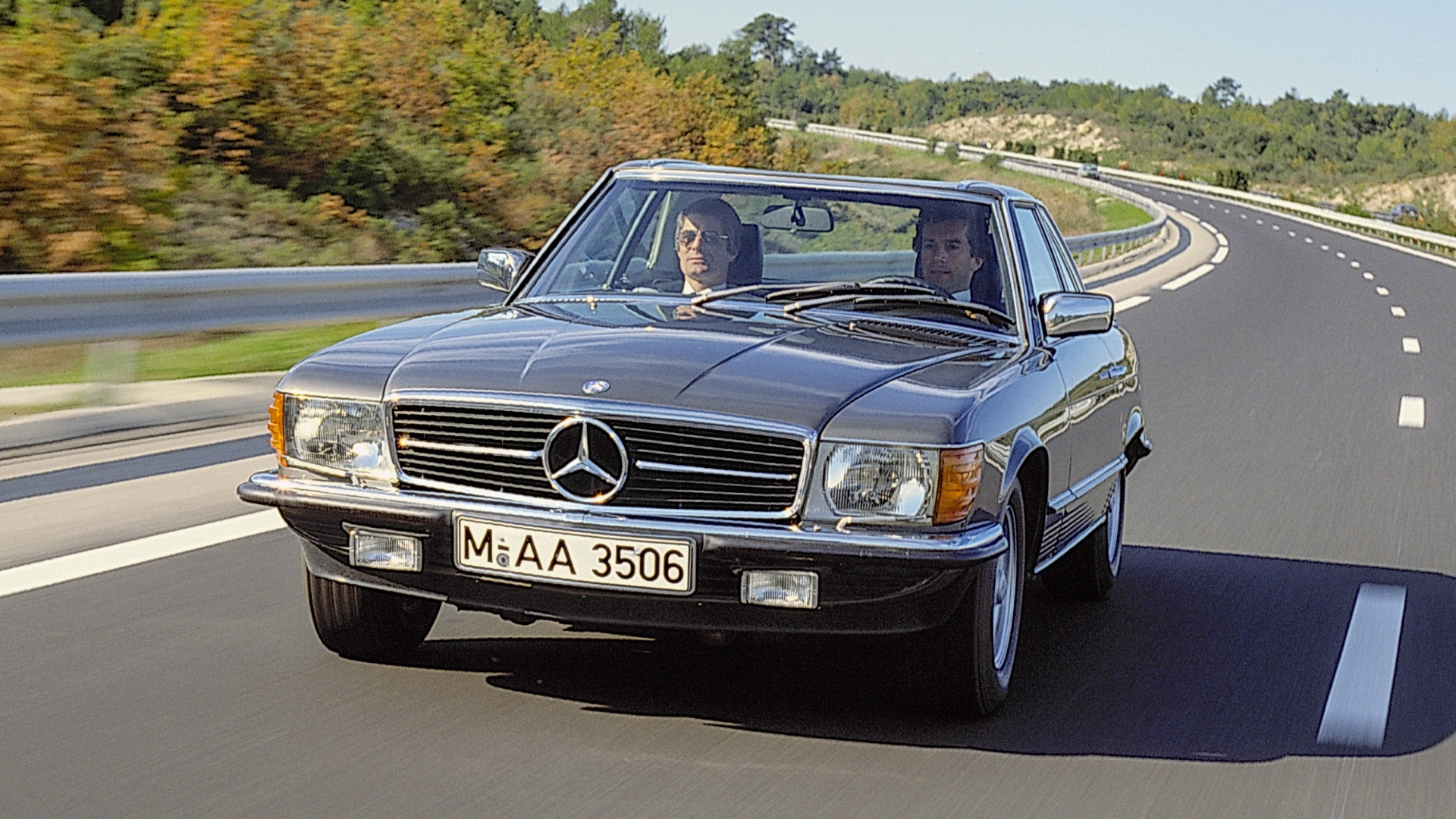
The abiding impression left, as always with Mercedes of that era, is of brilliant quality. No fripperies, just po-faced solidity. Doors thunked shut, switches and levers were tough, the body panels thick and immaculately fitted, the whole structure rigid.
Get all the latest news, reviews and exclusives, direct to your inbox.
One other actually. Alongside the R107 for its first 10 years was the C107, badged SLC. Its near-identical below-the belt styling added a pillarless roof with distinctive gills in the rear side glass. It was super-elegant confection with usable rear seats, because the wheelbase was 36cm longer.
Oh, and a big-engined lightweighted 5.0-litre SLC was built to homologate in rallies. You won't be surprised to know the endurance events like the Safari suited it best.
Fine for the era, but let's say 'stately' by today's standards. The range of performance was surprisingly narrow. There were no 6.9s or smokin' AMG variants. The 280SL in different specs over the years came in either side of 180bhp, and the V8s were between 200 and 245. Plus the sixes were lighter. So the 0-62 times hover between the low eights and high nines.
All engines are smooth, but as was the Mercedes way in those days, they weren't meant to be characterful. Their audible nature was to stay in the background. Exhausts were muffled, and because of fuel injection there wasn't carburettor-type induction roar either.
Neither were they meant for big revs – remember they were designed for 1970s Mercedes saloons. So you sat in the torque curve and allowed the autobox to take care of things. The early four-speed auto wasn't that smooth; later ones restored the decorum.
It was happy at high speed, with very little cockpit buffeting and good stability.
As I said at the top of this review. It's a car that liked to waft. The ride was pillowy soft. The 14in wheels wore tall-walled tyres and the springs were low-rate, so sharp bumps were sponged away. The damping was pretty free too, which allowed the springs to flex over bigger bumps, but it did mean things could get properly floaty, both on successions of crests and dips or a series of quick steering inputs.
(That said, the suspension was firmed up a little for the 1985 facelift, along with lower-profile tyres as the wheels grew to a stupendous 15in diameter.)
In corners you're twirling that vast wheel. Mercedes was among the last to move from recirculating ball steering boxes to the more precise and tactile rack and pinion. An SL system, properly adjusted, wouldn't have free play, but there was precious little road feel. Power steering lightened the load but added another layer of masking.
So yeah, body roll, float, blasé steering… sounds like a nightmare. But don't jump to conclusions. The suspension fundamentals were very correct, so it was a car free of bad manners even if you pushed it. That added to the general sense of security and indeed superiority.
To own it's relatively straightforward, as the parts industry – Mercedes' own and the independents – flourishes. High mileage just isn't a barrier to an SL that's been cared for.
To buy, you need to be careful of rust. You can always rebuild a steering box, re-bush the suspension, or swap out electric bits. But the SL has a horrid reputation for rust right in the bodyshell's heart: the bulkhead. Get it looked at by someone who knows what they're doing before you buy, or you might be facing surgery with both engine and dash pulled out.
Newer cars have a better chance against this enemy, first because rust protection got better in 1980 and again in 1985. Secondly because newer cars are, well, newer.
This SL generation went from new to classic without really passing through the used-car naffness phase. It remains straightforward and elegant and never chased fashion. An almost unparalleled depth of engineering has carried it into the long term.
It's a lovable addition to any road. It's not flash, noisy or silly-fast and so it discourages you from being those things. It's the grown-up in the classic roadster room.
Get all the latest news, reviews and exclusives, direct to your inbox.
