

the cheapest
115kW Allure 58kWh 5dr Auto
- 0-62
- CO20
- BHP154.2
- MPG
- Price£30,930
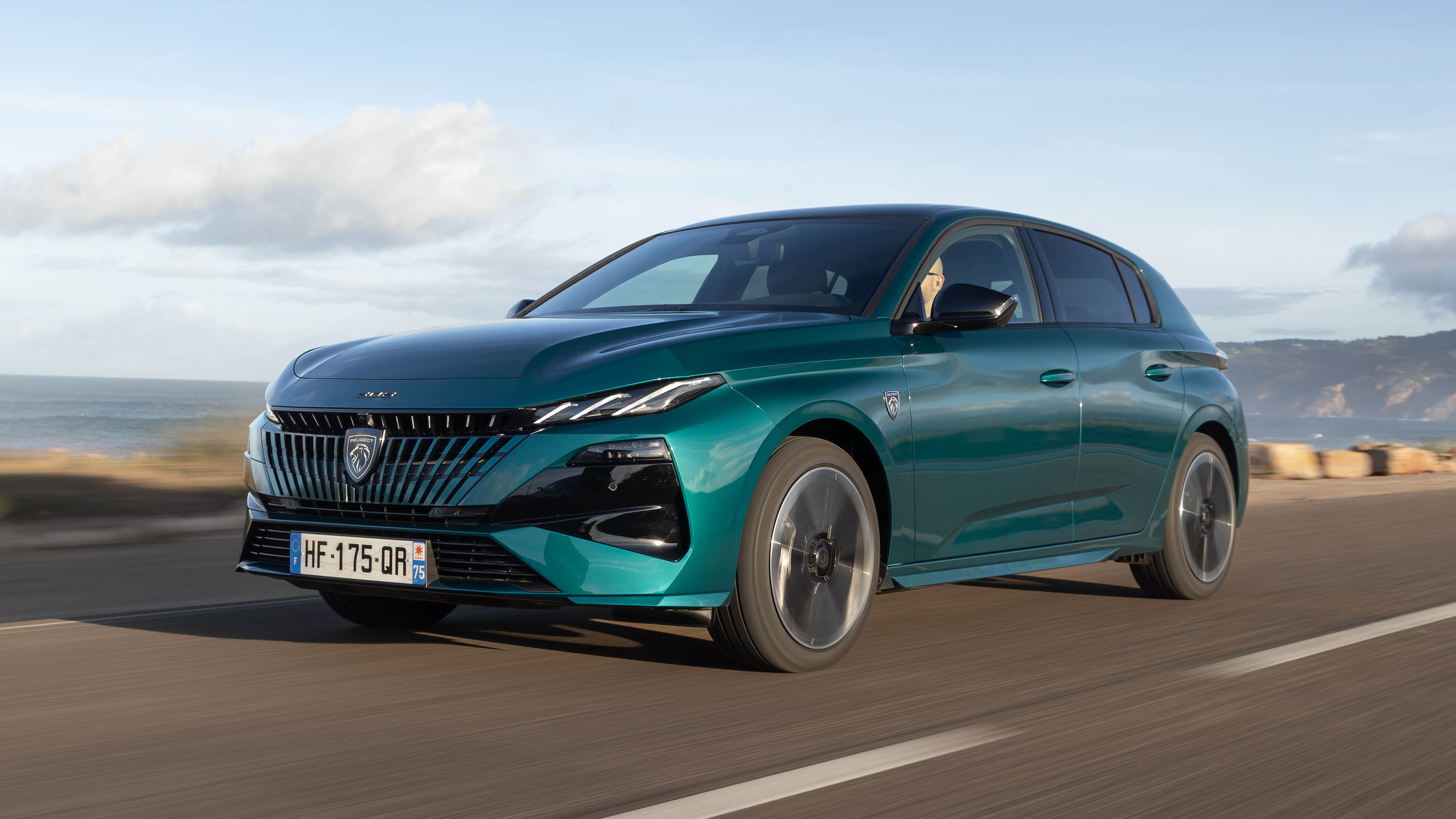
Peugeot puts this same powertrain in the E-2008 crossover, and the lower slung seating position of the 308 is immediately more appealing if even a fibre of your being enjoys the process of driving.
Curiously that E-2008 is a bit quicker to 62mph, with lower weight likely responsible. But at around 1.7 tonnes the E-308 still sits at the lower end of the EV spectrum, even if it’s several hundred kilos heavier than a standard 308.
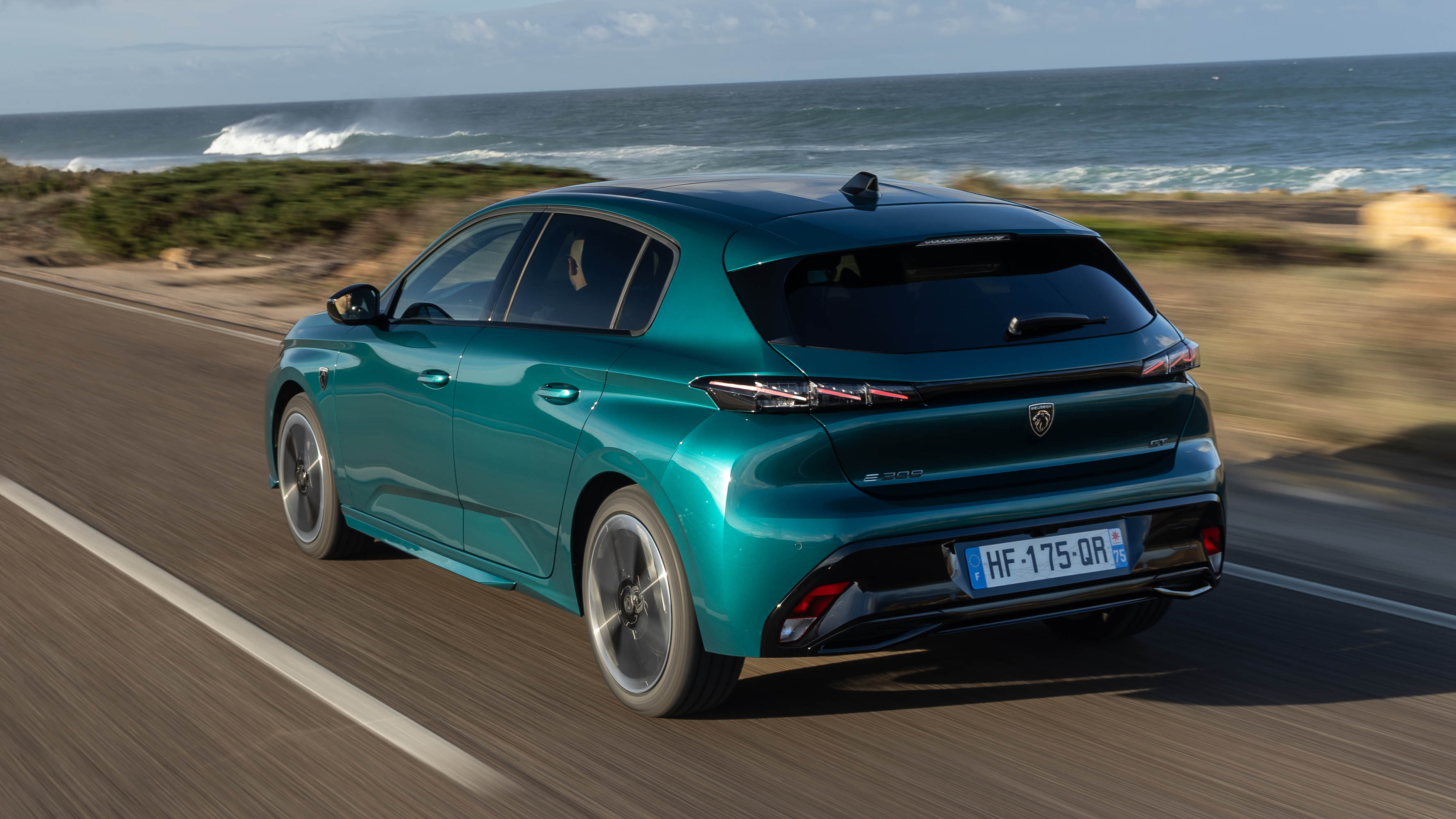
Its modest weight (relatively speaking) and low ride height beside countless crossover rivals ensure it’s among the more satisfying cars to drive in its class, with a pretty smooth ride over challenging, undulating roads. Even if it proves a bit fiddly at low speeds on those mighty 18in wheels. Refinement benefits, too, and you’ll slink along at motorway speeds suffering much less wind noise and tyre roar than taller EVs can subject you to. While it borders on ‘fun’ on a good stretch of road, it’s the E-308’s effortless stride everywhere else that will really satisfy.
You might get a bit of wheelspin in Sport mode, but overall the E-308 lacks the oomph you might expect from an electric car. It’s certainly brisk enough once you’re up to speed, however, and it’s adept at short bursts of acceleration out of junctions or during (well planned) overtakes. It slips into everyday traffic easily without ever feeling like a true firecracker.
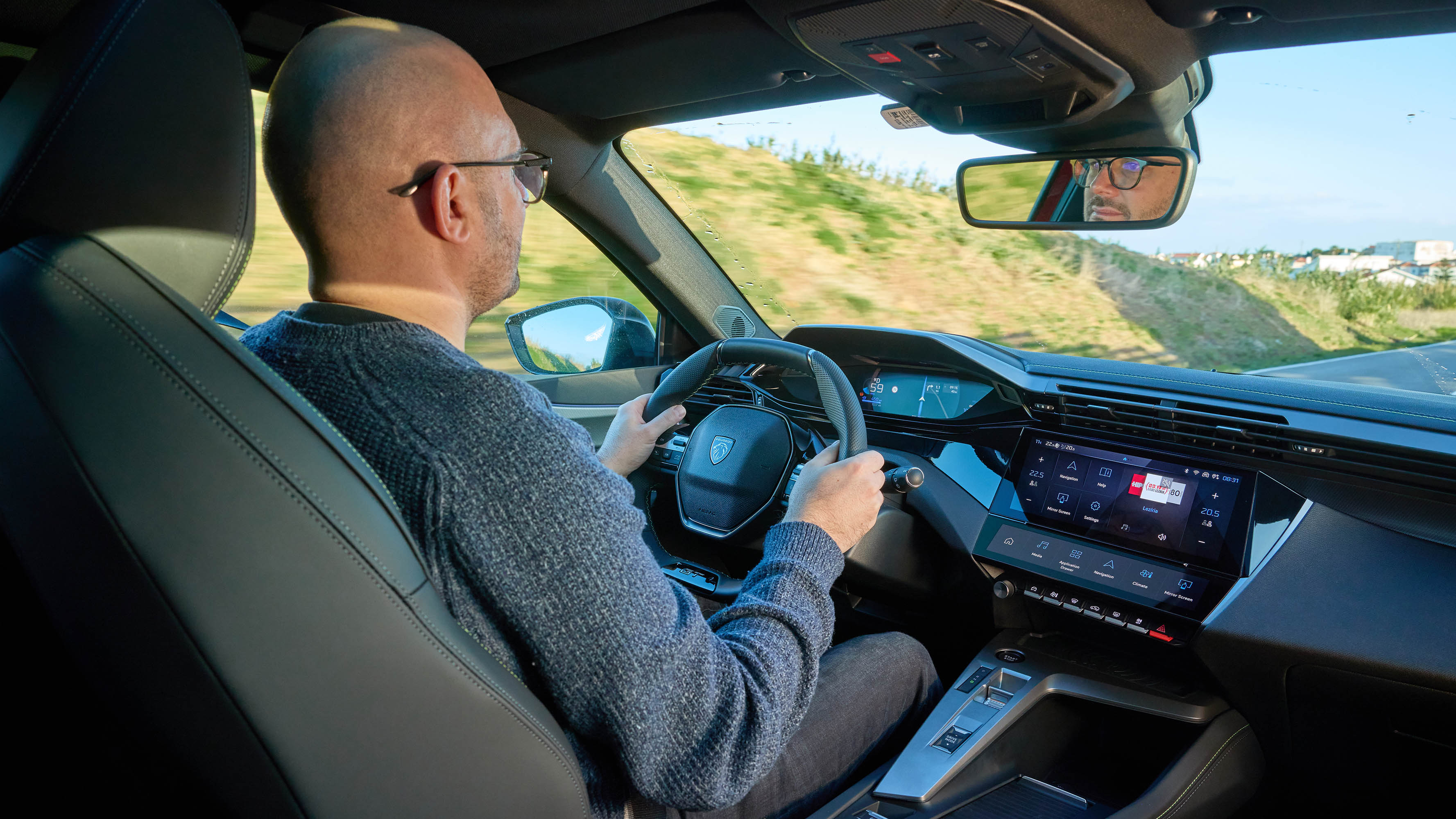
You have the choice of three driving modes – Eco, Normal and Sport – with a different power output for each, the full 154bhp saved for Sport. Which also brings the sort of stickier, heavier steering map we usually dislike in such modes. You can’t hook the lighter, more pleasant steering up with the punchiest power output, either. Stick with Normal and you’ll have a nicer time while also eking out the range. Eco not only limits power, but the punchiness of the climate control.
The E-308's official range has risen from 254 to 279 miles (or 275 if you’ve gone for the 308 SW estate). Peugeot claims 4.2 miles per kWh on the WLTP cycle and we achieved 4.3 on a mixed route with a bit of eagerness to our driving. Which bodes even better for its performance when you’re driving it, y’know, normally.
Enriching the experience further is the updated car’s three levels of brake regen, adjusted through the steering wheel paddles. They neatly counteract a quirk of the outgoing E-308 – its timid ‘B’ mode – and allow you to imprint a bit of your own style on the car, but it operates equally well left to do its own thing. Shame there’s no one-pedal setting, mind.
The Peugeot E-3008 crossover boasts a 320bhp Dual Motor variant, but it also sits on a fresher – and notably heavier – platform and is unlikely to bequeath its powertrain to the smaller E-308. But there’s a GTI revival within Peugeot, and a bunch of its Stellantis range mates have been sticking 276bhp power through their front axle. This is a quietly satisfying car in its current form, but let’s hope this (or a future generation of E-308) gets a proper hot hatch glow up, too.
Get all the latest news, reviews and exclusives, direct to your inbox.