



25
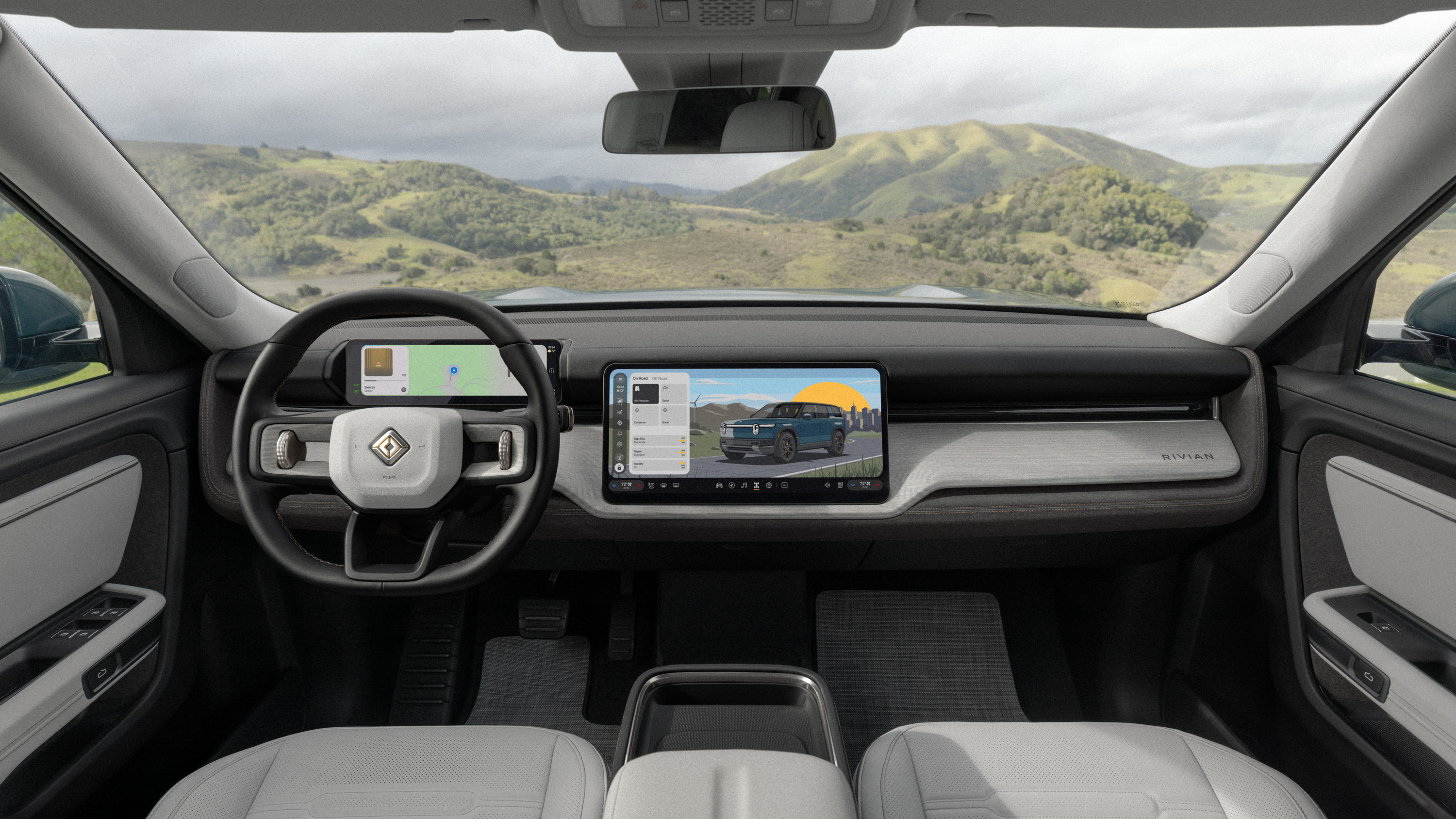
Rivan’s taken care to keep the R2’s cabin as streamlined as possible while still being versatile for a number of tasks. As such, the airy interior is thoughtfully composed (with air vents you can adjust manually – wow, so it can be done), made up of robust materials that bring a sense of style while handling the wear and tear of adventures great and small.
Behind the front row is a cabin with a substantial amount of headroom and legroom to match, which we’re sure will be a relief to you taller folk. All the way back is 28.7 cu ft (813 liters) of storage space which can be extended to 79.4 cu ft (2,248 liters) if you need to haul more cargo, and it’s all designed to lay flat if you’d like to use that place as a camping shelter instead. You could also always tuck a few things in the 5.2 cu ft (147-liter) frunk, if need be.
All told, it’ll seat four comfortably, only getting cramped when you try to muscle in a fifth rider.
Perhaps the biggest indicator of the R2’s focus on road driving is the lack of grab handles, of which the R1 has plenty. Don’t let that stop you from taking it off-road, though. The panoramic sunroof and superb outward visibility makes the Rivian a wonderful viewing platform for safaris, urban or otherwise.
Buttons? Yeah, we’re missing a few classics here. Rivian has been unwavering in its vision of an ideal cabin, and so most functions live within the 15.3-inch touchscreen, or can be manipulated with the new haptic halo wheels. These scroll through dynamic menus and can click in different directions for a multitude of functions. They take some getting used to, as they have a few fixed inputs, but it’s not always clear which ones they’re paired to at the time.
They’re also quite pronounced, and in fast-hand situations like hitting a sequence of corners, it’s easy for your meathooks to palm them or otherwise send them flipping through settings at an inconvenient time.
Dense. Like the droid it shares a name with, the R2 is a robot on wheels. There’s a too-long list of hardware components that include multiple cameras, radar sensors and AI-powered processors on hand to give the R2 capabilities beyond the average utility vehicle. Drive assists include a hands-free driving system that can function on any marked road, though it’s up to the driver to stop at lights and signs, which is kind of important. On the highway, it’s not dissimilar to GM’s Super Cruise or Ford’s Blue Cruise, apart from their reliance on mapped roadways.
Google integration means navigation and entertainment are covered, so no need for Apple CarPlay or Android Auto overlay, which Rivian bristles at. You can’t really blame it, seeing as how – we’ll say it again – dense the menus are. It would be near impossible to offer up the same level of functionality if your phone was taking over the dash. The menus are also really pretty, we’ll admit.
You’re still beholden to them when it comes to simple tasks like mirror adjustments or air vent orientation. Sure, the first thing any Rivian spokesperson will tell you is these are things you set once while you build a driver profile, but it’s only half true, and there are more than a few examples of things that take more attention than they should in the Rivian interface. The R2 has two glove boxes now, though. We’ll take what we can get.
Get all the latest news, reviews and exclusives, direct to your inbox.
