



Car Review
Rivian R2 (US) review
Advertisement
“The R2 is an excellent starting point for Rivian’s second age – it fully delivers on its promise of a dutiful daily EV equipped for weekend excursions. Could be more user-friendly, though”
Good stuff
Planted and firm ride, easy to take off-road, superb outward visibility
Bad stuff
Clunky and distracting interfaces, halo wheels prone to accidental inputs, steep learning curve for newbies
Overview
What is it?
It’s the R2, the latest vehicle from the rugged overlanding EV automaker, Rivian. After launching with the highly regarded (and Top Gear Award-winning) R1T pickup and its SUV variant, the R1S, it’s second album time. All eyes are on Rivian’s sophomore offering, particularly now that it’s priced to appeal to a broader consumer base instead of just techbros with crypto to burn.
The R2 is smaller, more accessible and meant to better balance daily-driving duties with weekend off-road adventures.
Advertisement - Page continues below
So instead of the R1S, it’s the R1… less?
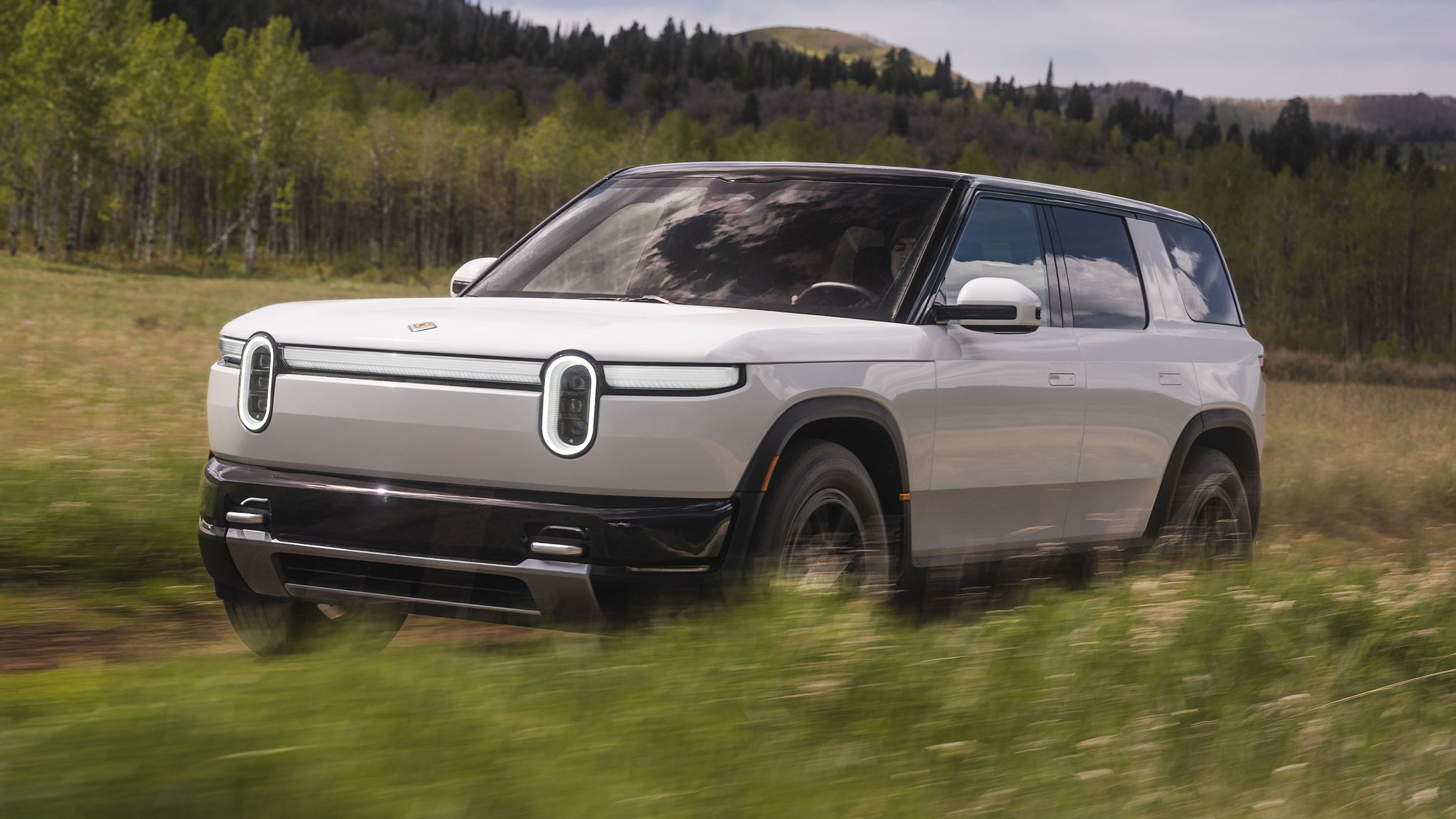
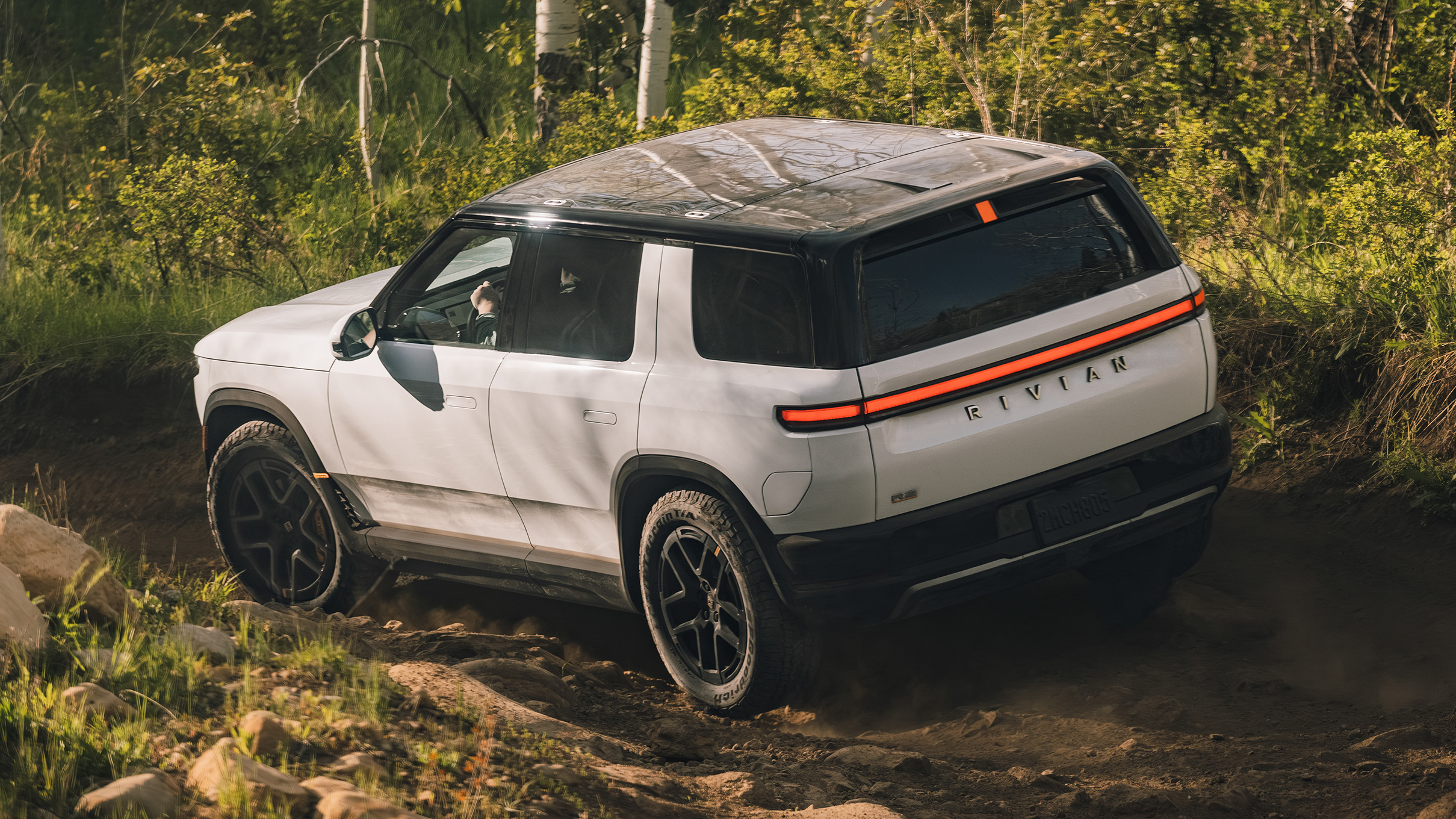
You’d think so, especially at first glance. Indeed, to the untrained eye, the R2 looks like an R1S that’s slightly further away, but once you get familiar with it, you’ll notice the more compact proportions and how it all balances out.
Mind you, the R2 is small only in comparison to its older sibling. In living daylight, it’s a substantial mid-size SUV with a great deal of cabin space and built-in utility, along with a healthy dollop of what makes a Rivian a Rivian, warts and all.
Gimmie the deets.
At launch, we’re getting the best the R2 has to offer in the form of its Performance trim. This one’s equipped with a motor on each axle, providing all-wheel drive, 656hp and 609lb ft of torque. Rivian states this can sprint from 0 to 60mph in 3.6 seconds, though liberal use of launch control will surely eat into the EPA-estimated 330 miles of usable range it provides. Sans fees, the Performance model comes in at $57,990.
Premium is up next. Similar to the Performance, it’s got the same dual-motor AWD set-up, but with 450hp and 537lb ft instead. It may be a second slower off the line, but it's also $53,990, so we can probably chalk up the disparity to all that extra money in your wallet weighing it down.
Advertisement - Page continues below
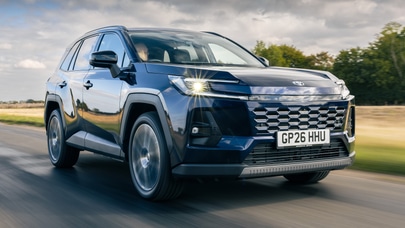
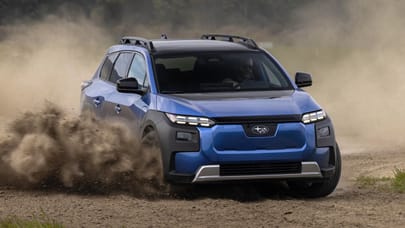
Lastly is the Standard model that’s coming around next year. This is a single-motor RWD version good for 350hp, 355lb ft and 345 miles of range with the aptly-named long range version. Just $48,490 for this one. So it’s either this, a Tesla Model Y, the Toyota RAV4 or, if we’re strictly speaking crossover-sized EVs that can off-road, the Subaru Trailseeker.
All R2s come with 87.9kWh of usable battery power, though a more affordable RWD model with around 275-ish miles of range is slated to arrive next summer for $44,990 and likely a smaller power pack. All versions are built with native NACS ports, and on the appropriate station, it can replenish 150 miles of range in 15 minutes.
How does it drive?
The overall road experience with the R2 is very flat. It’s smooth and even-keeled, and the going has to get very rough to properly upset the cart. Absent on the R2 is the independent air suspension featured on the R1s that, among other things, dynamically change the ride height of the vehicle. Instead, the R2 Performance model sports a more traditional coil suspension over electronic dampers that respond to changing road conditions.
This “semi-active” suspension set-up plus the unibody construction amounts to a very solid-handing utility vehicle that eats bumps for lunch and reins in the body roll, even through a series of switchbacks.
How about off-road?
True to the attitude of the Rivian brand, the R2 can handle a decent amount of off-roading, despite the capability split leaning closer towards overall street use. This is to say don’t expect R1-like rock scrambling. Its capabilities are more comparable to what we’ve seen in the likes of the Ford Bronco Sport Sasquatch or the most recent Subaru Outback, in that it will handle some of the more challenging trail roads, though you’ll likely need to skip the truly difficult trails.
For more detail, click through to the Driving section of this review.
What if you, uh, don’t want to drive?
There have been drive assists in every Rivian so far, and the R2 is no exception. Where it differs – currently – is that it’s equipped with the latest gear setting itself up for as close to full point-to-point hands-free driving as possible. Much of this is thanks to the AI-driven…
Wait, wait, wait… there’s AI in this thing?
Kind of a lot, actually. We might as well address the digital elephant in the room: there’s a ton of AI computing happening in the R2. Upfront, we’ll say that the Rivian collects what’s mathematically referred to as an “F-ton” of user data, all sent to the cloud to build out models based on your driving behavior. We’ll also say that drivers can opt out of all of these via a menu, and any collected data is encrypted. Take that as you will.
Per Rivian, the R2 is set up with “200 sparse TOPS of edge AI compute” (please write to us if you know what this means) which is in service to the autonomous driving systems as well as the Rivian Assistant, a voice-command function meant to seamlessly handle a number of tasks in the car and out of it. You could ask it to change in-cabin settings or, when paired with things like your Google suite of services, arrange things around your life.
For instance, the R2 could theoretically detect a system error and schedule its own service appointment based around your personal calendar appointments. You could also give it a string of commands like “I want directions to a half-decent sushi spot by the water and I’ve got to pick up flowers on the way” and it’s meant to sort all this out for you.
What’s the interior like?
In keeping with the Rivian design philosophy, the R2’s interior is streamlined, with natural elements accenting the tidy, airy cabin.
A 12.3-inch digital display sits behind a steering wheel that now features new haptic ‘halo wheels’ which act as kind of a half-measure between the mostly digital inputs and the physical buttons we’ve become accustomed to. The centerpiece is the 15.3-inch screen which almost all car functions are fed through. It’s just as robust here as it is in the R1, which is to say it’s dense with menus, all with varying degrees of usefulness.
What’s handy is that there’s now a tutorial for new drivers that walks you through most of the key features as you set up your profile with seat and mirror preferences, among other things. What’s less handy is that we’re now at a stage where we need a set-up tutorial.
What's the verdict?
“The R2 as a vehicle is top notch… even if it might need more setup than a MacBook Pro”
The new Rivian R2 is a very composed, modern utility vehicle that’s as capable on and off the road as it is comfortable throughout. It’s also jam-packed with tech designed to enhance the driving experience while elevating the aspects of your life adjacent to driving. Most of our frustrations with it come from the steep learning curve of getting to grips with it all, but that aside the R2 comes out of the gate as a solid product.
And fair play to Rivian for making the R2 the way it wants to. But with a lot riding on its appeal to a more broader, less tech-forward customer base (that tends to be guarded with their hard-earned cash), some of the more ambitious functions could be potentially off-putting. That being said, the R2 as a vehicle is top notch… even if it might need more setup than a MacBook Pro.