



25
Skoda Elroq Estate
340 miles
1cc
335.3bhp
5.4s
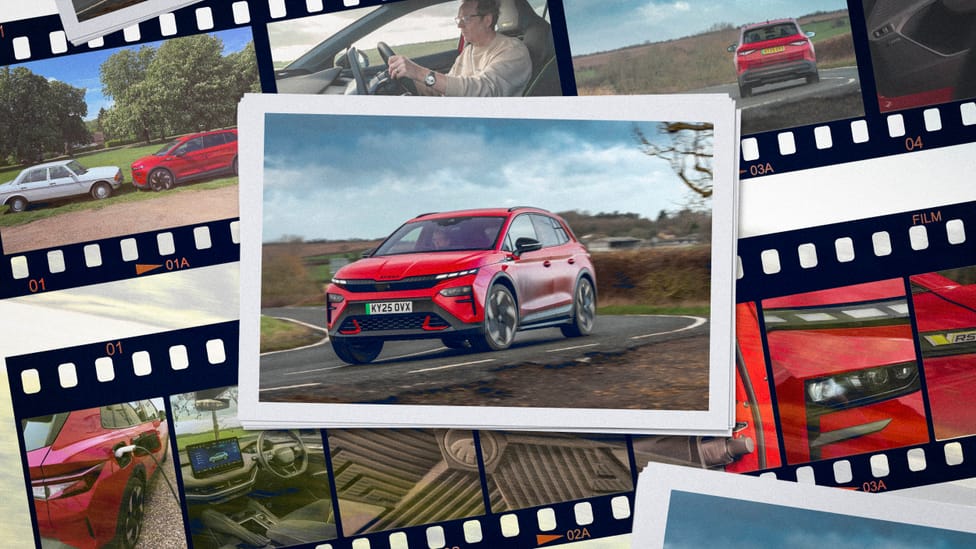
Conclusions after seven months? Škoda’s marketing guys won’t thank me for this, but the Elroq vRS is a comfy pair of shoes kind of car. Wait, though. In my case, those’ll be Nike Air Maxes (I have many pairs), because a lingering metatarsal injury on my right foot requires soft but not quite orthopedic and certainly not non-stylish footwear. How’s that for an analogy?
As the TG Elroq vRS exits stage left, respect hasn’t turned to love exactly, but there’s deep admiration here nonetheless. This might even be the best EV overall in the VW group portfolio. That’s partly because I’ve long liked the cut of Škoda’s jib, and its generally no-fuss approach.
The vRS risks diluting that honesty with faux hot hatch aspirations, but actually they’ve judged it really well. Because it genuinely does feels like a hot hatch, just one fuelled by electrons. It also has character, the commodity that every car maker is desperately trying to locate for its EV products. The vRS styling mods amp up the visuals the right amount; there’s no need for the optional 21in wheels.
The driving interactivity part comes down to how the primary controls are calibrated. And the amount of power that’s available. The Elroq vRS has 335bhp, which is more than enough in a car that’s a family machine at heart. No-one, particularly passengers in the rear, enjoys being pinned repeatedly to the seat cushion, and good driving is as much about keeping your occupants safe and happy as it is dabbing in the oppo when the mood strikes. Fast EVs can make people feel ill. My lot are more likely to tell me to slow down than speed up.
The Škoda’s bandwidth and blend of attributes is well-judged. As ever, though, there’s arguably too much choice. Its Dynamic Chassis Control (DCC) brings with it dampers that have 15 stages of adjustment, and steering wheel paddles give you four levels of regen. All of this should help you tailor the driving experience, but have a wild guess how many times I really dipped into it…
Yep, once, for testing purposes. Normal mode is fine. The most important thing is that the car is fundamentally well-sorted, although given the effort the engineers have gone to in order to enliven the regen, the one major dynamic weak point are the wooden friction brakes. Taken all together, the vRS maybe doesn’t wholly persuade over and above lesser Elroqs for the cost, but hey, it’s dual motor. Think of it in old money and it’s a Skoda with two engines.
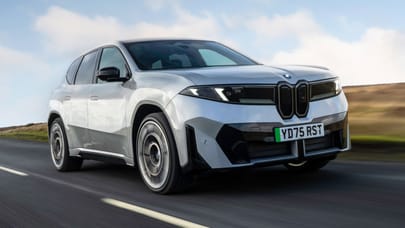
Fabulous interior, though. Again, it’s all scrupulously done. Mercedes has fumbled the ball repeatedly on this stuff as far as I’m concerned, and even BMW’s all-singing new Panoramic iDrive is arguably a little OTT (the four-spoke wheel and its buttons are a trifle try-hard).
The Elroq vRS has lovely microsuede upholstery with lime green stitching, a tactile heated steering wheel (which was useful in pre-heatwave conditions), and fabulous seats. No back-ache to report whatsoever.Only once did the infotainment refuse to talk to my phone, and the row of hard keys beneath the 13in touchscreen brings up climate control and the ADAS displays very smoothly. Lessons have clearly been learned from other applications, and in regular use the Elroq’s lack of pretence proved to be a key USP.
Its efficiency improved as the weather did, and a real-world range of 275 miles, while hardly eye-catching, was fine in practice. On a 7kW home charger, you’re looking at 12 hours for a full replenishing. I was usually doing that three times per week, taking advantage of my night-time reduced tariff.
Would I buy one? Absolutely, assuming the Skoda dealer or leasing company played ball. This is an excellent car, and one whose attributes reveal themselves unshowily over time. Not very 2026, really, which is all the more reason to appreciate it.
Get all the latest news, reviews and exclusives, direct to your inbox.
