



25
Toyota Prius
1987cc
219.9bhp
6.8s
Well, it happened. The nightmare scenario for the charging-at-home hybrid/EV driver. Particularly in the early stages of a fuel-panic. My wallbox charger packed up.
What broke it, funnily enough, was Editor Jack’s Maserati GranTurismo Folgore.
I had relegated the Prius to the kerb and plugged the big Maser in for an overnight charge. A few minutes after I’d gone to bed, something Italian and flamboyant disagreed with the charging box, which promptly died. When I needed to get cracking at around 5 o’clock the following morning, the frigidly cold Maserati had about half the range I needed. Great.
Anyway, you know the drill. I checked the fusebox breaker switch. All was well. I turned the box on and off again. I did the hard reset dance. I updated the app, deleted it, redownloaded it, and taught it to speak to my wi-fi router all over again. Sign out, sign in. The charger stubbornly refused to wake up.
Luckily, the Evec EVC01 (Britain’s cheapest home charger at the time of installation 18 months ago) was still under warranty, and after some email back-and-forth, an engineer was dispatched by the nice folks at Ascent Energy to replace a fuse which, they admitted, had become a known problem with these units.
The fix took less than an hour and came free of charge, so to speak. Since, it’s been good as gold.
In the meantime I had a two-week period living with a plug-in hybrid I couldn’t plug-in. If I’d had a full EV, I’d have been depending on the public network. But a PHEV gives you options…
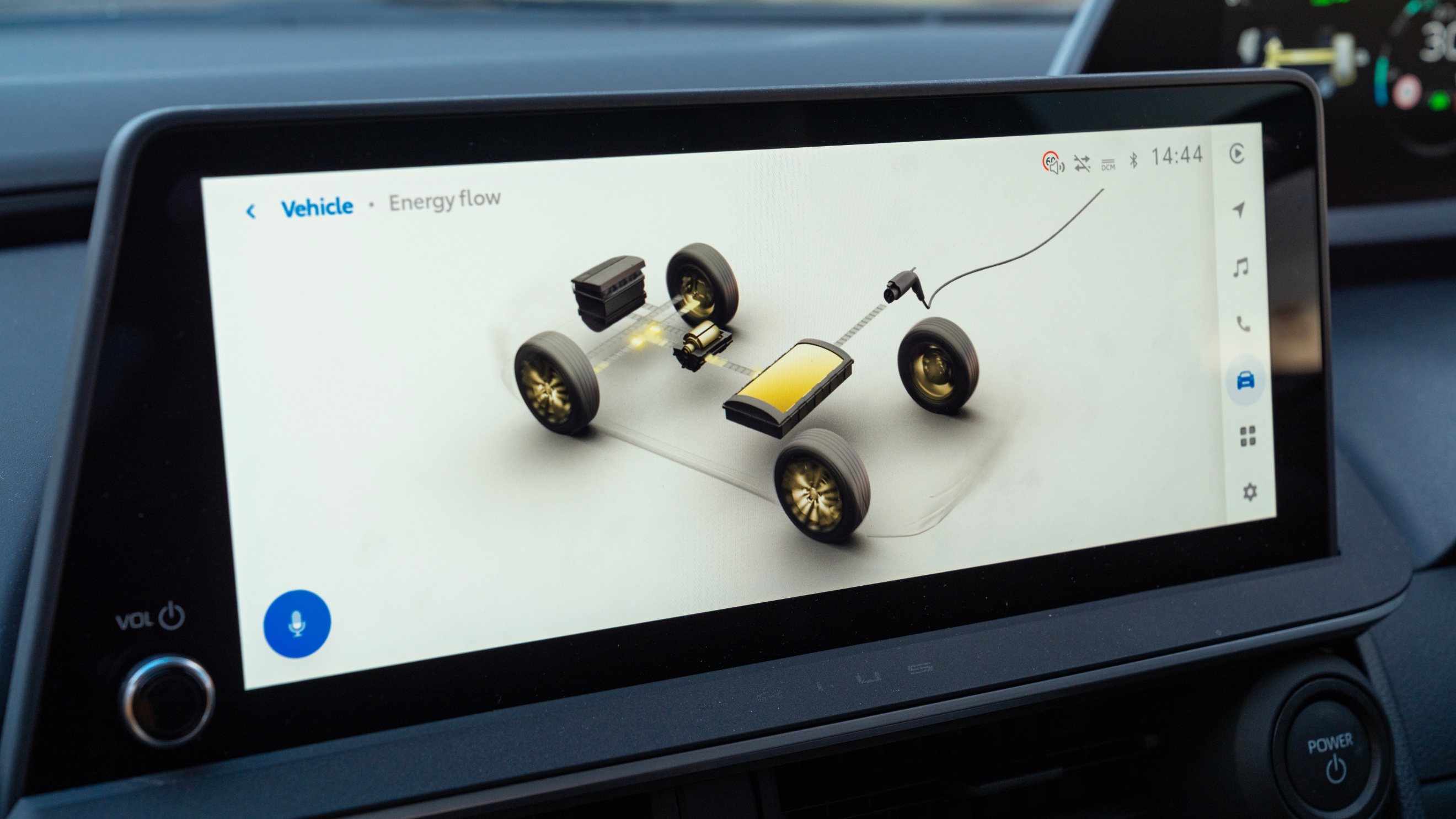
Toyota says the three-pin plug can replenish the car in four hours from a 220V household socket. Hmm. I plugged the Prius into my garage’s wall socket and the car told me to come back and unplug in six hours. Not exactly convenient unless it’s an overnight job. And I don’t want to leave my garage door open overnight.
Yes, I could’ve gone to a public charging station, but I didn’t. For three good reasons.
One: the Prius can only accept charge at a maximum rate of 3.5kW – half the rate even my home wallbox spits out electricity. So it can’t use rapid chargers and it would be trapped there for several hours. I like YouTube and doomscrolling as much as the next millennial, but there are limits to procrastination.
Two: public chargers are, as I’m sure you know, often a complete rip-off. The biggest cluster nearby, at a motorway services 20 minutes from home, costs more per mile than super-unleaded petrol.
Three: every time I’m in a depleted EV and I find a plug-in hybrid is tethered to a charger, I think the owner is the single most selfish person on the face of the Earth. You’ve got an engine. What are you doing taking the place of a car that needs a charger?
So, a fortnight in a purely petrol Prius. Observations? Well it’s amazing how much the supposedly depleted battery insists on silent, all-EV running around town. Below 10mph the car would regularly shut the engine off. Parking was silent as the Prius always employs e-power to reverse. So as an urban car, it remains economical and very refined. Even a flat-battery Prius can be coaxed to over 60 miles per gallon.
But because I spend my motoring life plodding up and down motorways where re-gen opportunities are limited, my average settled down in the mid 50s, and I missed the lusty whoosh of e-power helping zoom the car along sliproads. Fiftysomething to the gallon ain’t bad – the car managed almost 400 miles on its ickle 40-litre tank of petrol – but somehow I hoped for more.
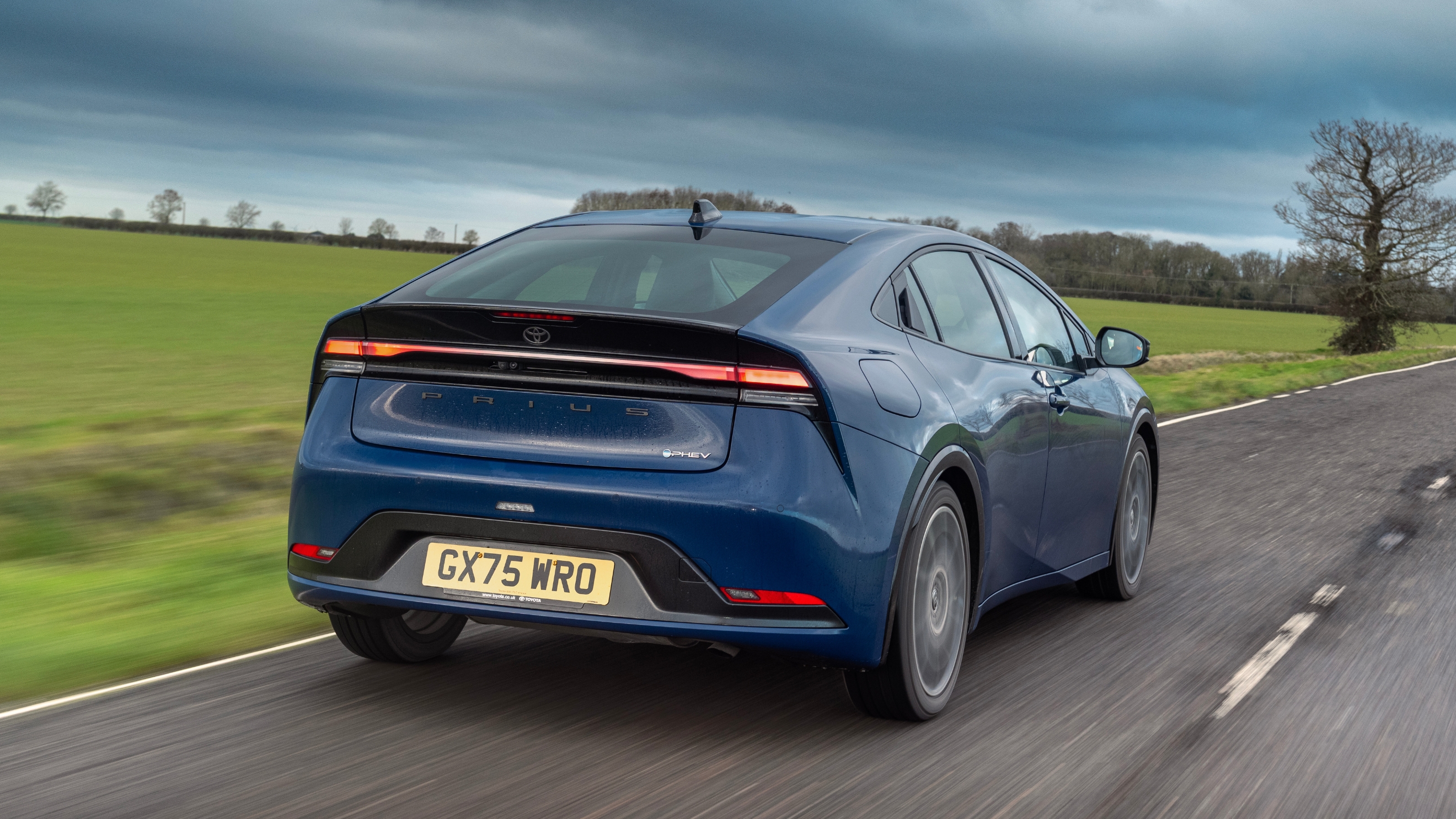
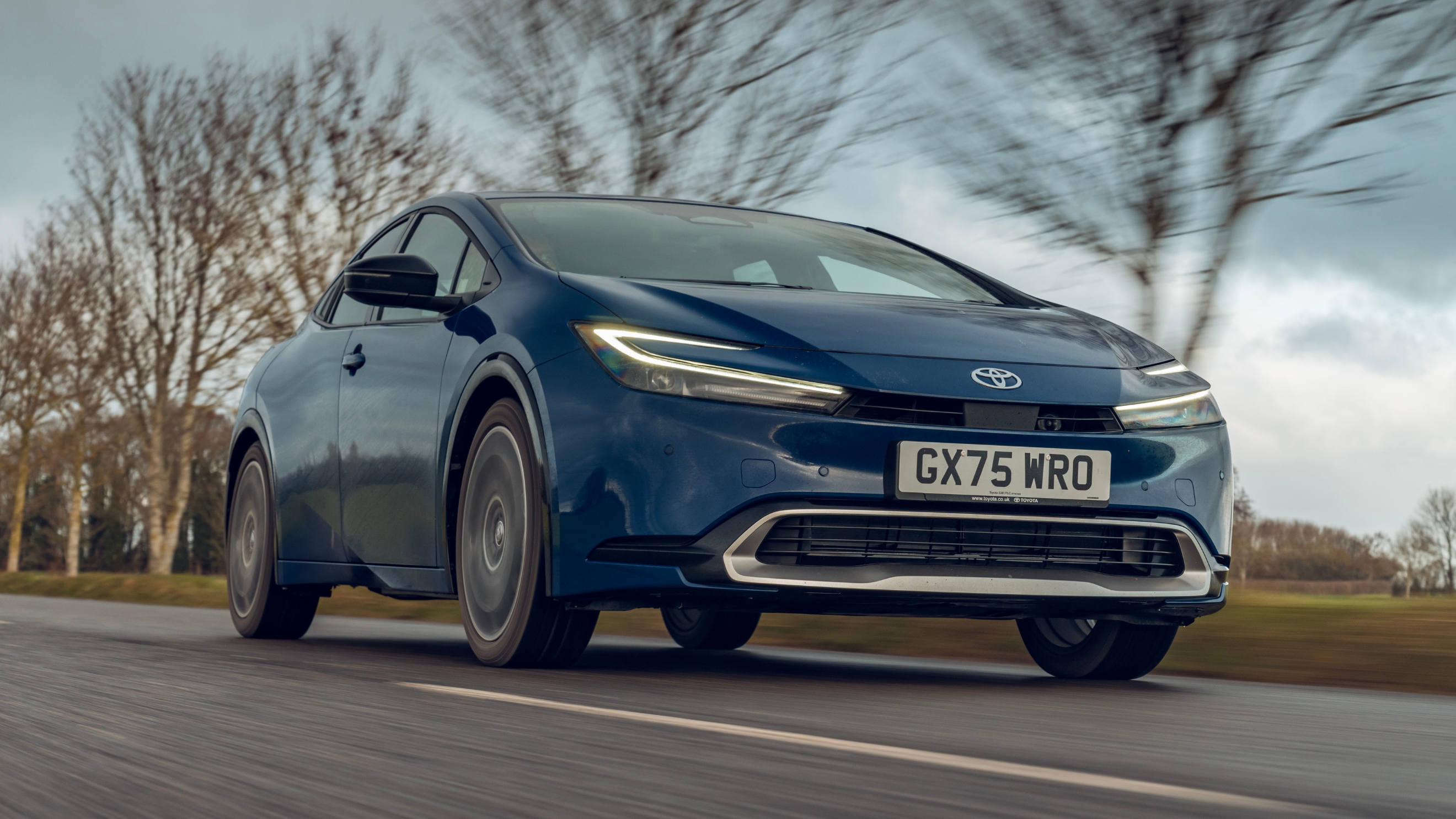
Look how streamlined the Prius is. You’re driving an eel, brimming with three decades of Toyota hybrid R&D. You’re putting up with a small boot, cramped rear headroom, and the mooing protests of an e-CVT. You’re making compromises to have the most fuel-efficient car possible, but the Prius sans-charge ended up matching mpgs with my brother’s 12-year old Golf turbodiesel. Which has a big boot. And roomy back seats.
Now the charger is back up and running, the Prius is back in its comfort zone. In a week where I need not venture 100 miles southward to the Top Gear office, the town-bound Prius is a pure EV. It pootles about with the engine in hibernation, with 160 horsepower more than adequate to make it a nippy short-range shuttle. And with a full charge costing about less than £3 on an overnight tariff, it’s extremely cheap motoring, backed up with the knowledge that should I need to be in the Scottish Highlands by nightfall (not unheard of working at Top Gear) or if my charger fritzes, there’s no range anxiety.
Ironically, with fuel prices now rising faster than a ballistic missile, I’ve now gone totally the other way. The engine never turns on. I’m running the car, as much as possible, as a pure EV. Don’t let me down now, charger.
Get all the latest news, reviews and exclusives, direct to your inbox.
