





Big Reads
'A mullet on wheels': is the Singer DLS Turbo as exciting as a Ferrari F40?
Singer's new project wants to emulate that Maranello legend. We find out if it has
There’s a Porsche 911 under there. It’s almost been consumed now, just the back bumper to go. And then, what? Well, we’ll never know, because the metamorphosis is already complete. Just a little hint of 964 left poking out the back of a monstrous gaping mouth. A piggy’s rump in the snake’s distended jaws.
It’ll drive around like this as a reminder of what it once was. A humble little sports car with two doors and four seats that lived a life until one day someone got hold of this pleasant little air-cooled device and swallowed it (almost) whole. As an analogy to the restomod business, it’s a pretty good one.
Advertisement - Page continues below
We know Singer’s work, it’s a master of the tasteful modification and restoration process, the gold standard to which all others must hold themselves. But this DLS Turbo tested us, didn’t it? Oof, it caught some flak: ‘the moment Singer jumped the shark’ some said, ‘too cartoonish’ and ‘comical’ said others. That last one I can get on board with, and when I walk round it, it makes me snort at the sheer improbability of it. Looking at pictures I’d thought it was a bit much, but out here the shapes, curves and lines resolve. It’s curiously beguiling. And faithful.
Photography: Greg Pajo
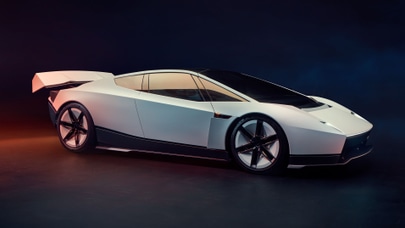

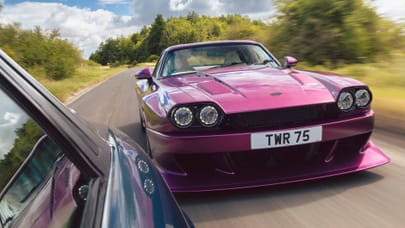
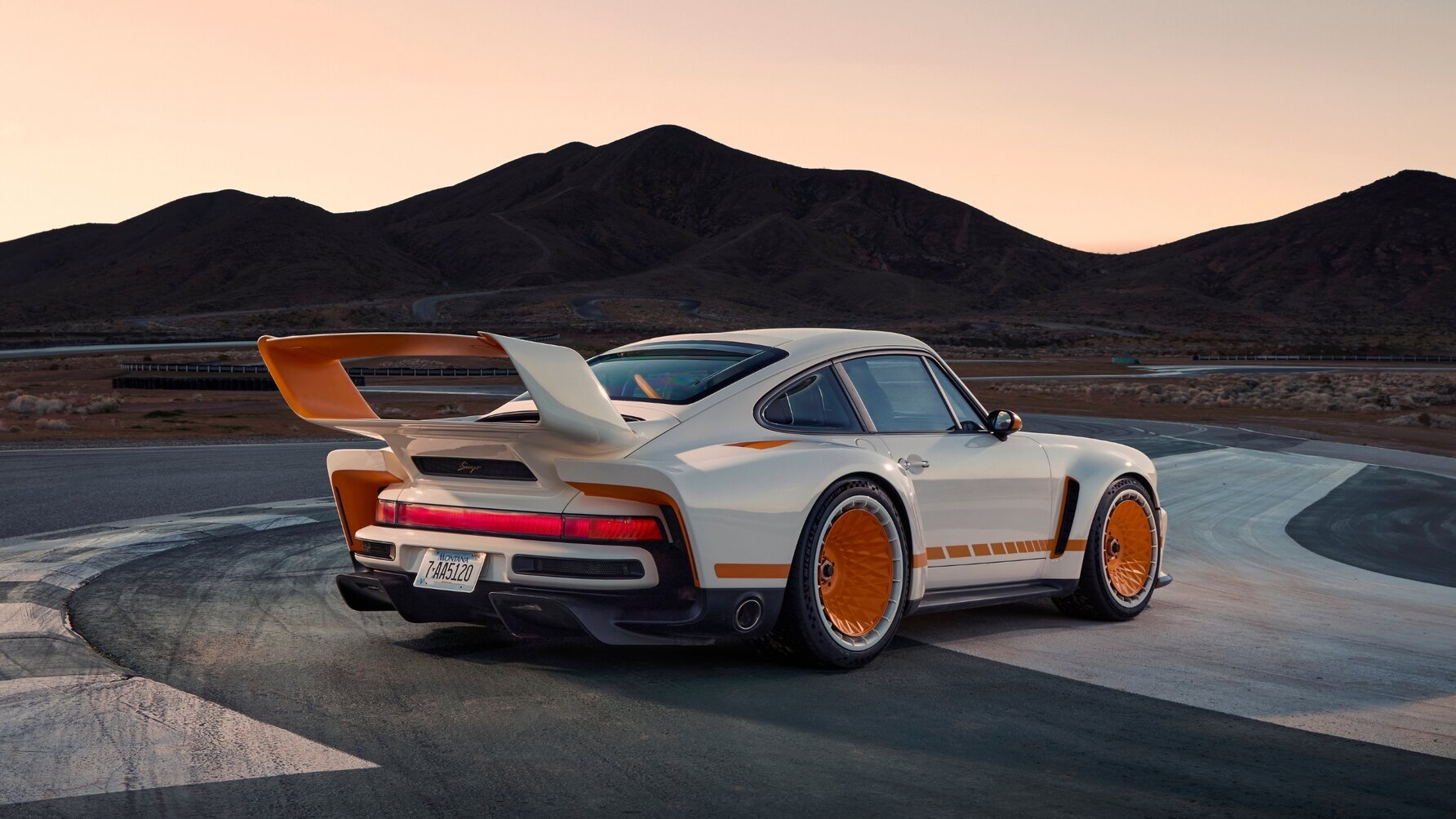
The 934/5 racer. It was dominant across 1977, a huge influence on Singer’s founder and chief designer Rob Dickinson and therefore the starting point for the DLS Turbo. It follows on from the original Dynamics and Lightweighting Study, obviously, that a paean to natural aspiration and rear-engined driving dynamics, this to those bulging muscular ’70s racers. I mean, you knew it was turbocharged just by looking at it, didn’t you?
It’s a mullet on wheels: business at the front, full width, wide body party at the back. Now, it’s tempting to think that Singer is so fixated on cosmetics that everything else takes a back seat. To a certain extent that’s true – the design comes first and dictates the engineering that follows. But the engineering is fabulously comprehensive.
Advertisement - Page continues below
The 964’s petite engine bay is packed out with the 3.8-litre flat six. There’s still a fan to air cool the engine block and that block is still original. But the four valve heads are new and water cooled, there are oil coolers as well, radiators at the front and a pair of giant monoscroll turbos, each mounted low behind a 345-width barrel of a rear wheel, exhausts venting out the side. Air is pulled in from arches, rear windows and deck lid – it takes a lot to both stoke and cool 710bhp.
But not visually represent it. Those haunches communicate everything and right now they dominate the little ducktail.
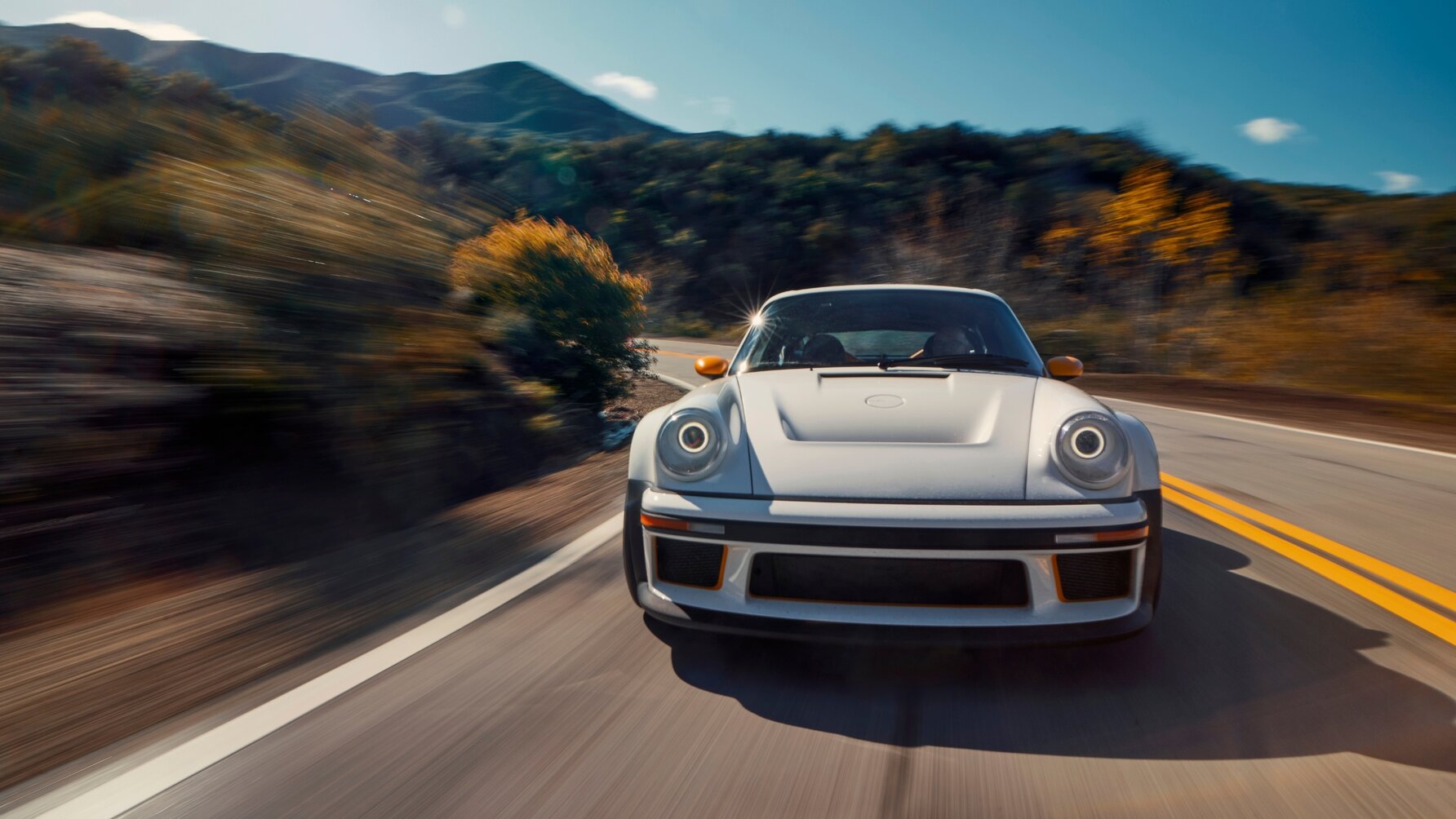
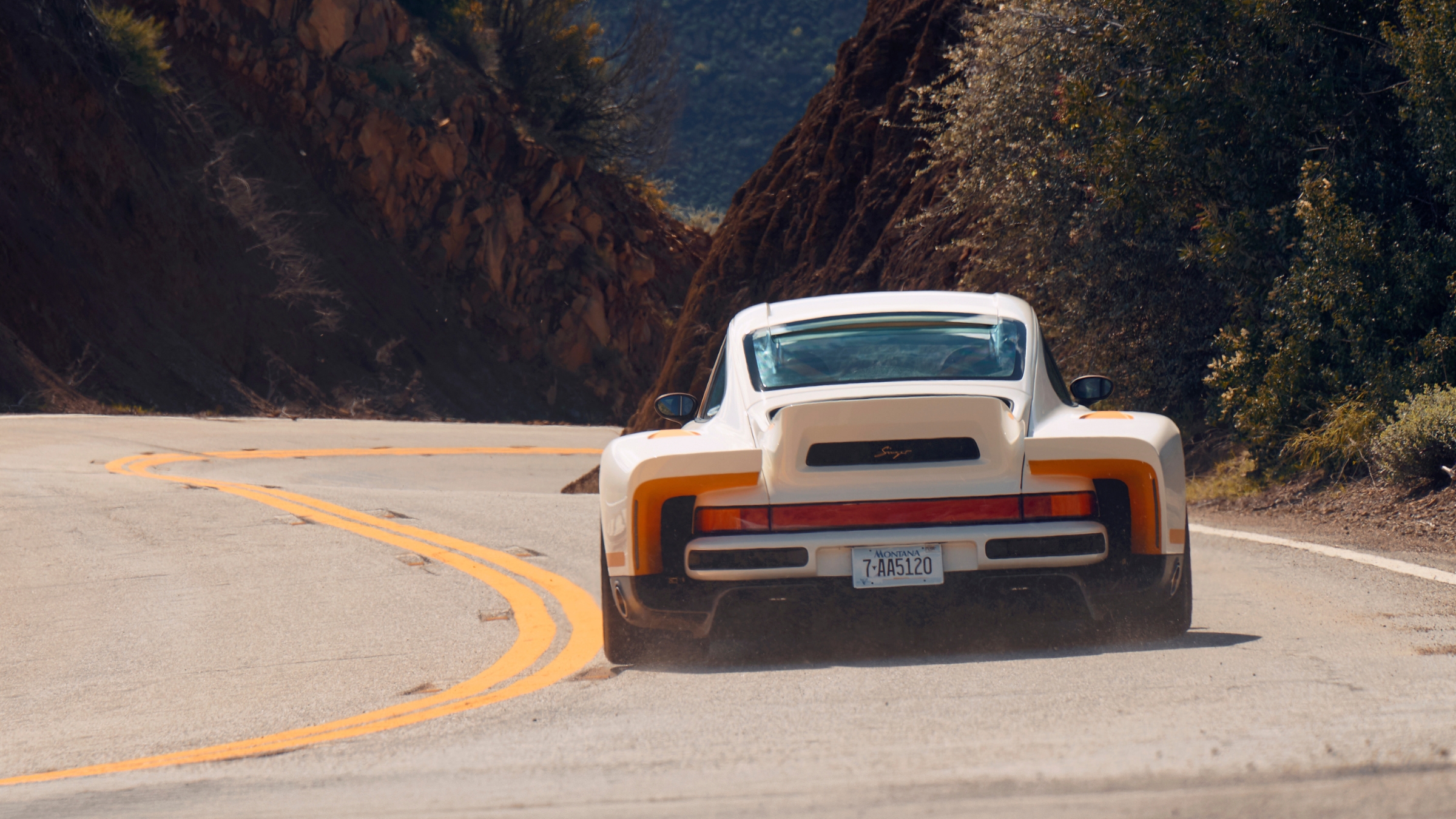
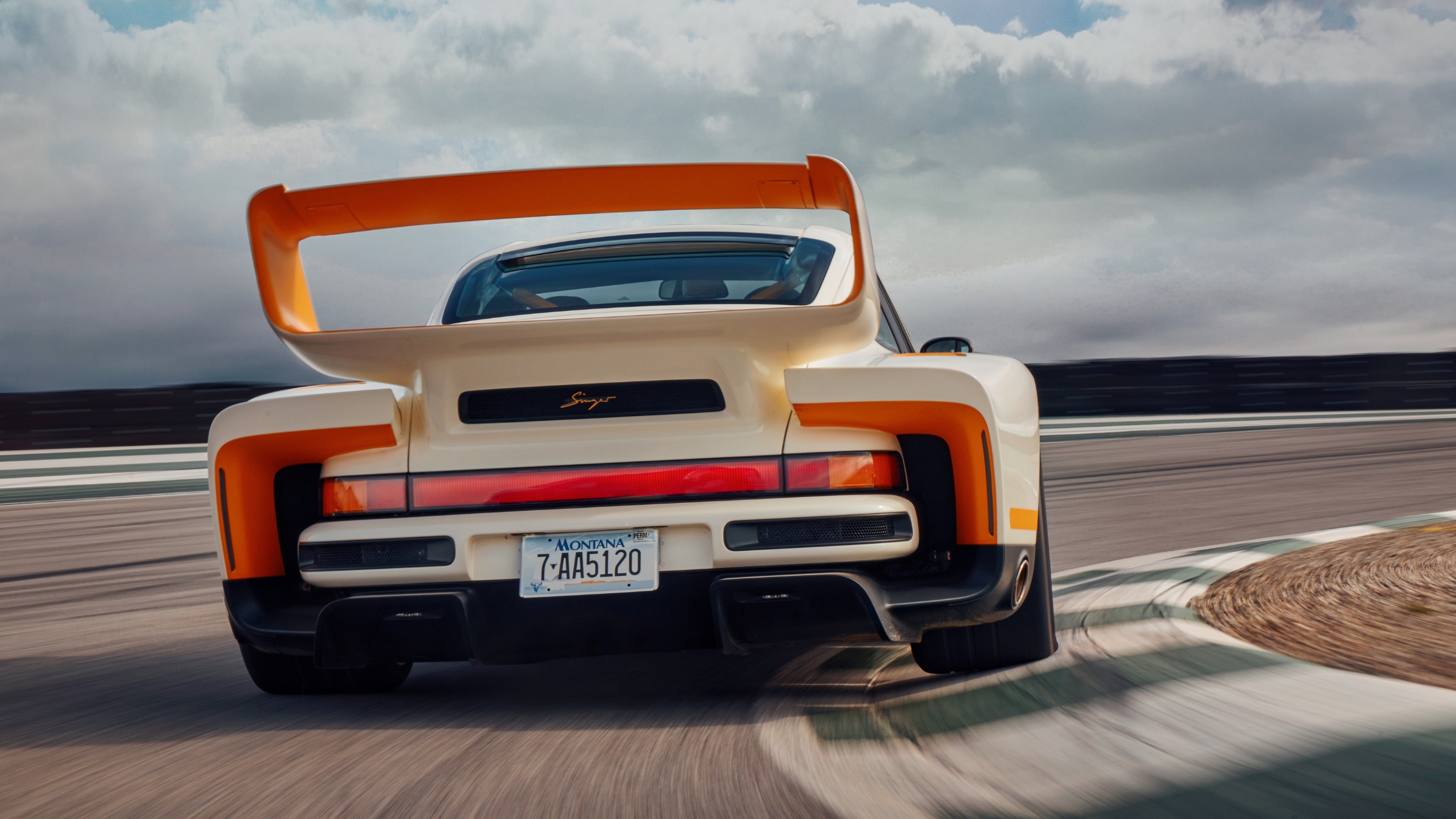
Tomorrow it’ll be dressed in the giant loop rear wing for track work, but in most places that’s not road legal as it projects out further than the rear bumper. About 75 per cent of owners are having both by the way. You just would.
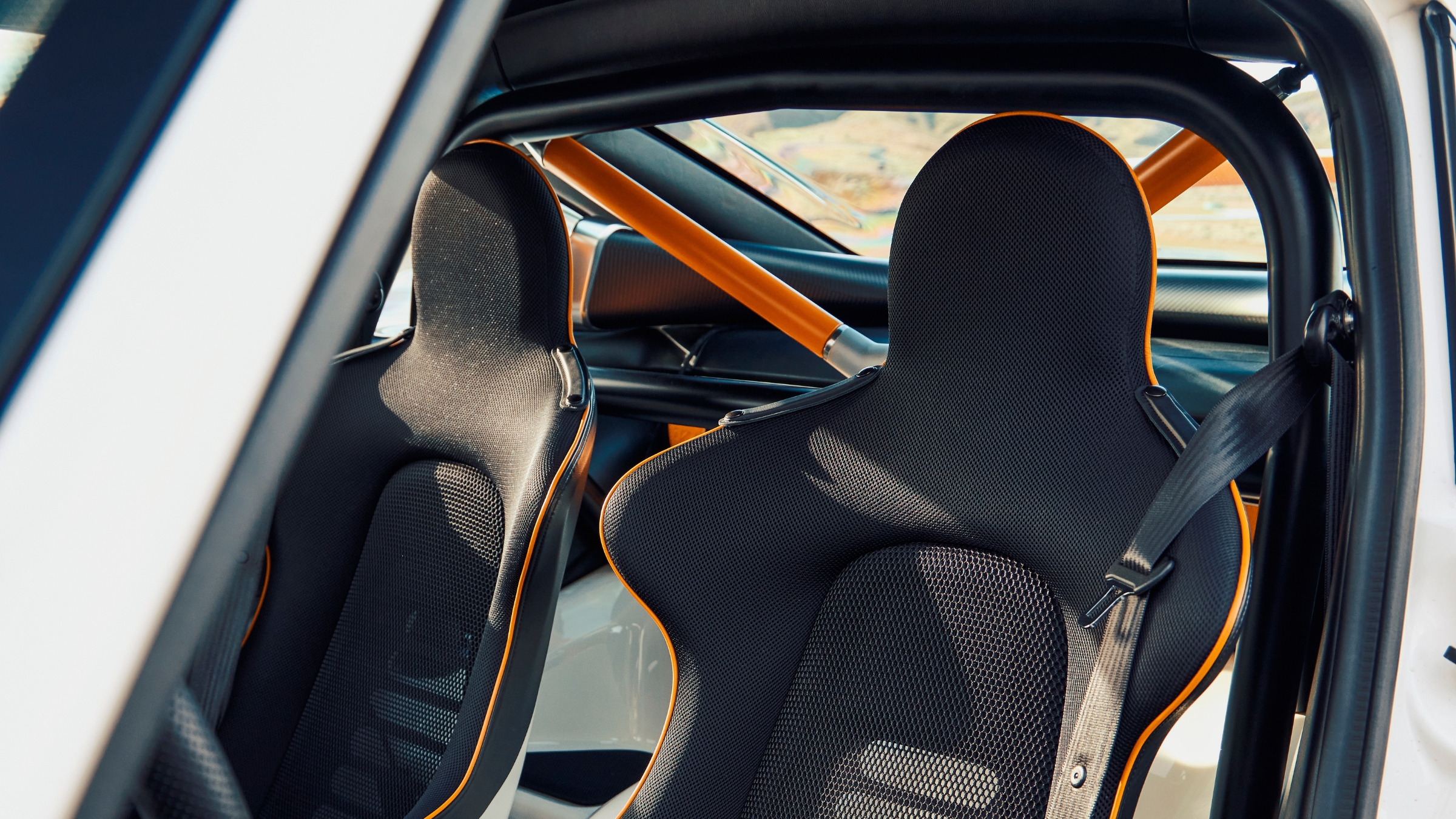
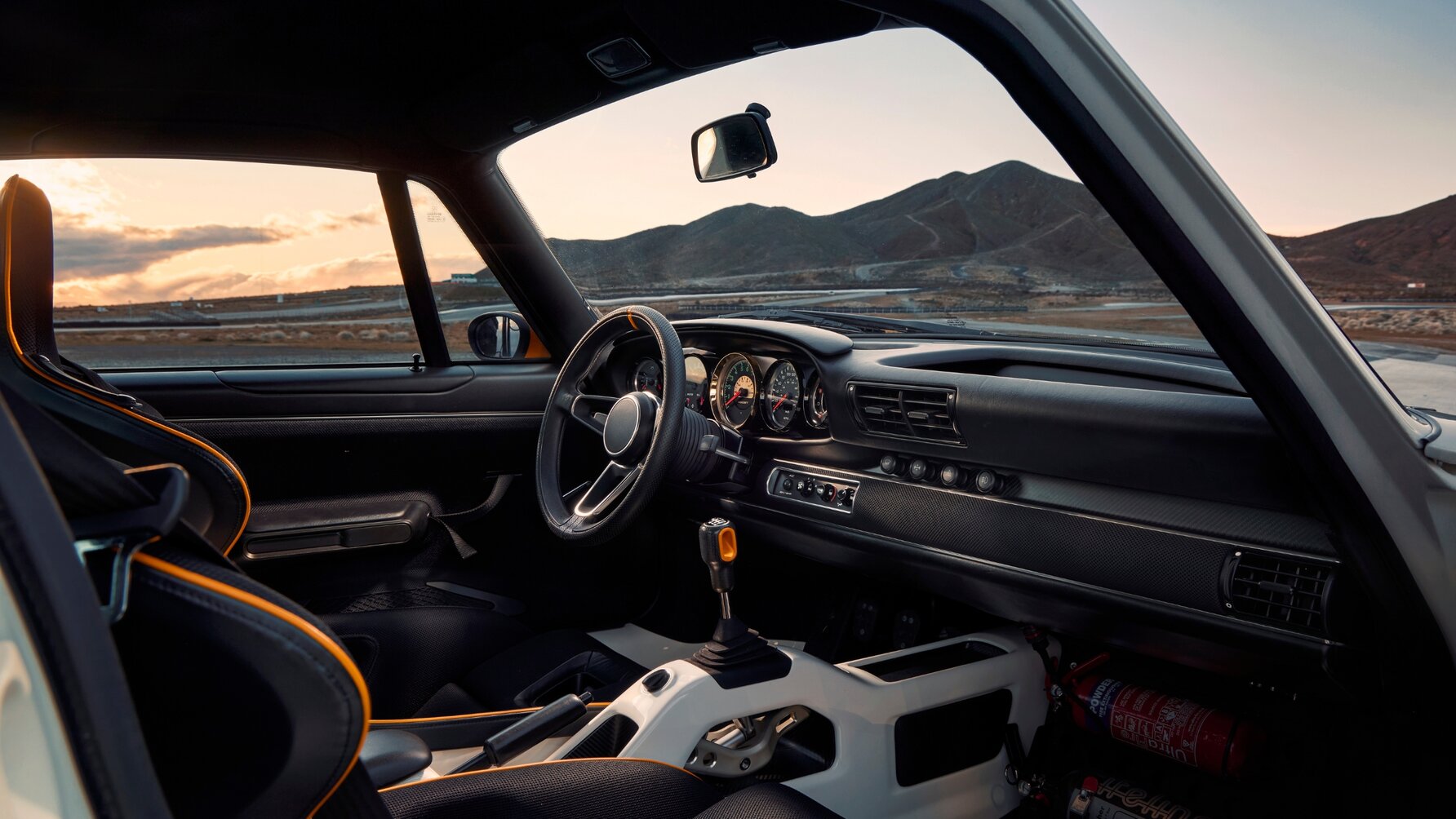
I approach it with a sense of trepidation. Old turbocharged 911s had a certain reputation when they had less than half this power, and no matter what Singer has done this has a short wheelbase, wide tracks and a rear end that looks like it wants to catch up with the front and duff it up. I hop in. The door clicks open and clacks closed just so and I find myself nestled low behind the familiar upright windscreen and five dial layout. It’s simple in here, both in layout and trim design. Pared back for sportiness. A bit too pared back for me – I miss Singer’s cabin artistry when it’s not there.
Twist the key to start. There’s a sudden guttural, motorsport bark. It’s deep, low.
Unmistakably flat six, but the noise is somehow bigger, more menacing. What follows next will, you assume, be a challenge. And true enough, every control has heft and weight. But they’re all in tune with each other. And they’re all fabulously precise. I blip the throttle, revs soar and die in an instant.
There’s an urgency to the way it gets moving, but most of all a sense of connection with the machine. This is nothing new to us, it’s simply the advantage restomod firms have in updating old masterpieces. But those old masterpieces had slop and slack in them as well. This doesn’t.
Top Gear
Newsletter
Get all the latest news, reviews and exclusives, direct to your inbox.
A good original 964 has torsional rigidity of around 7000Nm per degree of twist. With the DLS that rose to 15,000Nm. Now it’s 25,000Nm. The original chassis is still under there, but it’s been reinforced, braced. There’s a full roll cage tucked away, there’s no luggage room under the nose as space has been donated to new damper turrets, an extensive strut brace and extra links. Reinforcement is everywhere. You might not see it, but you notice it.
It means when I accelerate, there’s no flex in the platform, no bucking from the suspension. I surf the torque and nothing’s misdirected, it all goes into forcing the car down the road. Which is an addictive experience. Singer’s stated aim was to try and recapture the excitement of the Ferrari F40. Job done, people.
Singer’s stated aim was to try and recapture the excitement of the Ferrari F40. Job done
There’s a level of intimidation here as the turbos spool and gust, and pressure builds in the car and your back and neck muscles, and your brain confirms that, yes, the DLS Turbo is bound to have more power than grip. However, let’s manage any old school fire ’n’ fury expectations here.
This engine has near faultless manners. The throttle response is beautiful, so there’s real pleasure in just rolling on and off the throttle on light openings, and the ramp into the boost is super smooth – no lag to speak of, just effortless linear thrust that builds and builds and... ooh, public road.
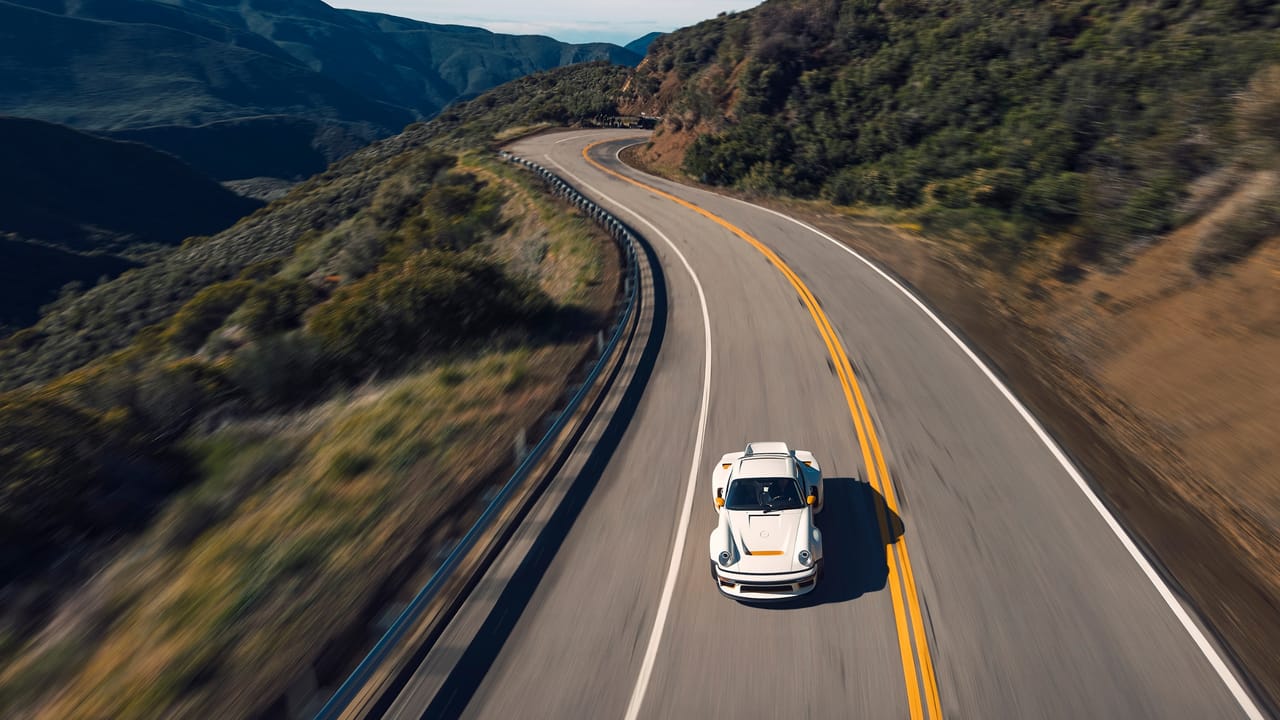
Driving it along Ojai Canyon is so satisfying. It’s quiet up here, the weather is bright, there’s no rush and the DLS Turbo isn’t histrionic. It’s happy to just spring between corners in third and fourth, surfing the torque. But it is a short, wide car with trailing arm rear suspension and it will twitch if you back off mid-corner. So it should. But it rides expensively on its adjustable Exe-TC dampers, tracks true and feels together.
The only thing I wish for is better rear visibility. The roll cage blocks the view out the back (this is a late prototype car and apparently that’s being changed for production) and the tiny side mirrors don’t do much more than remind you there’s a lot of width back there.
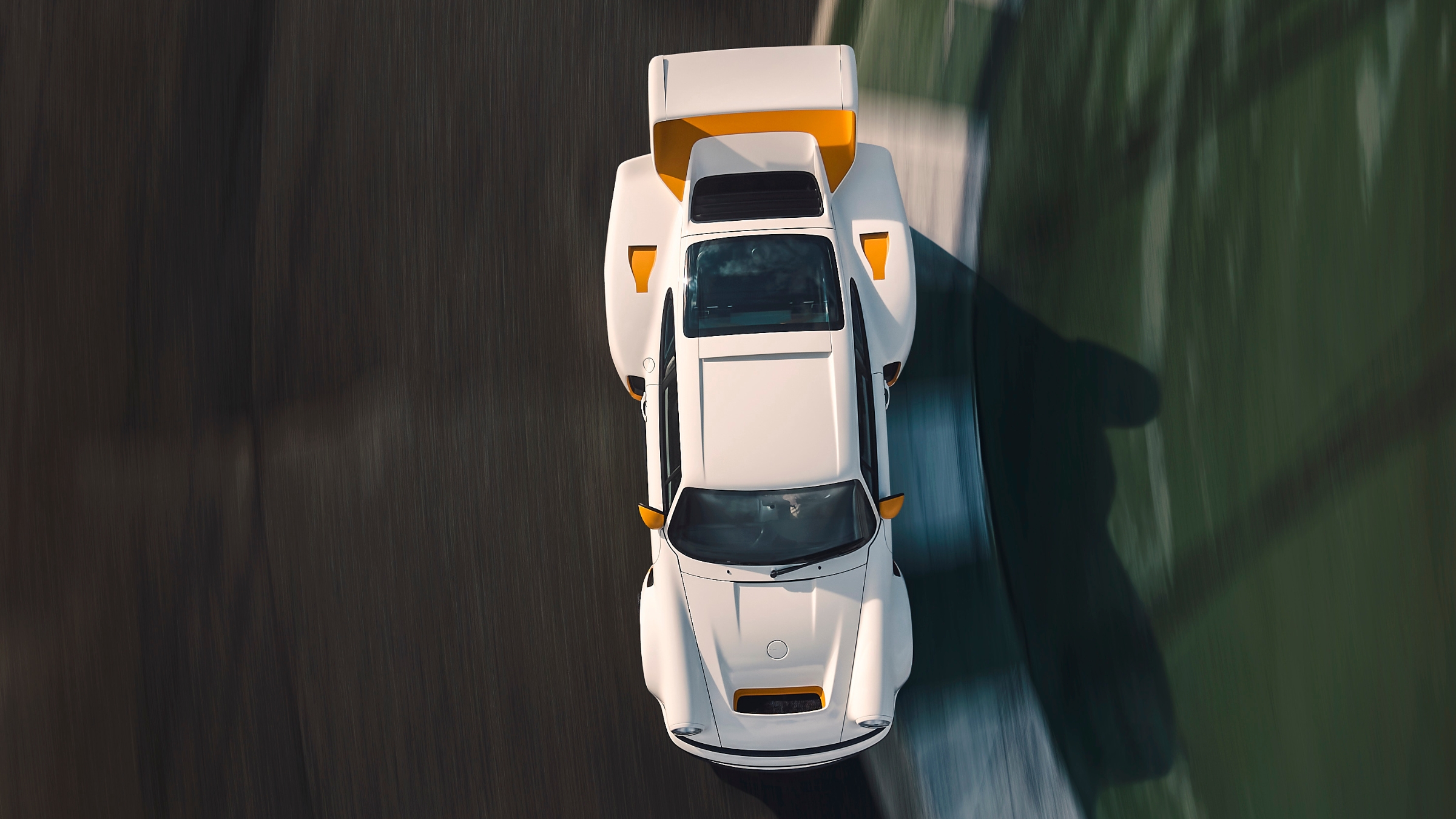
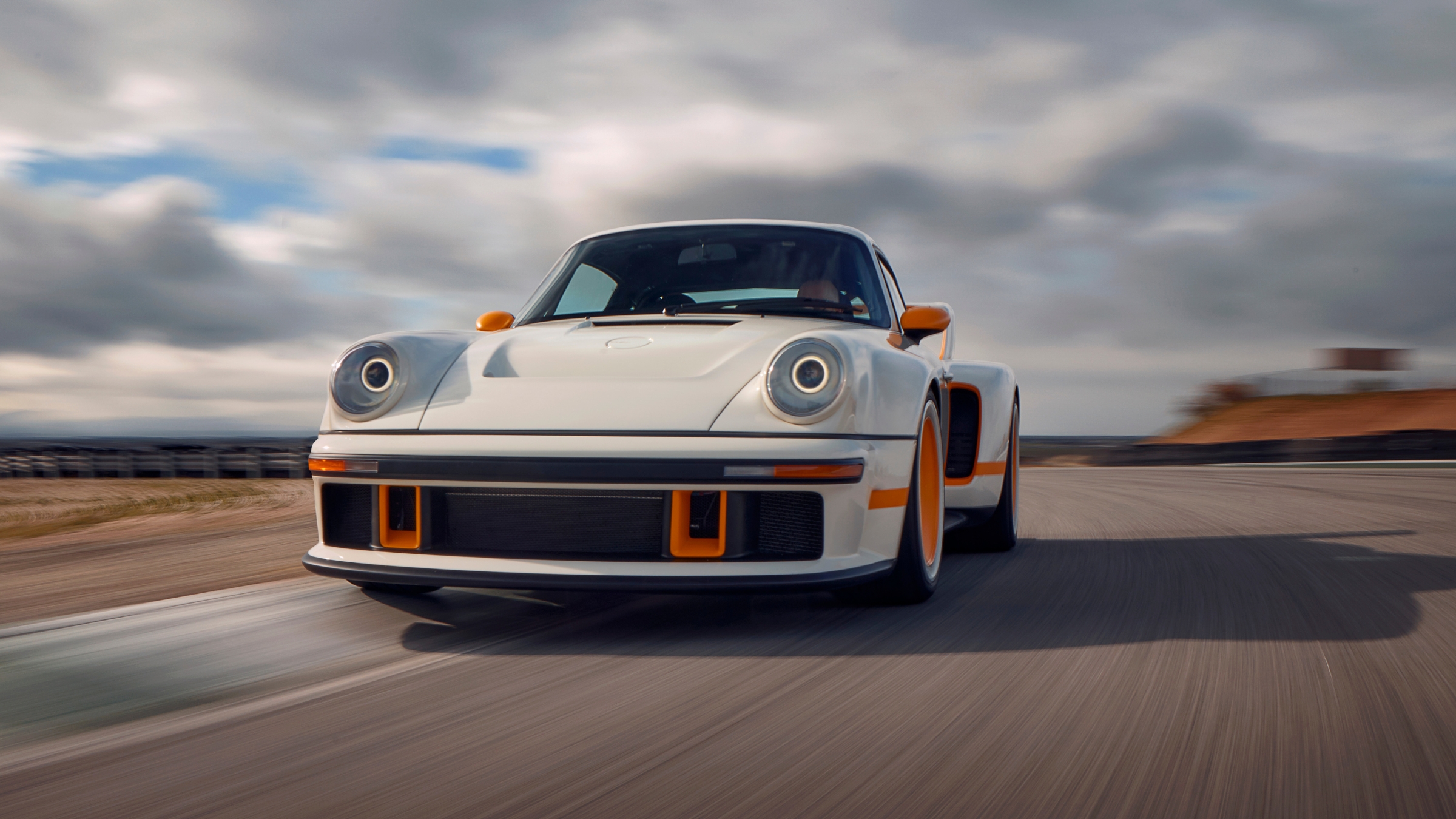
Important to remember that actually. You don’t want to get too greedy with an apex only to find the rear wheel is now steamrollering a rocky verge. Before I get that wrong, and while I’ve still got fuel in the tank, I turn round and head back towards LA.
Singer’s facility in Torrance is quiet this evening. The traffic round here is so bad that shifts start early and finish early to help the 450 staff dodge the worst of it. I’m back here for the wing switch over – and while the body panels are off, a good prod about underneath.
It takes two people over an hour to switch road parts for race. Exchanging the front bumper necessitates the removal of the front wheelarch liners, and you’re not going to be lifting that loop spoiler by yourself.
Opt for both panel sets (a $175,000/£131,000 option) and the spares come in giant flight cases. There’s a third flight case if you want the other wheels. Might as well, eh? Average spend on a DLS Turbo is around $2.9 million (£2.15 million) – Singer doesn’t quote a base price as everyone goes wild with bespokery. The DLS Turbos aren’t built out here though, but at Singer’s other facility near Daventry in the UK. That’s where the engineering is done as well.
Not enough of the car is removed for me to see much underneath, but there’s a lot to talk about. As well as the chassis, everything else had to be uprated from the DLS to deal with the torque and grip the Turbo is capable of generating. The Sachs clutch can cope with 960lb ft, the six-speed manual is now from Ricardo rather than Hewland, there’s more assistance in the steering and more weight overall.
And that weight, like the visual balance, is focused on the rear – 62 per cent of it sits on the back axle.
The next day I’m at Willow Springs racetrack. Singer, together with a development partner, bought the circuit last year – that’s right, Singer is now at the ‘branching out into other areas’ stage. It’s new territory. The track has already felt the benefits – new surfaces, barriers and runoff. But no drainage.
Not usually an issue out in the desert north of LA, but the locals are in a flat spin about the rain. Tractors have been employed to bulldoze the water. Some are fitted with jet blowers. If we were at Anglesey I’d be describing conditions as ‘standard’.
Patchy, puddled, blustery conditions are revealing. The DLS Turbo’s fat Cup 2s do their best but standing water detaches rubber from road, magnifying boost, wheelspin and handling traits – and their various consequences. But I can change this. There’s a five mode traction and stability system from Bosch. And it’s brilliant.
In Weather mode I can drive around and there’s not a trace of wriggle – the car seems able to read the surface better than I can. As conditions improve during the day I ramp it up through Normal, Sport and Track and it gives me more leeway. It’s not quite as uncanny as Ferrari and McLaren’s drift control systems, but for a restorer of old Porsches to have a safety net this sophisticated is stunning.
The car seems able to read the surface better than I can
I end up turning it off of course. Just to get a better sense of its on limit behaviour. It’s all about managing the light nose. Get greedy with speed on the way in and the front end will push past the apex. Get back on the power while carrying too much lock and you’re into understeer. Try to push past that with power alone and you’ll probably eventually succeed, but you won’t be in a happy place, instead a world of scrappy, sudden oversteer.
Instead go in deep on the magnificent brakes (Brembo’s top line carbon ceramics) to keep the nose loaded, get everything pointed in the right direction and then sit back and enjoy take off.
But contained in that process of cornering is so much satisfaction and communication. From the floor-hinged pedals and rev-blip downshifts to the weighty steering, barking flat six and considerable weight transfer, this is a car that both engages and challenges.
No shortcuts, you’ve got to learn it. There might be a level of finesse and capability here that’s alien to a 35-year-old Porsche, but this is still not as clean, direct, forgiving and effortlessly fast as a modern supercar.
Good. It’s dirtier than that, thickly coated with attitude and smeared with charisma. The engine snarls, turbos whoosh, rear axle squats, nose rises, steering chatters and round I go for lap after lap. I’m only removed from my reverie when the fuel light comes on. The regular DLS is light, supple, rev hungry and intoxicating. I feared this might be a blunt instrument. And yes, it’s rolling thunder, heavier in my hands, more muscular and boisterous, more of a route one performer.
But the rewards, not least that slingshot thrust, are just as great. It’s addictive, I crave just one more hit of turbo, to feel that tension as torque twists tarmac and I brace for boost.
But I also know the truth – those powerlifter haunches and that loopy rear wing flatter to deceive. The DLS Turbo is just a big, friendly monster.
Singer's DLS Turbo
Price: $2.9million (£2.15 million)
Powertrain: 3.8-litre twin turbo flat six, 710bhp, 553lb ft
Transmission: 6spd man, RWD
Performance: 0–62mph in N/A, 200mph+ (geared for 218mph)
Weight: 1,450kg (with fluids)
Trending this week
- Car Review
Tesla Model Y