


Big Reads
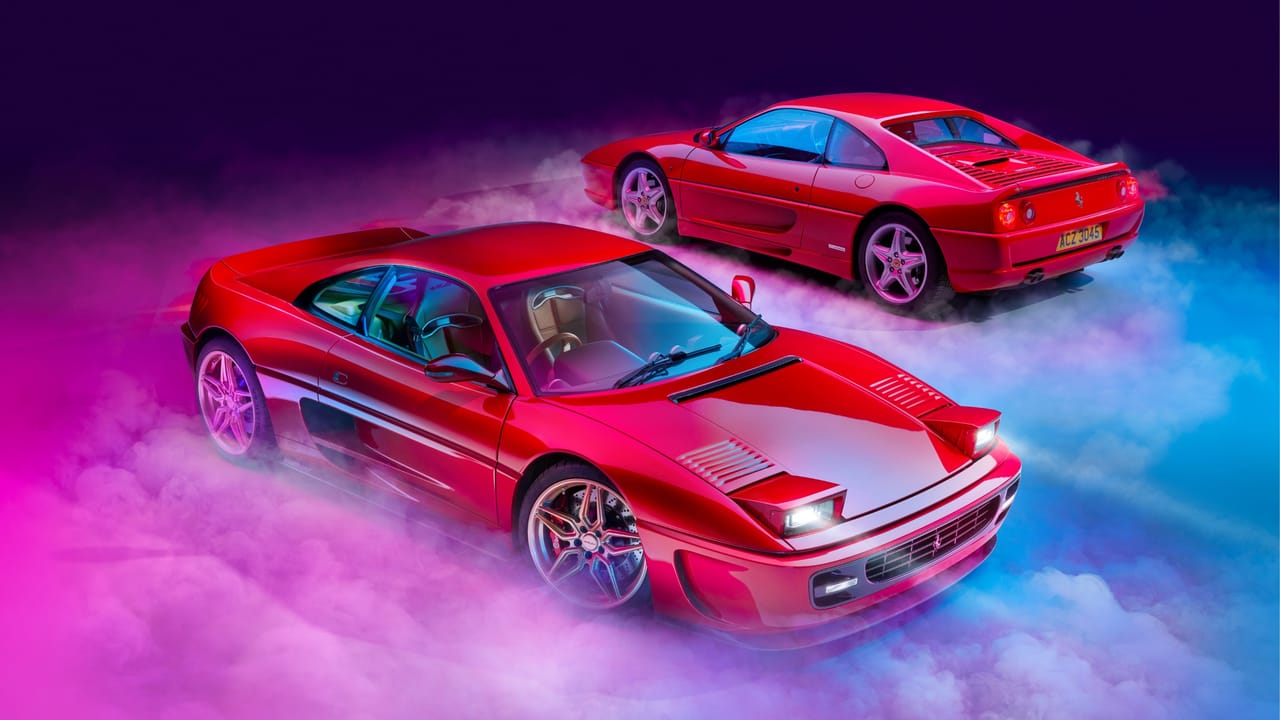
Evoluto's resto Ferrari F355: an analogue masterpiece, or soulless £800k remake?
Ferrari’s ’90s poster car has received a 21st century makeover - time to see what's what
It was always the 355.
Whatever hormonal alchemy occurred in my 10 year old brain circa 1994 it was clearly quite potent, and totally irreversible. Newer Ferraris arrived with more power, faster Fiorano times, F1 tech and bold new design ideas, but none could unseat this perfect intersection of style, size and simplicity as the one I’d crawl over hot cannelloni for. A month short of my 42nd birthday I finally drove an original F355, briefly, on the badlands just outside Corby. Troy Queef would be delighted.
Advertisement - Page continues below
Words shall be chosen carefully as it’s TG’s own Jason Barlow who’s tossed me his keys. I ask him why there’s a Ferrari USB stick on the loop, he stares at me like I’ve got green skin and explains the concept of an immobiliser. The interior is period correct with plastics (like all ’90s Ferraris) that appear to be melting at room temp. The seating position is reclined, arms outstretched, the pedals offset a little to the left and the tape collection predictably on point. I love every moment – the way the engine requires working to find its voice, the cushioned ride, the threadability on real roads. But the experience is more ‘vintage’ than I’d imagined – a proper time warp to when supercars were more visceral, but quite a bit cruder.
Photography: John Wycherley
Time for a refresh? Why not, with the restomod craze spreading like chlamydia in fresher’s week, it was only a matter of time before arguably the most significant mid-engine V8 in Maranello’s history went under the knife. But while most restomods are content with a little maintenance surgery, the 355 by Evoluto has spiralled out of hand in the most glorious way possible.
A 414bhp (or 473bhp if you’re in a hurry, more on that in a bit) Ferrari F355 restomod that’s been totally re-styled and re-engineered to improve everything about the model that Clarkson, in 1996, called “the nicest car I’ve ever driven”.
Advertisement - Page continues below
Our quest is to sniff out the finest Welsh tarmac and discover whether ’90s supercar perfection can really be improved upon. In fact, should it be improved upon when the original is still so beautiful, still delivers high rev thrills and still has genuine star power... minus the Haribo switchgear? Ultimately, should you spend £100k on a used F355 (plus, if you so wish, a good chunk again making it factory fresh) or £595k + VAT + a donor car + options on the Evoluto, of which it’s only building 55? Yes, your maths are correct, that’s the scary side of £800k.
Let’s start with the heart of any Ferrari. In the OG corner you had a flat-plane crank 3.5-litre V8 with 375bhp – a significant increase over the 348’s 312bhp, and at the time the highest horsepower per litre of any naturally aspirated car on sale, McLaren F1 included. Criticisms? It could do with a little more torque (or perhaps my internal gyrometer has been spoiled by modern turbo’d stuff and EVs) and it’s only truly musical above 5,000rpm.
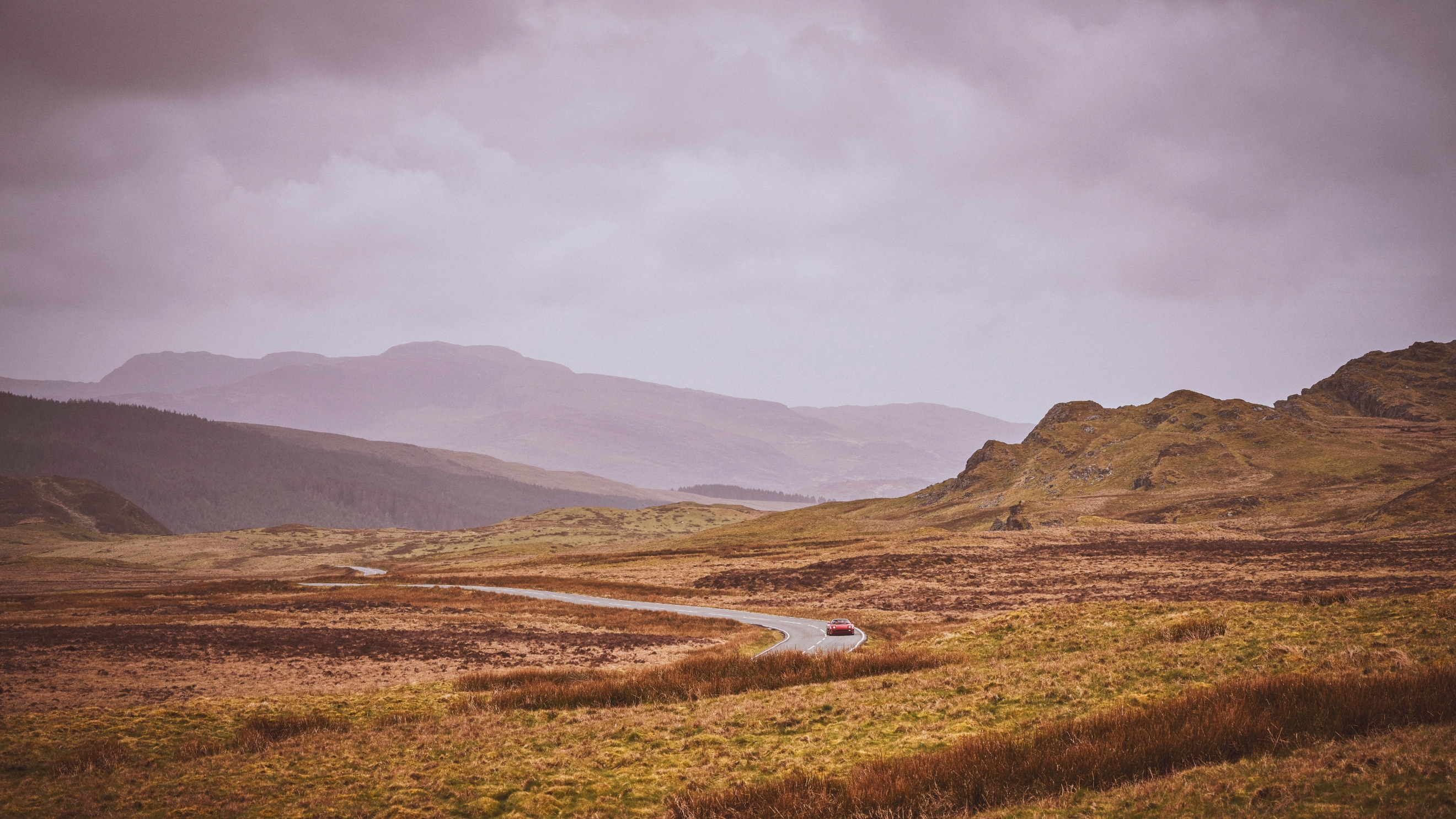
Over to the Evoluto, where you’ll also find a 3.5-litre V8, that still revs to 8,500rpm, but power is up to 414bhp and torque hiked by 22 to 295lb ft. Bespoke camshafts, ported cylinder heads (200 components replaced in total) and a new equal length header stainless steel exhaust system uncorks the extra horsies, sharper responses and a sound that’s far more soulful lower down, and builds to a much fuller-bodied howl beyond 4,000rpm.
Want more? You can order a 3.7-litre engine upgrade with 473bhp at 9,000rpm and 332lb ft of torque courtesy of that increased capacity, high lift cam profiles, revised fuelling, titanium conrods, carbon intake plenums and a full titanium exhaust. Throw in a throttle by wire system (it’s a trusty old cable on the 3.5) and a single mass flywheel and it should be more urgent, more of the time. Red engine covers denote the 3.7, black on the 3.5, although this 3.5 final stage prototype ignores that completely.
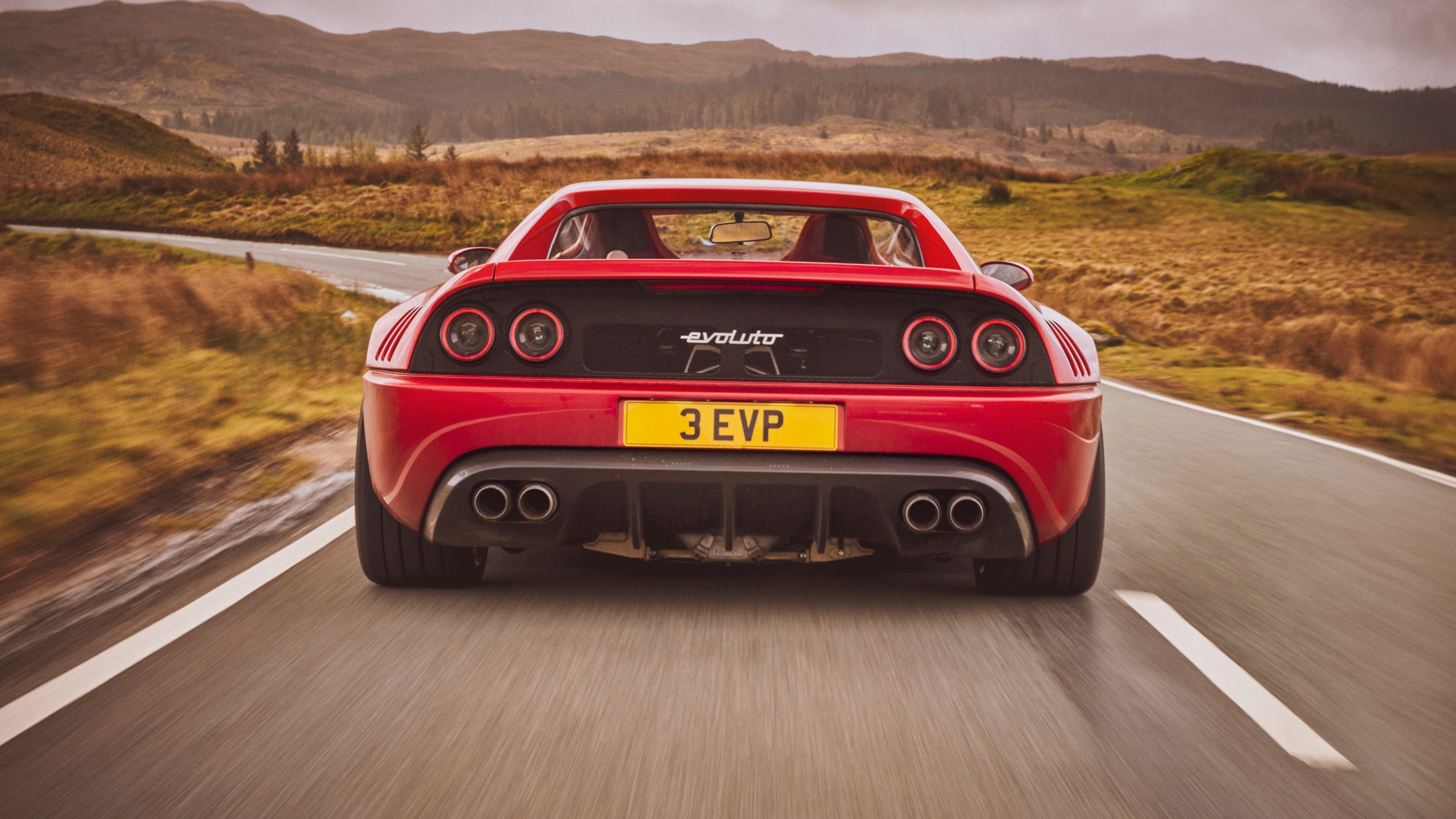
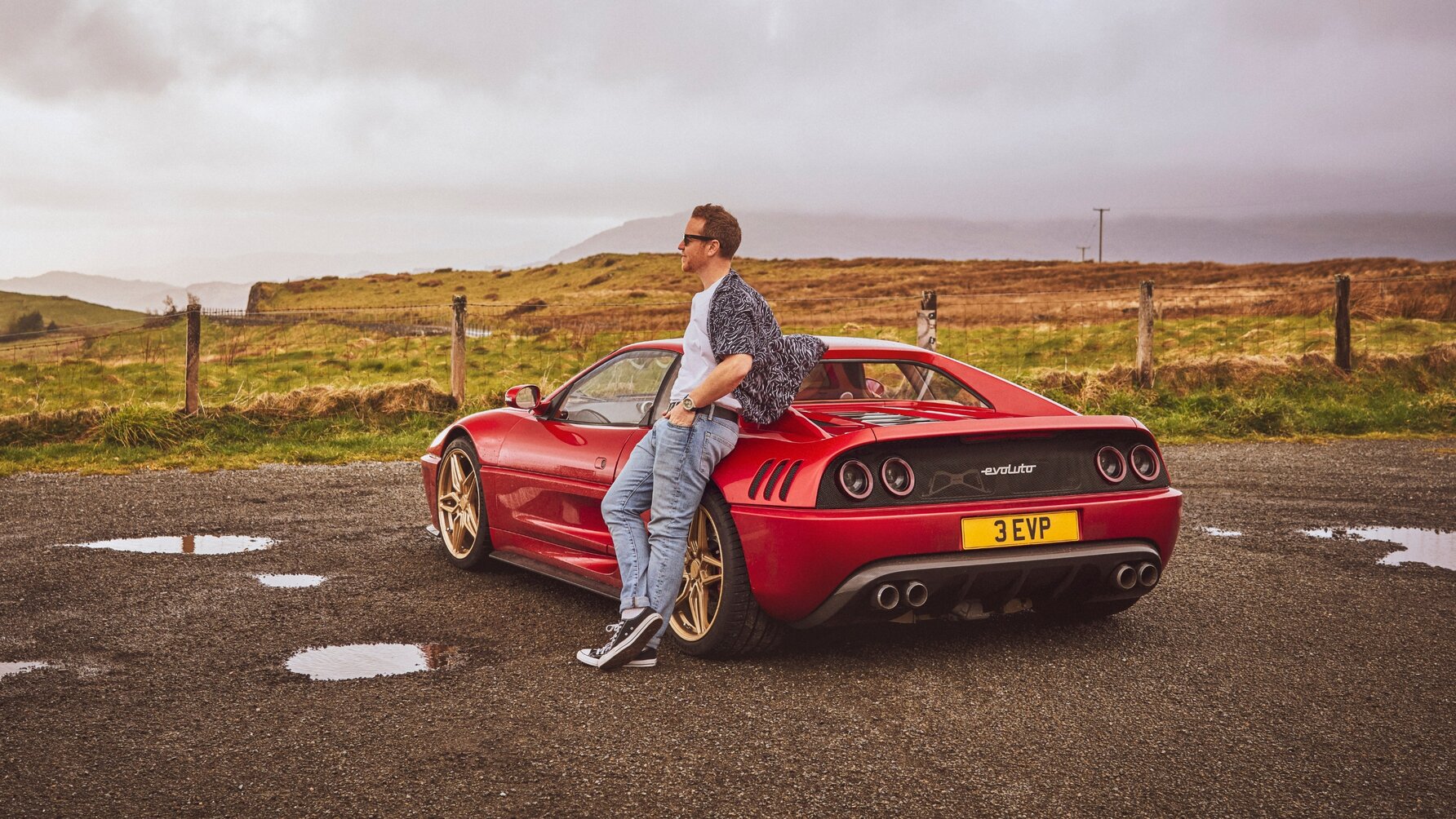
So far, so authentic. The styling though is a little more controversial – mostly because the original is untouchably stunning, but also because some in the TG office think it looks too ‘tuner’. Fair enough; the slats behind the headlights and on the rear flanks add a fussiness, the carbon sills and front splitter I could do without and the gold wheels (now 19in, not 18s, and here in the optional magnesium alloy that save 4kg per corner) are a punchy look. Personally, I’d stick with silver.
However, the fundamental proportions and stance are spot on: 25mm lower ride height, front and rear tracks widened by 77mm and 66mm respectively (done the hard way – not with spacers), effectively squaring everything off and filling the front arches properly.
The body is all carbon fibre, every panel is new, including deeper and wider side intakes to feed the engine and rear brakes that necessitate changing the doorhandle to a push button and redesigning the entire internal door mechanism.
Top Gear
Newsletter
Get all the latest news, reviews and exclusives, direct to your inbox.
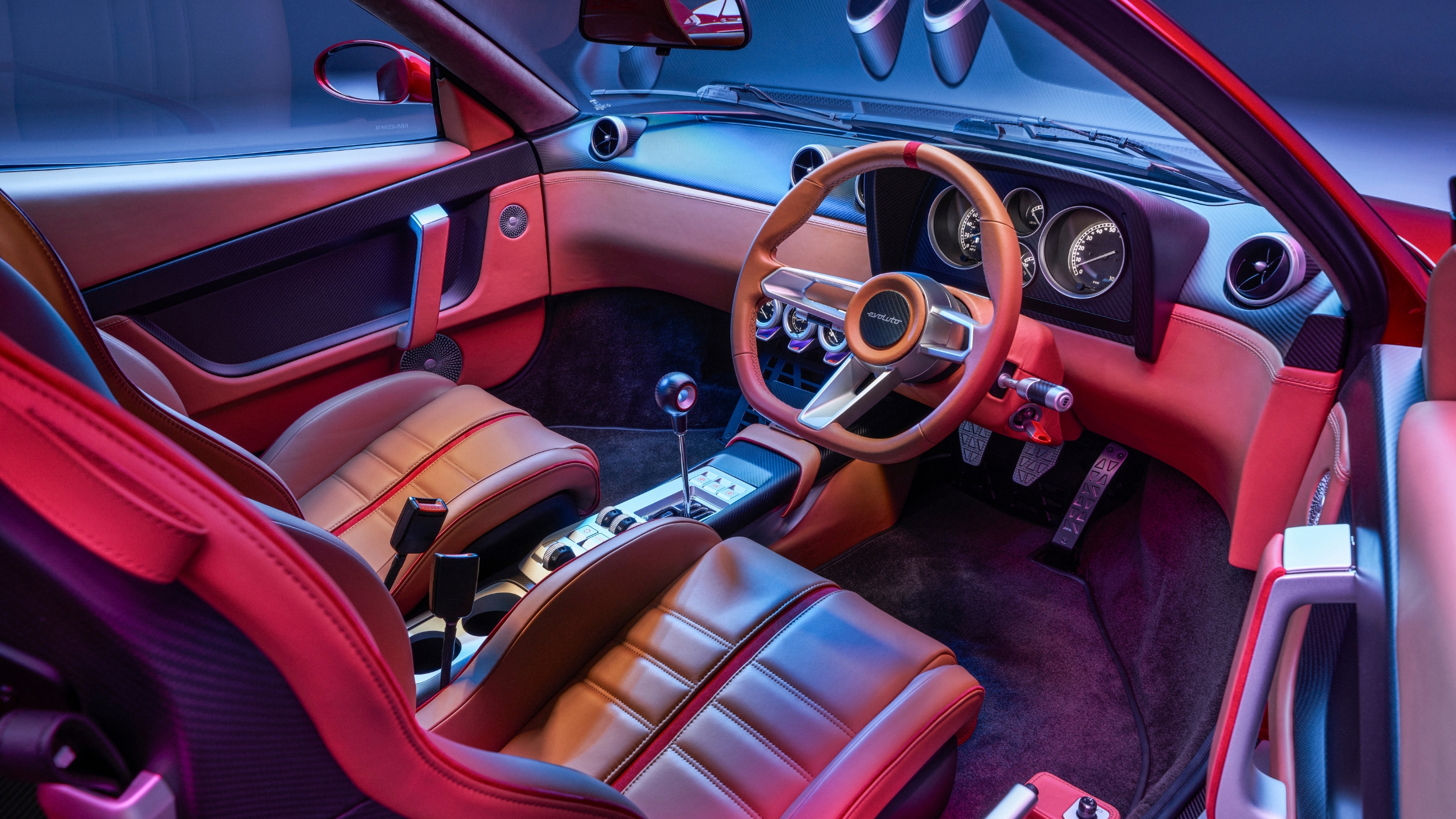
Besides refurbished analogue dials, the leather, carbon and metal-clad interior is totally new, and (sorry Jason) a huge improvement. You turn a key in a barrel to get in, and immediately the DNA is obvious – low, reclined seating position, pedals offset and while the steering still only adjusts for rake, not reach, the deep-dish wheel is superb with a delicate thin rim that reaches out to meet you. No screens, just a cradle for your phone and Bluetooth, and no Ferrari logos allowed except for on direct carry-over components, hence the Cavallino in the front grille, on the shifter gate and the window glass.
And we haven’t even got to the total hip, knee and elbow replacements going on under the skin. There’s an entire new rear subframe that can unplug and drop down – making what was previously major engine out maintenance a whole lot quicker and easier. Bits of carbon strengthening in the chassis (and the carbon body) up stiffness by 23 per cent, and fully re-engineered suspension includes new upper and lower arms, uprights, wheel bearings, anti-roll bar drop links and three-way adjustable dampers from R23.
This means wider Michelin Pilot Sport 4S tyres in contact with the road more of the time and cleaner, less corrupted steering. Thanks to all that carbon, a dry weight of 1,250kg is 100kg lighter than the original.
It takes less than a minute on the fabled B4391 to deduce this is simply one of the best sounding, rawest engines I’ve ever experienced – right up there with the gargling Shelby GT350R and the rasping Alfaholics GTA-R in my personal hall of fame. Keep your toe in and there’s the briefest of pauses just before 4,000rpm, as if the engine’s steeling itself for the pure savagery to come as it tears towards the 8,500rpm limiter. I know ‘spine tingling’ is a terrible cliche, but it’s the most literal description I can offer.
The joy isn’t just the metallic clarity of the note escalating in pitch and volume, it’s that in something like a Ferrari 12cyl with 800bhp+ you also have an atmospheric engine with a sparkling top end, but you’re going so bloody fast by the time you get there that you’ve either been arrested or run over a sheep. Here, the stakes are lower, you have time to enjoy revving it out and you’re not doing triple-figure speeds when you reach for the next gear.
The gearbox keeps the same ratios as the original (Evoluto replaces first and second gears as those are the ones that take a beating in its former life) and it’s predictably glorious – but you have to be deliberate and place it in the right slot with a bit of muscle. The action isn’t as oily as, say, an Audi R8 manual – but timing clutch, blip and shift is every bit as satisfying.
I’m probably getting a bit giddy here, but it drives how I always imagined the F355 would, how I’d built it up in my head. By extension, that means it’s the supercar I’ve always dreamed of – this heady cocktail of noise, tactility, size and just the right amount of performance. Do you need the 3.7-litre engine upgrade? If your pockets are bottomless (you’re buying a near million-pound F355, so they are) then another 60bhp is always welcome, but I’m not sure you need it. Sometimes less is more.
Just ask the steering ratio, down from 3.25 turns lock to lock to 2.0 here, the same as you get in a modern 296 GTB. Except it doesn’t feel overly light and hyperactive like a 296, there’s more weight and feedback while still feeling crisp and direct. The ride, too, is superb – something that stood out on the original – and it’s been preserved albeit with top shelf components and optimised geometry. Everything feels stiffer and tighter, so the suspension now has a more rigid platform to work off, and can remain supple and still control the body movements beautifully.
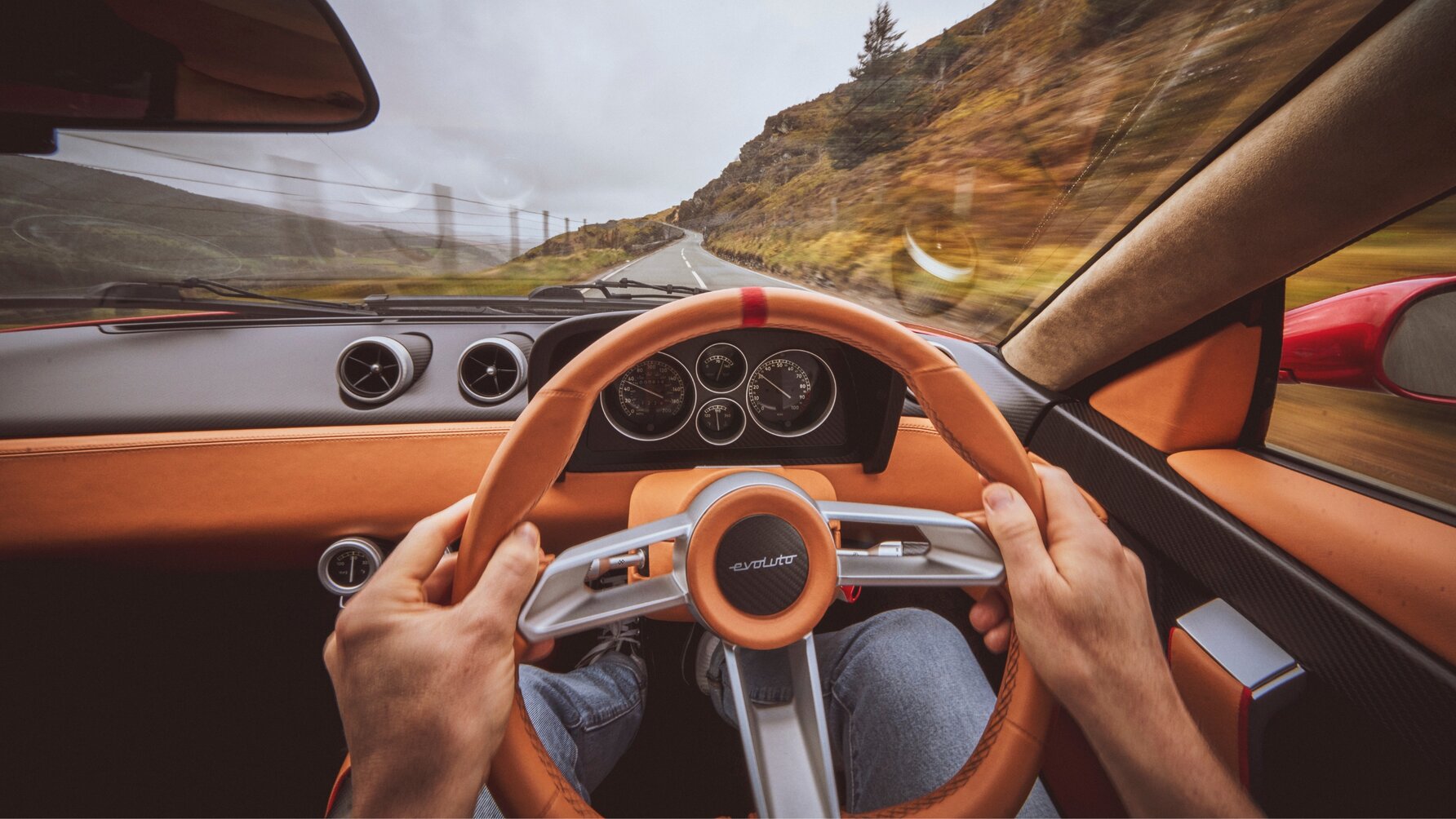
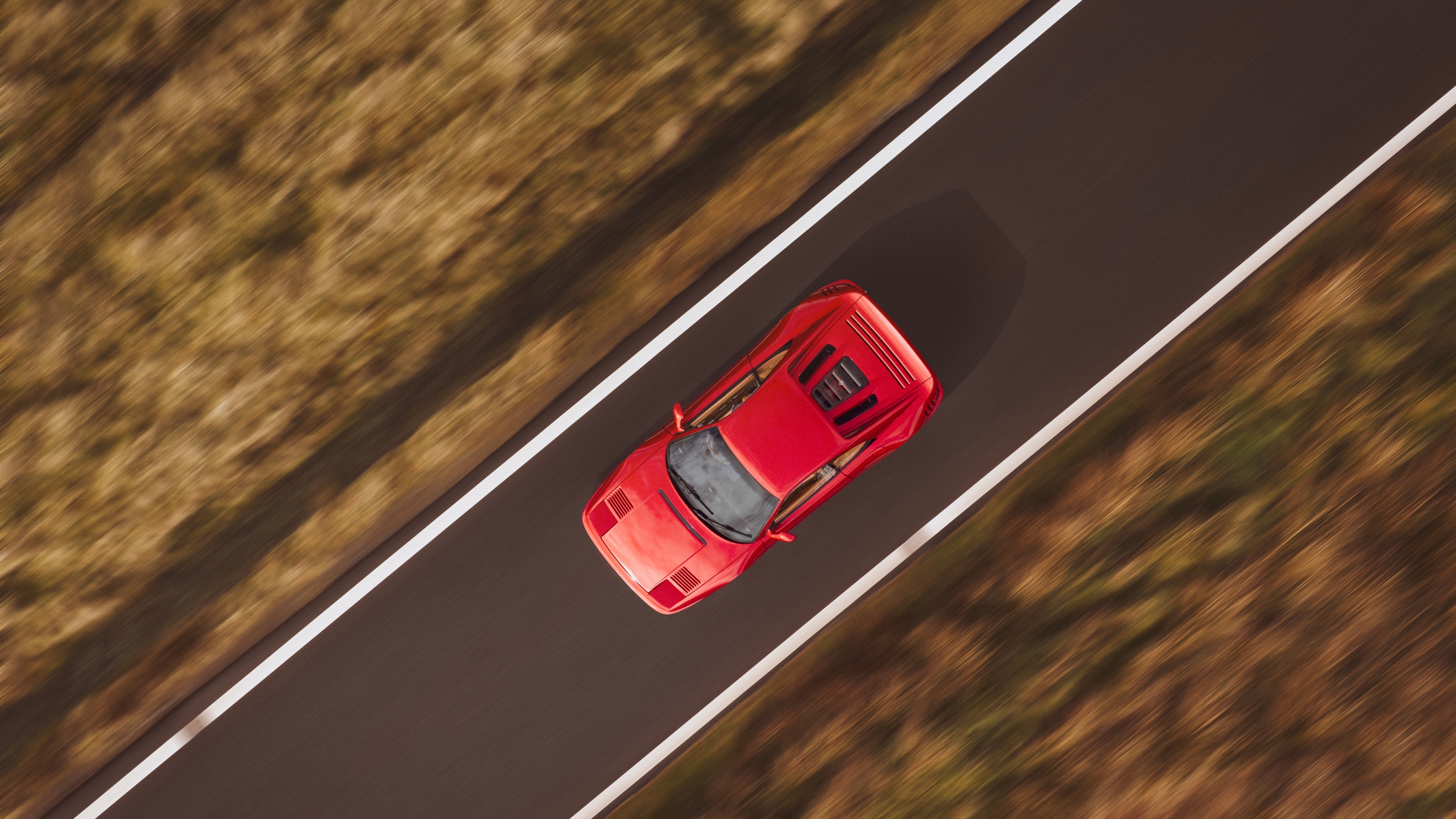
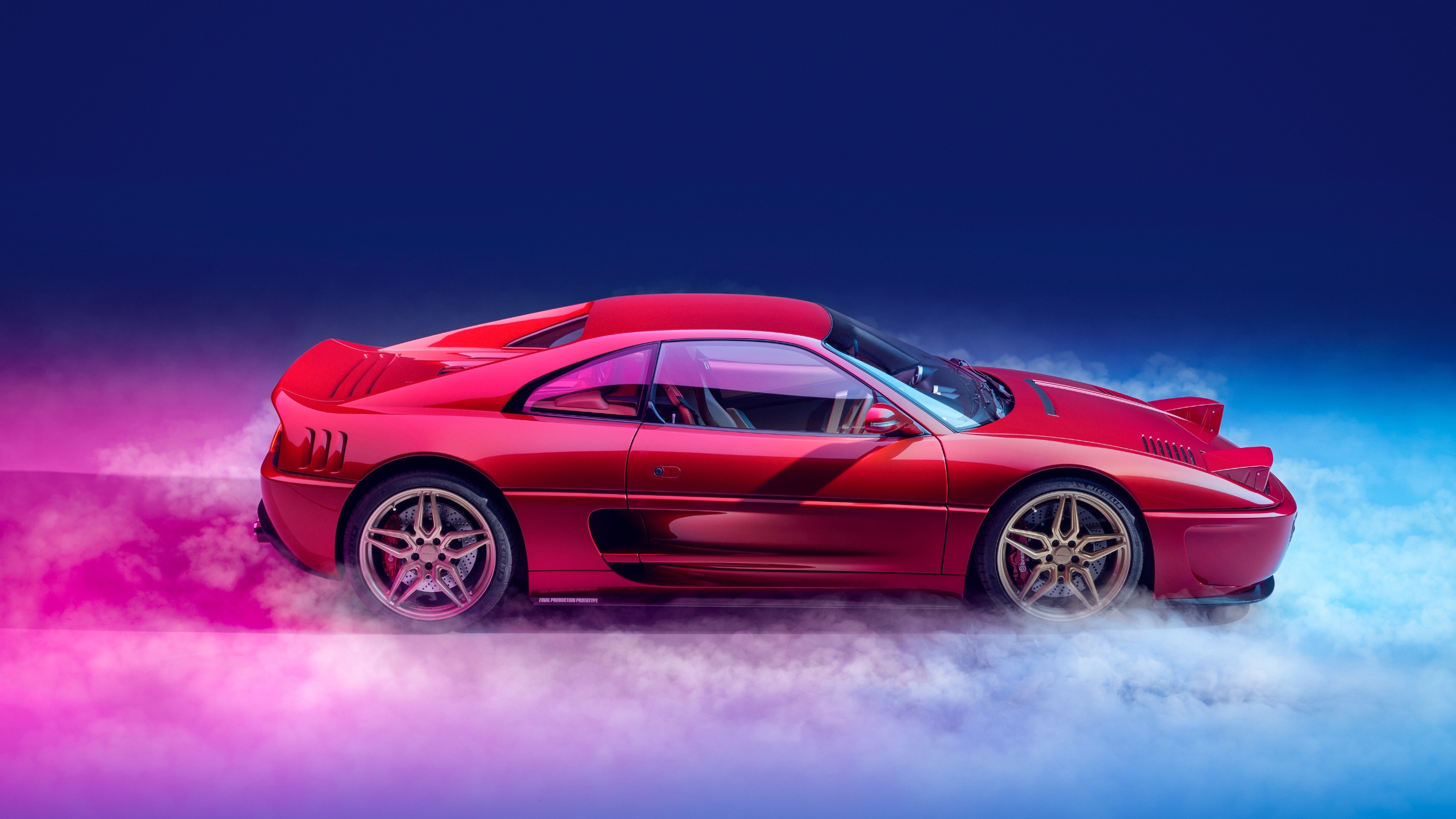
Straight away you click into a flow on the road, surfing the crests, hollows and cambers rather than picking a fight with them. You can cruise through the gears, find a relaxed rhythm and then, when you get your shot, let rip. It’s a car that’s been designed not for track days, hot laps, 0–60mph times or downforce numbers; it’s about interaction, analogue thrills and a bit of theatre. It’s a modern supercar, seen through a ’90s lens.
I’m aware some will dislike it on principle, see it as a bastardisation of the F355 and bemoan its lack of purity. It’s a colossal amount of money, too, which came into sharp focus when the passenger door wouldn’t open during the test (it’s a prototype, these things happen and a fix is already sorted, but a reminder that at this price point the little things need to operate faultlessly and reliably, too). But the fact is, it’s more fun on the road than hypercars with four times the power, it sounds better (at more accessible speeds) than any modern supercar I can think of, and as an ode to analogue the driving experience is pretty much perfect.
It’s the car that Ferrari wishes it could build, but can’t because it’s being kettled towards turbos, hybrids and EVs. For the poster on my bedroom wall it’s still the original F355, it always was, but it’s the Evoluto I’ll drive in my dreams.
Price: £595,000 (+ donor car, + VAT)
Engine: 3.5-litre V8, 414bhp, 295lb ft
Transmission: 6spd manual, rear-wheel drive
Performance: 0–62mph n n/a secs, n/a mph
Weight: 1,250kg (dry)