


Electric
"The Luce is not an act of heresy": a closer look at Ferrari's first ever electric car
Don't worry, Ferrari will still sell you an engine. This is something different altogether...
Iconic. Disruptive. Muscular haunches.
Jony Ive and Marc Newson are walking TG round the Ferrari Luce when we pause to ponder the words we’d ban during dissection of a car’s design. The whole caboodle surely needs to be re-thought. Which is what Ferrari and LoveFrom have done with this, the Italian legend’s first fully electric car. (Legend, another word worn wafer-thin with overuse.)
Advertisement - Page continues below
Ive, a thinker of fathomless depths, has naturally given this some thought. “A lot of that started in Silicon Valley... move fast, break things, disrupt. I see zero virtue in any of that unless you’re making something substantially better. We could do three cars this afternoon that would be different and disruptive for the sake of it, but they wouldn’t be very good.”
Photography: Alex Howe

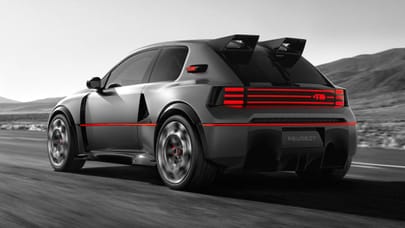
Still, the Luce is that rare thing, a genuine ‘wow’ moment. A jolt to the system. Yes, the prospect of an electric Ferrari is in itself historic – some observers have used uglier descriptors – but the result is further out than anyone would have predicted. A genuine surprise in 2026. How’s that for disruptive?
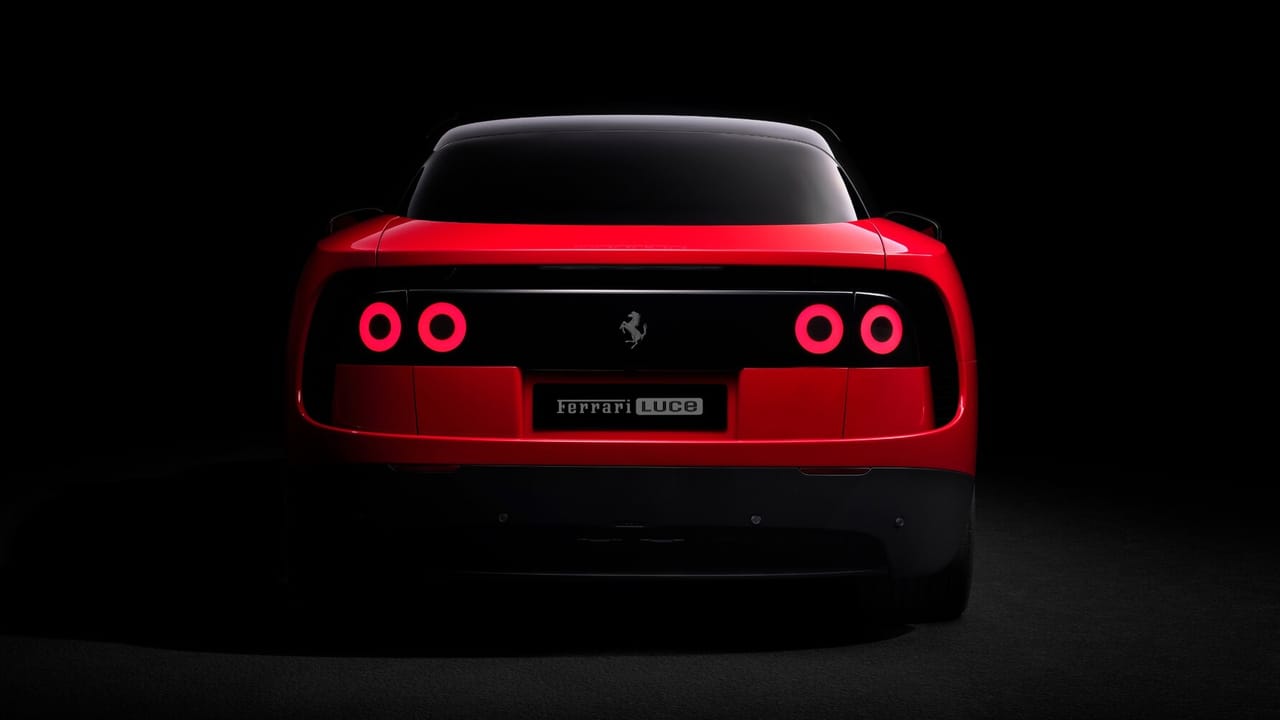
Previous supercar EVs have stuck to the established mid-engined typology, searching for high end buyers who want something new/not-new. Ferrari, though, has gone a different way. Firstly, by engaging design agency LoveFrom to handle the exterior and interior execution and, secondly, by focusing on versatility and useability. Never mind the means of propulsion, the Luce has room for five and a hatchback. It resembles no other Ferrari in history, though there are some detail familiarities. (Check out the round rear LEDs, for example.)
Advertisement - Page continues below
How this lands depends on what you expect a Ferrari to be or do. No car company has erected such an elaborate superstructure around its own myth, a temple in which millions worship and rather fewer shell out scads of cash to get their hands on the latest hypercar or a decommissioned F1 machine. It’s a phenomenally good – and expertly managed – business.
But the Luce sees its maker rolling the dice in spectacular fashion. It reconfigures what desire looks like and asks as many questions as it answers. Fundamentally, Ferrari didn’t see the point in replicating what it already does and substituting an all electric powertrain for an eight- or 12-cylinder combustion engine.
When the development team began conceptualising its BEV back in 2019, it quickly became clear that only a clean sheet approach would do. “We’re always drawing graphs and charts,” Ferrari’s head of vehicle engineering, Matteo Lanzavecchia, tells us, “plotting and evaluating lateral driving thrills against what we call usability.
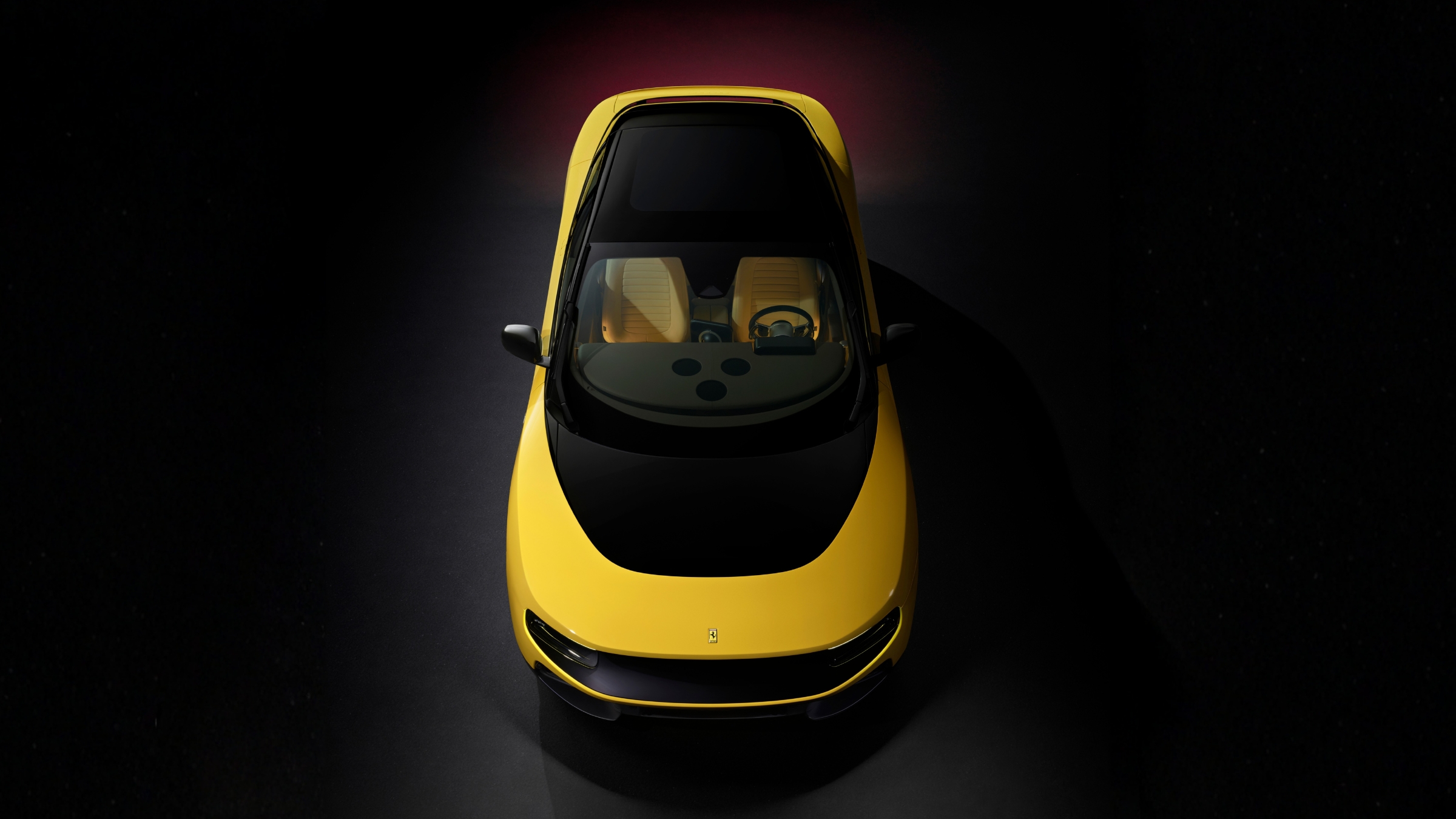
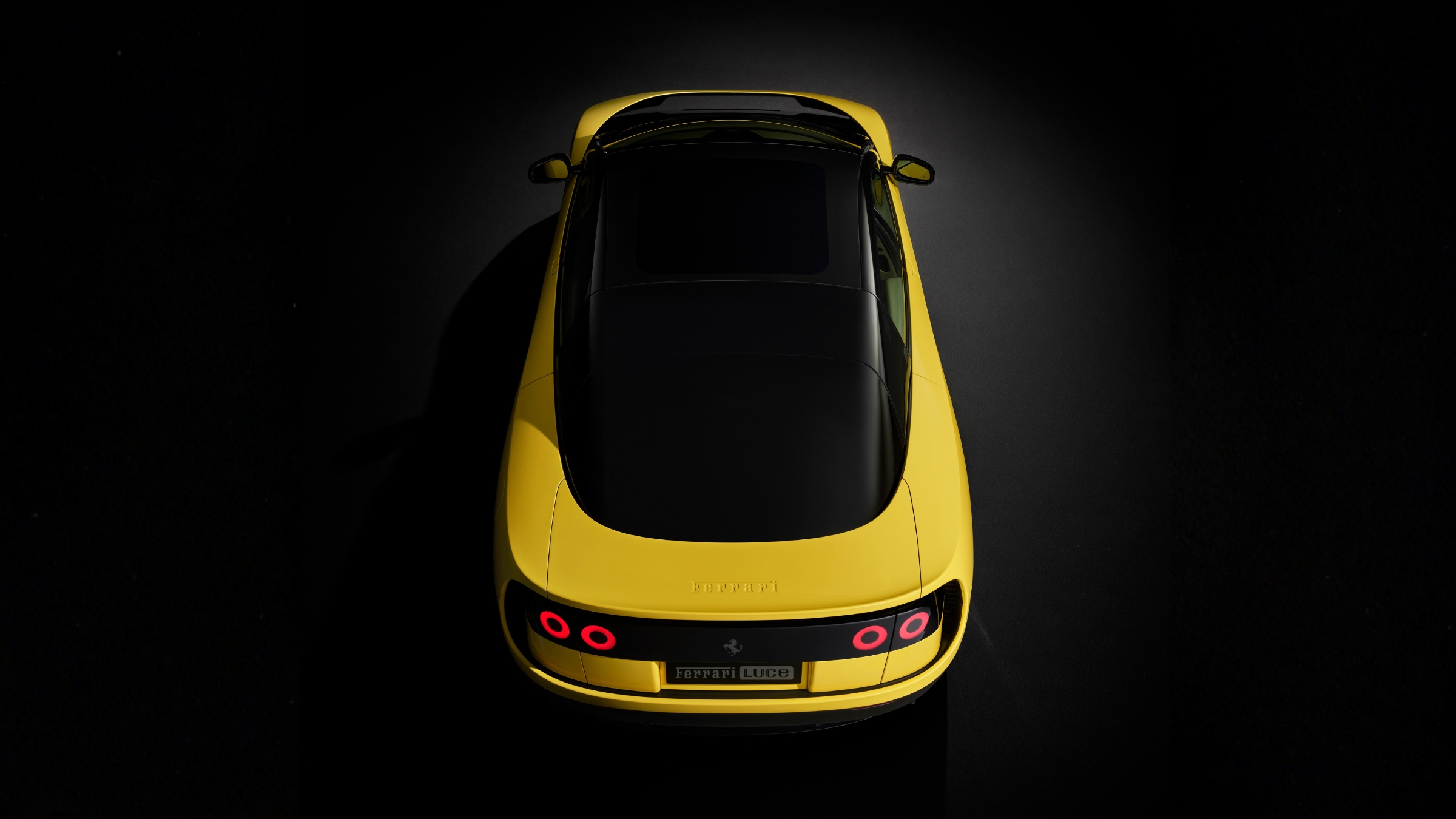
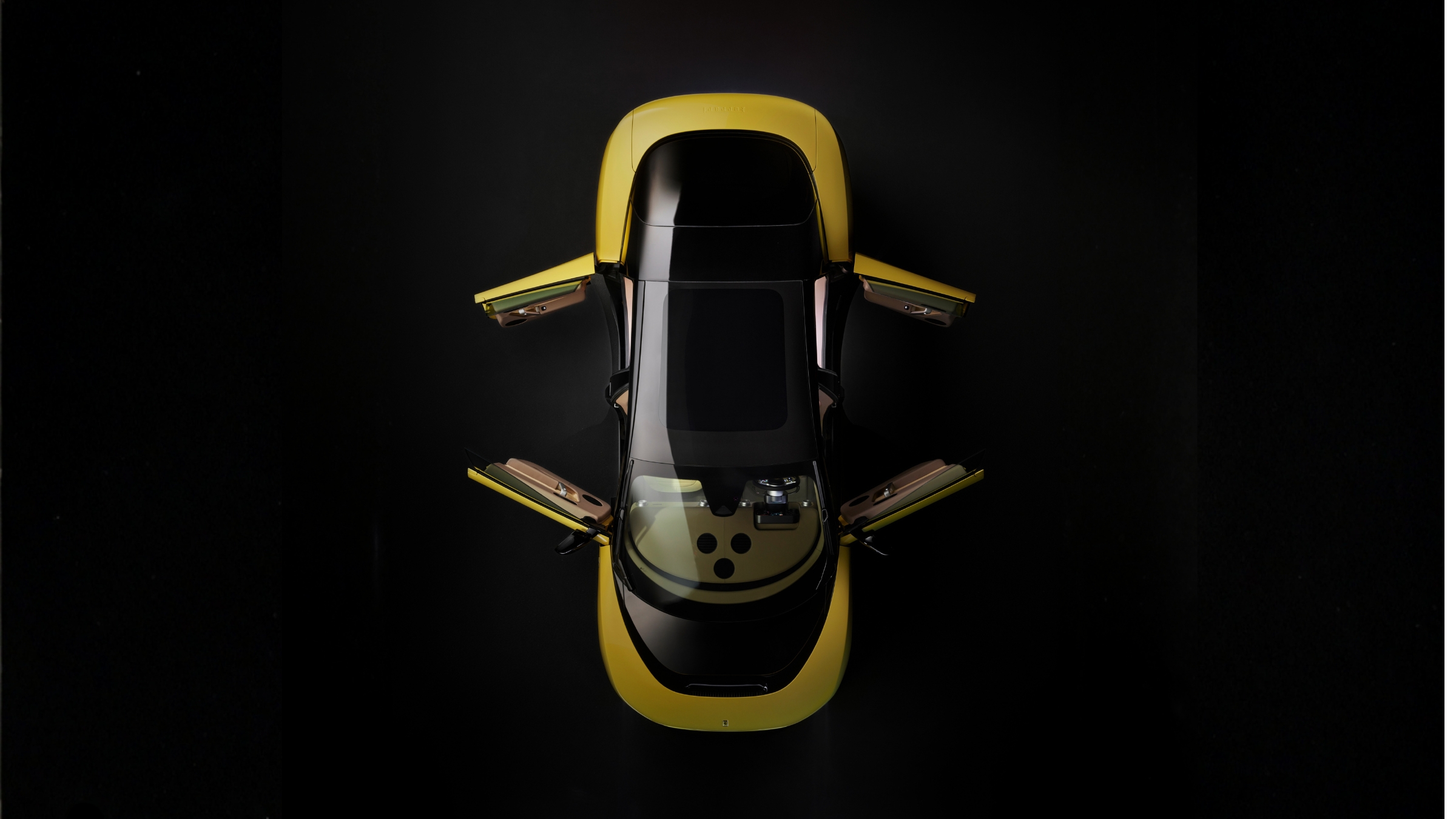
"If you have a mid-engined car and you remove the engine and fuel tank and replace them with a battery pack and electric motor, you’re not gaining anything in terms of centre of gravity or the moment of inertia. But by doing something bigger, we were able to deliver space for five people. The centre of gravity is lower, and we’ve improved the torsional rigidity by integrating the battery pack into the body. We’ve re-thought everything. As a result, 95 per cent of the components are new.”
A fully electric iteration of the F80 was explored – and discarded. “It was not winning at all,” admits Lanzavecchia. “You might complete two thirds of a lap of the Nordschleife and you finish the battery. In terms of packaging, aero efficiency and so on, philosophically it was not for us.”
There will be so much more to explore when we drive the Luce, but for now it’s worth mulling Ferrari’s aims here. The new car delivers unprecedented control of each wheel in all three axis – lateral, longitudinal and vertical – with particular emphasis on the lateral body dynamic. A new ‘vehicle control unit’ (VCU) oversees everything, and updates targets 200 times per second.
The Luce has a 122kWh battery and four e-motors, two on each axle, and optimum weight distribution. The front motors deliver 282bhp, the rears 831bhp, the peak output is 1,036bhp – slightly less than simply adding them. And there’s mammoth torque, of course, an almost meaningless amount – 5,900lb ft at the rear wheels.
Top Gear
Newsletter
Get all the latest news, reviews and exclusives, direct to your inbox.
There’s more. The front motors can spin at up to 30,000rpm, and can go from nothing to full tilt in less than a second. The driver sits further forward and closer to the front axle than you might expect, so there’s a greater sense of command at the wheel despite the car’s dimensions. The chassis and body consists of 75 per cent recycled aluminium, which dramatically reduces CO2 emissions.
There’s also a separate subframe for the first time on a Ferrari; it’s connected to the rest of the chassis by elastomeric bushes – polymers with a high viscosity – which helps reduce noise and vibration. Normally some crackle and snarl is exactly what you want, but maybe not on an electric Ferrari. There is sound, though, achieved by using an accelerometer and equalisation of naturally occurring frequencies on the rear inverter. Sound is vital, especially on an electric Ferrari.
Do we need to talk about power output? We live in a world which rewards insane amounts of horsepower, without really addressing the moral or legal consequences. Or the fact that, if we’re being completely honest, 2,000bhp makes a chocolate teapot look like a high utility device. So we admire Ferrari for stepping back from that particular race, and committing to a car that its owners will actually use. Mind you, anyone who believes that 1,000bhp-plus is insufficient needs to check in with their therapist pronto.
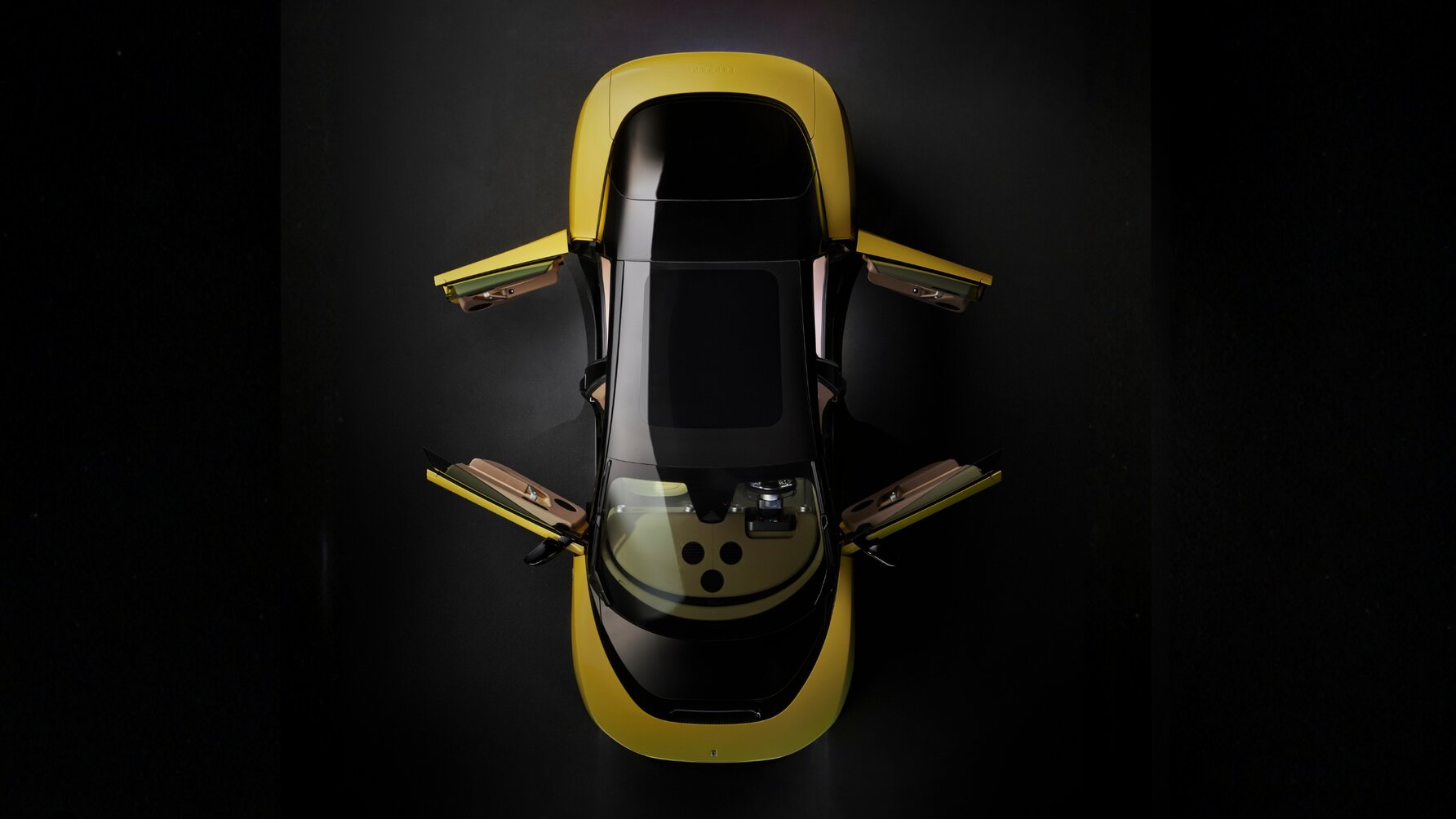
Now back to the way the Luce looks. This is a car with a clear point of view. Whether it’s one you buy into is up to you, but it’s highly considered and meticulously executed. It has rear-hinged doors, a distinctive cockpit complete with a ‘flying bridge’ C-pillar, and a genuinely concept-y vibe. The rear wheels measure 24in in diameter, the fronts 23. It pulses with cleverness and lateral thought, but it’s not a hypercar as we’ve come to define it. Instead, it’s something else. “We have to educate people,” Newson states. “If you ask consumers what they want, they’ll only be able to use their frame of reference. And all they can do is look into the past.”
During his time at Apple, Ive and his team transformed the nature of our relationship with computers – and technology. Previously beige boxes became ultra sleek, fetishised emissaries from a superior world, while the iPhone changed everything. But at heart, Ive likes things that are useful, that actually work.
“We were excited about a five seater car that was flexible, versatile and inherently luxurious. Of course, the price point means it’s exclusive but it’s more accessible and relevant. That’s a new paradigm, and also the biggest challenge…” His hand gestures to the roofline. “Imagine how much easier our job would have been if we’d been able to pull this point down two inches...”
The Luce still sits lower than the Purosangue but is chasing an alternative aesthetic. The monobox form is difficult to realise, and you can end up with a domed roof and sag at either end if the overall proportions aren’t bang on. It’s why the Luce’s passenger cell is cloaked in a form that encircles it. A car within a car, almost, that takes the eye on quite a journey front-to-rear. Ferrari won’t confirm the drag coefficient but it’s the slipperiest car it’s ever made.
The Luce has the power to amaze. The windscreen flows directly into what passes for a bonnet, which reaches an end point under the floating nose seemingly only a couple of inches off the ground. The lights are slender LEDs; there’s a vent beneath that feeds the HVAC. Few cars have fewer shutlines than the Luce, and the one between the screen and bonnet is a breathtaking piece of design and manufacturing technique. It’s clean and uncluttered.
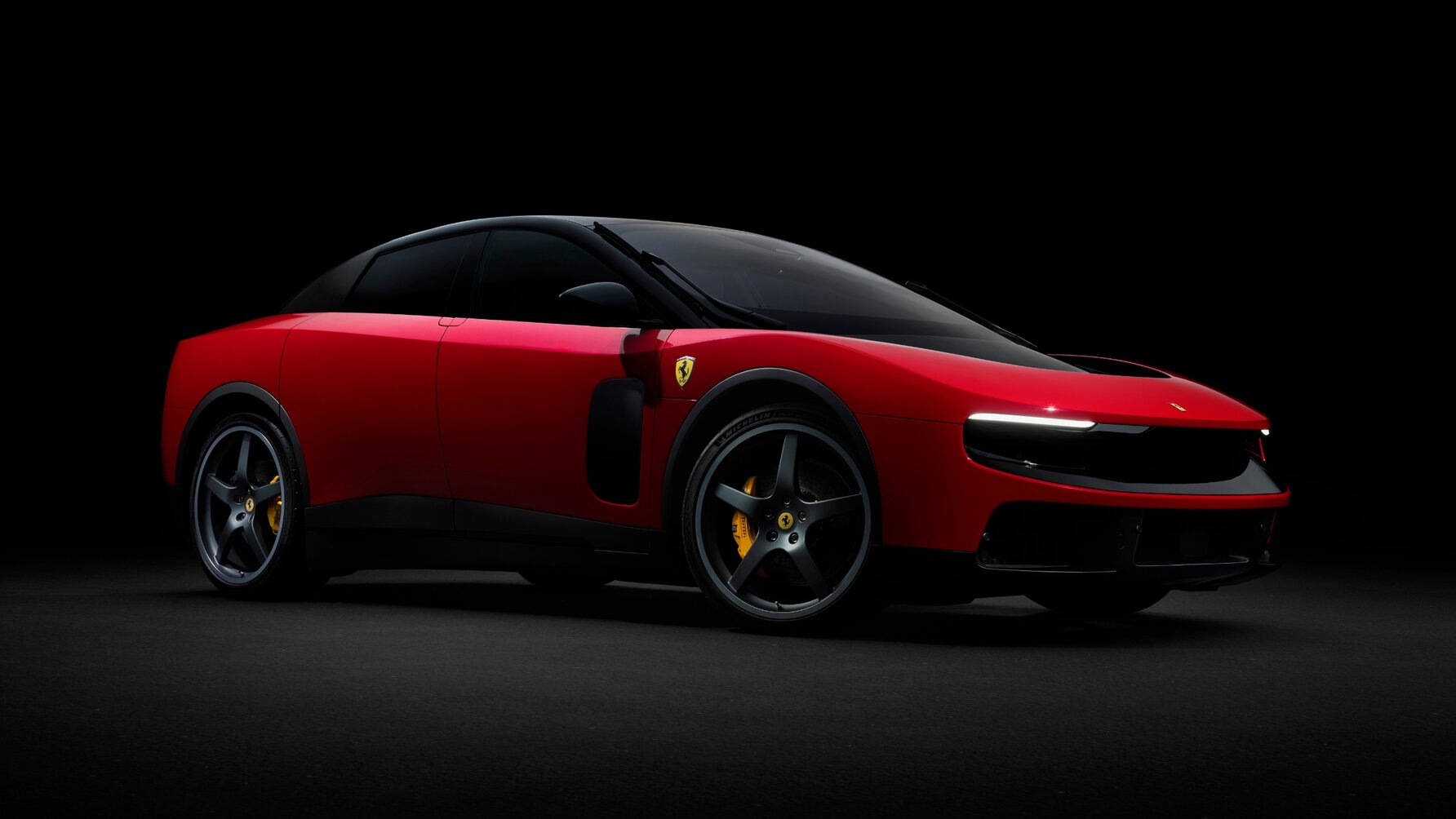
Ive lets slip that they wanted the entire front section to be made of glass, but that’s still firmly in the realm of concept car. The gap between the front suspension uprights and the body is tight as you like. Note the positioning of the wipers, which park at either side of the screen rather than the usual place.
Speaking of which, if anyone could devise a replacement for conventional windscreen wipers, it’s surely these guys. In fact, Ive says he’s been working on hydrophobic coatings with his glass supplier, but hasn’t yet figured out how to repel moisture. “But then the flying car in Blade Runner 2049 still had conventional wipers,” he says, “and I remember thinking, ‘you’ve got the car to f***ing fly but you still need windscreen wipers...’”
Ferrari’s guys were apparently shocked at how slickly LoveFrom’s early design models went together. But that’s an Ive/Newson trademark. They’re both design engineers, men whose approach is informed by an appreciation of how things are constructed and manufactured. To be blunt, they know their s***. They also know and understand how the supply chain works.
“We’re more interested in working with engineers than designers because we know how to build,” Ive explains. “We have guys in San Francisco with PHDs who really know how to put stuff together. We hold great engineers in such high esteem and Ferrari knows we weren’t just throwing stuff over the wall. It was certainly not a case of how hard can I stamp my foot in a petulant arsehole designer kind of way.”
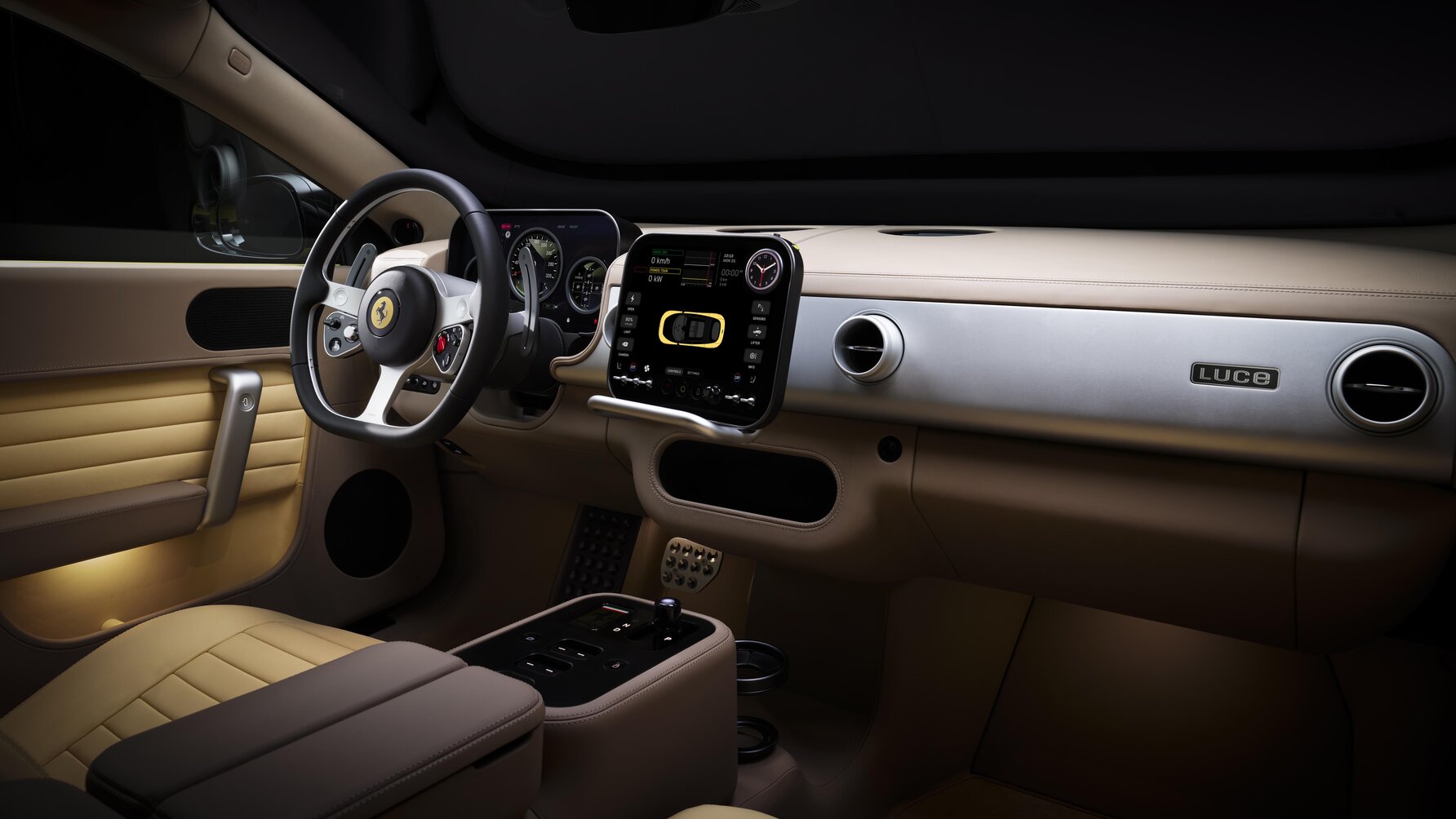
Plenty of people will sign on simply for the notion of an Ive-designed car. The interior doubles down on this idea. TG was in San Francisco in February for a preview, but the elements were presented separately, so it’s only now that we get to experience everything in context. Social media’s predilection for reasoned debate was in full effect back then, but we’re calling it: the Luce has the best car interior in the world (until we get to try the Bugatti Tourbillon, anyway).
One of Ive’s superpowers is being able to detect the level of care that has been taken over something. The quality is in the ether. That’s the case here, but the Luce is also highly tactile, and engineered with exemplary precision. Open all four doors and check out the fit and finish on the sills and pillar surround. Have a look at the hinges themselves, objects of sculptural beauty. Shut the doors and notice the double glazing.
Then you’ll take in the three-spoke wheel, a deliberate call back to Ferraris past; it’s made of recycled aluminium and contains 19 separate CNCed parts. A substrate spans the length of the dashboard; it’s machined from a solid piece of aluminium rather than being pressed, so there’s no bend radius to it.
You don’t even need to look at the central screen to find the climate controls; there’s physical switchgear with little protective bump bars to satisfy the regulators. The fan icon keeps spinning and speeds up as the motor behind it does. There’s a palm rest, so that operating the toggle switches is like playing a small piano.
The instruments ahead of the driver are uncommonly beautiful, with a physical needle in the speedo. The dials’ colour changes depending on chassis mode, but it’s the way the hue gradually decays that’s the really cool bit. The launch control lever is in the panel above, inspired by the instruments you’d find in a helicopter. The button to release the rear hatch has a little luggage graphic on it.
The centre console is designed like a self-contained product, one that makes glass the hero feature. That’s been developed by long-term Apple supplier Corning, whose work on the iPhone’s ‘gorilla glass’ has enabled them to create something both visually and practically robust inside the Luce.
The key lives in a special recess and uses ‘e ink’ so that the yellow in the Ferrari logo transfers to the drive selector when the key is docked. It’s another moment of theatre, of magic, really. As is the clock/compass combo on the central screen, which has a similar level of complexity to a high-end mechanical wristwatch. Even the seat runners have been reimagined, and they normally don’t get much love. “They don’t get any love!” avers Newson.
LoveFrom has an in-house typeface expert called Antonio, who grew up close enough to Maranello to hear Ferraris being tested. The Luce has its own font, called ‘LF Maranello’. The Ferrari logo on the bootlid can be laser etched, and you can dial its intensity up or down.
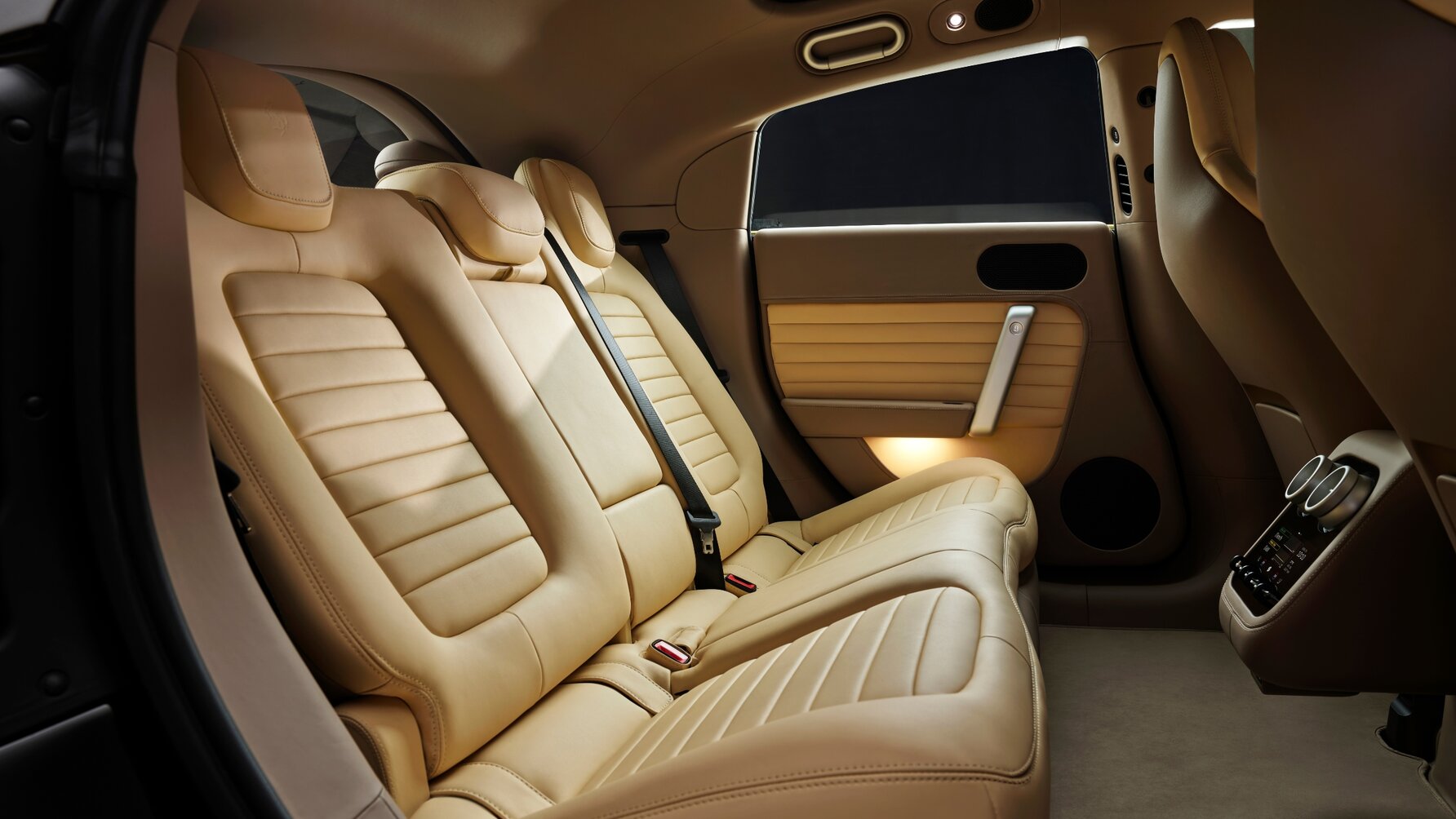
Newson has designed luggage and the first class compartment for Qantas, so he knows about maximising space and utility, as well as luxury. The Luce might well have the nicest looking boot compartment in history. It’s also huge. He talks about eliminating the “carbuncles” that can intrude on bootspace, and the speakers are sublimely integrated. The struts are smoothly actuated. This is also a Ferrari whose design is not compromised by the fitment of number plates.
Don't panic, Ferrari still sells 12cyl engines
“Collectively, I don’t think there’s anything we wish we could have done that we haven’t,” he concludes. “No one’s been rushing or pushing too much. It’s been really important to get it right. The whole point of the exercise was to be different. It’s a five seater electric Ferrari. We started with an electric platform and what you see here could only have been done on an EV platform.”
Ferrari, of course, will still sell you cars fitted with six-, eight- or 12-cylinder engines. So don’t panic if electricity doesn’t do it for you. The Luce is not an act of heresy. It’s doing what Ferrari has always done: look ahead. More ambitiously than ever.