


Big Reads
Alpine A290 vs Skoda Fabia 130: the battle of the... slightly warm hatches
Emissions regs have all but killed the hot hatch. So how can we get our kicks now? Simple. Turn the temperature down...
The Midlands in February isn’t great. Happy roads turned slick by winter and bitter by potholes, grey mizzle that sticks to waterproof coats and strokes damp fingers down the back of necks. But there’s redemption in the shape of small cars with slightly more power than the usual; chuckable, usable hatches that don’t cost the Earth and come with less emotional stress.
Though the cost thing is... debatable. In 2014, the Golf R was launched with 295bhp, all-wheel drive and a starting price of £29,900. In 2020, the 257bhp Toyota Yaris GR weighed in at £29,995, also with AWD. Yes, it sounds like the start of a rant about how things were less expensive back in the day and ‘this all used to be fields when I were a lad’, but when you remember that a 180bhp Fiesta ST started off in 2013 at £16,995 (although by the end, in about 2023, they cost about £27k and had 200-ish bhp), the current crop of warm hatches look stupidly expensive.
Advertisement - Page continues below
The 175bhp Skoda Fabia 130 we have here lists at a fiver under £30k. As tested, it’s over £32k, and not exactly dripping with extras. This Alpine A290 GT+ – that’s the 178bhp version – costs £34,595 without options. And yet, because it’s all made in Europe, batteries included, it qualifies for the full £3,750 government grant, dropping its list price to £31,045. So you’ve actually got a couple of very different takes on what it means to be a warm hatchback for very similar money, even if that money seems like a lot. Game, as they say, on.
Photography: Alex Tapley
The facts to grip are rapid rather than revelatory with these two; you will not be seeing God at the top of either relevant rev ranges. But they are broadly comparable, having almost identical power and both hitting 62mph in 7.4 seconds. The Alpine has more torque at 210lb ft, playing 184 for the Skoda, but the Alpine is also 277kg heavier (1,483 versus 1,206kg). They are both five-seat hatches, though the Skoda is notably more practical, having both a bigger boot and more accommodating back seats.
The Fabia is also, bluntly, more convenient. It’ll do 58mpg on a run, has easily 400-plus miles of range and can be topped up in the traditional manner. The Alpine – in the single digit temperatures we were testing in – ran to 150 miles of range from a full 52kWh battery, which became considerably less when pushed. Some 36 per cent less than the claimed 236-mile WLTP range. But that’s likely unachievable unless conducted in the same lab that does fireproofing for chocolate teapots. Oh, and 10 to 80 per cent charge with 100kW DC charging in 30 minutes for a small battery isn’t exactly nuclear.
Advertisement - Page continues below
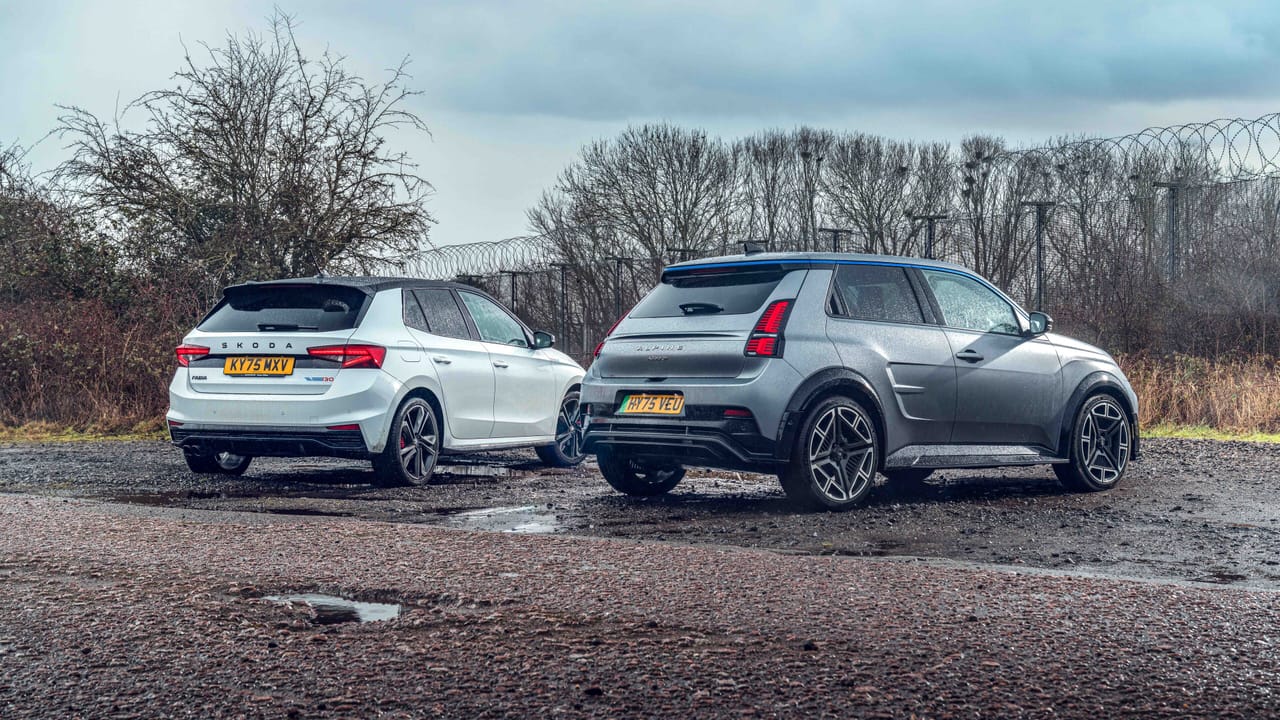
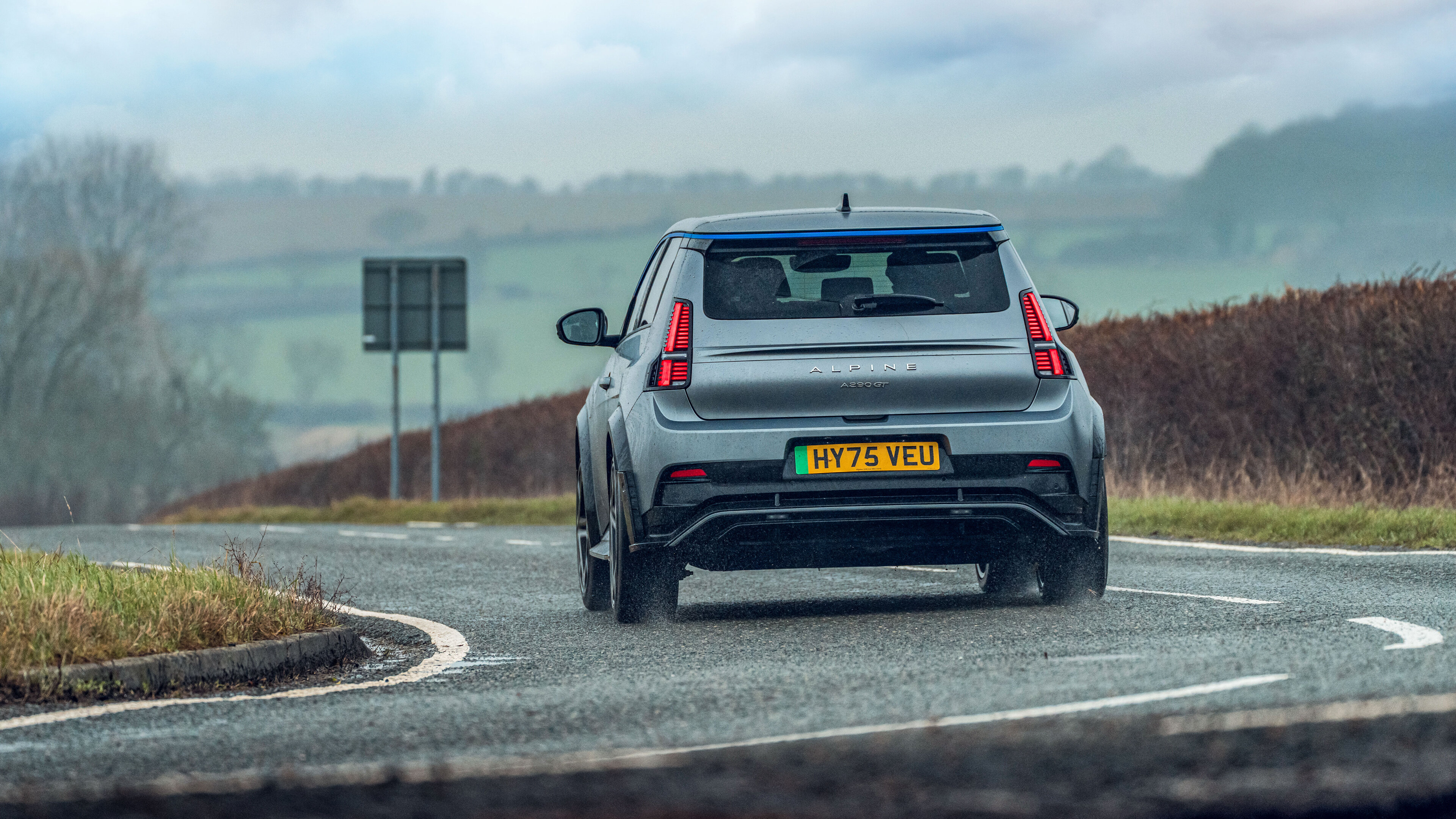
Thing is, if you can put up with the paucity of winter range, the Alpine A290 – even in this lesser horsepowered GT+ variant – is actually largely lovely. For a start, it looks much more special than the Fabia. Retro-chic and annoyingly on-trend, but done well. There are fake strakes on the rear wheelarches that don’t offend. A perspex box on the bonnet, coupled with weird little square rally style lights. A stumpy, all-fours look that reminds of the old R5 Turbo. Or probably more relevantly, the modern R5 Turbo 3e. Big 19in wheels pushed out to the corners and a pleasing crawful of attitude.
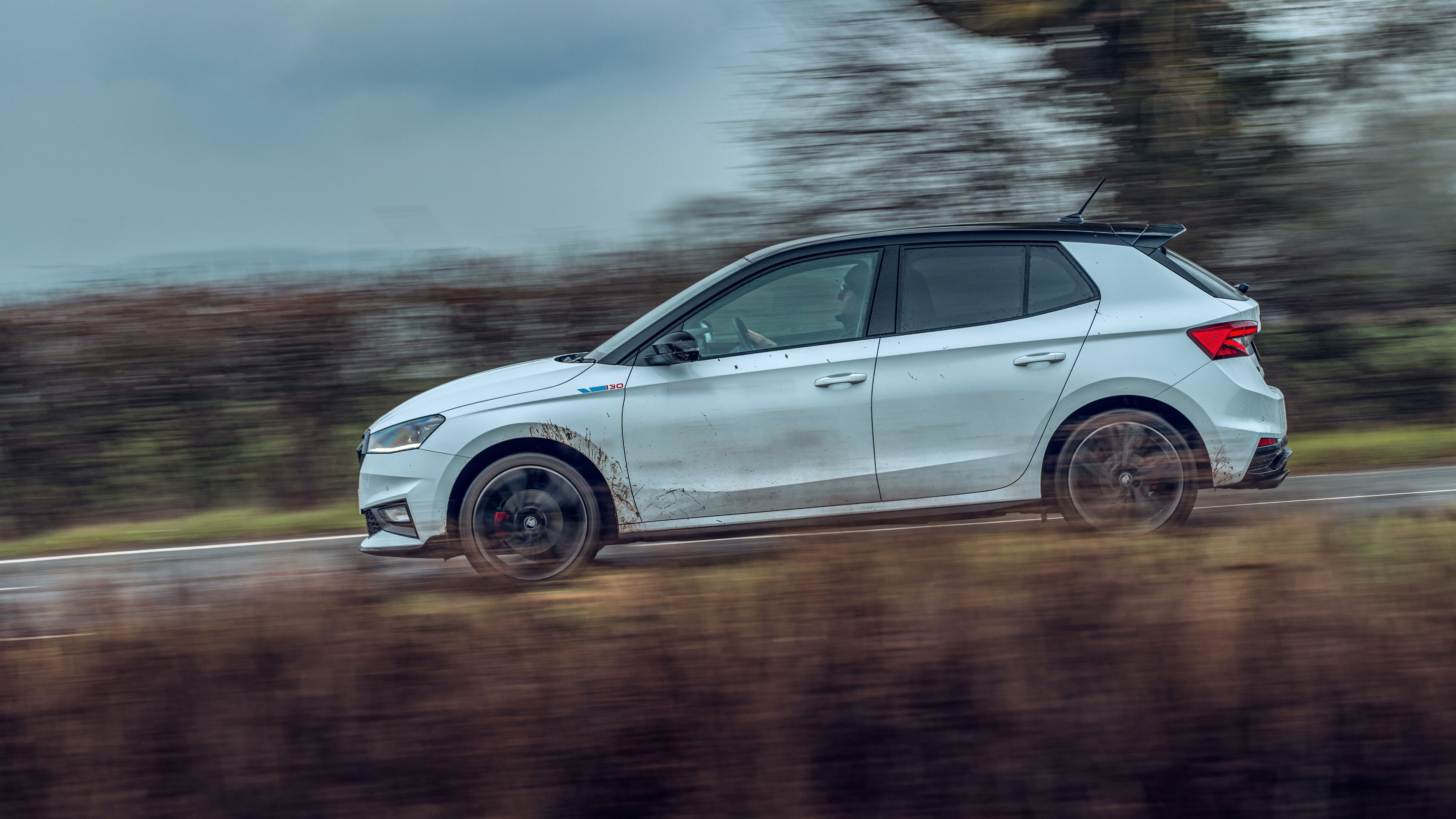
The flipside is the Fabia. This ‘130’ special edition (that’s both 130kW in new money and 130 years of Skoda, fact fans), basically gets some stickers, very slightly reprofiled bumpers and 18in ‘Libra’ alloys. Yes it’s 15mm lower, but it’s not exactly scraping the floor and to be honest, if the stickers came off, it’d be virtually indistinguishable from a more mundane model.
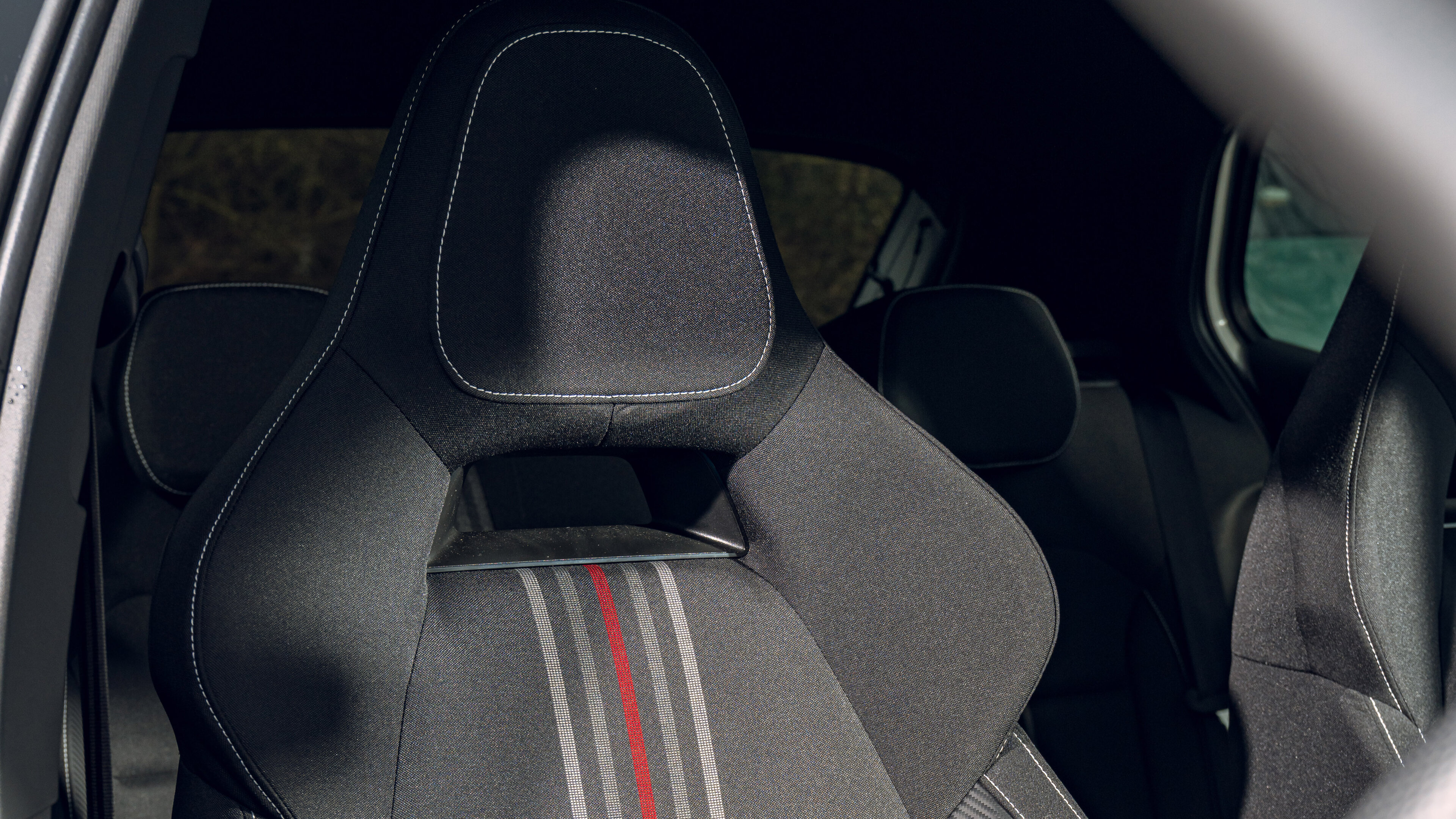
The same goes for the interiors. The Skoda feels like the physical manifestation of German efficiency: clean, clear and logical. It’s done well and feels nicely built, has attentive ergonomics and a pleasing lack of chintz. The seats are comfortable and enveloping, the general practicality obvious. This is route one warm hatchery.
The Alpine is more artistic – whenever it stayed still for long enough, the French would apply some quilting. Headliner, door cards, seats – it’s all been plushly stitched. It’s obvious from the inside that this is a Renault 5 doing some sort of baroque cosplay, but it’s fun and interesting, although notably smaller and less accommodating generally than the Skoda. Still, all the digital screens seem to work well, and it’s no real hassle – it actually feels like a much more expensive place to be. But if you’re looking at these two, chances are that you’ll have a passing interest in dynamics, otherwise you’d just buy the lesser versions and be done with it.
The A290 just generates more smiles
The Fabia should be the purest and therefore more interesting to drive quickly. But it never quite resolves. It’s talented but emotionally matte, lacking the glossy finish of something truly exciting. Mainly because of the gearbox. Nothing wrong with seven speeds of paddleshift in town, but next to the Alpine it feels elastic and overly thoughtful, an age of milliseconds between the push of the accelerator, the idea of the right gear and the actual manifestation of extra shove. It even slurs full throttle changes in Sport mode like it’s eight beers in and trying to explain something complicated.
Of course, the only option is to manually paddleshift all the time, but that feels like you might as well have an actual manual, where you rejoice in the connection while getting some minor cardio in. It would make the 175bhp more accessible, less obscured behind a paywall of electronic call and response. There’s an added complexity here that isn’t paid for with effectiveness.
Top Gear
Newsletter
Get all the latest news, reviews and exclusives, direct to your inbox.
On the positive side, the Skoda feels lighter and more deft from the off. And it is. It’s a traditional front-wheel drive chassis with more grip and talent than outright power, so speed conservation and momentum become the games that you play. It’s very solid. But again, the ’box is subtly wrong. Out of focus through the lens of this particular car. Spontaneity swallowed up by lack of reaction. Something put into stark relief by the A290's electric reflexes.
Indeed, the Alpine is the surprise here because in basic driving terms, it’s more enjoyable than the traditional car. Not perfect, but it has a kind of hectic purpose that’s hard not to appreciate. The laminations of feeling are, weirdly, thinner with the EV. It’s more direct and eager. There’s less pregnancy of intention and action. The steering is light and fast, eager and pointy: the better to slip the lie that the A290 is light. It isn’t. As mentioned, it’s a quarter tonne heavier than the Skoda, dense work in a short chassis.
The distance on the dynamic map isn’t all that far from the Renault on which it’s based, but there’s more urgency in the responses and greater grip, as if the car is pre-loaded for the corner instead of the standard 5, which requires an element of notice. Strength and conditioning. And it’s a wonder, but it actually rides very nicely, even on 19in wheels. Rims that give it a very wheel-at-each-corner stance. It’ll still clatter through a pothole, but dampers only reach so far, and gun it from a wet junction and you’ll get a wristy shot of torque steer. Generally though, it’s a darty, fun thing to drive, if not the fastest or most natural.
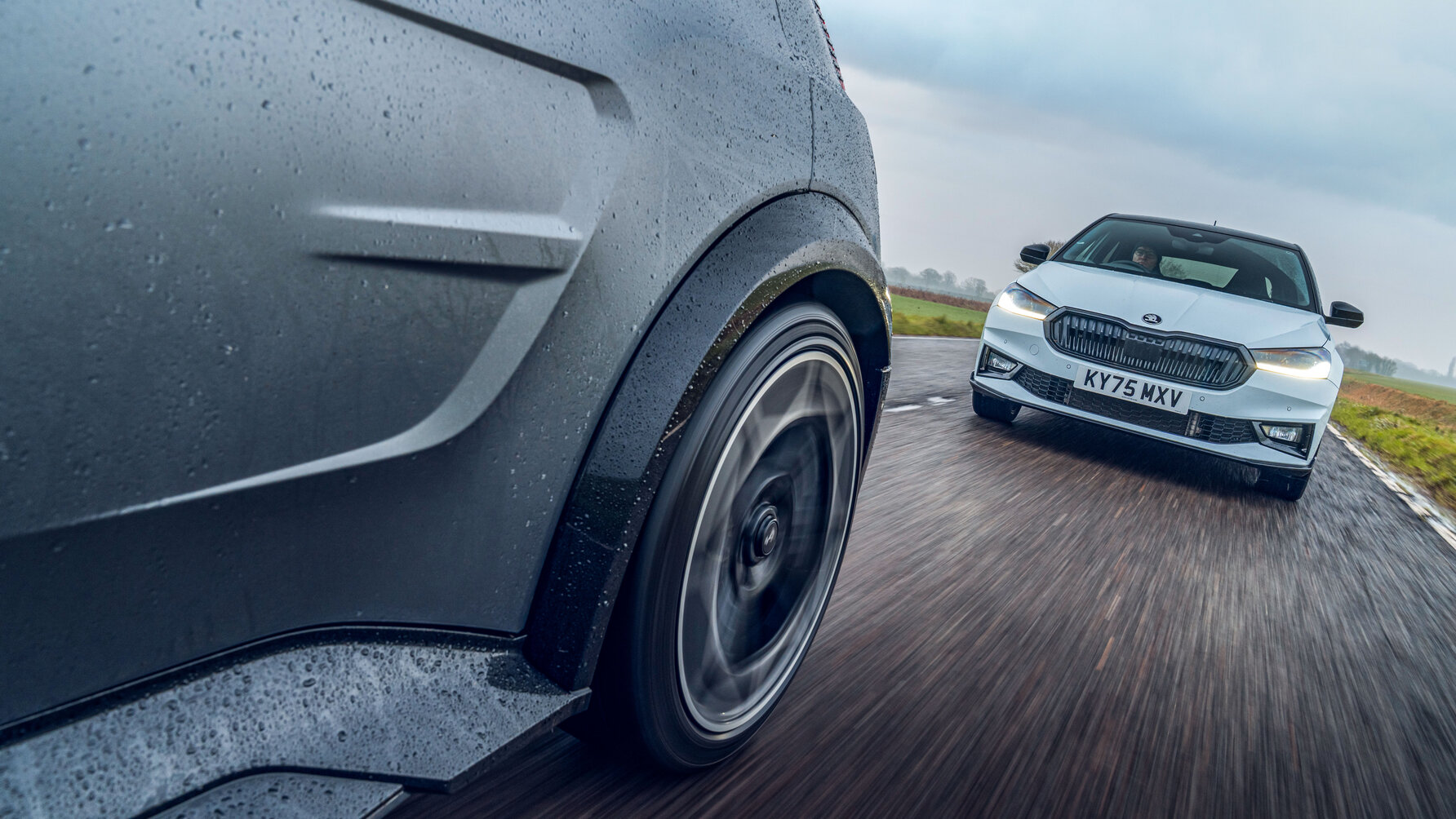
It also needs a bit more feel on the brakes. When wet, cooled by rainy spray, the first bite feels like they’re track-glazed and uncertain. Four-pot Brembos on the front and drums at the rear – it sounds like an old school setup, but EVs tend to not require a more complex or hardcore rear braking system: it’s almost like they’re using the fronts with the rears as a dragging plough of balance. But there’s definitely a lack of feel. That initial stomp on the pedal comes with the vague numbness of old anaesthesia. It warms up, but this isn’t a car that you can be shy in if you really want to stop. The Fabia stops assertively and easily, without trying to blend regen and friction elements, no doubt helped by not being quite so lardy as the Alpine. It’s more natural.
But the fact is the Alpine A290, even in this lower powered guise, just generates more smiles. It’s rapid and responsive, tied down and regular. Feels a bit faster than it is, simply because the throttle reacts instantly, turns hard enough. The Fabia is slightly at odds with itself, with that gearbox slightly mis-sold. If you marketed this car as the top spec Fabia that would be fine – but the explicit sporting pretension doesn’t materialise enough. They’re both good cars. But at this level, and with the almost price parity, the Alpine feels like you’re getting more car for the money, in terms of surprise and delight and dynamics. And for those reasons, it’s the Alpine that reaches the summit first.
1: Alpine A290 GT+ 7/10
There’s a lot to like about the A290, from chunky, interesting styling to pleasingly chuckable dynamics. It’s the car that feels like it actually could cost £30k. If you can live with 150-mile winter ranges, it’s a lovely little thing
2: Skoda Fabia 130 6/10
The fast-ish Fabia means well, but the DSG doesn’t suit it as well as a manual. A reliable and predictable chassis and some good suspension work means it’s not a terrible choice, but really, it ought to be £3–5k cheaper