Big Reads
Freshly minted: is the Codalunga Speedster *peak* Pagani?
The Zonda is the boss, the Huayra a rush and the Utopia pure art... but could this Coda be the ultimate?
On my desk as I write this, weighing down an untidy pile of receipts to expense and envelopes I’ll put off opening, is a little sculpture of a Pagani Huayra Codalunga Speedster. It glints expensively but weighs almost nothing, because it’s milled from the same aircraft grade aluminium Pagani deems worthy of its real cars.
Each new Utopia is home to over 700 CNC-machined parts. The slender steering wheel starts life as a 40kg cylinder like a wheel of cheese. The delicate throttle pedal is withered away from a block bigger than your TV remote. And the swarf isn’t melted down for the next batch of bits. It’s sent off to industries who obsess less over quality. Even little keepsakes like an exquisite paperweight don’t use offcuts. That’s not the Pagani way.
Advertisement - Page continues below
I only mention that miniature memento because like the scarf received by the little boy in The Snowman, it’s tangible evidence this day ever happened. A hazy dream on one of Italy’s best kept secret roads, in what should be the final branch of the Pagani Huayra family tree. If the factory can bring itself to stop...
Photography: Mark Fagelson

It’s the day after we shot the three Pagani Roadsters you recently read about. Jethro’s flown off to drive his thirty-seventh new hypercar of the working week, and I’ve stayed behind with photographer Mark and video team Harry and Mitch to meet one more Modenese aristocrat.
It’s a late arrival from a VIP event on the other side of Italy where it’s been holding court with Pagani’s most fanatical customers. The 15 year old Huayra has now arrived in the Pagani retirement phase. It’s been replaced, we’ve said our farewells. But Pagani just can’t resist another special. And another. Go on then, just one more. A coda. A stretched one. The long goodbye.
Advertisement - Page continues below
It’s 6.30 in the morning as our chocker hire car rounds a bend on the Strada Statale 17 to reveal the valley where a 1:1 scale Huayra Codalunga Speedster has recently vacated its transporter. We’re chattering away making a shoot wishlist but the car falls silent as this shimmering pistachio speck draws nearer in the windscreen, an art-deco spaceship sent from the future by a race of steampunk superbeings.
As decreed in the ancient supercar scrolls, all car names sound better in Italian, and this last hurrah (yeah, right!) Huayra agrees. It’s the longtail, inspired by the flowing aerodynamic flourishes of late 1960s and early ’70s racing cars. Horacio Pagani himself has recently added two restored Porsche 917s to his personal collection. He adores this era of primitive aero and stunning profiles. But in Italian, you don’t mutter ‘long tail’. You say ‘Codalunga’, with a flourish.
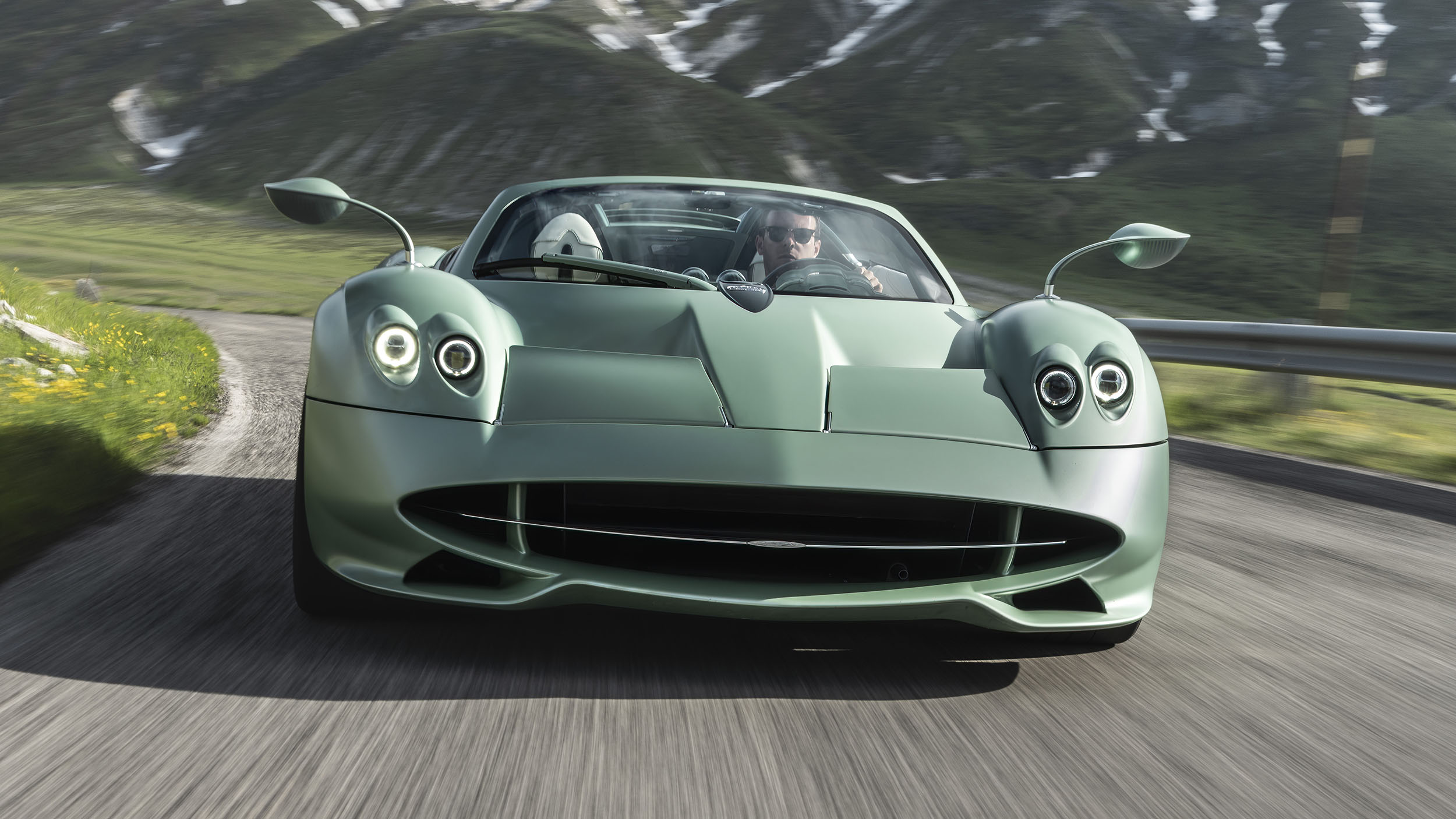
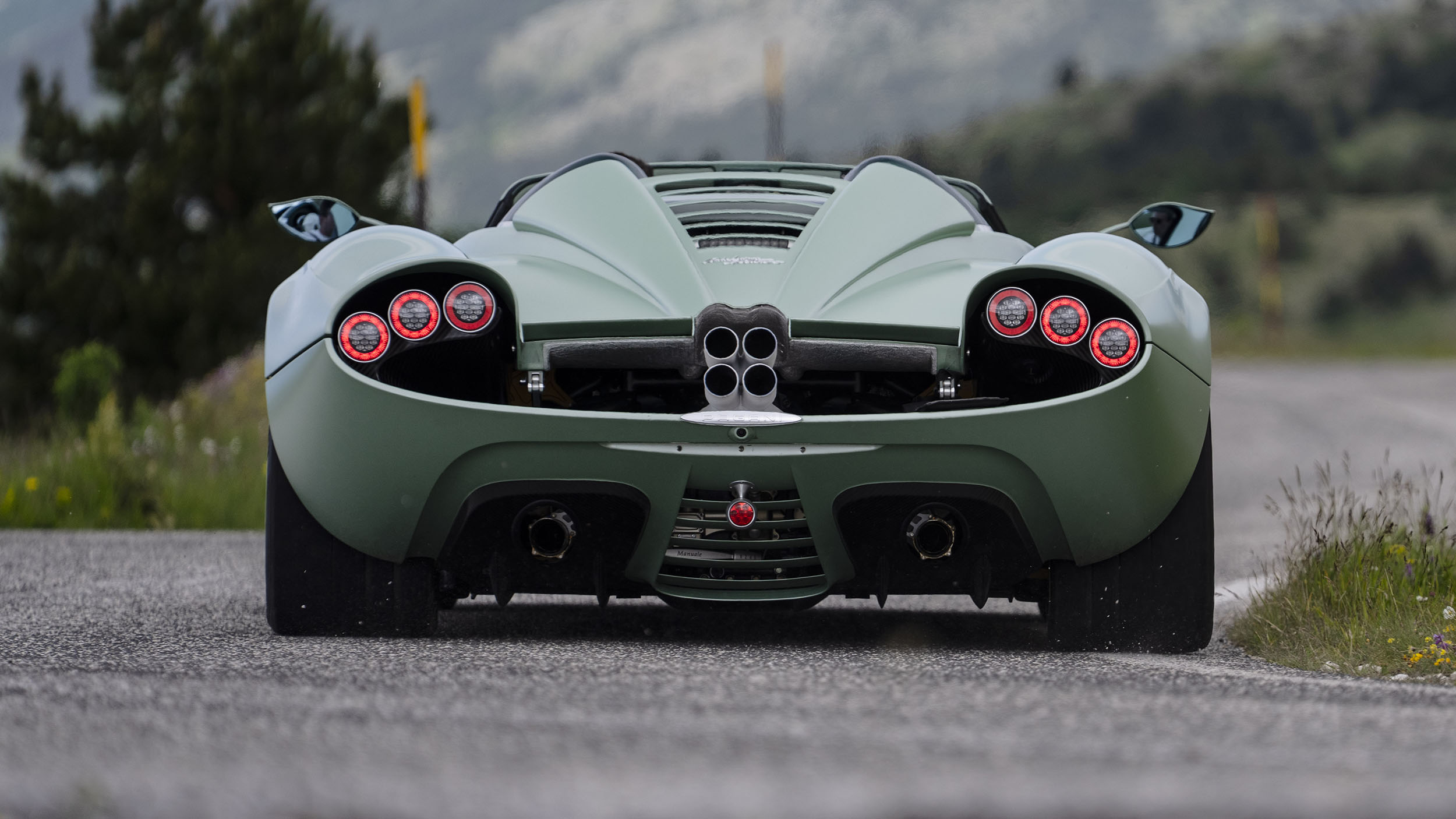
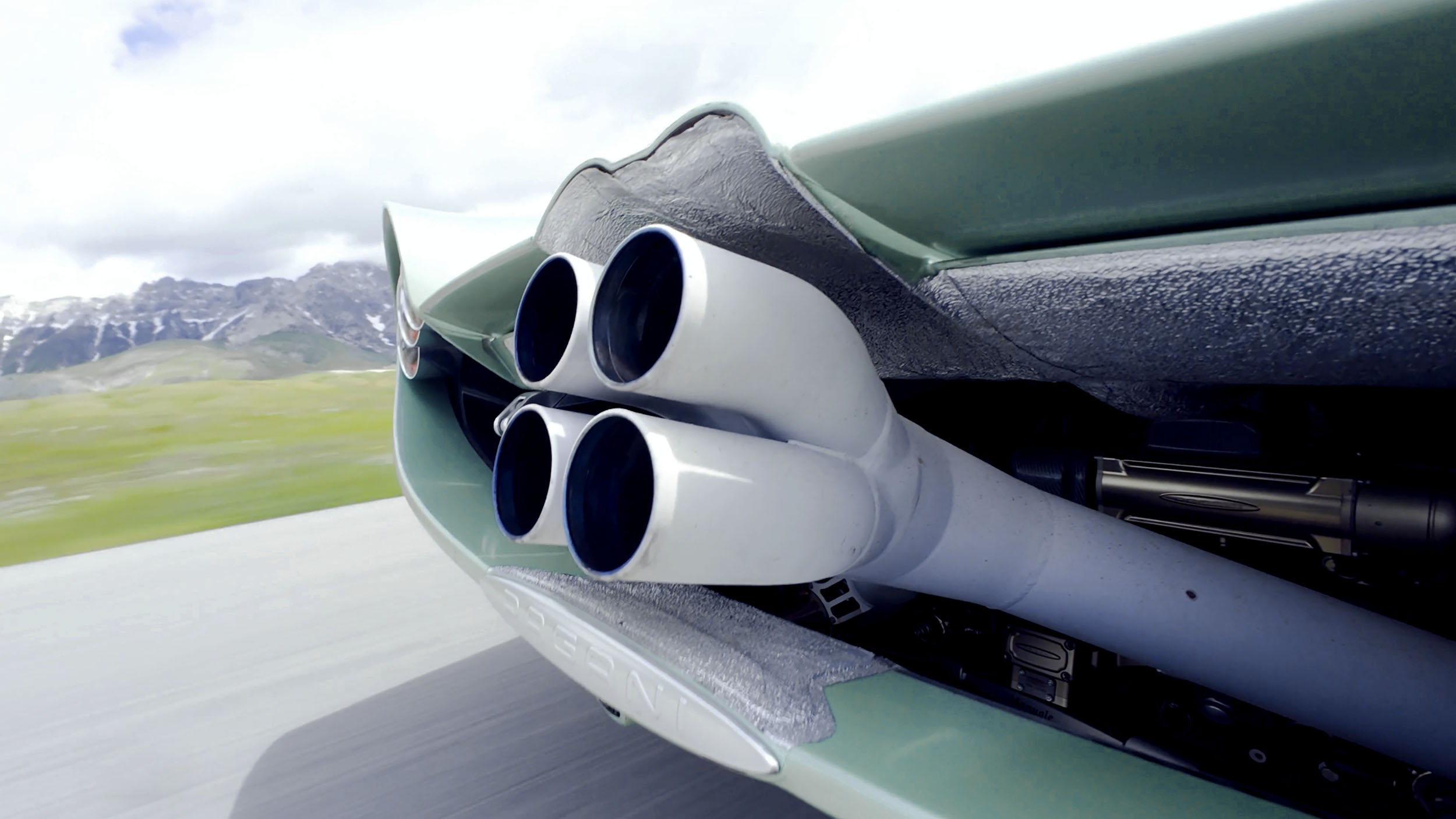
It’s a product of what Pagani calls, and I promise I’m not joking, Grandi Complicazioni. That translates as ‘major complications’, and it’s the sector deep inside Pagani that deals with the bespoke, the rarefied, and the demands other Pagani owners dare not ask for. In this case, a Huayra that doesn’t share a single panel with the standard car.
I circle it digesting the wilfully lavish proportions. The tail stretches 360mm further than your boggo Huayra. The whole car is almost five metres long. The rear clamshell alone is a 3.7 square metre savannah of slatted carbon fibre: bigger than a regulation pool table.
Grandi Complicazioni has previously dreamt up unicorn limited editions like the roofless Zonda HP Barchetta (only three built), the Huayra’s evil track-focused cousin Imola (six of those, plus eight roadsters) and five Huayra Codalunga coupes complete with an 828bhp version of the 6.0-litre twin turbo V12.
The Codalunga Speedster is actually common as muck for Grandi Complicazioni. Minty fresh here is the factory prototype but they’ve sold 10 customer cars. Depreciation’s gotta sting, eh? Should you be among the 10 and beset by owners of hard-top Codalungas gloating their car is rarer, you can retort that your Speedster is more powerful. The version with the removeable one-piece roof has 852bhp. Twenty four more. And is therefore better. Welcome to the joint most powerful road-going Pagani yet.
But you needn’t worry about the roofless Coda having the structural rigidity of a politician’s spine. The Speedster’s super strong carbon fibre and titanium spliced monocoque chassis is unique. The windscreen is severely chopped too. Those are expensive procedures if you’re making a thousand cars, never mind 10, and partly explains why each Speedster costs €11 million. While the camera botherers swarm it with suction cups, tripods and mounts, I tell myself I’m taking my time to absorb the details.
Top Gear
Newsletter
Get all the latest news, reviews and exclusives, direct to your inbox.
I love the foglight pod like a tailgunner’s outpost in a World War Two bomber, the two extra exhausts built into the ramped diffuser, and the racecar-like meshless rear inviting voyeuristic glimpses of the engine beyond the ceramic pipes.
It’s even novel to see a Huayra wearing paint. It was Pagani who invented, popularised and perfected tinted clearcoat carbon fibre bodywork, so it’s vanishingly rare to meet one that hides its herringbone carbon weave under a layer of colour. The kitsch paint and smiling eclipse mouth gives the car a friendlier demeanour.
Unless you’re a commander-in-chief there’s always joy to be had pushing a big red button
Really, I’m stalling because I drove a ‘normal’ Huayra seven years ago and was ever so slightly underwhelmed. Admittedly it was the same day I first drove a Zonda – the 1999 Geneva Motor Show car which was literally the first naked carbon supercar ever – and following that is tricky. Imagine winning a raffle the same day you lose your virginity. Nice, but unlikely to live as long in the memory.
I hated the hesitant flappy paddle automated-manual gearbox. The turbocharged engine lacked the Zonda’s life-affirming crescendo. Somehow, I didn’t fit inside as comfortably. It had all the artisanal theatre and truly spectacular power, but just wasn’t quite as nice to drive as I was hoping.
These final (hah!) Huayras have a new generation of the AMG V12, but the 120bhp bump isn’t as important as the engine control unit rethink that at last allows a proper manual. Dropping inside onto seats angled as standard to Italian playboy recline, the new centrepiece promises to transform the experience. It’s a seven speed, dog-leg, open-gate operation with a ballet of exposed aluminium linkages garnished with a polished wooden ball, matched to the glossed wooden steering wheel. How evocative can you get?
A big red button. Unless you’re a commander-in-chief there’s always joy to be had pushing a big red button. The Codalunga’s V12 knows what’s expected of an Italian supercar: gratuitous starter motor crank, a grand flare of revs then the malevolent, bassy idle. Inside, needles sweep around milled clockfaces you can’t really read. Click the Aero toggle switch for some performative theatre, as the active flaps undergo their pre-flight checks.
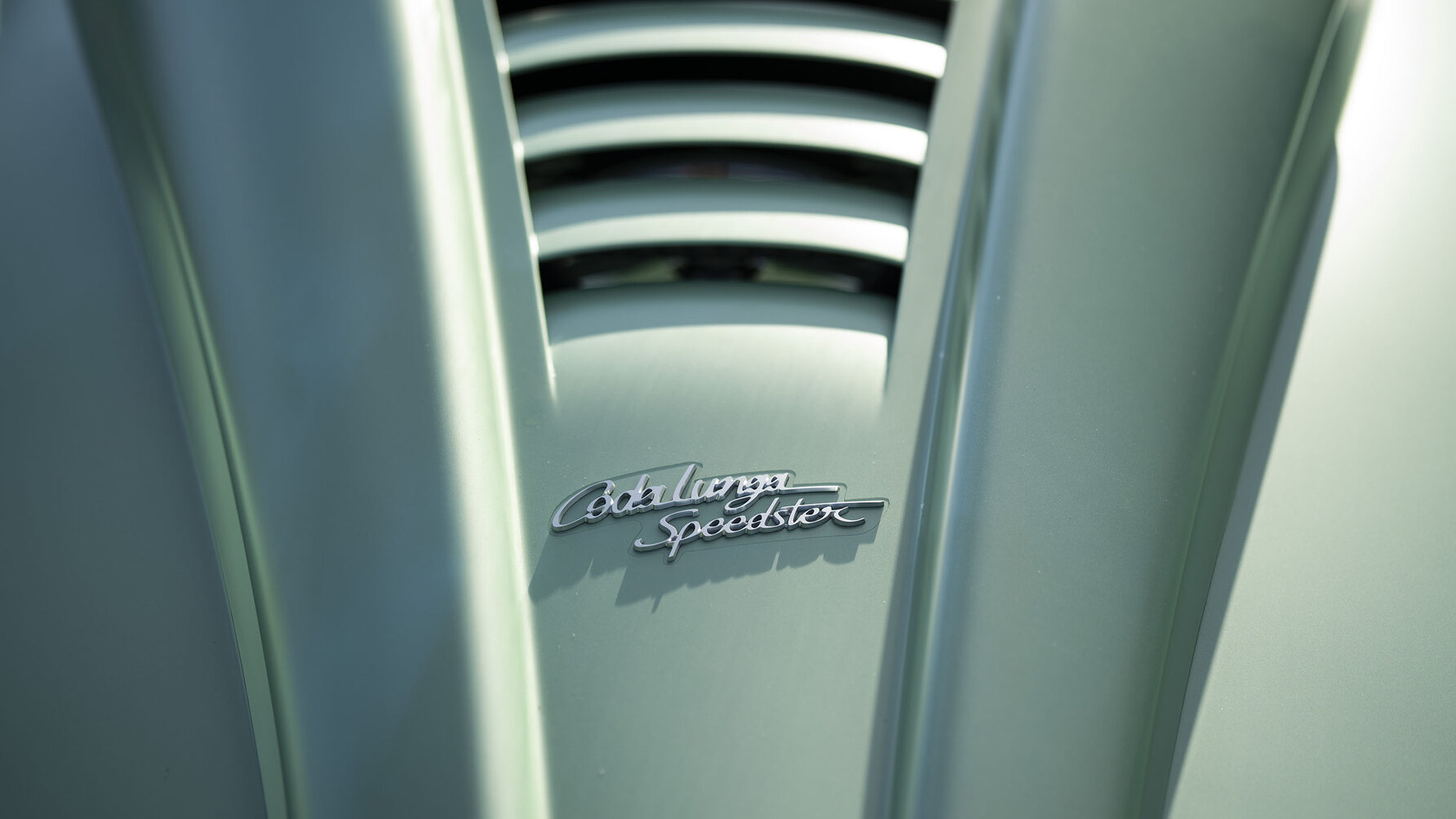
Because the Speedster’s aerodynamics are so different to a standard Huayra, Pagani has totally rewritten its algorithm, just for 10 cars. The attention to detail goes much further than just the 1950s Americana paint scheme and the quilted exhaust-motif upholstery, formed of over four million individual stitches with matching hand luggage cocooned in the saddlebags.
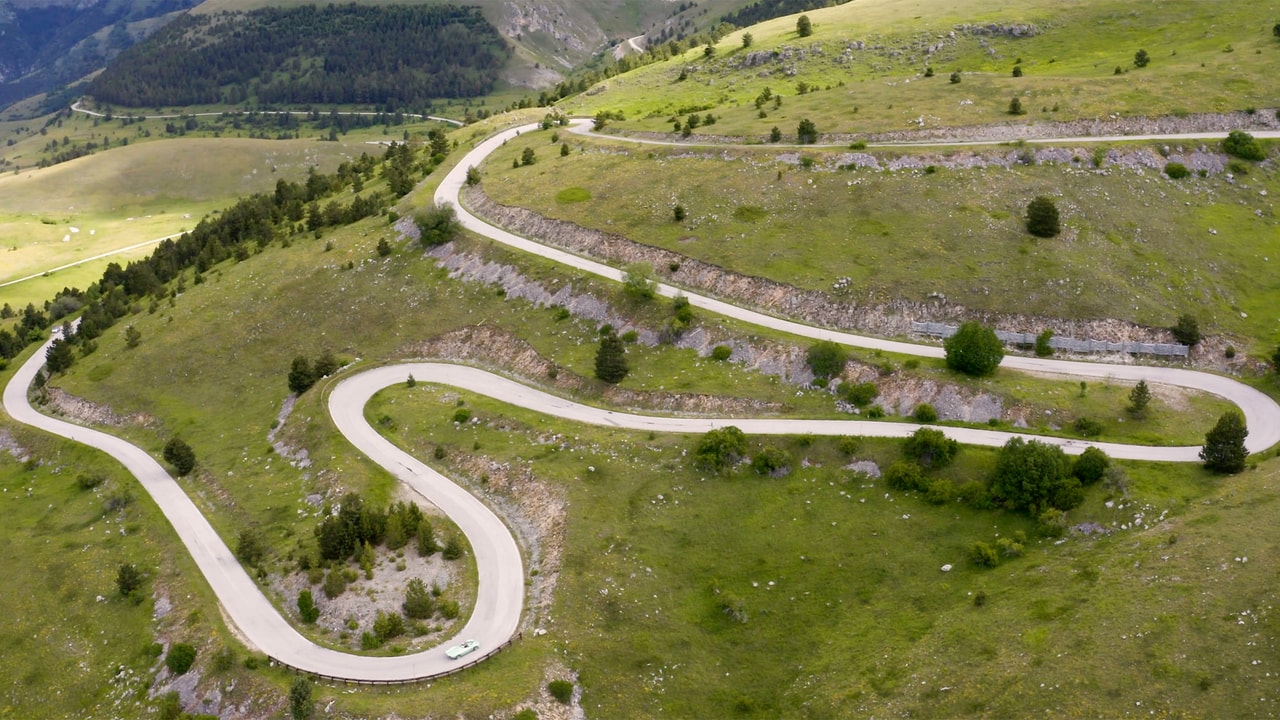
Saturday sunshine has summoned every campervan and cyclist in eastern Italy to this usually deserted ribbon of Apennine road and the owners of every single one want a Speedster selfie. They block the road in lycra-clad indignance until I indulge them with revs or a flypast. The local carabinieri arrive on the scene in a textbook Fiat Panda 4x4 and intervene with enthusiastic hand gestures and what sound like impressed swear words.
So we’ve arrived at the moment where I describe what the Speedster’s like on a public road. Except, sorry to puncture the moment, but does that even matter? When a car is this rare, this expensive and drips with so many details, the idea of using it as transport is like using the Statue of David to hang your coat. It’s certainly not a supercar which fills the Gran Sasso valley with shrieking, baleful songs like a Zonda. It’s an interesting, weird, intimidating noise. V12 on bass and the turbos hissing and sucking, dumping and chirruping.
It has a Bugatti W16’s sense of greedily feasting on all the air it can inhale, sucking it clean out of your lungs. But if you’ve got a Codalunga, you’ve also probably got a Zonda, a LaFerrari, a T.50, an LFA: you’ll own operatic cars. Even Horacio himself doesn’t drive to work every day in a Pagani. He uses his Porsche 918, his Ford GT, his Jaguar E-Type and even a MkI Honda NSX.
The Codalunga accelerates like a skydiver
Supercars are about different sensations, the main one here being ferocious power. The Codalunga accelerates like a skydiver. I’ve driven Bugattis with twice the power of this, I’ve driven a Rimac with almost three times the power, but the Pagani is somehow even more shockingly savage, maybe because you don’t expect art to be capable of such raw brutality.
It’s like AMG bottled up all its frustrations at having to make hideous electric cars and poured it into this psychopath. Finding the nerve to use all of the throttle in first or second and even third takes strong minerals. Every time I squeeze the throttle, unleashing the boost is like a blood transfusion of triple espresso. But traction is sturdy, the steering isn’t hyperactive and the brakes bite hard. The last Huayra rides more compliantly than the first. Everything’s had its game raised to match the titanic engine.
And the gearbox? It’s an acquired taste. An offset first with seven speeds sprung to centre in fourth and fifth, it’s a new path for your H-pattern hand to learn and despite bristling with delectable aluminium, the linkages are well bushed and don’t click-clack as metallically as I’d expected. Smoothness doesn’t come instantly – like the monstrous engine and the Coda’s sheer size, it all takes warming to. In a world of instant gratification, a Pagani still teases and titillates.
But compared to the staccato delays and pongy clutch of the paddleshift ’box, being entrusted with the old school shifts is terrifically rewarding and the monstrous torque becomes your friend if you don’t quite nail the upshift. Grabbing a lower gear is easy, with lovely heel and toe pedals and even an auto-blip option.
And that’s what I love most of all about this Codalunga, and all Paganis. Even when they’re only making 10, under all the pantomime, the da Vinci meets Tony Stark art-tech and the sheer excess, they’re properly sorted, reliable, fully realised and finished sports cars. I hope the lucky 10 realise that too. The Codalunga – and any Pagani – deserves to be so much more than an expensive paperweight.
Pagani Huayra Codalunga Speedster
Price: €11 million (+ taxes)
Engine: 6.0-litre twin turbo V12, 852bhp, 811lb ft
Transmission: 7spd manual, rear-wheel drive
Performance: 0–62mph in 3.0secs (est), 217mph
Weight: 1,270kg (dry)