



25
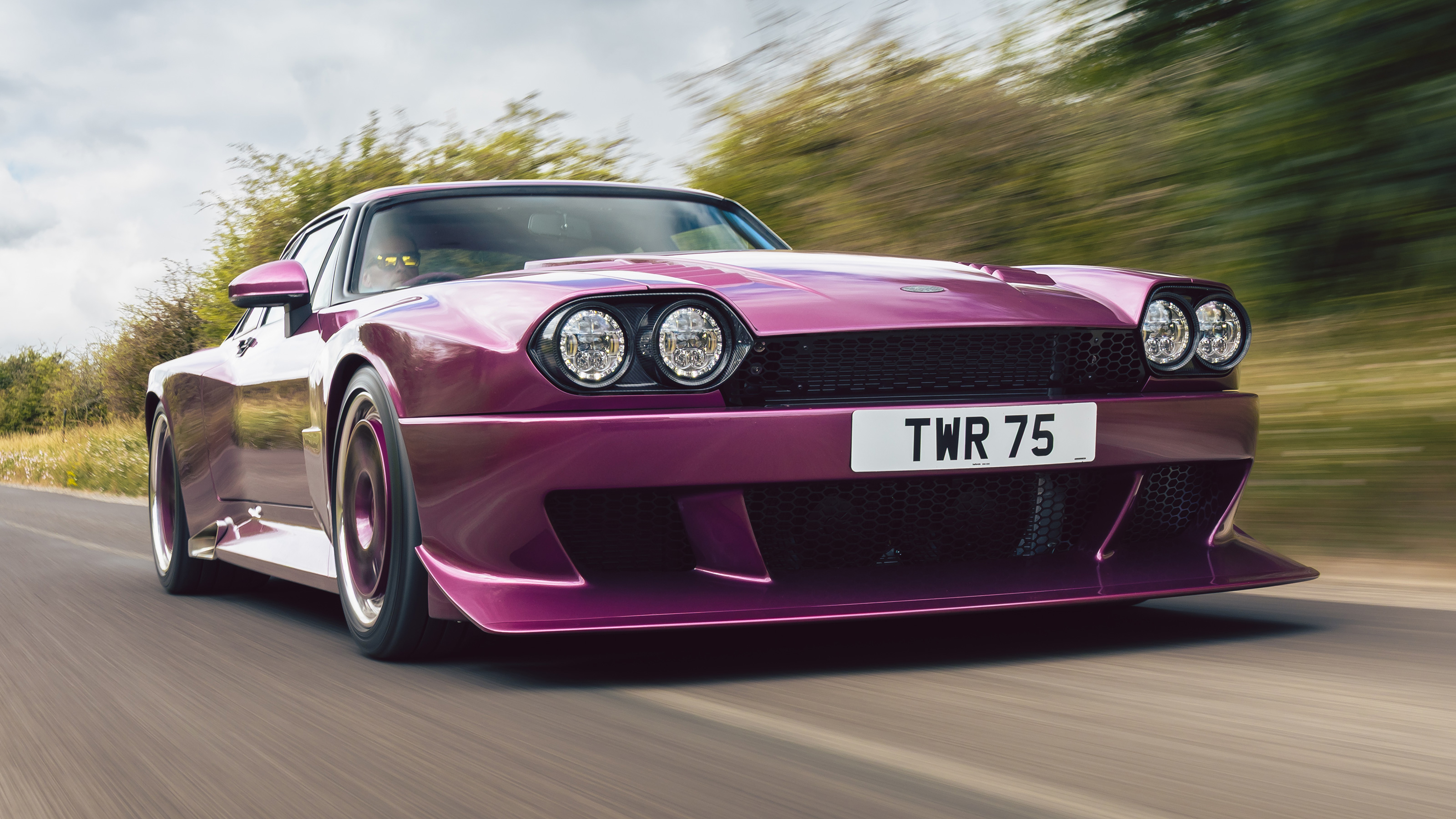
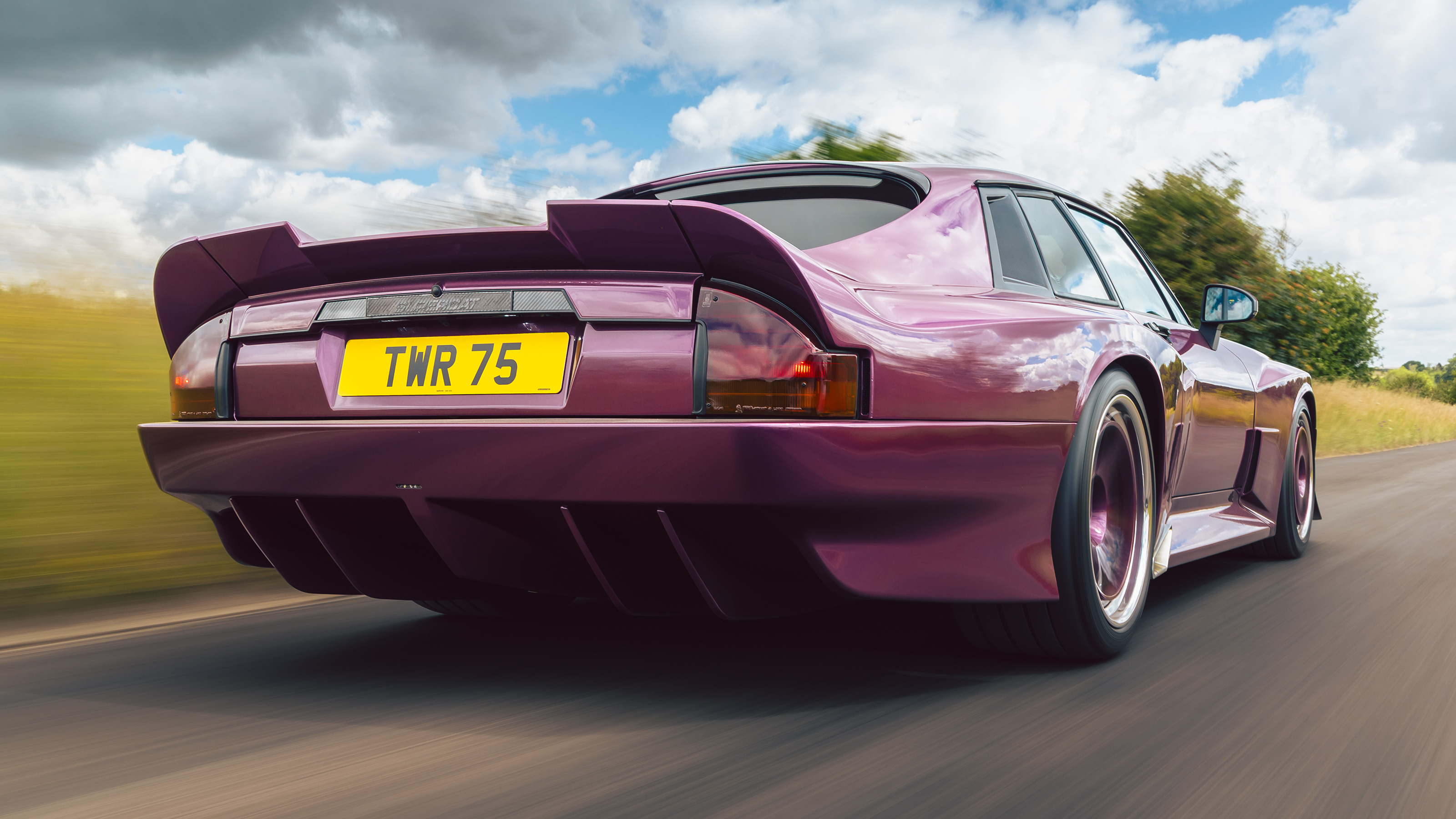
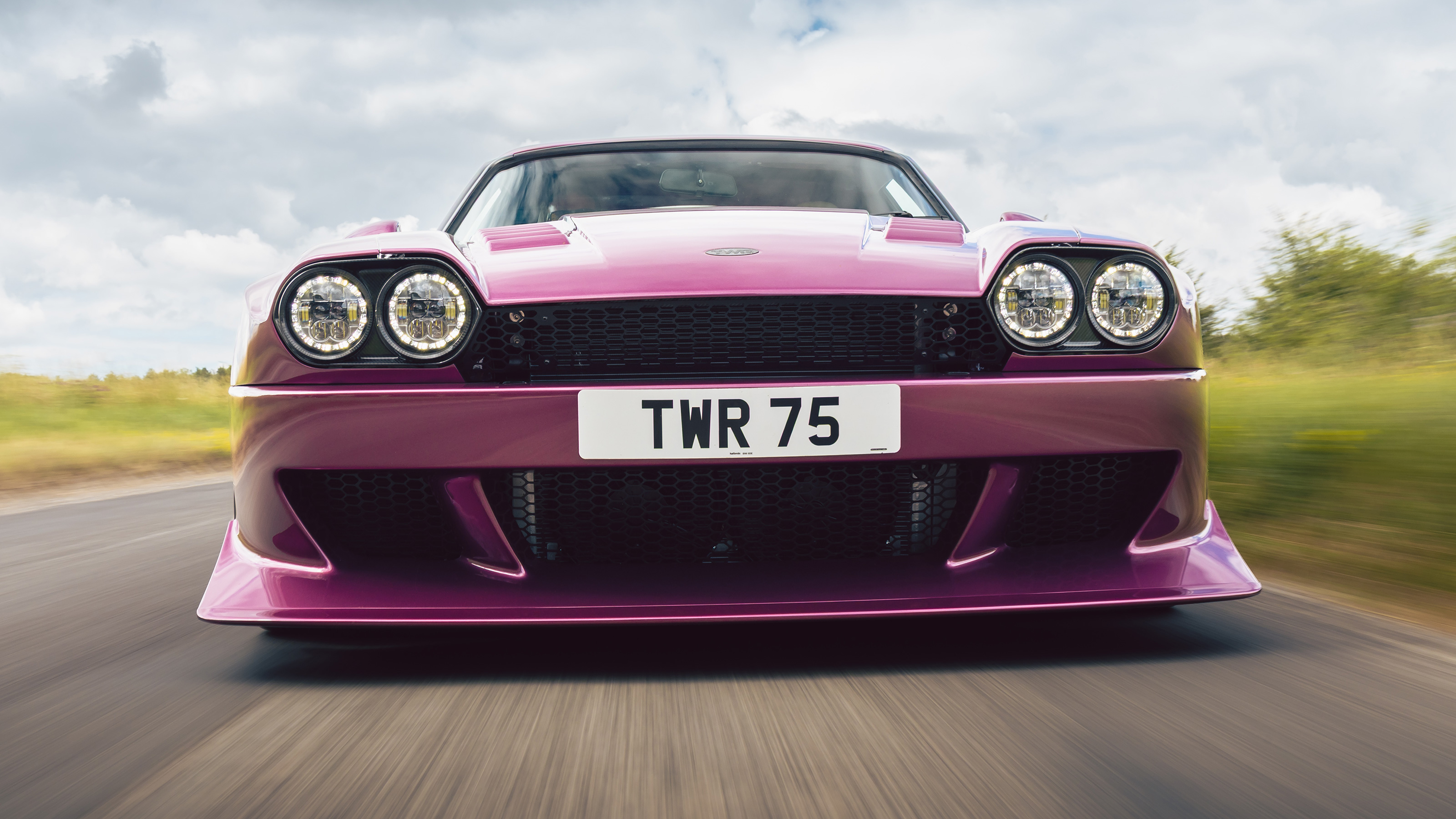
It’s a brutal piece of design, the TWR Supercat. But as we’ll find out, that theme runs through the whole car. Maybe not that surprising when the centrepiece is a supercharged V12 and the gears are manual, but let’s park that for now and start with the way it looks.
Absolutely not, but it wasn’t intended to be a modern, polished piece of design, because this restomod doesn't set out to honour the Jaguar XJ-S, but to riff on it in a very particular way. One that harks straight back to the 1980s, with a side hint of Group A racing.
It could almost not be a restomod at all, but the work of Janspeed or Lister or Koenig Specials – or indeed TWR themselves – from back then. At a push, and in the era of the XJ220, it could have been Jag’s mighty swansong to the XJ-S.
No, never. Okay, there was the XJR-S which sported a 6.0-litre 328bhp V12 and was developed in conjunction with – surprise, surprise – TWR in its original incarnation. But it still had a three-speed auto.
What this does is give the XJ-S specifically (and Jaguar more generally) a kick up the wotsits and remind people there's more to old Jags than E-Types. This is a hardcore take on the gentleman's cruiser. Where most restomods are calm, sympathetic updates, thoughtfully enhanced to reflect the original, I can’t think of a car that has travelled further between what it was and what it is now. Because the Supercat is XJ-S by the Sex Pistols.
This is a point worth making. There is a reason why so many restomod companies settle on old Porsches as their start point. They were really good in the first place. The XJ-S, er, wasn’t. Rust, electrics, build quality, the usual British Leyland story.
I don’t want to dwell for too long on the lengths TWR has had to go to in order to create the Supercat, as we’ve covered that before, but here’s a quick precis. An original XJ-S V12 is the donor. It’s stripped down and all that’s kept is the chassis and engine block. That ensures the car keeps its original identity.
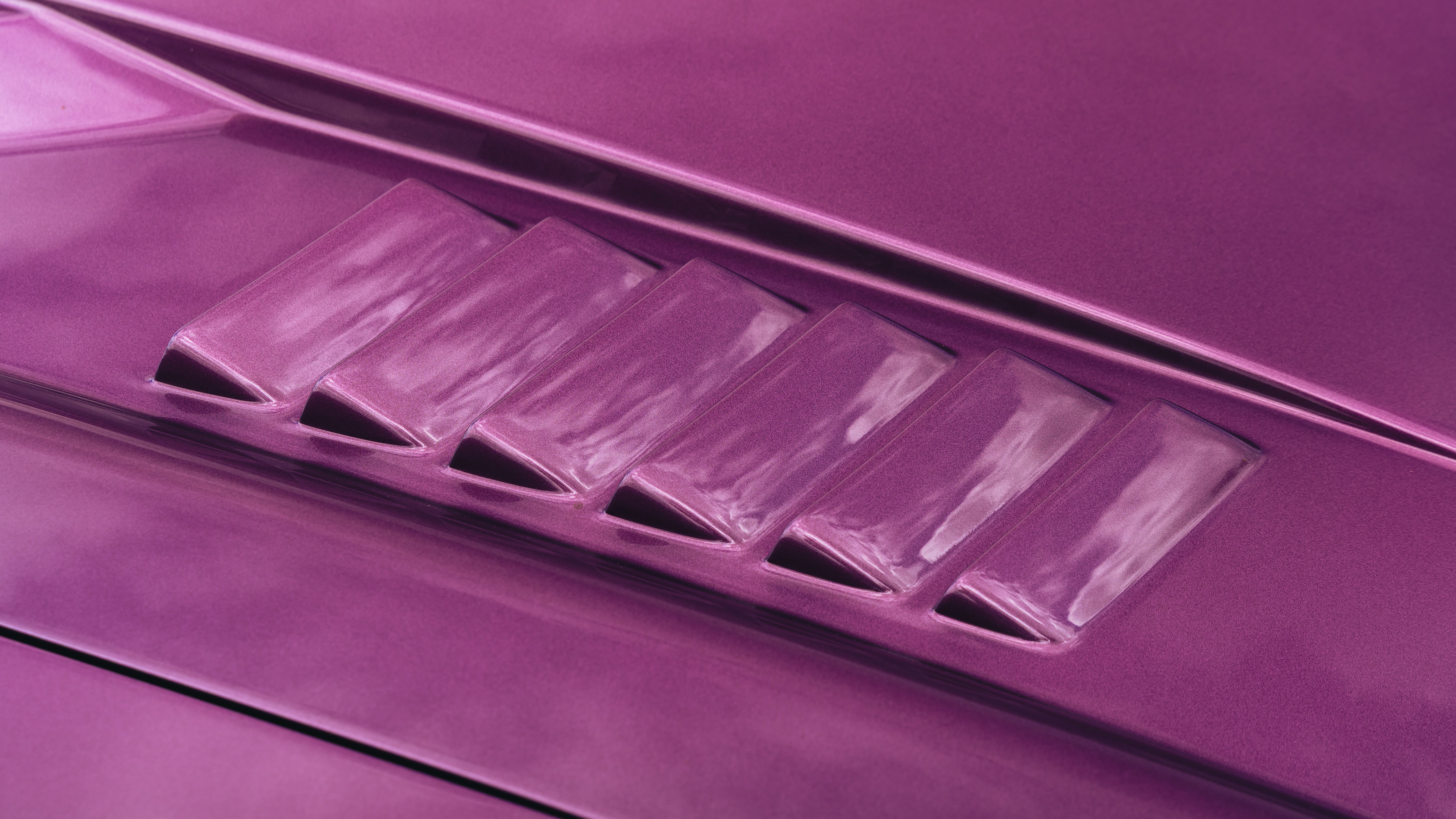
The only other original XJ-S parts used are the door handles inside and out, the windscreen wiper assembly, the handbrake lever and the rear lights. The chassis is massively reinforced. A roll cage is welded in, plus new crash structures, front subframe and rear bulkhead. The design is the work of Khyzyl Saleem, the body panels are carbon, created for TWR by Progressive Technology, one of the biggest suppliers to F1 teams.
Block aside, it's essentially new from the ground up, a 5.6-litre V12 developing 660bhp and 538lb ft. First thing to mention: it looks stunning under the bonnet. The bodywork may be divisive, but not what lies beneath, long cylinder banks with a Rotrex supercharger nestling between them, intake plenums curving over, carbon pipework down the centre. It is glorious to behold.
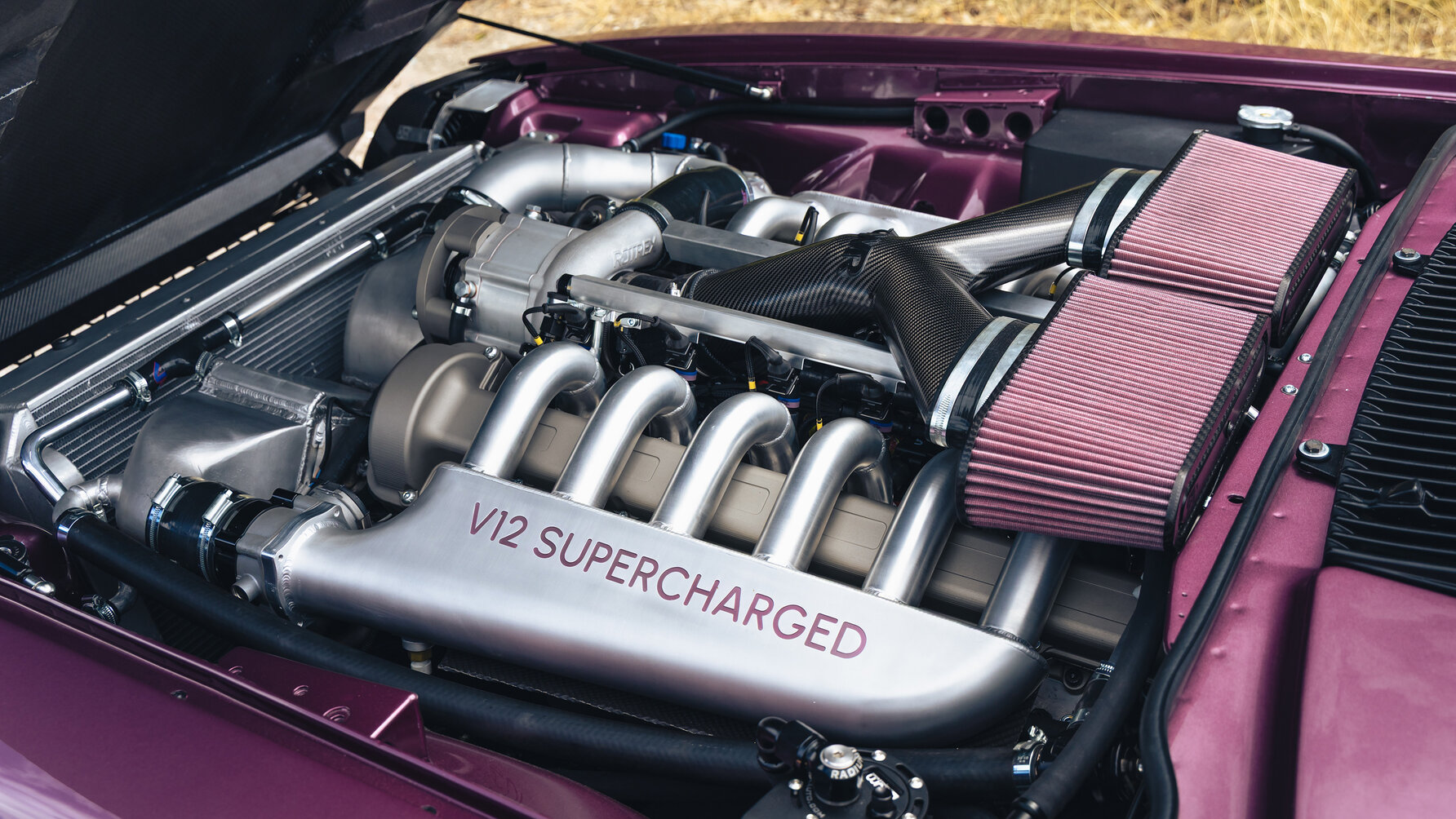
Press the start button and there’s a whine as it catches. V12s are naturally smooth, so there’s no V8 throb here, instead a raspy yowl. The powertrain is the best thing about this car. Supercharged V12s have been so rare across automotive history that you can count on, er, one finger how many times it’s been done before. And it was an XJ-S. Lister did a 7.0-litre 604bhp twin supercharged conversion back in 1991. Okay, there were stories that owners of Auburn 12 Speedsters retro-fitted superchargers, but that’s going back nearly 100 years.
Get all the latest news, reviews and exclusives, direct to your inbox.
This gives the Supercat a unique selling point, because it turns out V12 and supercharger work very nicely together. Their voices blend together harmoniously, the sound unlike almost anything else. There’s a bit of Lambo V12 in there, a bit of Pagani too, and quite a lot of Mark Riccioni’s old Mercedes S600.
There’s plenty of power – 660bhp pushing 1,650kg ensures that – but there’s even more sound and drama. This is a car that, unlike almost all moderns, feels faster than it actually is. You’ll drop the windows to hear those side pipes bounce tunes back off every surface, hedgerows included. Windows up there’s volume aplenty. You can turn the hifi up as loud as you like (there’s CarPlay in here) but it’ll make no difference once the rev needle sweeps past 4,000 because the V12 will dominate.
The noise enhances the sense of speed, and so does the chassis. This is not a super-polished performer that aims to give you the manners of a new supercar in a retro package. There’s still a fair bit of general noise and commotion from tyres, suspension and so on. It can cruise and you can talk to your passenger fine, but it’s an occupying car to drive.
Not least because of the control weights. The clutch is heavy, the brakes are almost entirely unservoed, the steering has little assistance. It’s as muscular to drive as it is to look at. At low speed even turning the steering is a wrench, but as you go faster you forget that, instead appreciate the response and feedback and decide this is the way you’d want things anyway.
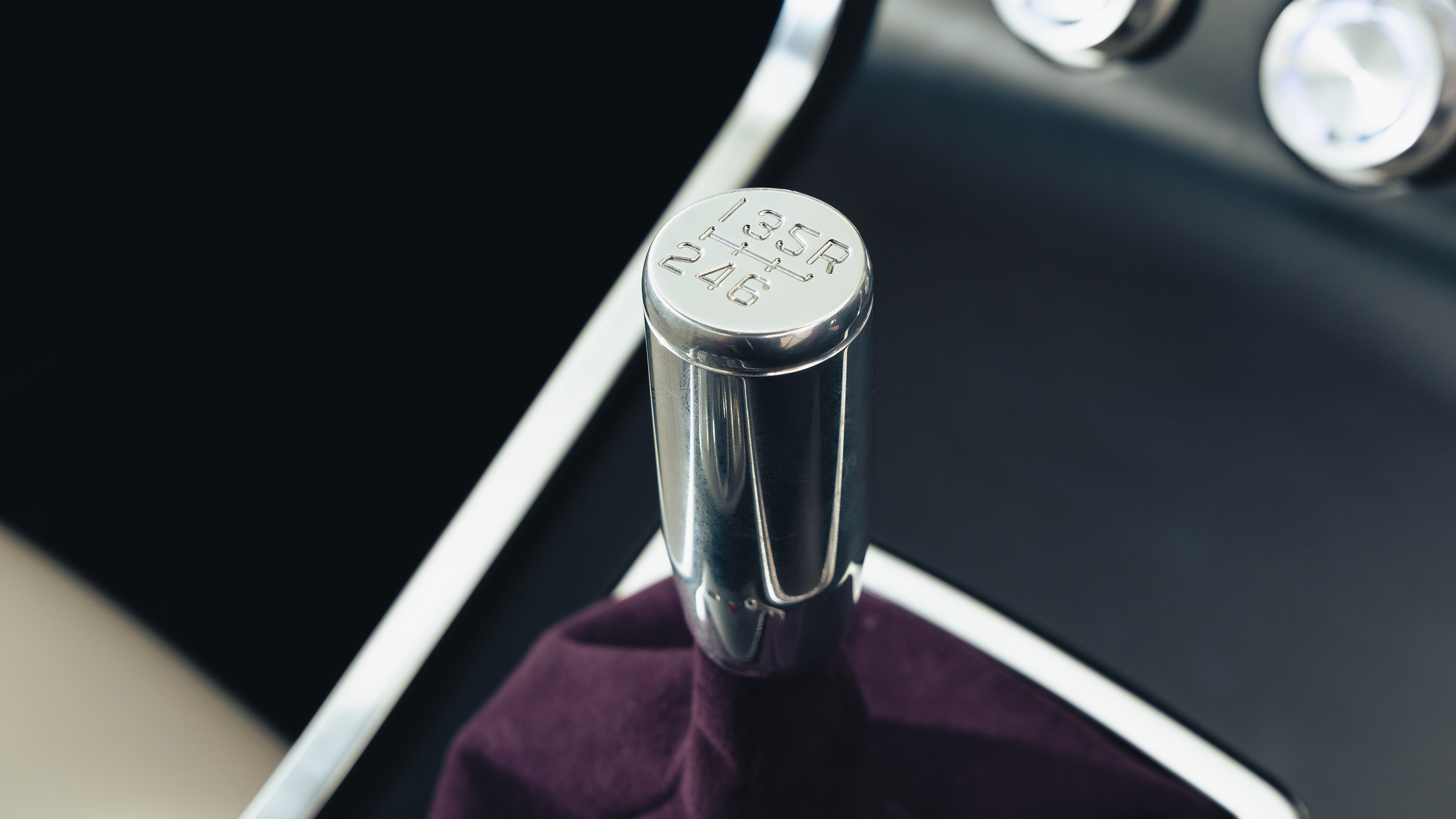
Special mention for the Tremec six-speed gearbox, which has fabulously direct, metallic shifts. With such a wide spread of torque third gear does all you need, but shifting is fun when it’s done with this much attitude. And of course it’s fun to just play with the power band. Superchargers absorb a lot of engine power before they start giving back, so initially you can fool yourself into thinking you’ve left the handbrake on. Not for long. Once you’ve got 2,500rpm up, you’re into the start of a wonderfully linear power band.
Above 4,000rpm it really starts to fly and beyond 5k it’s a rampant headlong surge for the 7,500rpm limiter. The pace, together with the noise and a chassis that never stops chatting demands full concentration. Lift off and there’s masses of engine braking – nice, because it assists the unassisted brakes, which would otherwise demand even more pedal effort.
More fun than riding a giant jelly down a waterslide. Okay, nearly. It’s fun because it so accurately captures the spirit of the car, rather than having perfect manners. It’s a car you laugh along with as it charges about, rather than taking delight in its fluent manners or steering dexterity.
It’s a car you laugh along with as it charges about, rather than taking delight in its fluent manners or steering dexterity
It has huge mechanical grip, is more connected and lighter on its feet than most muscle cars, but at the end of the day, that’s what it is.
TWR claims the car is now 99.5 per cent there (it was 80 per cent the last time we drove it). There’s a bit of clutch judder, the throttle needs some final calibration as does the suspension, the steering wheel is being changed, the split rim front wheels will be dished (and look all the better for it) and there’s a few trim bits inside to sort, including the heating control surround panel.
The digital dash riffs on the old XJ-S dials and looks great, the steering has plenty of adjustment, you feel comfy in here and on the whole it just about justifies the expense. Originally it was priced at £225,000 (£270,000 with VAT). That felt cheap. Now it’s £395,000. Plus VAT. Plus donor car. Call it £500,000 with a few options thrown in.
That’s much more punchy. Against that you have to put this car’s sheer usability. Yes, it’s enormously thirsty (11.4mpg on our shoot day, 18-20 when cruising), but a 100-litre tank means an easy 350-mile motorway range. And it’s not short of luggage space. The boot is vast, and there’s a through-load facility. I can’t think of many modern cars that could carry golf clubs with more ease than this. Road-tripping? Bring it on. It’s no Bentley, but it’s brim full of attitude.
That’s the £500,000 question, isn’t it? It’s not going to be your first car, or possibly even your tenth, so money won’t be the problem. If you’re used to modern stuff or even Singer/Eagle-level restomods (although they basically operate in a class of two), there are a few rough edges here that will take some getting used to. But this is a brutish car, they’re part of the Supercat’s charm.
Photography: Jonny Fleetwood
Get all the latest news, reviews and exclusives, direct to your inbox.
