





Modified
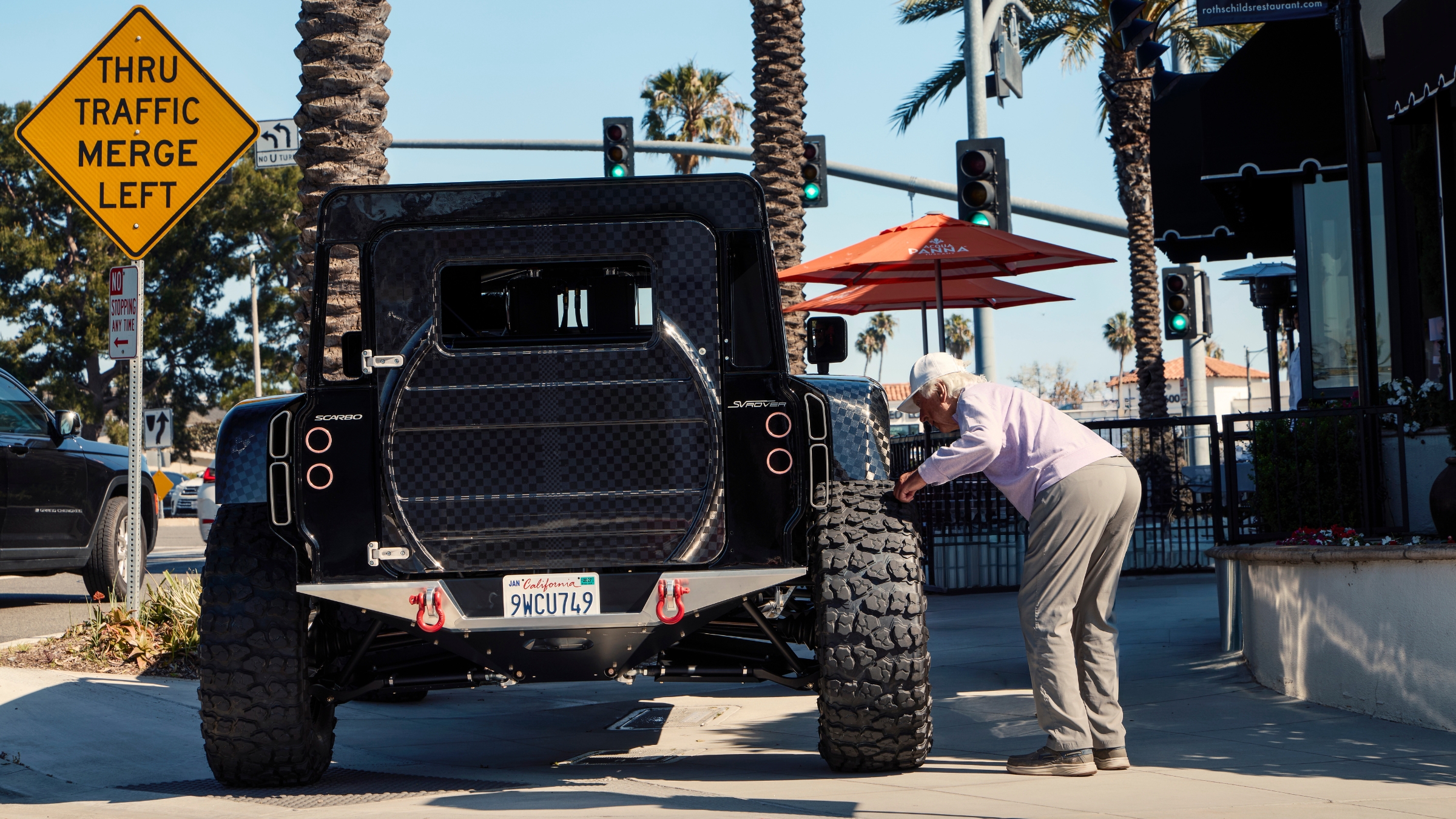
Meet the Scarbo SV Rover: a road-going Defender trophy truck
We get to grips with this special desert-bashing monster... on the streets of LA
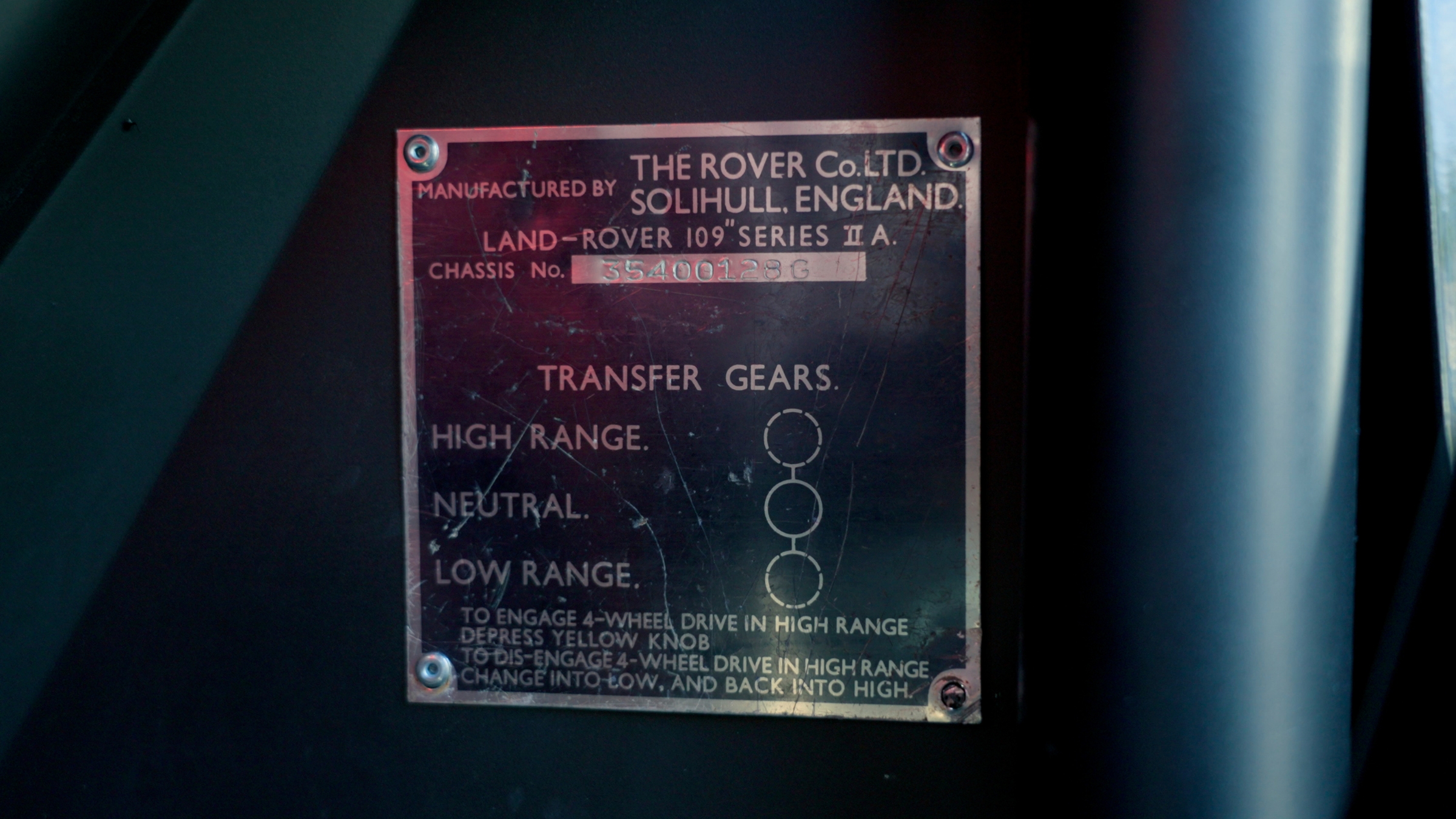
Open the passenger door. Peer down into the footwell and there it is. The chassis plaque. The chassis plaque that states this is an original Land Rover Defender.
Had a good chuckle? Yeah, what you’re looking at here isn’t so much a restomod as a culture clash. The original farmer’s friend gussied up as a yee-hah desert thumping trophy truck. The world’s first hyper truck, that’s the claim.
Advertisement - Page continues below
As for what remains of the original... it’ll no doubt shock you to the roots to learn that it’s the sum total of sweet FA. Or more precisely the front bulkhead and the seal around the windscreen. Oh, and the doorhandles are a genuine Land Rover part too.
Photography: Greg Pajo


Now, we see this fairly regularly with restomods, basically using a bit of the chassis to claim some semblance of legality and respectability, some link to the past. But normally they treat the original with respect, riff on its themes, play the same notes and tunes, the aim being to honour and uplift the original.
Well, I guess this one has definitely been uplifted. But let’s not pretend here – the original plan behind this car was not to modify a Land Rover. It was to build a road-going trophy truck. And that was one man’s dream.
Advertisement - Page continues below
Joe Scarbo is a car designer and engineer who cut his teeth developing desert racers, then moved into car projects, some of which (Radford, Oilstain Labs, Ken Block) he can talk about, others he can’t. This monster is his passion project. He grew up infected with the desert racing bug; his first job out of college was with Volkswagen, turning the Touareg into a Baja racer.
That project sounds insane – it used the twin turbo V12 diesel from Audi’s Le Mans car, stuffed in the back of a Touareg, and in the only year it ran (2008), managed a 13th place finish. It still exists – sans engine unfortunately. The V12s were each valued at $500k and when the project was over, were shipped straight back to Germany.

But that sowed a seed in Joe to want to create his own thing from the ground up. This isn’t his first rodeo, it’s just the one he cares about the most. So he’s left it until last. Because Joe has been busy creating his own dream three car garage.
Branded Scarbo Vintage (SV) he has already created a retro road-going F1 car (the SV F1), an interpretation of the 1966 Gurney-Eagle, and followed that up with the SV RSR, inevitably yet another take on a Porsche 911. That project has lived a famous life – Scarbo built one for Ken Block, the 1,400bhp Hoonapigasus that he took to Pikes Peak in 2022.
And now this, his Land Rover. It has locking differentials. And a low range gearbox. It also has 30 inches of travel, rear wheels that steer to the same angle as the fronts, dampers popping out of the bonnet and the small matter of 1,500bhp. It also has precisely nowhere to put a wet Collie.
It’s a desert racer for the road, the ultimate Californian fun-haver. Which is also the right place to find people wealthy enough to afford one. Because while you may think old Land Rovers have pretty punchy residuals, they’re also not $2.2 million (£1.65m) a pop. OK, $1.5m (£1.1m) if you don’t want bare carbon, the full ticket 1,500bhp and some other tricks and trinkets.
That is an absurd amount of money. Yet the reason you might think you’ve seen one before, is because you have. A couple of years ago Joe built a yellow one. It was bought as soon as he announced it, sent off to the Middle East, the money from that put into development of this.
Top Gear
Newsletter
Get all the latest news, reviews and exclusives, direct to your inbox.
So for the past couple of years Joe has kept a low profile so no one comes along and makes him another offer he can’t refuse until he’s ready.
A time which is fast approaching. Joe takes me for a ride in it. It’s fantastically raw and rowdy, hasn’t yet had any sound deadening fitted, but it’s never going to be the most peaceful cruiser. Not what it’s for. But once the gearbox software is programmed (a chunky job given Joe believes this is the only eight speed automatic in the world running on a Motec ECU, so every line of code needs to be programmed from scratch), it’ll be ready to head out to the desert for suspension setup, durability testing and so on. The good stuff.
It is the answer to the question of what happens if you take a long travel desert racer and forget to use any off the shelf parts. Let’s start with the front diff housing, because it’ll tell you a lot about Joe’s approach. The original plan was to machine and weld it from aluminium plate. But the thickest available was 14 inches (350mm) and Joe needed it chunkier.
Which meant starting with a 22in (560mm) billet block weighing 544kg and milling it down. It is a work of art, sculptural, as if it’s been wrought by Pagani. “It was really hard to justify doing that... but with this solution you know the material properties are consistent and that it’s dimensionally stable, but boy is it expensive.”
But this west coast Colin Chapman knew an opportunity when he saw one. So this diff casing doubles up. Triples. Quadruples actually. The upper control arms mount to it. The lowers as well. The steering mounts to it. The chassis pick up points are there as well.
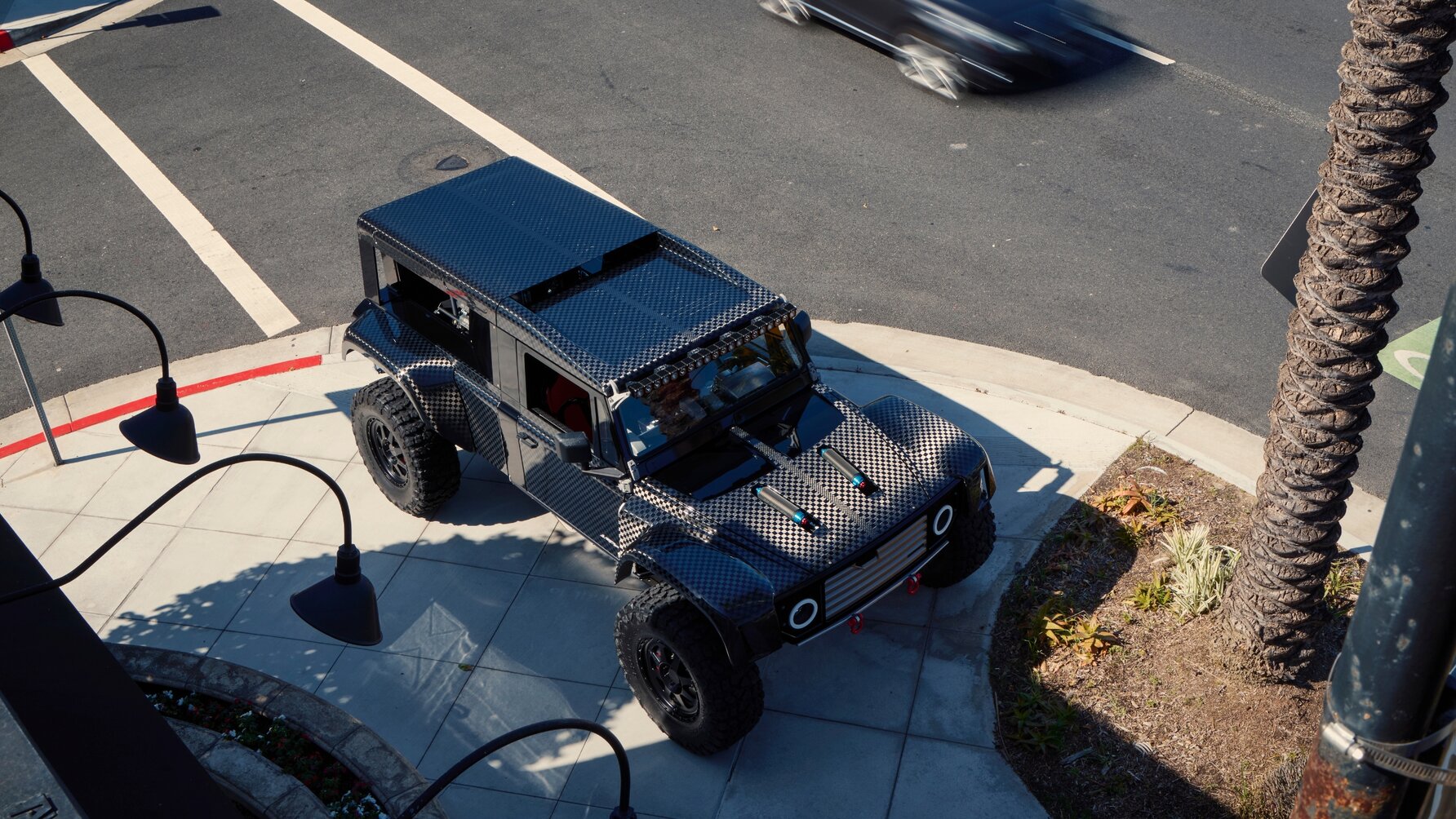
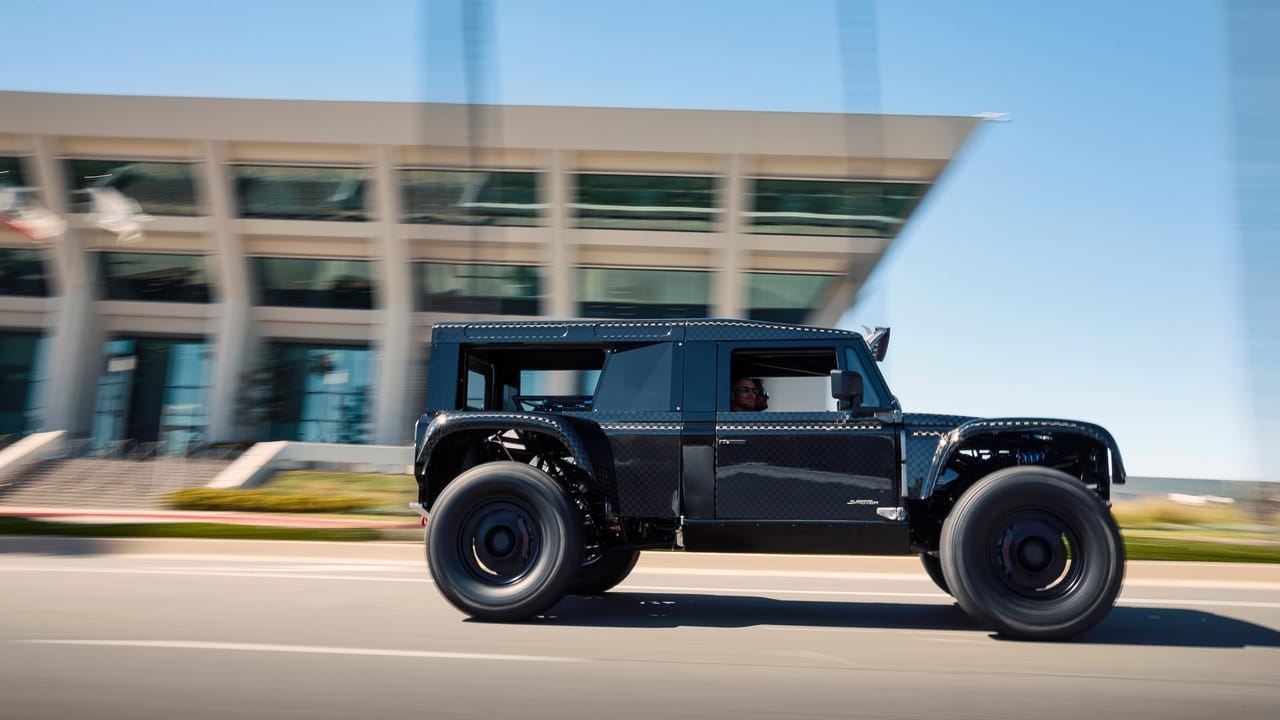
Come round the side and you might be wondering how on earth you get 30 inches (760mm) of wheel travel when those carbon arches sit just above the 40-inch Yokohamas. The answer is that the arches move. As each wheel moves upwards to within an inch of the arch, the upper suspension arm meets a strut, which pushes the hinged panel out the way. Simple, yet clever – especially since it means you don’t have tall arches blocking the driver’s view.

Scarbo also went to the trouble of designing his own wheels since he wanted 20s, rather than the 17s or 18s more common in off road racing. This not only gave him more room to package the upright behind, but allowed him to fit 400mm Brembo carbon ceramic stoppers. It’s another one of those pet projects where someone failed to say ‘enough’ at any stage.
He did need help in places though. Joe’s genius is engineering, his weakness is design. So he’s part of an automotive exchange programme – he’s helped Oilstain Labs engineer its awesome Half-11, and in return the Bridan brothers, Ilya and Nikita, have helped him with styling.
Their input created the flying buttress which helps pinch the back end in, shaped the Rover’s shoulder line and lengthened the door by 10 inches (250mm). Created what Land Rover identity it has beyond the VIN plate, in other words.
It's one of those pet projects where someone failed to say 'enough' at any stage
The Jeep parts bin donated the door mechanism and mirrors, the cabin has overtones of new Defender, and the basic engine is from GM. The yellow truck had a supercharged crate engine, this has something much more bespoke – a long-stroke 6.6-litre LS with twin turbos. On E85 1,500bhp, otherwise 1,200bhp. Even on pump gas and in a vehicle that weighs 2,450kg, that means a 490bhp/tonne power to weight ratio. A Ferrari 296 GTB isn’t much ahead of that.
Fuel consumption will, of course, be outrageous, which is why the Rover has a 250-litre tank. But if you want to be ethical, Scarbo will build you an electric one. “The whole truck was designed from the ground up around EV parts,” says Joe, “it’s just...”
You guessed it. No one wants one. They want the noisy one. Which this most certainly is. It’s also comically manoeuvrable. Switchgear on the centre console allows you to control the rear steer.
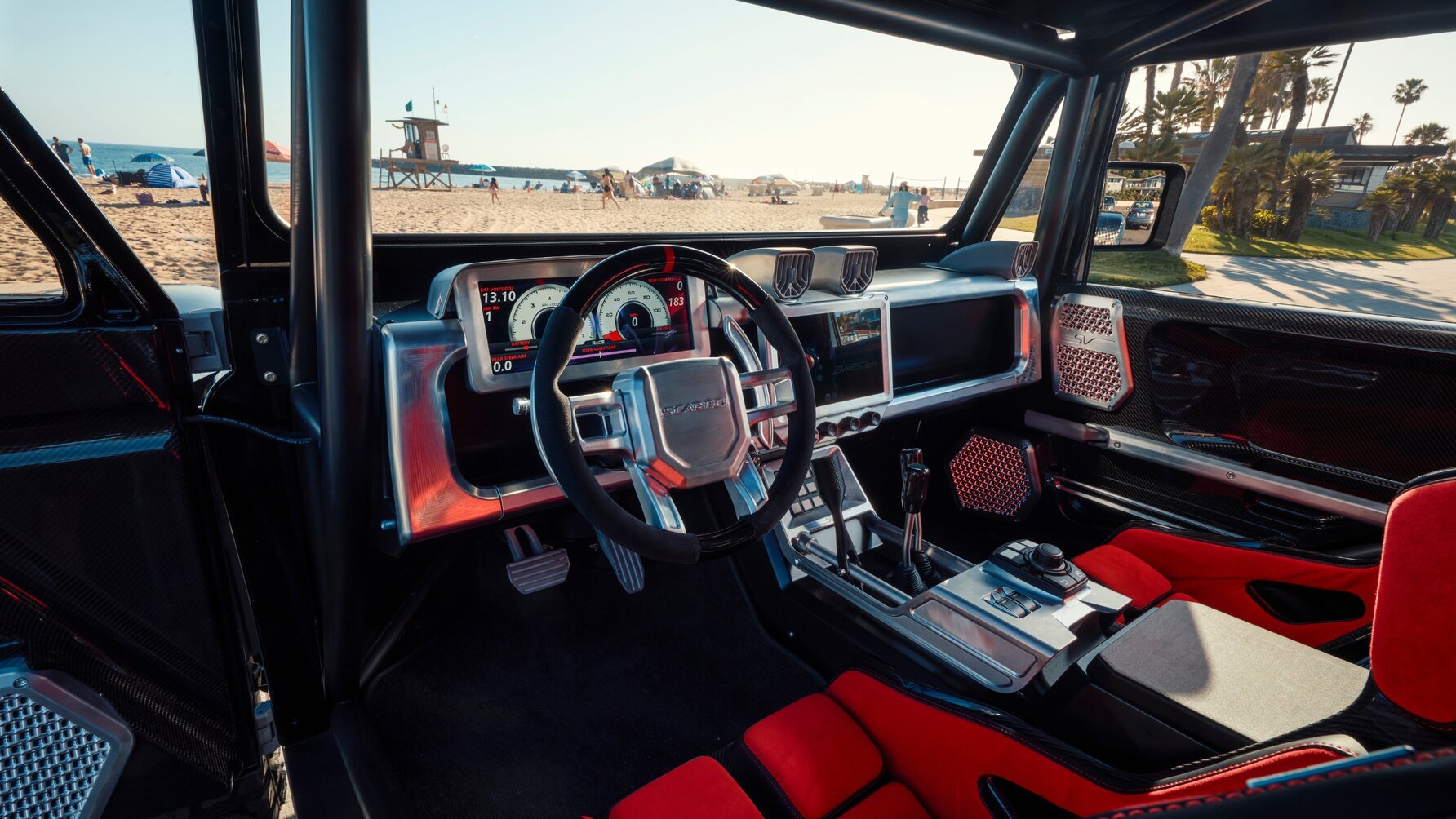
It can either be off, automatic (where it steers to aid turning circle at low speed, stability higher up) or manual. In that mode, designed for rock crawling, it’s entirely independent – you can leave the steering wheel alone and use a control knob to turn like a forklift truck.
It is massively overengineered to be the ultimate... what though? I don’t really know. It’s like a blank canvas of a car, you can use it for anything. Rock crawling and desert racing are just the start, after that drag racing followed by one-upping people at the beach?
Probably got a broader use case than a conventional hypercar. If equally preposterous and limited in actual passenger and luggage carrying practicality.
But when you open up the rear door it’s like an exploded diagram of a hypercar. Everything just sits that bit further apart. But with four inboard dampers sat atop a dry-sumped engine that sits five inches lower to bring the centre of gravity down, that is the level of engineering you’re looking at here.
“We never anticipated this truck getting so out of hand,” comments Joe, “but it’s one of those things that once you have the bill of materials and the time it takes, unfortunately that’s where it gets to.”
It's probably got a broader use case than a conventional hypercar
And yeah, underneath all of that, the remnants of an original Series IIA Defender 109. Quite the body transformation for a 60 year old.
Of course, Land Rover itself has moved a long way from its origins, but even in the wildest dreams of its most extreme product, the superb Defender OCTA, I bet it never imagines itself ending up like this. As the SV Rover, a mad, raging King Kong of a thing.

Trending this week
- Long Term Review
We lived with the bestselling Alfa for six months. Should you?