




Modified
An old 911 with more power than a Bugatti Veyron? Meet the GW F-26
This isn’t your average restomod - this is a Gunther Werks
Around the corner together at a steady 30mph, pass the cones and press go. For a second we’re level, then things go a bit blurry and I discover I’m not sitting in a car, I’m strapped to a shockwave.
Through the vibrating mirrors I’m distantly aware the GT3 RS has apparently given up and slammed the brakes on while I, pinned back with eyelids flapping, forget to breathe for the length of gears three, four and five. Yep, that genuinely feels like a thousand horsepower. In an old Porsche 911. Crazy times.
Advertisement - Page continues below
The Gunther Werks F-26 is one of the most explosively fast cars I’ve ever driven. Chomping through gears like a Labrador through lunch, each a horizon-bound lunge of frantic flat six gnash and thrash. Inspired by the old 935 racers, it claims. More the living embodiment of them, I say.
Photography: Mark Riccioni
I can speak with some authority here as I once drove Moby Dick, the famous Porsche 935/78 racer. First was good for 100mph. Turbo lag for days. Locked spool differential. Tricky to drive. A total adrenaline rush. It had 845bhp and topped 228mph on the Mulsanne Straight. I couldn’t fathom the abilities needed to race it. Now, 50 years on, here’s a Californian restomod with another 200bhp on top of that, that pretends it’s a road car? I mean, come on.
Quite a bit to unpack here, starting with the fact that if some of this sounds familiar, you’re not wrong. A couple of months back I drove another Californian restomod inspired by an old Porsche racer, Singer’s DLS Turbo. It looms large in this story because Singer bestrides the world of restored and modified Porsches like a colossus.
Advertisement - Page continues below
It’s the OG, everyone else lives in its shadow. So the superficial assumption is you only have one of the others if you can’t afford/can’t wait for one of Singer’s Reimagined 911s, and that you are therefore getting something inferior. That’s the assumption. And it’s very wrong.
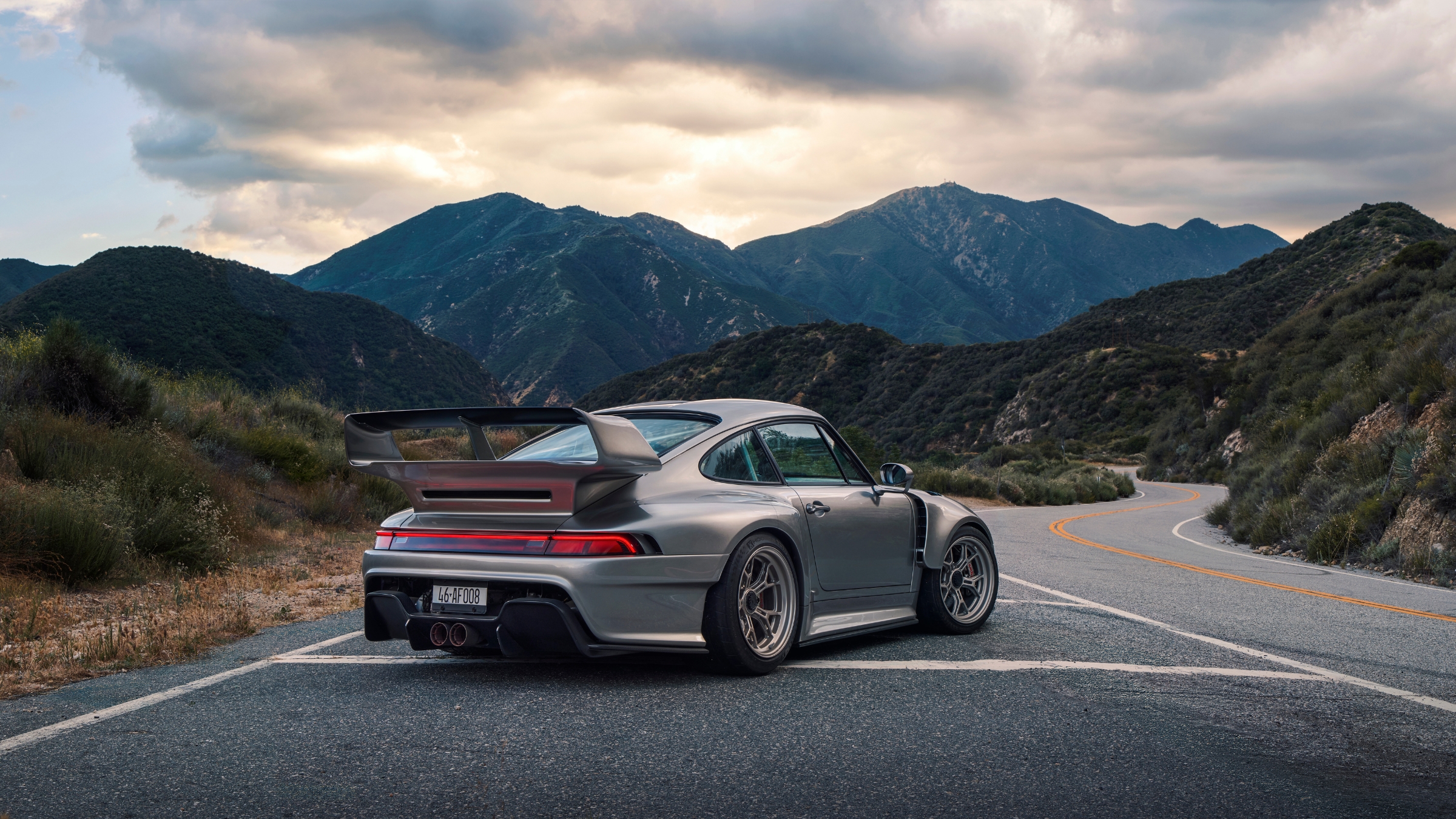
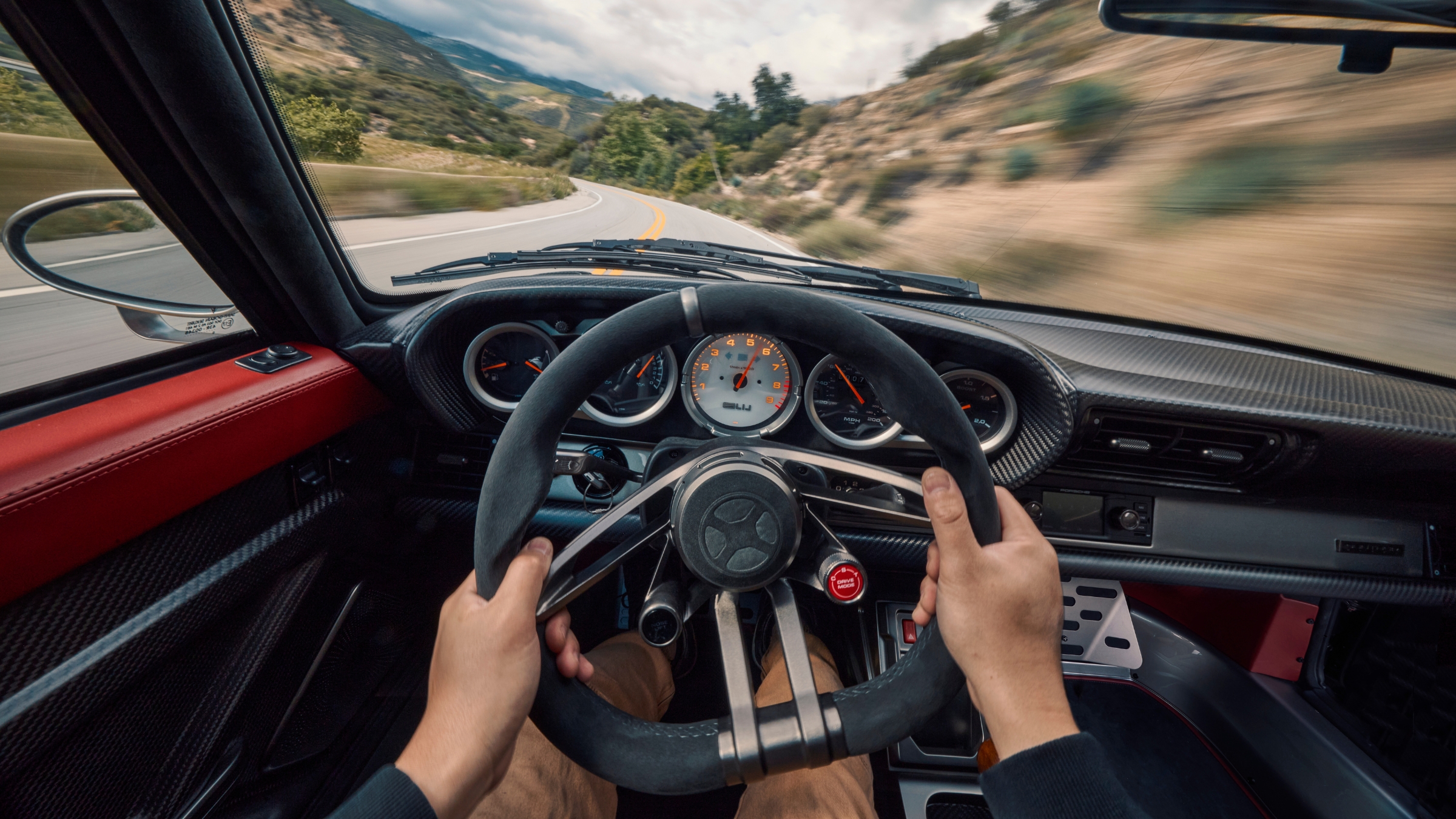
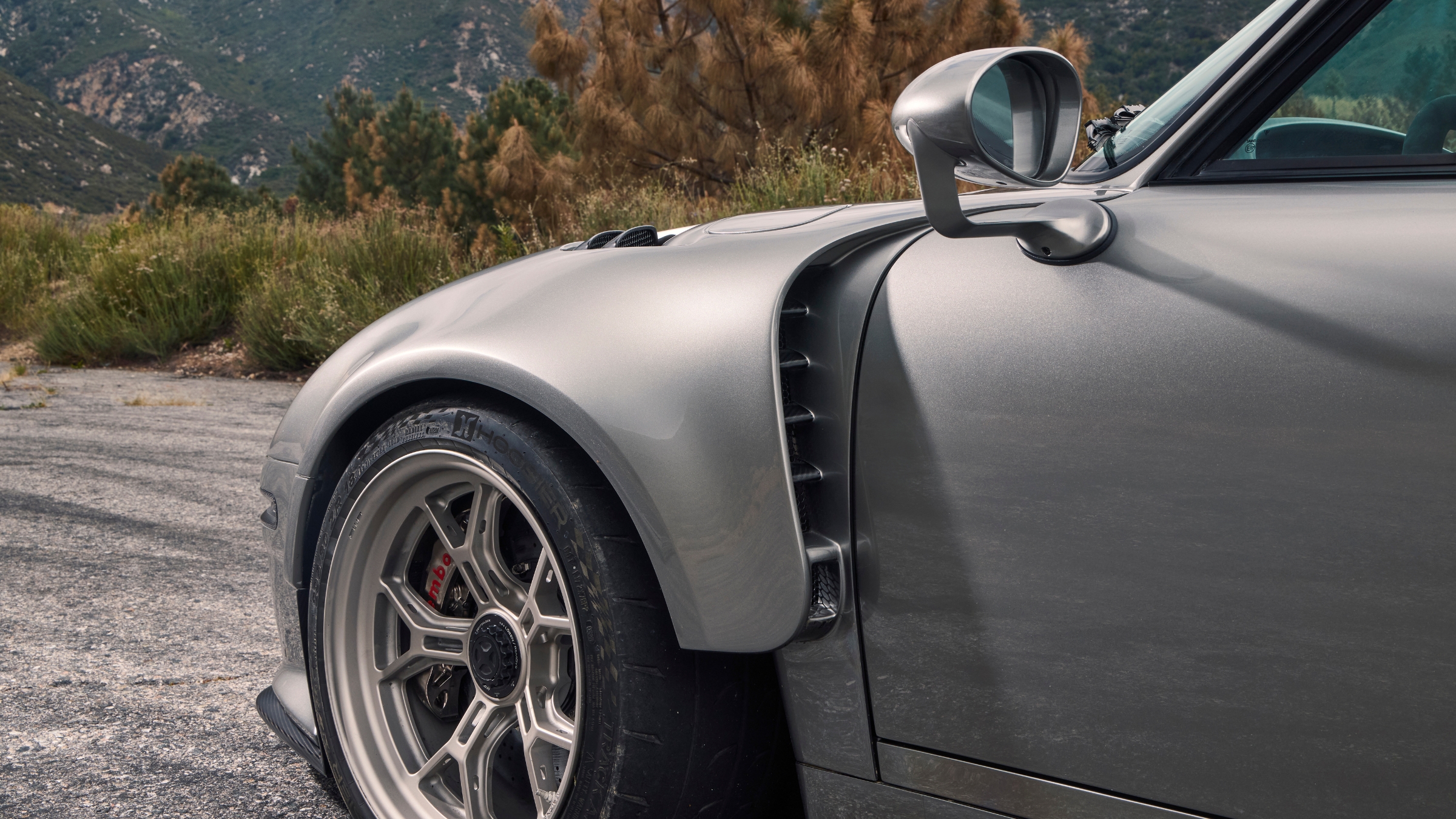
The F-26 is a fundamentally different car to Singer’s DLS Turbo. Not worse, not better, just different. It’s more hardcore – I could imagine roadtripping a DLS Turbo, the Gunther Werks would be exhausting. This is a car with a much more direct motorsport link than the Singer. The suspension is rose jointed rather than rubber bushed, it’s raw and angry and downright bloody thrilling.
Gunther Werks sprang up in 2017 inspired, as so many others have been, by Singer. But instead of using the 964 generation 911 (1989–1994), it takes the later 993 (1994–1998) for its Remastered cars.
Unsurprisingly, the F-26 is the most extreme machine it’s created. The back story here was an aim to recreate the 930 Flachbau (slant nose) that was an option, inspired by the 935 racers, on the original 930 Turbo. However, the most an original 993 ever had to cope with was 444bhp, so how does Gunther Werks add over 600bhp to an original Mezger motor and hope it’ll hang together?
That’s two separate questions, so let’s talk about power creation first. Because the most amazing thing about this whole project for me (besides the fact Gunther Werks offers it with a five year 100,000-mile warranty) is that this engine is still air cooled and only has two valves per cylinder.
The original block is bored and stroked to 4.0 litres and has a load of modern trickery applied to it by GW’s engine partner, Rothsport Racing. The fan, rather than blowing horizontally, sits directly over the block, housed in a carbon fibre shroud. The only water cooling is for the intercooler air. Not once while I drive the car does the temperature gauge do anything untoward.
The Garrett turbos borrow a trick from the original racers. Tucked in behind the rear bumper, they’re away from the block but on show to cars behind. They are what defines this car. Where the DLS Turbo is beautifully drivable with minimal lag, the F-26 has to first gather itself.
Top Gear
Newsletter
Get all the latest news, reviews and exclusives, direct to your inbox.
But still, that 1,067bhp peak is misleading. It’s only available on E85 ethanol-rich fuel. On regular pump gas, it’s about 880bhp. Never mind. It’s enough, in a car with a claimed dry weight of 1,247kg, to give it a power to weight ratio that betters a McLaren 750S or Ferrari 849 Testarossa.
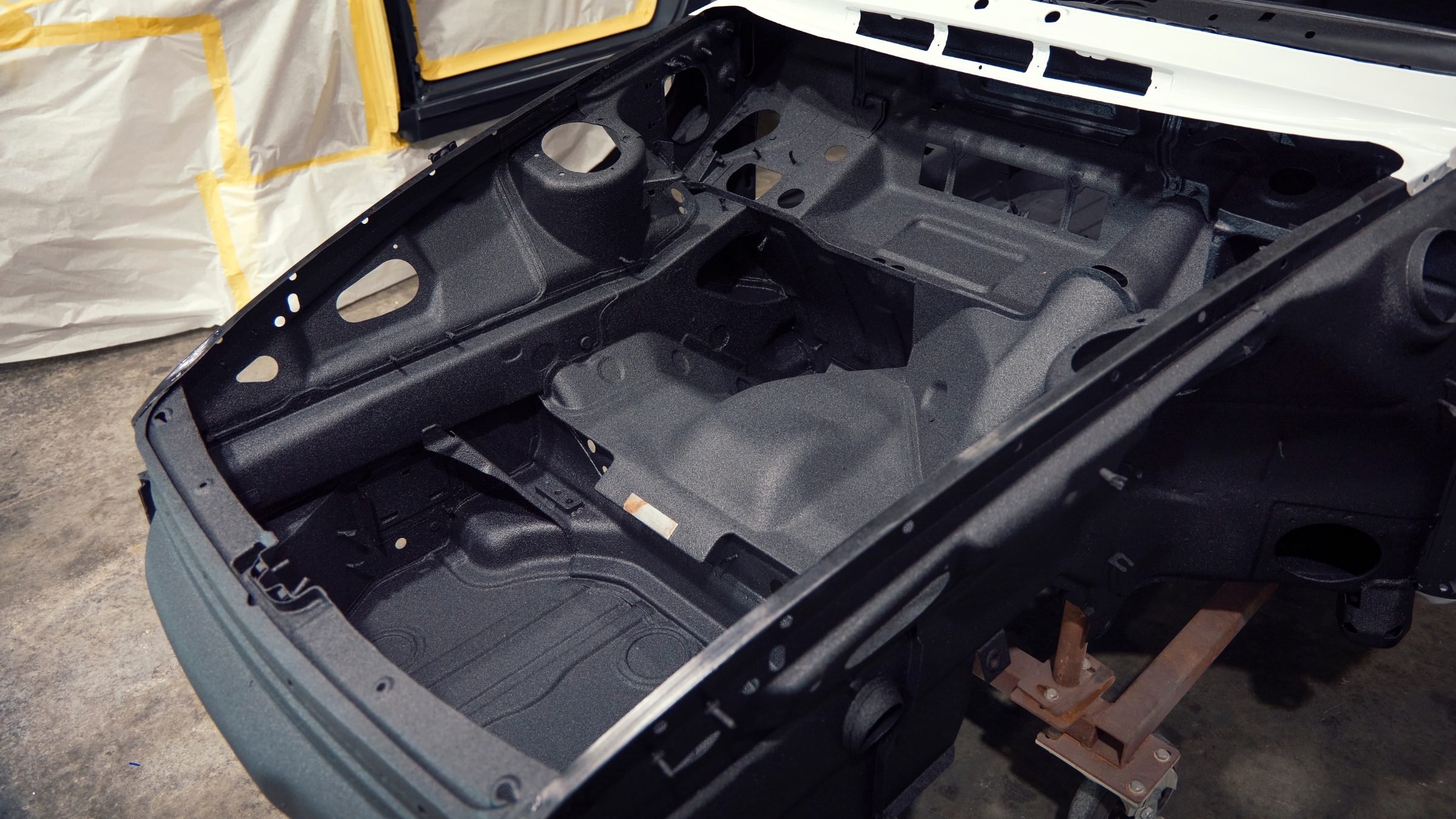
The chassis has adopted a coping strategy. Each donor car is stripped right back to a bare frame and hugely strengthened. Extra sections, welds and bracing boost torsional rigidity by 250 per cent. The front subframe is entirely new and, like Singer, Gunther Werks has developed its own double wishbone front suspension.
At the rear the axle has been moved backwards 30mm to help improve weight distribution (but that’s still 39:61), and lots of weight has been removed to offset the extra strengthening that’s been inserted. The body is entirely carbon, as are the doors (not only the skins both sides, but the structure within) which means each is 20kg lighter than an original. The new wiring harness has saved 30kg.
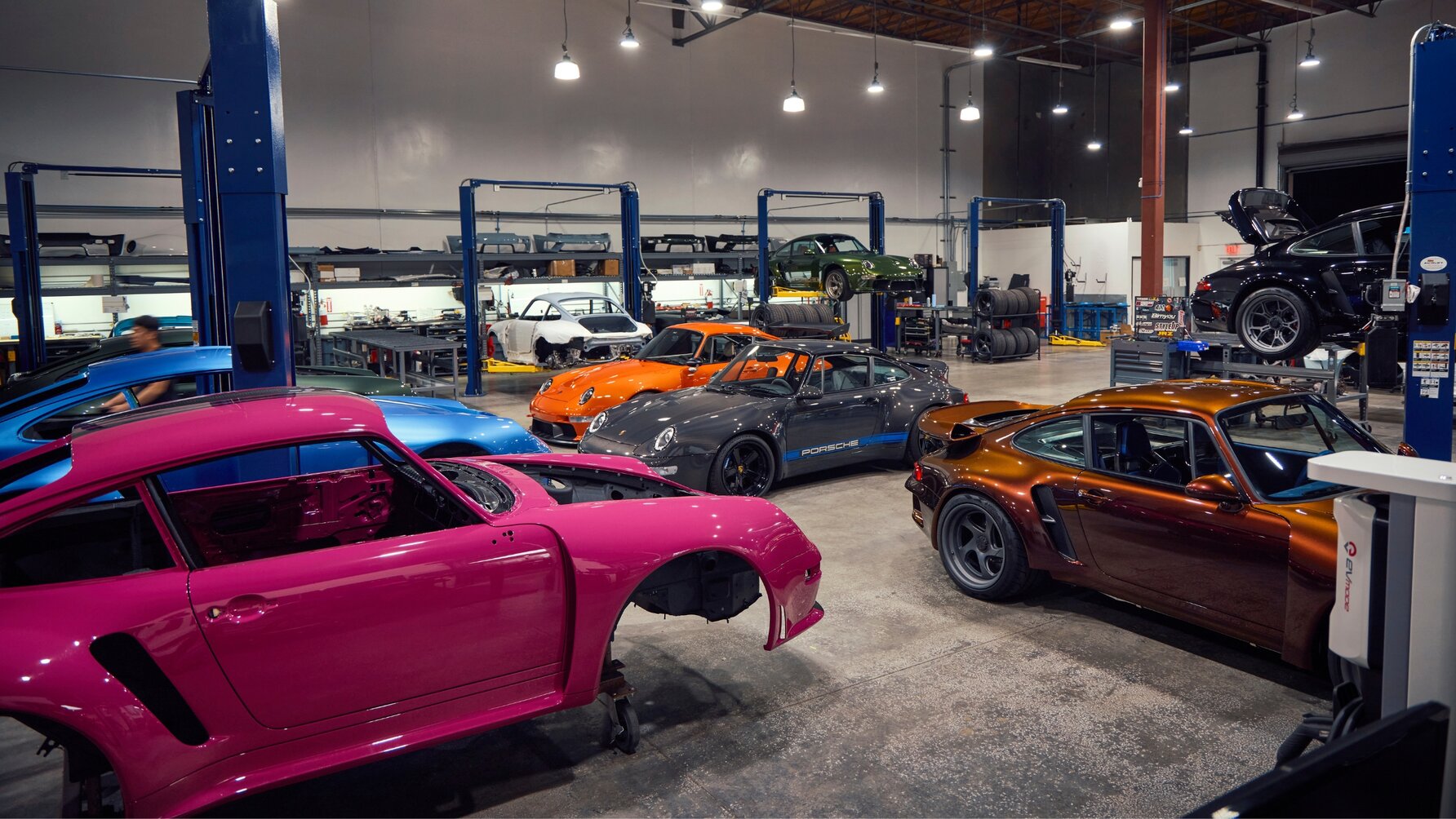
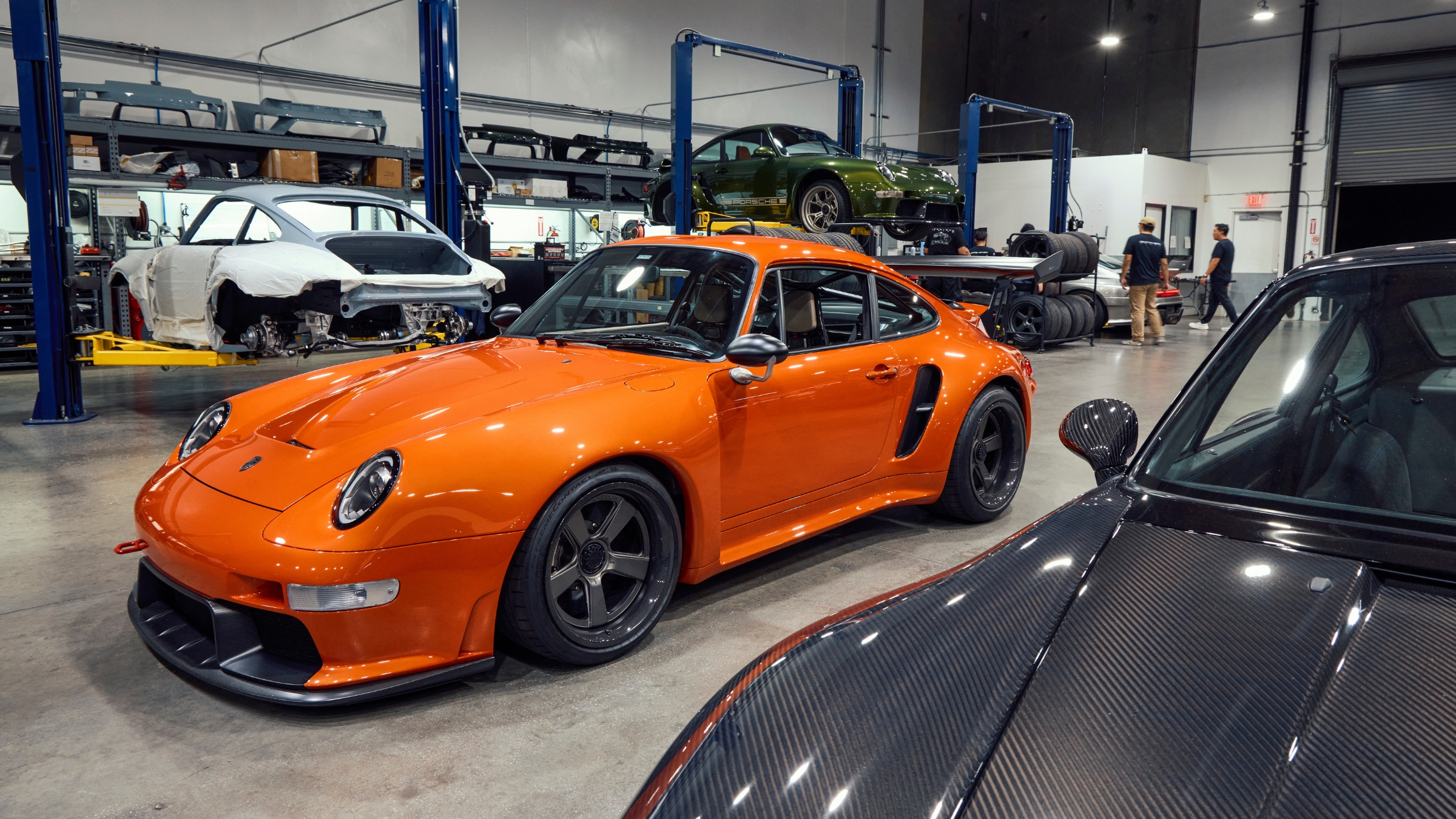
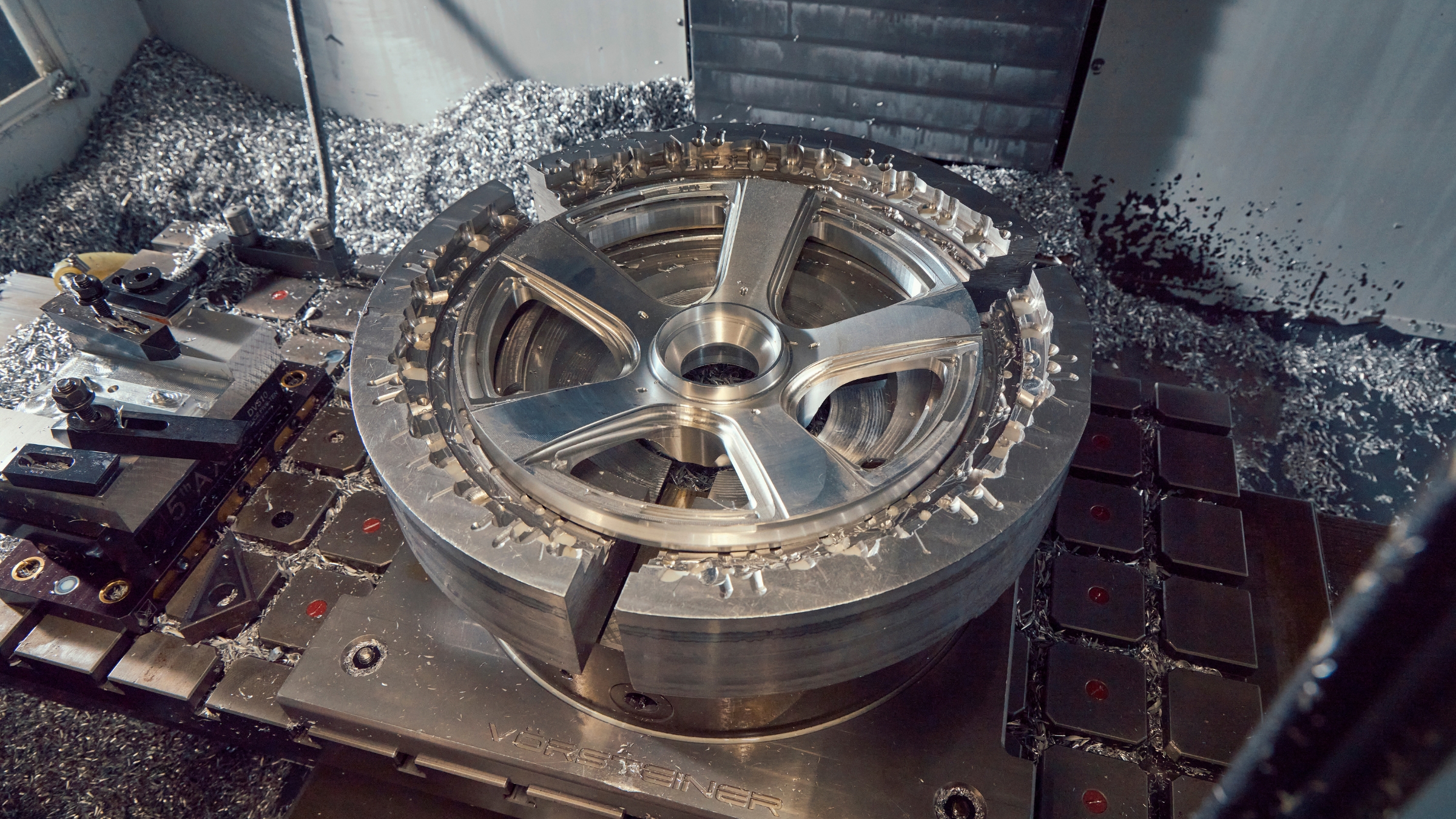
The factory is a tale of two halves. The foyer, showroom and main workshop are glossy and bright, but up a corridor is where the deeper work is done, where cars are stripped, welded, painted, where wheels are machined from raw blocks and components 3D printed. This, incidentally, is how Gunther Werks got its start – it spiralled off from Vorsteiner, an automotive supplier creating bespoke wheels and bodywork.
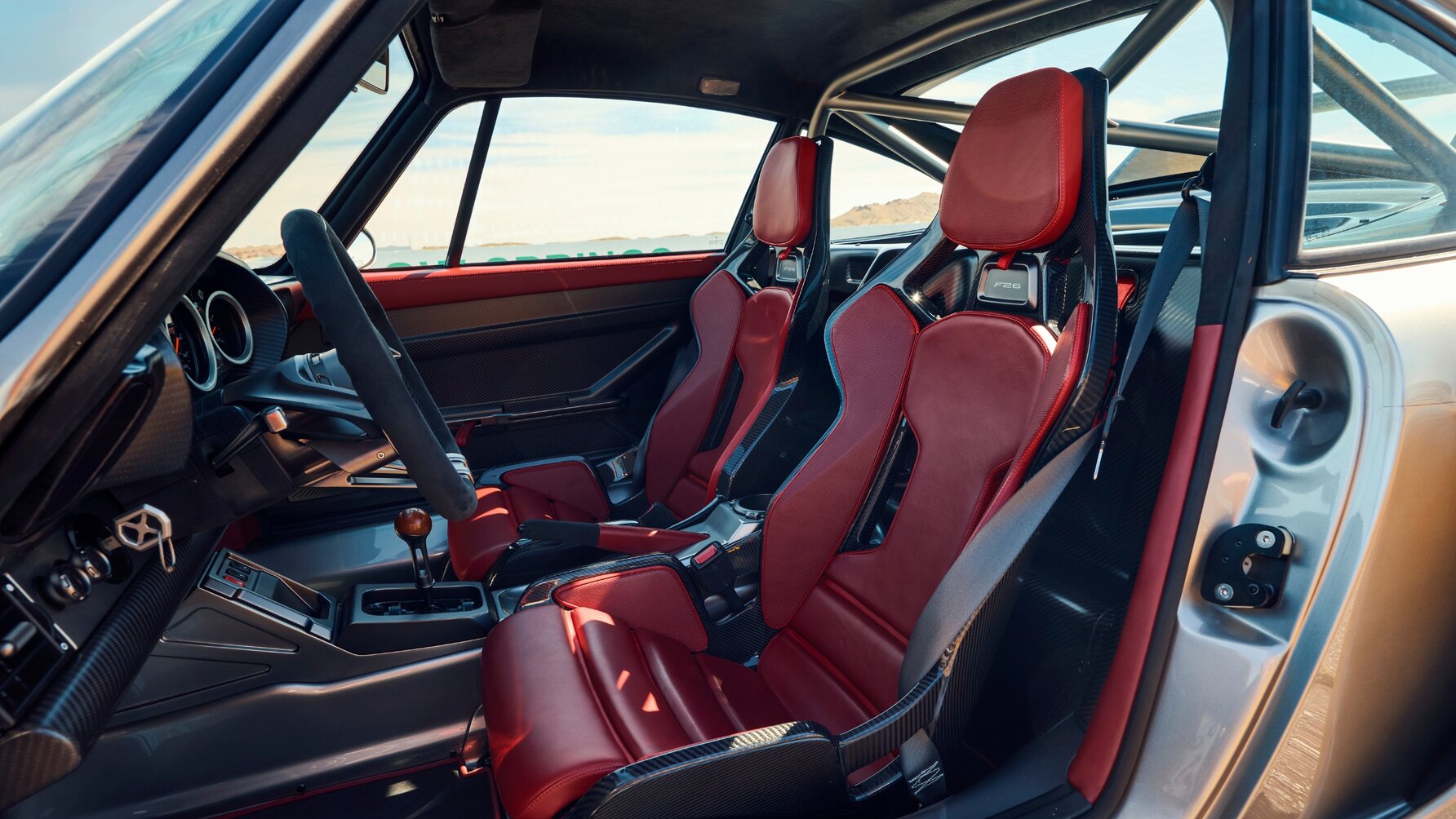
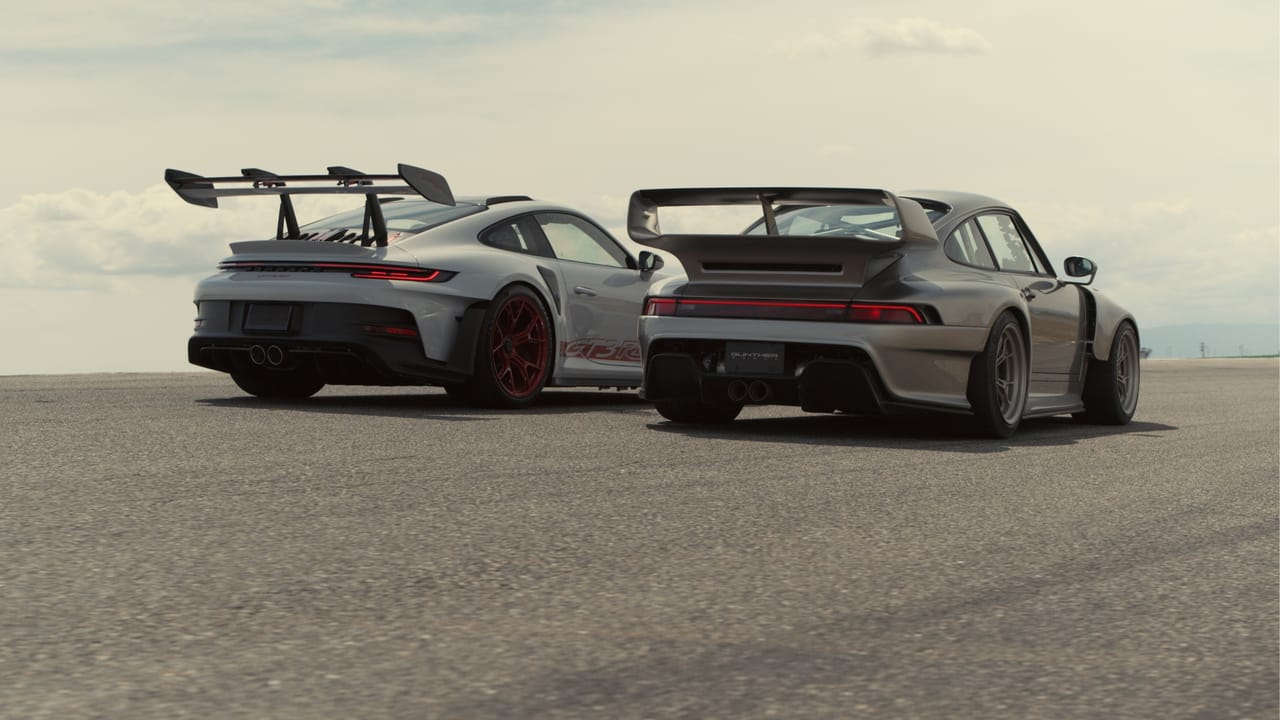
Much of the F-26 is created in-house, including 3D printed mirror housings and machined doorhandles. Step back and it doesn’t have the visual cohesion of a Singer, but sat in the pitlane at Willow Springs, it’s striking and purposeful, squats low over its arches. I’m just glad it’s not raining.
The F-26 fires with the breathy rawness that only comes from an air-cooled flat six. It moves off easily, no judder through the clutch, and the wooden topped six speed manual gearlever feels great in my hand.
I love that the exposed linkage hasn’t been prettified – it looks purposeful. I’d like more under thigh support from the seats, some steering adjustment too, but it’s good to be reminded this remains an old car. It means I approach it with a certain wariness.
Gunther Werks has set it up more like a racecar, with a narrow but very communicative balance window. It doesn’t understeer at all, but sits securely on a line through corners leaving it up to you how much throttle you give it. The motorsport-derived ABS and traction control will prevent it doing anything too scary, but every time you gas it intense turbo whistle lets you know things are at a boil already. Easy to be intimidated.
Everything about the car tells you not to take liberties with it
But the car is trustworthy. The steering is accurate and has good feel – no slop there, so you have confidence turning in. It’s not the most adjustable on the throttle through corners, but that’s fine. If it behaved on liftoff like an old 911, I’d be worried. Instead the rear axle is obedient, well supported and provides massive mechanical grip.
The brakes are Brembo’s finest CCMR carbon ceramics, the wheels are magnesium and done in-house, and the tyres – super sticky largely tread free Hoosiers in this case – can cope. Be glad about that weight distribution imbalance pressing the rear end down. When it does breakaway, it’s more progressive than I expected, but everything about the car tells you not to take liberties with it.
After five or six laps of Willow Springs I needed a break. The heavy steering had made my forearms and wrists ache and at high speeds – easily over 160mph on the shortish main straight – the air pressure was causing the door tops to pull away from the bodyshell, causing wind roar in the cabin.
There’s an intensity to this experience that you don’t get from modern machines (at least not this side of a Koenigsegg Jesko). It’s almost too much on track. Straights are normally a chance to relax, but with this much power in a small, light car, they’re as occupying as the corners.
The F-26 doesn’t let up and you don’t want to let it down. But if your concentration blinks it will start to run away from you – and 1,067bhp has the capacity to run faster than my brain’s processing power. The experience is so vivid and all-consuming that I have to take a couple of minutes just breathing and walking around.
The next day we relocate to Route 39 north of LA. It’s blissful up here, quiet, pretty and equipped with a road the equal of any Alpine pass. First thing to note: the F-26 will potter about, but the rose-jointed suspension will also feel its way into every bump and dip. It’ll do so smoothly, because the damping is good, but this is a car that wants to tell you everything about the road surface. And at low speed it gets distracted because it’s not that interested.
But as it gets faster, it gets better. It still hunts cambers, but does so gently, doesn’t tug at the wheel, actually flows really well on challenging roads. Provided you can resist full throttle. Use third and fourth and surf the torque between 3,500rpm and 5,500rpm and you’ve got all the performance you could ever need, this bottomless boost to jet you between corners.
You have to be careful about exploiting it. Modern supercars are so efficient, so stable, their power deliveries are so linear, that they’re incredibly accessible. They do speed with ease. This is not like that. It’s busy and active, it moves around, makes noises, communicates constantly. And if you want to use all the F-26 can give you’ll want warm tyres, a straight road, zero traffic, third gear and a tight grip.
“Everyone has a plan until they get punched in the face.” Isn’t that what Mike Tyson said? Well, lag is a fabulous thing, it gives you a moment to consider what you’ve just asked for. It pauses the punch.
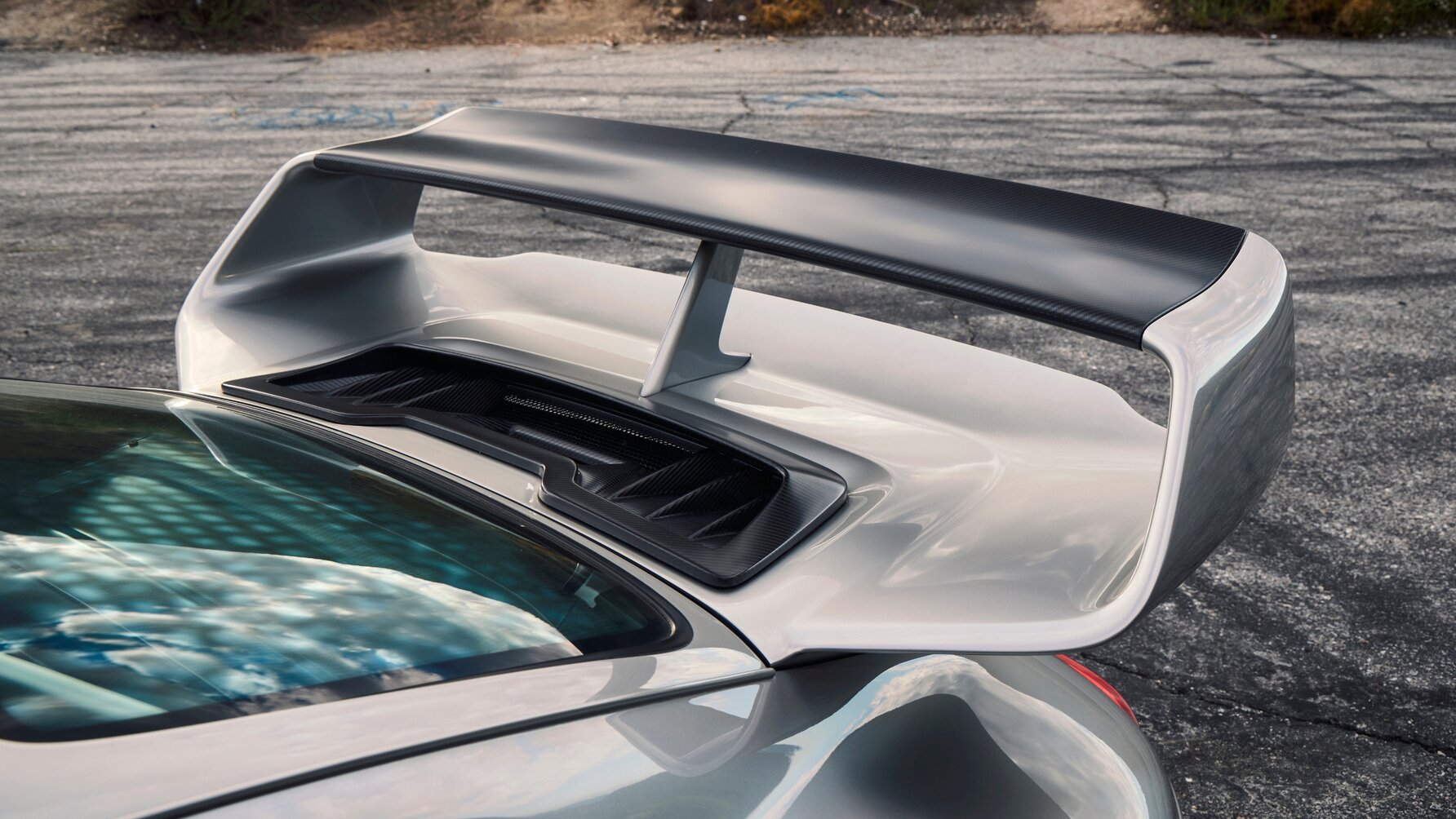
Because here comes the haymaker, and it’ll make you forget what to do. Forget vital things, like lifting off. Looked at another way I’m describing addiction – and there is something of that to the F-26. The onslaught is so intense, the furious howl of noise, the spooling thrust, the crescendo of it all as it homes in on 8,000rpm.
And I love it. Hadn’t expected to. Had expected they would have got it to make the power then made the rest cope, but actually this is a driveable, well set up car. But it’s also proper old school. Who’s to say what value is at $1.57 million (£1.16 million)? All that matters is for demand to outstrip supply for the 26 cars being built to keep residuals high, so wealthy buyers don’t look like they got a bad deal.
Cheap, alongside a DLS Turbo, but then it’s not as sophisticated as a Singer. The detailing isn’t there, the finish is good, but not exceptional and could do with further finessing. And that ‘Define your limits by going beyond them’ message on the kick plate as you get in? No thanks. Crass.
Definitely not a long distance car then. But as a car to rip up a canyon road with improbable violence, scenery whipping and blurring through the upright windscreen, to feel breathless and giddy with excitement, to need to pull over at the top to get out and calm down and stop trembling... well, there’s not much to touch it. Forget small concepts like restored or modernised, this is a Porsche 911 maximised.
Price: £1.16m
Engine: 4.0-litre TT flat 6cyl, 1,067bhp, 750lb ft
Transmission: 6spd manual, RWD
Performance: 0–62mph in n/a secs, n/a mph
Weight: 1,247kg (dry)
Trending this week
- Long Term Review
We lived with the bestselling Alfa for six months. Should you?