



25
We have, but that was the full-size Rangie that should really have reached customers by now. It keeps being pushed back as Range Rover (it’s a separate brand now, remember) wants to “take more time to get it right” according to Managing Director Martin Limpert.
What you’re looking at here is the slightly smaller Range Rover Sport in all-electric form, which we were originally promised would arrive way back in 2024. Oops. Still, that means plenty of work has gone into its development, and Limpert also tells TG that it sees the Sport “moving apart from the full-size Range Rover”.
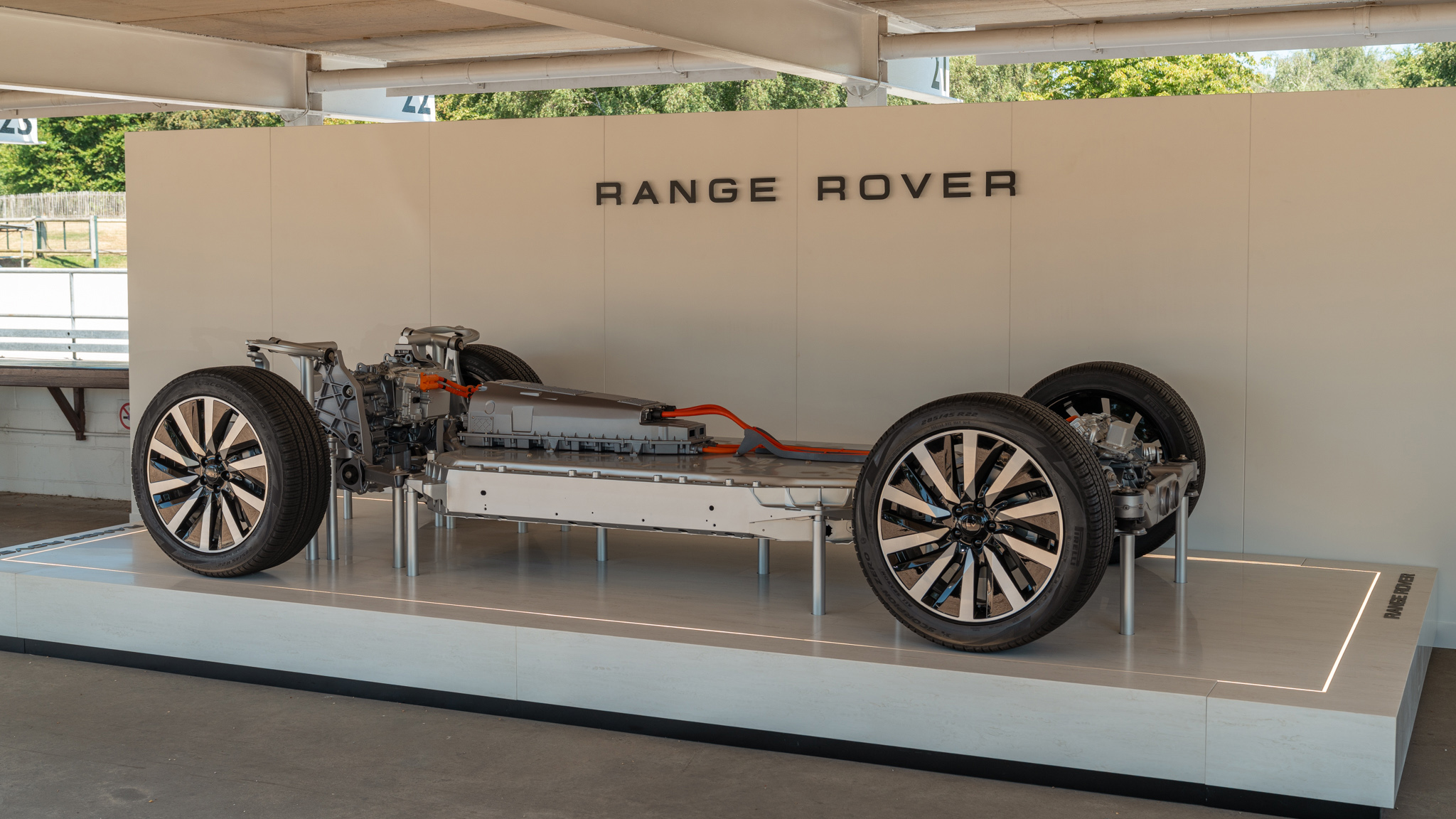
Well, there’s not a huge amount that we can tell you just yet, although JLR has let slip that – much like with the internal combustion versions – the RRSE will share the full-size Range Rover’s platform and its powertrain.
That means there are two electric motors working together to send 542bhp to all four wheels. We know that the bigger brother also gets 627lb ft of torque, so expect that to be the same here. The battery is also the same double-stack unit as found in the Range Rover, so you’re looking at 118.5kWh of usable capacity.
At a guess that should mean around 330 miles of range on a single charge. That full size car also gets an 800-volt architecture which allows for rapid recharging at 350kW, so it should be the same for the Sport.
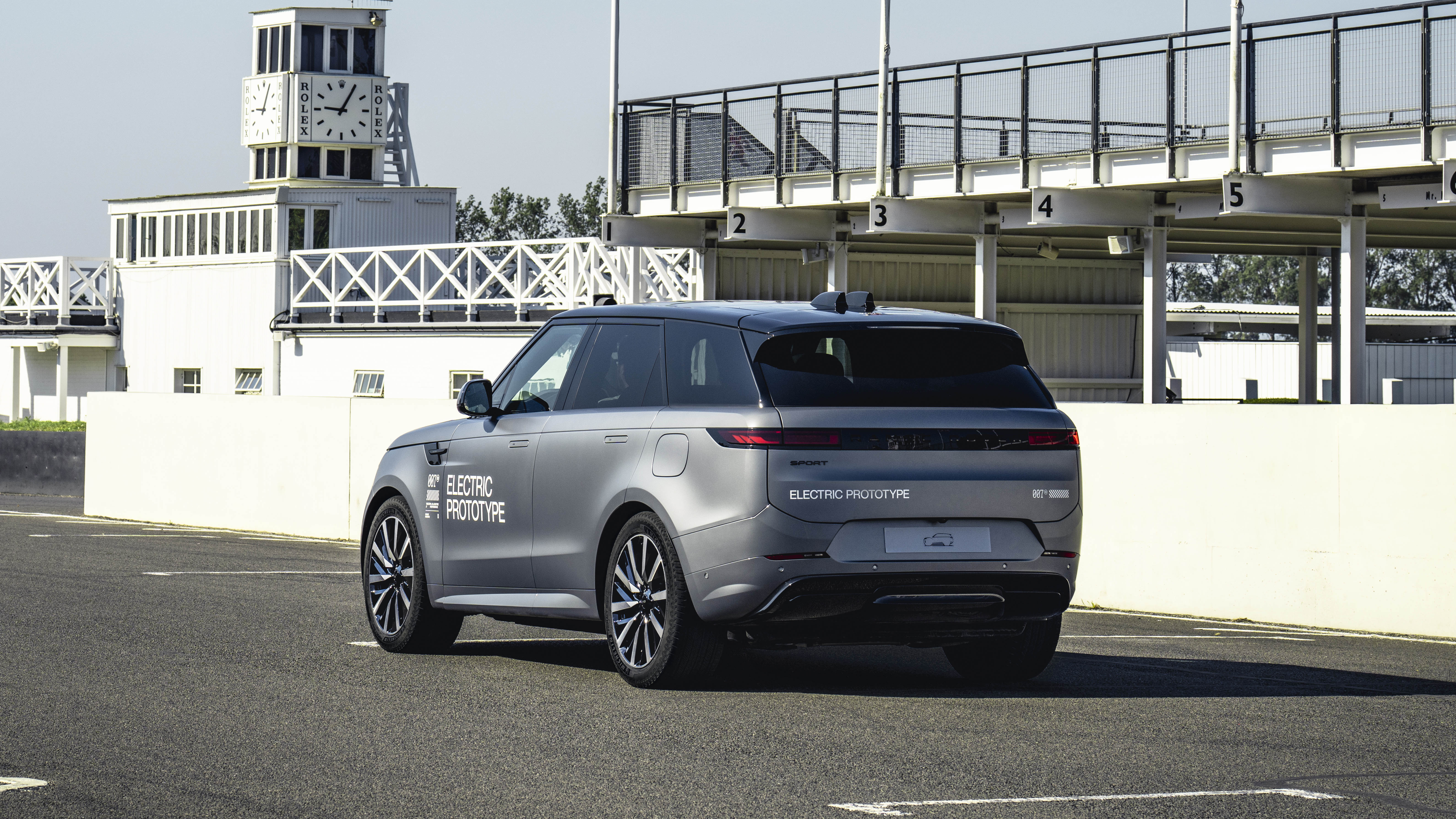
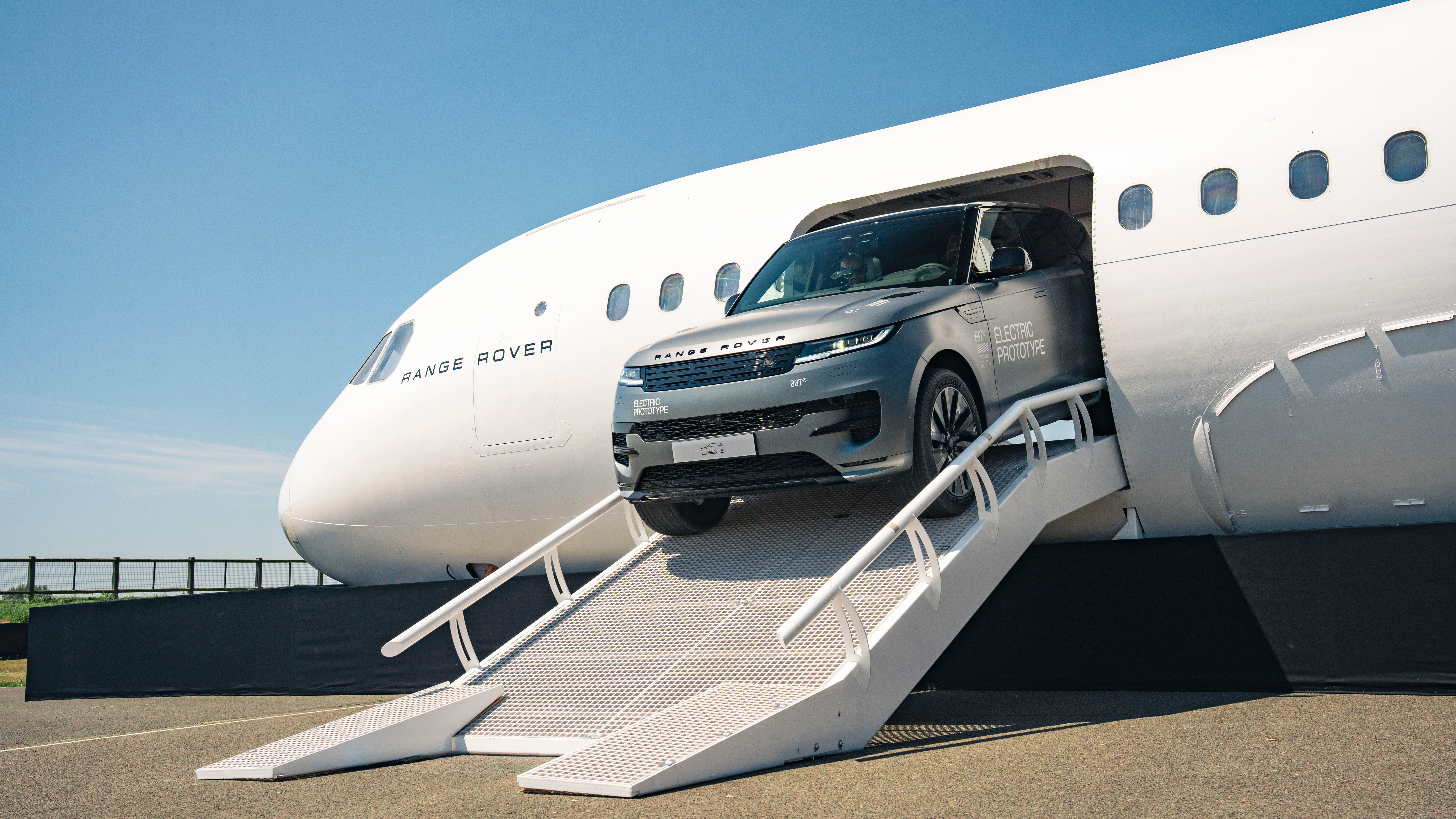
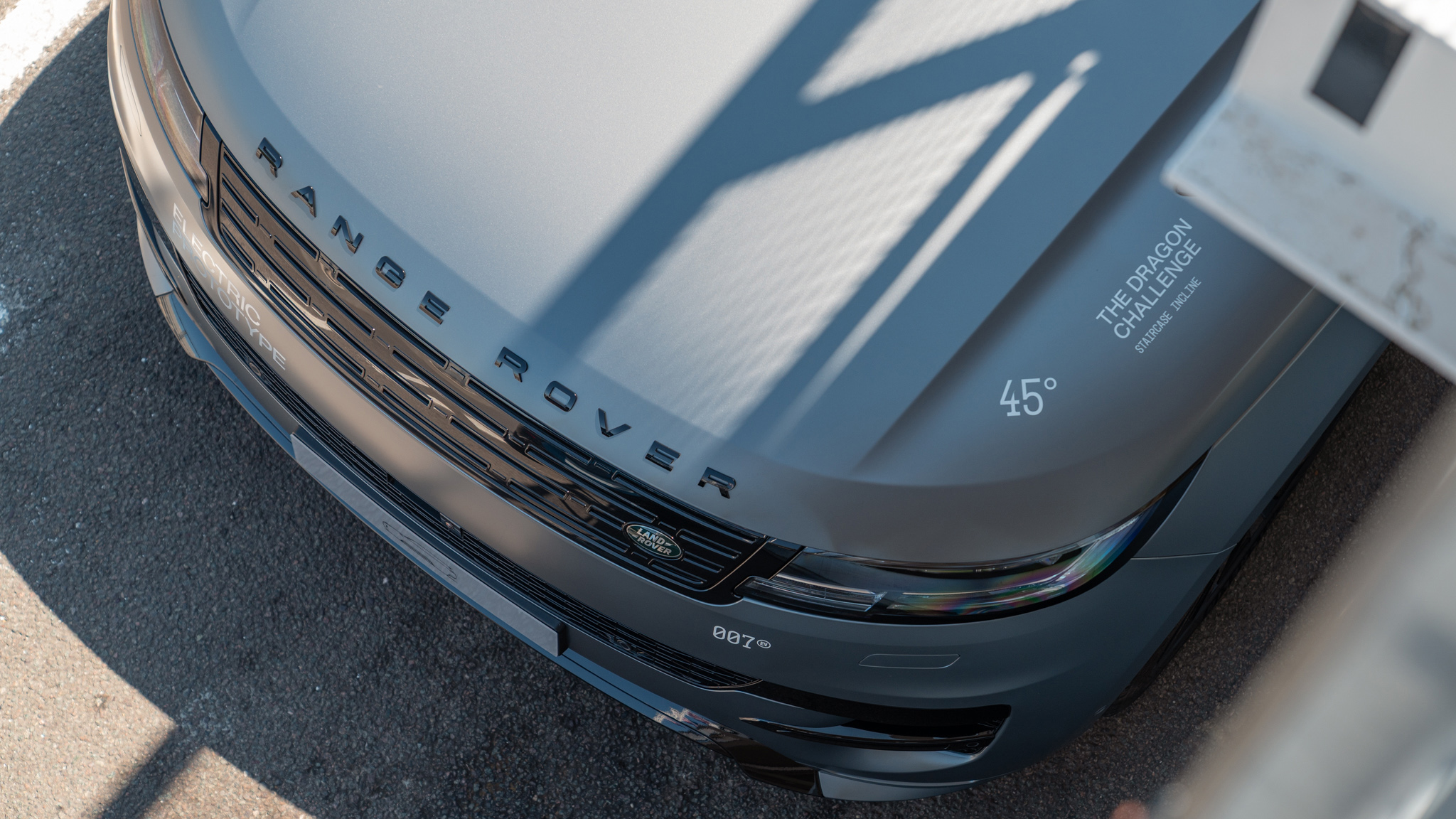
Very briefly. JLR let us have a go in a prototype at the Goodwood Motor Circuit, and rather helpfully it threw in a few obstacles that allowed us to test more than just on-the-limit handling. They also served as a throwback to old Range Rover Sport marketing stunts. On the launch of the L494 in 2013 journalists were invited to drive through a Boeing 747, and you might remember the ‘Dragon Challenge’ from 2018 where a PHEV climbed the 999 steps up to Heaven’s Gate on Tianmen Mountain.
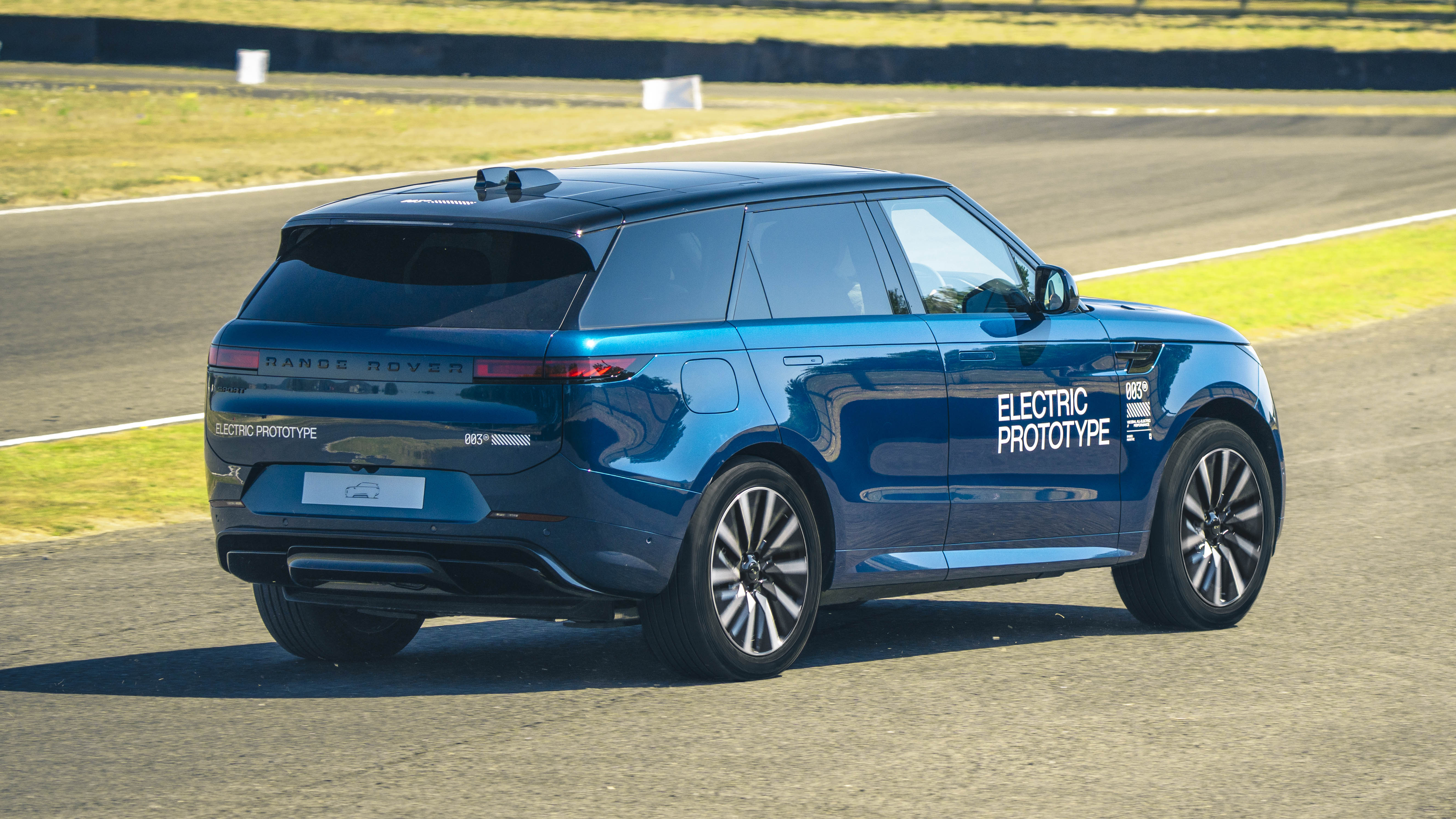
Our short drive starts with something a little more dynamic, with a couple of different slaloms through cones to test the erm… Dynamic drive mode. What can we report? Well, there’s clearly air suspension and four-wheel steering, and the RRSE feels impressively agile given its size. With its battery under the floor the centre of gravity is bound to be lower than the combustion-engined variants (it’s 60mm lower in the full-size Range Rover Electric), and it stays pretty flat through sharp turns at speed.
It does feel relatively punchy too, with Dynamic mode clearly giving you a more aggressive throttle map and quicker acceleration. No word on the 0-62mph time just yet.
We also get a chance to test the strong regen in one-pedal drive mode, and the brake pedal itself seems to blend relatively seamlessly into friction braking when required. It all feels supremely smooth.
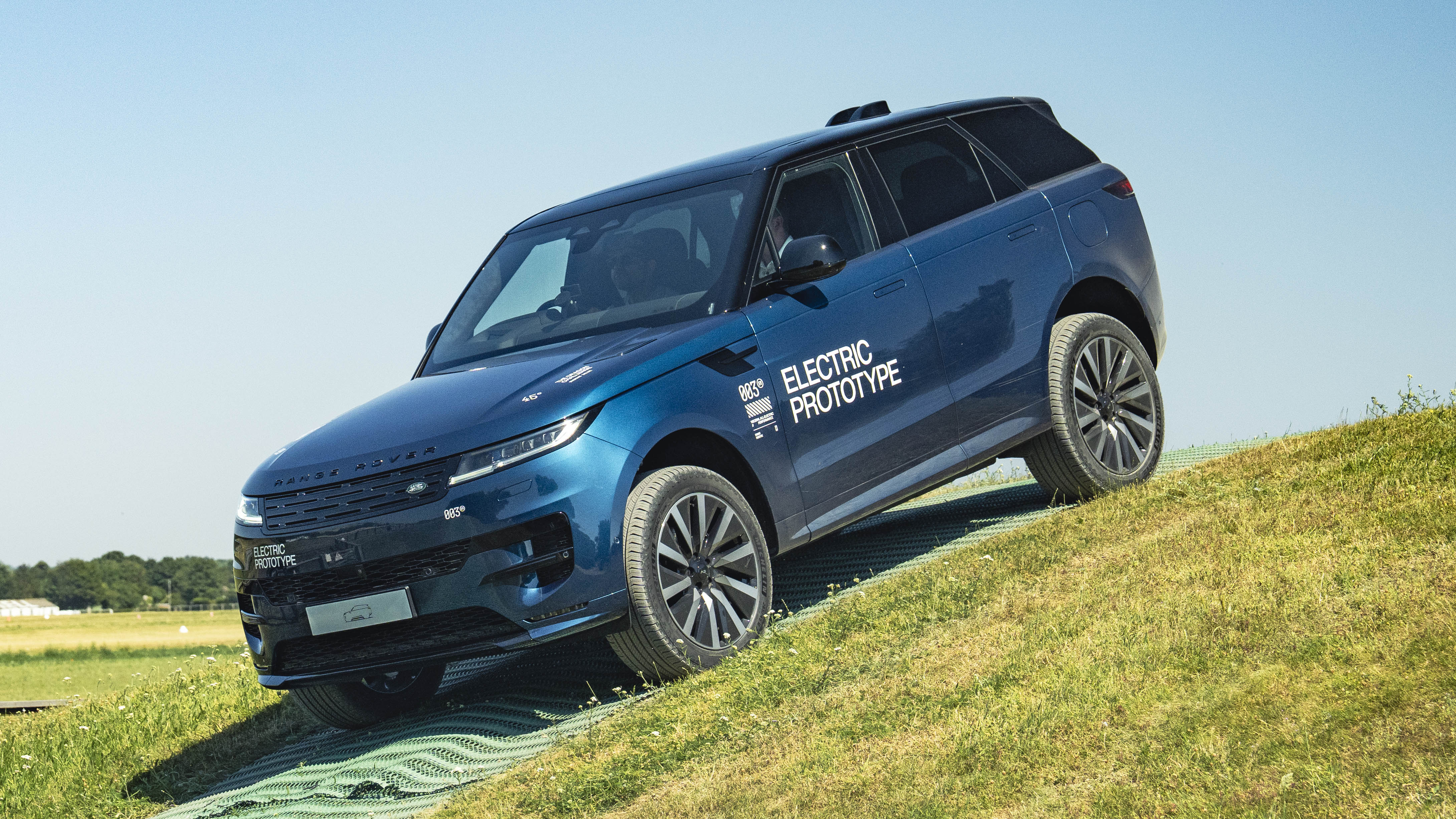
Well, it’s hardly Tianmen Mountain but we do get to use the Sport’s ‘Rock Crawl’ mode to climb a steep set of steps. There are still impressive approach and departure angles in the EV, and the car’s brain works to provide traction in almost all circumstances. It’s uncanny and easily conquers the climb with limited slip. You’ve got all of the usual off-road drive modes here should you need them, and they’ve also all been tweaked to work with that one-pedal driving. Clever.
Get all the latest news, reviews and exclusives, direct to your inbox.
How do we know that there’s air suspension? Well, we had to stick it in its first off-road height setting for our trip through the plane cabin. Any lower and we wouldn’t have had the clearance for the front bumper on the way out, any higher and we’d be creating the world’s first Range Rover Sport Electric Convertible.
We were only behind the wheel for 15 minutes or so, but we barely noticed any changes inside. Of course you get some special displays in the 13.1-inch central touchscreen and on the 13.7-inch dial display, but otherwise it’s as clean and button-free (uh-oh) as any post-2024 model year Range Rover. No regen paddles here.
Heck, the drive selector hasn’t even changed – with the ‘S’ that used to represent the gearbox’s ‘Sport’ mode now repurposed to refer to ‘Single-pedal drive’.
As you’d expect it’s whisper quiet inside, with what seems like impeccable insulation from wind and road noise. We’ll need a proper test on public roads to confirm, but it feels plenty luxurious from the driver’s seat.
That we won’t know until later this year, but it’ll almost certainly be more than the entry-level Sport. The range currently kicks off at just under £80k for a mild-hybrid 3.0-litre twin-turbo six-cylinder diesel. The silence of electric power certainly suits the slightly smaller Range Rover though, and with the punch provided by instant electric torque this second EV might truly live up to its name.
Get all the latest news, reviews and exclusives, direct to your inbox.
