





Big Reads
To the RBATcave! The secrets behind Red Bull's mind-blowing RB17 hypercar
Welcome to the skunkworks where the most extreme track hypercar ever will be forged
Red Bull is building a hypercar. Seriously, Red Bull is building its own hypercar.
The RB17 – the machine that promises to put Max Verstappen’s (2025) quali times within the reach of anyone lithe enough to climb inside – isn’t like the Aston Martin Valkyrie or the Ford GT, which were off diary spaceships understandably subcontracted to Canadian racecar specialists Multimatic.
Advertisement - Page continues below
It’s actually all British, and almost entirely in house. The RB17 isn’t secretly being farmed out to a globally recognised but modest talent like Dallara or Prodrive. Its Le Mans ready carbon tub is baked on site at the Red Bull technology campus in Milton Keynes, a wheel nut’s throw from the F1 team headquarters. The intricate shrinkwrapped gearbox, the air commanding bodywork from the deepest recesses of Adrian Newey’s rulebook free fantasies, and even details like seat upholstery and dashboard buttons are all made real by Red Bull Racing’s side hustle ‘RBAT’, or Red Bull Advanced Technologies.
Photography: Mark Riccioni



There’s only one (fairly big) piece of the puzzle RBAT is entrusting to someone else... on a different industrial estate in the Midlands. Care to guess what that might be?
Today I have access to the RBATcave, a facility so new the paint is barely dry and the security guard scowls as if I’ve asked directions to Narnia when I arrive. RBAT has been on site for a year but this facility only came online in August 2025. First time I’ve been in a car factory where I felt rude keeping my shoes on.
Advertisement - Page continues below
Inside, my guide is ‘brain in chief’ Rob Gray, RBAT technical director since late 2020, following a two decade career in Formula One which began on the Jaguar team and continued through Red Bull Racing’s upstart newcomer phase into its dominant Newey designed championship eras. I suspected we’d get along when he pulled up in a mucky Porsche 997 manual and mentioned early doors he liked to race a classic MG at the weekend, but luckily Rob’s also got that quality your best schoolteachers had, of explaining wildly complex subjects in a genial, digestible fashion.
Ironically, it’s also the day Aston Martin announces Rob’s old partner in design Newey will assume the role of F1 team principal. Rob’s a little startled at the news, but clarifies despite Newey’s departure from Red Bull at the end of 2024, he’s still across his track only brainchild.
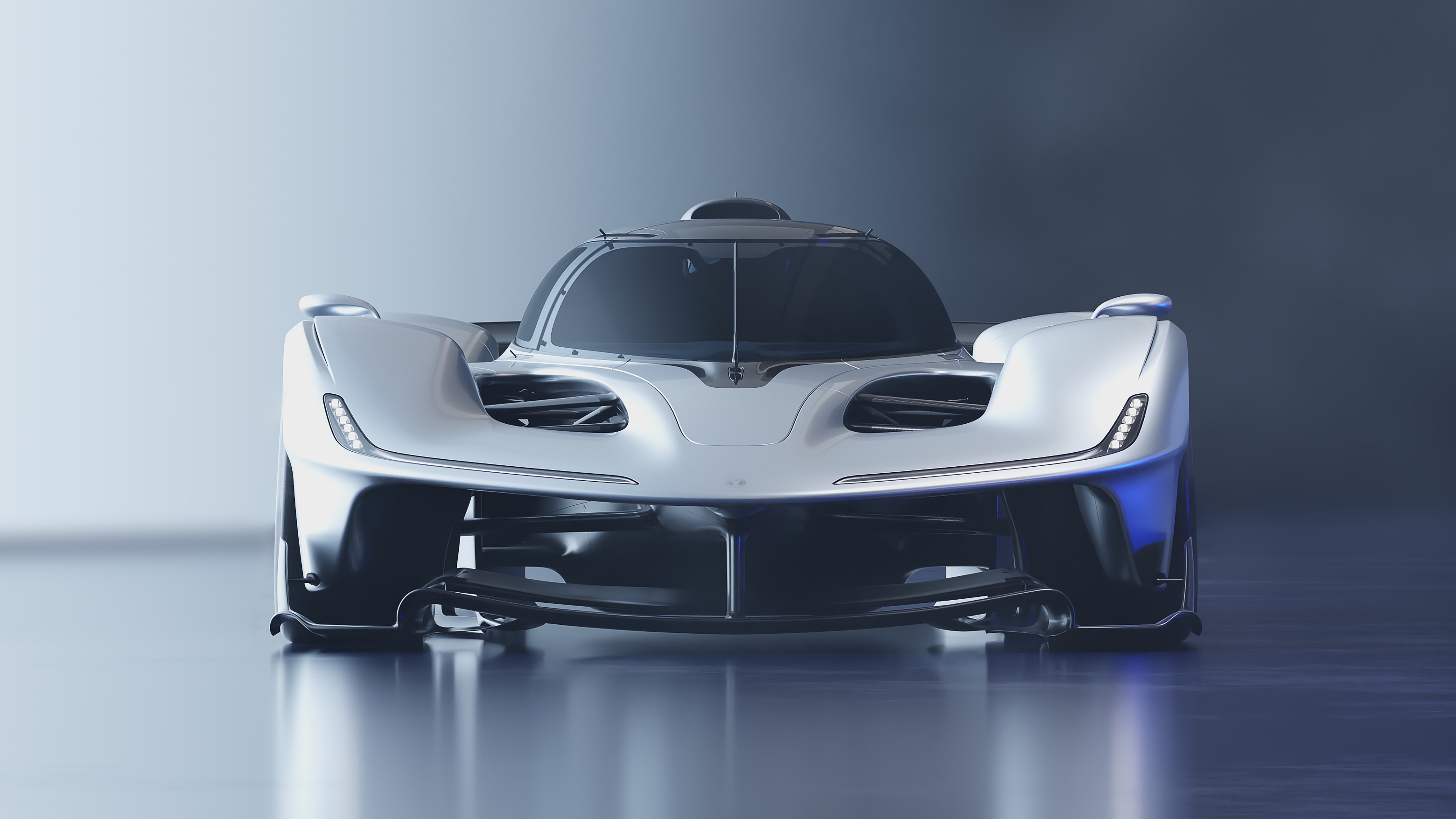
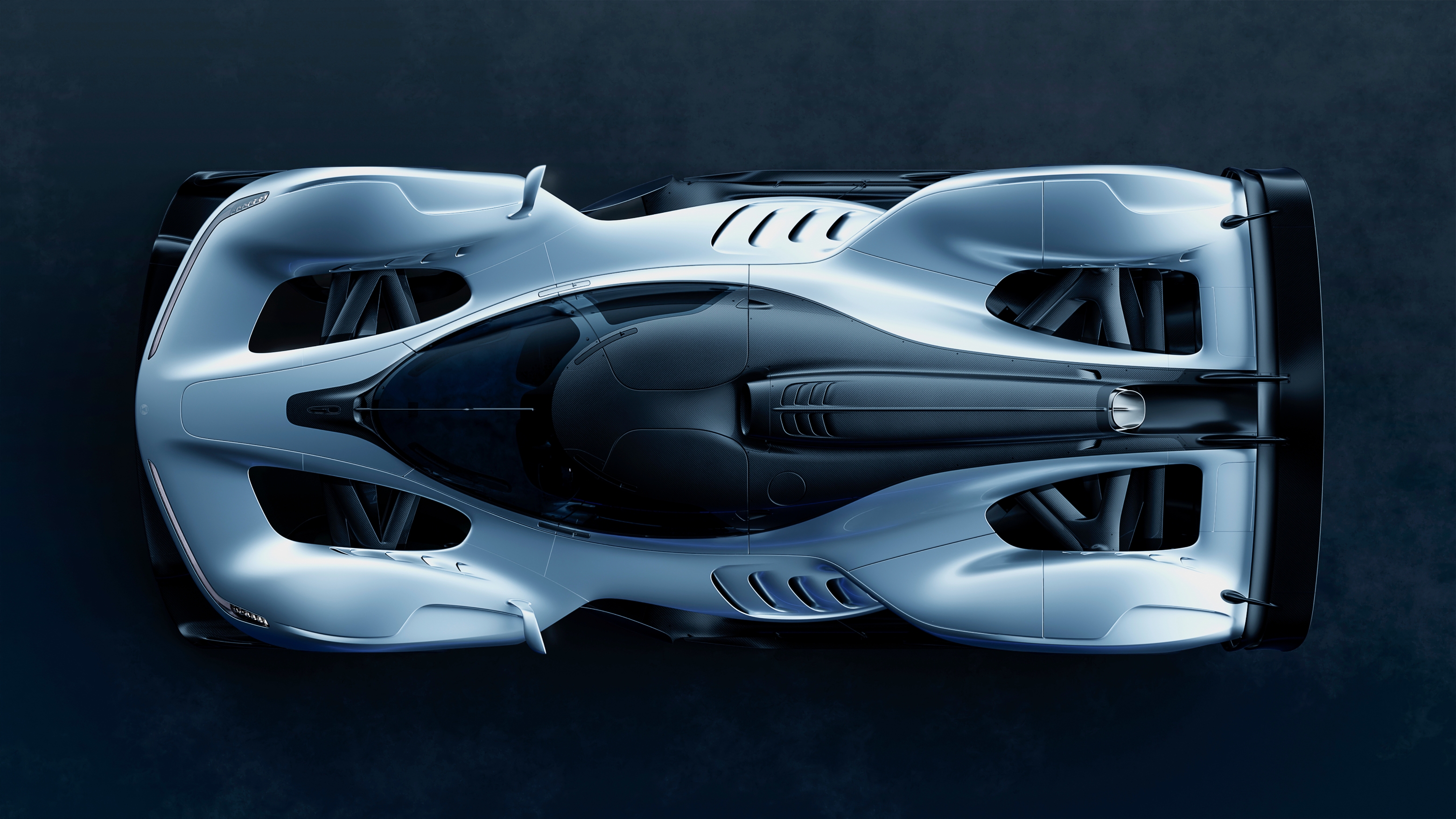
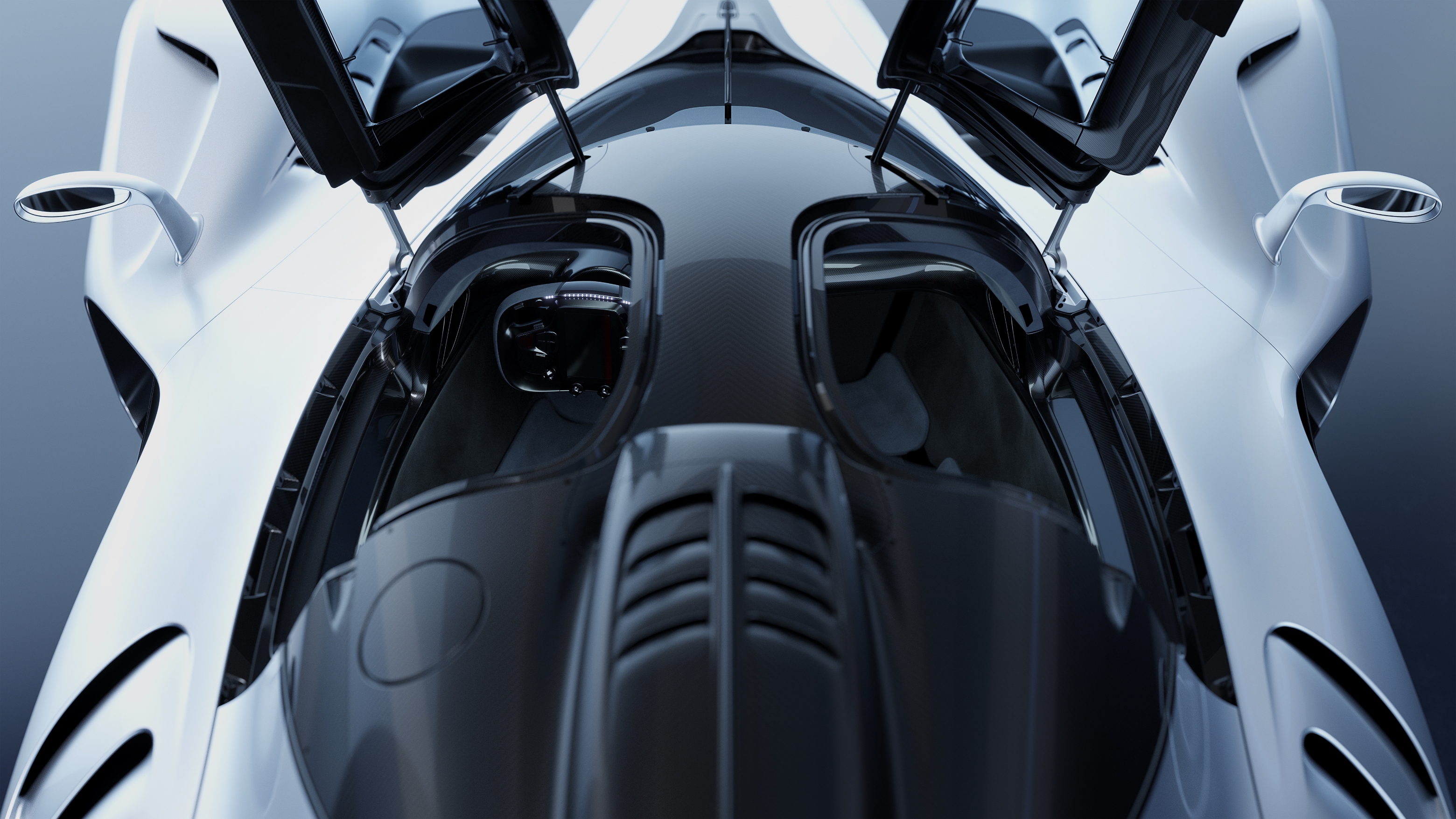
"He’s allowed to [consult on the project], and he’s still interested in what’s going on. But to an extent we got what we needed from him, we know what he wanted the car to look like and he’s always on the end of the phone if we need him.
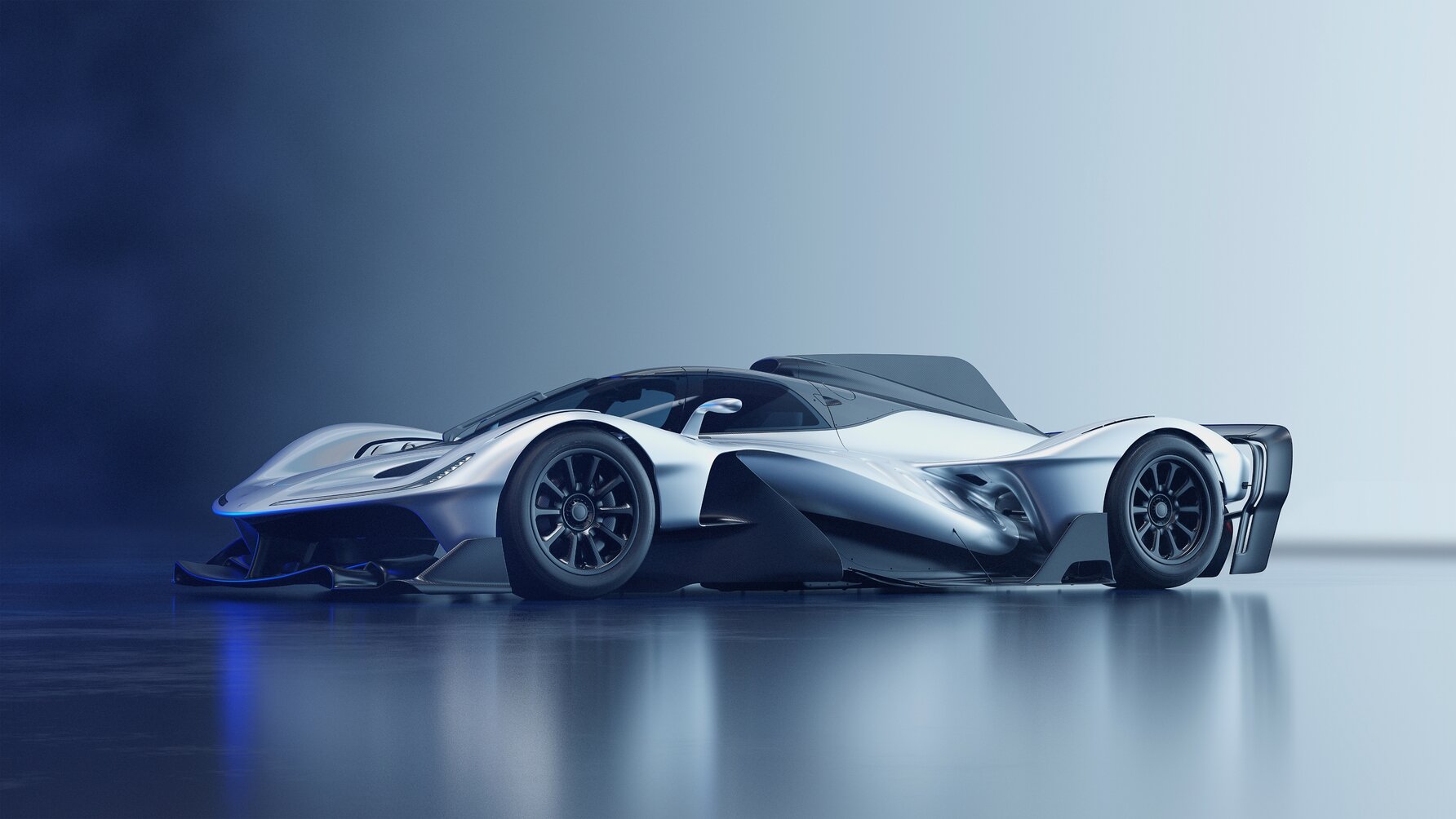
“One of the last changes Adrian made was to move the exhaust onto the spine of the engine cover. That’s quite a big change and led to a lot of work on the thermal side of things to stop bits catching fire,” Rob explains, noting the once blue, now white ‘display model’ RB17 is now very last spec, with countless changes made since it first broke cover in late 2024.
It'll go into production in spring 2027, though a running prototype is likely to be howling around on demo laps at various F1 races next season. Silverstone is local, and the Red Bull Ring would seem appropriate...
Right now around 160 very smart individuals work within RBAT, but that’ll swell as the 50 RB17s head into production. Rob beckons me into the surgical bay where the core of the car comes to life: the pressure cooker known as an autoclave which births the 60kg one piece carbon tub.
Top Gear
Newsletter
Get all the latest news, reviews and exclusives, direct to your inbox.
Here’s one he made earlier. It’s a stunning object in the raw, worthy of a classified Lockheed fighter jet, except the carbon weave meets centrally in a neat herringbone pattern because Rob reasons people spending £5 million on a track toy want art as well as science. The chassis will seat two adults, though the pinched packaging is classic Newey.
Aside from lightness and tightness, strength is key here. Even though the RB17 will never race and RBAT absolutely does not endorse plans customers may have to road legalise it, they’ve specced the tub to endurance prototype crash rules as a ‘duty of care’. Reassuring when you first try taking Eau Rouge-Raidillon flat...
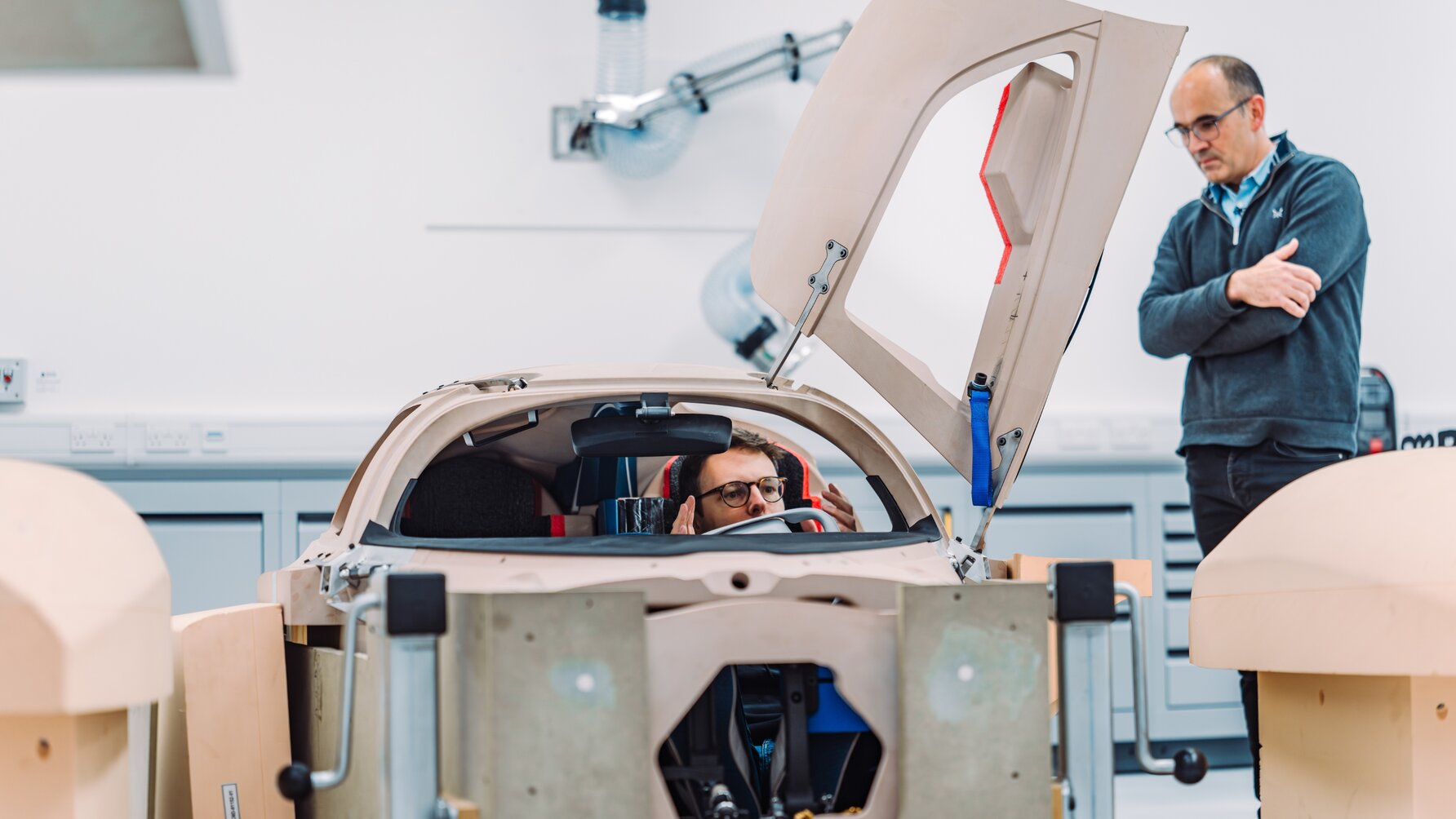
Next door Rob gives me the customer treatment as I’m allowed to clamber into the seating buck. It’s carved from what looks like solid MDF (actually a sort of modelling resin) and Rob explains it exists “to sort out the cockpit layout, doorhandle positions, switchgear logic and steering wheel position – it’s easier than in the digital world”. VR nil, B&Q one.
The driving position is pure F1: backside skimming the ground, heels and knees raised to nipple height so aero wizardry can happen underneath. It’s cosy and comfy, and I can spot how tiny adjustments to the shape of the front bodywork make a huge difference to sighting the apex.
Front hinged doors which allow the driver to stand on the seat before sliding downwards also make the RB17 considerably swifter to enter (or exit) than the similarly cramped Aston Valkyrie – Newey’s last out of hours homework.
Where the Valkyrie was (believe it or not) in some ways compromised to join the public highway, the RB17 can push the limits. In a manufacturing bay I’m introduced to the miniscule gearbox. It’s about the size of a Nespresso machine but has to survive 1,200bhp while subjected to five g cornering loads – and last longer than just an F1 weekend.
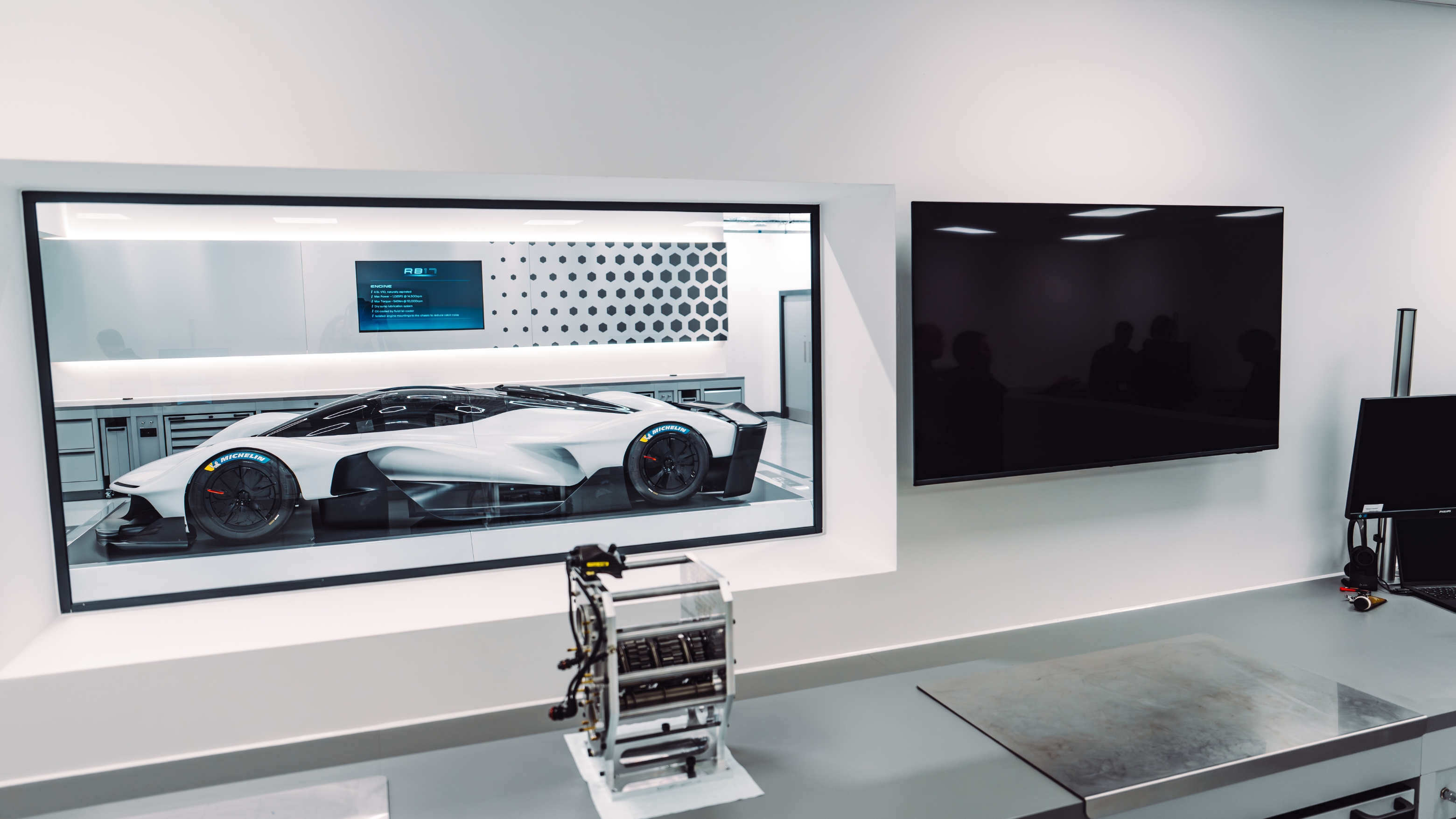

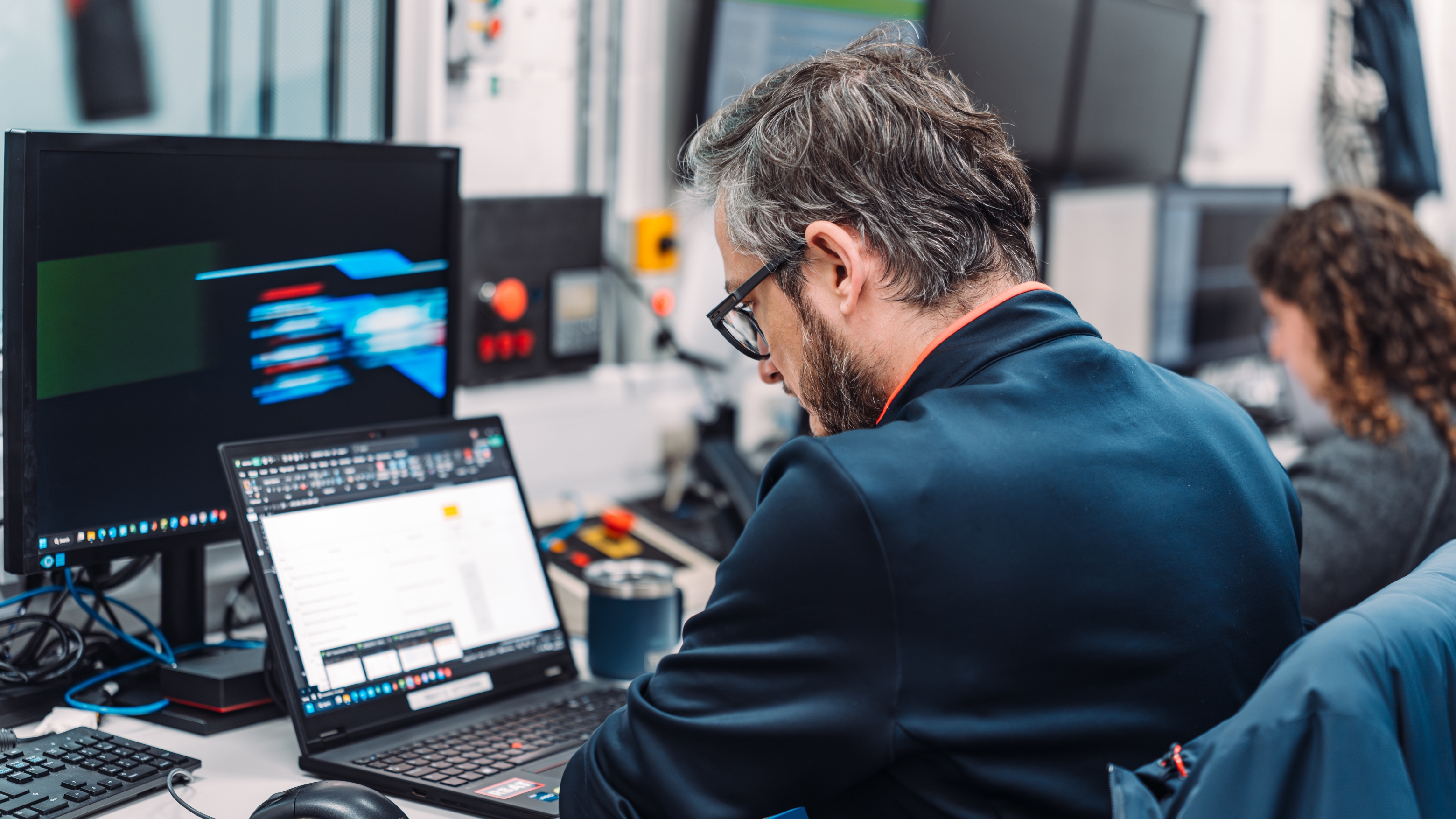
Rob explains RBAT has written its own fiendishly clever code that allows sensors to scan where the ‘dogteeth’ nubs are on each gear, so every shift is not only millisecond quick, but never shaves any of the dogs off as expensive swarf. The assembly is exquisite – a shame no one will ever really see it.
Same goes for the front uprights: sinewy organic fillets of aluminium that look like the fossils of super advanced alien lifeforms. And the front end hydraulic manifold to power the active suspension and power steering, a sort of multi-chamber robot’s heart CNC machined from aluminium. Deals with fluid working at over 200 bar, weighs as much as a loaf of bread. Magic.
Speaking of suspension, in another building (built specifically for the job) lives a punishing damper torture chamber. To cope with the forces of a sub-900kg car generating 1,700kg of fan assisted downforce at 150mph, the colossal steampunk rig is made from Brunellian bridge girders and is surveyed from behind reinforced glass.
In yet another outpost on this NASA-like site, there’s a dyno room purely for the gearbox. It’s kitted out with three electric motors: one sits on the main crank and simulates the fury of the Cosworth V10 engine.
The others work against the axles, generating friction and the effect of braking so that before an RB17 ever turns a wheel in anger, the transmission will have already done thousands of testing ‘laps’– and they’ll have broken it in a lab, not halfway through Maggotts/Becketts in front of a global audience of around 70 million.
There are avenues inside RBAT I’m prohibited to enter. Plastic lined clean rooms where white coated boffins scuttle about, concocting tech that would have the FIA in full scale nuclear meltdown.
And that’s the secondmost impressive thing about the RBATcave, besides just how much of the RB17 isn’t delegated overseas: the sheer scale of this operation, for just 50 examples of a billionaire’s plaything. The breadth of what they can do in one little corner of Milton Keynes is staggering.
Surely they’re not just going to stop at one car, are they? Wouldn’t Max enjoy the ultimate street legal weapon to celebrate his champagne soaked success? Keep an eye on the trademark office, just in case Rob and his team copyright Red Bull RBMV...
COS YOU'RE WORTH IT
Yes, it’s the RB17’s engine that Red Bull decided to leave to a different set of experts. Nothing to do with the F1 team’s breakup with Honda and incoming technical Ford partnership, and everything to do with the fact that Britain is currently the undisputed king of producing hypercar engines.
And when we say Britain, we mean one storied business based in Northampton: Cosworth. Decorated in every motorsport series you can think of, it’s also supplied the Gordon Murray T.50’s 12,100rpm V12 and the Bugatti Tourbillon’s sensational V16 following a star turn in the back of the Aston Martin Valkyrie. How a 6.5-litre V12 squeezed in there we’re still unsure.
![[node:field_inline_galleries-themed-delta:0]](/sites/default/files/styles/media_embed/public/2026/03/RB17%20%2810%29.jpg?itok=9vboAgU7)
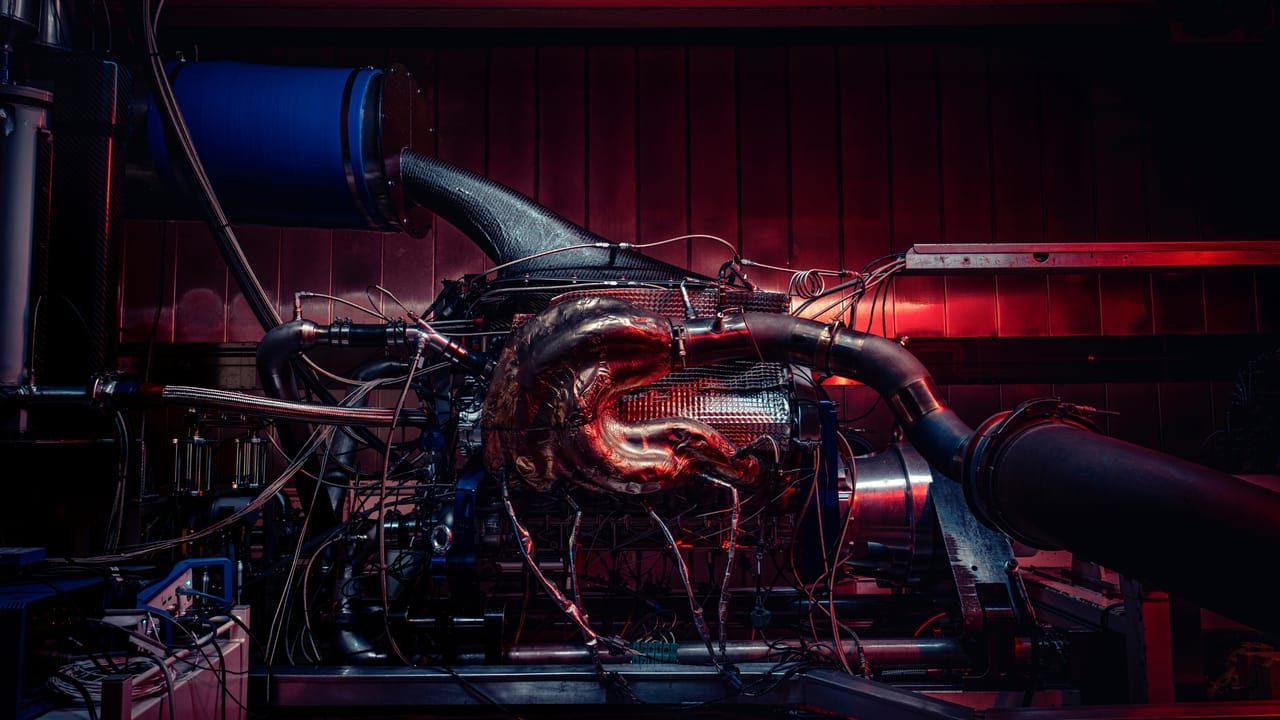
The RB17’s powerplant was a new challenge though: unimpeded by road regulation but hounded by Newey packaging demands. The result is a 4.5-litre V10 with a 10-into-one exhaust manifold to unleash a noise inspired by the 2000 McLaren MP4/15 – Adrian’s personal favourite F1 soundtrack. It revs to 15,000rpm and generates 1,000bhp. An e-motor supplies reverse, sustains torque during gearshifts and provides a further 200bhp boost.
Cosworth say it’s the loudest engine it’s ever tested – our supermarket decibel meter ran to 127.9dB as it seared towards a screaming, pure 1990s nostalgia redline. The engine could probably go higher still (F1 V10s went beyond 20k) but Red Bull wants reliability, 6,000–10,000km service intervals and turnkey start, unlike the old V10s which were seized solid with microscopic tolerances until pre-heated with warm fluids.
Cosworth’s managing director Bruce Wood tells me: “In all of our work with Adrian, with this and the Valkyrie before, he’s very focused. He likes working with engineers, and he’s very good at pushing you until you’re at the point of saying ‘it’s impossible’, then he says ‘OK, let’s go back to the stage before’. He pushes us on an engineering level until it gets a bit silly, and at that point he’s pushed you to the limit of what you can do, but never beyond it. I’d be the first to recognise Adrian has probably pushed us further than we would have gone without him...”

Trending this week
- Car Review
Aion UT
- Top Gear's Top 9
Nine funky Brazilian cars with Volkswagen engines
- Car Review
Porsche Panamera