

Report 6
One car company above all others has had the most ridiculous slam dunk of a year. Vive la Renaulution!
Retro done right is a complicated proposition. Too much cut ’n’ paste and you’re in a world of heavy handed pastiche, the blood and bones of caricature. Too little, and your nod to the past ends up imperceptible, message unreceived. But Renault in the middle 2020s seems to be walking the line with some grace. First up we get the reborn 5, scaled up into a modern, safety satisfying outline, but with the proportions that ape the original. New school drivetrain, but with the comforting shapes of a classic hatch.
Younger people think it’s cool, older people – the ones with the fond memories – find those reminiscences well served. The details are fun and interesting, the hardware on point. It’s a sales success and deserves to be. And ditto the 4, another revival mod that remembers what made the original so satisfying, giving a taste of the past with the flavours of the future. They’re both great.
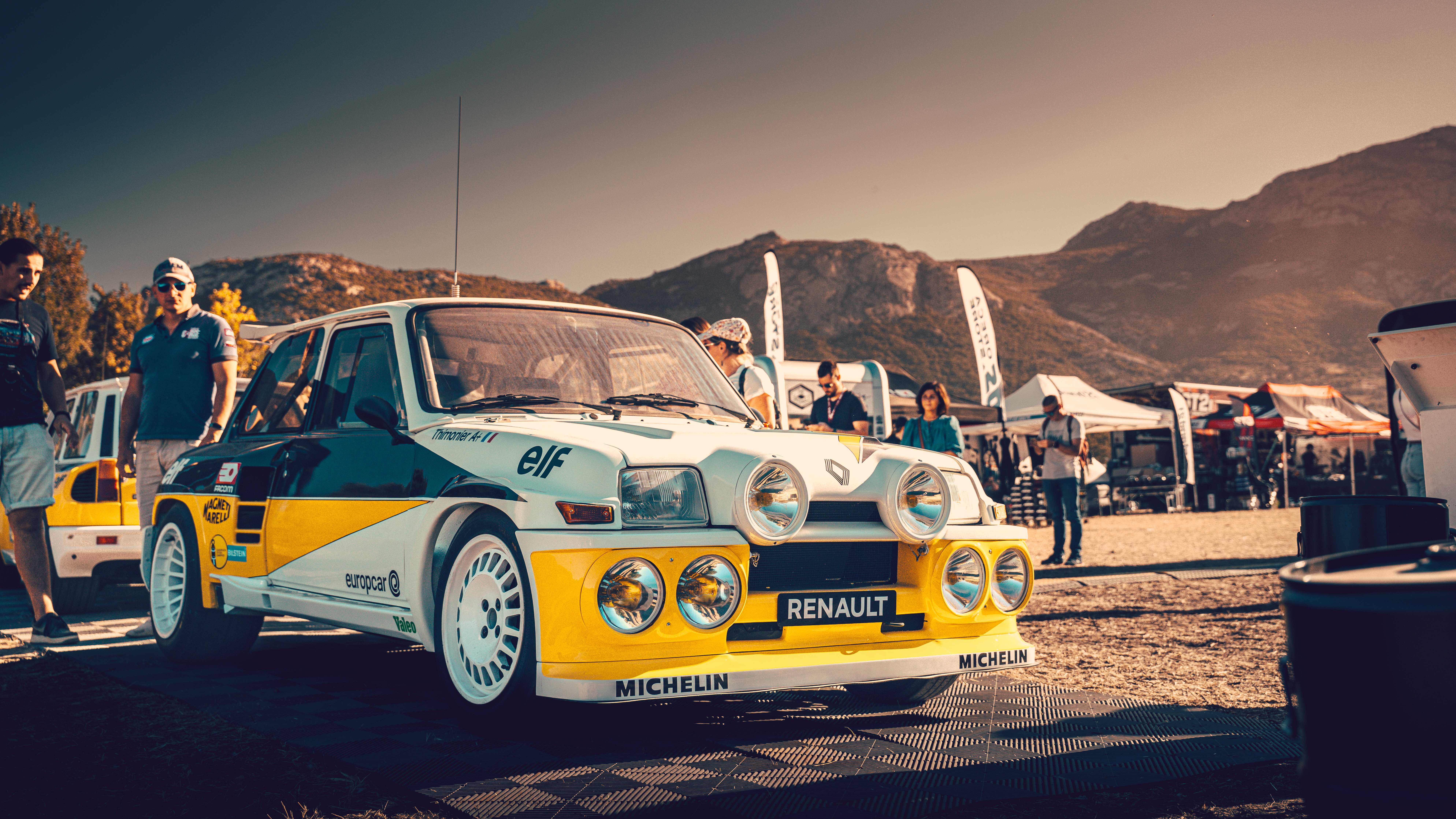
But the Renault 5 also had a proper wild side. Back in the early 1980s, it morphed, under rally homologation rules, into the Renault 5 Turbo. A Group B refugee whose back seats had been swallowed by a 1.4-litre turbocharged four pot with 160bhp. A car the length of a small sofa that now had rear wheel drive and plenty of dynamic surprises for the unwary. These days, those cars are legendary – both for their layout and their boxy, blocky, function over form aesthetic. And if you want to take inspiration from your back catalogue, it really helps if that history has some stone cold icons lurking at the back of the room.
Photography: Huck Mountain
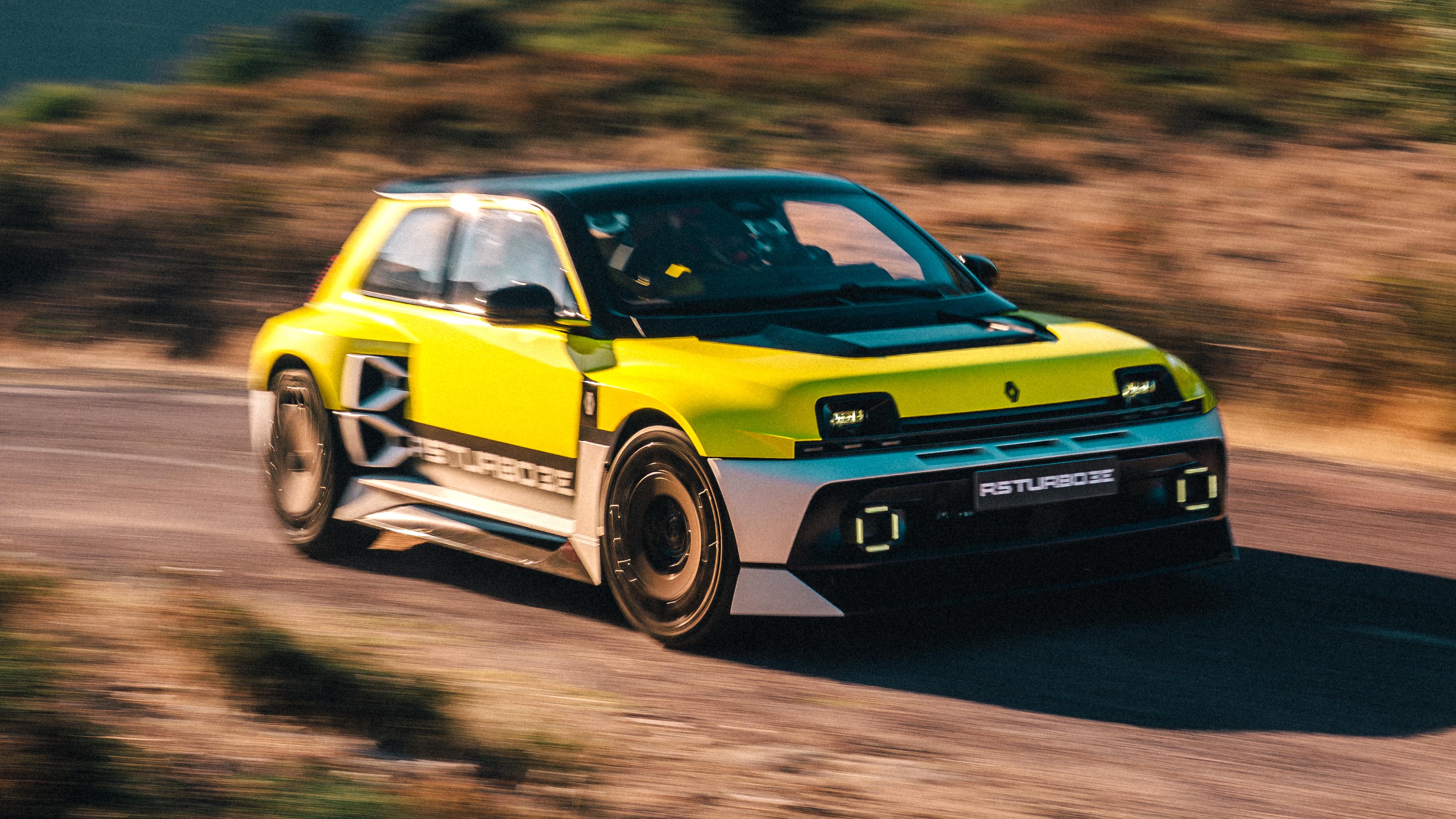
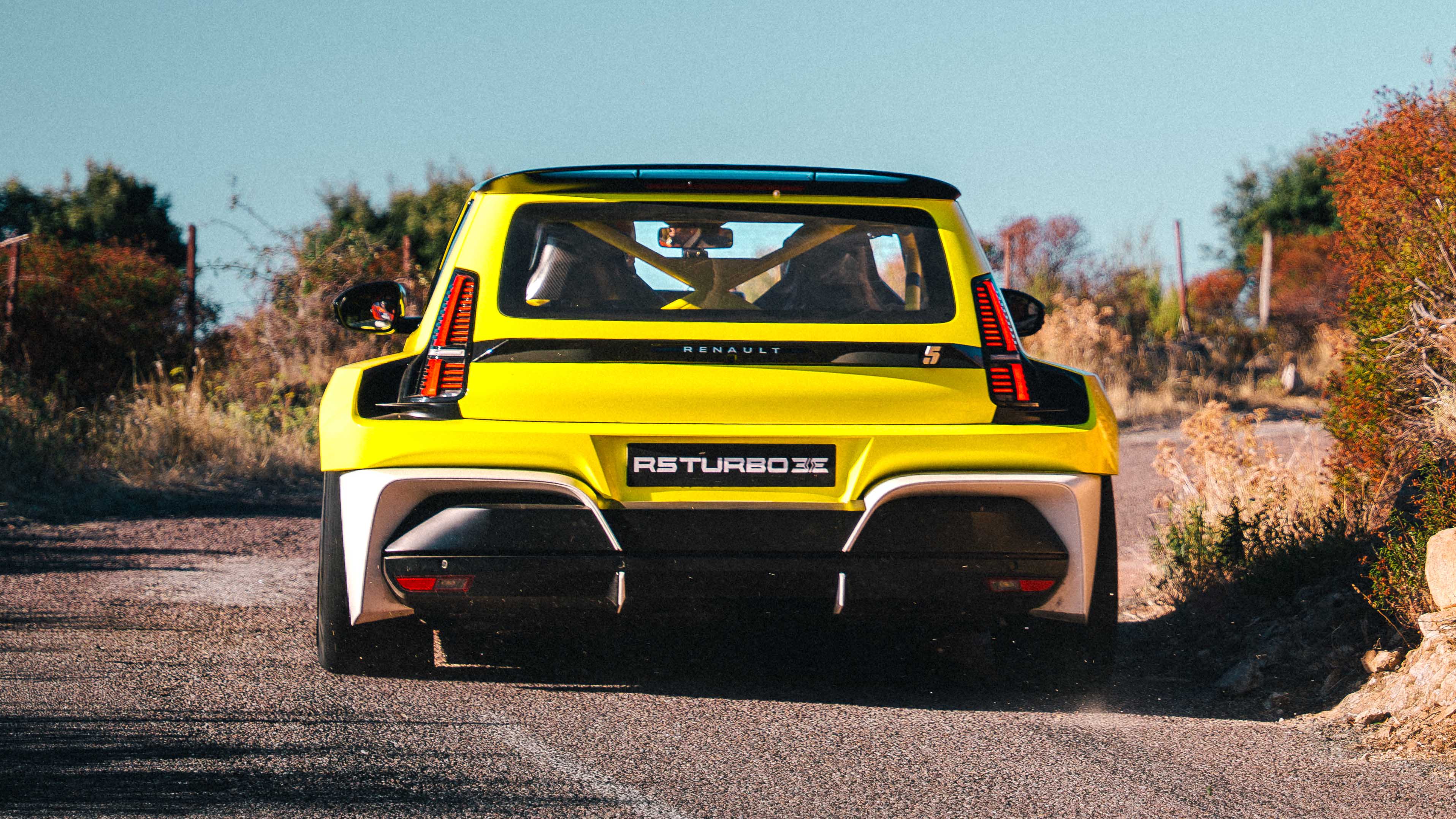
It felt inevitable that Renault would return to the 5’s wide arch halcyon days, then. But again, it’s done so without compromising the idea that the Turbo was an innovator from conception. The new Renault 5 Turbo 3E is... a little crazy. With a chassis constructed by the sportier sister company Alpine, the 3E sports girthy carbon bodywork, a half cage, a windscreen positioned some way back in the profile, and 540bhp delivered to the rear wheels by in-wheel motors that can exert control of the tyres directly from the hub. Instant torque, dynamic control, a world of new possibilities.
What’s emerged is a hatchback the same width as a Lamborghini Aventador. A car that works out, in plan view, as the most square car in ‘soon to be’ production. It takes the vision of the old school and makes it sympathetically new, just like the production R5. Except with more va-va-kaboom. It’s good, too. We trooped over to Corsica during the annual historic rally to have a passenger ride with rally ace Julien Saunier on one of the island’s very bumpy and vertiginous rally stages, and the 3E felt like a unique, slightly bonkers experience.
There’s work to be done honing the motors and suspension, which play a much bigger part in how the car behaves than a traditional transmission, but it’s got the speed, reactions and attitude that currently makes it unique in the space.
You sit upright in front of a lightly raked screen, tucked next to a vertical pole of a hydraulic handbrake. You recognise some shared bits from Meganes and Alpine A110s and Dacias, but none of that seems to matter, smothered as they are by sheer joy and a lot of customisable colourful tartan. The acoustics are weird, unlike any other EV fast thing, the way it tucks into a corner unlike anything else. It feels pugnacious and silly and brilliant. But more to the point, it feels like Renault is respecting its heritage without being too precious about it.
It’s more than just a flight of fancy, too. Yes, it’s a bit niche, and yes, it’s not really particularly good for anything specific, but Renault plans to make 1,980 of the things in a nod to the original Turbo’s year of birth. They’ll cost £135,000, with the customisation options apparently capable of taking that nearer 200k. Which is daft. But in a world full of serious faces and downbeat headlines, it feels like a glorious attack on the grey. More of this please, Renault. Tom Ford
You’d think multimillion pound hypercars would be the complicated ones. But you’d be wrong. Those kinds of cars have development budgets – and eventual prices – that allow for the unique. It’s ubiquity that’s difficult. Cheap is hard.
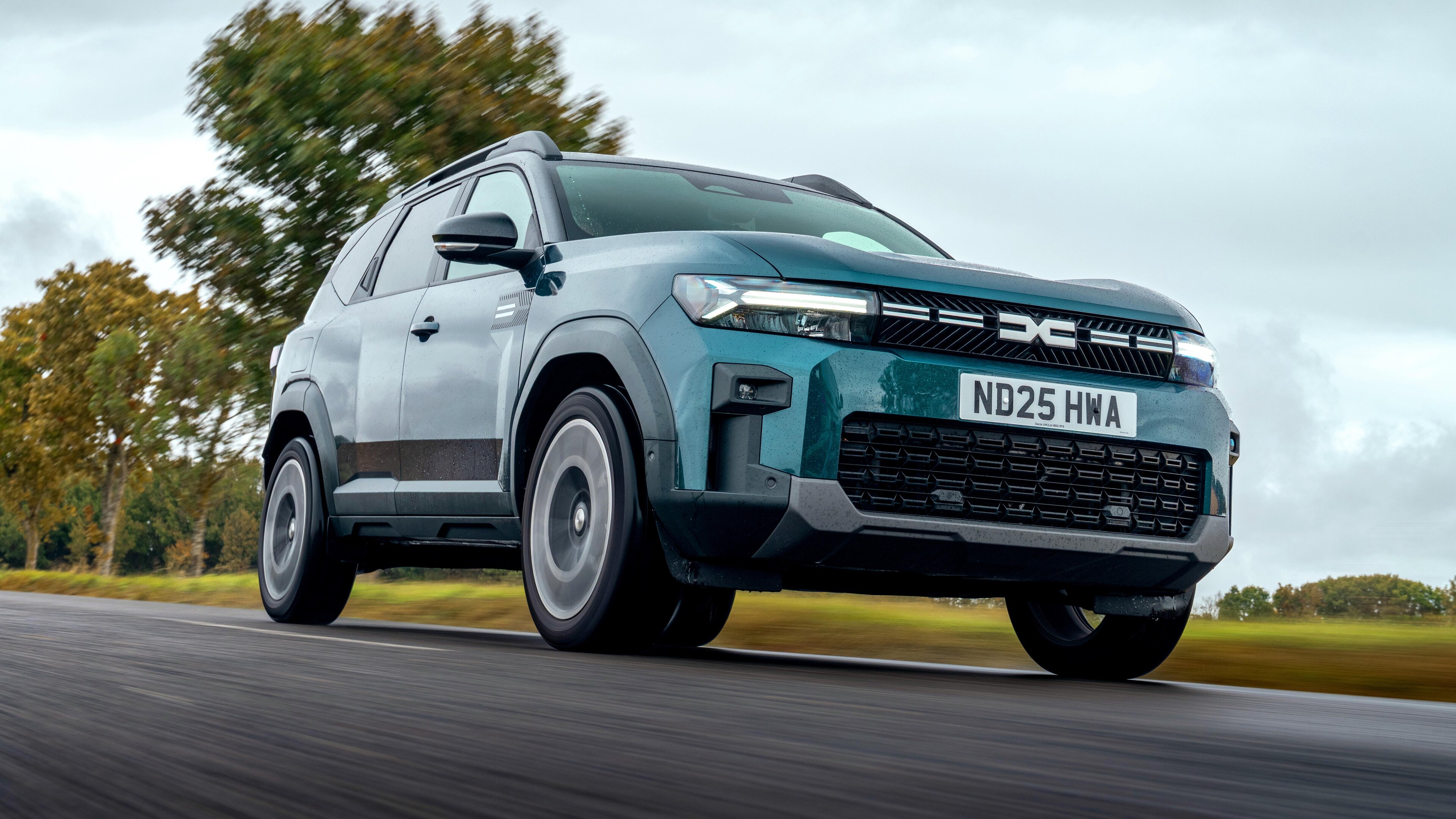
And that’s where Renault’s sister company Dacia has been nailing the value for money aspect of modern motoring to the wall. The Bigster is one of those cars. Yes, it’s essentially a longer, roomier Duster, but there’s absolutely nothing wrong with that. It has the same characterful look as all modern Dacias, confident rather than flash, and it has the right mix of practical and usable, takes to heart a kind of rugged pragmatism that’s hard to ignore.
Yes, it uses a mix of Renault bits, but never feels like it. And yes, it feels built to do a job, but that’s a job that needs doing.
Get all the latest news, reviews and exclusives, direct to your inbox.
Dacias are for people who know the value of things, renaissance vehicles for those people who want something a cut above basic but without the frippery. The Bigster and Duster typify that attitude and have solidified Dacia’s position, sliding neatly into the portfolio below the semi-posh Renaults. TF
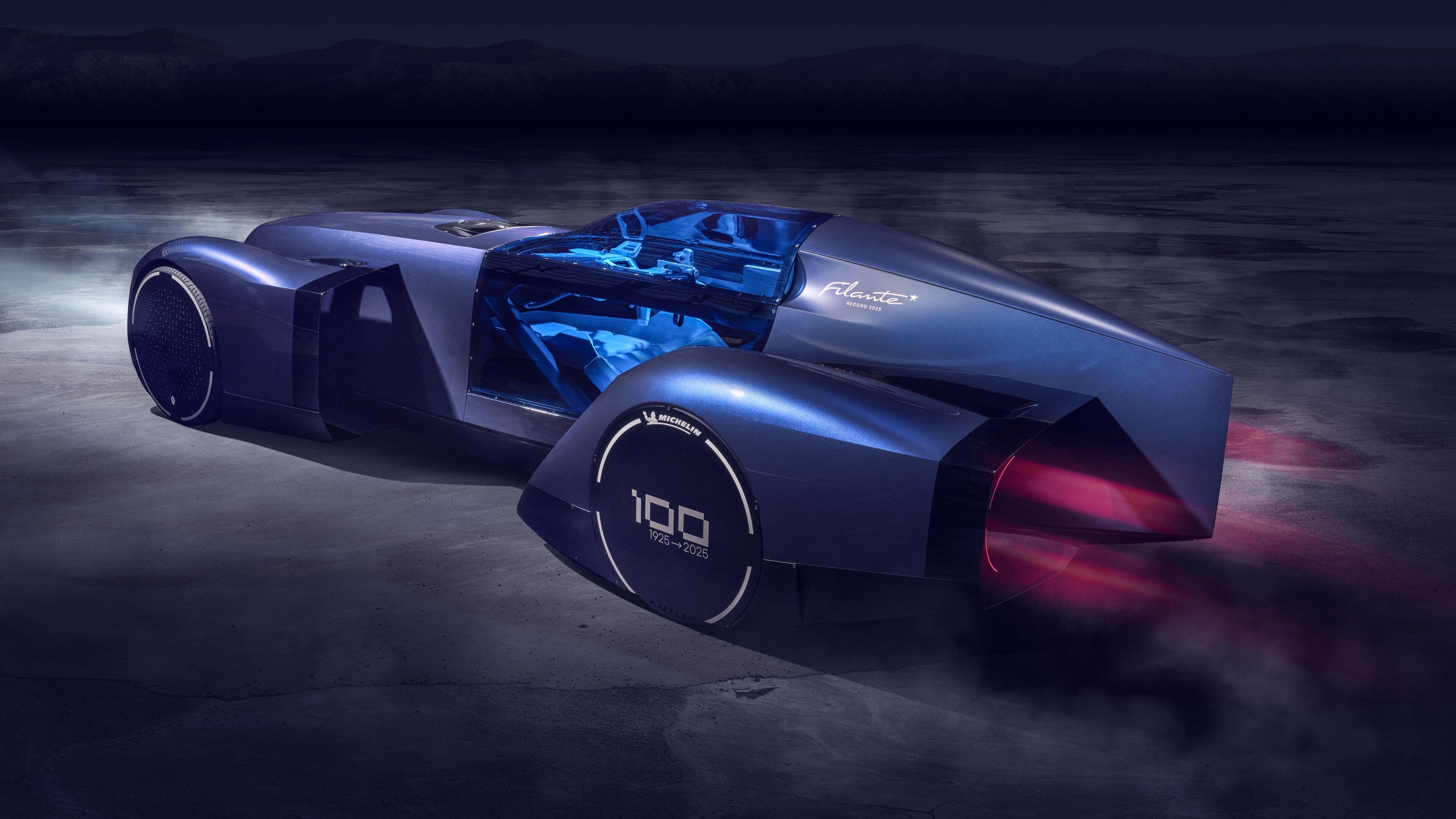
Renault hasn’t just been combing through its back catalogue to create funky electric hatchbacks and crossovers in recent years. In fact, in January it showed us the magnificently retrofuturistic Filante Record 2025.
Taking inspiration from the 9.1-litre straight six powered 40 CV des Records from 1925, as well as the eight cylinder Nervasport des Records from 1934 and the streamlined, jet-engined Étoile Filante from 1956, it won’t just be a rolling lab either. As the name suggests, it is to be Renault’s latest record setting machine and plans to set new high scores for “power consumption and range with an 87kWh battery”.
But even if it doesn’t break a single record, it’ll still prove that electric efficiency can be properly cool. Heck, just look at it. Sandeep Bhambra, director of advanced design for Renault, says that as a full carbon single seater with a hunkered down cockpit it was inspired by fighter jets and was intended to be a “sculpture in motion”.
Mission accomplished, we reckon. Greg Potts
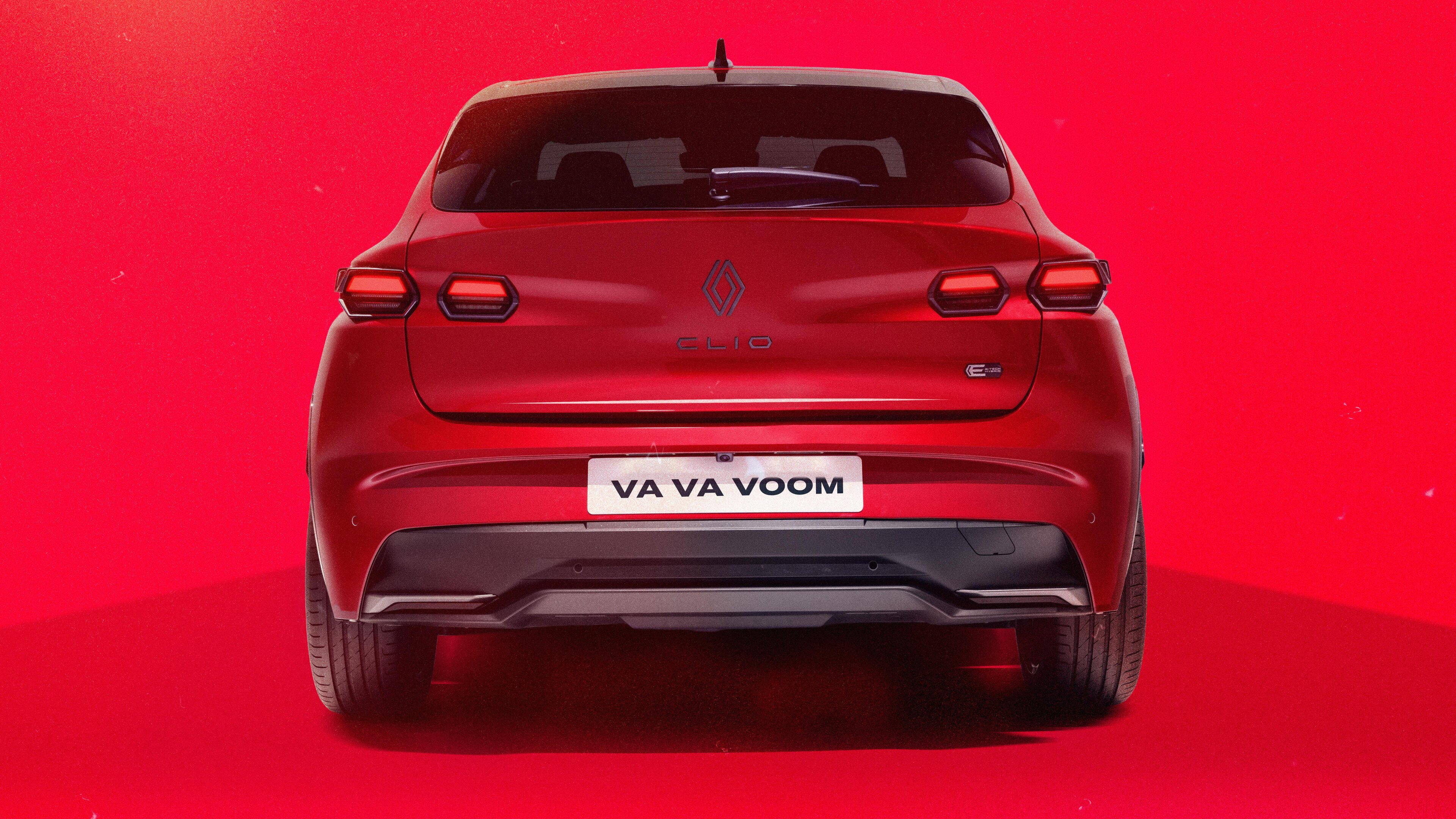
Is Renault singlehandedly saving the supermini? The all electric 5 is now out in the world and brightening up our city streets, and it’s about to be joined by the all new sixth generation Renault Clio.
With its combustion engined rivals dropping faster than Faithfuls in the first few weeks of The Celebrity Traitors, it’s a delight just to see a new Clio, and we’ve already had confirmation that it’ll hit UK shores in 2027.
There’ll certainly be no missing it when it does rock up either. While Renault’s EVs are doing retro design right, the Clio has been gifted a dramatic and modern face with all of the diamonds up in its grilles. There’s a slightly coupe-ified rear end with a twin-deck rear spoiler setup, and the lights at both ends are surrounded by sharp creases in the metal. It’s longer, wider and taller than the outgoing car too, and it uses that footprint to hide even greater bootspace than you’d get in a Volkswagen Golf.
But here’s the best bit: two powertrains will make it over to our shores, with the entry level version a 1.2-litre three cylinder turbo that sends 113bhp to the front wheels through a six speed manual gearbox. How refreshing is that? Of course, you’ll also be able to have a fancy E-Tech hybrid setup with a 1.8-litre engine and two compact electric motors if you really want, but the petrol/manual combo tips the scales at a featherweight 1,155kg. We can’t wait to have a go.
Renault has sold almost 17 million Clios across its five generations since the car arrived 35 years ago, 1.3 million of them in the UK. Now watch that number carry on climbing. GP
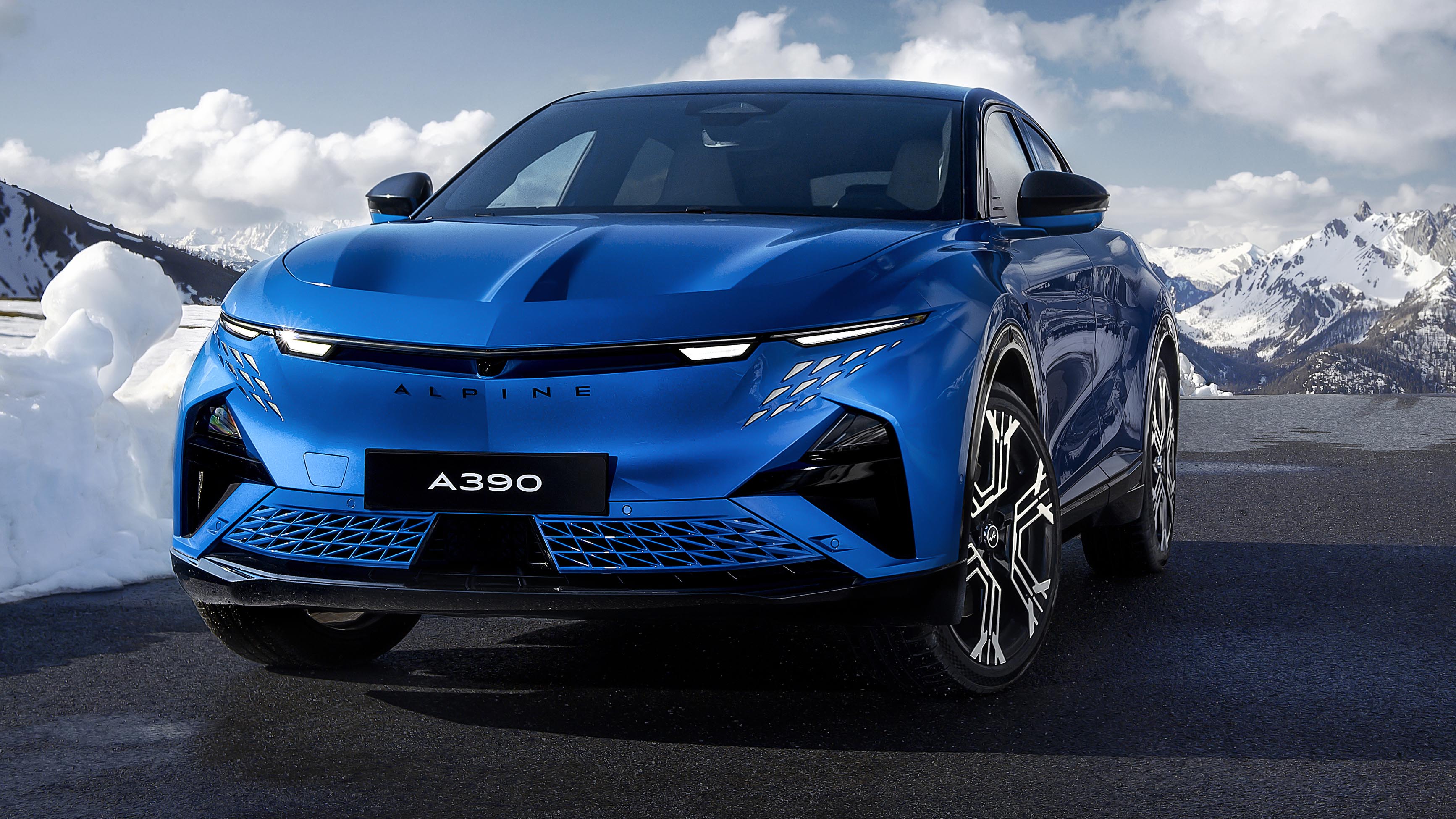
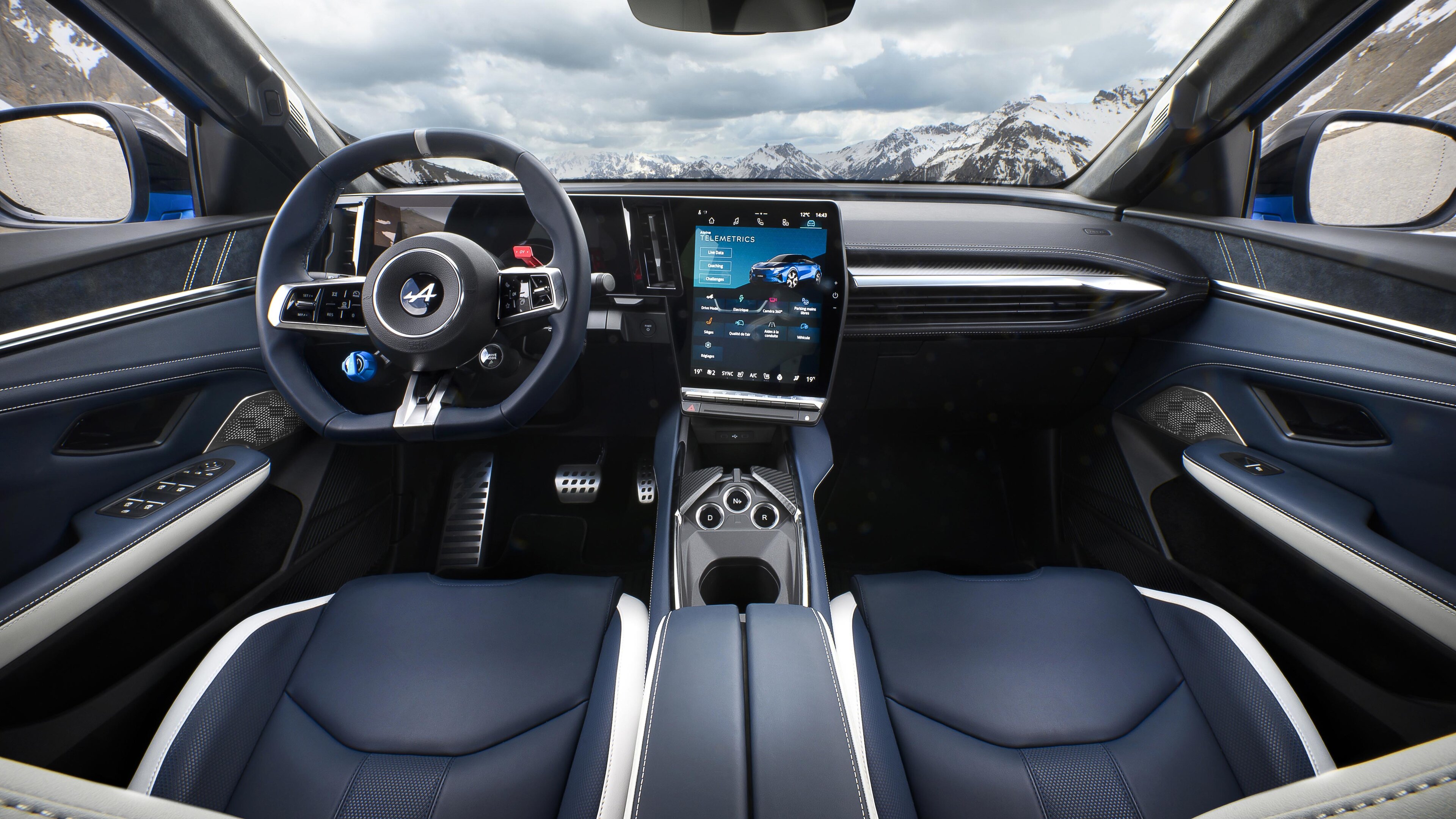
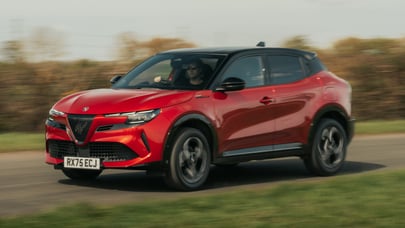
OV says the big red button on the steering wheel. Overtake. Fireworks graphics explode on the screen and the Alpine lunges forward, feeding every possible electron to its three motors. I’m reluctant to wee on its visual or metaphorical fireworks, but... it has a pedal to do that. Bar the visual fireworks anyway. So the OV button is trivial, even if emblematic of Alpine’s racing activity.
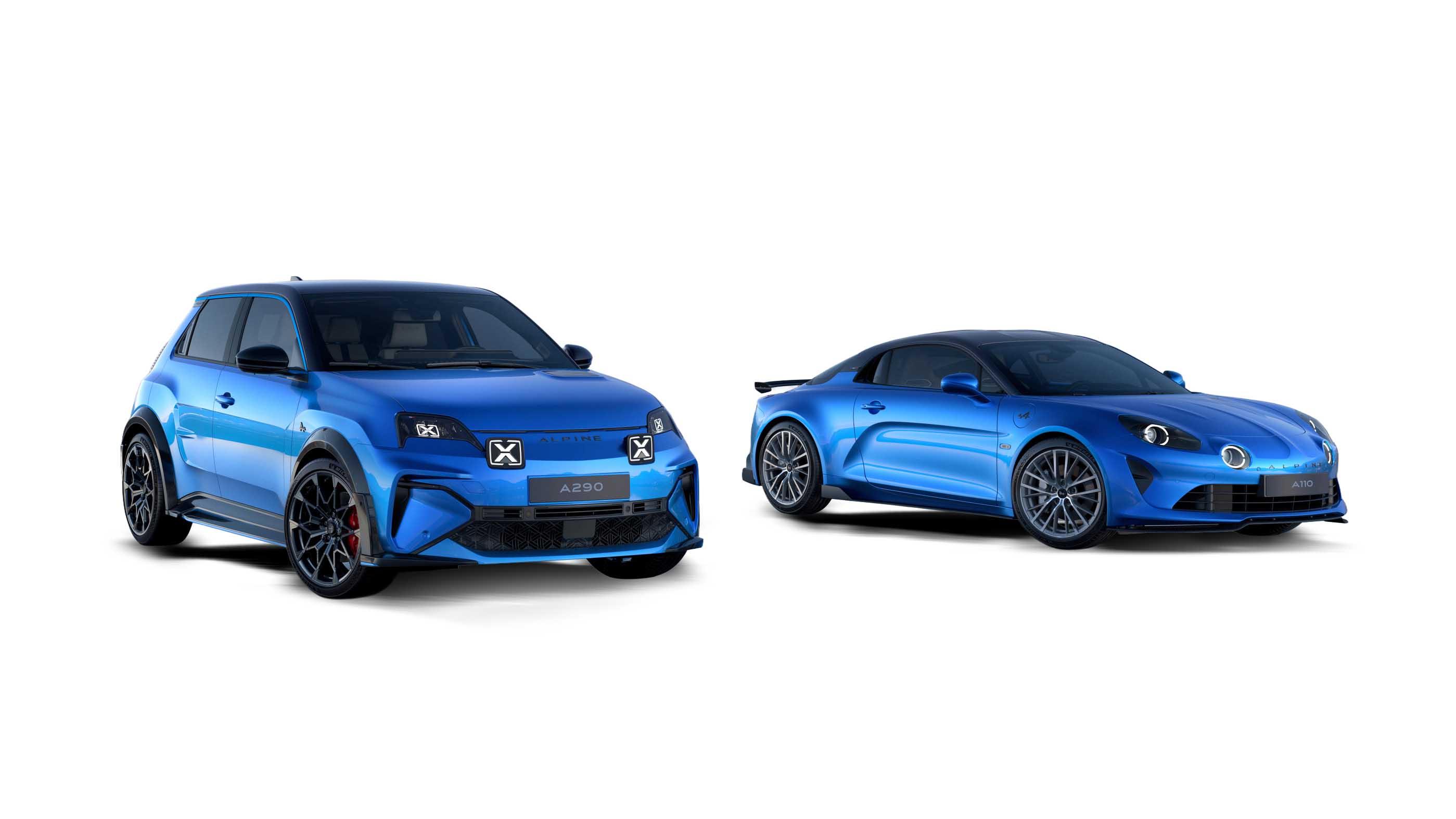
Mind you racing cars aren’t meant to be fun. Just to go fast. Powerful electric cars often meet the exact same criticism. Quick yes; good time companions not so much. Alpine’s history in road cars concentrates on just two things: souped up people’s cars (including the original R5) and lightweight specialist sports cars. The A290 is a creditable modern hot hatch, there’s one box ticked. But the A390 doesn’t really have a heritage. Of course it’ll be fast and grippy. But it needs to be a car with a multi-sensory and emotional connection.
Alpine designers could have just faxed in a generic fastback crossover with a few A110 cues smattered about. I’d say they did better. The modelling of the door panel stampings has a lot of A110 about it. The roofline and rear pillar more so. The front lights use ideas from the Alpenglow hypercar concept. An S-duct in the nose does useful aerodynamic work.
Inside the dash and doors are well upholstered, the Sabelt seats terrific, even if they’re mounted a little high for tall people. But then, this isn’t a low sports car, it’s a sporty hatch.
That size makes it feel compact and keen – more so than the Ioniq 5 N. The steering and brakes are light, and it completely avoids the clumpy legged feeling that blights the twin motor EV landscape. Not actually light, mind, at nearly 2.2 tonnes, but it disguises it. There’s no trickery: no adaptive damping or active anti-roll. The ride is really quite amazing.
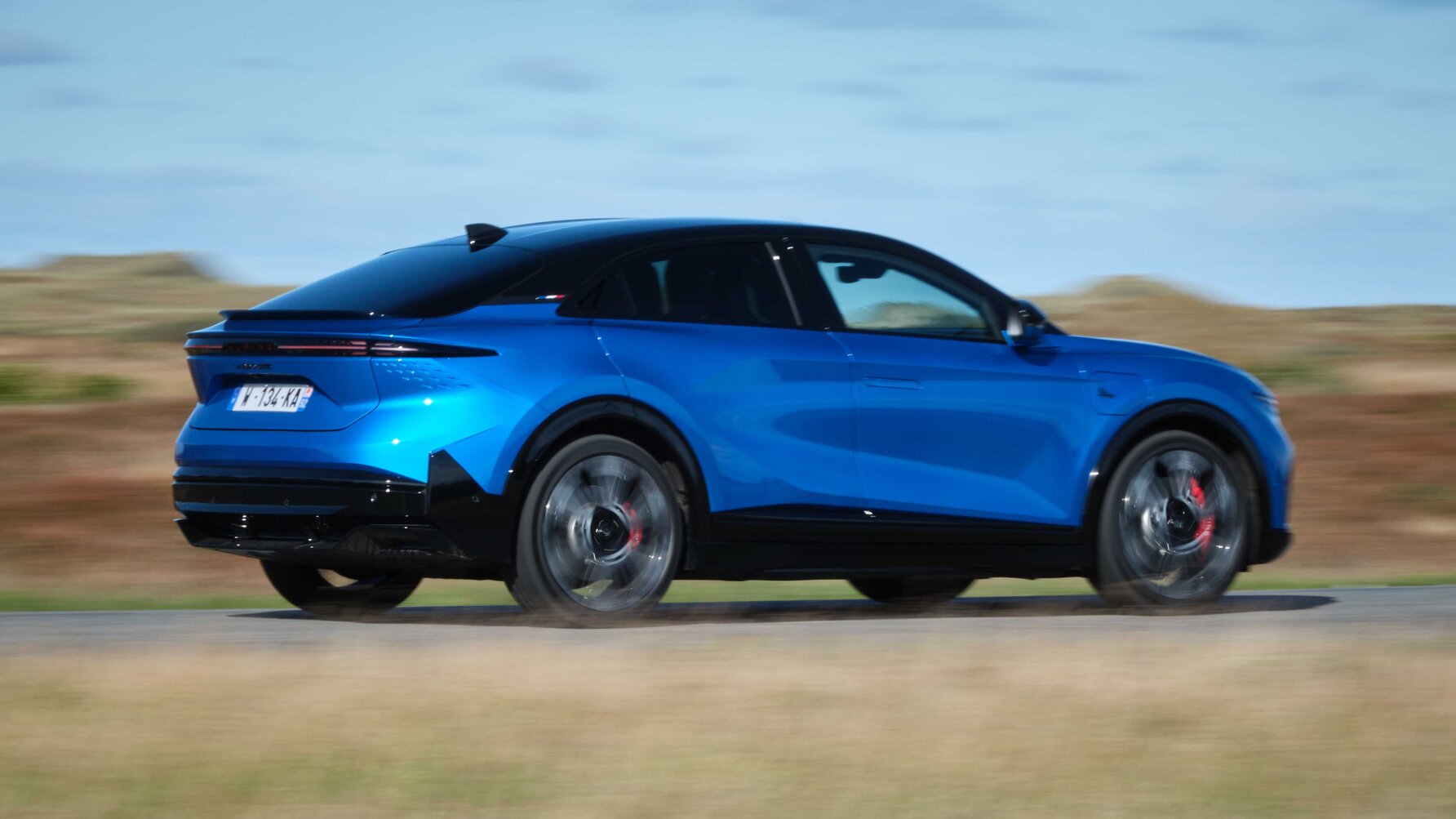
Its big technical flourish is for bends: three motors. That brings true torque vectoring both from front to rear and, at the back, from side to side. In the different drive modes it can alter its balance. Select a spicy drive mode, turn in under the brakes and then get on the accelerator: you can feel the rear taking the load and just inching out, which is a subtle joy.
The spec says 470bhp and 0–62 in under four seconds. It feels fast, though not drastic, and hauls up to 100 without catching breath. A synthetic noise, dependent on pedal position, helps your sensory connection. Regen is controlled by the blue steering wheel twist knob, which is less convenient than paddles but more Formula One.
That knob and the OV button, then. Or the little French flags. Or the A for Alpine badge on the front wings, which is reversed on the right hand side so its arrow always points forward. These serve little practical purpose and certainly don’t make it better to drive. But they show the A390 was designed by people who love it. They’re justified, as it’s a fine car, if in this spec an expensive one. If maybe not the one you expected: it’s a quick and agile GT rather than something really lairy.
Yet it’s still an Alpine, rather than just that full stop I feared. Its motions down the road, its springs and damping, the speed of its steering, those really do carry the character of the A110. It’s just more distant. You might not get the almost obscenely intimate connection of the A110, but you do know what it’s thinking and doing, and those things are well worth having. Paul Horrell
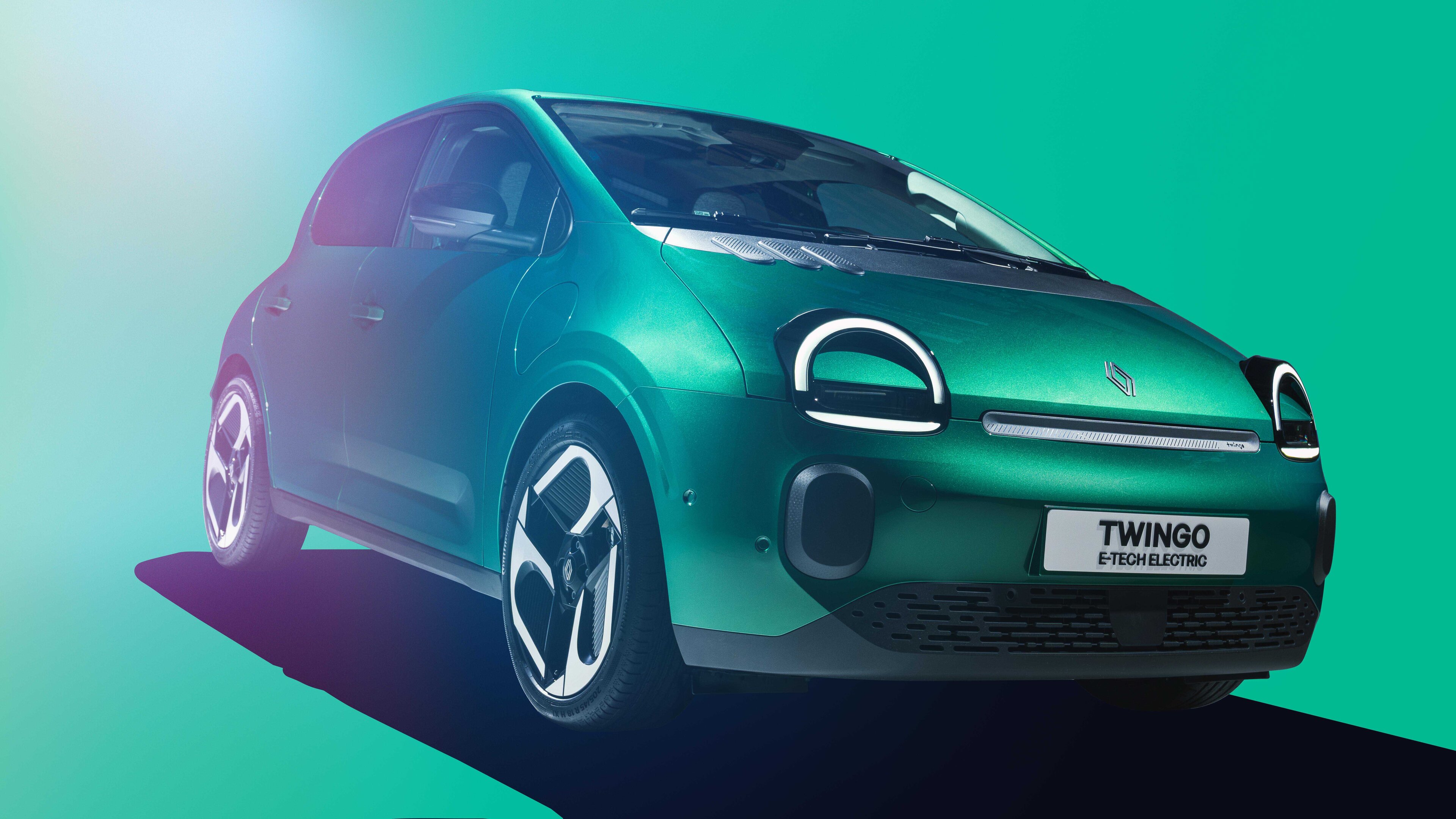
No Parisian style parking required here, because the Renault Twingo is back... and it’s a properly dinky little city car!
Renault first announced a return for its mini Mini rival back in November 2023, and the production car you see here hasn’t strayed too far from the concept. Of course, that means it’s also heavily inspired by the first gen Twingo from the 1990s, with a fun size, one-box shape to maximise interior space, and a cheery face with what Renault describes as a “subtle smile”.
It’s supremely cute. The lighting is now LED front and rear but still manages to create plenty of personality as it protrudes from the bodywork, and while it’s only 3.79m long in total, the wheelbase is 2.49m so there’s space for four proper doors. Four adults inside, too.
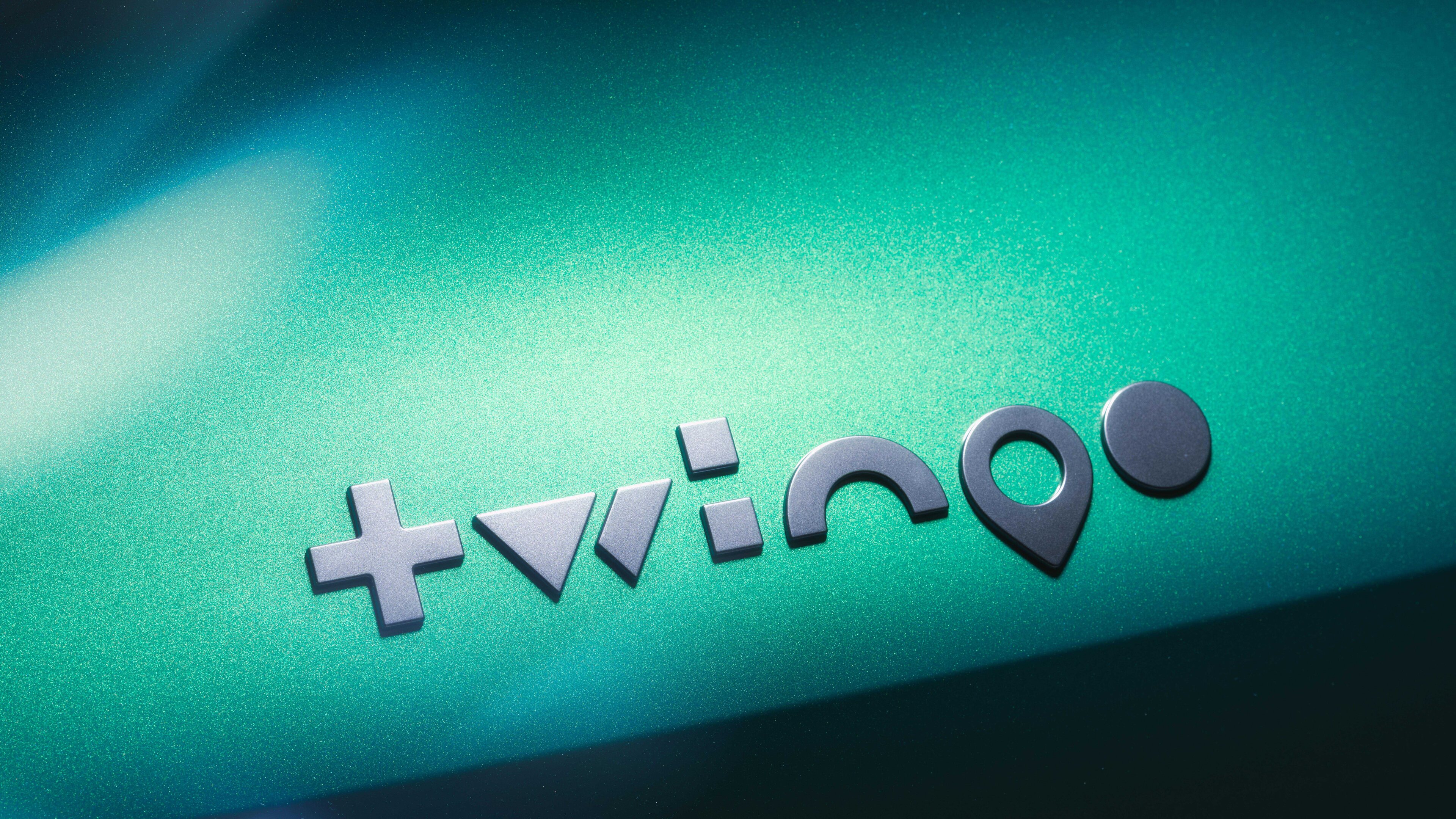
Renault has created a funky new Twingo alphabet for the badging round the back (which also appears on the roof lining and the floor mats inside) and we’re told that the shark fins on top of the rear lights improve aero. The rear window is a large oblong, which is a shape reflected in the grille up front and on the little plastic bumper protectors. Perhaps Parisian parking is on the cards after all...
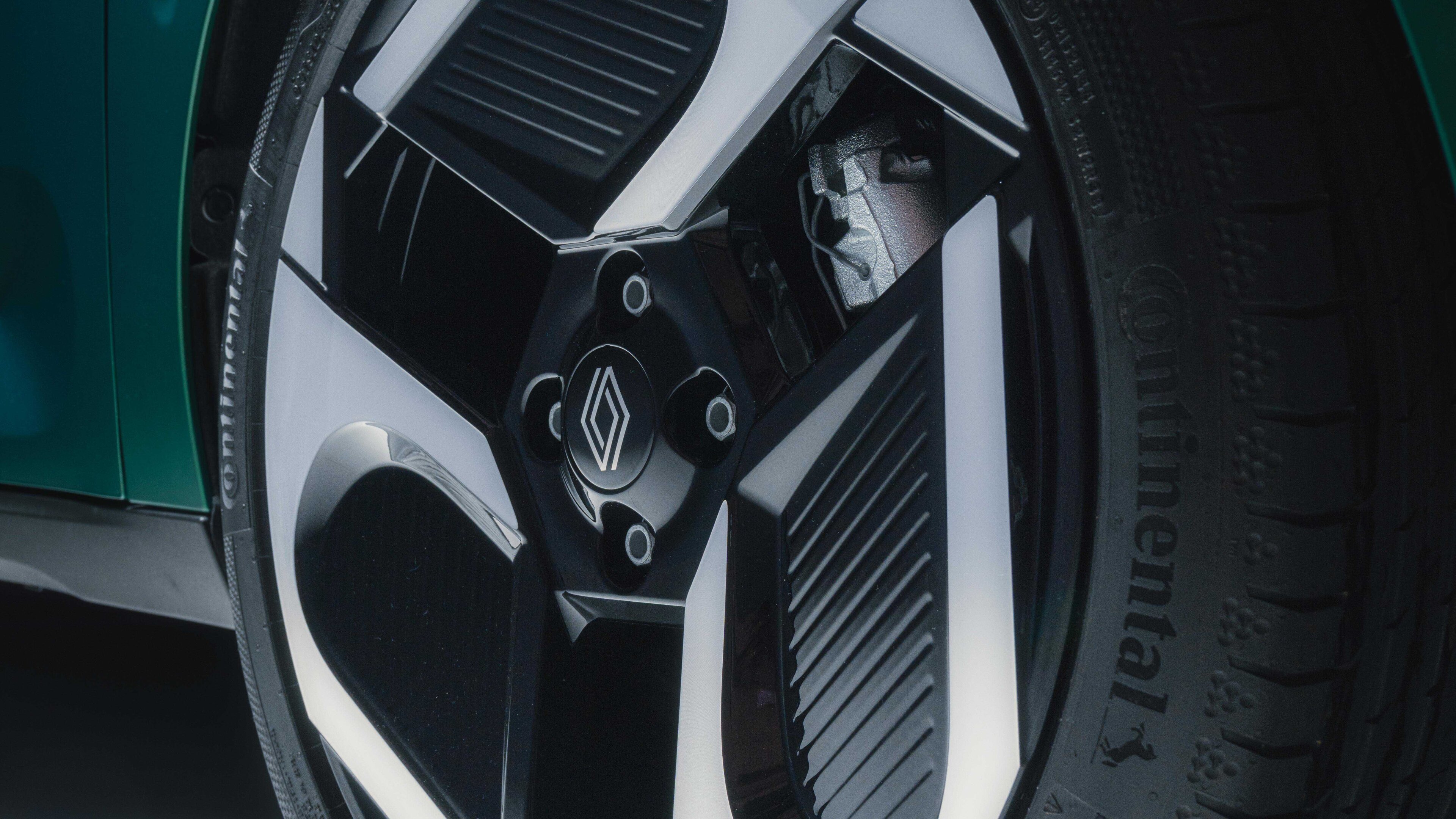
Standard wheels will be 16in steelies with aero spec plastic trims, but you’ll be able to upgrade to these hefty 18in alloys if you ain’t afraid of no kerbs. Like the new Renault 5, the Twingo will launch with some eye catching colour options including green, red and yellow, and the whole look continues Renault’s retro revival form. It even features a little tribute to the three air intakes on the MkI. You can’t actually lift the bonnet on this fourth gen car, so those little bits of plastic now hide a small opening to top up the windscreen washer fluid. Neat.
“When I arrived at Renault in 2009, I got a lot of questions about the 4 and 5,” design boss Laurens van den Acker tells Top Gear. “At the time I said I’m hired for the future, not for the past. And I believed that. But these EV platforms allow us to get close to the proportions of those days.
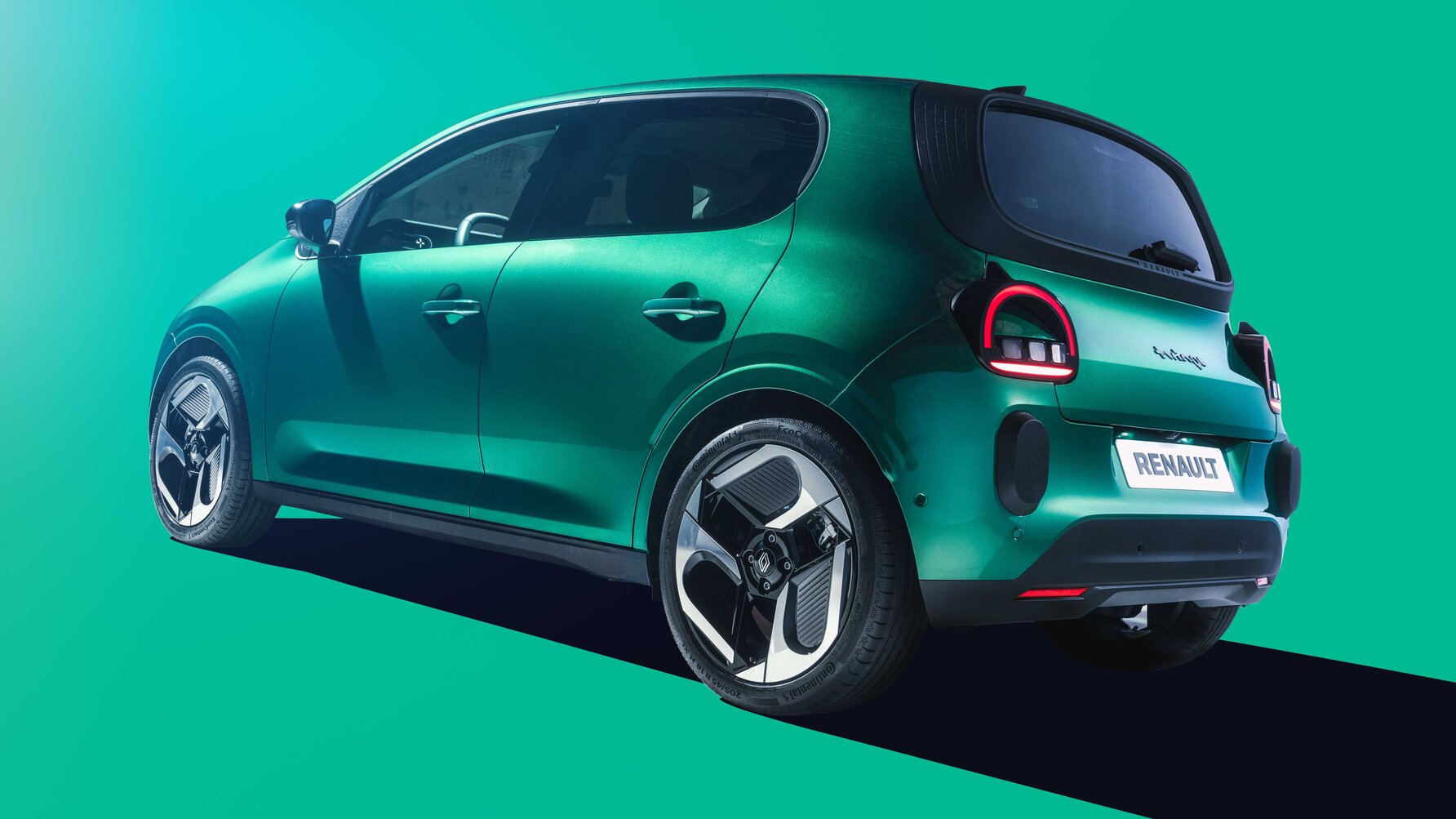
“Cars had their wheels pushed right into the corners. And with the EV platform, we can return to this. The motors are more compact, so you can have bigger wheels on the corners that turn more. If you put an internal combustion engine in this Twingo, you would have to add 100mm to the front end, and then you would make a caricature.”
So yes, the new Twingo is electric only, and its powertrain is equally dinky to match the proportions. It deploys an LFP (lithium iron phosphate) battery that gets a usable capacity of 27.5kWh. It’s based on the same platform as the R5 and R4, but because it only weighs 1,200kg and hasn’t really been designed to leave the city limits, it only needs an 80bhp motor to hurry along the front wheels. You’ll never do it, but the 0–62mph sprint takes 12.1 seconds. Perhaps more pertinent is the 0–31mph time of 3.85 seconds. Oh, and the turning circle is just 9.87m.
Range is quoted as 163 miles WLTP, with Renault claiming that the potential customer base averages just 22 miles per day. The LFP chemistry of the battery reduces reliance on critical metals like cobalt and nickel, while at the same time cutting the cost of the pack by around 20 per cent.
In Europe you’ll be able to buy a Twingo that doesn’t rapid charge. Standard cars will get 6.6kW AC charging to top up from 10 to 100 per cent in four hours and 15 minutes at a wallbox. An optional extra ups the AC charging to 11kW and adds the capability for 50kW DC charging. The latter means a 10 to 80 per cent top up in 30 minutes. UK spec is yet to be confirmed.
The look continues Renault’s retro revival form
On the inside all trim levels get a 7in dial display and a 10in infotainment screen. Renault says there are “playful graphics and animations” for both, with a welcome jingle that was developed in collaboration with composer and producer Jean-Michel Jarre. Top spec cars get the impressive Google built-in system.
Thankfully there are still some proper buttons and rotary controls, while the hazard button on the dash is inspired by the bulbous one on the classic 1990s Twingo. Its makers claim that the interior of this new version “expresses the cheerful vibe and optimism inspired by this vehicle”. There are pops of body colour on the dash and doors, plus actual pop out windows in the rear. The two seats back there slide forwards and backwards individually, meaning bootspace can stretch to as much as 360 litres with all four seats still in use. That’s only slightly less luggage room than you’ll find in a Volkswagen Golf.
Renault says that the city car segment now accounts for less than five per cent of the European market, but reckons there’s still genuine demand for small cars. And yes, it should be genuinely affordable. Official prices haven’t been confirmed just yet, but with its small footprint, cost efficient battery and a dramatically reduced development time of just two years, Renault is promising that the Twingo will launch at under £20,000.
Get all the latest news, reviews and exclusives, direct to your inbox.