

Ad Feature
This ode to E is Eagle’s most ambitious yet, but can the Lightweight GTR convince an E-Type sceptic?
I’m going to just say it right from the outset. I don’t really like the Jaguar E-type.
I know this is sacrilege to so many, but as a car magazine obsessed kid the E-Type emblazoned on the cover of classic car titles represented the worst and laziest journalism. I wanted to read new things about previously undiscovered or mysterious cars. Not another jingoistic missive on the E-Type. Yeah, yeah... 150mph on the way to Geneva show, Malcolm Sayer design and aerodynamics, Moss box. I’d heard it all before. Everyone had.
Yet conversely, I have always been fascinated with Eagle. You’ve probably heard the name and seen its products: beautifully restored, modernised and artfully modified E-Types. Clearly, it has a deep, unbreakable love for Jaguar’s icon and over the years its special models have taken the E-Type to new heights. Transcended even my indifference to the E-Type itself. These models are separate from its meticulous ‘zero mile’ restorations. They allow it to unleash all the learnings it’s accrued since opening in 1984 and to express its creativity, craftsmanship and engineering skill. Of which it has a lot.
Photography: Dean Smith
Often inspired by the ultra rare Lightweight E-Type racecars, of which 12 were built in ’63 and ’64, Eagle has created some truly stunning models with evocative names: Low Drag GT, Speedster, Spyder GT and Lightweight GT, amongst others. These cars remain real, authentic E-Types rather than some sort of silhouette tribute with wholly different underpinnings. Highly evolved but completely true to the original concept.
You might say that Eagle was the original money no object restomod manufacturer. However, somehow that generic term doesn’t quite cover the process, the transformation nor the bespoke nature of each car. Eagle is a unique mix of traditional skills, deep respect for its muse and incredibly thorough development drawing upon decades of experience. Just four full ‘Special Edition’ builds emerge from its workshops each year. And they are, I’ve always thought, exquisite.
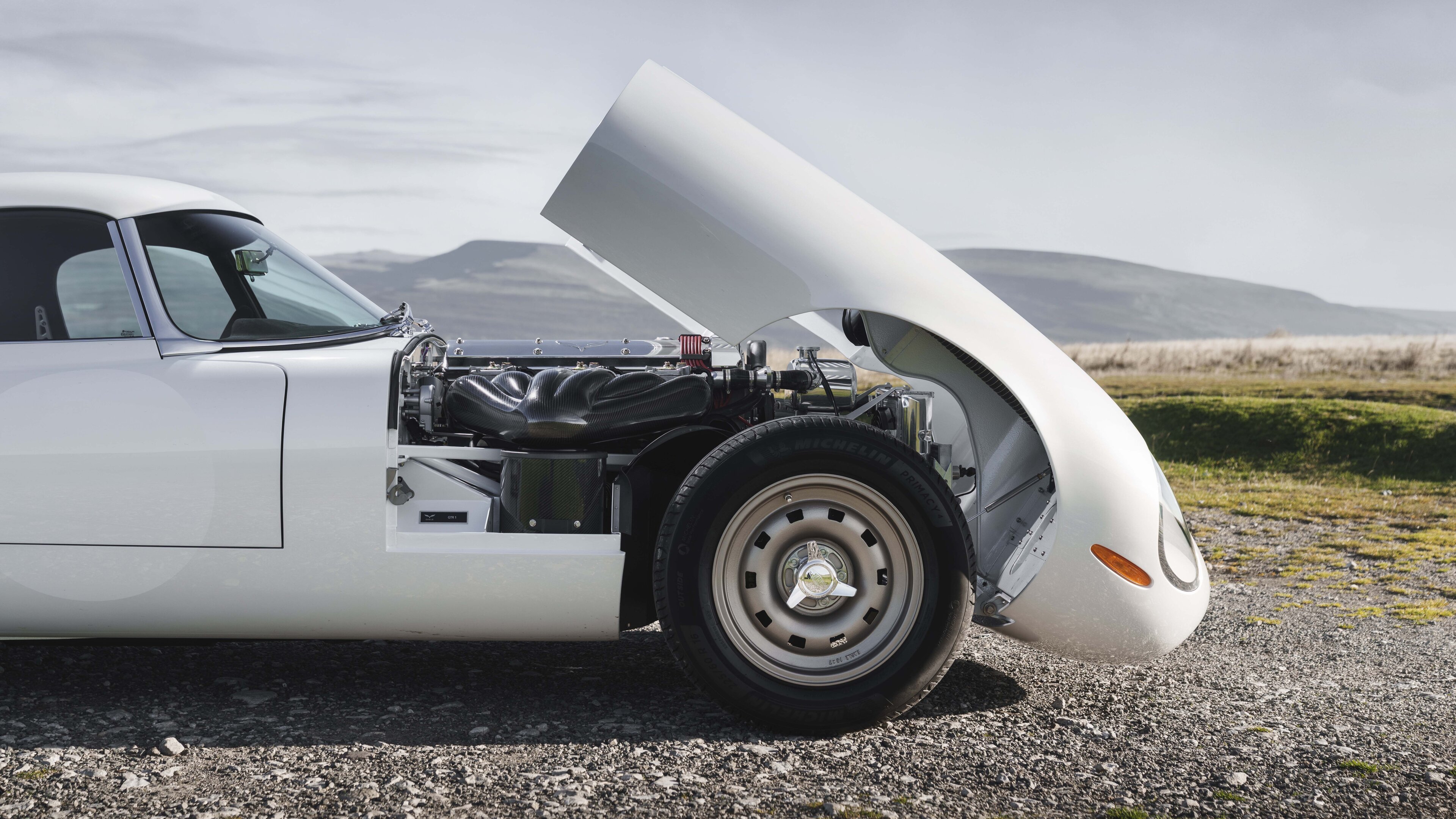
The latest is this, the Eagle Lightweight GTR. It’s the most extreme Special Edition yet and built in collaboration with a client who wanted to push boundaries to create a car that rails against the current trends in the automotive world. Namely, spiralling size, mass, complication and technology that distracts from the act of driving. The Lightweight GTR features Eagle’s own aluminium block 4.7-litre XK engine with triple Webers, carbon intake plenum, titanium conrods and over 400bhp. It weighs just 975kg with fluids.
To put that in perspective, a historic race team running a full Lightweight spec E-Type sent me its raceday setup sheet. The fully stripped FIA spec car was 1,116.5kg with fluids and 80kg driver. The Lightweight GTR is well beyond a Lightweight, then. Yet it has air conditioning and a simple but beautifully trimmed interior. Maybe it should be called the Featherweight GTR.
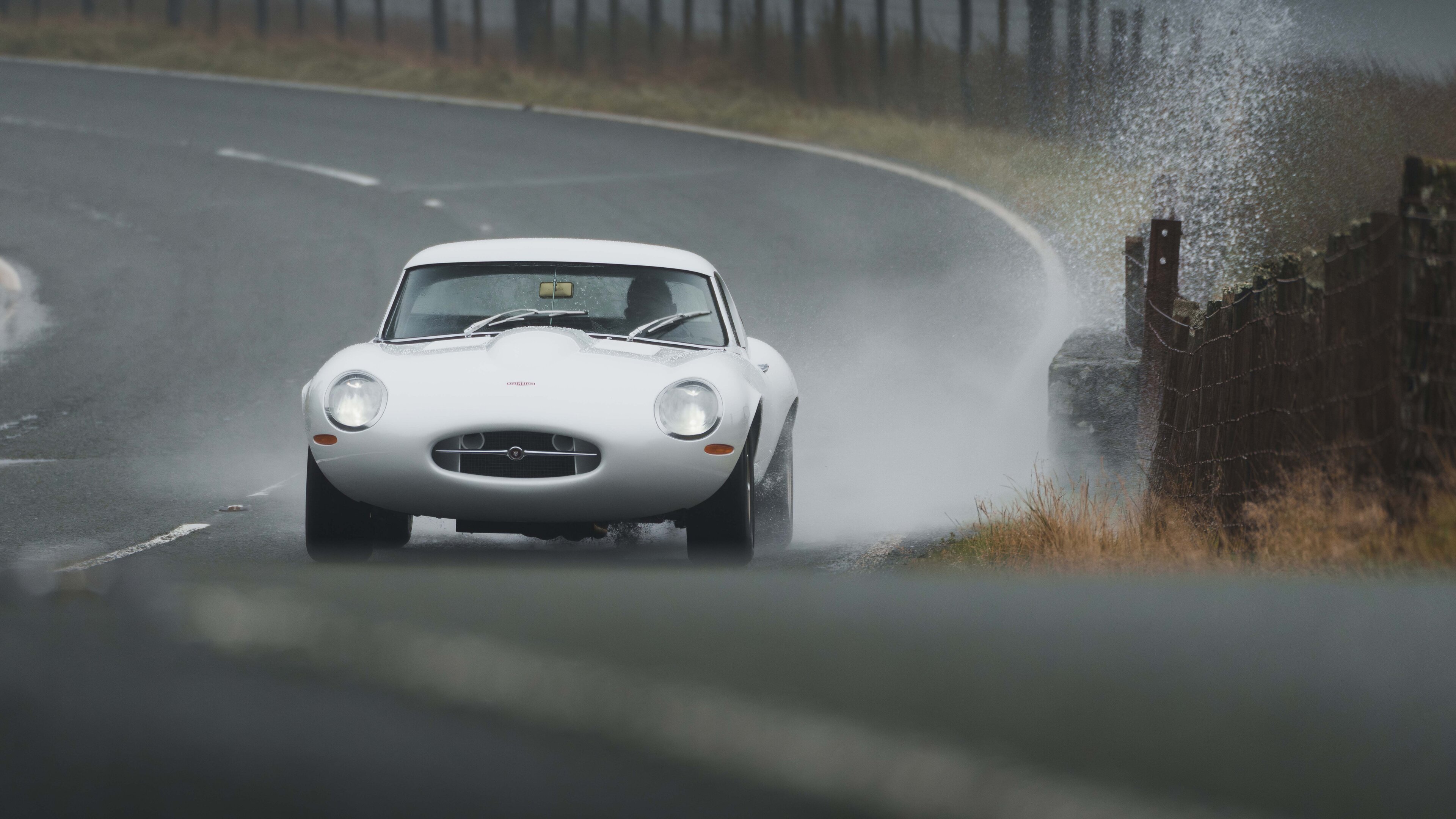
I’ve never touched or seen an Eagle Special Edition and so the chance to actually drive one – and one so in tune with my own preferences – feels a bit dreamy. Aside from the biblical rain, howling wind and freezing temperatures. Thanks Wales. The weather is an unwelcome reality check, but the GTR is unlike other ‘hardcore’ road racers and it doesn’t rely on wide, barely treaded tyres to reveal its full magic. In fact, this monster E-Type with the power to weight ratio to easily shade a new GT3 (430bhp per tonne vs 344) wraps its gorgeous magnesium wheels (attached to magnesium hubs by aluminium spinners) in humble Michelin Primacy 4 tyres measuring 225/60 R16.
That’s just 10mm wider than the Toyota GR86, a car with virtually half the power and an extra 300kg to lug around. The Primacy’s ample tread depth is comforting, but I can’t help wondering how the hell the GTR can put down all that power and legendary XK torque through such a small physical footprint. The price tag, which is well into seven figures, suddenly looms very large. Maybe the desire to drive an Eagle E-Type should remain a dream after all?
Get all the latest news, reviews and exclusives, direct to your inbox.
Funnily enough, Eagle’s MD Paul Brace is completely unperturbed by the grim and grimy conditions. “Fascinated to see what you think,” he says. “The triple Webers are great for top end power but don’t quite offer the torque of the original Solex carbs. Oh, and let us know what you think about the carbon ceramics. We haven’t used those before.” Yes, this is an E-Type with carbon ceramic brakes. These are the measures required to make such an incredibly light car. But Eagle knows its audience and its skillset.
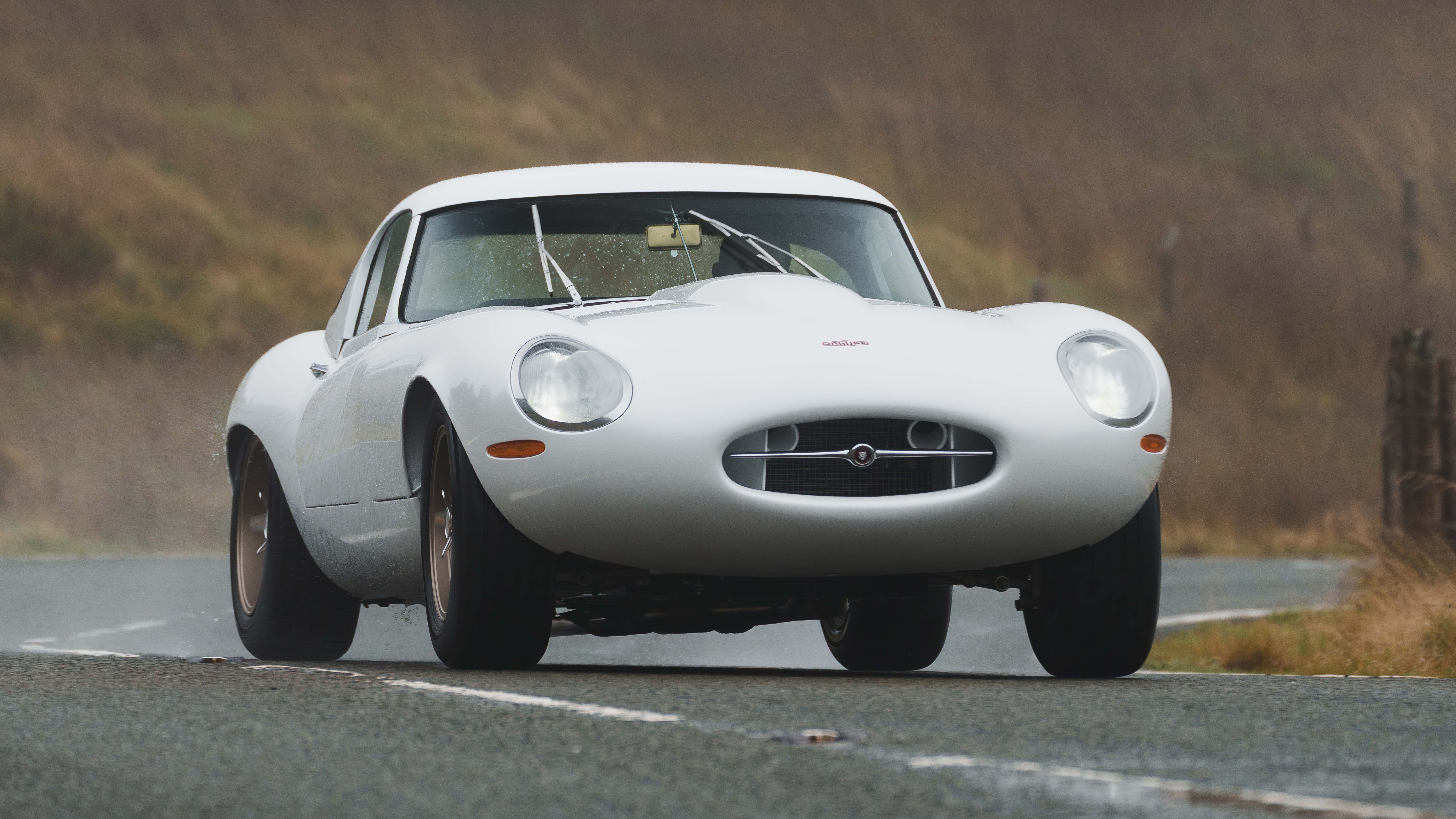
The GTR isn’t a carbon bodied creation and still features hand rolled aluminium panels for that gorgeously exaggerated but subtle shape. The changes are endless, from the more raked windscreen to the lower, flatter roofline, but they look so innately right you’d never spot them without a normal E-Type parked alongside. The GTR is a quite stunning thing to behold and the sheer quality is quiet but unmistakable.
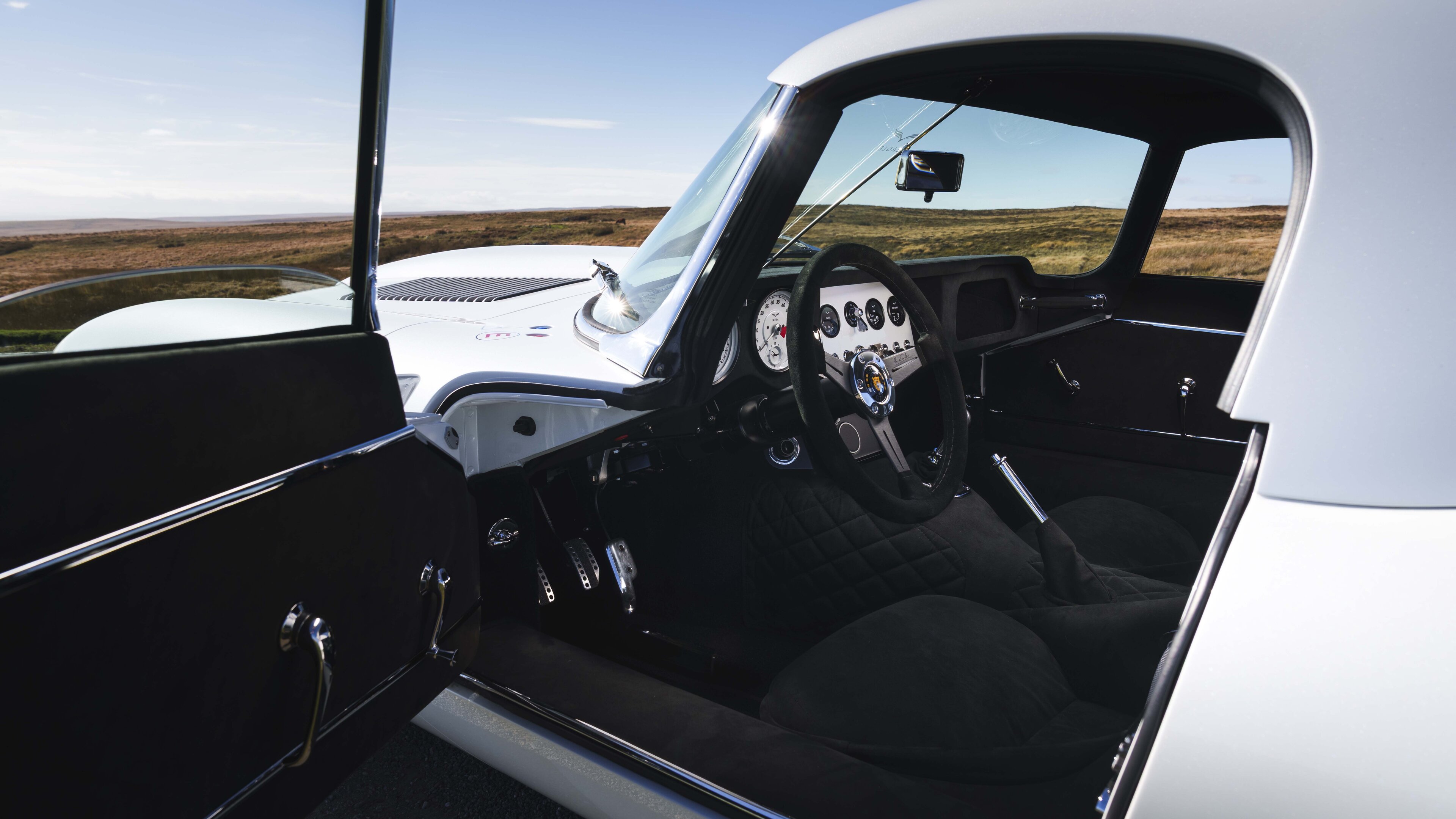
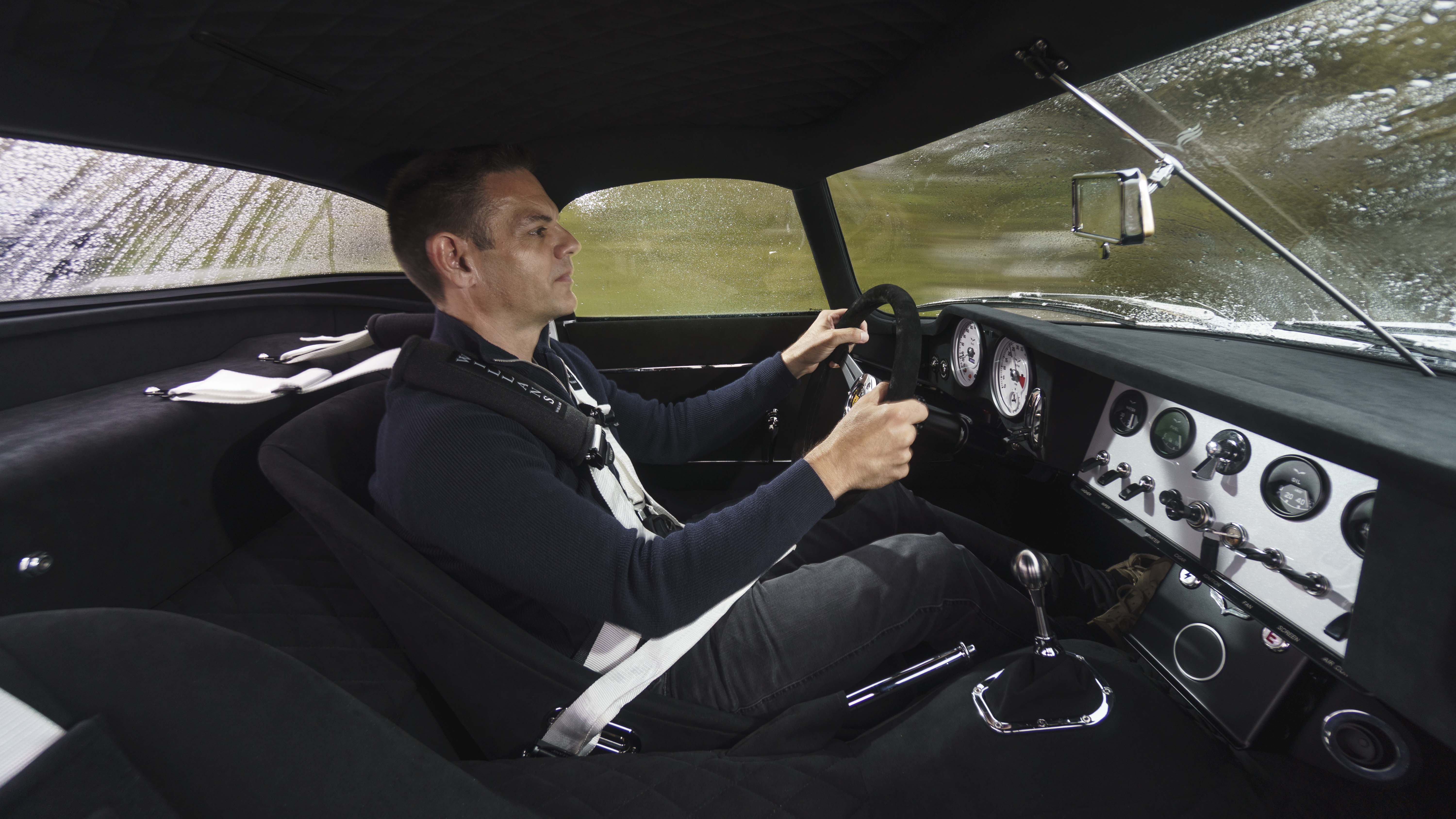
Once folded through the small door aperture (taking great care not to drag muddy shoes across the sill), the GTR is oddly roomy, nicely stripped back with a centre console delete and full of magical little touches. Titanium instrument bezels, platinum switches, mother of pearl for the winged Eagle badge and, best of all, the gorgeous little titanium shifter. The tiny bucket seats are fantastically supportive and the view is stunning. I’m starting to ‘get’ the E-Type looking out over that endless bonnet. Firing up the XK wins me over. A big, muscular straight six blowing through Inconel manifolds and a titanium exhaust is proper. If you can resist some gratuitous prods of throttle you’re stronger than me.
Just a few hundred yards is enough to know that my fears regarding grip and traction were unfounded. The GTR is just so together. The E-Type has a decently stiff structure already, but with Eagle’s additional bracing it feels right up there with a modern car and that means the bespoke Öhlins dampers can really work their magic. The ride is certainly firm but there’s no harshness and it’s nothing like as aggressive as, say, a Civic Type R. Eagle was keen to stress to me that the GTR is uncompromising, but to me it feels completely usable. The suppleness clearly has big benefits in these awful conditions too, because the GTR has so much bite. Lateral grip is astonishing and traction is even better. It’s so hooked up.
Those carbon ceramic brakes are operated by quite a long travel pedal. In fact, Eagle would like to create more instant response. However, with no ABS to lean on, I rather like the slightly longer arc. It’s full of feel and allows you to really meter out the stopping power without fear of a sudden lockup. The GTR just breeds confidence and the howling soundtrack provides a vivid, angry incentive to enjoy everything the car has to give. The owner wanted a pure drivers’ car and this thing absolutely delivers.
While the performance and the loads are unrecognisable from a 1960s E-Type, there’s still so much of the classic experience preserved. From the way it buzzes and resonates at idle, to the gentle waft of hot oil and the everpresent unfiltered feedback. The steering is heavy at low speed and has a tiny bit of slack but soon cuts through to deliver real clarity, the gearbox (which has a magnesium case, naturally) has quite a long throw but that titanium shifter adds to the tactile feast and the car will move around a little on the brakes. But it feels alive, not deadly. You just need to understand how it likes to move.
The engine is a superstar. It doesn’t rev much past 5,500rpm despite those titanium internals but you’d swear it was much more from the soundtrack and the energy as the needle sweeps around the dial. The GTR has a shorter final drive ratio than standard but could afford to go shorter still as second stretches to an indicated 80mph. Other than that, I have very few complaints. For me the deletion of the rear anti-roll bar to save weight is a step too far. I think reinstating it could make the car easier to drive on the limit and in combination with a more aggressive limited slip differential would really tip the GTR over the edge to something nearing perfection.
Of course, Eagle has such skill and flexibility that each and every Special Edition is perfect for the commissioning customer. Me? I’d go even more hardcore and revel in the dynamic qualities so evident in the Lightweight GTR. Even so, considering this and any Eagle is a love letter to Jaguar’s most famous model, it really does appeal to an E-Type non believer, too. Perhaps because the Lightweight GTR is, more than anything, a love letter to real, intense, interactive and joyous driving.
Get all the latest news, reviews and exclusives, direct to your inbox.