




Big Reads
TG's Big Modified Truck Battle: Land Cruiser vs Wrangler vs Grenadier vs Defender
Take four of the most extreme off roaders money can buy, present Stig with a mildly moist ‘Welsh’ Wales... and stand well back
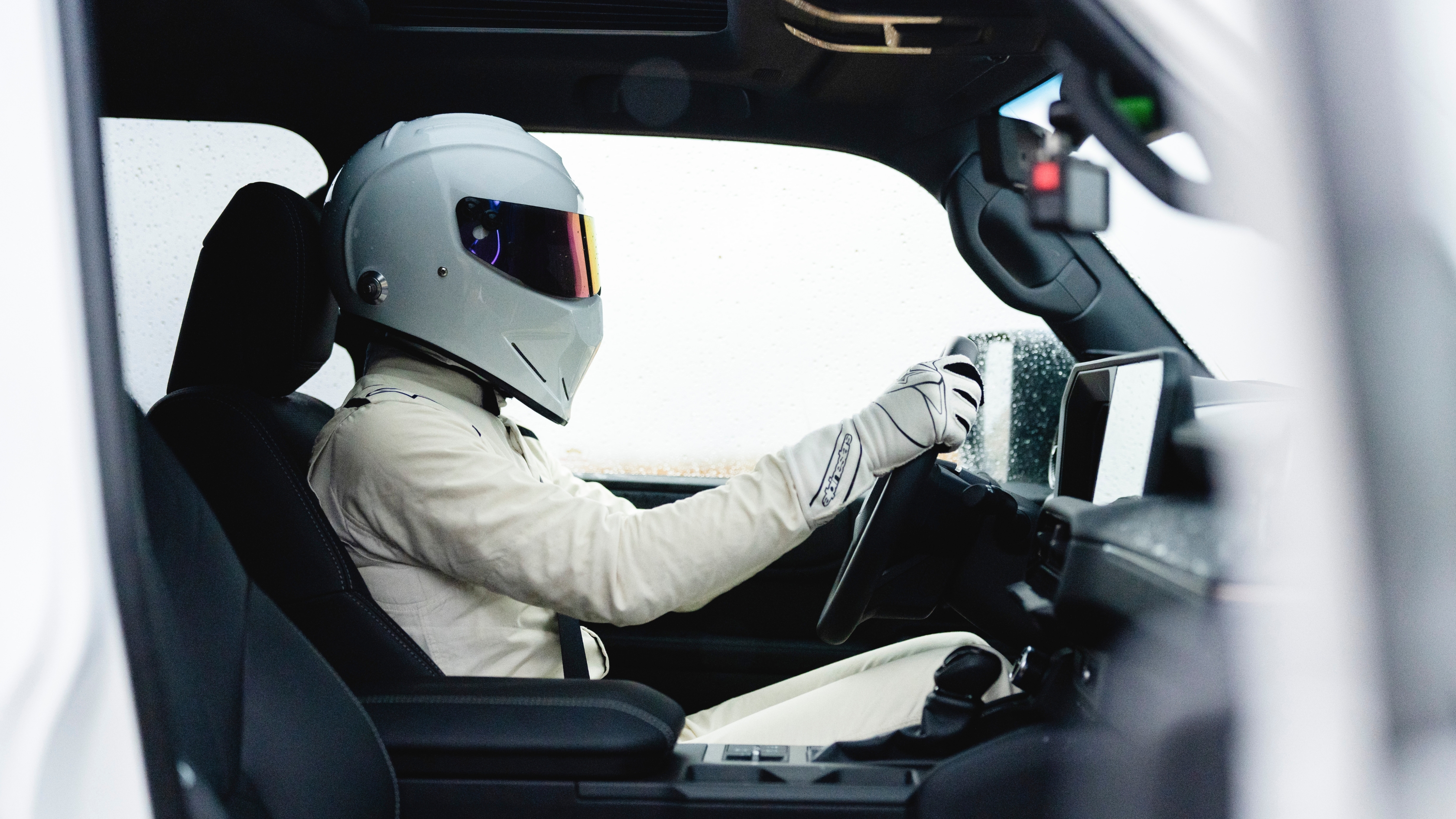
Brakes. Brakes! BRAAAKES!! The last shouted from the whole chest, fingernails cleaving into the Jesus handle on the Land Cruiser's centre console. The Stig has literally no self-control.
Or sense of self-preservation. I begin to wonder if it actually has a sense of self. The Stig does not brake. Inevitably the racing line is cut, although being on a narrow gravel rally stage, I was previously unaware that there was anything but the one line, and The Stig clips the inside of the corner and launches the Arctic Trucks AT37 onto two wheels.
Advertisement - Page continues below
We bicycle for about 25 feet, at which point it merely applies a flash of two wheel opposite lock, calmly sets the car back on all four and continues. It did not lift. During the whole seconds long episode, while my face was locked into a silent scream and a mental dissection of which route to take to the nearest hospital, Stig… did not lift.
Photography: Mark Fagelson



The worst part is, this wasn’t actually the scariest part of the trip. And that’s before we even consider how a thing that’s dressed in nothing but bright white can remain clean on a muddy, rain soaked Welsh hillside while rally driving steroidal 4x4s at ludicrous pace, a screaming martyr in the passenger seat. This isn’t even the closest I’ve been to ending up inverted on this trip. Which probably requires some explanation.
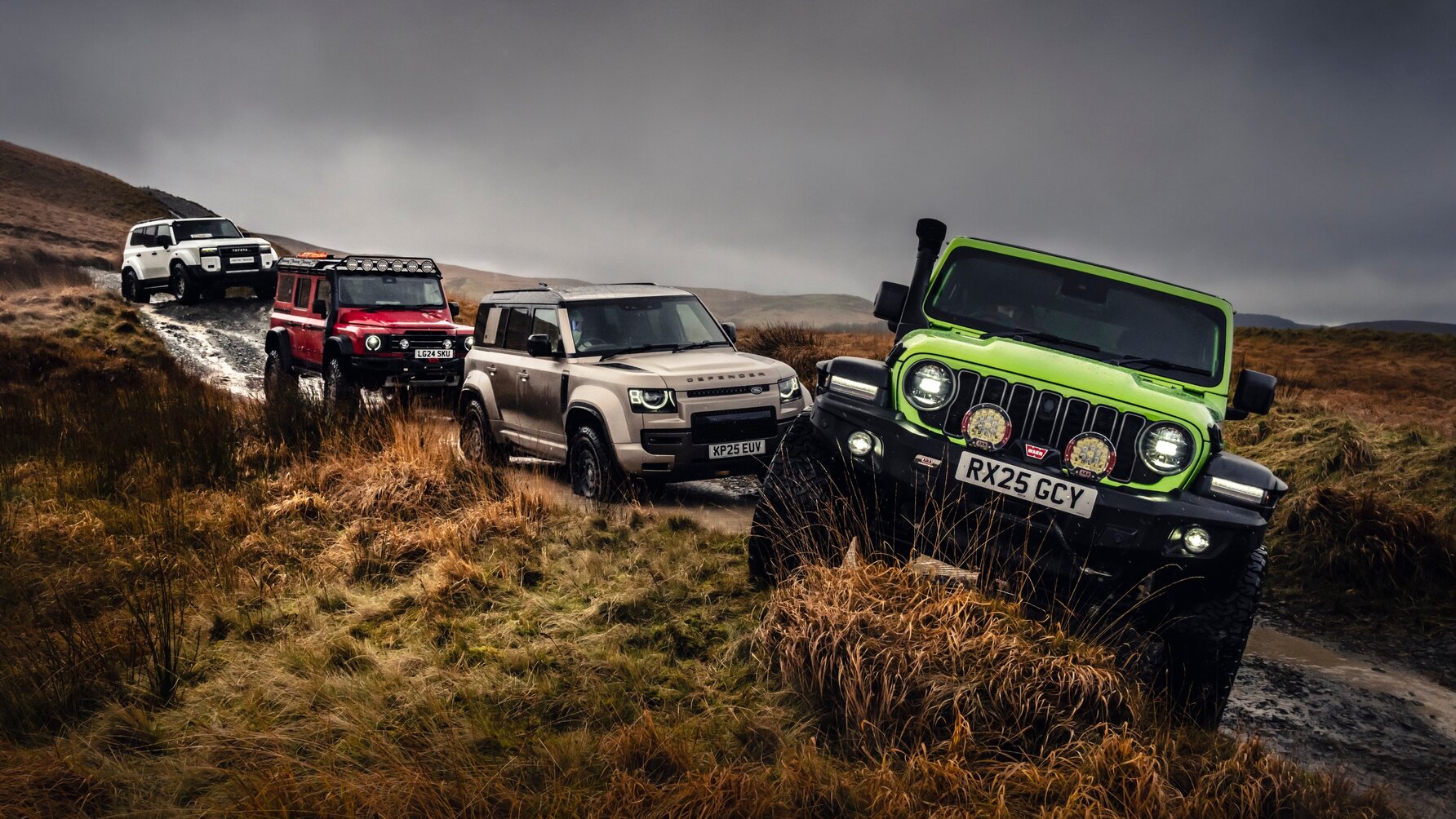
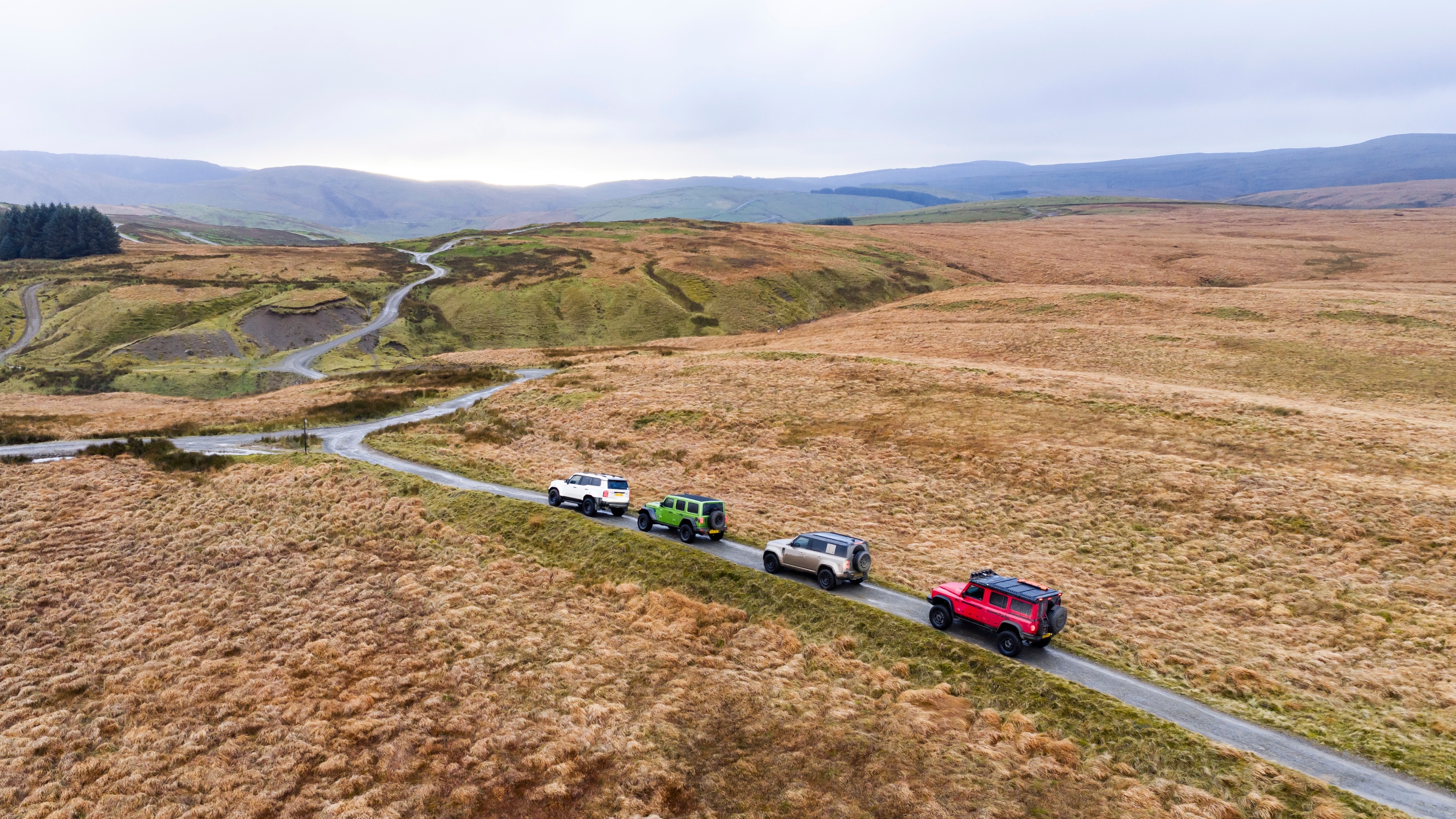
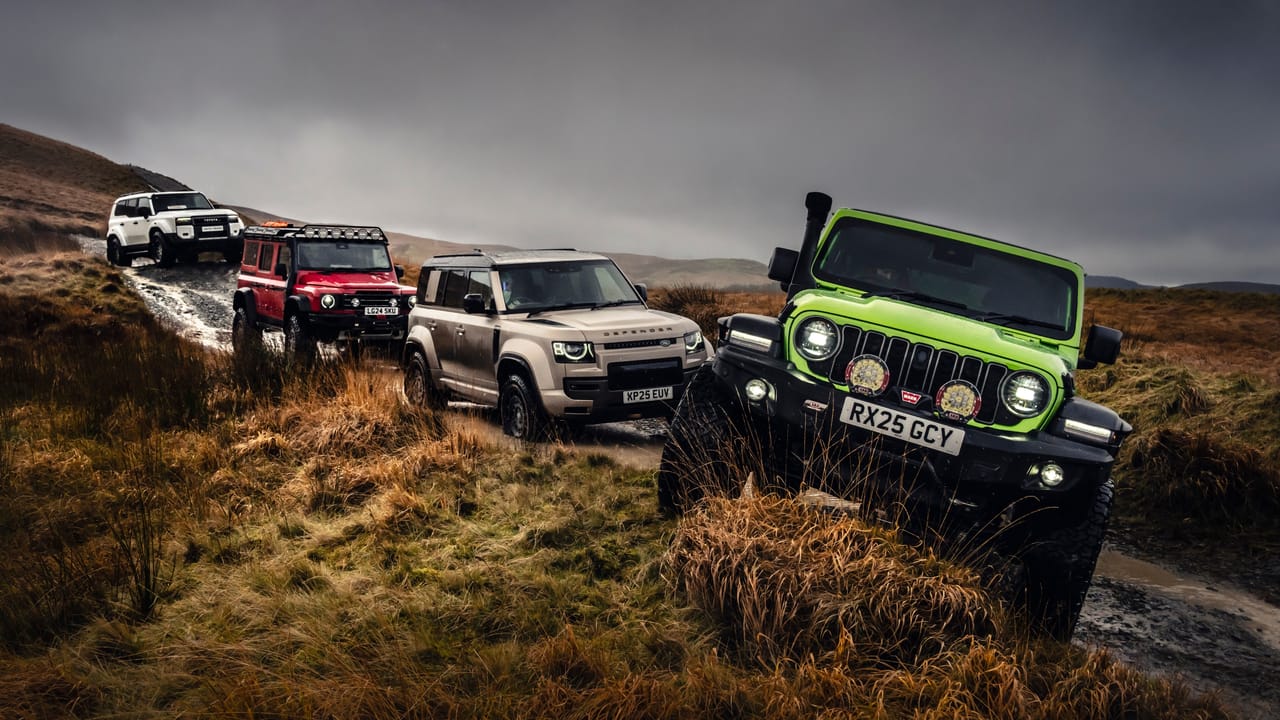
A while back, we brought some blocky 4x4s to ‘Welsh’ Wales for a bit of light off roading. Nothing too arduous, but we did endure several punctures and a little light body damage. So we’ve returned with several versions of the same cars with... modifications. Although these modifications are, in the most part, manufacturer approved and available from a dealer. So we have an Arctic Trucks AT37 version of the Toyota Land Cruiser 250, an Ineos Grenadier Trialmaster X LeTech, a Jeep Wrangler Rubicon modified by Storm Jeeps and a standard Defender Octa, which comes pre-hardened from the factory.
Advertisement - Page continues below
The deal is simple: see if the most hardcore variants of some of the most capable 4x4s on the market are actually the real deal and whether those flashy gym muscles actually have farmer strength. The test is in two parts, first a generous roadgoing trip to Wales doing normal road things and a green lane with a few more teeth than usual. Then, on the second day, a trip to Sweet Lamb where we’ll be getting The Stig to drive these things on an actual Rally GB stage to see how they cope with faster abuse. Which should cover off all testing needs.
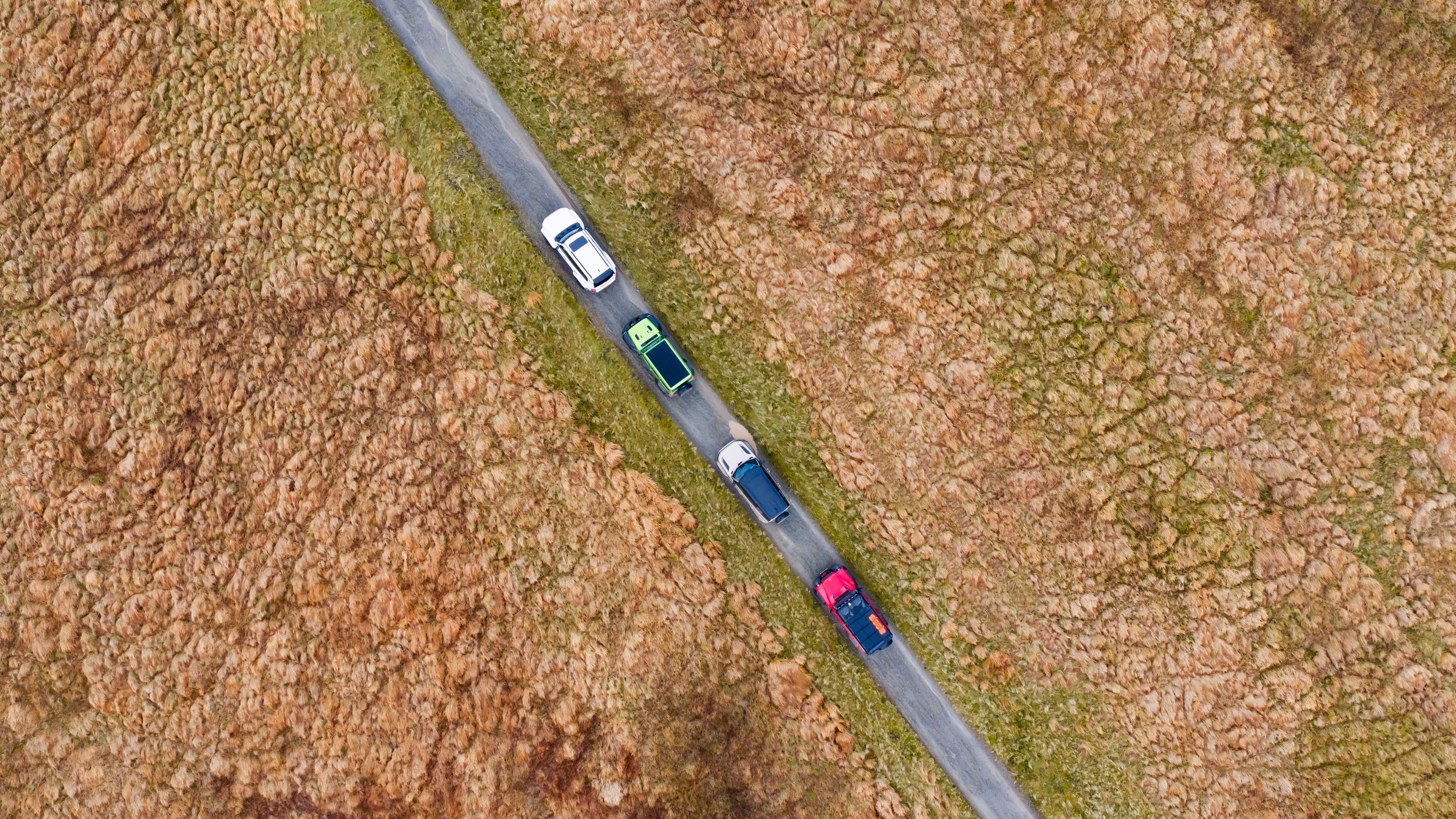
The road stuff is pretty easy, really. Yes, you have to be aware of the size of these things – especially the Ineos – and they’re not the first word in precision on tarmac, but they work. The Defender feels basically like a giant, weighty sports car and it’s the best of them on road by a fair margin, but we expected that. It’s not until we got to the off road section that things started to get interesting.
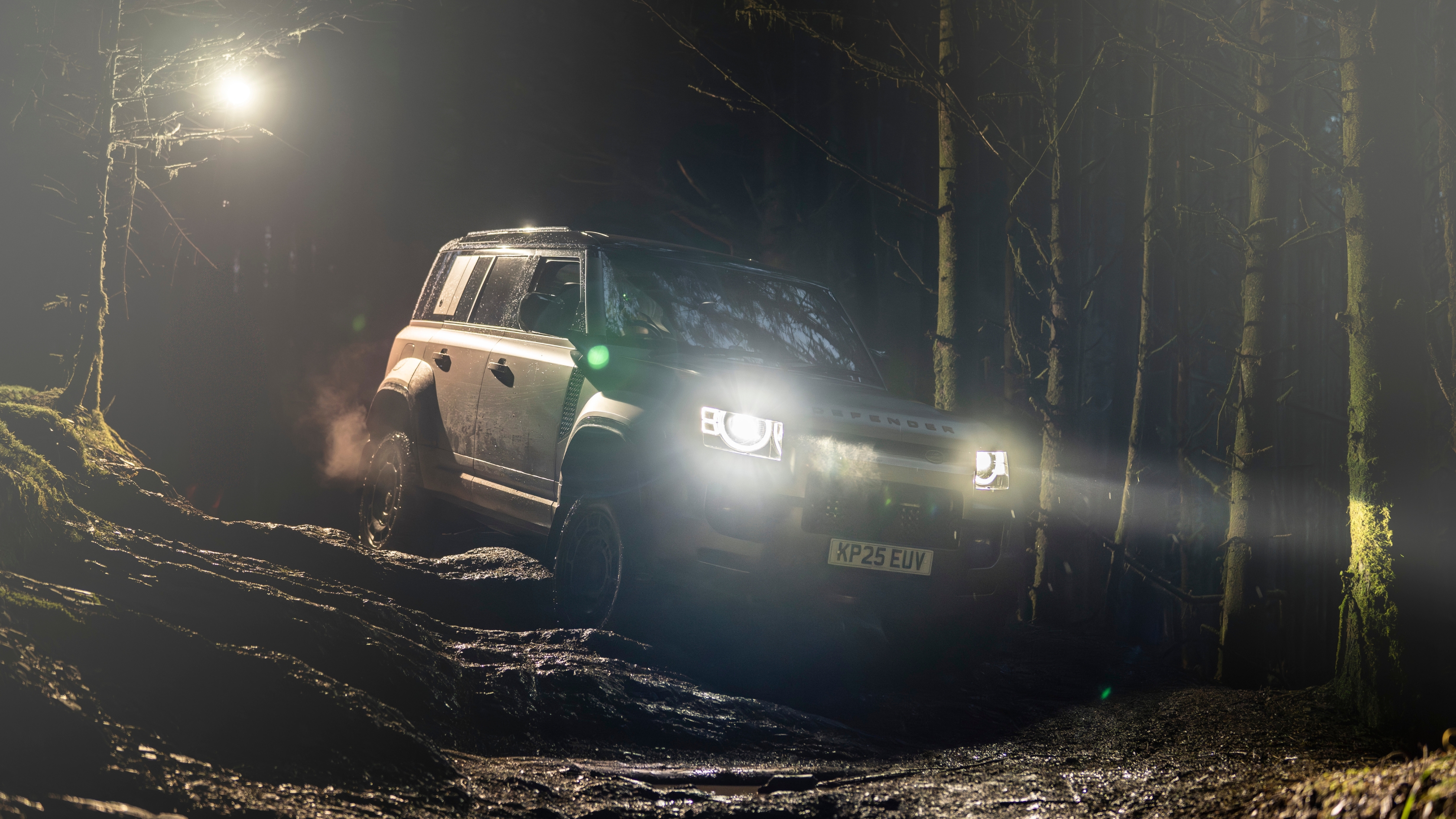
Mainly because the green lane we’ve chosen isn’t a car killer, but it’s more than most would attempt for casual driving, littered with ruts, mud and awkward reefs of rock that would like nothing better than to gut the diff crowns from an unwary 4x4. Wales is very wet, but the forest is primal. A living, breathing landscape that puts you in mind of gods and monsters. And it’s here that we start our little overlanding adventure.
We begin with the Jeep Wrangler. A little bit of a wildcard as a Top Gear Garage long term test car, but seeing as keeper Rowan Horncastle has seen fit to modify this Rubicon edition with Storm Jeeps accessories, we wanted to see just how it got on. And immediate first impressions are that there’s a very good reason why Jeep has been a go to for off road since WW2. There’s shortened gearing, a properly torque multiplying low range ‘box and an off road plus mode. There are also three locking differentials (centre, rear and front), and a little button that allows the anti-roll bars to dislocate for extra articulation.
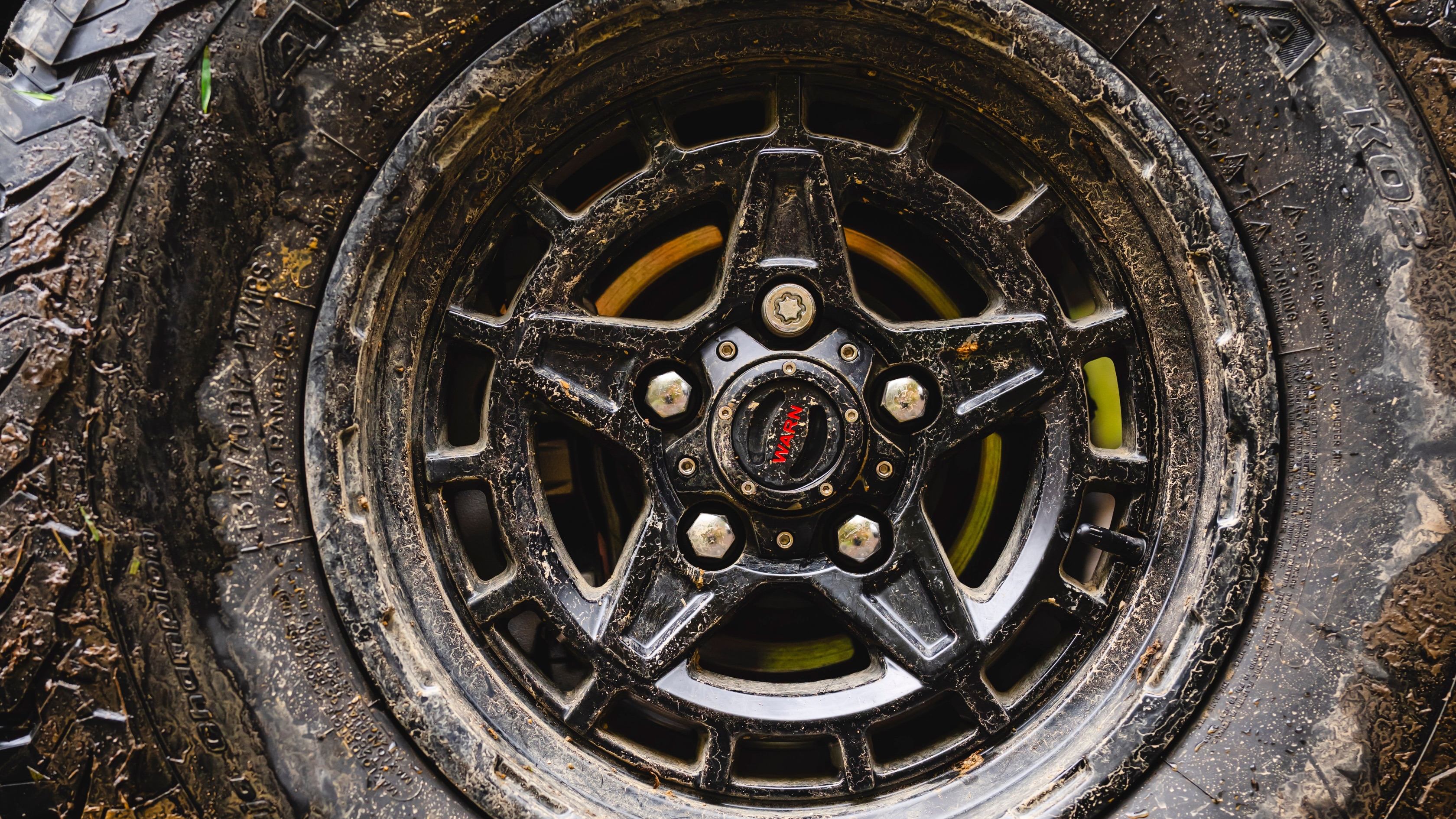
The Storm Jeeps kit includes a modest ARB/Old Man Emu 2.5in lift, 37in BFG tyres and a set of proper relocation brackets to make sure it all lines up properly and tracks competently on road. This isn’t the most dynamic of machines on a B-road, but it steers without too much wander and brakes in a straight line – more than can be said of less professional lifts.
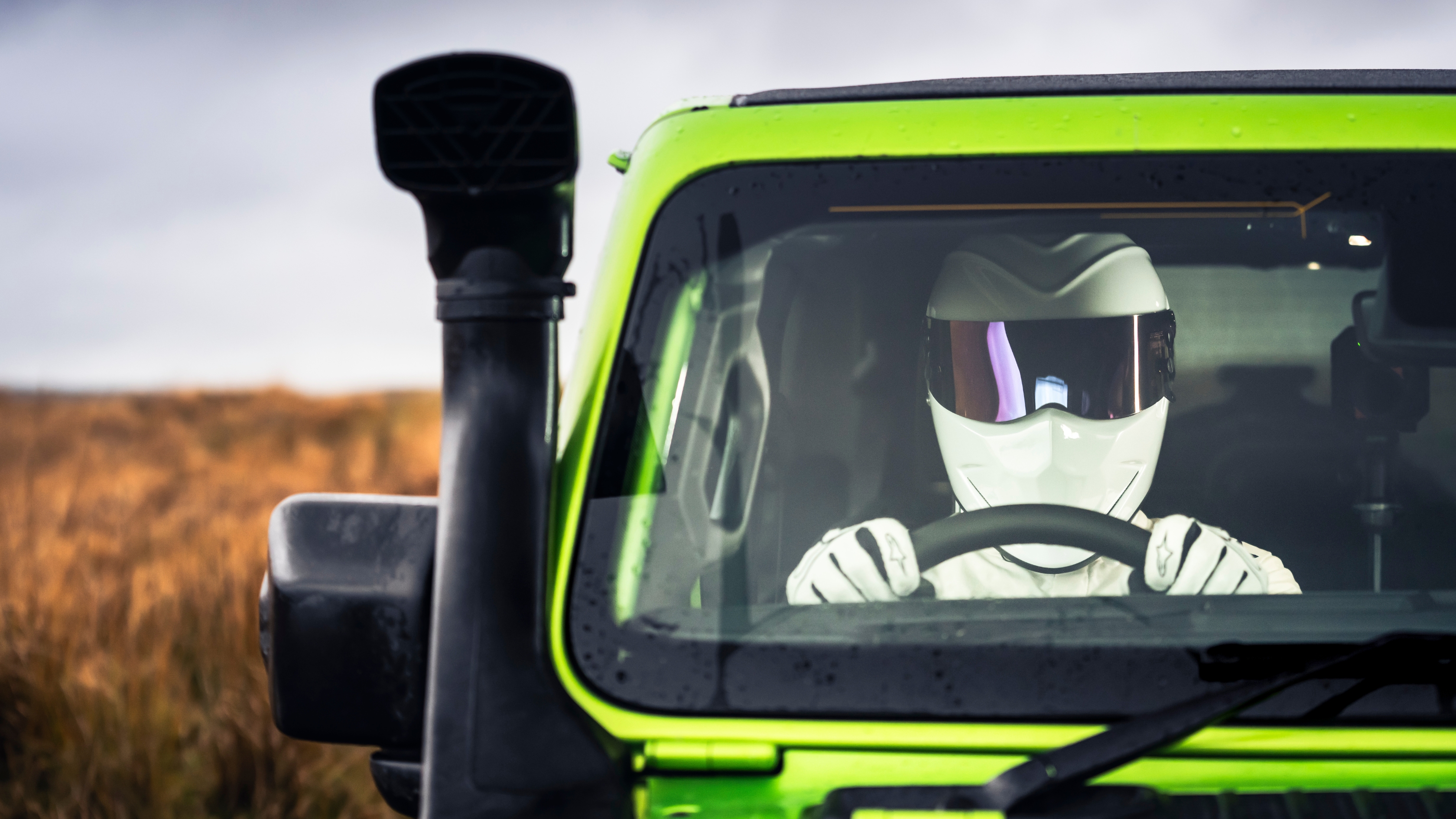
There are matching ARB recovery bumpers, a WARN winch in the front and extra lights, plus a snorkel. A matching starter set of typical off road modifications that enhance both the looks and the performance, nothing too extreme, but reliably effective. And that’s pretty much how you can describe the Jeep on a challenging green lane.
In fact, the articulation on the back axle is extreme enough for the outside edges of the tyres to chew lightly on the wheelarch extensions, giving an audible warning as to how contorted the suspension is. To be honest, it sounds much worse than it is, and the extra bits of plastic just pop back into place, but it just goes to show how well the Jeep keeps its claws on the ground, even when the ground is worryingly rumpled.
Top Gear
Newsletter
Get all the latest news, reviews and exclusives, direct to your inbox.
Off road, traction is always key. The other key is torque, and even though the Wrangler has a vaguely asthmatic 2.0-litre petrol, the low ‘box is truly low, the eight-speed consistent and the throttle response well judged. You can walk this thing over obstacles without slip or spin, axles merrily canting away underneath at uncomfortably extreme angles. It doesn’t grind or catch the important things – those wheelarches feel sacrificial – and with the lockers, there’s no wasted effort. It’s also not too big for narrow gates and passages, feels stable on side slopes and generally unstoppable.
In fact, the only things that really spring to mind are the fact that it feels quite old school inside and the seats could be better. As could the on road performance. But it’s the cheapest car here and the one that requires the least modification to your driving style. As long as you know when to switch the diff locks in and out, you’re golden. Old school, unsophisticated, but effective.
The Ineos Grenadier Trialmaster X LeTech isn’t just a snappy name, but a proper rework of an already very capable off road biased, straight six turbo petrol powered Ineos. That’s the BMW M40i ‘B58’ motor, if you’re interested. German outfit LeTech is well versed in the toughening and off roadification of the Merc G-Class, and the Grenadier is the latest subject of its attention, the portal axled version you see here the most extreme. And it’s a well proportioned giant.
Now, portal axles are simply a stack of gears that sit inside a housing that connects the driveshafts to the wheels vertically, giving a suspension lift that also takes the axle and diff housing with it. So you get much more clearance underneath the car than normal axles, with the obvious associated benefits when off road. They can also be used to change the gear ratios to the driven wheels for specific applications, although the ones fitted to the LeTech are 1:1, so you get the drive from the gearbox reproduced at the hubs.
Honestly, the Trialmaster with the LeTech bits does feel like quality, and looks like it too. New bumper hardware and winch, super engineered roofrack and access ladder, extra lighting and those portals; just the shocks and springs on this thing are €7,000, so this isn’t a halfway job. Yes, it’s only on 37s, but they look like a good choice. And essentially the Ineos will conquer pretty much anything.
The crown of the diff is some distance north of the centreline of the wheels, so ground clearance isn’t an issue, similarly breakover and approach/departure solid. But size isn’t always your friend on the UK’s smaller backroads and green lanes, and while the LeTech’s wide track gives it surprising stability on road, it makes it more awkward than the others in the backwoods.
It’s also not quite as pliable in terms of being able to contort its axles. Yes, the portals lift the centreline of the axles higher, meaning that ground clearance is never an issue and you’re unlikely to bounce the crown of the diff off a tree stump or rock, but you do seem to get less vertical movement of the wheel in the arch. That can lead to little spurts of wheelspin at times, and slightly less majestic progress than you might expect.
After a while though, you realise that the Ineos in this spec actually just needs a little more aggression. It’s so capable that it’s happier with a little more attack from the driver; it never came close to getting stuck, but it required a modified driving style to suit. I didn’t quite adapt fast enough.
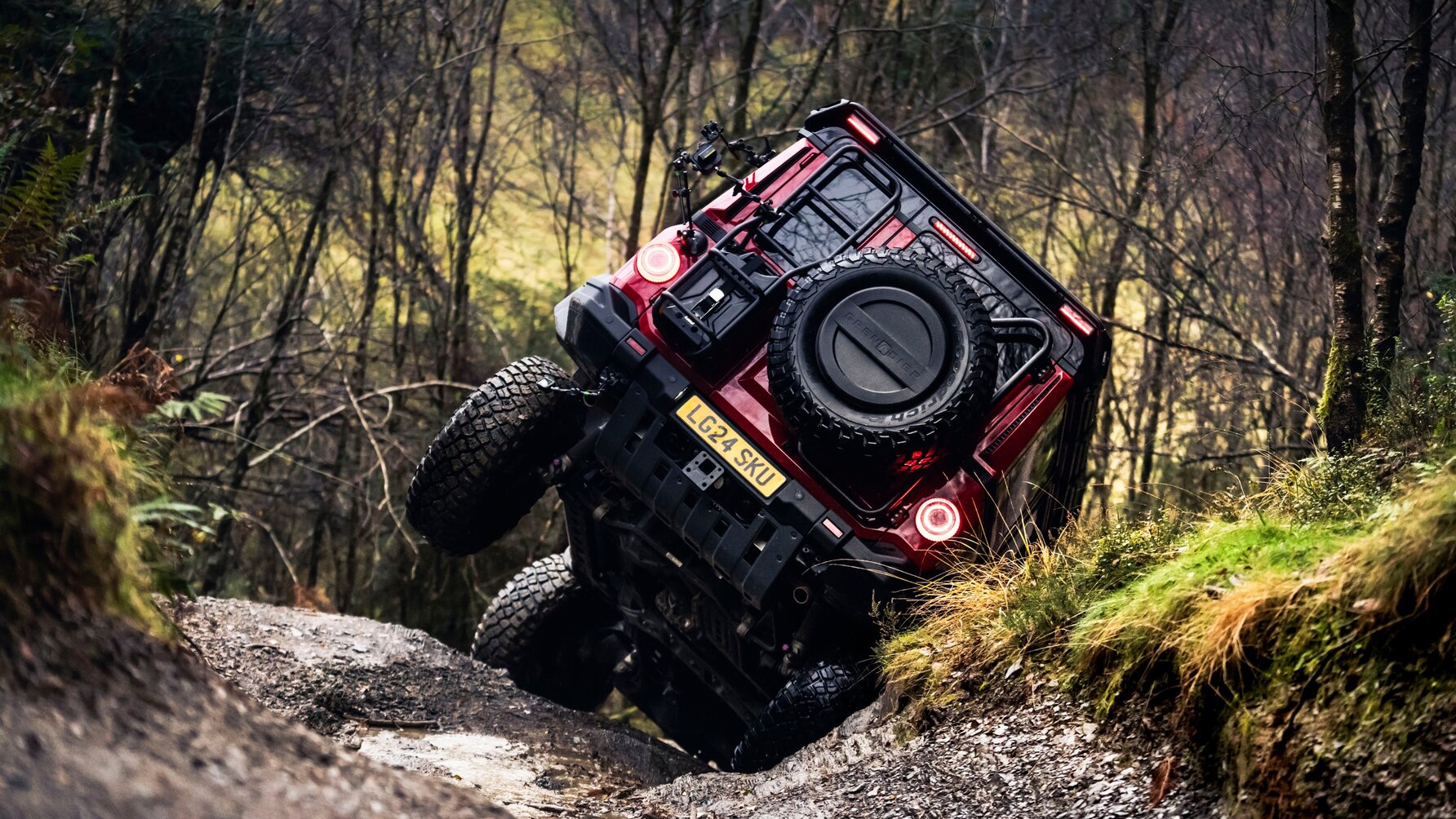
We’re going over. Slowly, granted, but we’re about to tip a very expensive Ineos Grenadier onto its side on an inaccessible Welsh green lane, and the biggest vehicle here, the one we were counting on for recovery, is the, uh, Grenadier. Adrenalised slow motion occurs, just enough for instinct to mug the hormone; we’re going downhill to the right, with the front wheels in a hole, but also pointing towards the right hand side. So gun it. Full throttle, we’ll deal with what’s next when we’re not on our roof.
The Grenadier’s engine roars, the front wheels yank the whole vehicle forwards and right, and the back left wheel comes down with a thump. The front scrapes hard along a large rock, splitting the bumper’s black plastic cover, but we’re back on all four wheels with only a light pinstriping of the right hand side front wing and a heart rate of 200bpm to show for it. A mixture of low pressures, a higher centre of gravity and a little overcompensation on my part caused the issue, but it’s a stark lesson that you have to be careful, even in the most capable of kit.
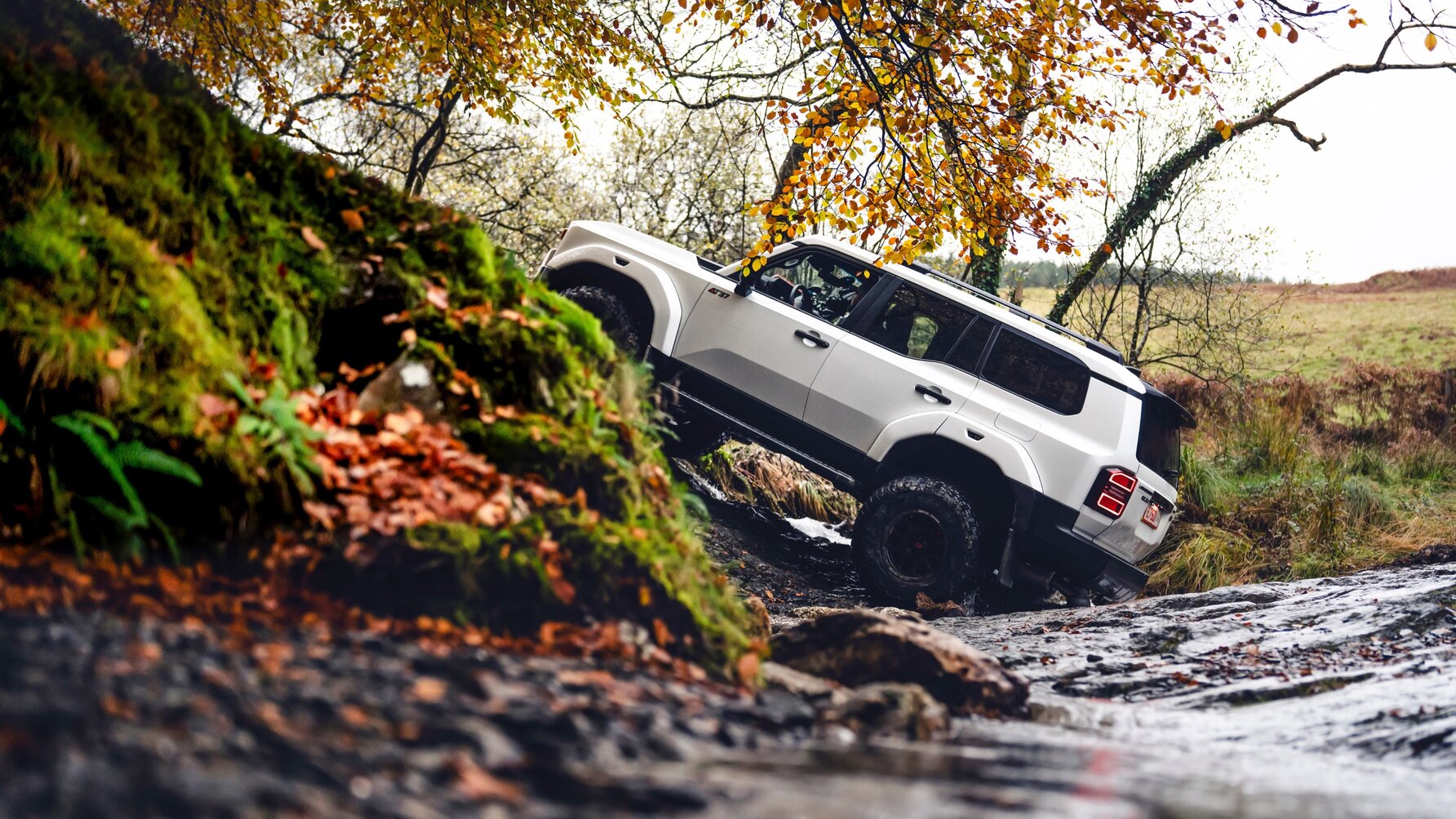
It’s the Land Cruiser that settles everything down. Arctic Trucks used to be a special ops department of Toyota, and you can get your Land Cruiser 250 sent off to them via a dealer. But this thing is not just a bolt-on kit. There’s three way adjustable damping by a company called R52 that’s more used to making Dakar suspension, 37in tyres on better wheels, a chassis that’s been modified and a wheelbase that’s been lengthened. The bodykit and arches have then been redesigned so it all looks like it belongs. Like a Tonka Toy in fact, all wide arched and tall, beefy stance. It’s also absolutely solid off road. Approach, breakover and departure angles are generous, the grip afforded by those bigger tyres resolute.
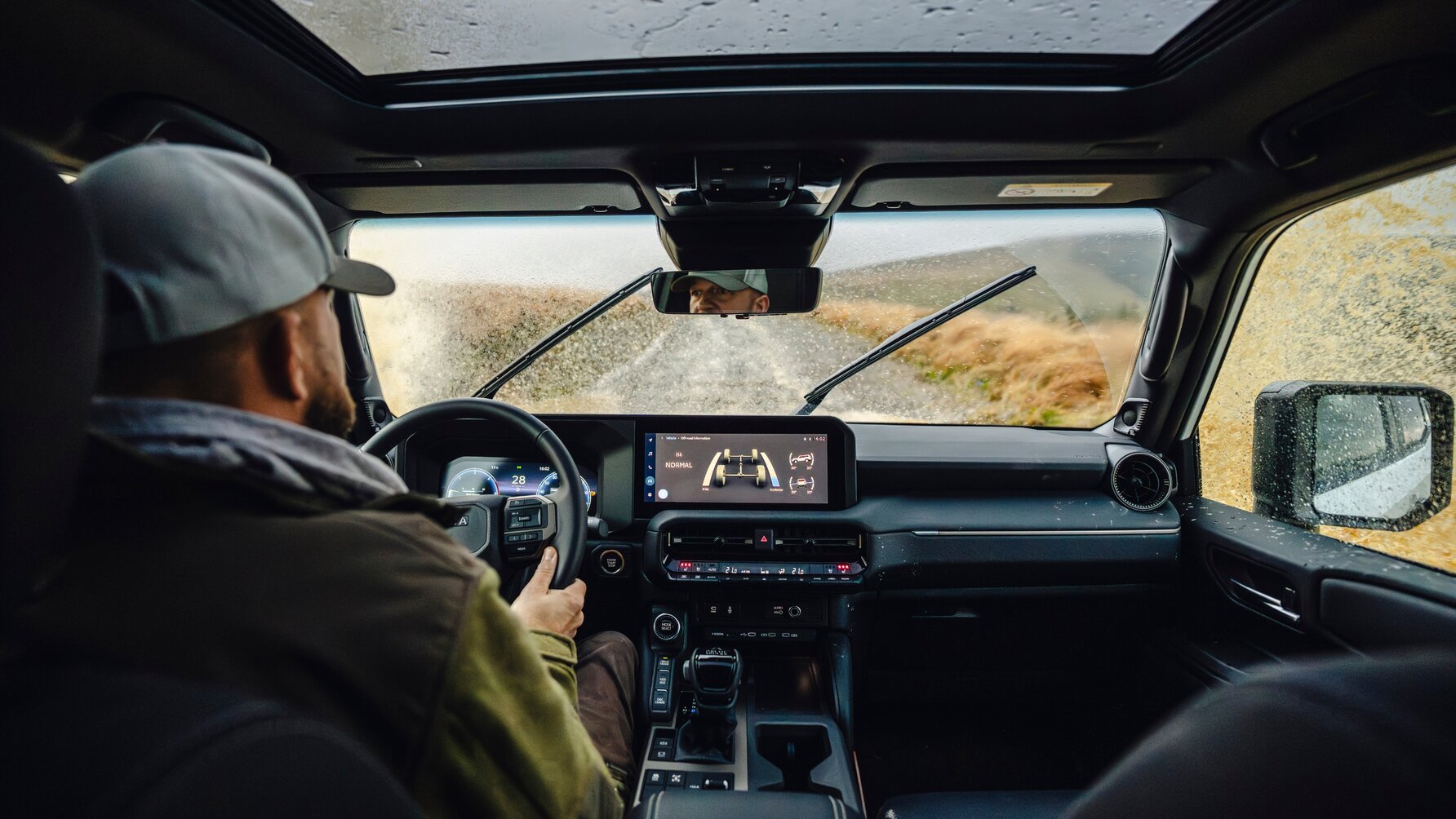
Like all the cars here, we dropped the pressures accordingly, and the Land Cruiser simply walks up the mini waterfall, lopes through the side slopes and ruts, eases through the gateways and rock garden without a care in the world. It might have the least horsepower, but easy diesel torque is the best for crawling. And it may not have a locking front diff, but it doesn’t seem to care. It’s the easiest car here to off road in.
Until it isn’t. On the second set of rock steps, two of the steps match the AT’s wheelbase, meaning it hops slightly under power. I hold the throttle slightly too long and there’s a whuff and a rattle from the front left hand side – the unmistakeable failure of a CV joint. Which is bad, but not something particularly unusual – a failure of a £5 part that makes everything just that little bit more annoying. It wasn’t, however, as bad as it sounded – a little winch over the steps, and the car drove out of the section in 2WD. And yes, it managed to get fixed that evening by people with more mechanical knowledge than me. Not great, but not fatal.
Which brings us, late, to the Defender. It’s the only ‘standard’ car here, but the Octa has more than twice the horsepower of either the Jeep or the Grenadier, three times that of the Land Cruiser. And it shows. Another cuckoo of a BMW engine, this time in 4.4-litre V8 flavour with 626bhp and 553lb ft of delicious gargly torque. Plus the Octa is basically everything you want a Defender to be. It has longer wishbones, new hubs and uprights, new mountings and bushings, different axles on air suspension with 100mm of extra articulation.
The tracks are stretched by 68mm and it rides 28mm higher than a regular Defender, gaining 100mm of wading ability (1,000mm plays 900), ground clearance is up from 291mm to 323 and the angles are better for clambering about. Even the tyres are triple-ply Goodyears for more puncture resistance. Off road it’s very, very good, but it’s also less specific than the other three and holds its bias on the really technical stuff. It never gets stopped, but the front axle without the locker seems to need a touch of wheelspin before it engages any kind of brake actuated slowdown. It’s also a bit more stiff kneed when in off road mode and the air springs are pumped up to the top of their travel. For 90 per cent of people, the Octa would mountain goat its way around whatever you threw at it, but here, on this more technical course, it’s probably the least comfortable – again, to be expected, given the car’s potential in other areas.
The ‘other areas’ become psychotically clear the next day on the rally stage. The Octa is basically a WRC car with a 119in wheelbase, and The Stig is revelling. The engine is allowed to fill its lungs, Octa mode is engaged (more RWD and less traction control), and speed is horrific. At least from the passenger seat – 100mph in the streaming rain through watersplashes a foot deep.
Sideways and skidding into bends with no room for error. It’s here that the Octa really shows what it’s capable of, and it is apparently capable of quite a lot. It’s a stunning showcase of what a Defender really can do, even if this is the über Defender. It’s got a surprising precision that none of the other cars can match.
Certainly not the Wrangler, which feels gaspy in comparison, and more than a little shuddery. That 2.0-litre petrol just doesn’t feel up to the rallyish task, and although the suspension is surprisingly compliant, you get the feeling that this is an older idea wrapped in ‘mojito green’ modern flash. It’s fine, but no more than that, and certainly happier on the slower, nastier off road sections. As was the Ineos, but it’s far from embarrassed on the faster stuff.
It’s surprisingly quick, astonishingly stable for the 2.3-metre height and credible fun. Yes, you do get the feeling that one wrong cut and it’d be off into the moor, but the testament here is to the engineering that makes such a tall thing handle like it does. It may still have the desperately slow recirculating ball steering from the standard car, but that actually helps to ease the car through the turns here. And it’s not just stately progress, either. The Trialmaster has some chops, and the watersplashes just looked epic.
Which brings us to the AT37. It provides an absolute lesson in the importance of suspension and damping. Because it is astonishing. Rally driving is all about faith in the equipment; if it fails, then confidence retreats like an army on the edge of defeat, slowly at first, and then all in a rush. And yes, we’d already had a mechanical failure with this car. But driven by The Stig on this lumpy, gravelly, waterlogged rally stage, the LC just floated. Not in a disconnected way, but where the other cars were kicked sideways or thumped their wheels through the cabin, the AT37 simply absorbed. Traction was complete, wheels on the floor at all times. In fact, the only thing that really marred the experience was the lack of grunt from the 2.8-litre four pot diesel – this really is a car that would conquer the world with a V8. But still, it’s the AT37 and the Octa that shine, and for completely different reasons.
Somewhat unsatisfactorily for absolutists, there isn’t really a winner here. Too many price points and capabilities. Truth is that the players in this game are enhanced. Each born from a capable base vehicle, they’ve been injected with an extra dose of ability in various different ways, all canted towards making them more. And it turns out that there isn’t any counterfeit competence on display here.
The Jeep is the cheapest and a song well sung about simplicity and proven hardware. The Storm Jeeps additions just make it more specifically capable. It’s a tiny bit let down by the engine (there’s a 392 V8 that would make this all better), and its road manners are less than sophisticated, but it’s a monster of a thing for casual off road. No wonder the US loves them: fewer tight B-roads and more national parks with rights to roam. The Ineos X LeTech is also brilliant, again focused by a company that really knows what works. The portals are slightly specific for UK green lanes, but the quality of the kit and the execution expand the Grenadier’s horizons. And the Grenadier is exceptional off road in the first place. It’s not cheap, but there’s a whiff of ‘ultimate’ about it.
Which also goes for the Octa. It’s one of those cars that puts a smile on your face no matter what, and there’s a lack of fragility that you don’t always find with LR products. It’s made to do a job, and it does it very well indeed. It’s also terrifyingly fast on a rally stage, as proven by the D7X-R's – basically a production Octa with rally race upgrades – class win on its Dakar debut.
Similarly, the Arctic Trucks Land Cruiser bundles up all the good stuff. It works very well on road, looks butch and has the capability off road that makes the complex simple. Again, it’s not cheap and yes, we did have a failure, but it’s got the kind of rounded, versatile attitude that scores points all day long. It needs a beefier engine for total satisfaction, but there’s just something about it that works on every level.
So no winner. Because if you’ve got any one of these, you really can’t lose.
Trending this week
- Car Review
Mercedes-Benz C-Class Electric