


Big Reads
Skeleton crew: fossil hunting in a Skoda Enyaq
Scientists in East Africa are searching for fossils that will expand our understanding of human evolution. Top Gear is here to, erm... help
The elevator pitch made this trip sound very glamorous, but it’s nearing 43ºC and I’ve been stooping around in the desert for over an hour, eyes fixed on the arid earth. We’re in the Turkana Basin in Northern Kenya, a part of the world responsible for so many hominin fossil finds that it’s often referred to as the Cradle of Humankind. And yes, I am about to attempt to distil all of human evolution into a single paragraph... this isn’t BBC Science Focus.
The Big Bang occurred around 13.8 billion years ago. Current estimates suggest that the Earth was formed just over 4.5 billion years ago. Skipping ahead slightly, but somewhere between seven and eight million years ago lived a great ape that was the final ancestor to both humans and chimpanzees. Our paths diverged and scientists claim that some of our own ancestors – specifically the tricky to pronounce Sahelanthropus tchadensis species – had the ability to occasionally walk on two legs between six and seven million years ago.
Advertisement - Page continues below
Around 1.8 million years ago, while living alongside a number of other human like species, Homo erectus migrated out of Africa to explore the rest of Earth. We know from fossils found in Morocco that Homo sapiens (that’s us) are around 300,000 years old, and we’ve been the sole species of human on this planet for the past 10,000 years or so.
Photography: Mark Riccioni
That wasn’t so hard, was it? But yes, we’re here on the hunt for bones. Specifically, those of our ancestors, and we’ve brought along the perfect vehicle for the job. Well, if by perfect you mean its name has a tenuous link to palaeoanthropology. You see, when Skoda needed a moniker for its first all electric production car, it landed on the Irish name Enya, which comes from the Gaelic Eithne meaning ‘kernel’ or ‘grain’, but symbolising ‘the source of life’. Clearly someone in the office was listening to Only Time on repeat. Enya eventually became Enyaq because all of Skoda’s SUVs have names that end with the letter Q.
So, it’s the Skoda Source of Life in the Kenyan Cradle of Humankind. Classic Top Gear logic. Although having landed at our base in Lodwar, only now am I realising that Skoda has equipped us with the hot twin motor Enyaq vRS. Perhaps it was worried the million year old fossils were suddenly going to up and leave...
Advertisement - Page continues below
To double check that isn’t the case, our first port of call is to the experts at the Turkana Basin Institute (TBI). Established back in 2005 by palaeoanthropologist and conservationist Richard Leakey, the institute enables year round research in this remote but fossil rich region. It also means that finds no longer need to make the circa 14 hour drive south to Nairobi for analysis or exportation abroad, and having briefly experienced the washboard ‘roads’ on the 45 minute drive from Lodwar, I can only assume they previously ran a fleet of Citroen DSes to avoid arriving with a tray of ancient dust.
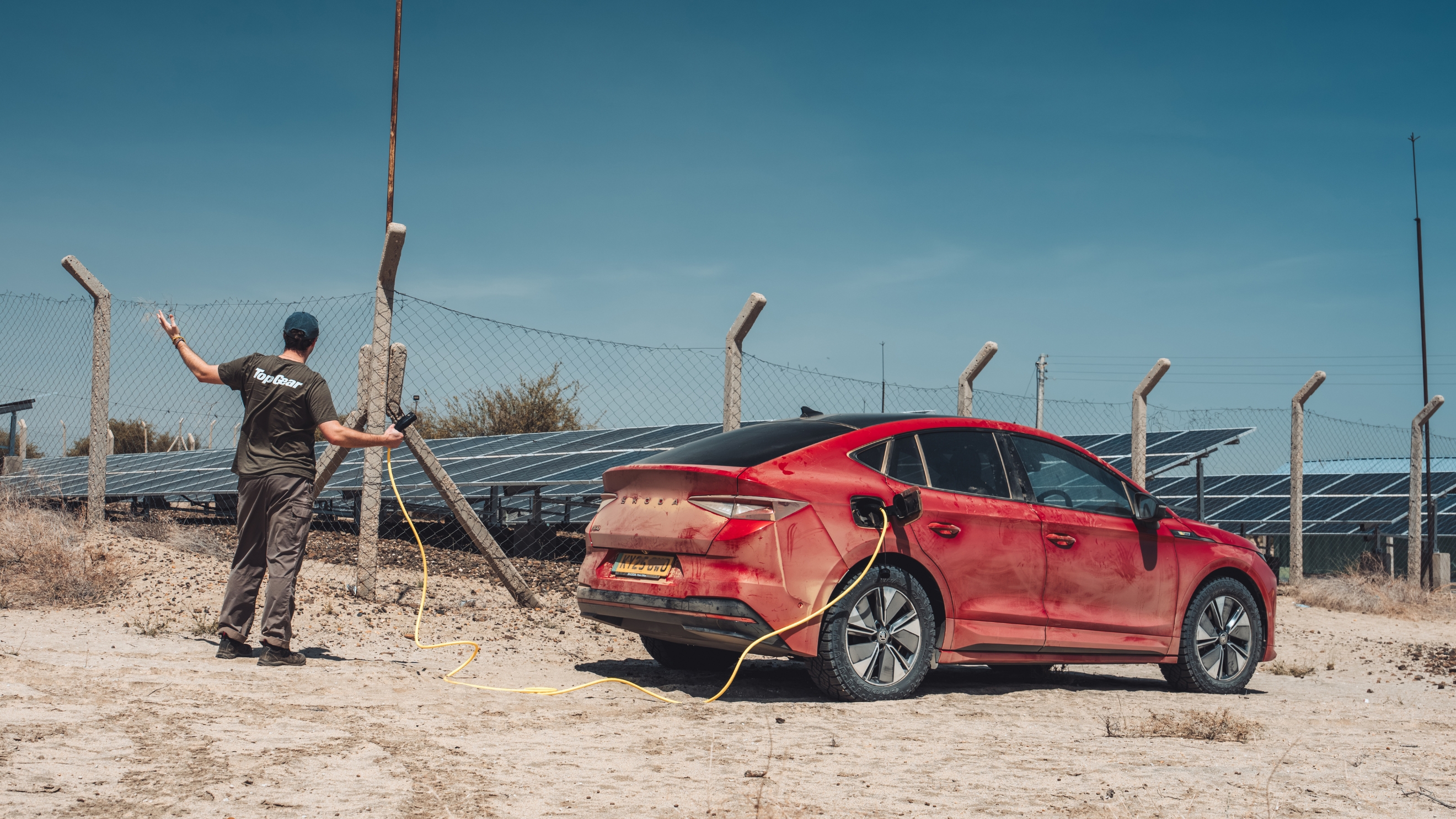
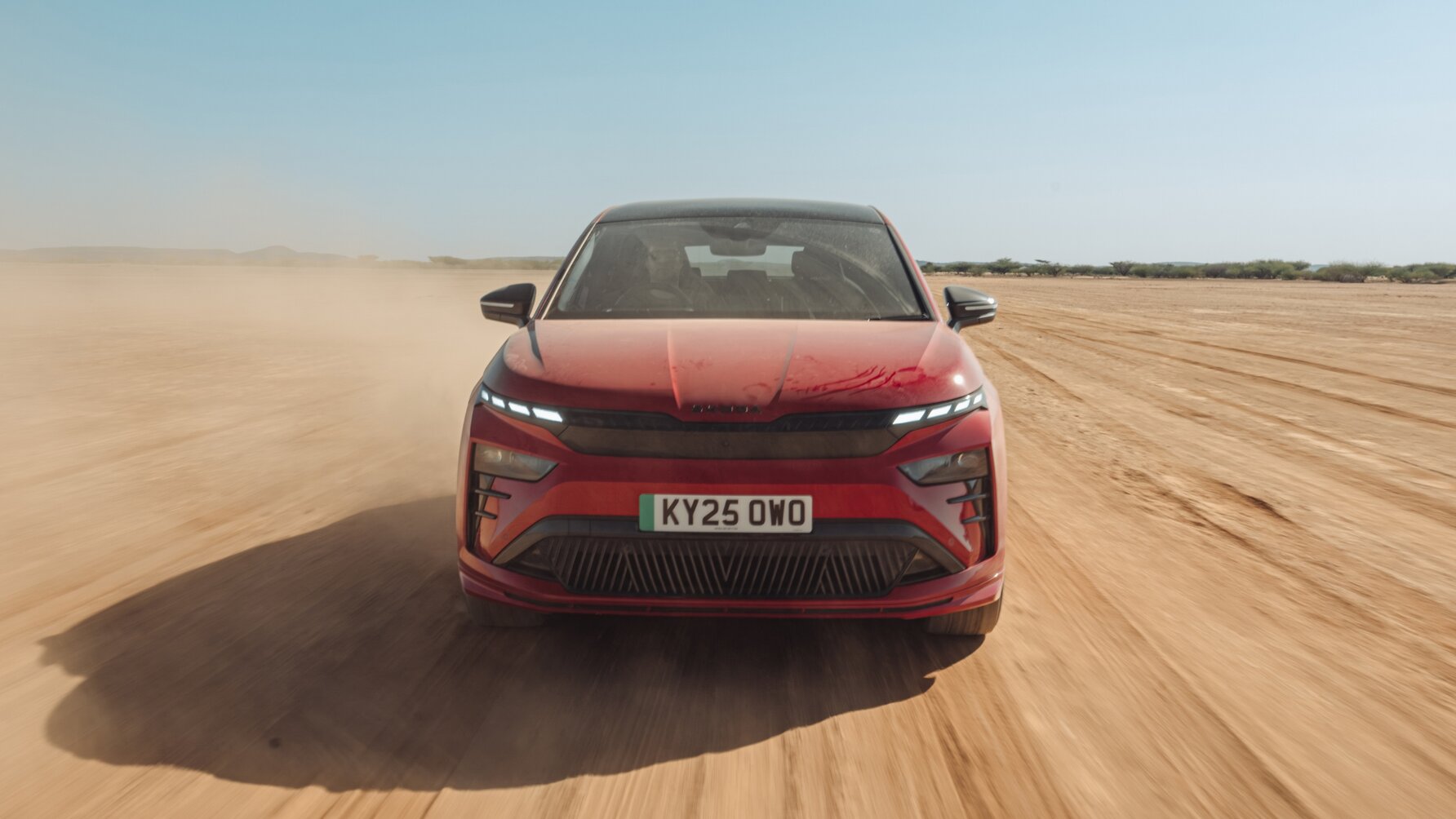
The only modifications made to the all-wheel drive Skoda for this adventure are some smaller 19in wheels from a base spec Enyaq and a set of chunky Goodyear Wrangler Duratrac tyres. I’m feeling rather thankful for the fancy rubber already, and while old Land Cruisers and other assorted sheds audibly crash and rattle past in the opposite direction, all has been remarkably calm in the Skoda. Only bottomed out once so far.
“When you’re out looking for fossils, one of the main things to keep in mind is that these are going to look the same as bone, just in the form of stone,” advises Carrie Mongle, assistant professor at Stony Brook University in New York and an affiliated researcher at the TBI. “So, the colour might be different, but an understanding of the anatomy is still going to inform your understanding of whether it’s a hippo toe or a hominin fossil.”
Drat, I knew I should have paid attention in those biology classes at school. “Oftentimes we’ll spend an entire field season and find absolutely nothing. But you could come back to the same spot the next year and new fossils will have completely eroded from the outcrops.”
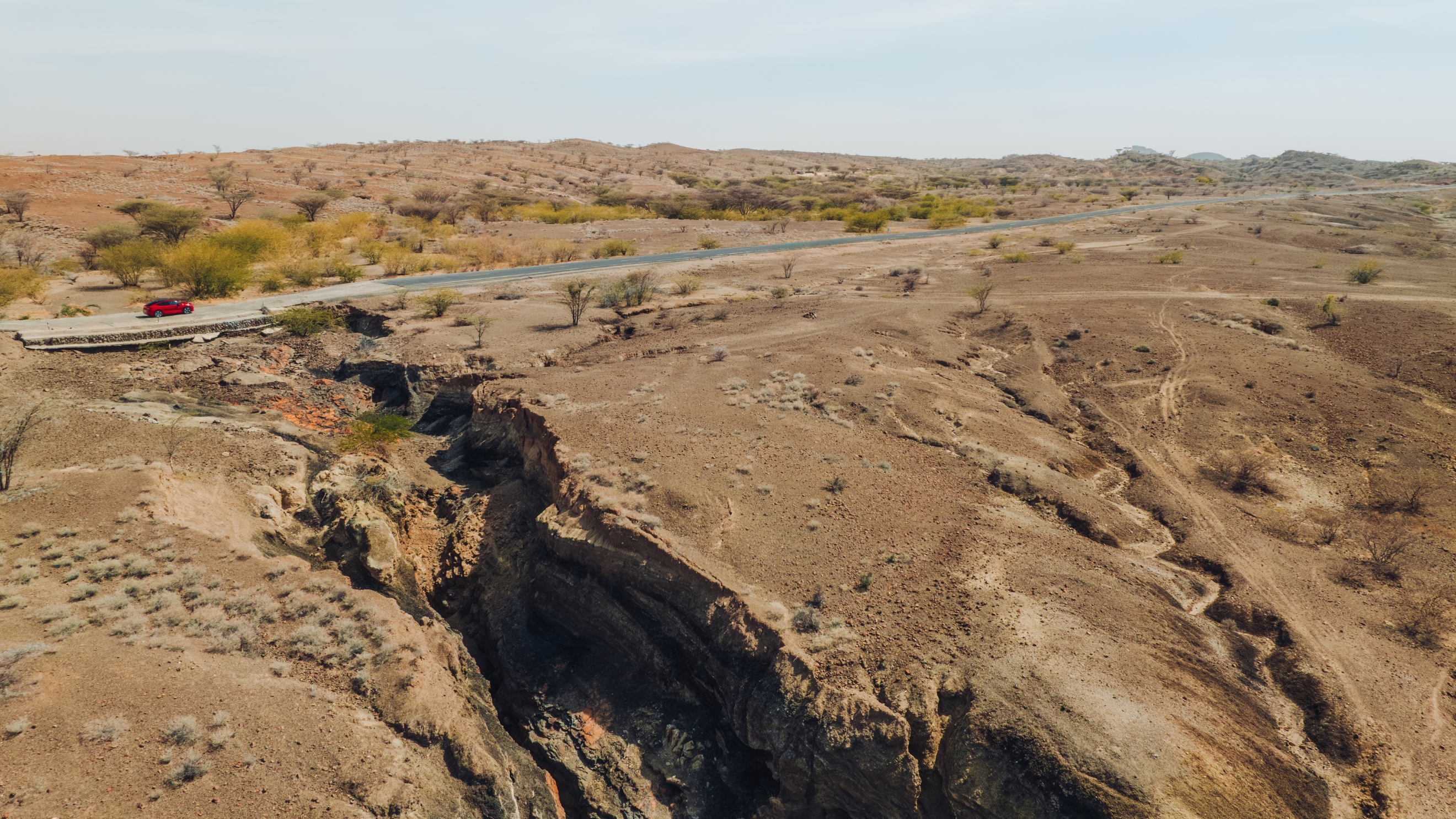
Mongle also explains that the geology of the Turkana Basin helps to preserve these fossils, with fine sediments from ancient lakes and floodplains quickly burying remains. Oh, and this part of the world that was so heavily populated with our ancestors also happens to lie within the incredible East African Rift – essentially a giant tear in the Earth’s crust that is splitting the continent of Africa in two by a rate of around 1cm per year. That means plenty of volcanic activity, with many layers of age-old ash that allow researchers to precisely date their finds. It’s also potentially why we evolved in this part of the world in the first place, as changes in climate forced our ancestors to walk on two legs, develop tools and start communicating.
All sounds rather promising for a TG fossil find, doesn’t it? Perhaps the most famous discovery in this region was all the way back in 1984, when fossil finder Kamoya Kimeu uncovered what would become known as the Turkana Boy. Not another Marvel superhero, but a 1.5 million year old skeleton, and the most complete Homo erectus remains ever found. Not sure I’ll match that in the couple of days we’ve got, but I’ll keep my eyes peeled.
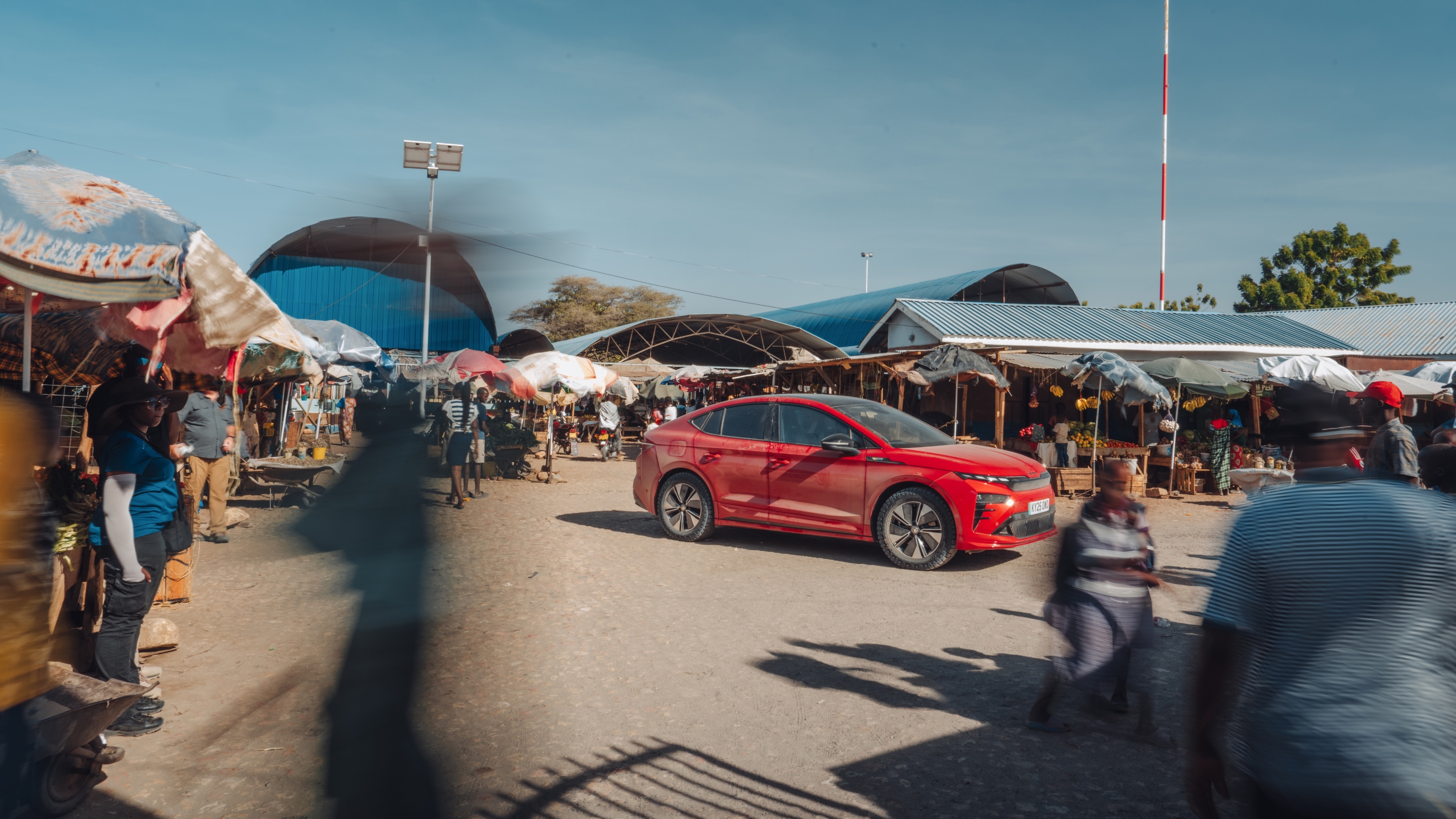
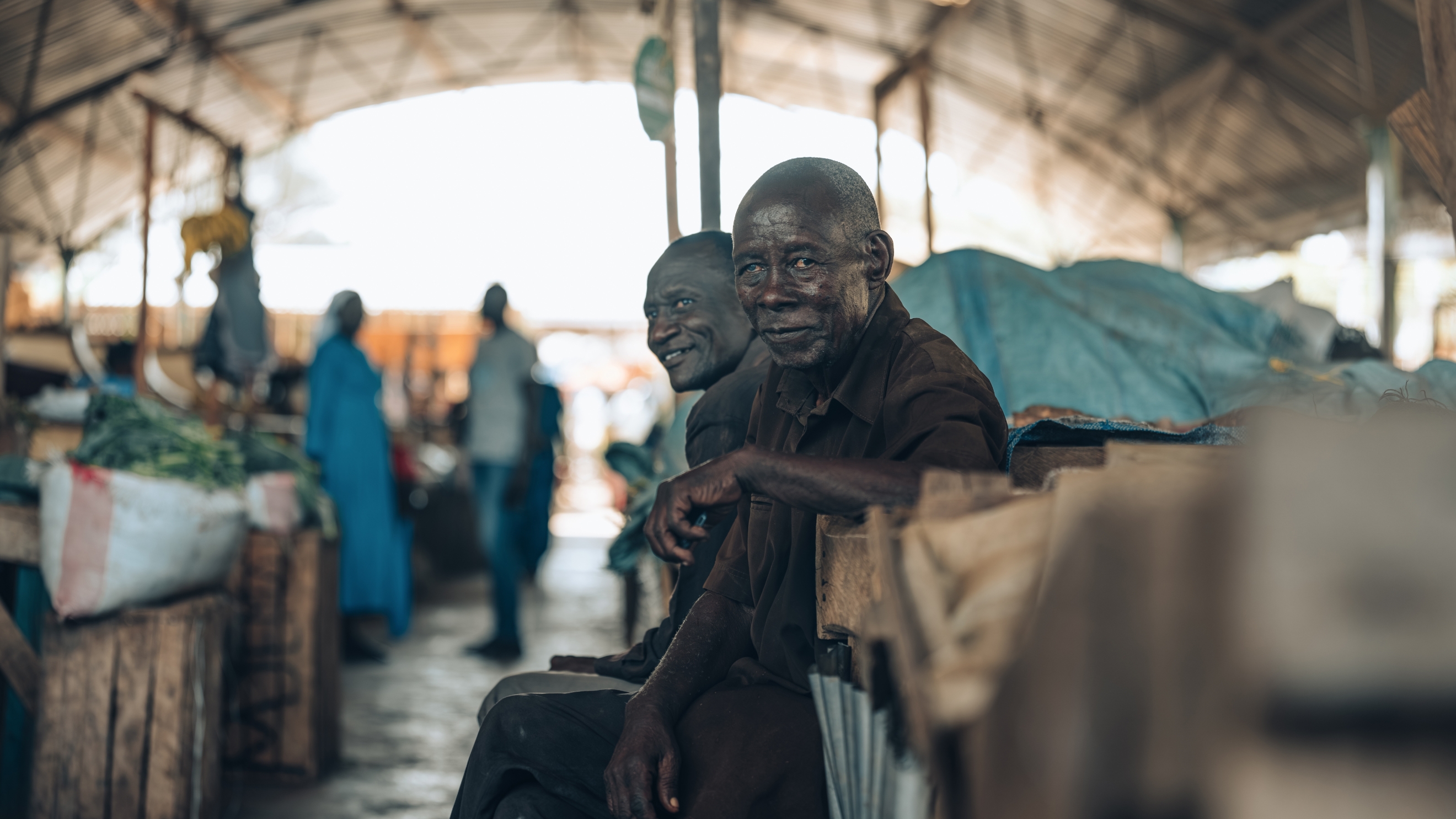
We leave the boffins at the TBI to their important research and head back towards Lodwar. I’m keen to get some local opinion on the Skoda before it becomes invisible under its own layer of volcanic ash, so we head straight for the lively Fresh Produce Market in town. The consensus seems to be that, in a sea of boxy, purposeful 4x4s, this coupe-ified Enyaq looks pretty blingy. Mercifully less toothy than the pre-facelift version too.
Top Gear
Newsletter
Get all the latest news, reviews and exclusives, direct to your inbox.
It also gets a claimed WLTP range of 347 miles from its 79kWh battery, but given the current temperature I’m running the air conditioning on what can only be described as its Arctic Blast setting. That has dropped average efficiency down to a lightly terrifying 1.8 miles per kWh, so real world range on these tyres and in this heat is more like 142 miles. Yikes. Luckily, we’ve brought in a local electrician to ensure that the Skoda will safely charge overnight at the hotel.
Might sound like overkill, but despite Kenya’s impressive clean energy production and a government target to install 10,000 chargers by 2030, the infrastructure for EVs this far north is non-existent. Plus, Lodwar is currently in the midst of a power crisis, with all too frequent outages and rationing.
Thankfully the next morning we wake with a brimmed battery, although the Enyaq is a little upset that it has no idea where in the world it is. Our plan is to visit some local landmarks and head east towards the shores of Lake Turkana on a proper fossil hunt, although like all good roadtrips our first stop is at the local corner shop for supplies. Along with heroically sugary fruit juices and alarmingly orange Fantas we’re offered a bunch of khat leaves... we decide a 335bhp Skoda will be all the stimulant we need for the day ahead.
I’m certainly awake when we come across a vast dry lakebed with room to stretch the Enyaq’s legs for the first time. These are the sort of open spaces that forced ancient apes to stretch out and develop bipedalism, but I can testify that it’s much more fun in a sporty Skoda. Just a shame that I can’t work out how to turn off the nannying ESC. Turn in, give it a bootful of power to start a sandy slide and then curse as the car’s brain robs the go-faster pedal of any autonomy. Boooo.
My attempted skids also fail to churn up any buried bones. Shame, although that must be the only time in human history that anyone has uttered such a sentence. As we make our way further towards the lake, the terrain flips between soft yellow sand, dusty orange earth and deep black rock. The Skoda takes the surface changes in its stride, barely even needing to break out of its reserved Eco mode in search of traction. Its only issue is a Prado up ahead that clearly knows the roads, but rather unhelpfully it also has no brake lights, meaning some of the larger craters are hit at an uncomfortable speed.
Just outside the remote resort town of Eliye Springs, a couple of signs point to the presence of a solar farm. Having rinsed the air conditioning all morning and switched to Sport mode on the lakebed playground, I wonder whether there might be a chance to replenish the Skoda’s already depleting state of charge. Sadly, there’s nowhere for us to plug in, and even if we’d found a socket I’d rather not rob the town of its electricity for the evening.
This area has had it hard enough in recent years with the emerald waters of the world’s largest desert lake rising rapidly. Strange given how dry the surrounding area is, but apparently it’s down to more erratic rainfall and increasing deforestation for farming, meaning any water runs straight into the lake. Turkana also has no outlet, so relies on evaporation. Apparently, these rising water levels are also creating more encounters between humans and the resident Nile crocodiles, so I bravely opt to sit in the Skoda for a while.
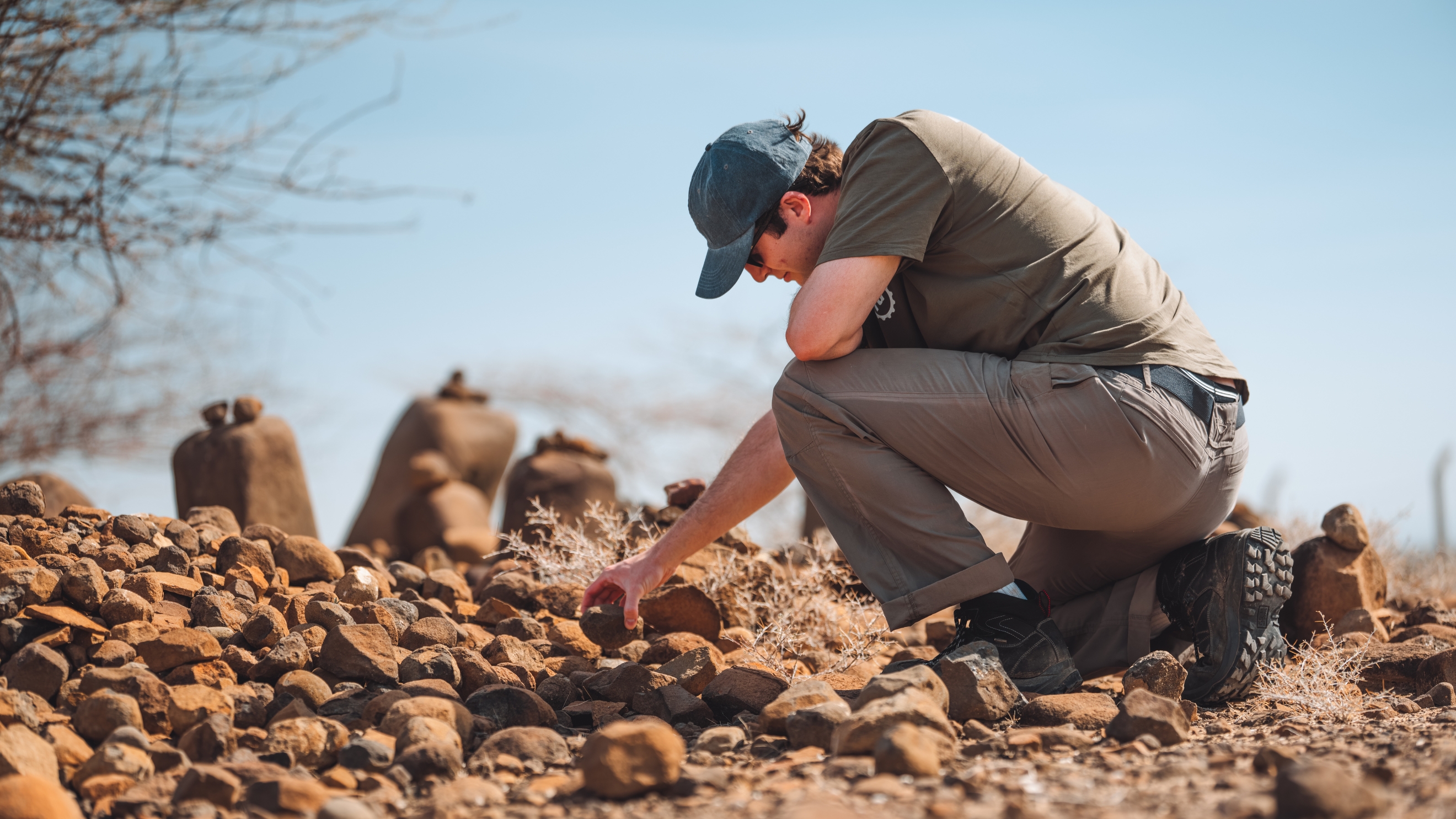
Thirty minutes north of Eliye Springs and set back from the shore are the remarkable Wadach Pyramids. Formed naturally by soil erosion, these layered peaks pop out of the crusted earth to create a scene that wouldn’t look out of place in Dune: Part 33. Stepping out of the Enyaq here is like opening the oven door mid-roast on a Sunday afternoon. I’m hit by a wall of heat. And yet, this feels like a prime spot for finding fossilised remains, so I set out on foot into the shade between the craggy formations.
Rock. Rock. Rock. Rock. My search continues in this manner for an excruciatingly long time, but then there it is. Hardly glinting in the midday sun – more like cooking – but it’s immediately obvious that while it’s the colour and weight of any other stone, it has the structure of bone. It’s actually too hot to handle, so I quickly introduce it to the second warmest surface in the vicinity – the black dashboard of the Enyaq. Curse that panoramic glass roof.
Is this the Source of Life? Is it the missing piece that’ll finally uncover the mystery of where Homo sapiens actually evolved from? Erm, no. Unfortunately, while it is well over three million years old, apparently it was once a very small piece of bone in the foot of a very large hippo. Although just think, this hippo could well have been hunted by the ape-like Australopithecus afarensis all those years ago. Or given how dangerous these giant semi aquatic mammals can be, perhaps it was the other way around. I’m sure there’s at least some tenuous link to our ancestors that we can make.
Given I don’t have the time or authority to commission a full excavation of the site to justify these claims, we press on. Passing through a small village of the Turkana people, we emerge at the bottom of the giant Natong’obong’ sand dune that supposedly stretches back to the edge of lake. The soft sand looks a bit dicey for a Land Cruiser, let alone an EV Skoda, but I figure the Enyaq has got this far, and given its UK registration it may never get another opportunity for a bit of dune bashing.
Delving into the touchscreen (there still aren’t enough physical buttons in here), I deploy the vRS’s ‘Traction’ mode for the first time to rein in throttle response and engage permanent all-wheel drive. Belying its 2.2-tonne kerbweight it waltzes up the dune, and I spend a moment revelling in the incredible views out towards Lake Turkana’s Central Island volcano. This vRS version of the Enyaq may not be pants-on-fire exciting, but once again it’s proving to be a remarkably competent all rounder.
Because I’m a terrible road tester, up until now I’d also forgotten that this facelifted vRS comes with the Volkswagen Group’s 15-stage adaptive damping as standard. As we return to yet another pitted, rocky track, photographer Mark finally gets to experience the Skoda with its suspension in the very softest setting. Oops.
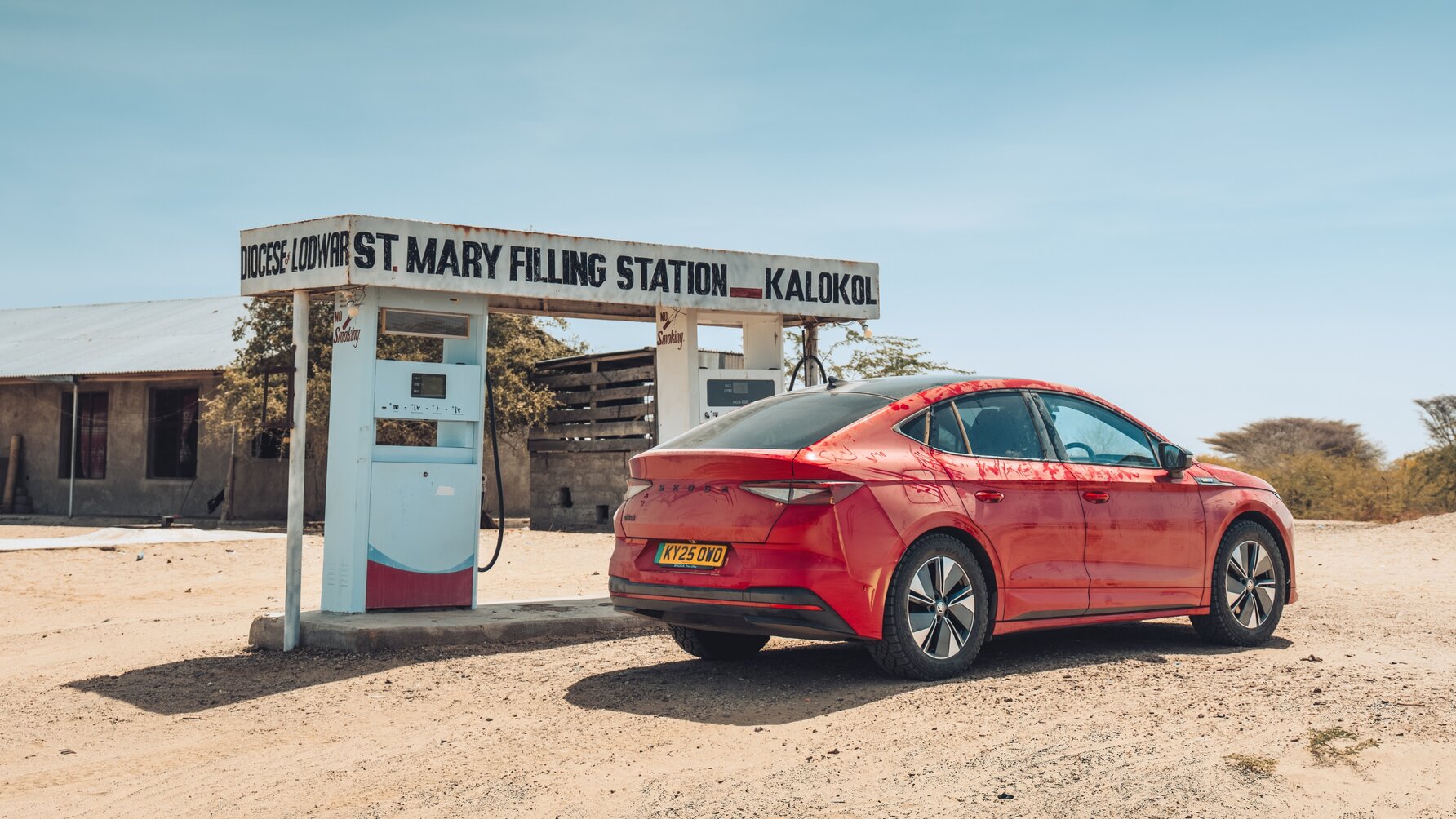
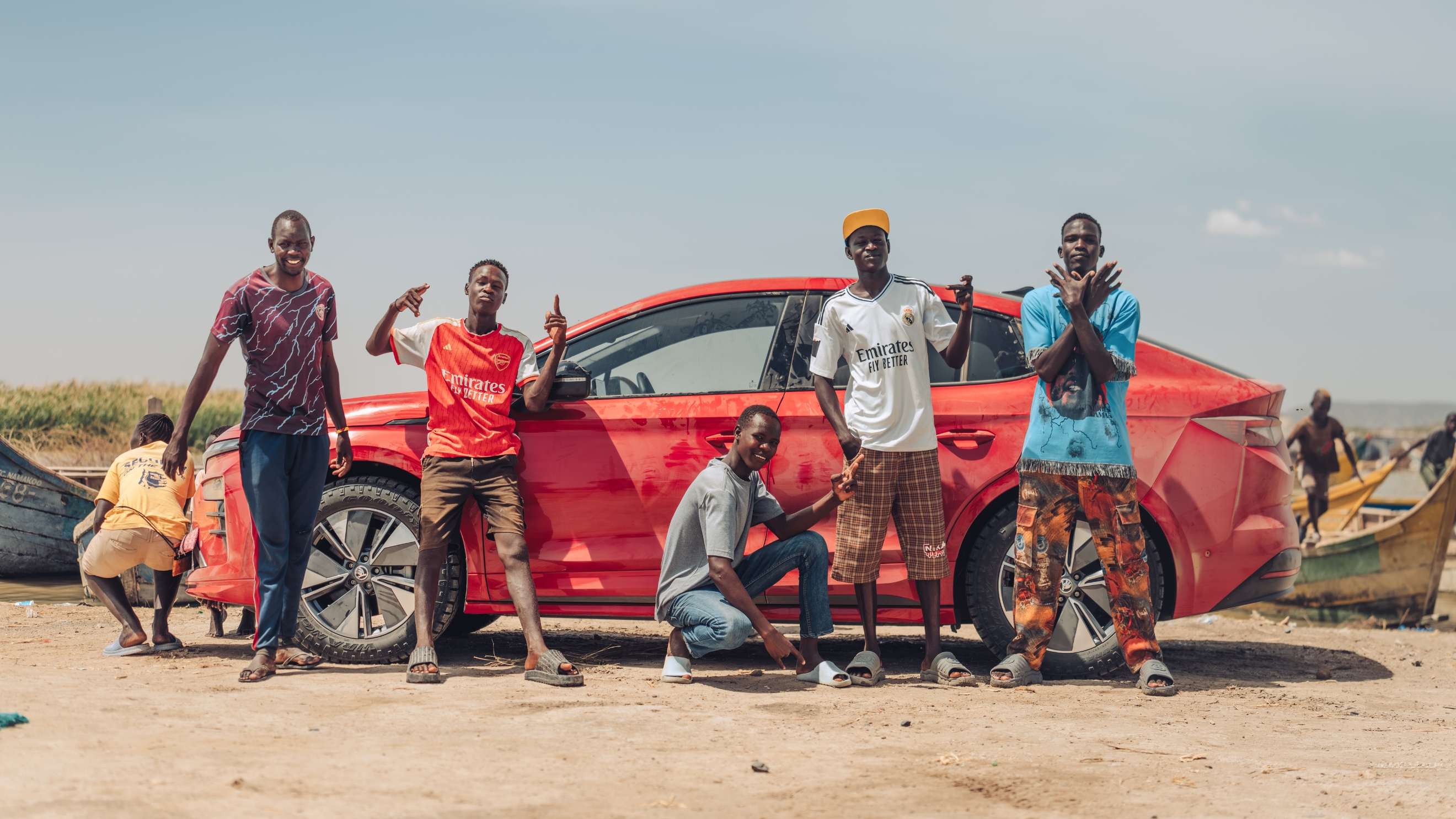
At the end of this bumpy stretch lies the small fishing town of Kalokol. As boat builders work on the shore, the morning’s catch dries in the sun and kids from a number of Kenya’s 42+ tribes play in the shallows, the arrival of a bright red coupe-SUV causes quite the stir, particularly as it creeps around silently under a drone to capture the incredible images you see here. A clattery diesel is still king in these parts, or perhaps that should be God given the church seems to own the local filling station. Dear Lord, please deliver us a rapid charger.
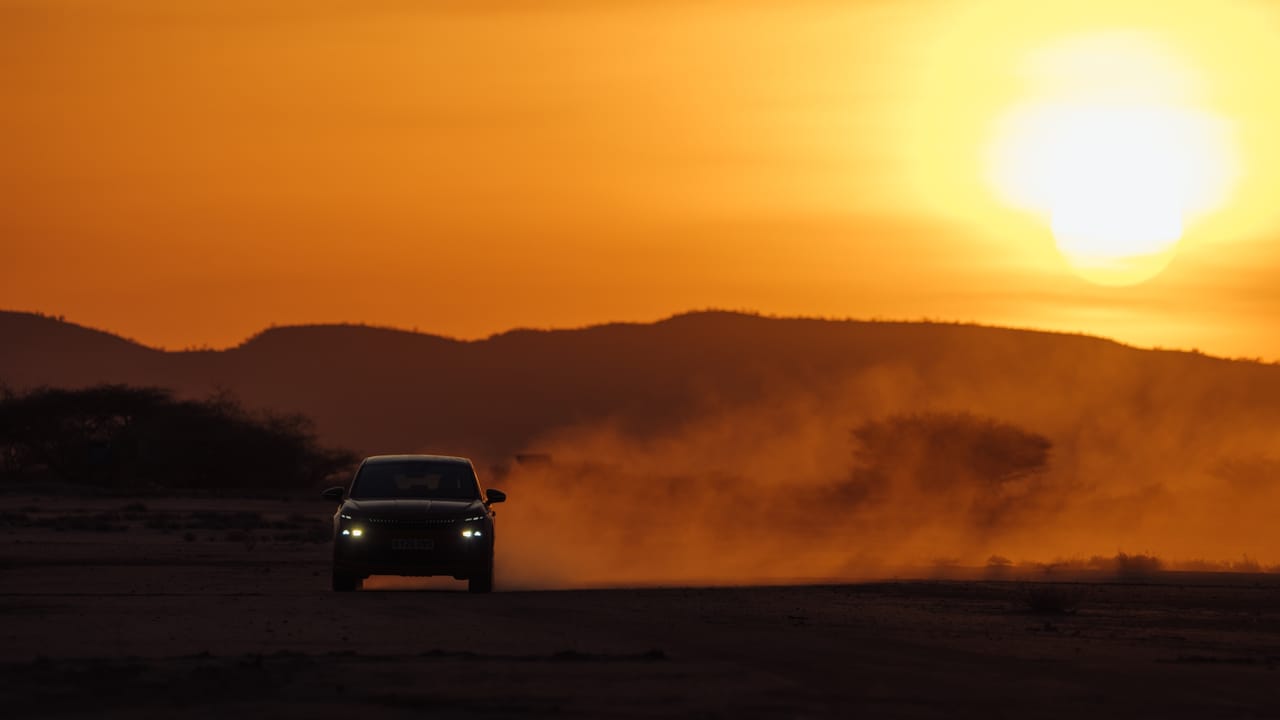
Clearly someone has been listening to Mark’s prayers, because the road back to Lodwar for our final stretch is a 40-mile ribbon of fresh tarmac that winds its way through otherwise untouched landscapes. As the sun sets the sky turns a searing orange, and the view out is even more dramatic once I’ve remembered to clear the windscreen of the day’s dust.
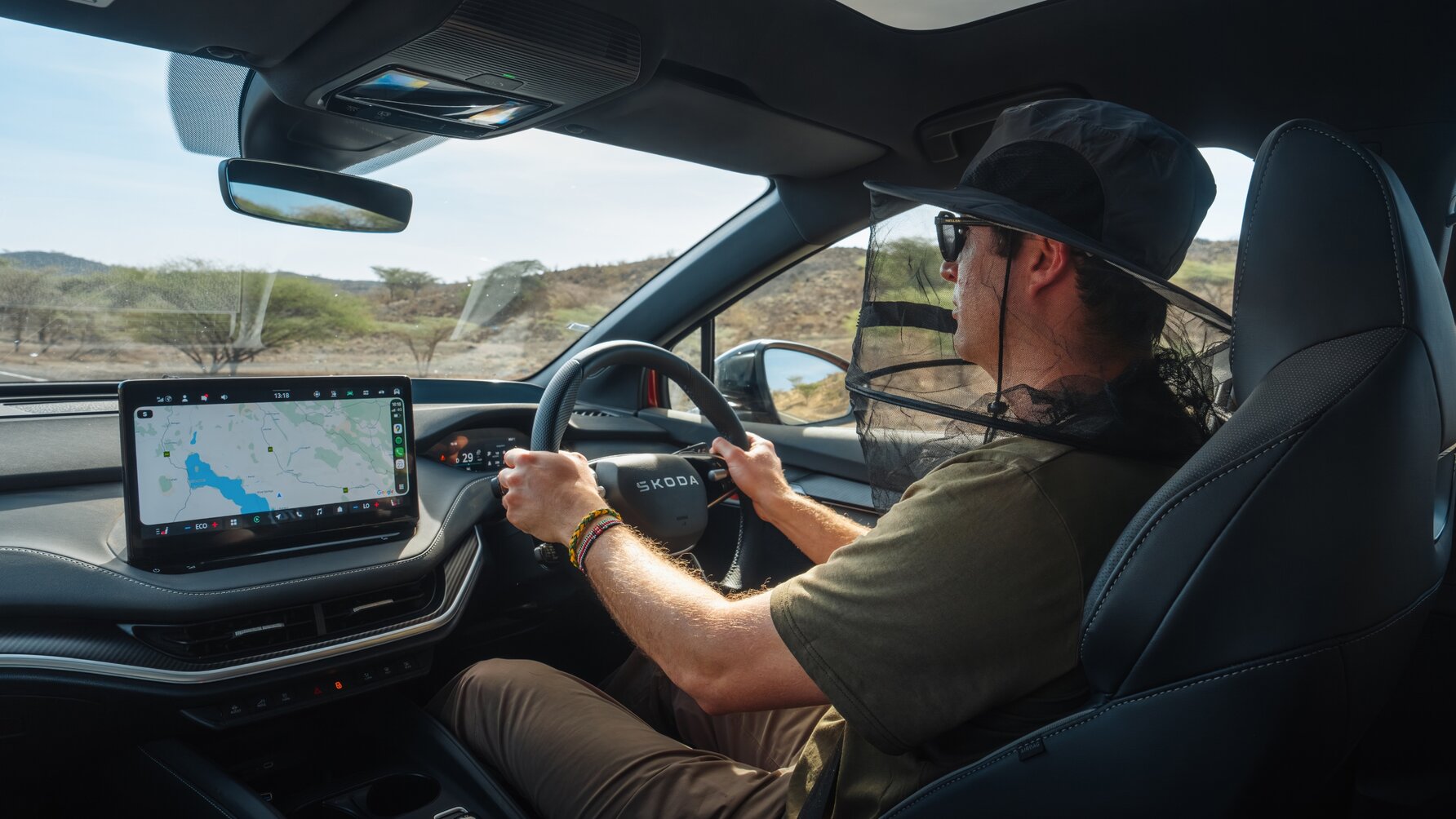
We arrive back at base under the cover of darkness, hippo fossil placed precariously on the dash but sadly not set to change our understanding of human evolution. Still, I later learn that just one per cent of all fossils found out here are hominin, and we’ve discovered plenty about the Enyaq in the meantime.
Mostly that it’s a cool, quiet, practical tool that let us appreciate our surroundings while leaving very little impact on such a historically significant part of the world. And Skoda has already come this far in a decade or so of electric car evolution – just think where it’ll be 300,000 years from now…