




Big Reads
Tower of Power: across Georgia in a Toyota Land Cruiser
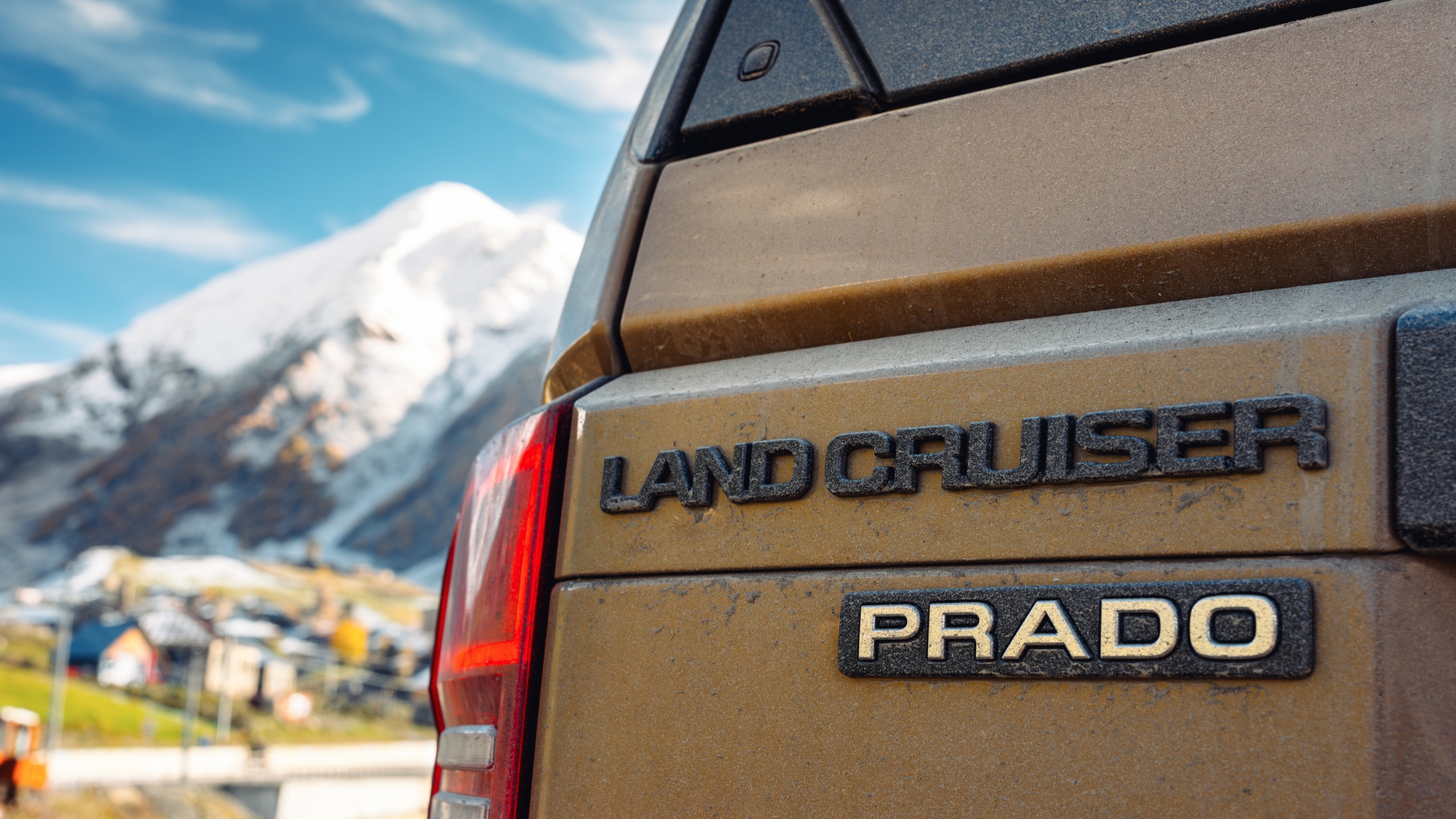
We take the full size Land Cruiser on a full size adventure... to the Svan Towers
They are called Svan Towers. Stark stone towers built to keep warmth in and invaders out. Located high in the remote valleys of the Upper Caucasus mountain range they were meant to be the highlight, the destination of this story. But things took a turn.
In several directions. Stalin got involved, so too did modern Russia. There was snow, there was mud, there were rockfalls and dogs and Kamaz trucks. And in amongst all this there was a Toyota Land Cruiser. Because if you’re off exploring and have been foolish enough to get yourself into a sticky situation, you need a machine that can help get you unstuck. Which is an apt place to start. Trouble is, a diff lock wasn’t going to help here.
Advertisement - Page continues below
“Is that your car?” Yes, it is. “Nice, very nice. New Land Cruiser, yes?” Correct, a First Edition, hence the stripes. I’m ‘in discussion’ with an Abkhazia border guard. The Land Cruiser appears to be on the verge of helping us perform a fast extraction as talk had turned to its hybrid petrol engine, but then things get rather one sided. “Guys, guys, why you here? It’s not allowed.” The voice isn’t unfriendly, but the tone is unmistakable. We’ve ballsed up.
Photography: Mark Riccioni
Welcome to Georgia. I’d only picked photographer Mark up from Tbilisi airport a few hours before. We’d then shot the breeze about this small, fiercely independent yet enormously welcoming country as we’d driven across it. Geopolitically, it’s always been in a bit of a pickle.
Sandwiched between the Black Sea and Caspian Sea to west and east, and hemmed in by the Upper and Lower Caucasuses to north and south, the spines of which form borders with Russia up top and Turkey, Armenia and Azerbaijan beneath, Georgia is a corridor country through which empires have swept. Over the centuries Mongols, Timurids, Persians, Umayyads, Ottomans and Russians have fought along its fertile central valley.
Advertisement - Page continues below
And still are. In recent times, two Georgian regions, South Ossetia and Abkhazia have, with Russian backing, declared independence. Look at an international map of Georgia today and you will see two great chunks bitten out of it, marked by dotted lines. Ukraine isn’t the only game in town.
South Ossetia comes to within a stone’s throw of the main east-west motorway. The Abkhazian border was right on our route to the Svan towers. So we stopped. It’s a bustle of barriers, cars, documents and people, all trying to travel to and fro through a restricted border. We stand and watch. I pull out my phone and take a couple of pics. That’s the mistake.
The door of the police station opens, a black leather bomber jacket emerges. Fast forward five minutes and we’re rooting for our passports in the back of the Land Cruiser, which, full of photography kit and drones, looks like we’re here for some Slow Horses level espionage. A frown appears.
Pictures are taken of my pictures, then of our passports. Which then vanish into his pocket. That’s not good. At this point his English runs out, so we’re into phone translation. He shows me his screen: “Now you come with me.”
Earlier that day we’d dropped in on the town of Gori, famous as the birthplace of Joseph Stalin. There’s a large museum dedicated to this most ruthless of dictators, an open-sided temple has been built over the rundown cottage that was his family home, his personal train carriage is here as well.
I walked around the museum and it was as I expected: busts, memorabilia, dark red carpets, monolithic sculptures, heroic Soviet portraits, but outside I see a man take aim at his statue with an imaginary gun, a woman flip it the Vs. “On one hand,” a local tells me, “we’re proud that a Georgian ran the whole of the Soviet Union. On the other we’re appalled by what he did.” Georgia didn’t escape Stalin’s purges.
Top Gear
Newsletter
Get all the latest news, reviews and exclusives, direct to your inbox.
Modern Russia appears largely loathed here. And feared. The national flag is flown everywhere. And alongside it, very often, flies the European Union flag. It feels a long way from Europe when signposts point to Tehran and Yerevan, but the sense you get on the ground is that this is how Georgia wants to align itself.
That, however, jars with the current political reality, where an initially left-leaning, EU-favouring government has slowly tilted towards Russia favouring populism, attracting widespread protests as a result. Whichever way you cut it, behind the scenes there are tensions.
This is what Mark and I failed to realise as we homed in on the Abkhazia border like a pair of chirpy terriers. It’s a nervy place and we’re now in a tight spot, tails between our legs, unsure of what we’ve done wrong. Bomber jacket’s phone rings as we’re walking nervously back towards the police station. Not speaking the language, I try to get the tone of what’s being said.
Turns out something along these lines: “Have you scared them? Good. Look the paperwork is going to be a b**** to process, so just give them their passports back and send them packing. Tell them not to come back or there’ll be real trouble.”
Which is what happens. We leave. After five minutes we finally draw breath. No flashing lights behind us, and just the mountains ahead. We’re giddy with relief. Maybe it was the Land Cruiser that won them over after all.
We’re back on track, following the route of the Enguri river through its vast natural gorge and up into the mountainous Svaneti region. The road is lined by dark cliffs, loose fallen rock scattered across it. It’s raining heavily. Just the lubrication needed. We look up nervously – and with good reason. The following day a wheel sized boulder comes flying down the hillside directly between us and the car in front. Not even a Land Cruiser is going to withstand a punch in the side from something like that.
Ancient snub-nosed Kamaz trucks, semi-permanent concrete barriers, the rusting remains of once vast factories, wheezing trains and grimy logging warehouses are 21st century reminders of Soviet times, a living museum to a time that Georgia seems keen to put behind it, but can’t quite. Heavy industry meets small scale agronomy here.
Spend a couple of days in Georgia and it’s hard to look past the Borat tropes. The stray dogs, the cows and pigs, the decrepit machinery, the rural backwardness. But given time you notice the rhythm of it.
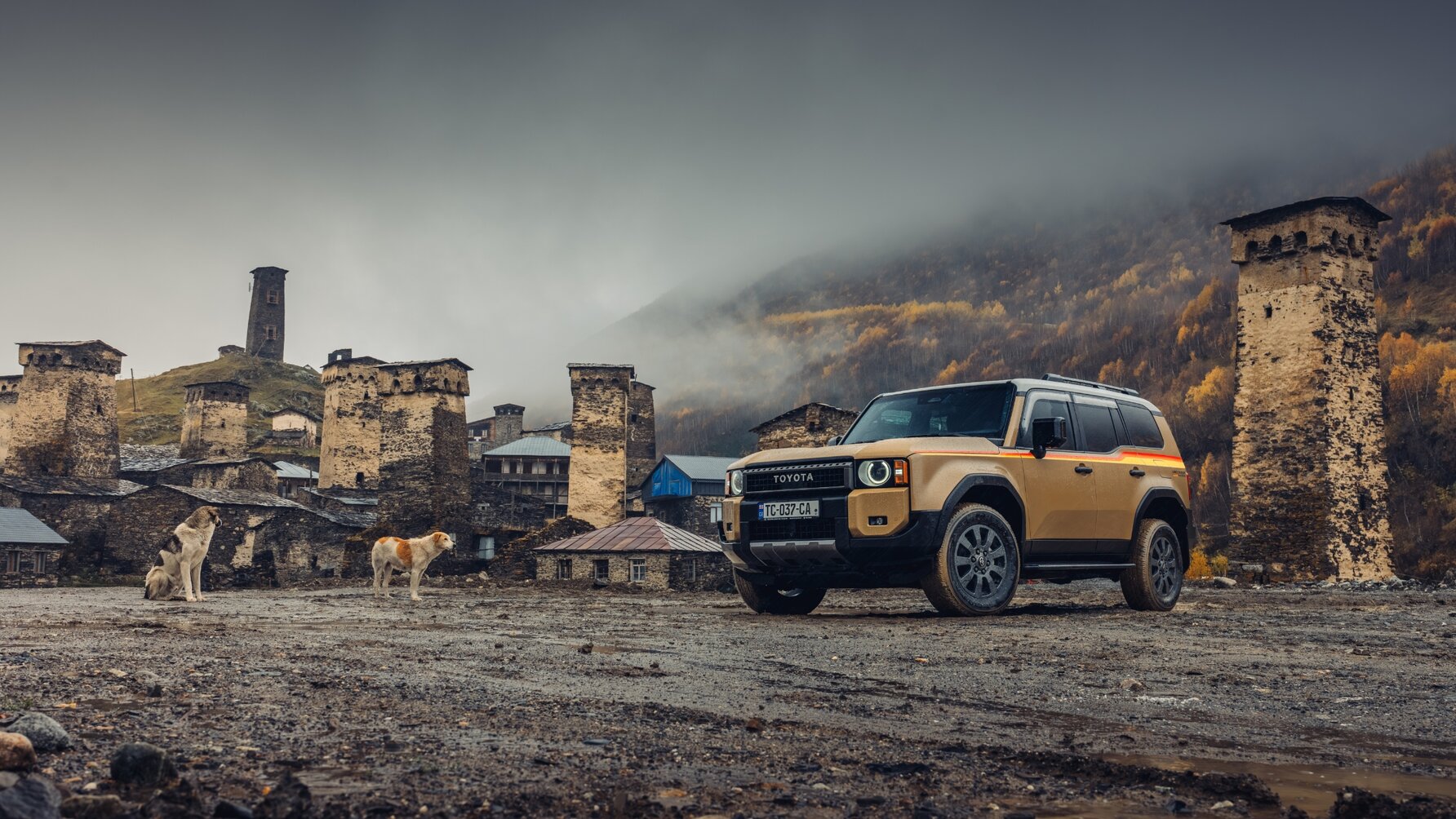
There’s good grazing along roadside verges, so animals are let out of family paddocks during the day, then shepherded back in at night. The dogs – and there are endless numbers of them, much to Mark’s delight – are well fed, well behaved, super savvy and seemingly belong to these communities, to be looked after by everyone.
And it’s this sense of community that really distinguishes Georgia. In every village people work, sit and eat together. The pace of life is slow, the horizons are close, opportunities presumably limited, but they seem happy with their lot. The people are warm and friendly, visitors are welcomed, there’s a rich culture of hospitality.
Food is ordered for the table, not individually, so portions come to serve three to four people. And it’s excellent. Not once, even when seemingly eating in people’s front rooms, do we have a bad meal. Khinkali and Khachapuri should be globally renowned. This place, not France, is the cradle of wine, production here having been traced back over 8,000 years.
So far as Georgia has an outdoors tourism industry, it is centred on Mestia, the gateway to the Svaneti. This huge valley, which sweeps north and then east to trace the Russian border, is a dead end. Or rather was. Beyond Mestia there was no tarmac until a few years ago when, keen to capitalise on tourism, a road was built the 25 miles to Ushguli, cutting the travel time from four hours to under one, and then on, over the Zagari Pass and back to the safety of the south.
Yep, it suffers rock falls, landslides and has been washed away in a couple of places, but you don’t need a Land Cruiser to master it. So my plan is to do something different, and have a crack at another way out: the Latpari Pass.
But first, Ushguli. This small village, high up in the mountains, has earned UNESCO World Heritage Centre status because of the Svan towers – Khoshki – that dominate the skyline. Uniquely weird, built to guard against invaders and, frequently, each other due to inter-family blood feuds.
They have entrances high up in their stone walls and allowed families to sit out sieges safely. Two hundred or so, the oldest now a thousand years old, rise above the regular rooftops of the four hamlets that make up Ushguli.
Driving the Land Cruiser up amongst them is like entering World of Warcraft. It’s foreboding, threatening, bleak. Muddy paths scurry between the dwellings. Two dogs follow me round, a cow wanders past. The whole place feels like a live feed from medieval times. I go inside a tower and it’s worse. Dark and clammy, each level a rudimentary wooden platform connected by ladders, the rooms small due to the prodigious thickness of the walls. No wonder the Svans have a reputation for toughness.
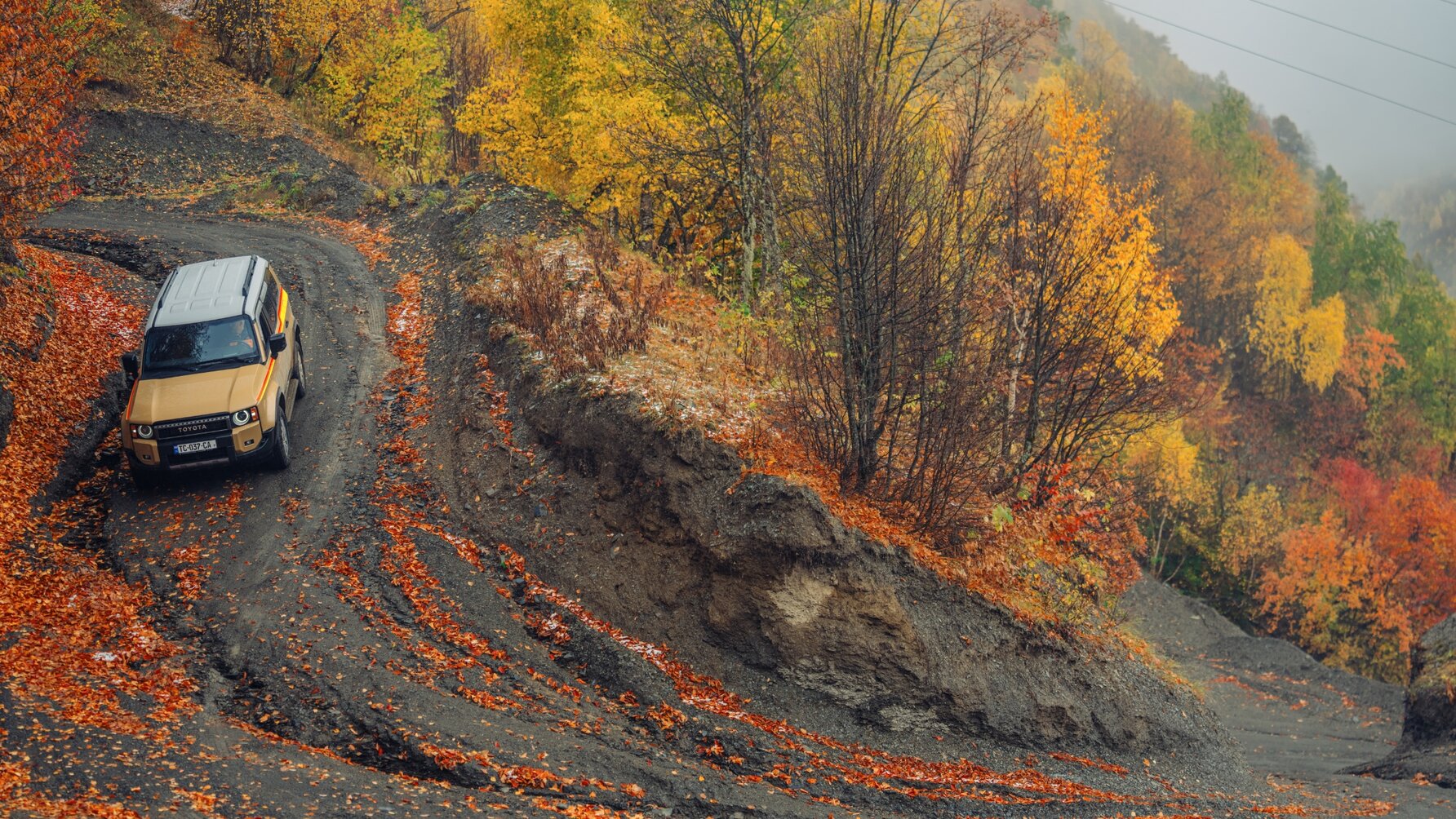
Time to put the Toyota to the test. Our guide, Guro Alapishvili, leads us to the start of the Latpari Pass. Nah, this can’t be right. He’s pulled up by some rickety farmyard gates next to a chicken shed. Apparently it is right. The gates are a deterrent, because what lies beyond is proper Land Cruiser territory, which starts as it means to continue, climbing steeply up loose shale hairpins.
Time for a diff lock or two. The Land Cruiser laps this up – it’s so communicative in the rough, the suspension, which can hobble and jar on road, is supple and reassuring as it gets to use more of its travel. Just a shame about the engine, a 276bhp 2.4-litre turbo, that barely has enough power for the weight, lacks the diesel’s churning torque and isn’t smooth or efficient for the Land Cruiser’s new found desirability. Otherwise what a platform for discovery this Toyota is.
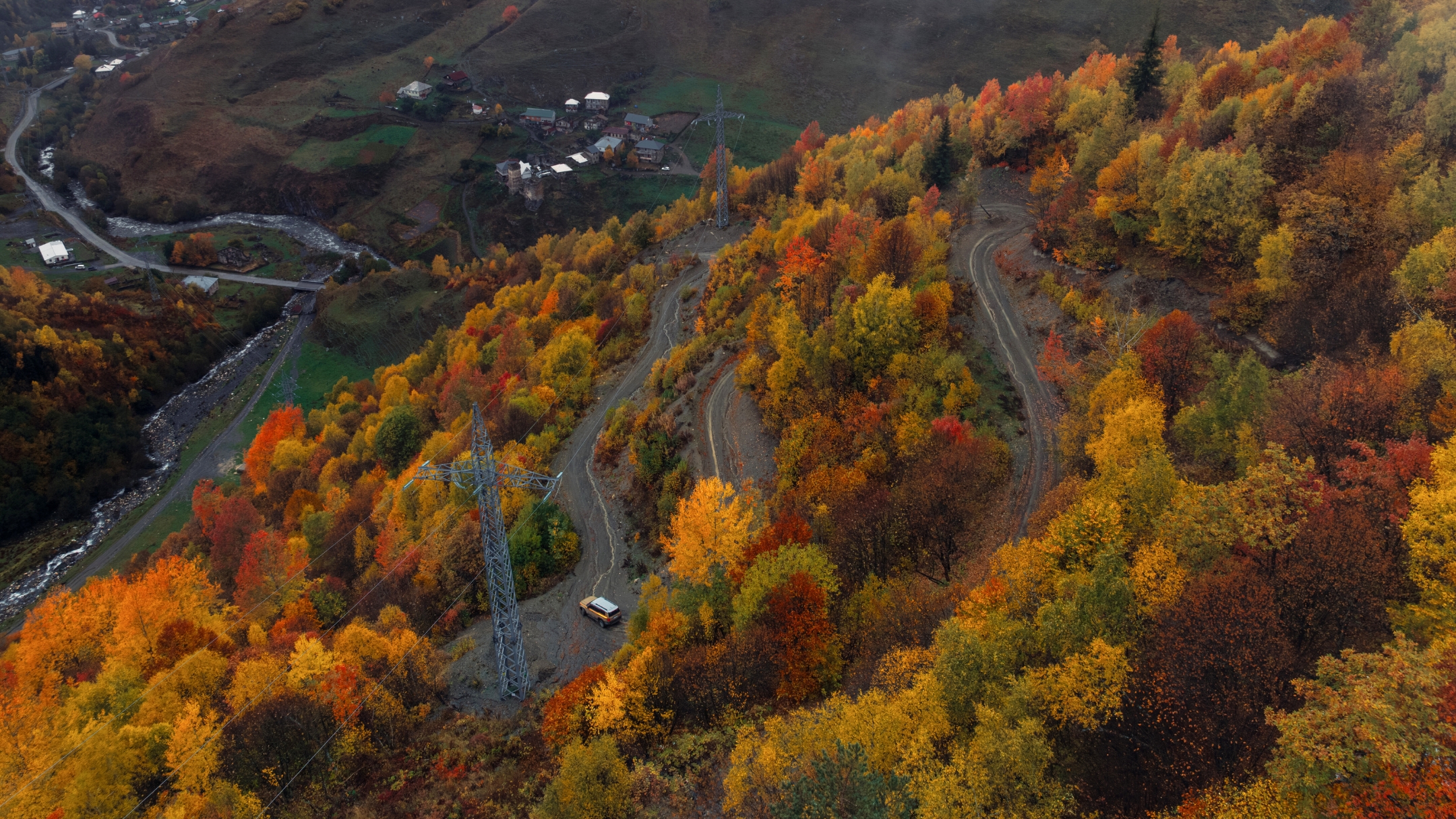
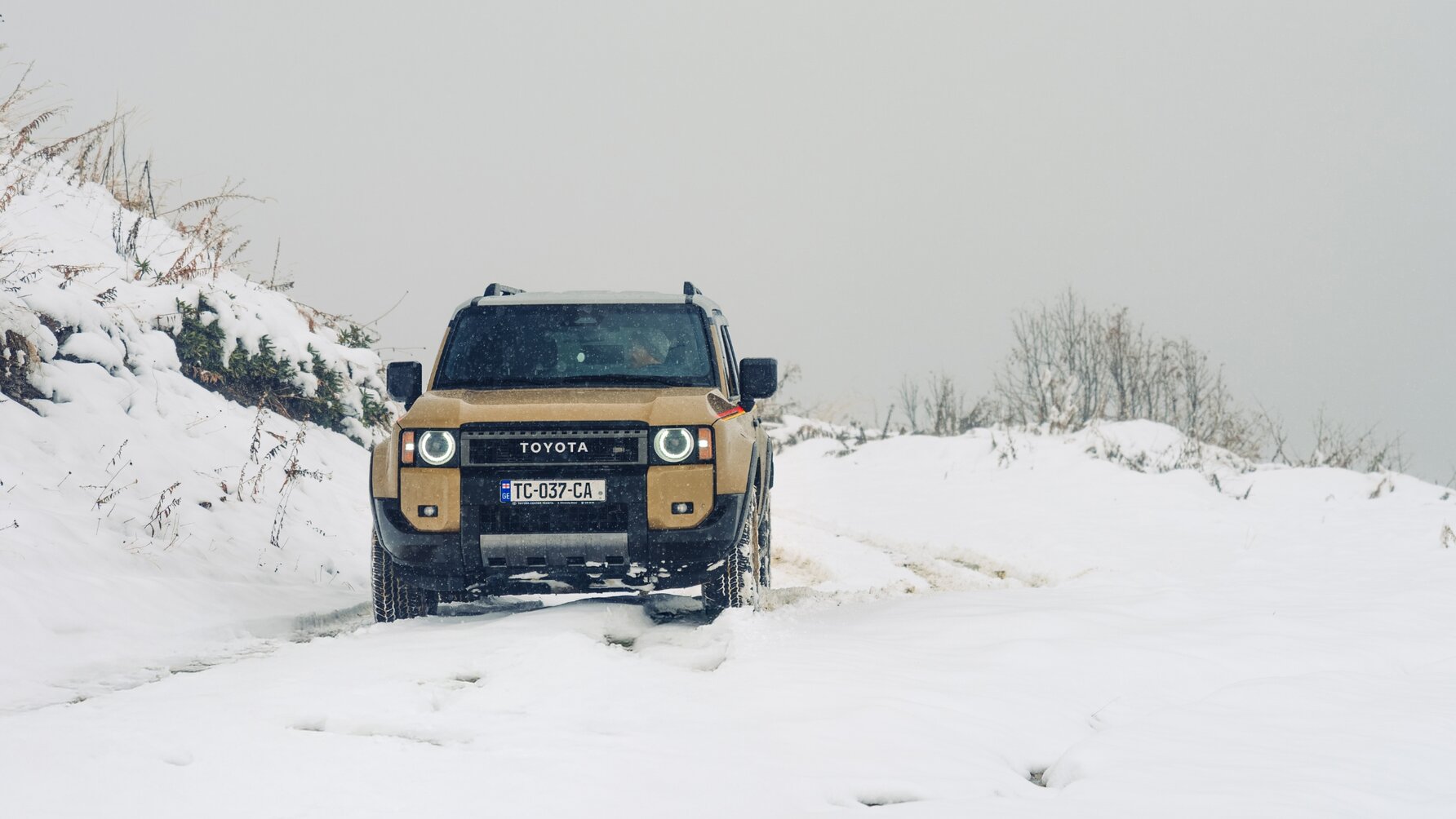
Outside the autumn colours are stunning, but as we rise higher something interferes with the view. Snow. Guro had warned us of this and as we get to the top of the treeline at about 1,600 metres, we start to slip and slide on the all weather tyres. The Latpari has still got well over another vertical kilometre of gain to go. We push on another few hundred metres, try lowering the tyre pressures to continue, but it’s a lost cause. I keep sliding off the main track. I can’t see the drop, which is just as well. We beat a retreat, the descent even sketchier than the ascent, so console ourselves with climbing a dead end road up to the ski resort of Tetnuldi at sunset.
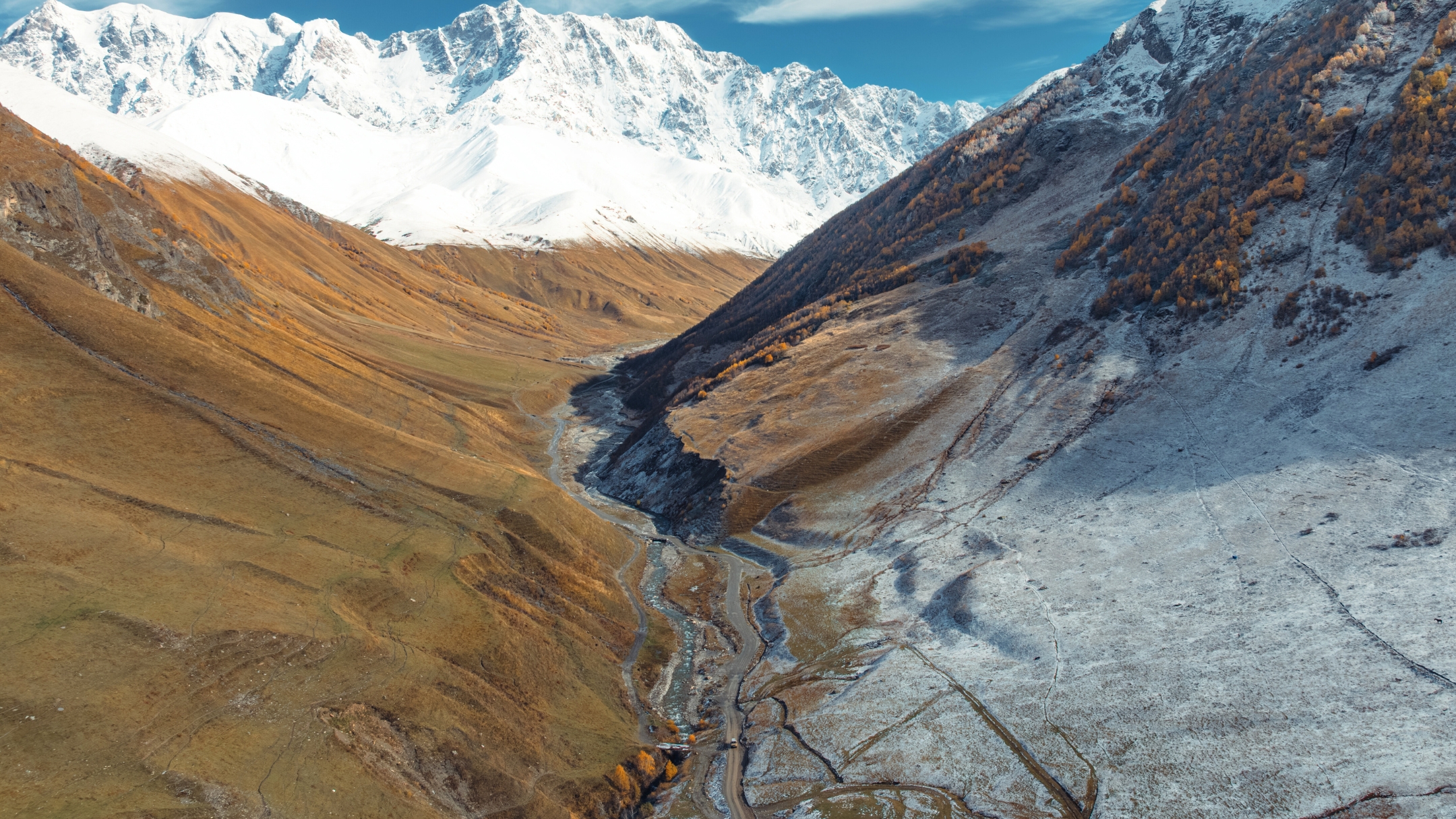
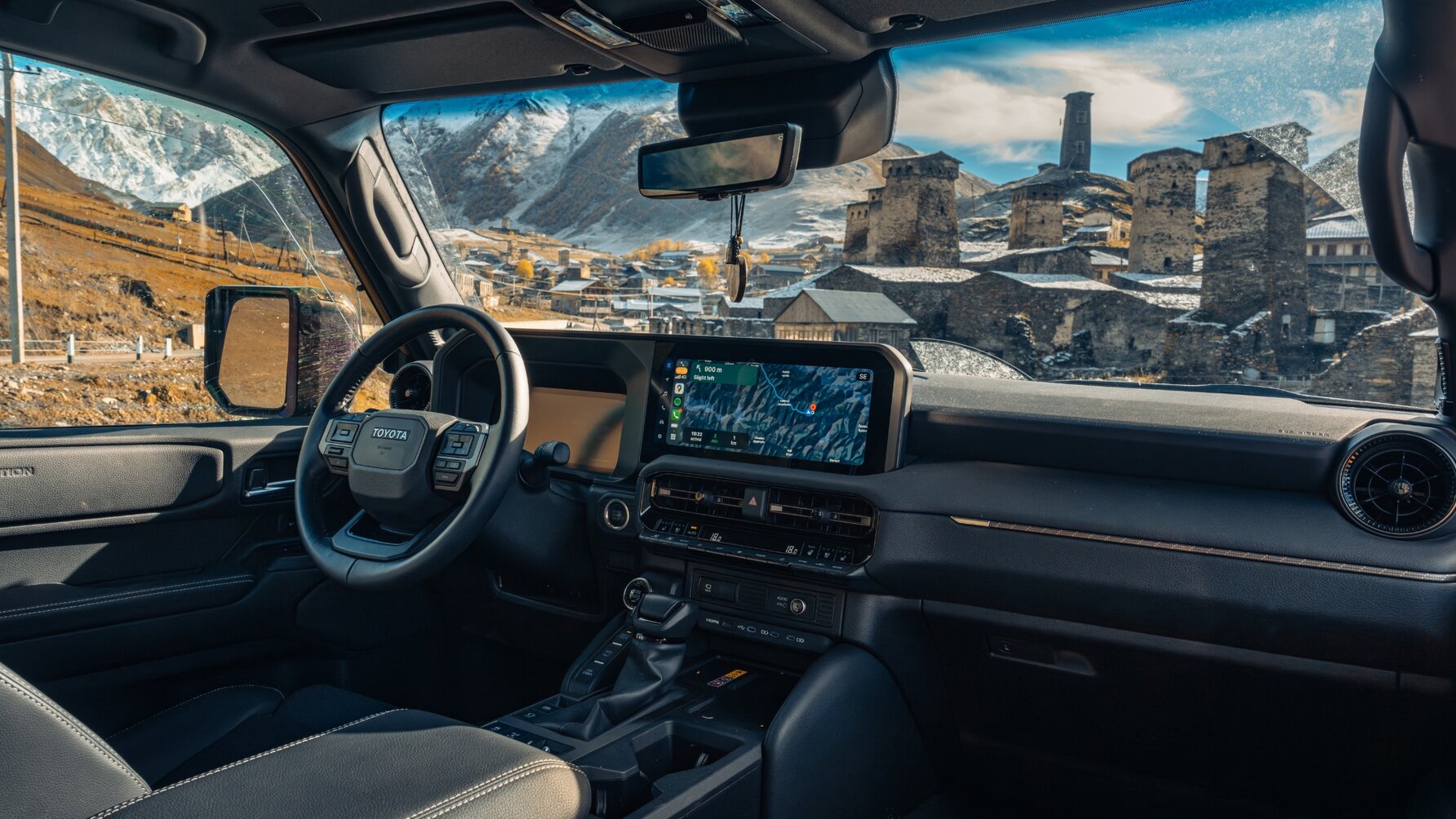
The following day, we take the chicken’s way out of Svaneti, up over the 2,600 metre Zagari Pass. It’s paved, but we have the place to ourselves and it’s nirvana, easily one of the most stunning drives of my life. It’s crystal clear, snow lines the road, and the lofty 5,000 metre peaks pop out of a royal blue sky. Behind us, Ushguli’s Svan towers rise like rockets out of the mist, majestic in the sun.
Trending this week
- Car Review
Aion UT
- Car Review
Porsche Panamera
- Top Gear's Top 9
Nine funky Brazilian cars with Volkswagen engines