


12
Stylish, forward-thinking, often weird – these are the 50 greatest cars to ever come out of France
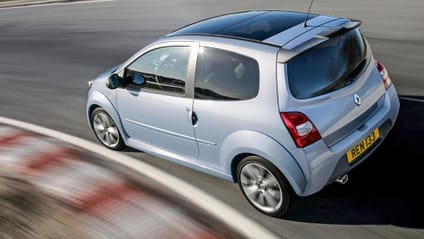
What would otherwise be the least interesting of the four generations of Renault Twingo was rescued by the stonking little RenaultSport version, which stuffed this little city car with a 1.6-litre, 131bhp engine. This was a bit like attaching a jetski engine to a paddleboard, and the result was a feisty, rev-hungry little handbrake turn machine in the finest French tradition, and one of the last properly small, pared-back hot hatches to ever exist.
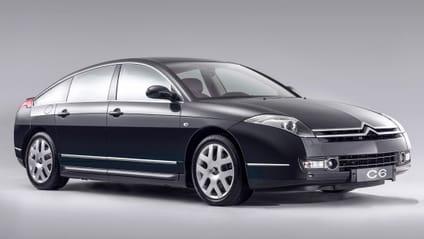
If you were a decently successful company exec in the mid Noughties, you could treat yourself to any of the usual crop of mid-size German saloons. Or, if you wanted to make a statement or pretend you were Jacques Chirac, you could get a Citroen C6, a concave-windowed slice of comfort that could out-waft an E-Class, 5 Series or A6 without even trying, all while looking effortlessly cooler. It was, inevitably, a sales disaster.
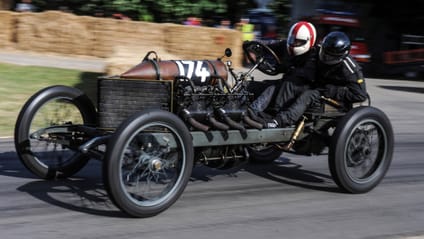
Having vanished over a century ago, Darracq is a long-forgotten name these days, but it was a serious player in those nascent days of the car industry. Innovative, too: in 1906, its 200 HP racer set a new land speed record at 122mph, which back then, may as well have been warp speed. It did this with the help of the world’s first automotive V8 engine, so like so many other things, every brilliant V8 since can trace its roots back to France.
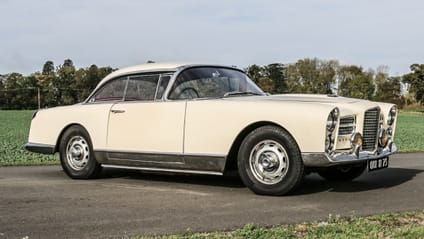
The Facel Vega HK500 was part of a small but rich seam of esoteric ’50s and ’60s grand tourers that combined European design with enormous, thumping American V8s. In the case of the rare Paris-built Facel Vega, those V8s were Chrysler’s famous Hemis, up to 6.3 litres and 360bhp in output. Combine that with a fantastically plush interior and all sorts of strange styling details, like the wraparound windscreen and 1920s-aping grille, and you had a spectacularly weird, stylish way of crossing continents.
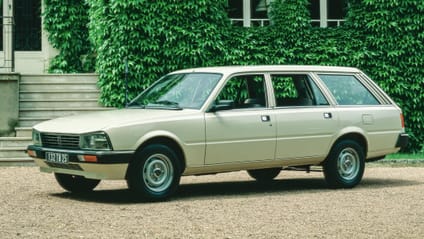
The final combustion-powered rear-wheel drive car made by Peugeot, the handsome 505 offered something for everyone. Want to pester sports cars down a country lane? The 2.2-litre Turbo version served you well with up to 178bhp and a superb chassis. Got a big family? The Familiale estate had seven seats. A fleet of the frugal diesel version even had a brief but successful spell as New York yellow cabs. There was nothing the 505 couldn’t do. Apart from fly, obviously.
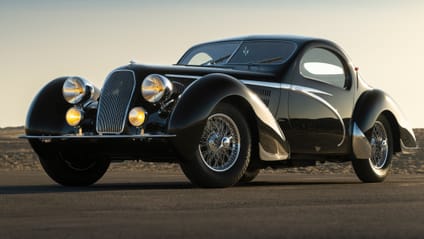
Talbot-Lago was a French-headquartered company with British roots, owned and managed by an Italian. They’re three countries with a knack for building gorgeous cars, so it’s no surprise that the company’s most iconic model, the T150, was properly, heart-flutteringly beautiful, especially with Figoni et Falaschi ‘Teardrop’ bodywork. Today, collectors will happily part with eight-figure sums when one comes up for auction. We don’t blame them.
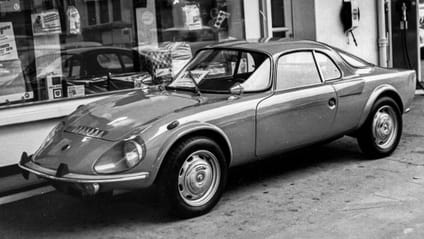
First sold under the forgotten René Bonnet mark, the Matra Djet itself isn’t all that well-remembered today, but it marked a significant moment in the history of the car: beating the Lamborghini Miura to the market by four years, this extremely pretty little coupe was the first mid-engined road car. Said engine was a rather humble Renault four-pot, but with the last versions producing 103bhp and the Djet weighing about as much as a speck of dust, it was an impressively quick thing for its day.
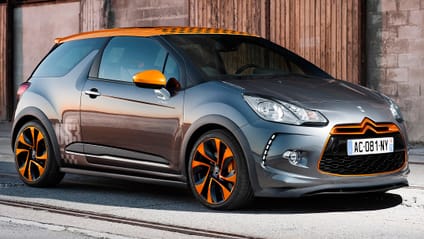
If most of the little hot hatches around at the turn of the 2010s weren’t quite in-yer-face enough, the limited-edition Citroen DS3 Racing – most commonly found in black with eye-searing orange highlights – was the car for you. It was very far from being all show, no go, though: even today, 204bhp would be plenty in a car the size of a small dog. Fifteen years ago, it made the rare DS3 Racing a serious pocket rocket.
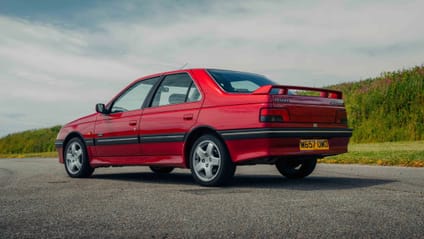
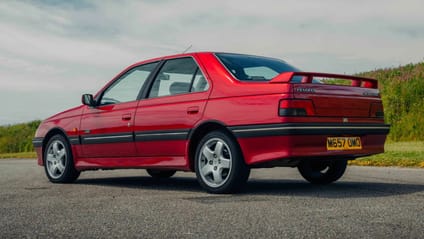
The attainable sports saloon is a much-missed category of car that was booming in the late ’80s and early ’90s, and one of the best of the bunch was the Peugeot 405 Mi16. Hailing from the era of Peak Peugeot Handling, it had Pininfarina-penned bodywork with extra sporty accoutrements, a rev-happy four-pot, and a name that sounded like some sort of shadowy secret service branch, all while comfortably carrying a typical family and its 1.8 children. Why can’t cars like this exist anymore?
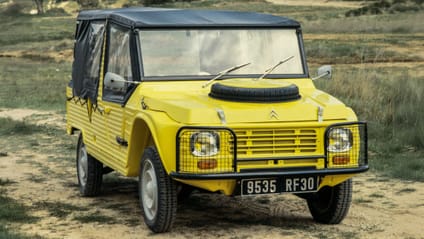
Take the already capable bones of a 2CV and reclothe them in plastic bodywork that appeared to have been stolen from an allotment shed – that’s how Citroen came up with the little Mehari utility vehicle. Developed with one eye on military applications, we wouldn’t fancy our chances on a battlefield in one, but happily, it was far more at home puttering around the sunny resorts of southern France, generally brightening the day of anyone that saw one.
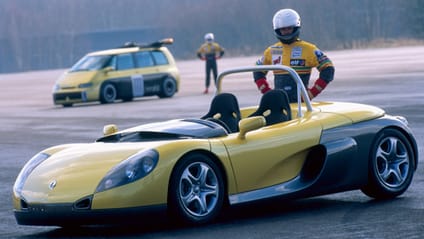
A product of one of those times when Renault periodically goes slightly mad, the Sport Spider was a barebones mid-engined roadster from a company that had never even considered selling anything of the sort before. It had the misfortune of launching a few months ahead of the original Lotus Elise, a conceptually similar and ultimately better car – and yet, 30 years later, doesn’t the Sport Spider, with its scissor doors and fizzy Clio Williams engine, look like the cooler choice?
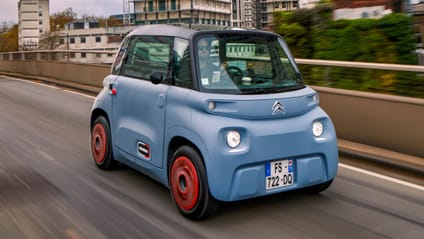
If you’ve been on holiday to any built-up European city over the past few years, the popularity of this motorised plastic box won’t have escaped you. That’s not us being mean, by the way – it’s literally made out of plastic and shaped like a box. With its 28mph top speed, it should, by all rights, be a total laughing stock, and yet we literally dare you not to be charmed by its smiling, bug-eyed face and titchy dimensions.
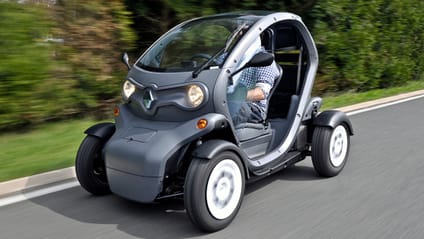
Citroen, of course, isn’t the first French company to dive into the world of funny little microcars. The country has a whole rich ecosystem of them, but the last one to make a real splash in Britain was the Renault Twizy, a chic, egg-shaped electric runabout with 1+1 tandem seating and the option of scissors doors to stop you falling out if you try to take a roundabout (or the Monaco hairpin) too quickly.
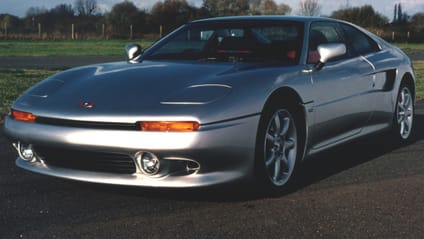
Often called ‘the French Ferrari’ when new in the 1990s, that was perhaps a fairly charitable nickname for the Venturi Atlantique, even if 1998’s Biturbo version was pushing a healthy 306bhp from its 3.0-litre PRV V6. Maybe the French Lotus Esprit was more apt, although lots of contemporary reviewers said the Venturi was better built and nicer to drive than the Lotus. It was gorgeous to look at too – all the more of a shame that it largely sank without a trace outside France.
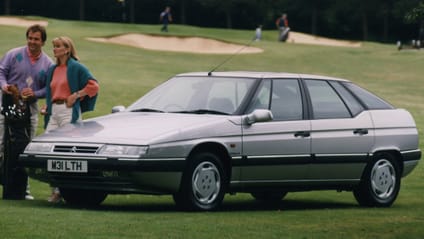
Back at its 1989 launch, big Citroen enthusiasts decried the new XM for being watered down compared to the CX and DS that came before. Looking back now, it’s hard to see what they were on about: the XM’s wedgy fastback styling was radically different to the saloon crop of the day, and it still had the trademark hydropneumatic suspension and enormously spacious interior with bonkers single-spoke steering wheel. It was even a complete sales flop outside of France – how much more big Citroen can it get?
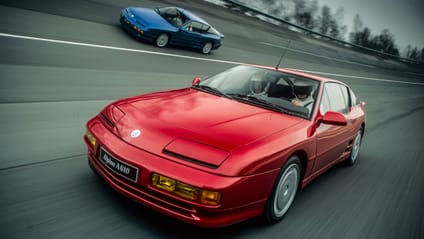
If, in the ’80s and ’90s, you wanted a rear-engined sports car but found that a Porsche 911’s bodywork wasn’t plastic enough for your taste, then the Renault Alpine GTA and later A610 were literally your only choice. Unexotic materials aside, these were genuinely capable cars, lauded at the time for their engaging yet stable handling, and with the later 3.0-litre turbo A610 producing 247bhp, they were seriously quick too. Even at home in France, they were a niche choice next to a Porsche – too niche for the original iteration of Alpine to last beyond 1995.
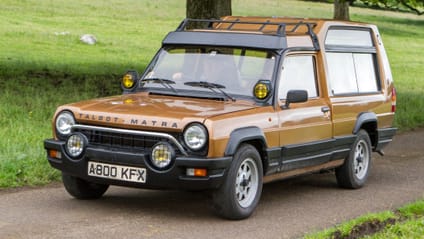
‘Ahead of its time’ is a term that gets thrown around a lot with certain French cars, but it really does apply to 1977’s Matra Rancho. It blended the supermini underpinnings of the Simca 1100 with rufty-tufty off-road styling, decades before such a combination would be commonplace in modern crossovers. The big difference with the Rancho is that it was actually half-decent off-road, and unlike today’s crossover crop, had genuine character.
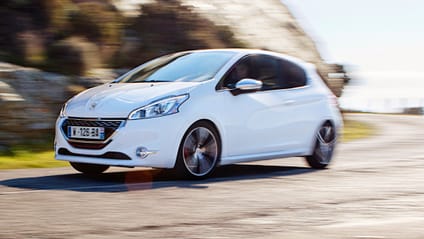
By 2012, Peugeot hadn’t launched a decent hot hatch in over 20 years, and it looked like it never would again. That year, though, the company suddenly seemed to remember that it used to be quite good at the whole hot hatch thing, and shook up the category with the new 208 GTi. The standard car was good, but the clumsily named Peugeot 208 GTi by Peugeot Sport, arriving a couple of years later with extra power and a host of chassis tweaks, was properly brilliant.
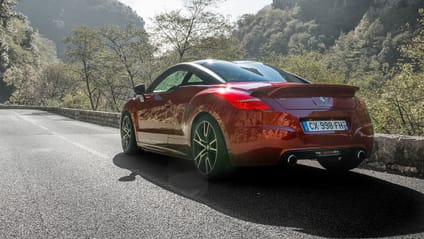
After years of Peugeot churning out cars about as pleasant-looking as a naked mole-rat, the arrival of the svelte RCZ in 2009 was a real breath of fresh air. All that was needed was a driving experience to match, and that came with the 266bhp R version in 2013. With lower, firmer suspension, more power and a limited-slip diff, the R helped the RCZ become not only one of the best-looking but one of the best-driving coupes of its day.
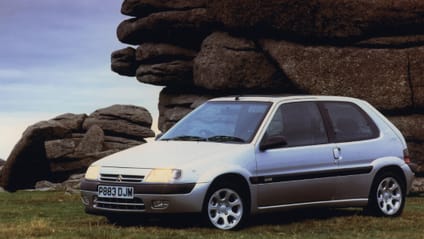
It’s no exaggeration to say that for a certain generation raised on a sub-genre of car magazines that you couldn’t really get away with publishing today, the little Citroen Saxo VTS was as big an object of desire as any contemporary supercar. Cheap to buy, insure and modify, its contemporary status as a cult smash among the custom car crowd slightly obscures the fact that right out of the box, it was an absolute hoot to drive.
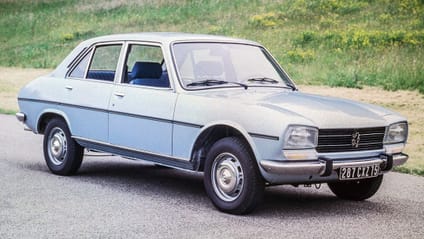
The Peugeot 504 was successful in Europe, but in Africa, it was nothing short of a phenomenon. Its simple but robust engineering, high ground clearance and vast number of derivatives meant that in a big, often sparsely populated continent with a patchy road network and lots of inhospitable terrain, it mobilised thousands and ruled the roads from Casablanca to Cape Town. So popular was the 504 in Africa that it was being built in Nigeria until 2006, 38 years after it had gone into production in France.
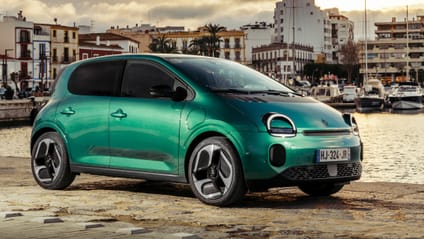
Retro car design done well is a fine thing, and the new electric Renault Twingo – inspired by the frog-faced ’90s original – is retro car design done really well. It follows the reborn 5 and 4 in Renault’s run of smash hit retro EVs, and in terms of the utter, unabashed joy we feel when we see it, it might just be the most successful yet. The best bit? Unlike the original, this one’s coming to Britain.
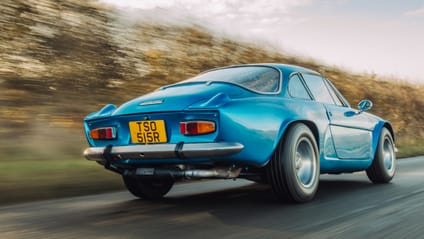
Compact, lightweight and staggeringly pretty, the Renault-powered original Alpine A110 would already be an enormously desirable thing – and that’s before you factor in what it achieved. Its low weight and traction friendly rear-engined layout made it an absolute demon on the rally stages of Europe, with an A110 winning the first ever World Rally Championship in 1973 and cementing the Alpine name as a force to be reckoned with in motorsport.
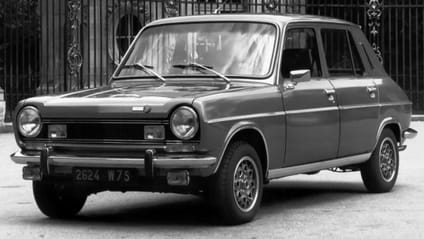
Launched in 1974, the Simca 1100 is often cited by pedants as the first ‘true’ hot hatch, beating the VW Golf GTI to the market by over a year. Of course, even bigger pedants know that the Autobianchi A112 Abarth got there even earlier, but with a mighty (by 1974 hatchback standards) 82bhp on tap, the Simca’s performance blew the Abarth’s out of the water, and it was an early indicator that France was going to be rather good at this new-fangled hot hatch thing.
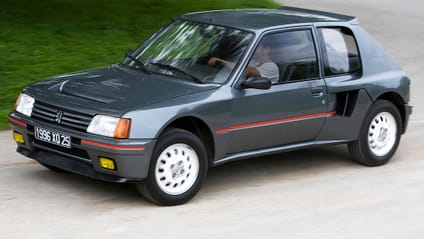
A 205 in name and general styling only, the T16 was one of the more memorable cars developed for the unhinged world of Group B rallying, which it owned in 1985 and ’86, before going on to win the Dakar Rally and finish second at the Pikes Peak Hill Climb. That’s a serious run of form, and homologation rules meant 200 people got to buy a roadgoing version, a 197bhp, mid-engined, turbocharged all-wheel drive sports car doing a barely believable impression of a runabout supermini.
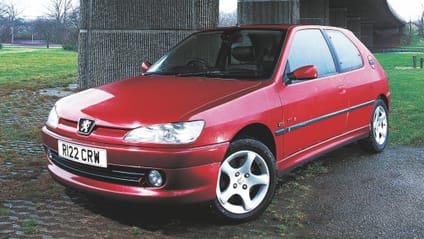
Ever wondered what the ‘6’ at the end of the 306 GTi-6’s name referred to? It was the fact that it had a six-speed gearbox. That was it. The hot hatch world was a much simpler place in 1996, but the 167bhp GTi-6 made the best of that simplicity to create an utterly enthralling package. With competitors including the underwhelming Mk3 Golf GTi and dismal Mk5 Escort RS2000, it was a shining beacon amid an otherwise dark time for the hot hatch.
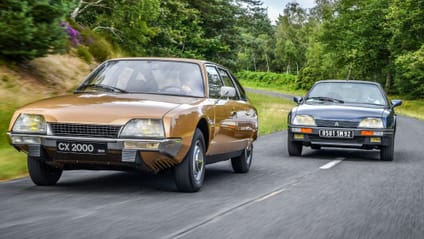
Replacing a car as universally praised and beloved as the DS was no small task for Citroen, but it arguably nailed the brief with the CX in 1974. It retained the ultra-wafty hydropneumatic suspension and upped the delightful weirdness stakes even more with one of the most wilfully bonkers cabins of its era. The clean, aero-wedge styling, meanwhile, was daringly modern, and later turbo versions gave it BMW-baiting performance. It was a truly superb all-rounder – when it was working.
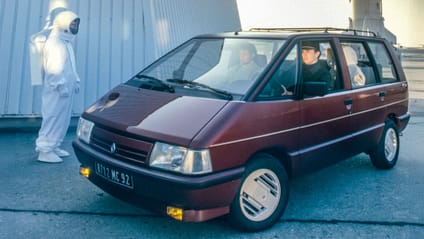
In 1984, long before ‘people carrier’ became shorthand for ‘I’ve given up on life’, the Renault Espace was viewed as revolutionary. With its one-box styling, galvanised chassis, composite body and hugely flexible configurable seating, it was hailed as the next big thing, before the MPV’s association with the drudgeries of everyday family life almost entirely killed its cool factor. But here’s the thing – these days, big families drive SUVs instead, which means the original Espace has gone full circle and become cool again.
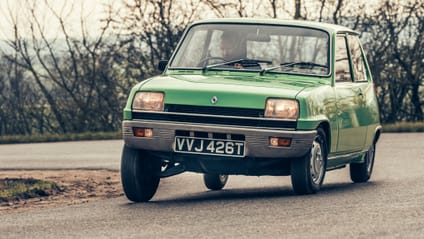
On the surface, there’s nothing special – not even anything that interesting – about the original Renault 5. It was a very conventional front-wheel drive supermini, albeit an early example of the breed. What makes it great is the way it neatly packages up so many things we love about small French cars – smart, carefully considered styling, simple but dependable underpinnings, and the ability to have a bit of fun when you decide to go full French and absolutely doorhandle it.
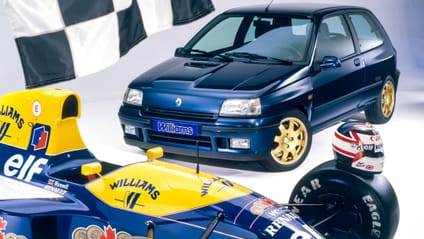
Conceived as a rally homologation special, Renault only needed to build 2,500 Clio Williams to tick that particular box. It’s telling, then, that demand was high enough that around five times that ended up being made. With a rev-hungry 2.0-litre 16-valve engine, 990kg kerbweight and those purposefully swollen arches, it was further proof that France was the go-to country for small, feisty hatchbacks. The link to the Renault-powered F1 team was little more than a marketing ploy, but upped the cool factor even more.
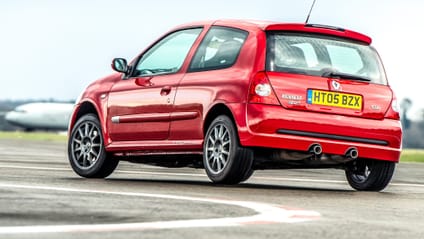
The RenaultSport Clio was the undefeated king of small hot hatchbacks during the 2000s, and they didn’t get any better than the Trophy version. Building on the already hilarious lightweight Clio 182 Cup, this limited edition – only ever offered in the UK and Switzerland – featured remote-reservoir dampers on the front corners, borrowed from the Clio Cup race car. Such fiendishly complicated and expensive suspension had no business being on a roadgoing Clio, but the effects on the ride and handling were truly eye-opening.
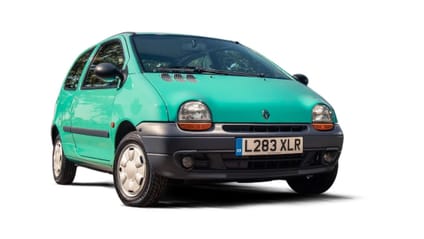
France has long been proving that small, cheap cars needn’t be miserable penalty boxes, and there aren’t many cars that sum that up as well as the original Renault Twingo. Sadly never sold in the UK, it was as conventional as ’90s city cars got underneath, but that didn’t matter when it had a clever, space efficient cabin and looks that could make even the most cold-hearted curmudgeons break out in a big, silly grin. It’s quite simply happiness on four wheels.

The Bugatti Type 35 and its various derivatives can lay a serious claim to being the most successful racing car of all time. Across the latter half of the 1920s and the early ’30s, it’s thought to have won somewhere between 1,000 and 2,000 races. That ridiculous success rate would easily be enough to merit its inclusion here on its own – the fact that the Type 35 is properly gorgeous to behold is just the icing on the cake.
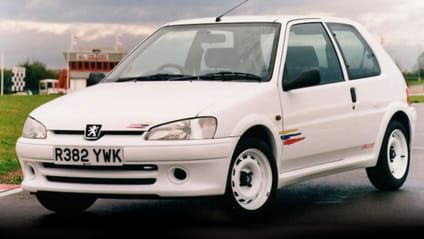
Stripey, steel-wheeled proof that hot hatches don’t have to have big power figures to thrill, the original Peugeot 106 Rallye had a titchy 1.3-litre engine – a displacement that kept it eligible for the entry-level class of rally cars – producing just 100bhp. However, at just 825kg, it weighed about the same as a big Sunday roast. Teamed up with that little engine’s rev-hungry character and a snappy close-ratio gearbox, this was the sort of car you could drive flat out everywhere without ever stopping smiling.
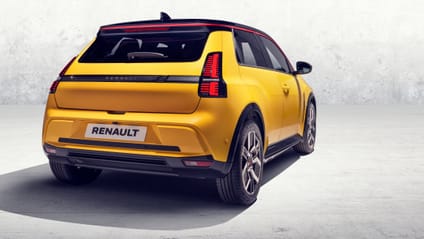
Arguably, retro car design has produced as many swinging misses as it has big hits, but thankfully, Renault not only smashed it out of the park with the reborn electric 5, but sent it into orbit. This is France’s small car expertise firing on all cylinders – brilliant design, fun handling, a chic interior and competitive pricing. It’s no surprise whatsoever that every corner of Europe is already swarming with these things, just as it was 50 years ago with the original 5.
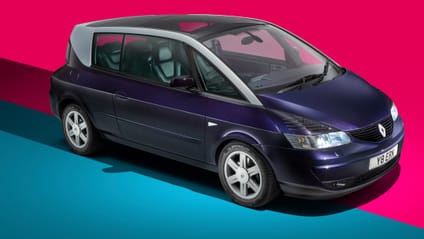
Frankly, a car as headache-inducingly weird as the Renault Avantime has no real right to even exist, let alone be this high up this list. A big, airy grand touring coupe that was also a high-riding people carrier – who was asking for that? Nobody, apparently, because the Avantime was a sales disaster. And yet, like a piece of surrealist French cinema, it may not make much sense, but gosh, if it isn’t just oozing with a strange but undeniably appealing style.
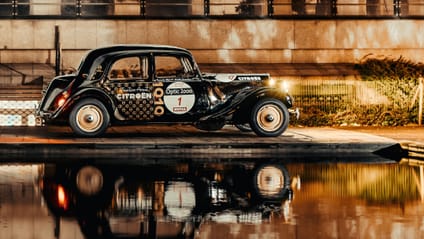
It’s worth just taking a look at the list of things pioneered by the Citroen Traction Avant. At launch in 1934, it was the first mass produced car with front-wheel drive, a unibody construction, four-wheel independent suspension and hydraulic brakes – in other words, still the basic recipe for cars across most of the world nearly a century later. By the time it went out of production in 1957, most other cars still hadn’t caught up to it.
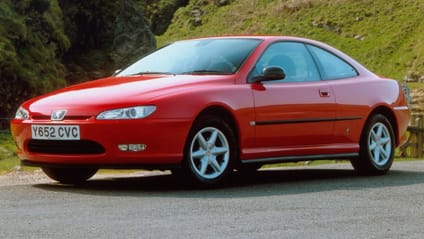
Proof that, with some good old fashioned chassis tuning and a bit of Italian design flair, unremarkable underpinnings can be turned into something dripping with style and driver appeal. The standard Peugeot 406 saloon was decent but nothing to write home about, but to turn it into a coupe, Peugeot widened the track, retuned the springs and dampers and left it to Pininfarina to pen a svelte body that was a whole lot more than a regular 406 less two doors. The result was one of the most likeable coupes of the genre’s 1990s golden age.
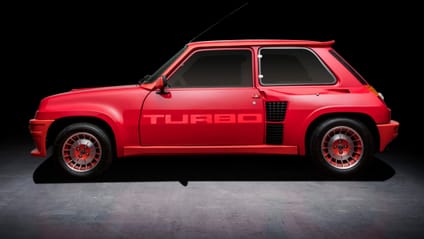
The first and arguably the most unhinged of a small wave of 1980s mid-engined homologation specials cosplaying as everyday hatchbacks, the original Renault 5 Turbo is perhaps the maddest of the lot. It does without the safety blanket of all-wheel drive, meaning that when that little 1.4-litre turbo unit delivers its full cohort of boost, you’re very much on your own in something with a short, squat stance and no driver aids. Still, at least you could admire that completely bonkers interior while you waited for someone to pull you out of the hedge.
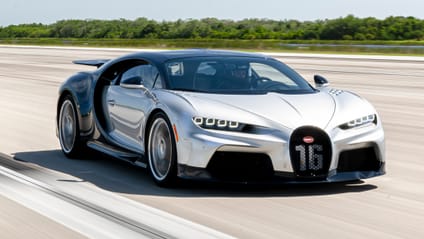
It took just over 100 years from the invention of the automobile for a road-legal car to to break through the 200mph barrier. Such is the rate of progress kicked into gear by Bugatti in the Noughties, it was just over 30 years before the stakes were raised to 300mph, and aptly, it was a one of the French company’s cars that did it. The Chiron may not have been as outright game-changing as its predecessor, but that doesn’t detract from what a mighty feat of engineering it is.
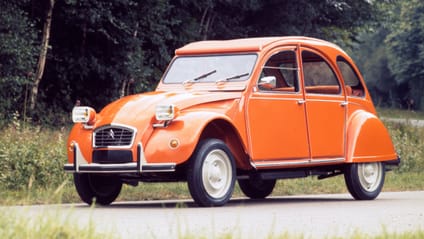
Few cars go beyond being a means of transport and become part of a national identity, but the Citroen 2CV is one of them. Built non-stop for 42 years, if you see a 2CV on a TV or cinema screen, it’s as surefire a way of saying ‘this scene is set in France’ as a lingering shot of the Eiffel Tower or, erm, a croissant. That’s quite a legacy for a car conceived as a simple means of getting the masses about. Oh yeah, also: four people, hats, eggs, ploughed field, etc, etc.
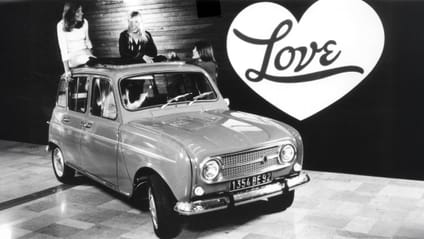
The 2CV may be cultural shorthand for Frenchness, but we reckon its big people’s car rival, the Renault 4, is the more significant, and slightly cooler, vehicle. Built in greater numbers than the Citroen, and produced at various points in Europe, Africa, North and South America and Oceania, the 4 was equally at home as a chic, utilitarian Parisian runabout or a rugged, dependable lifeline for isolated communities across the globe. Few cars have served so many parts of the world, and looked as unpretentiously cool doing it.
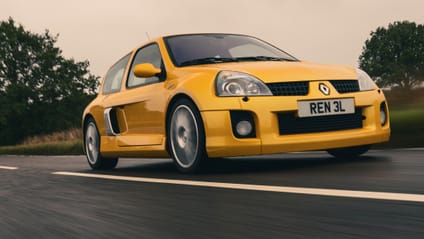
This car’s ancestor, the 5 Turbo, was produced for a very good reason – it was to give Renault a leg up in rallying. The Clio V6, though, which saw Renault’s popular supermini re-engineered to be mid-engined and rear-wheel drive and stuffed with a 3.0-litre V6, had no reason to exist beyond ‘because it can’. Frankly, we wish more cars were put into production with that mindset, because the Clio V6 is a riotous, lairy ode to having fun for the sake of having fun.

Do we really need to explain this one? Have you looked at that picture? Have you ever seen anything more gorgeous created by human hands? Forget the Mona Lisa or Saint Paul’s Cathedral – ironically, it’s a machine that itself proves that AI will never be able to truly recreate what we fleshy sacks of blood and bone are capable of producing. If it didn’t add to the mythos, it would almost be a shame that just four were ever made, and only three are accounted for today.
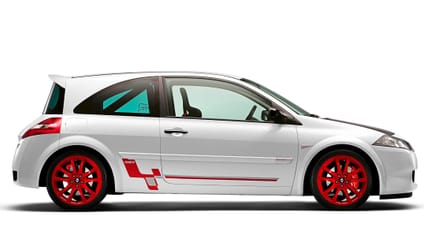
The Renault Megane R26.R flies in the face of logic. If you’re going to have a hatchback, why would you want it to have no rear seats and a boot pre-filled with a roll cage; and if you’re going to have a hardcore two-seater, why would you want it to be a front-wheel drive hatchback? However, logical thought goes out of the polycarbonate window after just a few minutes behind the wheel of one of these bestickered, big-bummed rolling contradictions, because it’s one of the most complete, engaging performance cars of the 21st century.
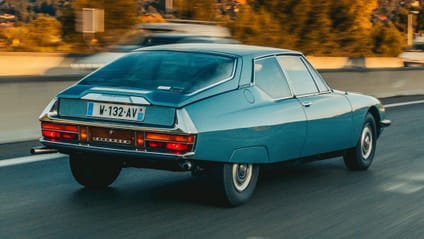
France and Italy getting together to build a big grand tourer was always going to be equal parts beguiling and baffling, and that’s just what you get with the Maserati V6-powered, hydraulically-suspended and utterly gorgeous Citroen SM. It’s just as magnificent to behold and glorious to drive as we have to imagine it would be migraine-inducing to actually own. One thing’s for sure, though: life with an SM would never, ever be boring.
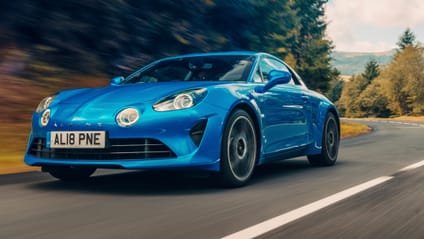
It was a brave call for Renault to bring back Alpine, a brand only really fondly remembered by ageing rally nerds, and even braver for it to do so with a modern reinterpretation of the A110 at a time when the sports car market was shrinking. Boy, are we glad it did, though – the modern day A110 is a singularly brilliant thing, a reminder of the simple joys of modest power and low weight, and one of the most perfectly judged, well-rounded sports cars of all time.
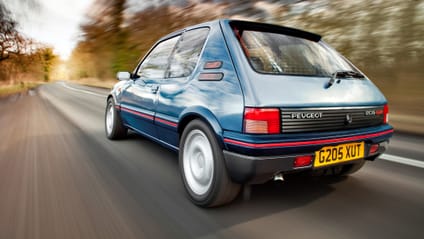
We haven’t looked into how many ‘greatest hot hatches ever’ listicles the 205 GTi has topped, because we’d probably be there all day. There’s a reason for that, though – from its low weight to its perfectly judged suspension to its zingy, throaty four-cylinder engines, the 205 GTi is quite simply as close to hot hatch perfection as we’ve ever come. The genre has become bigger, faster and more capable since, but few have been quite as able to plaster an enormous grin on your face.
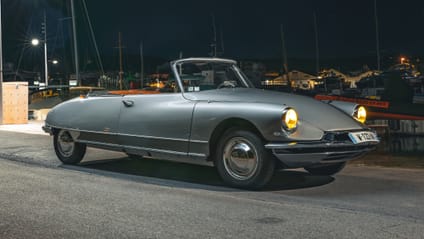
The worlds of cars and philosophy very rarely collide, but French essayist Roland Barthes, whose work was more usually concerned with impenetrable topics like semiotics and structuralism, was so staggered by the Citroen DS that he likened it to something that had ‘fallen from the sky’. It’s easy to see what he meant – in design and technology alike, very few cars since have created as much awe, and none have inspired quite as highbrow a critique.
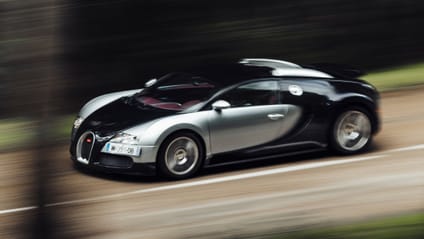
For all the bluster car companies like to fill their press releases with, it’s very unusual that something genuinely moves the game on, but the Bugatti Veyron did just that in 2005. Its record-shattering 253mph top speed was impressive, but what really set it apart was the fact it was just as amenable to popping to the shops or cruising to the coast as it was thundering along covering four miles every minute. Several cars have gone faster since – not least the Veyron’s own successor – but none have made quite the same impact.
Get all the latest news, reviews and exclusives, direct to your inbox.