


Retro
"XJ-S by Iron Maiden": the TWR Supercat is a Jag restomod with a sense of humour
It's not your usual resto-fare, instead a wild reimagination of the Jaguar XJ-S... with a 660bhp supercharged V12
The usual methodology for a restomod is as follows: choose your donor car, subtley enhance it. Concentrating on the cosmetics, carefully finesse it with modern touches but, ooh, careful not to overdo it. Diligently upgrade the chassis and engine, whilst remembering it must reflect the attitude and image of its predecessor. Sympathetic enhancement all the way. Think gentle thoughts. This is a luxury object after all.
Yes, the aim of a restomod is always to flatter the original. Not, as in this case, flatten it. TWR’s interpretation is a kick the doors down and have at it take on the Jaguar XJ-S. I’ve driven so many restomods, I’ve never driven one that moves the game on further (or has probably required more work underneath) than this one. It takes the XJ-S in a direction that is entirely new – as a muscle-bound sports car.
Advertisement - Page continues below
But wasn’t the original XJ-S a sports car, you’re thinking? Hardly. I know, I know, sports cars were different in the 1980s, but they weren’t that different. It was the era of light hot hatches, of nimble roadsters and cool coupes. BMW had the 635 CSi, Ferrari the Testarossa, there was the 205 GTi, MX-5, Sierra Cosworth, Esprit Turbo, Audi quattro. And Jaguar had the XJ-S. Yeah, it was a boulevard cruiser wasn’t it?
Photography: Jonny Fleetwood

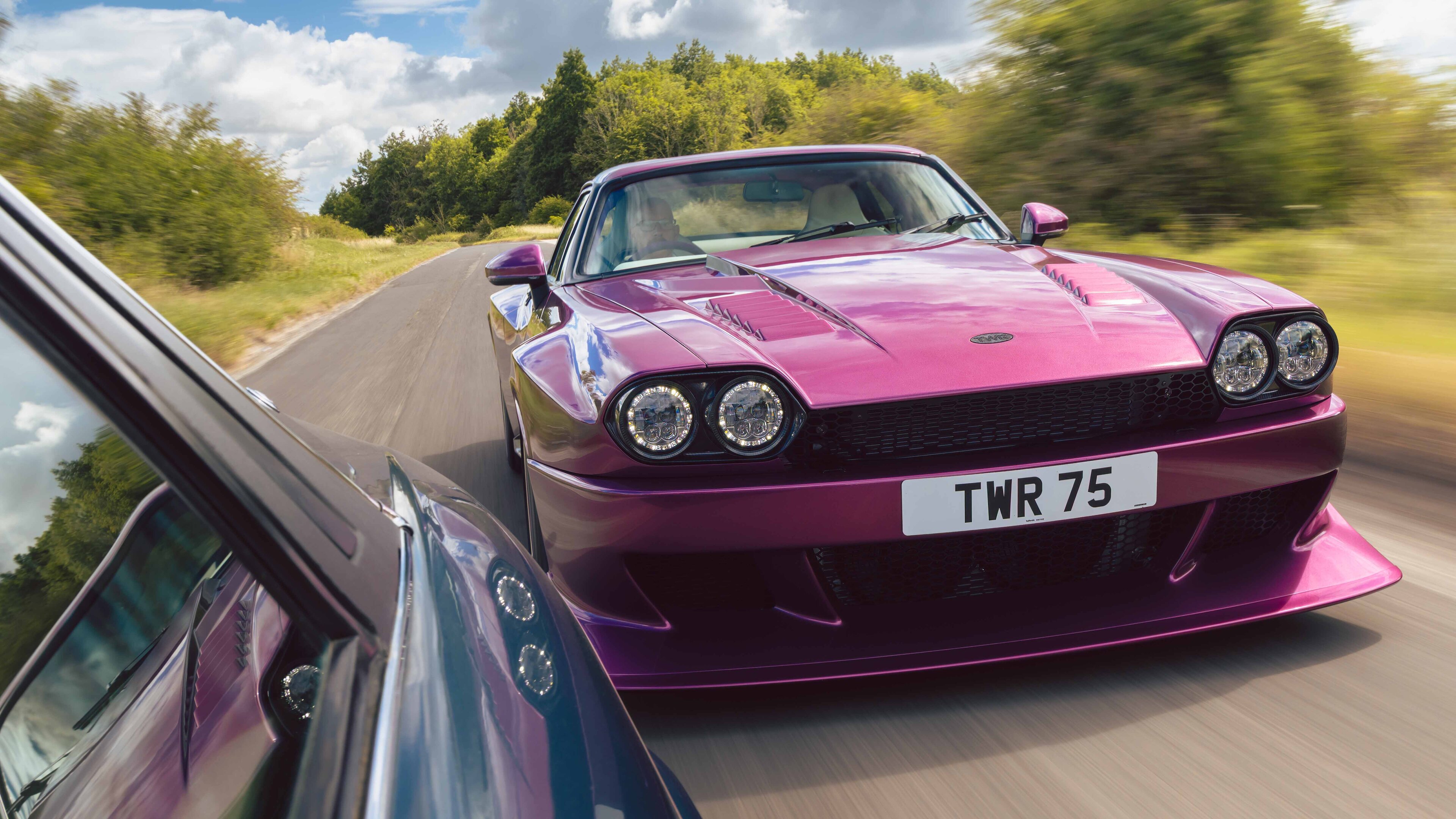
Even when it turned it up the wick for the XJR-S, it still had a three-speed auto. Imagine if Jaguar had had this instead. I mean, TWR’s Supercat looks like it could have been beamed here straight from the decade that gave us shoulder pads, neon and synthesisers. Looks like it has them all fitted already to be honest. But this is a new for 2026 restomod, just one that eschews the conventional approach.
TWR has previous, obviously. Tom Walkinshaw Racing was a successful race outfit, best known for its relationship with Jaguar that saw it take the unlikely XJ-S to notable victories including the European Touring Car Championship in 1984. It was later responsible for production of the XJ220, developed and ran the famous Volvo 850 Estate in BTCC, won Le Mans three times and, in a slightly different guise, made it all the way to F1. In the ’80s there was no bigger British race and road car developer.
Advertisement - Page continues below
Now TWR is staging a comeback under Tom’s son Fergus. The aims are less ambitious, but then this ain’t the OTT ’80s any more.
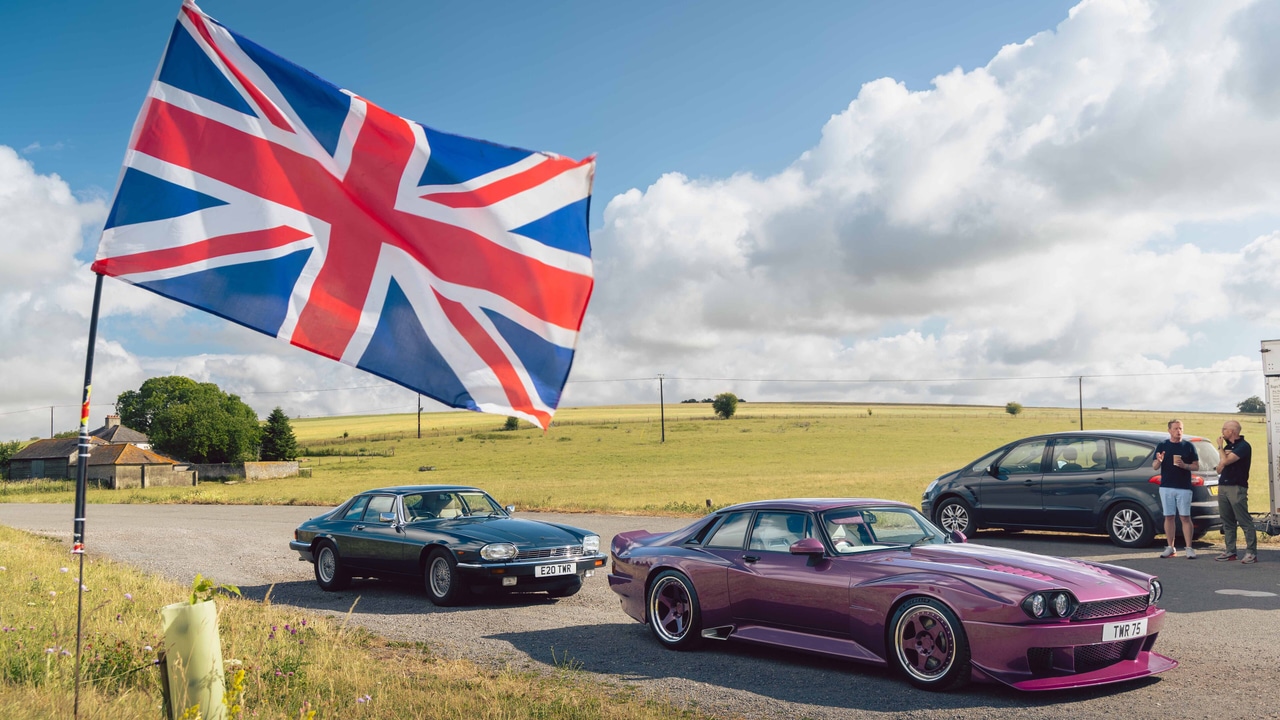
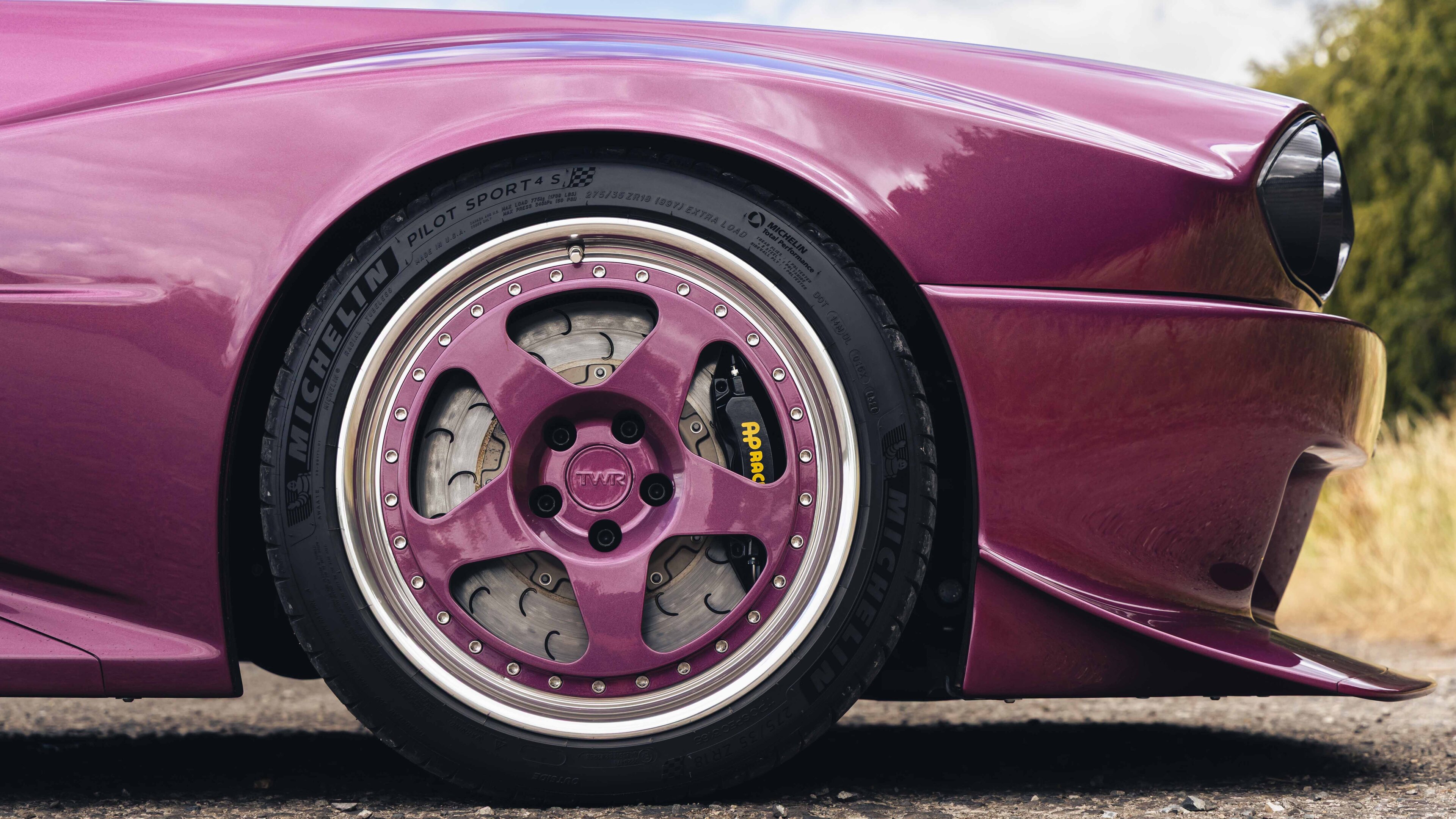
Although the Supercat itself suggests otherwise. This is clearly not a car that takes itself too seriously. The purple is a nod to TWR Jaguar’s famous Silk Cut Le Mans livery, but the bodywork itself (the work of designer Khyzyl Saleem) is a brutish interpretation of what might have been. Subtle and sophisticated it ain’t. There’s a Jaguar XJ-S under there somewhere, but it’s largely been lost behind giant box arches, slabby vents, sweeping wings, side exit pipes and a splitter that could double as a snowplough.
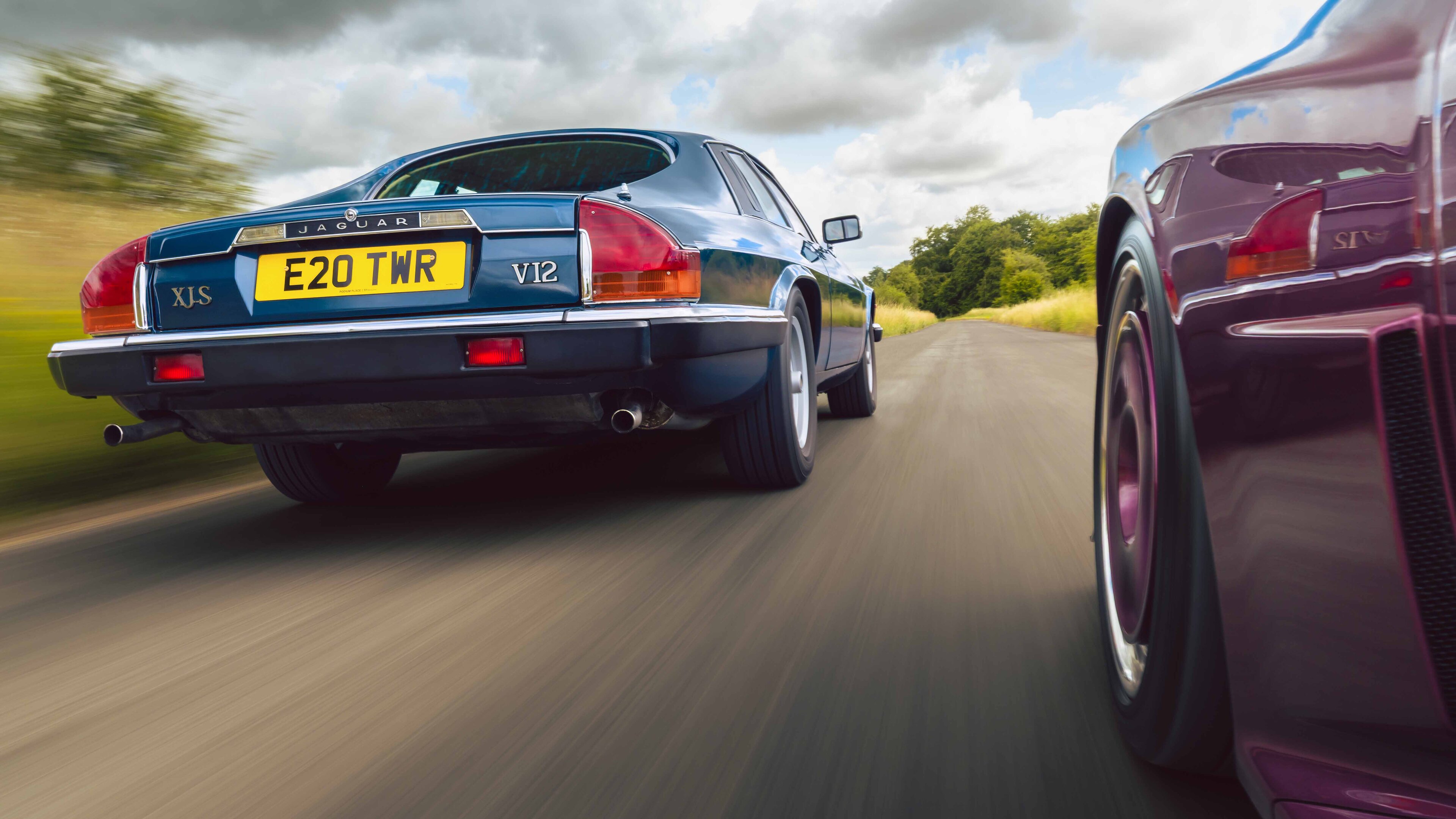
Meanwhile, the regular XJ-S sits quietly by. You notice the buttresses more here, because there’s fewer distractions. It’s a long, low car with a clean, uninterrupted flank line. Not as pretty as the legendary E-Type, but distinctive and of its era. I clamber in. Yep, magnolia hide, wand-like T-top gearlever, skinny two-spoke steering wheel and lashings of wood and chrome. I feel the suspension sag as the seat takes my weight.
The 5.3-litre naturally aspirated V12 purrs gently into life. Easy to forget in this day and age that not all V12s were intended to produce noise and violence. Naturally smooth, they were once appreciated and admired as much for their manners as their speed. Just as well given the glue factory has clearly claimed a fair few of the 295 horses that were claimed to dwell in here.
It is one of the gentlest cars I’ve ever driven. It is impossible to drive fast, impossible to hurry. Kickdown is a concept far beyond the grasp of the three-speed auto and the V12 would rather chew grass than tarmac. So you slip calmly along, one-handing the steering, sunk deep in a soft seat and adapting to a slower pace of life. There’s something to be said for it. Welcome to HMS XJ-S, where roads feel like seas and you heave to around every corner. It even creaks for the full galleon experience.
It’s not especially refined, but did you expect it to be when it looks like it does?
The Supercat, meanwhile, has been on the end of a heavy metal makeover. Literally, as well as figuratively. The work starts with an XJ-S V12 donor (the standard car you see here was intended to become a Supercat, but was deemed too good to be subjected to the indignities), which is stripped until all that remains is the chassis and engine block.
Top Gear
Newsletter
Get all the latest news, reviews and exclusives, direct to your inbox.
Then the work begins, initially to the chassis which is hugely reinforced and then the engine, which is rebuilt around a completely new design that has more than doubled the power output: 5.6 litres rather than 5.3, and with a centrifugal Rotrex supercharger nestled between the cylinder banks for 660bhp and 538lb ft. Personally I find the exterior styling a bit much, but the engine itself is a work of art under that slatted bonnet.
As a thing to drive and interact with it’s hard to believe there’s any relationship between them. Even the experience of sitting in them has changed entirely. Aside from a digital dash screen designed to mimic the original dials, the Supercat’s cabin heads off in a different, far more extravagant direction.
It’s not completely finished yet (this is the final validation prototype before production of the 88 customer cars begins), but the machined aluminium switchgear, Tilton pedal ’box and manual gearlever give an altogether different impression. The steering wheel juts into your chest, and there’s substantial weight to every control you interact with. Arguably too much: turning the steering while stationary is a substitute for a weights session.
There are a few common XJ-S components, but they take a bit of spotting. The interior and exterior doorhandles are common to both, so too the wiper system, handbrake lever and rear light cluster. That’s it, though. Everything else TWR has had to sort from scratch. But sort it it has and there’s a sense that all these new components are pulling the same direction. Which is the exact opposite of wherever the regular XJ-S is headed and at twice the velocity.
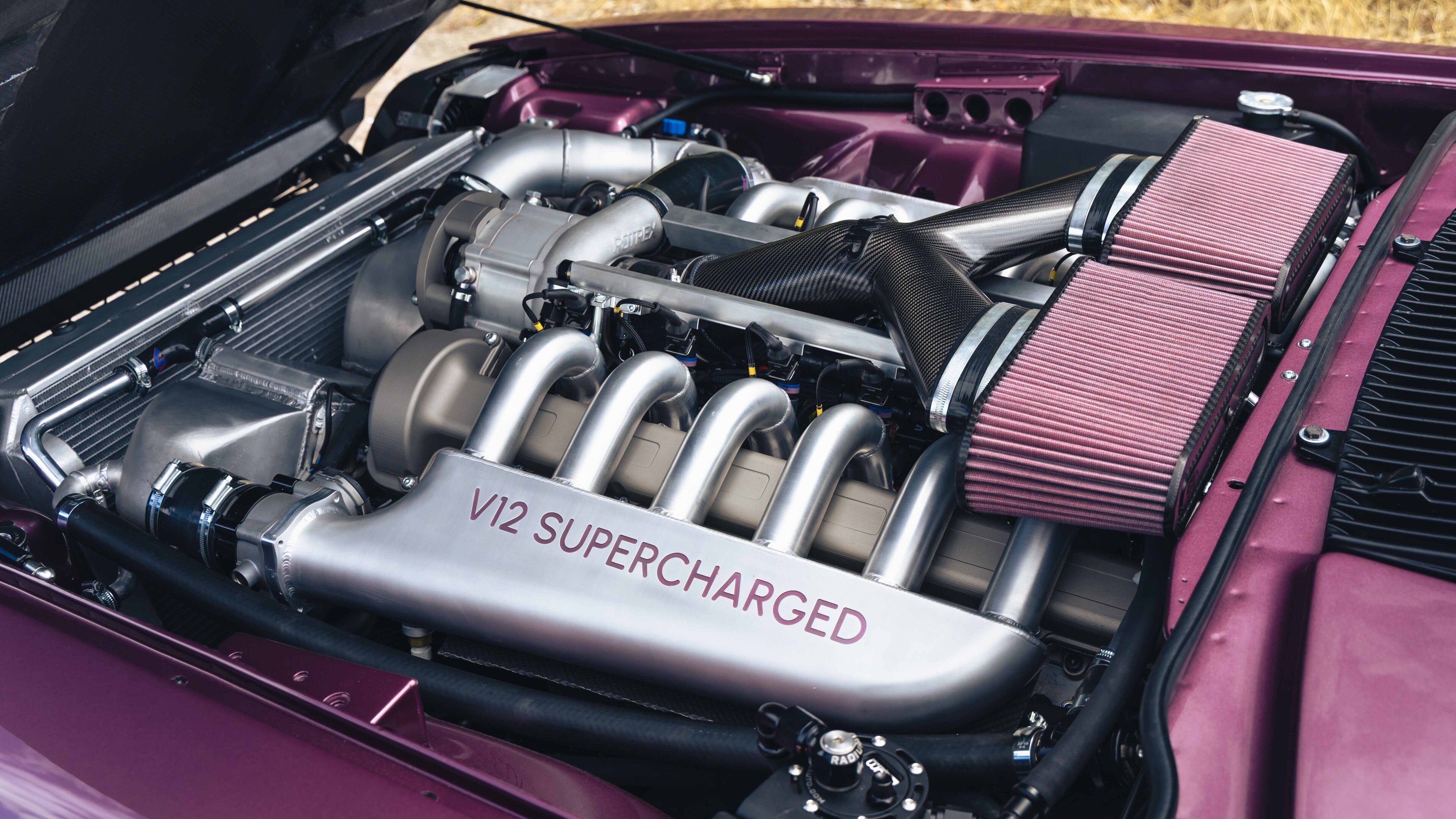
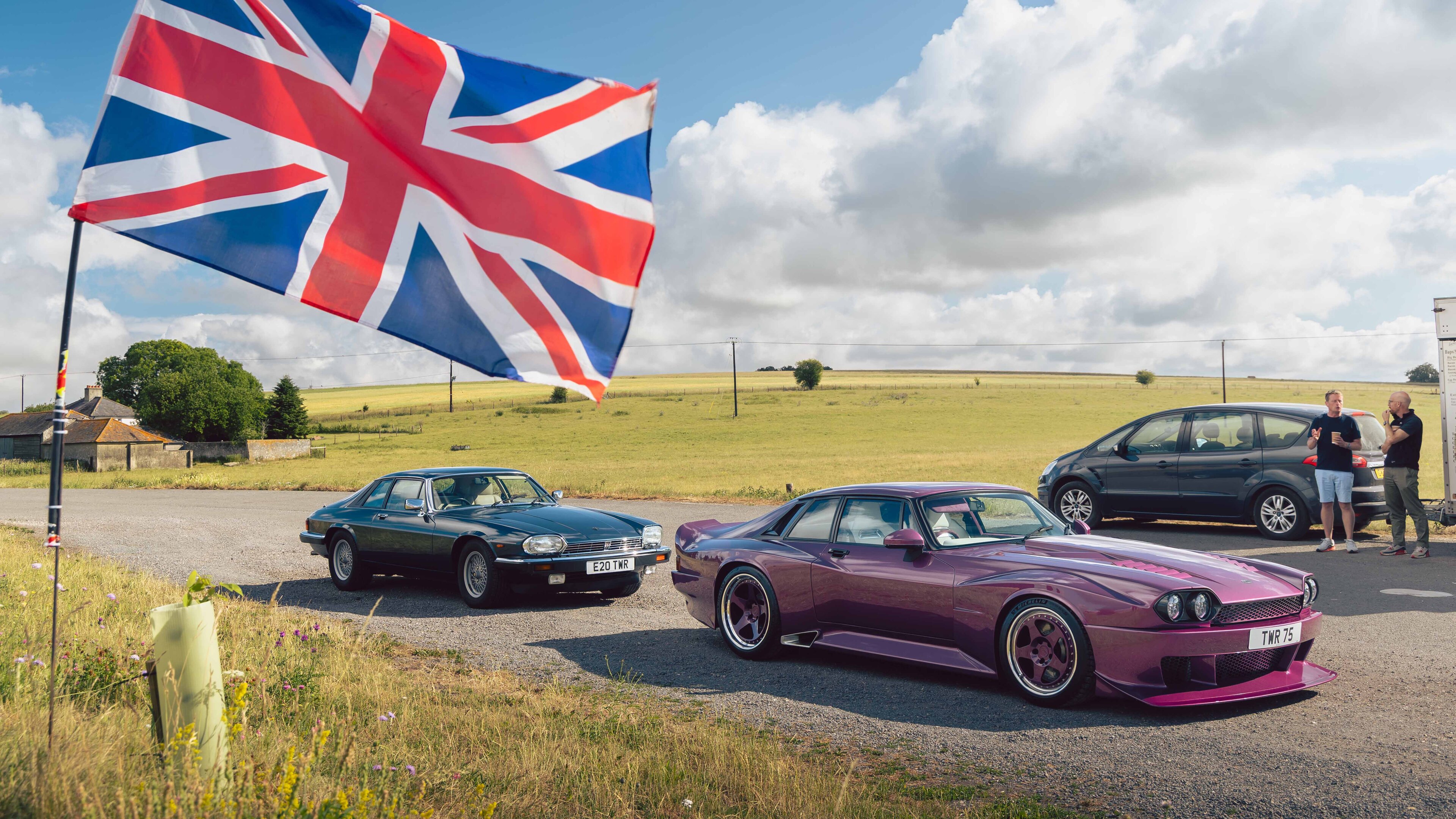
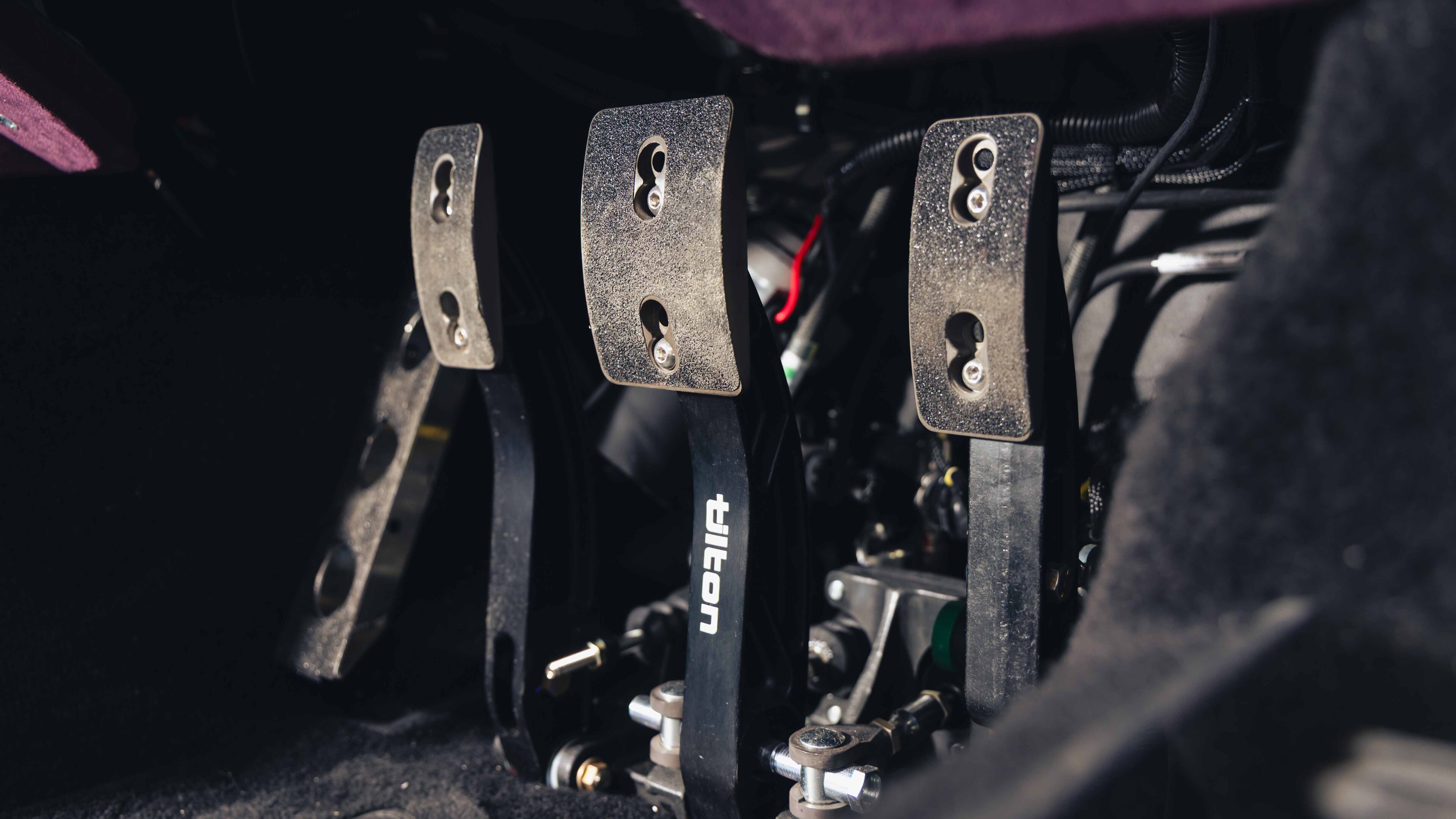
It’s a bruising thing to drive, heft in every control, but communication, too. The manual gearshift is a delight, accessing the star of the show – that supercharged V12 of massive pomp and might. The sound is shrill and raspy, higher register than you expect, more Le Mans, hard to believe it even has a block in common with the old car. This is no cruiser, it’s a hardcore muscle car, with enough handling nous to convince on a good B-road, too. No, it’s not especially refined, but did you expect it to be when it looks like it does?
It’s an extrovert, XJ-S by Iron Maiden, unashamedly brash and really rather thrilling. Loves a drink (supercharged V12, don’t forget...), but has a 100-litre reservoir to gulp from, and a boot that’ll take multiple bags of golf clubs plus kit for a couple of weeks away. It hits the roadtrip brief better than you might imagine.
And that’s about the only area these two overlap. Fair enough, it’s important for a recreation to have at least something it can point to as sharing with the car that inspired it. But the TWR Supercat isn’t really a recreation. Or a restomod. It’s a reinterpretation. One with a sense of humour. And you don’t see that often enough.
TWR Supercat
Price: £395,000 (+ VAT, + donor car)
Powertrain: 5.6-litre supercharged V12, 660bhp, 538lb ft
Transmission: 6spd manual, RWD
Performance: 0–62mph in c.3.5secs, c.200mph
Weight: 1,650kg