




BusinessTop Gear
Stellantis 'over-estimated' buyers wanting EVs and has now changed its strategy at a cost of £19bn
After Ford and GM, Stellantis is the latest to suffer changing attitudes to electric cars
Stellantis is the latest and biggest victim of the world's changing attitude to electric vehicles. It has just announced a shift in strategy that'll cost it €17 billion, or £14.8 billion. It's not alone. Ford recently announced a similar-sized hit, for similar reasons. GM too has taken a charge.
Antonio Filosa, CEO of the company – which includes Peugeot, Citroen, Vauxhall, Fiat, Alfa, Maserati, Jeep, Ram, Dodge and Chrysler – said: "The charges announced today largely reflect the cost of over-estimating the pace of the energy transition that distanced us from many car buyers’ real-world needs, means and desires."
Advertisement - Page continues below
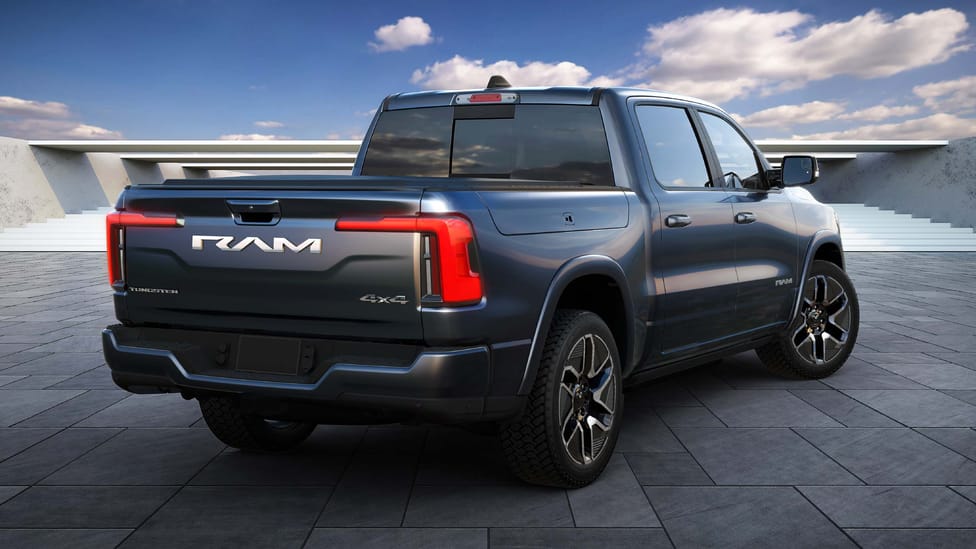
Of course customers don't just follow needs and desires. They follow price. Much of the turbulence has been in the US, where Biden-era incentives for EVs have been reversed in the Trump administration. So, just as Ford cancelled its F-150 Lightning electric pickup, Ram announced in September it wouldn't build its battery 1500 BEV (pictured above).
Unlike the Ford, the electric Ram had never even gone on sale, so huge sums spent on its engineering and tooling are included in today's announced figure. Stellantis will also have to pay off suppliers for cancelled orders. Meanwhile it has had to rush through development of a Ram with a Hemi V8.


We've seen the same in Stellantis's European operations. The Fiat 500 was never meant to have an engine, but the battery car didn't sell enough and so they squeezed in an engine in place of the motor.
Vauxhall was one of the first makers to say it would go all EV, giving a date of 2028. That plan changed and more petrol and PHEV cars were rushed through. Alfa was also going 100 per cent electric this year with its Giulia and Stelvio replacements, until it wasn't. So the replacements are delayed two years, harming revenue, and are having a costly re-engineering for a petrol power alternative.
Advertisement - Page continues below
Included in the figure is €6bn for 'impairment of platforms', which is a reference to electric platforms that have been launched with the expectation of selling big numbers of electric cars across several models. Now that the expected sales numbers are revised downwards, future profits will be impaired.
Today's announcement shows further misery. On top of the €17bn write-off for the EV strategy change, there's another €4.1bn (£3.6bn) for extra warranty costs. That's partly because Stellantis has changed the way these are accounted for, but significantly also because of all these extra, and rushed, launches. They came at the same time as switching to unproven suppliers. The firm mentions "a deterioration in quality, as a result of operational choices, which did not deliver the expected quality performance".
The claim is that new methods and extra engineers are improving quality now. But the quality dip will hurt finances for a long time to come as reputations for unreliability take years to shake.
Stellantis is a sprawling company. It was formed five years ago by the merger of PSA (Peugeot-Citroen) with FCA (Fiat-Chrysler). That made it so complicated there was a suspicion the synergies weren't properly realised and the management couldn't keep fully across the whole enterprise. Some investors have appealed to Filosa to split it up again, or sell off parts. Maserati's sales have fallen again, making it a prime candidate. But Filosa says he's keeping the group together for the foreseeable.
Top Gear
Newsletter
Get all the latest news, reviews and exclusives, direct to your inbox.
Previous CEO Carlos Tavares was kicked out because the American operations were underperforming. In the latter part of 2025, sales there have bounced back. But in one way he was prescient. He never felt enough buyers wanted EVs, and pushed the company into a rapid transition only when it was obvious elected Governments would introduce support.
Trending this week
- Car Review
Audi Q7