


First LookTop Gear
New Peugeot RCZ Vision: solid state battery, 493bhp, and a mad steering wheel
A warm welcome back for Peugeot's stylish small coupe. But that wheel? Yeesh...
Peugeot is feeling funky. In fact, its new design language is feeling feline, so much so that it’s actually called ‘feline future’. Peugeot wants to be the left-field, extrovert French brand, without being self-consciously wacky.
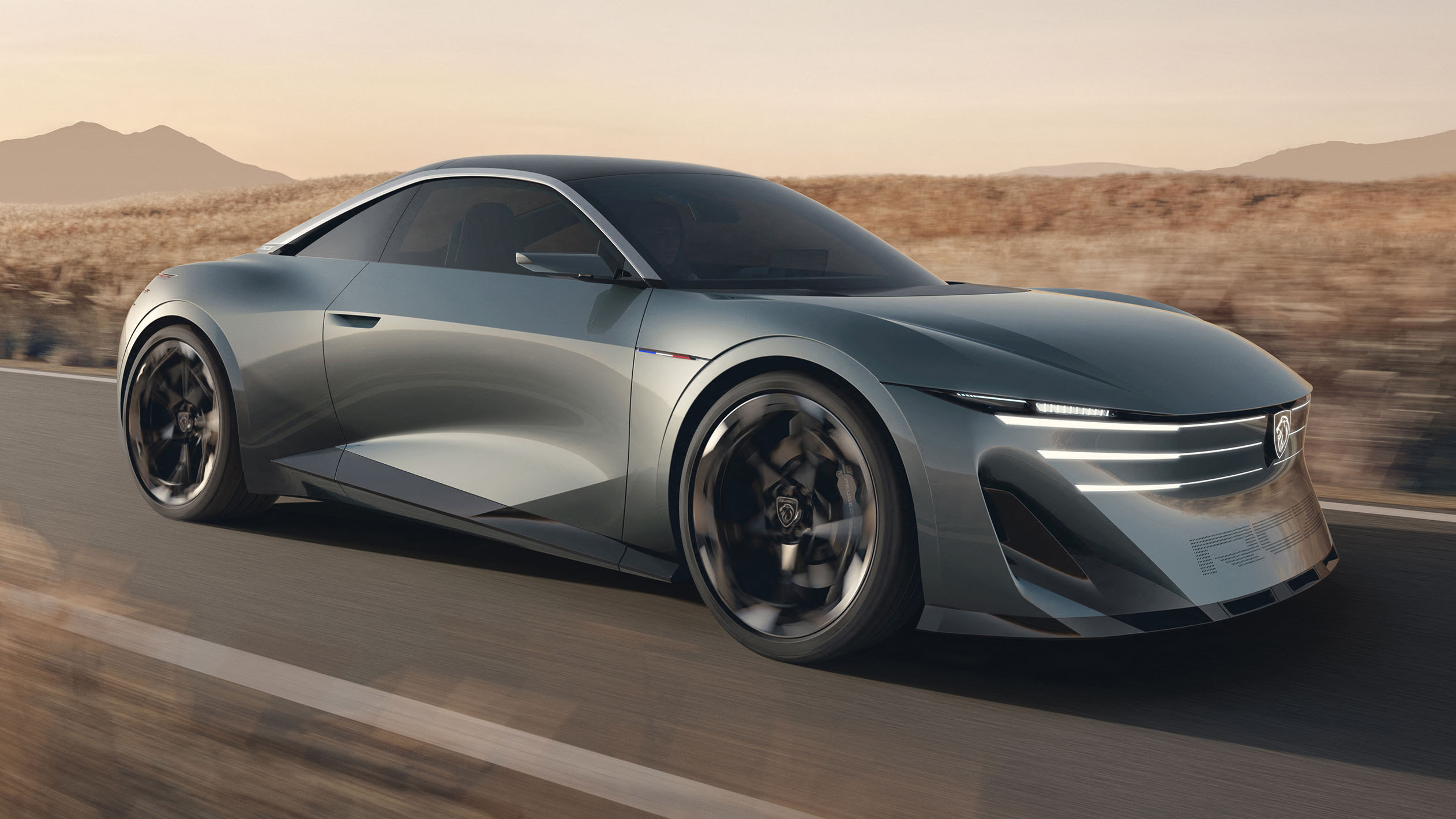
The RCZ Vision showcases the direction of travel. A crisply resolved coupe with echoes of its forebear – which ran from 2009 until ’15 and shifted a healthy 68,000 units – there’s plenty to like on the surface. But actually the bigger stories here are within and beneath, because this car introduces us to two significant developments – both of which are actually coming down the pipe.
Advertisement - Page continues below
Core to the RCZ is the STLA architecture, a modular mega-platform that will underpin in excess of 30 new cars across the Stellantis constellation, to the tune of two million vehicles per year by 2035. Coupled to it is a new software and control system called STLA Brain, fast-tracking the company’s ability to deliver autonomous driving capability and innovations such as steer-by-wire.
That’s also key to the RCZ Vision. Peugeot was one of the first to genuinely reimagine the car interior, with its odd but also oddly effective i-Cockpit. This new concept car develops the theme in various ways: highlights include ‘mobile’ air vents that can disappear when not in use, an aluminium centre console topped with frosted glass, and a transparent micro LED display screen above the wheel, which can be configured to show as much or as little as the driver wants to see.
Well, we say wheel. The dominant innovation inside the RCZ is clearly the so-called Hypersquare, which groups switchgear into four rings. That’ll take some getting used to, but we suspect the ergonomics are sound. Another head-spinner is the arrival of steer-by-wire; yep, there’s no mechanical linkage here, everything is 100 per cent electronic.
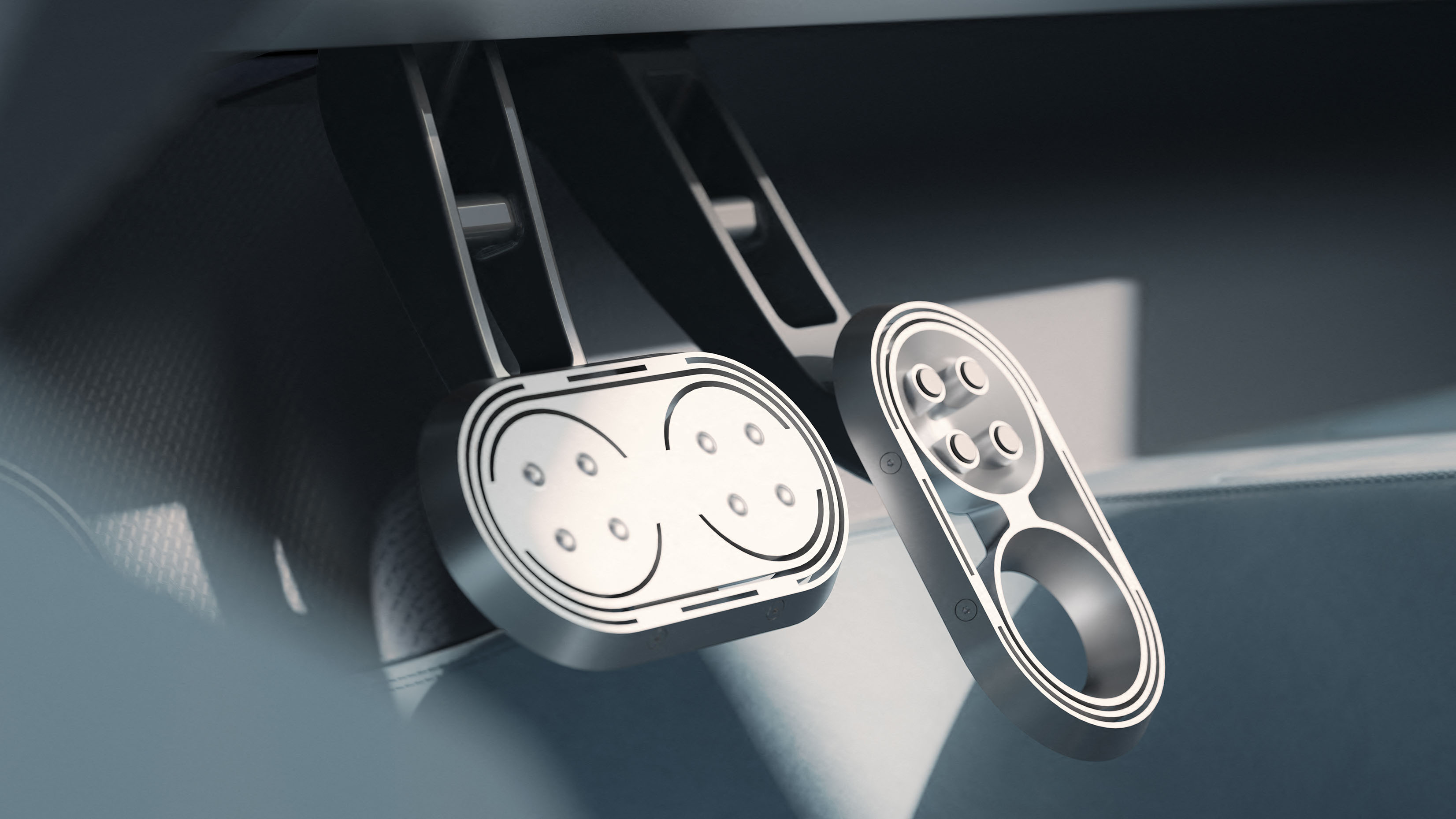
And fast: the maximum wheel rotation is a little less than one turn compared to the three turns lock-to-lock that we’re used to. A variable steering ratio means that you’re not all at sea at motorway speeds, and vibrations and torque steer are now relics of a different era. The RCZ – and indeed all future Peugeots – will brake-by-wire too.
Advertisement - Page continues below
What of the propulsion? The STLA One platform can accommodate ICE, but not here. On the RCZ Vision, we’re talking about a solid-state battery built on a 1,000 volt architecture so that it can charge from 10 to 80 per cent in 10 minutes.
Most of the big players are exploring solid state, whose primary benefit is a superior energy density in a more compact configuration. Peugeot is collaborating with a company called Factorial Energy in order to deliver this (Stellantis has a 9.5 per cent equity stake). The company says the RCZ has a power output of 491bhp, is targeting a range of 375 miles, and can deliver 5.4mpkWh overall.
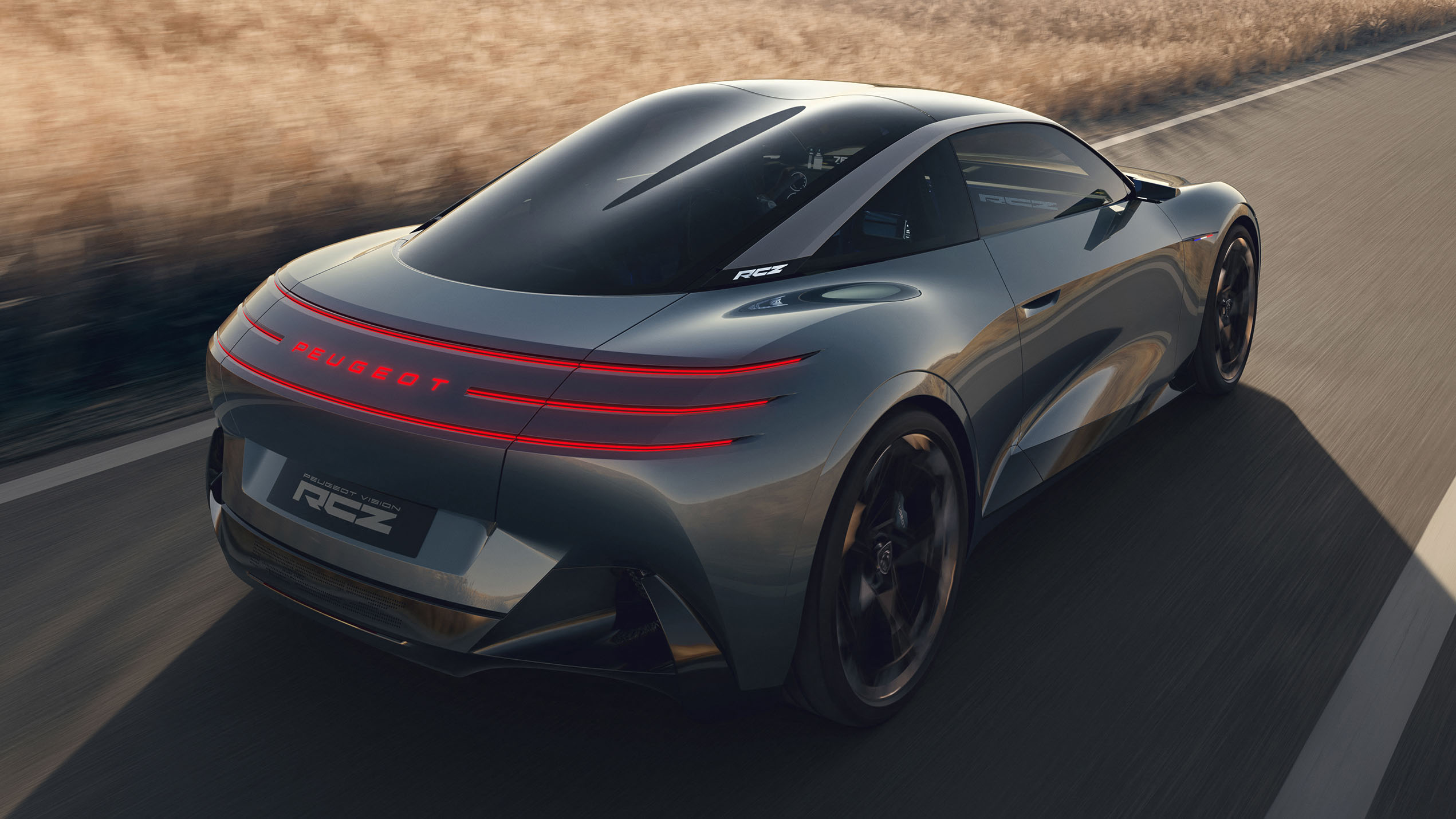
Back to the new design language. Peugeot’s design director Matthias Hossann says it’s predicated on five key principles: freedom, courage, elegance, instinct and inner force. Answers on a postcard – if anyone remembers those – as to the meaning of the last one. The RCZ is an undeniably pretty thing, if not as outré as some of its previous concepts (it’s worth looking those up – as far back as you care to go).
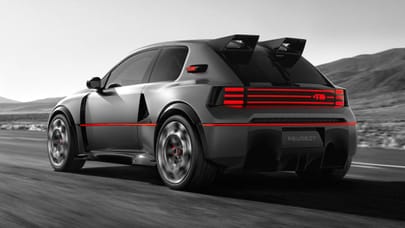
The horizontal light ‘claws’ are present and correct at the front and rear, and there’s a micro-perforated RCZ graphic across the bumper. The original’s glass bubble roof treatment reappears, and the slinky silhouette is made possible thanks to a battery that’s just 110mm thick. Forged aluminium wheels help reduce weight; they’re 21in upfront, 22in at the rear.
Top Gear
Newsletter
Get all the latest news, reviews and exclusives, direct to your inbox.
Note the triangular motifs, another callback to the original. Inside, there’s a dashboard clock from French specialist Serica, enough physical switchgear to satisfy analogue ideologues, and Pelinova recycled leather that uses offcuts that would otherwise be heading to the bin.
No word yet on whether the RCZ is destined for production. But a whole heap of the tech and thinking it contains is 100 per cent happening. Good news.